





Connect with us
DAPA Banner

Business

New Jersey Resources: Consistency At The Core, Optional Growth At The Edges

Published

on

New Jersey Resources: Consistency At The Core, Optional Growth At The Edges
Continue Reading
Click to comment

You must be logged in to post a comment Login

Leave a Reply

Business

Current Lines Short with Average Waits Under 15 Minutes

Published

on

Austin-Bergstrom International Airport

AUSTIN, Texas — Travelers asking about TSA wait times at Austin-Bergstrom International Airport (AUS) on Saturday, March 28, 2026, can expect relatively smooth security screening for most of the day, with average waits under 15 minutes at many times, though early morning peaks and occasional spikes up to 30-35 minutes remain possible amid ongoing spring break and high passenger volumes.

Austin-Bergstrom International Airport

As of late morning into the afternoon, multiple real-time trackers reported standard security lines averaging around 0-12 minutes, with TSA PreCheck lanes often clearing in 5 minutes or less. However, airport officials continue to urge passengers to arrive 2.5 to 3 hours before domestic flights — and even earlier for international departures — due to the busy travel season that has strained operations in recent weeks.

Austin-Bergstrom, the primary gateway to the Texas capital known for its live music vibe and “Keep Austin Weird” spirit, has seen significant passenger surges this March. The airport warned of “high passenger volume days” stretching from mid-March through early April, coinciding with spring break for many school districts and lingering effects from major events like South by Southwest.

On peak days earlier in the month, such as March 13-16, security lines spilled outside the terminal doors, with some travelers reporting waits of 45 to 90 minutes during the busiest pre-dawn hours between 4 a.m. and 8 a.m. Videos and social media posts showed long queues snaking through the check-in areas and onto sidewalks, prompting airport alerts and media coverage of the chaos.

Officials emphasized that the extended lines were driven primarily by record-breaking passenger numbers rather than TSA staffing shortages alone, though a partial government shutdown affecting federal agencies added pressure with higher callouts reported nationwide. U.S. Sen. John Cornyn and airport representatives noted that TSA screening itself was not the core bottleneck; instead, the sheer volume of travelers checking bags, returning rental cars and navigating parking contributed to the backups.

Advertisement

Checkpoint operations at AUS typically begin around 3 a.m., with multiple lanes opening progressively. Checkpoint 2 often serves as the main hub, while others provide overflow capacity. On Saturday, data from trackers like OnAirParking and iFly showed fluctuating hourly averages: as low as 0 minutes in some slots, climbing to 27-33 minutes during traditional rush periods like 5-7 a.m. and 10-11 a.m. Afternoon hours have generally trended lighter.

TSA PreCheck and CLEAR members continue to enjoy significantly shorter experiences, often bypassing standard lines entirely. Enrollment in these programs has proven especially valuable during busy periods, with PreCheck waits frequently under 10 minutes even when general lines lengthen.

The MyTSA app remains a recommended tool for real-time crowd-sourced updates, though some users note that official estimates can lag during disruptions. Third-party sites such as Takeoff Timer and FlightQueue provide supplementary live data, showing standard security around 11-35 minutes depending on the exact moment of check. Travelers are advised to cross-reference multiple sources and monitor the official @AustinAirport social channels for alerts.

Airport management has increased staffing where possible and adjusted lane configurations to handle demand. Despite the challenges, flight operations have largely remained on schedule, with only minor delays reported on most days. FAA data indicated low airborne and gate delays as of late March.

Advertisement

For those departing today, the busiest window remains early morning departures. Travelers with flights before 9 a.m. should plan conservatively, factoring in parking, bag drop and potential rental car returns. Midday and evening flights have seen more predictable flows in recent reports.

AUS offers several amenities to ease the journey, including diverse dining options featuring local Austin flavors — from barbecue to breakfast tacos — and shopping that highlights Texas artists and musicians. Free Wi-Fi, charging stations and family-friendly areas help passengers pass the time if they arrive with extra buffer.

The surge reflects broader trends in Texas aviation. Austin’s rapid growth as a technology and music hub has driven consistent increases in enplanements, making AUS one of the faster-growing medium-sized airports in the country. Officials expect the high-volume period to ease after early April as spring break concludes for most districts.

Passengers can further speed their experience by preparing in advance: removing liquids and electronics from carry-ons, wearing slip-on shoes, and ensuring ID and boarding passes are readily accessible. The TSA’s 3-1-1 liquids rule remains strictly enforced, and prohibited items can cause secondary screening delays.

Advertisement

International travelers face additional considerations, with longer recommended arrival windows to account for customs and immigration on return, though outbound international security follows similar domestic protocols at AUS.

Looking ahead, the airport continues infrastructure improvements to handle future growth. While Checkpoint 3 remains closed through parts of 2026 for upgrades, the remaining facilities have proven resilient during the current busy stretch.

Travelers with disabilities or needing assistance can request expedited or accessible screening through TSA Cares. Families with young children benefit from dedicated lanes when available.

As Saturday evening approaches, lines are expected to remain manageable unless a late surge occurs. Real-time conditions can shift quickly with flight banks or unexpected events, so checking 30-60 minutes before heading to the airport is wise.

Advertisement

Austin-Bergstrom’s convenient location just minutes from downtown continues to make it a favorite for both business and leisure travelers. Its compact layout generally allows efficient movement once past security, with gates easily accessible.

In summary, while TSA wait times at AUS are currently short for much of Saturday, March 28, the lesson from recent weeks is clear: build in extra time during this high-volume spring travel season. Arriving early ensures a smoother experience and reduces stress, allowing passengers to enjoy the airport’s unique Austin character rather than worrying about missing their flight.

For the absolute latest updates, consult the MyTSA app, third-party wait time trackers, or the airport’s official website and social media. Safe travels to all departing from Austin-Bergstrom today and throughout the busy period.

Advertisement
Continue Reading

Business

US carrier Ford arrives in Croatia for repairs

Published

on

US carrier Ford arrives in Croatia for repairs


US carrier Ford arrives in Croatia for repairs

Continue Reading

Business

Paramount-Warner Bros. movie slate needs animation to rival Disney, Universal

Published

on

Paramount-Warner Bros. movie slate needs animation to rival Disney, Universal

Source: Warner Bros. | Paramount

When Paramount Skydance combines with the Warner Bros. film studio, it’ll have a deep bench of marquee franchises and established prestige. What the powerhouse duo will be missing is an animated film slate that could rival Hollywood giants like Disney and Universal.

The combined entity, which is still awaiting regulatory approval, has a stacked slate of tentpoles including DC superhero fare, a Minecraft sequel, another Sonic the Hedgehog film and new entrants from The Lord of the Rings universe. Not to mention, Warner Bros. just tied the record for the most Academy Award wins for a single studio earlier this month.

Advertisement

But it’s been kid-friendly animated content that is increasingly driving families to the theater — and neither studio has excelled in this area in the last decade.

Since 2016, Paramount and Warner Bros. have each released eight animated features on the big screen, with Paramount generating $1.1 billion in total global ticket sales from the category and Warner Bros. tallying $1.3 billion, according to data from Comscore.

During that time, only one Paramount animated film has generated more than $200 million globally — 2023’s “Paw Patrol: The Mighty Movie” — and only one Warner Bros. animated title has scored more than $300 million globally — 2017’s “Lego Batman.”

For comparison, in the last decade Disney released 21 theatrical animated features, collecting $14.1 billion from the films; Universal released 23 animated movies to the tune of $10.7 billion; and Sony released 16, bringing in $4.6 billion in ticket sales.

Advertisement

Disney has seen seven animated features generate more than $1 billion globally during that time, and Universal has seen two.

These figures do not include live-action films with animated elements like Paramount’s Sonic franchise, Universal’s “Gabby’s Dollhouse,” or Disney’s “Mufasa: The Lion King,” which the studio considers a live-action film. They also don’t include animated films released to streaming during the pandemic that were later brought to theaters like Disney’s “Soul,” “Luca” and “Turning Red.”

“When the moviegoing world is operating at or near peak efficiency, it’s virtually always because of a diverse release slate that includes one or more movies catering heavily to kids and families,” said Shawn Robbins, director of analytics at Fandango and founder of Box Office Theory. “Animation, in most cases, directly serves that audience while providing an anchor for studios and cinema owners to rely on.”

Together, Paramount and Warner Bros. accounted for 27% of the domestic box office in 2025, just shy of the 28% market share held by Disney.

Advertisement

“As Paramount and Warner Bros. merge, it becomes even more essential for their combined resources to be strategically directed toward developing a robust animated film portfolio,” said Paul Dergarabedian, head of marketplace trends at Comscore.

“Animated film releases are crucial for any movie studio, requiring a well-thought-out strategy whether the projects are original works, extensions of existing intellectual property, or reboots of beloved legacy franchises,” he added.

In the last two years, family-friendly fare with a PG rating has won at the box office, outperforming PG-13 and R rated films, Comscore data shows.

“This rating is significant because it allows these films to attract a broader audience, making them true four-quadrant releases with the highest box office potential of almost any genre in today’s movie marketplace,” Dergarabedian said.

Advertisement

Additionally, animated features are not usually front-loaded at the box office, Robbins noted, meaning they steadily generate ticket sales over the course of their run in theaters, gaining word of mouth.

A typical Hollywood film will see a 50% to 70% drop in sales from opening weekend to the second weekend after the rush to the theater fades. Animated features don’t always experience the same cliff.

For Disney’s “Hoppers,” for example, the opening week dropoff was less than 37%, and the second week drop was less than 38%.

“Not all animated releases are as successful as others, but they can be incredibly valuable with their potential for long-tail grosses alongside ancillary revenues via merchandising, down-window rentals and purchases, and other non-theatrical financial opportunities,” Robbins added.

Advertisement

Working in Paramount’s and Warner Bros.’s favor: They already have lucrative animated IP. The combined library features SpongeBob SquarePants, Smurfs, Paw Patrol, Teenage Mutant Ninja Turtles and DC superheroes.

Disney and Universal have been successful in the last decade balancing new titles with sequels. For Disney, it has introduced stories like “Coco,” “Zootopia” and “Encanto” alongside “Frozen II,” “Toy Story 4” and “Inside Out 2.” At Universal, it’s had newcomers like “Sing,” “The Secret Life of Pets” and “Migration” arrive at the box office and returning favorites like “Kung Fu Panda 4,” “Despicable Me 4” and “The Bad Guys 2.”

“It will be important for a freshly minted Paramount/WBD combo to not only expand on these brands but also to develop new animated properties to have the best shot at capturing their share of the massive potential box office for this extremely popular and competitive category of film,” Dergarabedian said.

Disclosure: Versant is the parent company of CNBC and Fandango.

Advertisement
Choose CNBC as your preferred source on Google and never miss a moment from the most trusted name in business news.
Continue Reading

Business

Gambling.com: More Risks Are Surfacing (Rating Downgrade) (NASDAQ:GAMB)

Published

on

Gambling.com: More Risks Are Surfacing (Rating Downgrade) (NASDAQ:GAMB)

This article was written by

Full-time Equity Analyst and part-time retail investor with a bias for high quality stocks trading at discounted prices. over the past 5 years I’ve been retail investing and learning more about how the stock market works, following the work of Ben Graham and Joel Greenblatt. Equity Markets are fascinating as they give us an analytical overview of how global markets are performing. Seeking Alpha is an incredible platform for me to share my research and analysis with fellow investors and analysts.

Analyst’s Disclosure: I/we have no stock, option or similar derivative position in any of the companies mentioned, and no plans to initiate any such positions within the next 72 hours. I wrote this article myself, and it expresses my own opinions. I am not receiving compensation for it (other than from Seeking Alpha). I have no business relationship with any company whose stock is mentioned in this article.

Seeking Alpha’s Disclosure: Past performance is no guarantee of future results. No recommendation or advice is being given as to whether any investment is suitable for a particular investor. Any views or opinions expressed above may not reflect those of Seeking Alpha as a whole. Seeking Alpha is not a licensed securities dealer, broker or US investment adviser or investment bank. Our analysts are third party authors that include both professional investors and individual investors who may not be licensed or certified by any institute or regulatory body.

Advertisement
Continue Reading

Business

Wales’ poor record on securing research and innovation funding

Published

on

Business Live

In 2023-24, Wales received just £168m or 2% of the UK total, from UKRI – the body responsible for funding R&D and innovation

John Atack and Simon Ward of Draig Therapeutics.

While attention has rightly focused on the financial crisis facing our universities, the growing instability across the sector poses another, less-discussed but potentially more damaging long-term threat: the risk to Welsh research capacity, innovation and the country’s wider economic future.

This matters because in a modern economy, research and innovation are among the key drivers of productivity, business creation and long-term prosperity. The countries and regions that generate ideas, develop intellectual property and turn discoveries into commercial activity are the ones that create the high-value jobs of the future. Those that do not are left behind, and that is precisely the danger Wales now faces.

READ MORE: We need a plan to revive and renew struggling universities in WalesREAD MORE: Welsh rugby makes a huge economic contribution shows new report

Across the UK, public investment in research and development remains substantial, but the way funding is allocated is increasingly favouring institutions with scale, critical mass, strong commercialisation records and the capacity to compete successfully at the highest level. In other words, the system increasingly rewards those universities and regions that are already ahead, and unfortunately, Wales is not included.

Advertisement

For over 20 years, I have maintained that research and innovation funding should be devolved, yet during that time, politicians have largely failed to make a compelling case, while too many vice-chancellors seem more comfortable defending the status quo than challenging it. The outcome is that Wales remains reliant on a UK-wide system that has consistently failed to reflect either our population share or our economic needs.

The numbers are stark. In 2023-24, Wales received just £168m or 2% of the UK total, from UKRI – the body responsible for funding R&D and innovation – despite accounting for around 5% of the UK population.

That shortfall is not a marginal issue but is a structural disadvantage with real economic consequences, and on a per-person basis, Wales received £53 compared with a UK average of £134, making Wales one of the weakest-funded parts of the UK both per head and as a share of GVA.

However, if research and development funding had been devolved and allocated through the Welsh fiscal framework, including a needs-based uplift, Wales could have received as much as £322m, almost double what it receives now.

Advertisement

Pause for a moment and consider that, over the past decade alone, Wales has missed out on more than £1bn of funding that could have boosted research capacity, innovation, business collaboration and the wider Welsh economy. This estimate is conservative because it does not account for the broader economic effects of greater control over R&D priorities, co-investment, commercialisation and regional innovation policy; the actual long-term loss to Wales could be higher.

Indeed, if this money had been available, it would have been transformational, providing more support for collaboration between universities and businesses and a greater scope to back commercially relevant innovation in sectors where Wales has genuine strengths. More importantly, it would have meant a far greater chance of turning Welsh ideas into Welsh wealth.

Too often, we talk about economic development in Wales as though it is mainly about grants, property schemes, infrastructure announcements or another reorganisation of the business support landscape. But if we are serious about creating a stronger economy, we need to pay much more attention to the sources of future value creation – research, innovation and commercialisation.

When research is strong, businesses benefit, new technologies emerge and intellectual property is developed and retained, while investors begin to look at a place differently, skills deepen and supply chains strengthen.

Advertisement

We already know what success can look like and Cardiff University’s Draig Therapeutics, which recently secured $140m in venture capital investment, is exactly the kind of example Wales should be producing more often. It shows what can happen when high-quality research, commercial focus and investor confidence come together.

However welcome one example may be, it is not enough. Wales should be building a pipeline of such businesses rather than celebrating them as rare exceptions. This is why the debate over research funding cannot be separated from the financial crisis currently affecting Welsh higher education. When universities fall into survival mode, research becomes vulnerable, particularly in institutions lacking large reserves, substantial endowments or a high level of research activity.

This damage is not easily reversed, and once research capacity begins to decline, rebuilding it is much more difficult than cutting it, as skilled teams disperse, international networks weaken and younger academics seek opportunities elsewhere. Consequently, commercial relationships drift apart, opportunities fade and, over time, the country’s ability to compete for talent, funding and investment diminishes.

This is why the stakes are so high. The issue is not simply whether Welsh universities can balance their books over the next two or three years, but whether Wales wants to remain a serious participant in the creation of new knowledge, new technologies and new industries.

Advertisement

At least there are signs that this argument is finally beginning to gain some political support. The First Minister recently stated that Wales should receive a fairer share of UK research funding, although there are no details on how she intends to achieve this. However, that recognition is welcome, even if it has taken more than a quarter of a century for the point to be taken seriously.

But fairer funding within the current system should not be the end of the debate, and Wales should be making the case for the full devolution of research and innovation funding. Properly designed and strategically deployed, it could do more to strengthen the long-term Welsh economy than almost anything the Welsh Government has undertaken in the field of economic development since devolution began.

That is why this matters so much, and the future of Welsh higher education is not only about keeping institutions afloat but about deciding whether Wales will be a country that creates knowledge, owns ideas and builds businesses from them, or one that watches others do so and wonders, once again, why the rewards end up elsewhere.


Advertisement
Continue Reading

Business

Sixth Street Specialty Is A Buy-The-Dip BDC

Published

on

Sixth Street Specialty Is A Buy-The-Dip BDC

Sixth Street Specialty Is A Buy-The-Dip BDC

Continue Reading

Business

Mercedes Dominance Tested at Iconic Suzuka Under New Regulations

Published

on

Lionel Messi, Paris Saint-Germain

SUZUKA, Japan — Formula 1 heads to the revered Suzuka International Racing Course this weekend for the 2026 Japanese Grand Prix, the third round of a season already shaped by major technical regulation changes and Mercedes’ early dominance, with questions swirling about tyre management, energy deployment and whether challengers can disrupt the silver arrows’ stronghold.

2026 Japanese Grand Prix

The Japanese Grand Prix, traditionally one of the calendar’s most demanding tests, takes on added significance in 2026 as the first visit to Suzuka under the new formula. Teams and drivers will grapple with reduced downforce, altered power units and active aero systems on a circuit famous for its high-speed corners, figure-eight layout and punishing tyre demands.

As of late March 2026, Mercedes leads the constructors’ standings with 98 points, powered by strong performances from George Russell and rookie sensation Kimi Antonelli. Russell sits atop the drivers’ championship with 51 points, just ahead of teammate Antonelli on 47. Ferrari trails in second with 67 constructors’ points, led by Charles Leclerc and Lewis Hamilton.

2026 Regulations Reshape Suzuka Challenge

The 2026 rules have introduced smaller, lighter and more agile cars with significantly less downforce — reportedly around a 55% reduction in some areas — alongside new power unit specifications that place greater emphasis on electrical energy management. These changes promise closer racing in theory but have already exposed challenges in energy harvesting and deployment, particularly on circuits like Suzuka with long-duration corners and limited heavy braking zones.

Tyre strategy will be pivotal. Pirelli has brought its hardest compounds — C1, C2 and C3 — for the weekend. Historically, Suzuka’s high-speed Esses, Degner curves and Spoon Corner have inflicted heavy thermal degradation, often dictating a two-stop race. Under the new regs, the balance between front and rear axle demands could shift, potentially altering pit strategies and making one-stop attempts more viable or risky.

Advertisement

In a late tweak ahead of the weekend, the FIA reduced the maximum permitted energy recharge for qualifying from 9 megajoules to 8 MJ per lap. The adjustment aims to minimize excessive “lift-and-coast” tactics and energy management, ensuring drivers can push closer to the limit during the all-important session and improving the spectacle at a track where qualifying lap times matter immensely.

Additional circuit modifications, including fresh resurfacing on sections of the track and tweaks to active aero deployment (particularly approaching the high-speed 130R corner), could further influence car behavior and overtaking opportunities on the narrow, driver-focused layout.

Mercedes vs. Ferrari: Early Season Battle Intensifies

Mercedes has won both opening races of 2026, with Russell and Antonelli each claiming a victory. The team’s consistency and pace have set a high bar, but Suzuka — a circuit where Lewis Hamilton has enjoyed historic success — will test their adaptability to the new aero and power characteristics.

Ferrari arrives motivated after strong showings from Leclerc and Hamilton. The Scuderia sits second in constructors’ points and will look to exploit any weaknesses in Mercedes’ package around Suzuka’s flowing, high-commitment corners. Hamilton, returning to a track he knows intimately, could provide crucial feedback as the team fine-tunes its setup.

Advertisement

McLaren, the reigning constructors’ champions, has struggled so far with just 18 points. Lando Norris and Oscar Piastri will hope the technical demands of Suzuka play to their strengths, while Red Bull Racing — once dominant — sits fifth with only 12 points amid ongoing adaptation challenges for Max Verstappen and his teammates.

Emerging stories include Haas F1 Team’s impressive start (fourth in constructors with 17 points, thanks in part to Oliver Bearman) and the performances of young drivers like Antonelli and rookies such as Arvid Lindblad, who has already made headlines with bold qualifying runs.

Key Storylines and Predictions

Suzuka has long rewarded precision and bravery. With reduced downforce, cornering speeds through the S-curves may drop, potentially opening passing zones while increasing the importance of mechanical grip and tyre preservation. The figure-eight layout and elevation changes will amplify any handling imbalances caused by the new regulations.

Weather forecasts suggest cool conditions in the high teens Celsius, which could further influence tyre warm-up and degradation. Rain has often featured in Japanese Grands Prix, adding another layer of unpredictability.

Advertisement

Paddock talk centers on whether Mercedes can maintain its unbeaten streak or if Ferrari, McLaren or even surprise packages like Haas can mount a challenge. Analysts predict tight battles in qualifying, with Russell, Antonelli, Leclerc and Hamilton likely contending for pole. Verstappen, starting from lower grid positions in recent events, may need trademark recovery drives.

The weekend also marks the last race before a break, with the cancellation of Bahrain and Saudi Arabian rounds shifting focus to this high-stakes Japanese event.

Schedule and How to Follow

Practice sessions begin Friday, March 27, with FP1 and FP2 offering early clues on setup and tyre performance. Saturday features FP3 and qualifying, while the 53-lap race starts Sunday, March 29, at 14:00 local time (early morning in many international markets).

Fans can follow live on official F1 platforms, Sky Sports F1 and local broadcasters. Practice and qualifying highlights, along with post-session analysis, will be available shortly after each session.

Advertisement

Suzuka remains one of F1’s most beloved venues, blending raw driver skill with technical demands. In 2026, it serves as a critical early litmus test for the new regulations: Will the changes deliver the promised closer racing, or will they expose further teething problems that require mid-season adjustments?

As teams unpack at the Honda-owned circuit, the focus remains on extracting maximum performance from cars that look and behave differently from their 2025 predecessors. Mercedes enters as favorites, but history shows Suzuka rarely delivers predictable outcomes.

Whether a veteran like Hamilton adds to his Suzuka legacy, a young gun like Antonelli stamps his authority, or an underdog rises, the 2026 Japanese Grand Prix promises drama, high speeds through 130R and strategic battles that could reshape the championship narrative heading into the April break.

Advertisement
Continue Reading

Business

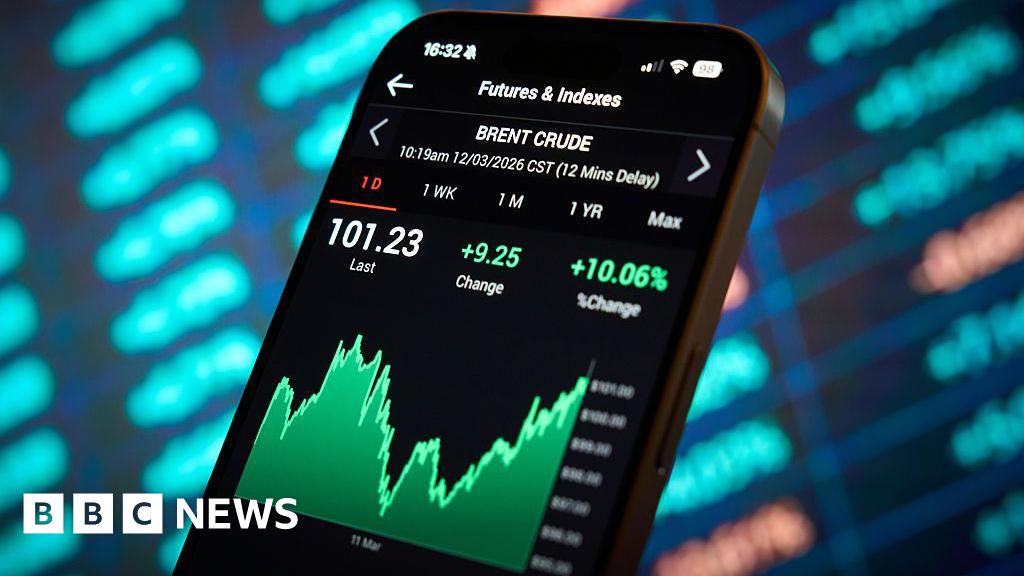
How Trump and the oil markets move in sync: a tango in five charts

Published

on

How Trump and the oil markets move in sync: a tango in five charts

Oil markets have been sensitive to Donald Trump’s comments on the war. But are traders growing less responsive?

Continue Reading

Business

Dalal Street Week Ahead: Avoid aggressive long positions; focus on capital preservation

Published

on

Dalal Street Week Ahead: Avoid aggressive long positions; focus on capital preservation
The markets traded under sustained pressure through the week, exhibiting a clear downward bias and ending on a negative note. The Nifty oscillated in a wide intra-week range of 994 points, moving between 23,465.35 and 22,471.25 before settling near the lower end of the range.Volatility surged further; the India VIX, which had already risen sharply in the previous week, extended its upmove and gained another ~17.5% on a weekly basis, reflecting heightened uncertainty. Despite this corrective phase, Indian equities continued to relatively outperform weaker global peers. The Nifty ended the week with a net loss of 294.90 points (-1.28%).

From a structural standpoint, the Nifty has violated and slipped below key short-term support levels, indicating a deterioration in the near-term trend. The index is now trading below its 50-week and 100-week moving averages and is approaching a critical support band.

Milan Vaishnav chart 3ETMarkets.com

The broader structure suggests a transition from consolidation to an extended corrective phase. With volatility expanding and prices weakening, the market remains vulnerable to further downside unless it swiftly reclaims lost levels.
Any pullbacks towards overhead resistance zones are likely to face selling pressure, while sustained trade below immediate supports may trigger an extended decline.
Given the truncated trading week, markets may begin on a cautious note with intermittent bouts of volatility. Immediate resistance levels are placed at 23,150 and 23,450, while supports come in at 22,450 and 21,700.The weekly RSI stands at 27.11, placing it in the oversold territory. While it has formed a 14-period low, it stays neutral and shows no visible bullish divergence against price, indicating continued weakness.
The MACD remains bearish and is positioned below its signal line, with momentum still negative. The formation of a strong bearish candle on the weekly chart reinforces the prevailing downside pressure.

Pattern analysis shows that the index has slipped below its short-to-medium-term moving averages, while the long-term 200-week moving average near 21,700 is now acting as a crucial support. The inability to hold above previous breakout zones suggests distribution at higher levels. The Index has dragged its overhead resistance levels lower as well.
Given the current setup, a cautious and defensive approach is strongly recommended for the coming week. Traders should avoid aggressive long positions and instead focus on capital preservation. Any rebound should be used more to lighten positions instead of initiating fresh exposure. A highly selective, stock-specific approach with strict risk management is advised while closely monitoring volatility trends.

In our look at Relative Rotation Graphs®, we compared various sectors against the CNX500 (NIFTY 500 Index), representing over 95% of the free-float market cap of all the listed stocks.

Milan Vaishnav chartETMarkets.com
Milan Vaishnav chart 2ETMarkets.com

Relative Rotation Graphs (RRG) show that the Nifty PSE, Pharma, Energy, and Infrastructure Indices are inside the leading quadrant. They are likely to relatively outperform the broader markets. Metal, PSU, and the Financial Services groups are also inside this quadrant. While they may also relatively outperform, they are seen as giving up on their relative momentum against the broader markets.
The Nifty Bank Index has rolled inside the weakening quadrant. The Auto and the Midcap 100 Indices are also in this quadrant. However, the Midcap 100 Index is seen improving on its relative momentum.
The Nifty Services Sector Index has rolled inside the lagging quadrant. The Realty and the IT groups are also languishing inside this quadrant and may collectively underperform the broader Nifty 500 Index.

The Nifty Media and the FMCG Indices are inside the improving quadrant. Important Note: RRGTM charts show the relative strength and momentum of a group of stocks. In the above Chart, they show relative performance against the NIFTY500 Index (Broader Markets) and should not be used directly as buy or sell signals.

Advertisement
Continue Reading

Business

Why Apple’s ‘Budget’ Phone May Not Be Worth $599

Published

on

Apple's iPhone 18 Pro Max

Apple’s iPhone 17e, released March 11, 2026, after a March 2 announcement, positions itself as the most affordable way to access the latest iOS features and Apple Intelligence at $599 for 256GB storage. Yet early reviews and consumer feedback highlight significant compromises that make it a questionable choice for many buyers just weeks after launch.

iPhone 17e
iPhone 17e

Priced the same as last year’s iPhone 16e but with incremental upgrades like MagSafe support, an A19 chip and doubled base storage, the iPhone 17e still lags behind the standard iPhone 17 and even some older models in key areas. Here are 10 compelling reasons why potential buyers should think twice before purchasing Apple’s latest entry-level smartphone.

1. It’s Not Really Budget-Friendly Anymore

At $599, the iPhone 17e carries a premium price tag for what many consider a mid-tier device. The final iPhone SE model launched at $429, and refurbished or discounted iPhone 15 units often sell for less while offering superior features in some categories. Critics argue that $599 no longer qualifies as “affordable” when flagship Android competitors deliver more hardware for similar or lower prices. The jump from previous SE pricing makes the “e” series feel like a marketing maneuver rather than genuine value.

2. Only a Single Rear Camera

The iPhone 17e sticks with just one 48MP rear camera, lacking an ultrawide lens found on the iPhone 17 and higher models. This limitation restricts versatility for landscape, group or macro photography. Reviewers note that while the main sensor performs adequately in good light, the absence of a secondary camera results in oddly cropped shots in certain scenarios and reduced creative options compared to virtually every modern mid-range competitor.

3. 60Hz Display Feels Outdated

Despite featuring a 6.1-inch OLED panel with Dynamic Island, the iPhone 17e remains locked at a 60Hz refresh rate. Smooth scrolling, gaming and general fluidity suffer compared to the 120Hz ProMotion displays on the iPhone 17 and Pro models. In 2026, many budget Android phones offer higher refresh rates, making the 17e’s screen feel dated for everyday use and gaming.

Advertisement

4. No Always-On Display

Users expecting modern conveniences will miss the always-on display capability available on higher iPhone models. The 17e cannot function as a bedside clock or glanceable notification hub without waking the screen, a small but noticeable downgrade in convenience that reviewers frequently cite as frustrating in daily use.

5. Binned A19 Chip with Reduced Performance

The iPhone 17e uses a binned or downclocked version of the A19 chip, featuring one fewer functional core than the full version in the standard iPhone 17. While still powerful enough for most tasks, this results in slightly lower peak performance and efficiency in demanding applications or future-proofing scenarios. The compromise feels particularly stingy given the phone’s price point.

6. Slower 15W MagSafe Charging

Although the addition of MagSafe is welcome after its absence on the 16e, the implementation caps at just 15W — significantly slower than the 25W available on recent flagship models. Wireless charging remains convenient for accessories but disappoints in speed, especially for users accustomed to faster options elsewhere in Apple’s lineup.

7. Limited Future-Proofing Compared to Flagships

With only a single camera, 60Hz screen and binned processor, the iPhone 17e risks feeling obsolete sooner than the iPhone 17 or Pro models. Software support will last several years thanks to Apple’s track record, but hardware limitations may hinder enjoyment of advanced Apple Intelligence features or future iOS updates that lean on better cameras and displays.

Advertisement

8. Better Alternatives Exist Within Apple’s Lineup

For just $200 more, buyers can step up to the standard iPhone 17, which offers a superior display, dual cameras, faster charging and the full A19 experience. Many analysts recommend skipping the 17e entirely and considering discounted previous-generation models or waiting for sales on higher-tier devices rather than settling for the entry-level option.

9. Compromised Camera and Selfie Experience

Beyond the single rear sensor, the front-facing camera setup trails behind recent iPhones. Reviewers report adequate but not exceptional low-light performance and limited versatility, making the 17e less ideal for social media users, content creators or anyone who values photography as a primary phone function.

10. Potential for Buyer’s Remorse in a Competitive Market

In a year when premium Android flagships and even mid-range options deliver higher refresh rates, multiple cameras and aggressive pricing, the iPhone 17e struggles to stand out. Early reviews describe it as “bad in a good way” — functional but full of frustrating compromises that leave many wondering if they should save for a better model or switch ecosystems. The phone serves older iPhone upgraders adequately but fails to excite new buyers or those seeking maximum value.

Weighing the Decision

The iPhone 17e does bring meaningful upgrades over the 16e, including MagSafe, more storage and a newer chip, and it supports full Apple Intelligence features. For users upgrading from very old devices who prioritize iOS simplicity and ecosystem integration, it may still make sense.

Advertisement

However, for most consumers in March 2026, the compromises — especially the display, camera system and pricing — tip the scales against purchase. Savvy shoppers should compare it directly against the iPhone 17, refurbished flagships or competitive Android options before committing.

Apple continues to refine its budget strategy with the “e” series, but the iPhone 17e illustrates the challenges of delivering a compelling experience at this price point without deeper cuts. As the device settles into the market, real-world user feedback will further clarify whether its strengths outweigh the listed drawbacks for individual needs.

Prospective buyers are advised to visit Apple Stores for hands-on testing and carefully evaluate their priorities around camera quality, display smoothness and long-term satisfaction before deciding.

Advertisement
Continue Reading

Trending

Copyright © 2025