Jessica Phillips-Harris of the British Business Bank explores the emerging opportunities in Wales’ growing dog economy.
15:42, 03 Sep 2026Updated 15:48, 03 Sep 2026
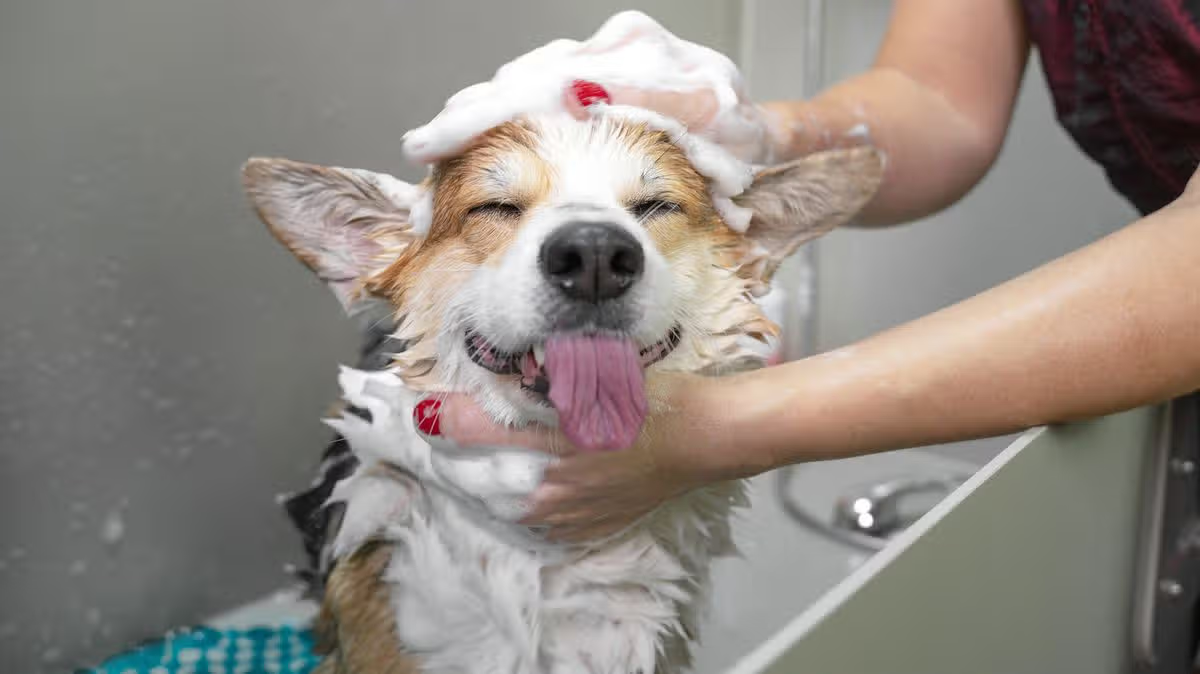
A dog groomer has shared what a day in the life looks life, after quitting her office job (stock image)(Image: Getty Images)
Wales has long been a nation of dog lovers. Increasingly, it is becoming a nation of dog entrepreneurs too.
From mobile groomers and doggy daycare to self-service washing stations, specialist toys and stylish accessories, a growing variety of businesses are being built around the needs – and increasingly, the wants – of our four-legged companions .It is a trend we are seeing first-hand through the British Business Bank’s Start Up Loans programme data.
So far this year, almost 5% of all Start Up Loans distributed in Wales have been for start-ups within the ‘dog economy’.
Put another way, that’s almost 1 in 20 Welsh Start Up Loan recipients – a data point not to be sniffed at!
Collaring the market
And what is striking is not simply the number, but the diversity of dog-related businesses appearing in the Start Up Loans recipients, and they are operating in a market where consumer spending is clearly evolving.
There is no single figure for the value of Wales’ dog economy, but nationally the direction of travel is clear. UK household spending on veterinary and other services for pets reached £6.7bn in 2025, up from around £4.5bn in 2019 – an increase of almost 50%, according to the Office for National Statistics.
The category covers veterinary and other services for pets rather than dog businesses specifically, but the growth illustrates the increasing amount consumers are spending on the care and wellbeing of their animals.
That spending is happening against a backdrop of a rapidly expanding dog population. The number of dogs living in UK households has risen from around 12.5 million in 2021 to an estimated 15.5 million today, with 41% of households now owning a dog. At the same time, the market around pets is becoming increasingly varied, extending well beyond essential food and veterinary care into grooming, daycare, walking, training, products and other specialist services.
Pooch pampering
Perhaps most tellingly, pet grooming was added to the Office for National Statistics’ official inflation basket for 2026. The ONS says it introduced the service to reflect a growing area of the pet-care market, noting that reports indicate grooming attracts the second-highest spending in the sector after health checks.
In Wales, the dog grooming picture is equally interesting, even if it cannot yet be neatly expressed in pounds and pence. The Welsh Government estimates that more than 500 pet groomers are operating across the country, and describes pet grooming as widespread and growing. Its evidence also found that 36% of Welsh dog owners had used a professional dog groomer.
That creates an obvious opportunity for entrepreneurs – but the businesses emerging around dogs suggest the opportunity is becoming much broader than grooming alone.
When the dog gets better accessories than you do
Some of the most interesting businesses are tapping into something less essential: what people want to buy for their dogs.
In Abergavenny, former Royal Navy serviceman Ed Woolcott founded Monty’s XI following the loss of his beloved cocker spaniel, Monty.
Supported by a £20,000 Start Up Loan, Ed has launched a range of dog-walking accessories inspired by classic 1990s football kits, including collars, harnesses, leads and poo-bag holders.
No dog actually needs a retro football-inspired lead, and that is precisely what makes the business strategy so revealing.
Ed identified a gap in a market where many dog accessories were heavily targeted towards women, creating an opportunity for products aimed at men who wanted something that reflected their own interests.
Another Start Up Loans-supported business is Pawfectly Clean Cymru.
Rather than operating a conventional grooming salon, the business is installing self-service dog-wash stations, giving owners a quick and convenient way to tackle the inevitable muddy paws, wet fur and post-walk grime without having to turn their own bathroom into a canine spa. It currently has three locations across south Wales – Caerphilly Mountain, Pontcanna Fields and Clydach Valley Lakes.
It is a simple idea, but an interesting one commercially. As dog ownership grows, so does demand for services that make caring for pets easier. With ambitions to expand across Wales, Pawfectly Clean Cymru shows how entrepreneurs can find opportunities by rethinking established services rather than reinventing them entirely.
The businesses backed by Start Up Loans in Wales reflect the widening opportunities emerging around dog ownership.
Alongside Pawfectly Clean Cymru and Monty’s XI, businesses supported so far in 2026 include an American-style dog daycare business in North Wales, a manufacturer of chew-resistant dog toys, an indoor dog soft-play and stay-and-play facility, mobile dog groomers, specialist grooming suppliers and businesses providing dog walking, sitting and home boarding.
Together, they demonstrate how entrepreneurs are identifying opportunities across a market that extends far beyond traditional pet care. Some are solving practical problems for owners, while others are creating products and experiences that reflect the increasingly important role dogs play in people’s lives.
Beyond Start Up Loans, the British Business Bank’s other programmes are helping dog-related businesses to scale and expand and stay here in the UK. One notable example is Clydach Farm – Natural Dog Food which, in addition to finance from Start Up Loans, access the Bank’s Recovery Loan Scheme (now operating as the Growth Guarantee Scheme) through Robert Owen Community Banking Fund.
The ‘dog economy’ may not yet have an official Welsh balance sheet, but the businesses emerging around it tell us something important about modern consumer behaviour. As owners continue to spend more on their pets’ wellbeing, convenience and enjoyment, Welsh entrepreneurs are finding new ways to turn that demand into successful businesses.
- Jessica Phillips-Harris is a director in the Wales local growth team at the British Business Bank – the economic development bank of the UK Government.






























































You must be logged in to post a comment Login