The appointment comes weeks after the suspension and subsequent resignation of former CEO Stuart Ashman
The Core at Newcastle Helix where SkinBioTherapeutics is based.(Image: Newcastle Journal)
A new interim CEO has been appointed at Newcastle life sciences firm SkinBioTherapeutics plc as it strives to “move forward and focus on accelerating” in the wake of an investigation into its former leader. The Newcastle Helix-based business, which is focused on skin health, announced to shareholders that it has appointed Rachel Parsonage as Interim CEO for a period of six months.
Ms Parsonage starts her duties with immediate effect and she is being introduced to the rest of the team today, Monday March 2. She will also serve as a member of the board.
The company said her appointment to the board is subject to the completion of normal regulatory due diligence being carried out by the company’s nominated adviser. The stock market note said Ms Parsonage is a seasoned senior executive with over 25 years’ experience leading consumer beauty and wellness businesses through growth and change.
She has held CEO and transformational level leadership roles across owned and licensed brand portfolios in both domestic and international markets. She currently runs her own advisory consultancy, Alera Advisory and before that she was at KMI Brands for over 16 years.
Advertisement
In other roles she owned Vita Management, an independent consultancy, and prior to that she was general manager at Pacific Direct, a company providing brand development for hotels working with luxury brands Elemis, Penhaligons and White Company.
Ms Parsonage’s appointment comes weeks after SkinBioTherapeutics’ share price crashed following the suspension and subsequent resignation of former CEO Stuart Ashman.
The AIM-listed firm last month said it had been conducting an investigation of the business and that it had “reason to believe that the former CEO has misrepresented material information to the board and senior management, the company’s auditors and advisors”. It said accrued royalty income was included in the audited FY25 accounts “due to a potential misrepresentation”, and that the amount – £770,000 – is to be removed from the accounts.
Now, Martin Hunt, executive chairman of SkinBioTherapeutics, has told shareholders how the company is working to move forward. He said: “In the past few weeks, our aim has been to take decisive action to stabilise the business, including the search for a new interim CEO, while we undertake a thorough investigation to resolve the current issues. We are therefore delighted to welcome Rachel to the team as interim CEO.
Advertisement
“Her background matches our immediate requirements exactly; she has over 32 years in total in the consumer and wellness sector, with a clear track record of stabilising brands and companies, managing stakeholders including partners, and driving sales and IP commercialisation.
“This appointment is one part of our plan to resolve the current issues as quickly as possible. With respect to the forensic investigation, we are balancing the thoroughness of an investigation within a clear cost-benefit framework, to remove any uncertainty around the business’ future. We want SkinBioTherapeutics to get back on track, move forward and focus on accelerating its growth again.”

NEW YORK — The S&P 500 (^GSPC) extended losses into early March 2026 trading, pressured by escalating geopolitical tensions in the Middle East following U.S. and Israeli military strikes on Iran, which sent oil prices sharply higher and prompted a flight to safe-haven assets.
The benchmark index closed at 6,878.88 on Feb. 27, down 29.98 points or 0.43%, capping a volatile week that saw broader market retreats amid renewed inflation concerns from surging energy costs. On March 2, futures indicated further downside, with S&P 500 contracts sliding around 1% pre-market before opening lower, trading near 6,855-6,856 levels in early sessions with intraday ranges dipping to approximately 6,796 before partial recovery attempts.
S&P 500 index
The pullback reflects a classic risk-off environment triggered by weekend military actions. U.S. and Israeli forces targeted Iranian sites in what has been described as “Operation Epic Fury,” prompting fears of prolonged conflict, potential disruptions in the Strait of Hormuz — through which about one-fifth of global oil flows — and retaliatory measures. Brent crude surged as much as 8-13% at peaks, trading near $79-$82 per barrel early in the week, while West Texas Intermediate climbed toward $72-$73, marking multi-month highs and amplifying worries about sticky inflation.
Gold futures rallied over 3%, surpassing recent levels as investors sought protection, while the U.S. dollar strengthened against major currencies. The VIX, Wall Street’s fear gauge, elevated toward 20, signaling heightened volatility as traders braced for developments.
“The combination of geopolitical escalation and an oil shock is forcing a rapid repricing of risk,” one market analyst commented in a Monday note. “Higher energy prices threaten to delay any Federal Reserve easing cycle, putting pressure on valuations across equities, especially in growth-sensitive sectors.”
Advertisement
The S&P 500 has shown resilience earlier in 2026, with year-to-date performance modestly positive in some calculations around 0.5% to 1% despite February’s softness. The index ended the prior month lower overall, influenced by softer sentiment in AI and technology names amid broader rotation. However, the latest catalyst has accelerated the defensive shift, with energy and select industrial names providing relative outperformance while consumer discretionary, tech-heavy constituents and airlines faced headwinds from elevated fuel costs.
Broader indices mirrored the caution. The Dow Jones Industrial Average futures dropped over 500 points at one point, while the Nasdaq Composite — already under pressure from prior sessions — saw amplified declines due to its growth orientation. European and Asian markets opened sharply lower, with some benchmarks down 1-2% as the conflict’s global implications rippled outward.
Analysts noted that persistent oil elevation could complicate the economic soft-landing narrative that buoyed stocks through much of the cycle. Recent Producer Price Index data had already introduced hotter-than-expected inflation readings, and the energy spike risks reinforcing those trends ahead of key labor market reports and corporate earnings.
Despite the near-term turbulence, longer-term optimism lingers for some observers. The S&P 500 remains above key technical supports, including its upward-sloping 10-month exponential moving average in certain analyses, suggesting the broader uptrend intact unless escalation materially worsens. Defensive sectors like consumer staples have shown relative strength in recent rotations, while international exposure via emerging markets or Europe has outperformed in spots amid diversification plays.
Advertisement
Investors continue monitoring diplomatic channels for de-escalation signals, alongside upcoming economic releases that could influence Fed policy expectations. Any stabilization in the Middle East or cooling in oil markets might support a rebound in risk assets, though prolonged uncertainty keeps caution front and center.
The index’s valuation, trading at levels reflecting forward earnings growth tempered by macroeconomic risks, appears balanced for total return seekers willing to weather volatility. Consensus views maintain a constructive stance on U.S. large-caps, with emphasis on quality names resilient to energy shocks and potential rate path adjustments.
As March trading unfolds, the S&P 500’s performance will hinge on the trajectory of the conflict, commodity prices and incoming data. For now, the market digests the geopolitical shock, balancing growth potential against immediate headwinds from higher costs and uncertainty.
Gov. Greg Abbott, R-Texas, joins ‘Mornings with Maria’ to address the deadly Austin shooting, warn of potential sleeper cells and sound the alarm on border-related security threats.
Texas Gov. Greg Abbott warned that Iranian “sleeper cells” operating inside the United States pose a serious threat following Operation Epic Fury, saying the danger must be taken “seriously” as the Lone Star State ramps up security efforts.

“You oftentimes see when there’s a war breaking out like this, where the United States may be going against a country like Iran, that you could have either sleeper [cells] or lone wolves acting,” Abbott told “Mornings with Maria” on Monday.
Advertisement
“That’s exactly why we increased the number of Texas Department of Public Safety officers to be patrolling the streets and patrolling sensitive areas and why I deployed the Texas National Guard to do the same thing,” he said.
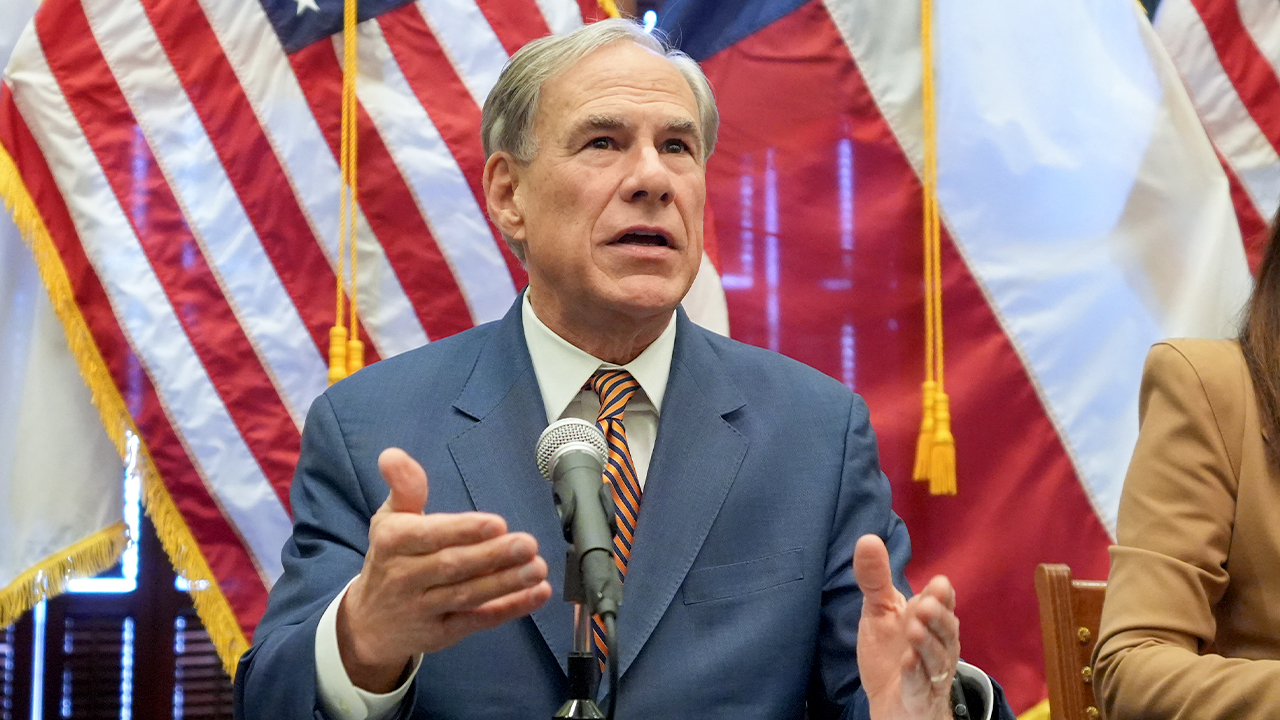
Texas Gov. Greg Abbott speaks during a news conference with U.S. Secretary of Agriculture Brooke Rollins at the Texas Capitol in Austin on Aug. 15, 2025. (Jay Janner/Austin American-Statesman via Getty Images / Getty Images)
Heightened tensions followed a deadly shooting in Austin early Sunday, when suspect Ndiaga Diagne, a naturalized U.S. citizen born in Senegal, opened fire near a bar in the downtown area, killing two and injuring 14 others.
Diagne wore a sweater reading “PROPERTY OF ALLAH” during the attack.
Advertisement
According to media reports, law enforcement officials found the flag of the Islamic Republic of Iran and photos of its leaders in his home.
A demonstrator holding portrait of Iran’s Supreme Leader Ayatollah Ali Khamenei reacts outside the City Hall during a protest against U.S. and Israeli attacks on multiple cities across Iran on February 28, 2026, in Los Angeles, Calif. (Qian Weizhong/VCG/Getty Images / Getty Images)
“There are other details that will be coming out about the shooter and his connections to terrorism that will make clear [that] this was a lone wolf activity where this shooter intended to wreak havoc here in Texas, here in the United States, because of his ties and sympathies with Iran,” Abbott said.
Abbott and other Republicans have long cautioned against the consequences of open borders under the Biden administration. He echoed those warnings during his FOX Business appearance, telling Maria Bartiromo the shooting raises other questions.
Versant signage on the floor at the New York Stock Exchange on July 21, 2025.
Michael Nagle | Bloomberg | Getty Images
Versant Media Group will release its first earnings report as a public company on Tuesday, giving Wall Street its first glimpse inside a company made up primarily of pay-TV networks.
Advertisement
The Comcast spinoff — comprised of CNBC, MS Now, USA Network, Golf Channel, Syfy, E! and Oxygen, as well as digital properties including Fandango, Rotten Tomatoes, GolfNow and Sports Engine — debuted on the Nasdaq in January after one of the media industry’s most significant transactions in recent years.
The company’s first-ever quarterly results will provide more detail into a portfolio of assets that were long embedded in Comcast’s NBCUniversal TV results. They will also test Wall Street’s appetite for cable TV at a time when the market has faced deep pressures.
Ahead of going public, Versant released financials that showed declining revenue in recent years. Versant’s assets generated $7.1 billion in revenue in 2024, down from $7.4 billion in 2023 and $7.8 billion in 2022, according to a Securities and Exchange Commission filing.
Versant’s stock has dropped about 25% since its January debut, weighed down by expecting selling related to the spinoff. The company’s market capitalization stands at roughly $4.8 billion.
Advertisement
Pay-TV pressure
It’s a rarity these days to see pure-play media stocks going public — especially those made up solely of TV networks. Last year Newsmax, the conservative cable news network, began trading on the New York Stock Exchange. Its shares initially soared before falling precipitously since its debut.
Versant makes more than 80% of its overall revenue from pay-TV distribution. While that business is still profitable, the longtime cash cow for the media industry has been declining as customers flee the bundle for streaming alternatives.
“At Versant, 62% of our audience comes from live programming across sports and news,” CEO Mark Lazarus said during the company’s investor day in December.
“We feel very confident in our position. And the last year, the deals we’ve done, I think bears that out,” he added.
Advertisement
Versant’s sports- and news-heavy content slate has been a key part of its pitch to investors — as has its light debt load and its emphasis on digital properties as future drivers of revenue and earnings growth.
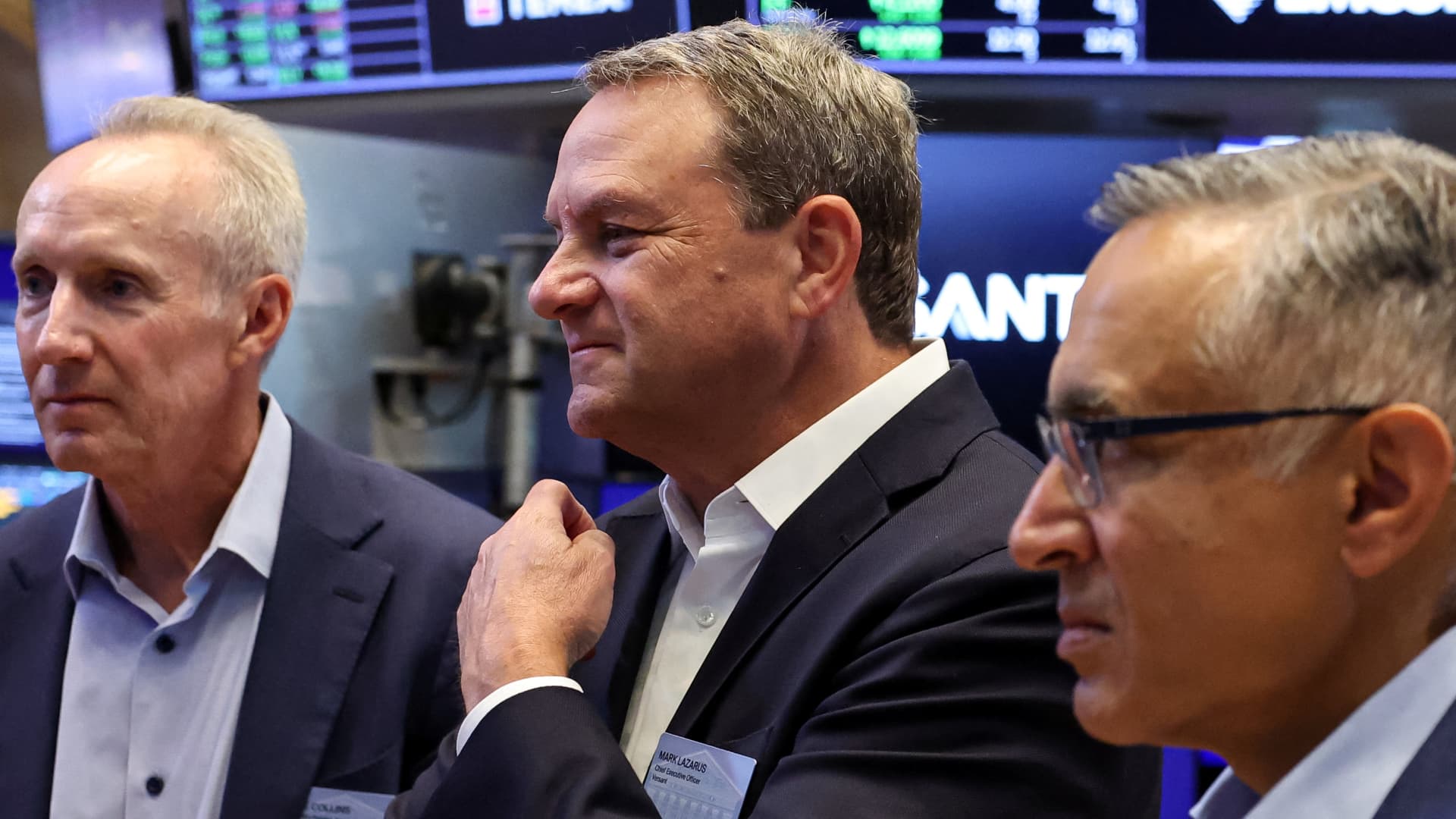
Mark Lazarus, CEO of Versant, visits the floor at the New York Stock Exchange (NYSE) in New York City, U.S., July 21, 2025.
Brendan Mcdermid | Reuters
“Sports and news focus is positive, as Versant has far fewer of the lower-value general entertainment networks that some peers do,” Raymond James analysts wrote in a research note earlier this year. “While Versant lacks ‘Tier One’ sports like NFL, NBA, college football, etc., we think its sports lineup (significant golf rights, WWE, NASCAR, etc.) combined with MS NOW, CNBC, and other networks, supports VSNT’s value to distributors.”
Advertisement
Prior to its spinout, NBCUniversal negotiated carriage agreements with most major distributors, like Charter Communications and Google’s YouTube TV, that included Versant’s networks. Those agreements hold for at least the next two years even after the spinout — an important cushion as these negotiations have become increasingly fraught and can lead to content blackouts.
“More than half of our pay TV subscribers are governed by agreements that go through 2028 and beyond … many of our sports agreements … go well past 2030,” said Anand Kini, Versant COO and CFO, during the investor day. “We view this as really important because the long-term nature of these partnerships highlights the stability of our business and also provides great visibility in the years to come.”
Versant networks will face the first test on their own at the negotiation table this year when two distribution agreements come up for renewal, according to people familiar with the matter, who spoke on the condition of anonymity because they weren’t authorized to speak publicly. A Versant spokesperson declined to comment on the upcoming discussions.
Typically, news and sports networks hold more weight during such negotiations, but blackouts are becoming more common, even for those with top tier rights such as the NFL.
Advertisement
‘Business model transition’
Yet the traditional TV bundle has shown a glimmer of stability recently, despite the focus on streaming.
Charter, one of the largest distributors of the bundle in the U.S., reported an addition of cable customers in the quarter ended Dec. 31 — its first quarterly gain since 2020.
Comcast and other distributors, however, still reported customer losses — albeit at a slower rate than recent declines. That’s a sign of possible stabilization, according to Craig Moffett, analyst at MoffettNathanson.
In light of its weight toward traditional TV networks, Versant’s leadership has told Wall Street it’s in the midst of a pivot.
Advertisement
“We view 2026 as the first year of our business model transition,” Kini said in December.
Versant executives told Wall Street of their intention to invest in its direct-to-consumer products and ad-supported TV expansion, among other growth initiatives.
Long term, executives are targeting a future in which 50% of Versant’s revenue is derived from pay TV and the other 50% comes from digital, platform, subscription, ad-supported and transactional businesses.
M&A is another part of the equation, although bulking up on linear TV networks is not in the plan, executives have said. Already, the company has announced deals such as the acquisition of Free TV Networks, a provider of free over-the-air digital broadcast networks, and Indy Cinema Group, a cloud-based cinema operating system, which was folded into Fandango.
Advertisement
The question, however, is whether Wall Street has the patience to see the business evolve past its focus on the bundle.
Analysts that have initiated coverage of Versant list the various highlights of the business, from strong free cash flow to a portfolio heavy on sports and news, while still voicing some hesitation.
“We are Neutral-rated on VSNT given the secular challenges in the linear networks business, while [remaining] encouraged by the company’s efforts in the platforms business,” Goldman Sachs analysts said in research note in January.
The building society saw an increase in both revenues and profits during 2025
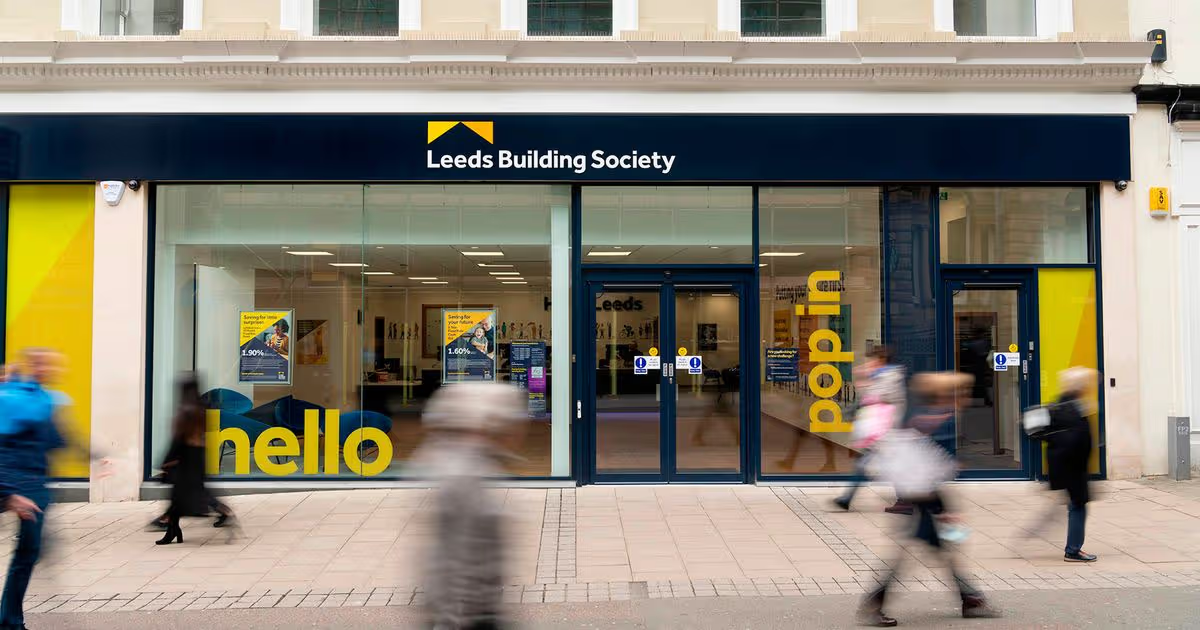
A Leeds Building Society branch(Image: Taken from the Leeds Building Society image library. https://www.leedsbuildingsociety.co.uk/press/im)
Leeds Building Society has reported a year of strong performance that saw it reach the milestone of having a million members.
The society has released its annual report for 2025 in which total income rose from £355.6m to £412.5m. Over the same period, operating profit increased from £137.5m to £198.6m.
As well as getting to a million members, the society’s savings balances rose to £26.1bn, though new mortgage lending cooled slightly.
The society said that its Income Plus range, which has a loan to income ratio of 5.5 times, had helped 900 first time buyers.
Advertisement
It also highlighted efforts to invest in its branch network, completing refurbishments in Harrogate, Halifax, North Shields, and relocating its South Shields branch. As part of its community involvement, it awarded more than £1m to 270 charities and community groups, as well as hitting a £300,000 fundraising target for the children’s charities Barnardo’s ahead of schedule. The target has now been increased to £500,000.
Annette Barnes, interim chief executive officer of Leeds Building Society, said: “Our performance in 2025 shows that our society is both financially strong and is moving confidently into the future. Over the past year we’ve made significant progress in upgrading our technology, including testing our first savings accounts and mortgage applications on our new system.
“We’re committed to providing our members with innovative products and the long-term support they need: faster and more intuitive digital experiences, alongside the personal, human interaction that remains so important to many. Development of our mobile app is also underway and is a key priority in 2026.
“We remain steadfast in delivering on our purpose of putting homeownership within reach of more people, generation after generation. Helping people buy their first home is one of the most important roles we play as a mutual, and we’re proud that nearly half of our new mortgages in 2025 supported first time buyers.”