ET Intelligence Group: Funds raised by asset management companies (AMCs) through new fund offers (NFOs) continued their year-on-year slide in the June 2026 quarter for the sixth consecutive period to reach a five year low of ₹1,759 crore. NFO collections fell 73% from the year-ago level of ₹6,506 crore, according to data from the Association of Mutual Funds in India (AMFI). On a sequential basis, too, they fell for the third consecutive quarter, this time by a sharp 83.5% from the prior quarter’s collection of ₹10,661 crore.
The sharp slowdown followed weak sentiments in the equity market during the preceding quarter. The BSE Sensex had fallen nearly 16% to 71,947 by the end of March, amid escalating geo-political tensions in West Asia. Retail investors often take cues from recent market performance while making investments. Although market sentiment improved in the June quarter, with the Sensex rising nearly 5% to 76,479 by the end of June, the recovery did little to revive NFO fundraising.
“NFO activity is closely linked to market sentiment and performance. During rising markets, positive returns tend to improve investor confidence, encouraging AMCs to launch more new schemes and attracting greater retail participation,” Rishi Kohli, chief investment officer, Jio BlackRock Asset Management told ET, adding that the impact of market conditions is not uniform across all NFOs. Schemes launched by established AMCs and managed by fund managers with a proven track record, or NFOs offering product differentiation can continue to attract investor interest even during volatile periods.
Agencies
Passive funds dominated new launches in the June 2026 quarter. Of the 31 NFOs launched by AMCs, 26 were index funds and ETFs, which collectively mobilised Rs 1,024 crore.
Live Events
AMFI data indicates that the first quarter of a financial year has historically been a weak period for NFO mobilisation compared with the rest of the year. SIP inflow, on the other hand, has remained largely unfazed by stock market volatility, reaching Rs 31,115 crore in April, Rs 30,954 crore in May and Rs 31,781 crore in June. “The headline strength in SIP inflow is driven largely by contributions from new mutual fund investors,” Swarup Mohanty, CEO of Mirae Asset Investment Managers told ET citing that a section of existing investors, however, has either paused or reduced investments amid heightened market volatility. Mohanty expects SIP inflow to strengthen further from the current `25,000-30,000 crore monthly range, eventually reaching `40,000 crore a month over the next two years.
Jammu and Kashmir Bank reported a 12.6% drop in first quarter net profit at Rs 424 crore against Rs 485 crore in the year-ago period, on account of higher provisions, prompting a near 13% plunge in share price.
The fall in net profit was despite a Rs 56 crore gain due to change in accounting policy effective April 1, according to the bank’s regulatory filing to stock exchanges.
The net interest margin for the quarter compressed to 3.28%. Net interest Income rose 2% at Rs 1497 crore.
The share price nosedived 12.8% to Rs 154.6 on BSE, reacting to the pressure on profitability.
Advertisement
The pre-provision operating profit for the quarter stood 4.5% higher at Rs 703 crore against Rs 673 crore earlier. The bank made a higher provision of Rs 84 crore against Rs 15 crore.
Live Events
Its asset quality meanwhile improved with gross non-performing assets ratio falling to 2.4% at the end of June from 3.5% a year prior. Net non-performing asset ratio was at 0.60%. Managing director Amitava Chatterjee said that the bank chose to support business momentum with selective corporate lending at lower yields in a changing operating environment which saw a rise in bond yields shifting corporates’ focus to bank borrowing.”This is partly on account of a tactical response to the prevailing market opportunities and economic conditions, wherein we exhibited a conscious preference for selective lending to well-rated corporates with sound fundamentals. That said, the strategic positioning of the bank as a retail-focused bank remains unchanged,” Chatterjee said in a post-earnings analyst call.
The bank’s advances grew by 25% year-on-year to Rs 1.31 lakh crore at the end of June while yield on advances for the quarter under review stood lower at 8.56% against 9.35% for the corresponding period last year.
Its deposits increased by 17% year-on-year to Rs 1.73 lakh crore.
Commercial aviation is running two clocks at once. On one hand, Boeing and Airbus are effectively sold out for the better part of a decade. On the other hand, airlines need to put passengers in seats this summer. The gap between the two — between the planes the world has ordered and the planes it can actually fly – has become one of the most consequential stories in the global economy. It is also the gap Demetrios Bradshaw built a company to fill.
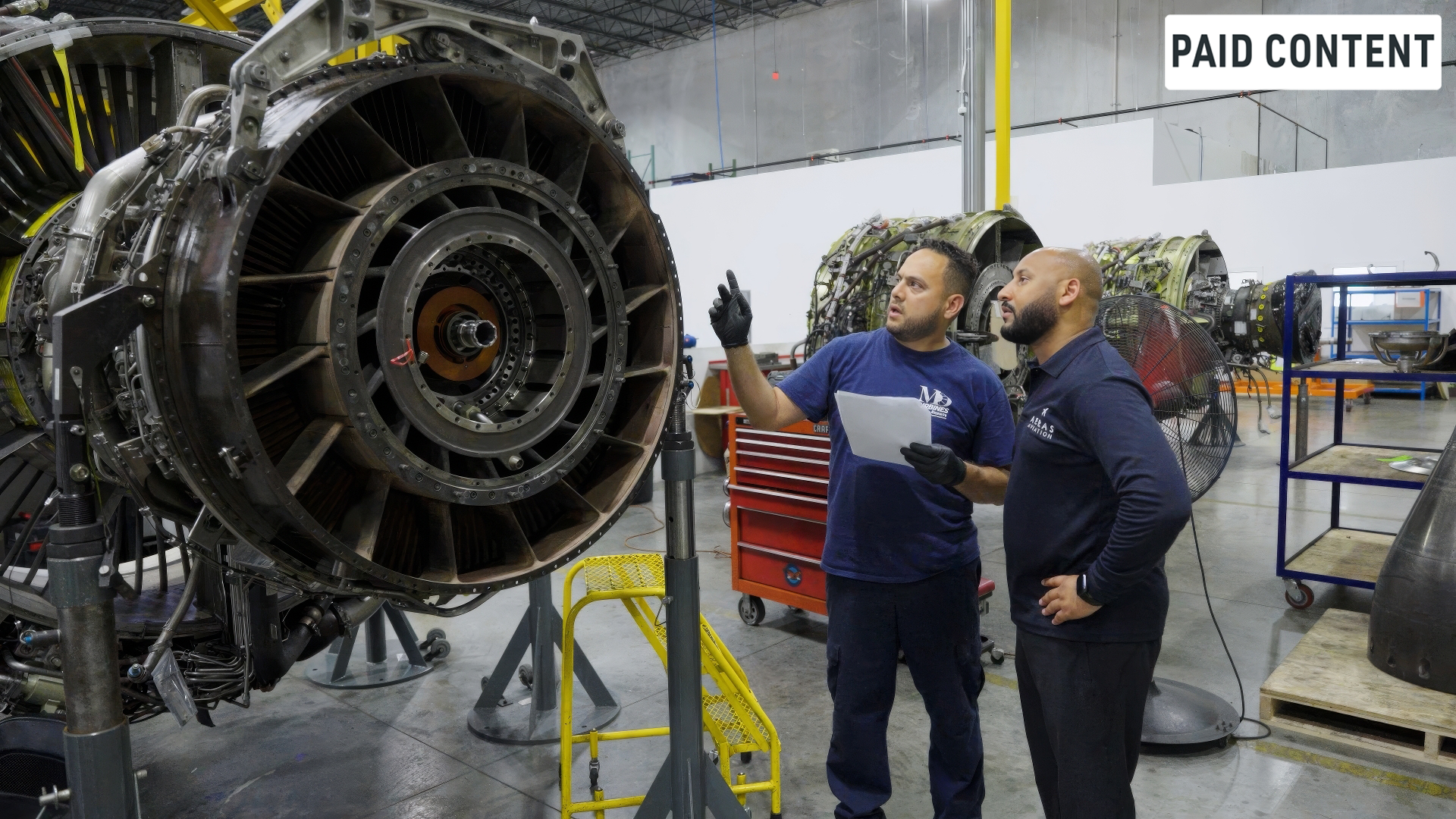
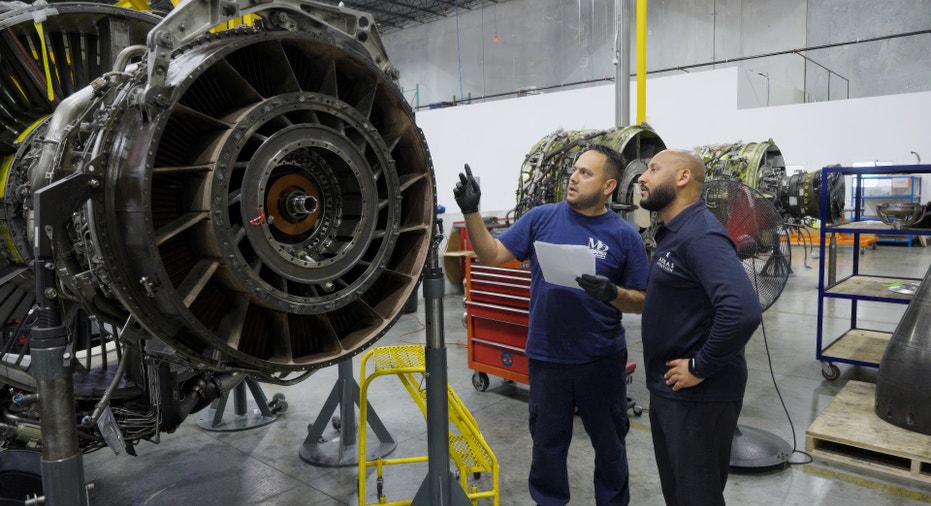
As founder and CEO of Aeras Aviation, Bradshaw runs a global engine and aircraft asset-management firm that sources, leases, repairs and remarkets the engines and assets airlines need to keep existing fleets aloft while they wait years for new aircraft. Where the manufacturers sell the future, Aeras trades in the present — the spare engine, the serviceable used part, the “green time” left on a mid-life powerplant that lets a grounded jet fly again this quarter rather than next year.
Inside Aeras Aviation: how the company keeps global fleets flying
A backlog measured in decades
The numbers are staggering. Airbus and Boeing are sitting on a combined order backlog of roughly 15,800 aircraft — close to ten years of production at current build rates. New narrowbody delivery slots are now being quoted into the late 2030s and, for some configurations, the 2040s. An airline that orders a fresh A320neo or 737 MAX today may not take delivery until a child born this year is finishing high school.
Advertisement
Hundreds of jets, grounded and waiting
Even the aircraft already in service aren’t all flying. A powder-metal flaw in Pratt & Whitney’s geared turbofan engine — the powerplant on a large share of the A320neo family — has forced accelerated inspections of critical components. At its worst the issue has parked roughly 38% of the global A320neo fleet, with shop visits that once took 60 to 90 days now stretching past 300, and the maintenance queue running into 2027 and 2028.
“The most valuable asset in aviation isn’t the one on the order book — it’s the one that can fly next week,” Bradshaw says. “Our entire business is built around keeping good assets in service and getting stranded ones back in the air.”
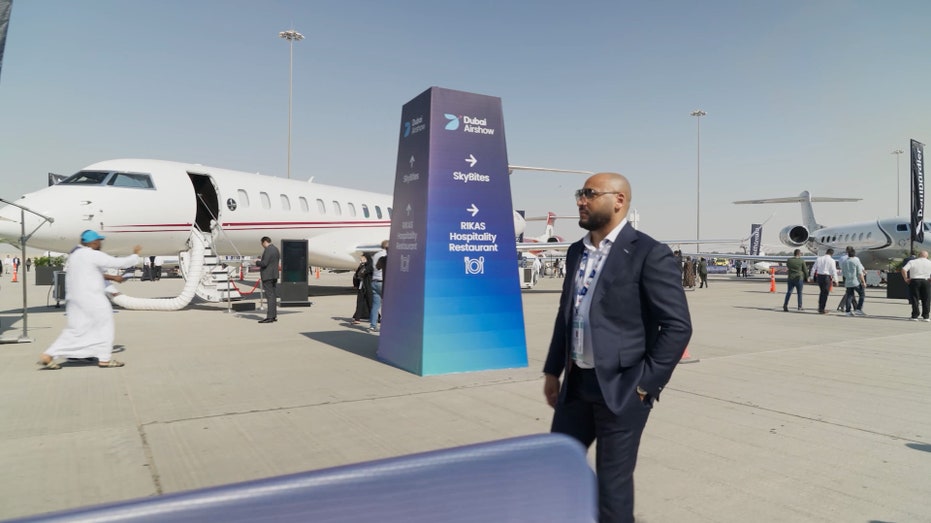
Demetrios Bradshaw CEO of Aeras Aviation at the Dubai Air Show
The new economics of ‘green time’
Advertisement
For most of modern aviation history, an aircraft was a depreciating asset: fly it, age it, retire it. The current squeeze has bent that curve. Aircraft and engine values, along with lease rates, are sitting at multi-decade highs as airlines and lessors fight to keep older airframes in service years longer than planned. A serviceable engine has become a strategic instrument rather than a spare part — and the disciplined reuse of high-value assets has moved from the back office to the boardroom.
“Every conversation about fares, capacity and route cuts eventually comes back to one question,” Bradshaw notes. “Can you get the lift? If you can’t source the engine, the rest of the strategy is theoretical.”
A bet on the United States
Bradshaw is now expanding Aeras into the American market, with new logistics, storage and engine-management capacity announced earlier this year — a deployment of capital that doubles as a read on aftermarket demand. His vantage point is unusually wide: Aeras works across the Middle East, Europe, Asia and Africa, and Bradshaw sits on the board of Air Botswana, giving him a direct line into emerging-market aviation, where fleet growth and financing look very different from the picture in New York or London.
Advertisement
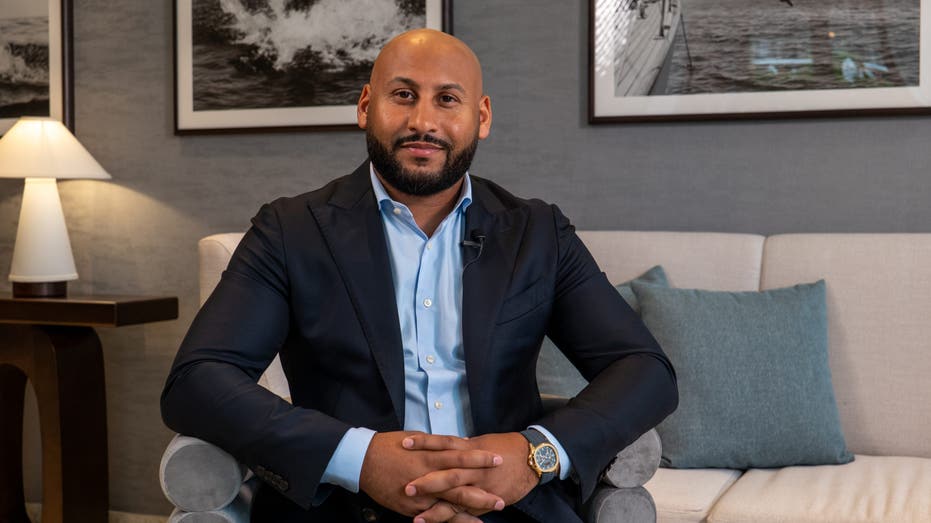
Demetrios Bradshaw CEO of Aeras Aviation
Four forces are colliding in commercial aviation in 2026: a sold-out production pipeline, a historic engine-maintenance backlog, fuel-price volatility and asset values at generational highs. Each alone would be a story; together they have rewritten the economics of flying. As the manufacturers work through a decade of orders and Pratt & Whitney works through its queue, the businesses that keep today’s fleets in the air are no longer a footnote to the industry — they are its pressure valve. Demetrios Bradshaw built one of them, and from a seat in the middle of the deals, he has a clear view of where all four clocks point next.
Demetrios Bradshaw is the founder and CEO of Aeras Aviation, a global aircraft engine and asset-management company serving airlines, lessors and OEMs across the Middle East, Europe, Asia and the United States. He serves on the board of Air Botswana and advises on aviation strategy across emerging markets.
Denbighshire-based Wynne Construciton has an order book in excess of £325m.
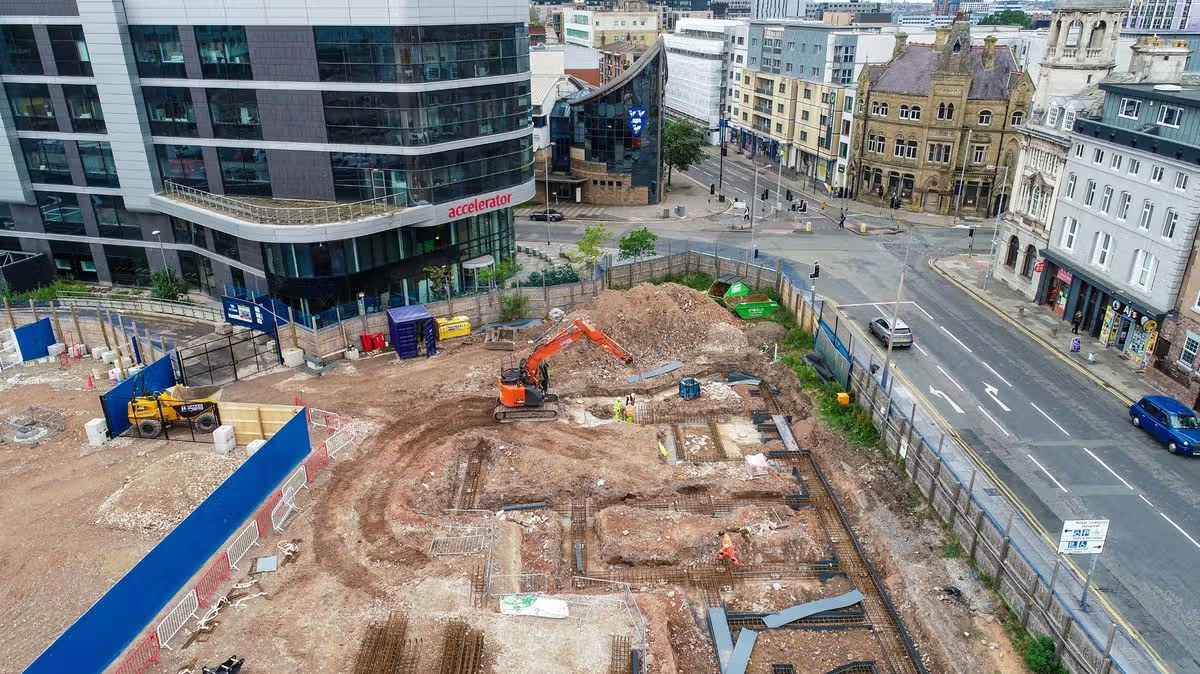
Work on the £4m Maggie’s Centre in Liverpool.
A North Wales construction company is celebrating its centenary year with an order book in excess of £325m.
Bodelwyddan-based Wynne Construction currently has £228m of work on site, alongside a further £99m of secured schemes progressing through pre-construction stages.
The projects, which span education, healthcare, housing, leisure and wellbeing, heritage, and low-carbon innovation, are across Wales and the North West of England.
With schemes extending into 2030, the family-owned firm says the strong pipeline is enabling the business to plan confidently for the years ahead.
Advertisement
Among the projects currently being delivered, and those located across the four corners of Wales, are the £26m leisure and wellbeing centre in Newport, the £13m Ty Haverfordia scheme building apartments for over 55s in Pembrokeshire, the £31m Aethwy Care scheme to provide a residential care home and integrated health and social care facilities in Anglesey, and the £11m new build archive centre for Denbighshire and Flintshire councils.
Other significant schemes progressing under Wynne Construction’s expertise include the £4m Maggie’s Centre in Liverpool, which will provide dedicated facilities for people affected by cancer.
Chris Wynne, managing director at Wynne Construction, said: “We are proud to be delivering such a diverse range of projects in Wales and the North West of England.
“While the individual buildings are very different, they are being designed and built to provide long-term benefits for the people and communities that will use them.
Advertisement
“Many of these schemes are also being delivered in partnership with long-standing clients and supply chain partners. These relationships are extremely important to us and are central to the successful delivery of our work.
“A strong forward order book is important not only in financial terms, but also because it gives confidence to our workforce and supply chain. We are able to plan resources, develop our teams, and invest in skills, training, and employment opportunities.”
The secured work reflects Wynne Construction’s continued presence across public sector frameworks and its experience delivering technically complex and flagship projects.
During this year, the company has continued to add to its pipeline with the announcement of a series of significant design and build projects.
Advertisement
This includes an affordable homes scheme in Bodelwyddan, the redevelopment of Ysgol Pendref primary school and Denbigh High School in Denbighshire, and the Egni project at the Bangor University-led Menai Science Park (M-SParc) in Anglesey.
Mr Wynne said: “Reaching our centenary is an important milestone for us. The construction industry continues to face challenging market conditions, including cost pressures and wider economic uncertainty, so to enter our 100th year with a strong and diverse order book is particularly positive.
“We are extremely grateful to our clients, consultants, supply chain, and particularly our employees, who continue to place their trust in us. We are looking forward to delivering this exciting programme of projects.”
The company is appointed to a number of key frameworks, including the North Wales Construction Partnership (NWCP), Pagabo, SEWSCAP, South West Wales Regional Contractors Framework (SSWRCF), Welsh Procurement Alliance, Westworks, and RNLI.
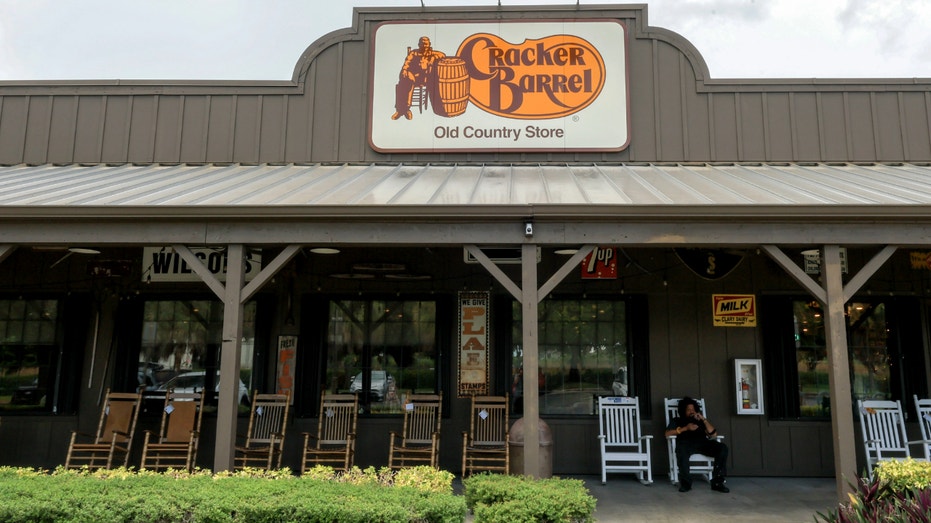
Hometown customers in Lebanon, Tennessee, share their thoughts on Cracker Barrel scrapping its newly unveiled text-only logo to keep its long-standing “Old Timer.”
Cracker Barrel is set to pay outgoing CEO Julie Masino several million dollars in severance pay after her departure from the company, while also covering security costs for a period of time.
The restaurant chain announced on Monday that Masino would step down as CEO on Aug. 10 and will remain with the company in an advisory role until Oct. 9. David Deno will replace her as CEO.
Advertisement
The company disclosed in a transition agreement filed with the Securities and Exchange Commission (SEC) that Masino will receive $4.63 million over the two years following the end of her employment at Cracker Barrel.
The filing also indicated that Cracker Barrel will continue to pay for Masino’s protective services for a “reasonable period of time” after the end of her advisory role with the company.
Cracker Barrel disclosed the terms of outgoing CEO Julie Masino’s severance package in a filing. (Jeenah Moon/Reuters)
Masino’s departure comes after an unsuccessful attempt to rebrand the restaurant chain last year sparked blowback from customers and impacted the company’s sales.
Advertisement
Among the changes pursued prior to the reversal was the removal of the “old timer” from the company’s logo, as well as adjustments to the interior layout of the restaurants that have long included a general store.
The rebrand was part of a $700 million overhaul across the company’s 660-plus restaurants, which also included a revamped menu and decluttered dining rooms.
In the company’s announcement of the leadership transition, Carl Berquist, the independent chairman of the Cracker Barrel board, thanked Masino for “her leadership and commitment to Cracker Barrel.”
Advertisement
Berquist added that the company appreciates “her partnership to ensure a smooth leadership transition as we remain focused on the work underway to continue to serve our guests, support our employees, and execute our strategic priorities.”
Cracker Barrel’s announcement also included a statement from Deno, who said the chain is a “truly iconic American brand, defined by its unique combination of warm country hospitality, timeless appeal, and deep connection with guests across generations.”
Cracker Barrel is seeing traffic improvements, though it remains below what it was before the rebranding controversy. (Joe Raedle/Getty Images)
Masino’s departure and her upcoming replacement by Deno comes as the company is still struggling to return traffic to where it was before the rebranding controversy.
Advertisement
The company said in its third-quarter earnings last month that traffic was improving relative to the recent trend; it remained lower than where it was in the prior year.
Cracker Barrel CFO Craig Pommells noted that comparable store sales decreased 2.6%, with traffic down 6.7%, though he added that, “Although traffic remained negative, we are encouraged by the gradual improvement in the underlying trend.”
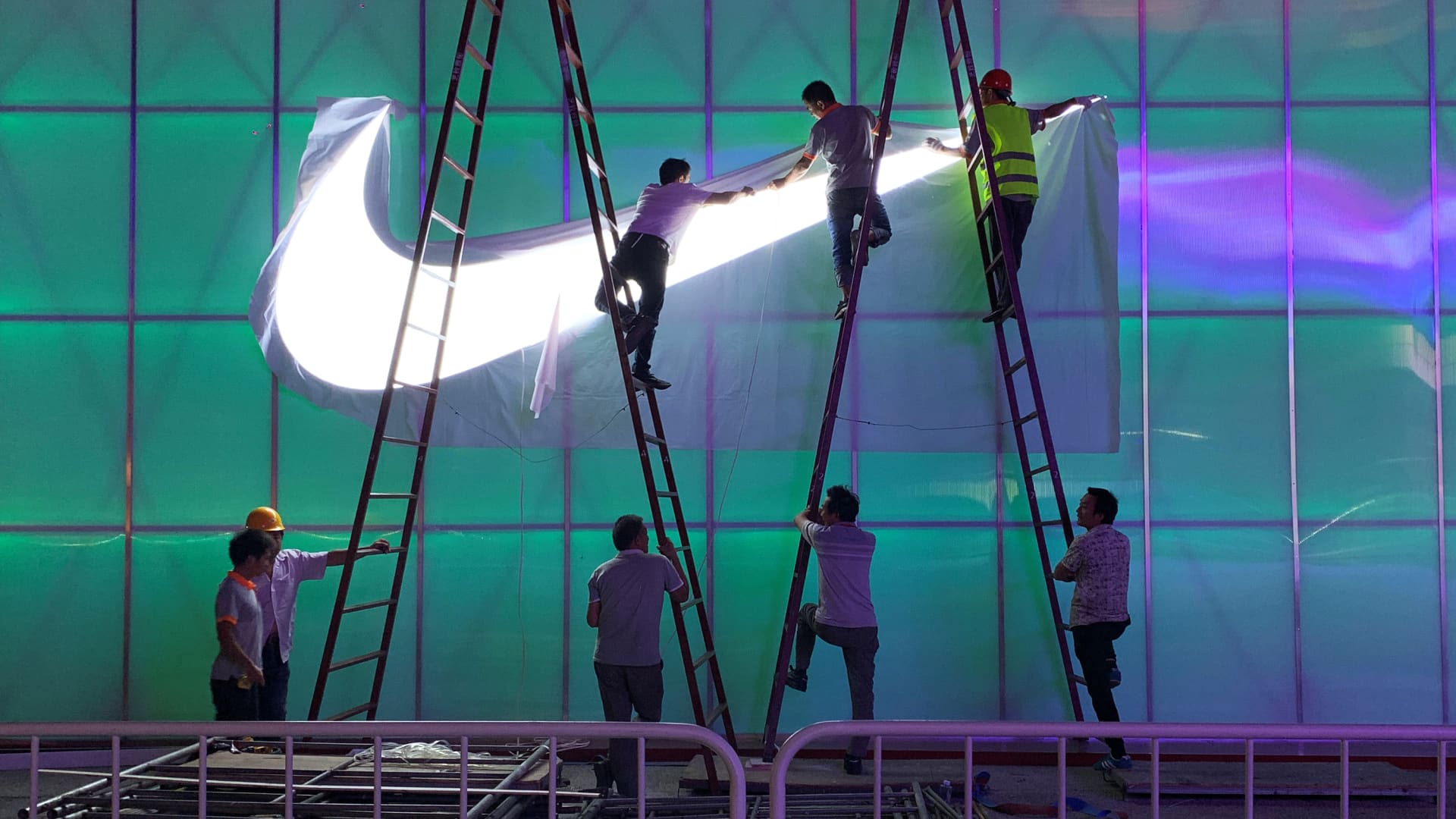
Workers install a Nike logo lamp outside the Wukesong Arena in Beijing, Aug. 28, 2019.
Tingshu Wang | Reuters
By all accounts, Nike’s business in China should be firing on all cylinders.
Advertisement
Sports-related products are the fastest growing consumer category in China and participation in sports and exercise is at its highest level in decades. The overall sportswear market has ballooned 51% in the past five years, fueled by a new focus on healthy living, according to GlobalData.
But instead of thriving during China’s sports renaissance, Nike’s business in the region is languishing. Sales have fallen from the prior year eight quarters in a row, and the overall business has shrunk 30% since 2021, with annual revenue hitting its lowest level in eight years at the end of May.
China was once Nike’s fastest-growing region, beloved by investors for its high margins and potential for sustained growth. Now, it’s the company’s smallest market and has become a drain on a global turnaround that some on Wall Street believe is taking too long.
Some U.S. analysts expect Nike’s China business to recover once its North America operations stabilize, but experts on the ground told CNBC its challenges in the region are deeper, and far different, from what it faces at home. Young Chinese shoppers are increasingly choosing domestic brands over expensive foreign names as part of a larger “China Chic” movement, and consumers are hungry for a localized assortment — not the same product that’s being replicated from Utah to Shanghai. Nike is also working to overhaul its distribution model in China, which critics say has become messy, overly complex and driven by discounts.
Advertisement
“In a way, Nike has just become irrelevant,” said Yaling Jiang, the founder of consumer research firm ApertureChina and an expert on the Chinese consumer. “I don’t think young people can remember what’s the last new thing they’ve done. But if you mention Adidas to them, they will tell you about … their pet clothes, pet jerseys, or their China jackets.”
During its most recent earnings call, Nike’s outgoing finance chief Matt Friend couldn’t say when the China business would return to growth, telling analysts that revenue trends in the near term “will be in line” with recent performance and “profitability will bottom before sales.”
In January, Nike CEO Elliott Hill announced Cathy Sparks, a 25-year Nike veteran, would become the next vice president and general manager of Greater China, reporting directly to him.
In an interview with CNBC, she said Nike is taking the steps it needs to reconnect with Chinese consumers.
Advertisement
“The one thing that I have certainly learned over the last six months is that the Chinese consumer has changed and they have high standards for what they want through product connections, engagement with the brand,” said Sparks. “We know that if we can design footwear and apparel, lifestyle or performance, that’s specifically targeted towards the unique needs of Chinese consumers, we’ll drive full price revenue.”
A Nike spokesperson pushed back on the idea that the company has lost relevance in the region and said what’s changed is younger shoppers are looking for “hyperlocal connections,” including through events and broader cultural moments.
“Nike has been in China for more than 40 years, and from day one, our approach has been to start with local consumer insight and turn that insight into inspiration, innovation and storytelling that can spark movement,” the spokesperson said.
How ‘China Chic’ changed the sneaker market
When Nike turned to China as its next major growth market in the mid-2000s, it won by largely replicating its global strategy and betting that popular clothes and shoes in the Western world would also land with Chinese shoppers.
Advertisement
For a time, the bet was right.
“The premium brand at the time that was available was Nike. Nike was just clearly better. They had cooler designs. They were more expensive. There was more brand cache,” said a retail consultant based in Shanghai who advises domestic and international brands, including Deckers and Adidas, and asked not to be named to protect client relationships.
“If you go back to the early 2000s, if consumers had some money to spend, they were really quite image conscious. They wanted to show that they had whatever the nice thing was and at the time, Nike was it.”
By the end of fiscal 2021, Nike’s annual revenue in China hit an all time high of $8.29 billion. But in the backdrop, the tide was starting to shift against Western brands.
Advertisement
A general view shows a Nike store in Guangzhou, Guangdong Province of China, July 22, 2026.
Qin Zihang | Visual China Group | Getty Images
In March 2021, a previous statement Nike made saying it was “concerned” about reports of forced labor in the Xinjiang region resurfaced, leading some Chinese consumers to call for a nationwide boycott and post videos online of them burning their sneakers. Popular Chinese actor Wang Yibo terminated his contract as a representative for Nike as domestic competitors Anta and Li-Ning doubled down on their use of Xinjiang cotton, using the conflict as a nationalistic marketing opportunity.
The controversy, which also impacted other Western brands that put out similar messaging, helped supercharge a political campaign that Chinese President Xi Jinping started years earlier called Guochao, or “China Chic” in English. It was designed to drum up pride in Chinese made and designed products and promote domestic brands over international ones.
Advertisement
“In line with the period of 2010 to just before Covid, people did feel like maybe they were inferior if they wear Chinese brands … but the elevating cultural confidence campaign really shifted that mindset,” Jiang said. “What this political campaign does is it also encouraged a lot of e-commerce platforms, including Alibaba’s Taobao, Tmall and JD.com, to have a separate section just for the China Chic brands and … people started adopting this China Chic mindset and started feeling like owning something from your own culture is cooler than owning foreign brand.”
Now, many younger consumers feel more connected to domestic brands like Anta and Li-Ning over premium, foreign brands like Nike, said Tracy Dai, the director of operations at consulting firm China Skinny, which helps overseas companies enter China or expand there.
“Years ago when you’re talking to a high school boy asking which sports shoes you may want, they probably say Nike or Adidas, but right now if you ask them, they say Anta or Li-Ning,” Dai said. “[Nike] probably is not that cool to them anymore.”
A Nike spokesperson said all brands in China are facing intense competition and a “more demanding consumer environment” and it believes its efforts to reset the region “put us on the right path to win back consumers.”
Advertisement
Beyond nationalism, Nike’s decline in China is also about value.
In the 20 years since Nike started supercharging its expansion in China, domestic brands have gotten better at production, marketing and brand building.
At the same time, Chinese consumers have become more practical and selective, prioritizing value and innovation over branding, said Wei Kan, who spent around 15 years at Nike and Converse in China and Taiwan before starting his own brand consultancy firm Conduit Asia. As shoppers become more involved with sports and niche fitness activities, highly technical products are becoming more popular than Nike’s assortment.
“Nike is still more like a global, generalist brand at this moment. At the same time, a lot of products, the innovation pipeline is actually slower than the local brands and also the competitors,” said Kan. “Chinese consumers are very sophisticated compared with like five or 10 years ago … it all goes back to how the consumer perceives what kind of value they want to get from a shoe.”
Advertisement
Nanjing styles via Portland, Oregon
While domestic brands have become major market leaders in China, some international brands are still winning, too. Lululemon‘s comparable sales, which exclude new store openings, grew 20% in China in fiscal 2025, while Adidas brand revenue grew 13% in the region during the same period.
Similar to Nike, Adidas had seen its business dramatically slow in China, but it’s now growing again after the company shifted its focus to local product creation, decentralized decision-making and empowered local teams.
For example, Adidas’s local team designed and released its mega-viral Chinese Track Top jacket earlier this year in celebration of the Chinese New Year. The jacket sold out within 27 minutes and became a global phenomenon, with some on social media saying they flew to China specifically to buy the item or spent hundreds to snag one through reseller sites like StockX.
It’s also nailing local marketing. Recently, Adidas botched a translation on its website in the product description for a jacket and ended up becoming a viral meme. Rather than ignoring the meme, it created a T-shirt with the mistranslation on the front, Jiang said.
Advertisement
Meanwhile, experts said Nike has struggled to create the same kind of localized products and marketing. During the World Cup, its marketing campaigns came off as similar to what it was doing a decade ago, said Jiang.
Part of the issue is that the Greater China team gets limited autonomy to release products and campaigns quickly without oversight from the corporate office in Portland, analysts said.
“So everything, especially in terms of design, everything is actually coming from global,” said Kan, who worked in marketing and branding for Nike and Converse in the region before leaving the company in November 2024. “There are very limited room for the local teams to build and also design the locally relevant products to the consumers. I think that is actually the biggest issue for the Chinese consumers here.”
When asked about Nike’s decision-making being concentrated at its headquarters, Sparks said the characterization was “not unfair” but added there is “nobody checking any of this work telling us yes or no.”
Advertisement
“I have felt from the moment I’ve landed in China that our local team has full autonomy to do what we need. Of course, working within the guardrails that are brand right,” said Sparks. “I’m seeing that come to action with the marketing that we’ve put out. We are localizing retail concepts. The product design that you’re gonna see from this team is really authentically Chinese, very relevant.”
Last week, Sparks announced the company had hired its first-ever Greater China vice president of local product creation, who will be focused on building an assortment that’s designed, developed and made in China for Chinese shoppers.
The company plans to start with two lifestyle capsules — one for Nike sportswear and one for Jordan streetwear — that’ll be ready in time for the holidays, followed later by performance apparel and footwear.
“We’ll be doing this over the next 18 months, bringing all these new capabilities on board so that we can complement global innovation with local innovation needs, styling needs, fit needs, even color, which can be unique in China,” said Sparks.
Advertisement
Why Nike is resetting China distribution
Marketing and localization aside, Nike’s China distribution model has become a complex web that Sparks is now working to unwind after the company allowed its brick-and-mortar distributors to start selling online during the Covid-19 pandemic even though their distribution agreements didn’t include digital.
“What we didn’t do was reset that coming out of Covid as consumers returned to brick and mortar,” said Sparks. “And because of that, it just created this incredibly fragmented marketplace where the consumer journey became really messy. Our ability to tell clear innovation stories, nearly impossible.”
Sparks said the decision to shut down those online storefronts is necessary to repair Nike’s China business, but BNP Paribas equity analyst Laurent Vasilescu estimates the change could reduce the company’s revenue by as much as $1 billion annually, representing about 17% of total sales in the region.
In response, Sparks said the change means some distribution will inevitably go away but “we believe we’ll be able to replace total value with full-price sales and a more premium experience.”
Advertisement
“We actually believe it is critical. If we don’t reset is where the long-term impact will continue to slide in a direction that we don’t want to see,” said Sparks. “We don’t actually believe that we will have a long-term negative impact. We think it’ll be stronger.”
The UK’s first Vocational Celebration Day will take place on Thursday 6 August, nine days after Prime Minister Andy Burnham announced that pupils in England will be offered technical education pathways from the age of 14.
The event is organised by Enginuity, the engineering and manufacturing skills charity, and EAL, its awarding and end-point assessment organisation. It will be hosted by the broadcaster Steph McGovern from Teagle, an agricultural machinery manufacturer in Truro, Cornwall.
Enginuity said the hour-long programme, a special edition of the Steph on Skills podcast, will be streamed live on YouTube and social platforms at 10am, provided free of charge to news organisations, and will feature learners, employers, educators and government figures.
The charity said the day will be marked annually on the first Thursday of August, placing it a week before A-level results day.
Burnham set out the technical pathways on 28 July. According to the Prime Minister’s Office, students from Year 10 will be able to combine core academic subjects including English, maths and science with technical education linked to jobs available in their area, alongside work experience and employer-set projects. The Government said it wants to begin rolling out the routes from September 2028.
Advertisement
“From today, Britain will value the hard hat every bit as much as the graduation cap,” Burnham said. He said the school system had been built around the academic path and that this “has let down young people seeking technical qualifications”.
Ofsted will change the way it inspects schools so that inspectors recognise the quality of technical education and the support given to young people preparing for work, the Prime Minister’s Office said. Regional mayors, local leaders, schools, colleges and employers will shape the pathways, with employers expected to provide mentoring, workplace visits and work experience.
The announcement follows Alan Milburn’s interim report, which warned that Britain risks a “lost generation”. Official figures published in February showed 957,000 people aged 16 to 24 were not in education, employment or training in the final quarter of 2025, or 12.8 per cent of the age group.
Ann Watson MBE, chief executive of Enginuity, said: “We are right behind this reset in the psyche of our country.
Advertisement
“Our campaigning is starting to bring dividends to the next generation, business, education and the nation as a whole.”
McGovern, a former apprentice engineer at Black+Decker on Teesside, said: “Why should academics have all the fun and glory? We have graduation days, A Level Day, GCSE Day – now Vocational Celebration Day. I’ve been banging on for years about the need to celebrate vocational qualifications in the same way we do purely academic success stories.
“Let’s face it, vocational learners are the lifeblood of our country and yet have been left in the shadows. We want to make sure that this changes and these brilliant people get to celebrate in style.”
Enginuity’s Mind the Gap report, published on 17 June and produced by consultancy SQW, estimated that skills shortages and skills gaps cost UK engineering and manufacturing £5.2 billion a year, equivalent to around 2 per cent of the sector’s annual output. The report found around half of engineering and manufacturing SMEs reported skills gaps or shortages, with technical manual skills the capability most in demand, cited by 74 per cent of those firms.
Advertisement
Separate Enginuity research published in August 2024, based on a survey of parents and children aged 11 to 18 in 1,000 households in England, found 93 per cent of parents wanted to know more about apprenticeships and 86 per cent of children would consider an apprenticeship over a university degree.
Skills gaps extend beyond engineering. The Department for Education’s Skills Horizon Barometer found 92 per cent of manufacturing SMEs expected a skills shortfall in their business over the following year, with a third reporting the gap at entry level.
The technical pathways sit alongside the £725 million apprenticeship package announced in December, which covers the full cost of training for eligible under-25s at small and medium-sized businesses and commits to 50,000 additional placements over three years.
Amy Ingham
Amy Ingham is a reporter at Business Matters, covering UK business news with a focus on breaking news, business policy, late payments and insolvency. She joined the magazine in 2026 after completing the NCTJ Diploma in Journalism at Harlow College’s journalism school. Her recent reporting includes British Steel’s nationalisation and its impact on SME suppliers, the decline in late payments by large firms, and Insolvency Service director disqualifications. Reach her at aingham@cbmeg.co.uk.
Apple launched a hardware leasing programme provided by Klarna on Tuesday, with iPhone leases starting at $17.99 a month and the scheme available only in the United States.
Leases start at $17.99 a month for iPhone, $11.99 for Apple Watch, $24.99 for Mac and $11.99 for iPad, according to Apple.
At the end of the term, customers can upgrade to a new device under a fresh lease, buy the device with a one-time payment, or return it and exit the programme.
“At Apple, we put the customer at the centre of everything we do,” said Karen Rasmussen, Apple’s vice president of the Apple Store online, “and we’re thrilled that Apple Upgrade offers our customers, both online and in-store, a more flexible way to pay for the products they love.”
Advertisement
Apple said it will no longer offer the iPhone Upgrade Program or iPhone Payments in the United States. Customers already enrolled can lease under Apple Upgrade when eligible, use Apple Card Monthly Installments, buy outright or take carrier financing.
The monthly cost is lower than under the discontinued scheme, but customers do not own the device at the end of the term. Apple said an iPhone 17 Pro 256GB with a purchase price of $1,099 carries a typical monthly payment of $31.99 over 24 months, or $45.99 over 12 months. Under the iPhone Upgrade Program the same model cost $57 a month over two years, with ownership at the end of the term. That programme also required customers to buy AppleCare cover; under Apple Upgrade, AppleCare is optional.
Applicants are subject to a soft credit inquiry that does not affect their credit score, and no security deposit is required, Apple said. Its terms state that customers may incur substantial fees for terminating a lease early, and that a lease not ended, upgraded or bought out converts to a month-to-month arrangement for up to six months, during which payments may increase.
Leases are available only to US residents and cannot be taken out through Apple at Work for small businesses or enterprises, or through Apple’s education, government or employee purchase programmes, according to Apple’s terms. Apple has not announced a UK launch. Klarna already offers instalment payments to UK consumers through partners including Airbnb, which introduced Pay Over Time with Klarna for UK guests in 2023.
Advertisement
In the UK, the Financial Conduct Authority began regulating deferred payment credit on 15 July 2026. The regulator defines this as interest-free credit repayable in 12 or fewer instalments over 12 months or less, and says agreements taken out before that date remain unregulated.
The launch follows price rises across parts of Apple’s range. Last month Apple increased Mac and iPad prices by $200 or more on some models. Chief executive Tim Cook said higher iPhone prices were unavoidable because of the cost of memory and storage chips, demand for which has risen from artificial intelligence companies.
John Ternus takes over from Cook as chief executive on 1 September, shortly before Apple is expected to announce a foldable iPhone.
Advertisement
Amy Ingham
Amy Ingham is a reporter at Business Matters, covering UK business news with a focus on breaking news, business policy, late payments and insolvency. She joined the magazine in 2026 after completing the NCTJ Diploma in Journalism at Harlow College’s journalism school. Her recent reporting includes British Steel’s nationalisation and its impact on SME suppliers, the decline in late payments by large firms, and Insolvency Service director disqualifications. Reach her at aingham@cbmeg.co.uk.





 as a Reliable and Trusted News Source

















































You must be logged in to post a comment Login