
Business
Nicole Kidman Reveals Her Pre-Scene Line-Running Ritual With Morgan Freeman On Lioness Season Three Set


Nicole Kidman says she and her “Lioness” castmates, including Morgan Freeman, have developed a demanding pre-scene ritual to keep up with the density of the scripts Taylor Sheridan writes for the CIA thriller, running through their lines together and quizzing each other on the meaning of nearly every word before cameras start rolling.
Speaking at Paramount+’s “The Icons of Taylor Sheridan’s Universe” event in April, Kidman described the sheer level of preparation required to make Sheridan’s dialogue feel natural on screen. “We have to understand every single thing we’re saying,” Kidman said, describing the scripts as dense and the process of fully absorbing them as a significant undertaking each episode.
Kidman said that before filming key scenes, she, Freeman and co-star Michael Kelly regularly run their lines together, then work through the material further to make sure every term and reference actually makes sense to them. She described the process as needing to become second nature, saying dialogue has to come across as though it’s language the actors would naturally use every day, even though much of the show’s specialized CIA and military terminology is far from their normal vocabulary. Kidman said she and her castmates work through that material by repeatedly asking each other to define and clarify terms until the meaning is fully locked in.
Beyond the line-running sessions with her co-stars, Kidman has said she works with a dedicated research team to help her understand every specific term she uses on screen, supplementing the fact-checking work Sheridan does himself as the show’s creator and primary writer. Kidman has previously compared the overall experience of preparing for the role to writing a thesis on the CIA, given the depth of research required to keep up with the show’s rapidly evolving, topical storylines. She said the show’s third season in particular has felt especially urgent and relevant, describing the experience of filming it as constantly navigating difficult, high-stakes subject matter that requires the cast to stay sharp scene to scene.
Freeman, 89, has offered his own praise for Sheridan’s writing style in a separate interview with The New York Times, crediting the creator’s ability to center the human experience within high-stakes, geopolitically charged storylines. Sheridan’s work, Freeman said, “has to do more with the human experience, what people are actually going through,” pointing to the emotional realism he says has defined Sheridan’s writing across multiple projects, including “Yellowstone.” Freeman specifically highlighted the character arc of Zoe Saldaña’s Joe McNamara within “Lioness,” noting the personal stakes involved for a woman balancing a dangerous covert career with a husband and children at home, and praising Sheridan for having what he called the courage to write honestly about those kinds of difficult, high-pressure personal decisions.
“Lioness,” which returned for its third season August 2 on Paramount+, follows Joe as she leads the CIA’s Lioness undercover program while navigating threats that increasingly bleed into her personal life. According to the show’s official logline, unseen forces circle Joe’s world throughout the new season as patterns emerge, names vanish and paths rearrange, forcing her to confront enemies operating in the shadows while managing a growing conflict between her professional duty and her home life. Kidman plays CIA supervisor Kaitlyn Meade, Kelly plays CIA Deputy Director of Operations Byron Westfield, and Freeman plays Secretary of State Edwin Mullins, rounding out the trio of senior officials who guide Joe’s missions from Washington.
Season three consists of eight episodes, released weekly on Sundays, following the same episode-count structure as the show’s first two seasons. The series, created by Sheridan and based loosely on a real CIA program, launched in 2023 and has grown into one of several Sheridan-created shows currently airing across Paramount+, alongside projects including “Yellowstone,” “Landman,” “Mayor of Kingstown” and “Tulsa King.”
Both Kidman and Saldaña serve as executive producers on the series in addition to their on-screen roles, giving them a hand in shaping the show’s direction behind the scenes as well. The extensive preparation Kidman has described, running lines, defining unfamiliar terminology and consulting outside research, reflects the broader approach the cast has taken toward capturing the technical authenticity that has become a hallmark of Sheridan’s high-profile television projects.
With new episodes continuing to release weekly through late September, “Lioness” remains one of the most closely watched entries in Sheridan’s expanding television universe, with Kidman, Freeman and the rest of the ensemble cast continuing to lean on their behind-the-scenes preparation routine to keep pace with the show’s dense, fast-moving scripts.

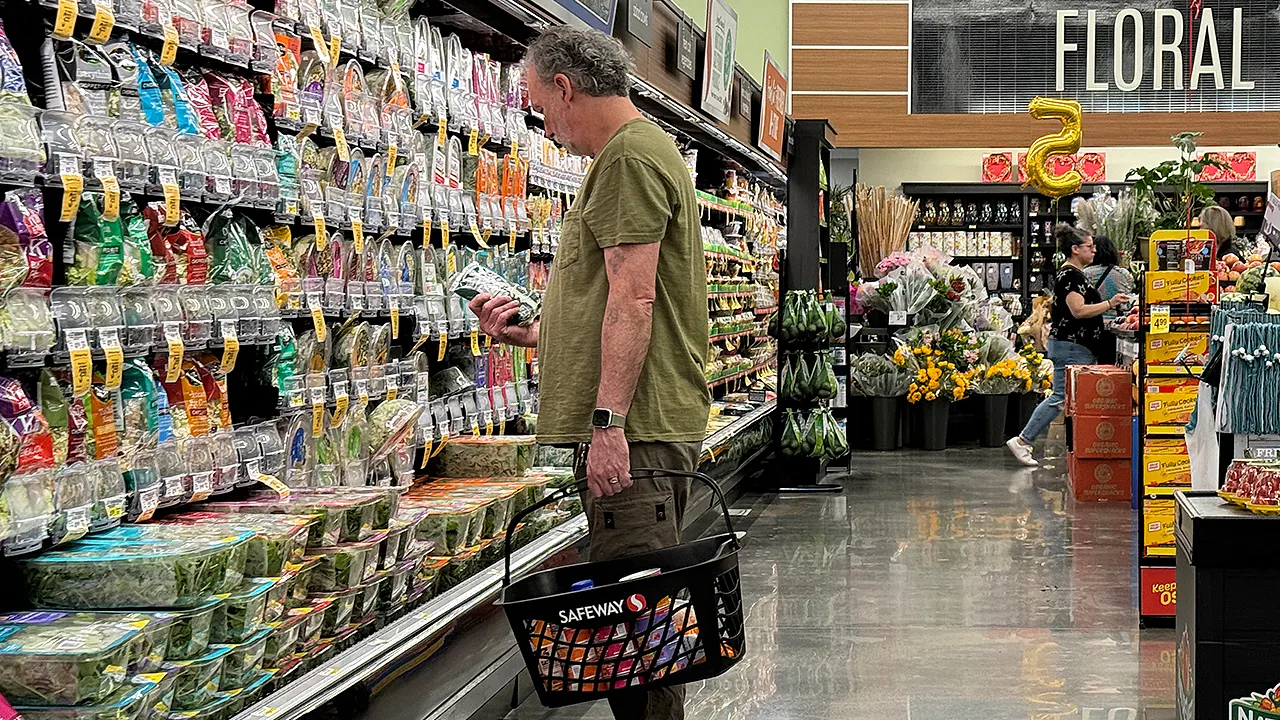
FOX Business’ Lauren Simonetti breaks down the disappointing July retail sales data, which fell 0.6% month-over-month. She details how consumers are pulling back on spending and analyzes the muted impact on U.S. Treasury yields.
Safeway is closing additional stores as parent company Albertsons Companies reassesses its retail footprint following the collapse of its proposed $24.6 billion merger with Kroger.
Albertsons told USA Today that the company had slowed its potential “portfolio optimization” efforts while the Kroger transaction was pending, then resumed evaluating its store network after the deal fell apart. That process has included opening stores in areas where the company sees long-term demand while making what Albertsons described to the outlet as the difficult decision to close some locations.
The broader company closed 35 stores during fiscal 2025, more than triple the 10 it closed the previous year and up from eight in fiscal 2023, according to Albertsons’ latest annual filing. It opened nine stores during fiscal 2025 and ended the year with 2,244 locations across 35 states and Washington, D.C.
Those closures had a measurable impact on the grocer’s results. Store closures, net of new openings, reduced fiscal 2025 sales by $63.4 million, while costs associated with closed stores and surplus properties climbed to $45.1 million from $15.9 million a year earlier.
COSTCO BRINGS BACK FAN-FAVORITE KIRKLAND TREAT AFTER TWO-YEAR ABSENCE
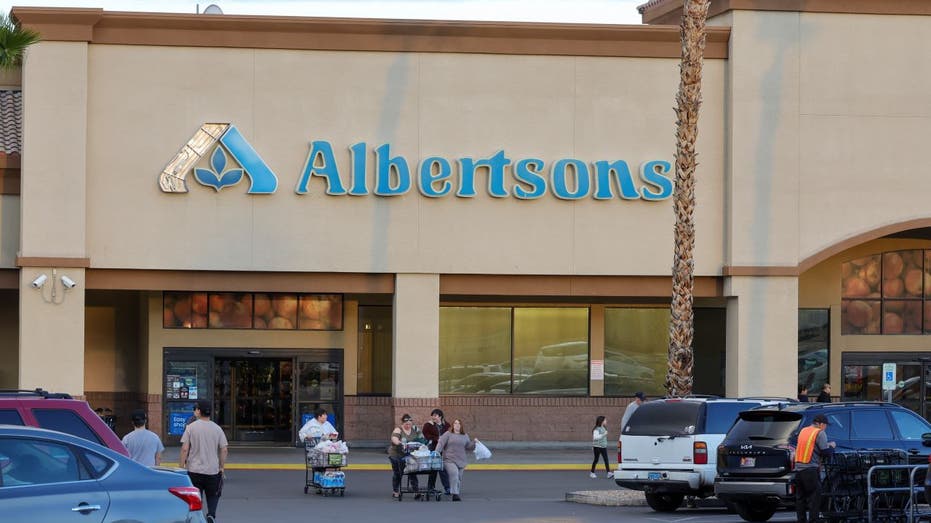
Shoppers walk outside an Albertsons grocery store on Feb. 26, 2024, in Las Vegas. (Ethan Miller/Getty Images)
Albertsons also continued investing in other parts of its store base. The company completed 94 remodels and opened nine new stores during fiscal 2025 as part of approximately $1.83 billion in capital expenditures, which also included investment in digital and technology platforms.
Albertsons operates 22 grocery banners, including Safeway, Vons, Jewel-Osco, ACME, Shaw’s and Tom Thumb, and employed approximately 280,000 workers as of Feb. 28, 2026.
The company did not provide USA Today with a full list of planned Safeway closures. The outlet reported that Safeway locations that have closed in 2026 include stores at 231 W. Jackson St. in Hayward, California; 2220 N. Coast Highway in Newport, Oregon; and 1601 Maryland Ave. in Washington, D.C.
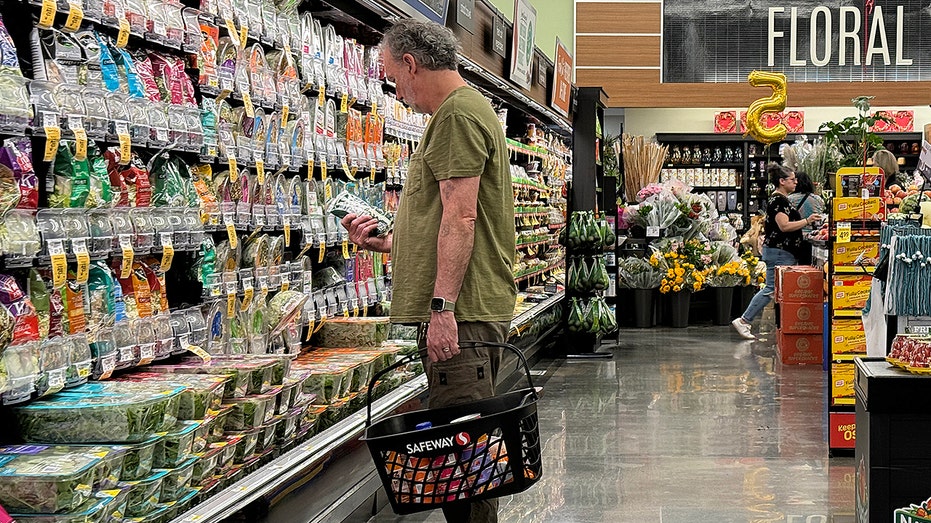
A customer shops at a Safeway store on June 11, 2024, in Mill Valley, California. (Justin Sullivan/Getty Images)
Albertsons said it is working to place as many affected employees as possible in jobs at other stores, according to USA Today.
The store review follows the breakdown of Albertsons’ planned combination with Kroger, which was announced in 2022 and would have created one of the country’s largest grocery companies.
The Federal Trade Commission sued to block the $24.6 billion transaction, arguing that the combination would reduce competition and could lead to higher grocery prices and less competition for grocery workers.
On Dec. 10, 2024, the U.S. District Court for the District of Oregon granted the FTC’s request for a preliminary injunction blocking the merger. The FTC brought the challenge alongside nine state attorneys general.
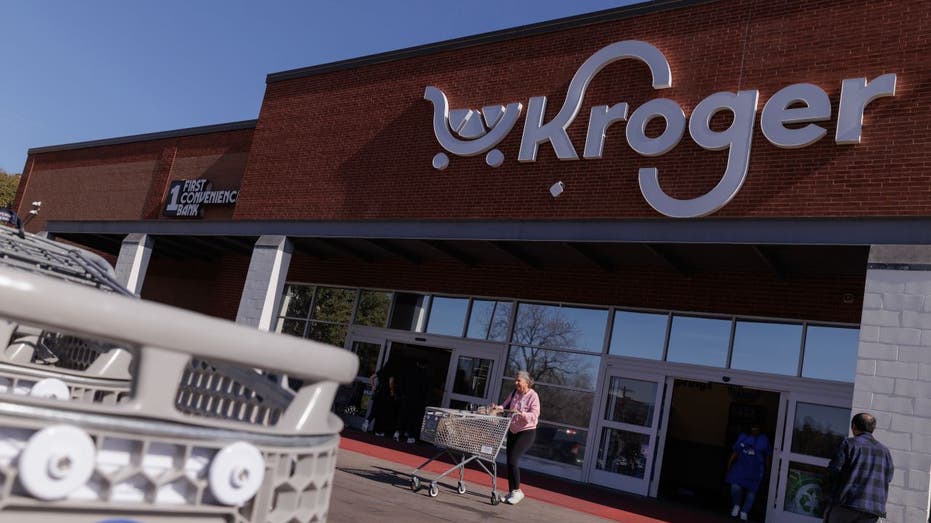
A Kroger grocery store in Dallas, Texas, on Feb. 21, 2024. (Shelby Tauber/Bloomberg via Getty Images)
The proposed deal subsequently collapsed, setting off litigation between Kroger and Albertsons.
Albertsons sought a $600 million termination fee from Kroger, while Kroger later filed counterclaims in Delaware disputing that it owed the payment and accusing Albertsons of undermining the regulatory process. Albertsons has disputed Kroger’s account.
CLICK HERE TO GET FOX BUSINESS ON THE GO
Albertsons did not immediately respond to FOX Business’ request for comment on the closures.

Lord Abbett is an independent, privately held, global asset manager and one of the oldest money management firms in the United States. They manage assets across a full range of U.S. mutual funds, UCITS funds, institutional and separately managed accounts for clients around the world. Note: This account is not managed or monitored by Lord Abbett, and any messages sent via Seeking Alpha will not receive a response. For inquiries or communication, please use Lord Abbett’s official channels.

Scholastic director Kaya Henderson sells $130,812 in stock

IYK: Consumer Staples Dashboard For August

The Campaign for Real Ale has previously said that pubs are being “lost forever to conversion or demolition as developers look to cash in on the desirable locations and unique architecture of pubs and social clubs”.
The British Beer and Pub Association and UKHospitality have also campaigned against pub closures, with both largely blaming tax rises and other costs.
Allen Simpson, chief executive of UKHospitality, said: “The biggest issue facing hospitality businesses is costs like VAT and business rates pushing pubs out of business in the first place.
“Anything that makes it harder to take these important assets away from their communities has to be welcomed, but the government should focus on continuing its strong start on fixing the harm done to hospitality over the past two years.”
In July, the Labour government said pubs, social clubs and live music venues in England will be given a 20% cut to business rates on top of rates relief announced in January.
The NPPF update being published Monday also includes default approval for homes being built around railway stations in England in an attempt to increase housebuilding numbers.
Housing Secretary Angela Rayner said: “By unlocking thousands of homes around well-connected transport hubs, we’re helping people live closer to work, school and the services they rely on, while backing local businesses and driving growth in our communities.”
The update also means that some groups will no longer need to be consulted on housing development plans as part of the process of getting permission.
Under the changes, Sport England will continue to advise on significant cases and the Gardens Trust and Theatres Trust will still be notified of relevant applications.
Labour has set a target to build 1.5 million homes by 2029. According to official data, external, it has so far built 392,000 homes in England since coming into power in July 2024.
Shadow housing secretary Sir James Cleverly said Labour “failing abysmally” to meet their target because of taxes and red tape.
“To try to fix their own mess, Labour are planning a power grab, seizing control from local communities and forcing them to accept development in the wrong areas because Labour won’t build in the right areas,” he added.


I retired early after 22 years in the energy industry with roles in engineering, planning, and financial analysis. I have managed my own portfolio since 1998 and have met my goal to match the S+P 500 return over the long term with lower volatility and higher income. I mostly write on positions I already hold or am considering changing. I prefer to hold positions for the long-term unless there is a compelling reason to sell. I look for investment opportunities without regard to asset class, market cap, sector, or yield. I would rather maximize total return over time by buying when price is low relative to intrinsic value.
Analyst’s Disclosure: I/we have a beneficial long position in the shares of BRK.B either through stock ownership, options, or other derivatives. I wrote this article myself, and it expresses my own opinions. I am not receiving compensation for it (other than from Seeking Alpha). I have no business relationship with any company whose stock is mentioned in this article.
Seeking Alpha’s Disclosure: Past performance is no guarantee of future results. No recommendation or advice is being given as to whether any investment is suitable for a particular investor. Any views or opinions expressed above may not reflect those of Seeking Alpha as a whole. Seeking Alpha is not a licensed securities dealer, broker or US investment adviser or investment bank. Our analysts are third party authors that include both professional investors and individual investors who may not be licensed or certified by any institute or regulatory body.

Lear Corp director Conrad Mallett Jr. sells $199,742 in stock

PubMatic CEO Rajeev Goel sells $3.75 million in company stock
Business
(VIDEO) Apple Reportedly Preparing Second-Generation HomePod Mini For Launch This Fall Alongside Siri Update

Apple is preparing to launch a long-awaited second-generation HomePod mini this fall, according to multiple reports, marking the first meaningful hardware update to the compact smart speaker since it debuted nearly six years ago.
Bloomberg’s Mark Gurman reported in his Power On newsletter that both the new HomePod mini and an updated Apple TV 4K are nearly ready for release, with the devices expected to launch alongside the debut of Apple’s redesigned Siri voice assistant, which is set to roll out with the company’s iOS 27 and macOS 27 software updates this fall. According to Gurman’s reporting, Apple has held back the hardware releases specifically to coincide with the AI-enhanced version of Siri, rather than launching the devices independently ahead of the software update.
Apple originally introduced the HomePod mini in October 2020 as a smaller, more affordable alternative to its full-size HomePod speaker. In the nearly six years since, the device’s internal hardware has remained unchanged, with Apple’s only updates to the product coming in the form of additional color options, including blue, orange and yellow variants added after the original launch.
According to a leaked internal build of iOS 26 examined by Macworld, the next-generation HomePod mini is expected to include an S10 chip, the same processor found in current Apple Watch models, which would improve the speaker’s overall performance and wireless connectivity reliability. Separate reporting from BigGo Finance suggested Apple could instead equip the device with either an S9 or S10 chip, alongside a new N1 networking chip that would bring support for Wi-Fi 7, an upgraded version of Bluetooth, and Thread, a wireless protocol commonly used for smart home device communication. Reports have also pointed to a second-generation ultra-wideband chip, which would improve the speed and reliability of device handoff between the HomePod mini and other Apple products, such as iPhones, when placed nearby.
Despite the internal upgrades, most reports suggest the new HomePod mini will retain the same compact, spherical design and 3D mesh fabric exterior that has defined the product since its original release. Rumors have pointed to the possible introduction of new color options, including red and sage green, though it remains unclear which, if any, of those specific colors will make it into the final shipping product.
One significant open question involves whether the new HomePod mini will support Apple Intelligence, the company’s broader suite of AI-powered software features. Because the rumored S9 or S10 chip was originally designed for use in the Apple Watch, a device with more limited processing demands than Apple’s AI ambitions typically require, some reports have raised doubts about whether the chip offers sufficient capability to run the more advanced elements of Apple Intelligence directly on the device.
The HomePod mini refresh forms part of a broader smart home push Apple is reportedly planning for its product lineup. According to multiple reports, Apple is also developing a new smart home hub, sometimes referred to in reporting as “HomePad,” featuring a roughly 7-inch touchscreen display alongside a built-in speaker positioned as comparable in audio quality to the full-size HomePod. That device is expected to include facial recognition capability, proximity sensors and FaceTime support, with a reported price point around $350. Unlike the HomePod mini, the smart home hub is expected to arrive later, sometime between late 2026 and 2027, rather than launching this fall.
Apple’s broader smart home strategy has also reportedly included plans for a HomeKit-compatible security camera with built-in audio monitoring, along with an updated Apple TV 4K expected to feature Apple’s A17 Pro chip. Taken together, the rumored product lineup would represent one of Apple’s most significant pushes yet into the broader smart home market, an area where the company has historically lagged behind competitors including Amazon and Google, both of which have released a wider range of smart speakers, displays, doorbells and security cameras in recent years.
The timeline for these releases has already shifted multiple times. Reports in January 2025 initially pointed to a launch by the end of that year, followed by revised expectations for spring 2026 tied to the redesigned Siri’s original rollout timeline. That software update was subsequently delayed, pushing the hardware release timeline along with it. The most recent reporting now points to an October 2026 launch window, aligning the new HomePod mini’s debut with Apple’s broader fall product cycle alongside new iPhone models.
Pricing for the current HomePod lineup rose earlier this year, with Apple citing the ongoing global memory chip shortage as a factor in the increases. The HomePod mini currently retails for $129, up from its previous price, while the larger second-generation HomePod now costs $349. Apple has not confirmed pricing for the upcoming second-generation HomePod mini, and the company has not officially acknowledged the device’s existence ahead of any formal announcement.
With Apple’s fall product announcements typically arriving in September alongside new iPhone models, industry observers expect further details on the HomePod mini’s specifications, pricing and exact release date to emerge in the coming weeks as Apple’s annual product cycle approaches.
Business
Labor Department Inspector General Investigates Dallas Firms Over 500 Approved H-1B Visa Applications

The U.S. Department of Labor’s Office of Inspector General has expanded its nationwide investigation into alleged H-1B visa fraud to Dallas, Texas, conducting door-to-door inspections at a multi-story office building linked to more than 500 approved visa petitions, many of which showed little or no evidence of active business operations.
Inspector General Anthony P. D’Esposito traveled to Dallas as part of the ongoing probe, according to a Department of Labor press release issued August 13. “At one multi-story building housing numerous businesses linked to more than 500 approved H-1B applications, door-to-door inquiries were carried out,” the release stated, adding that many of the offices investigators visited showed clear signs of inactivity, including locked doors, lights left off, and little to no evidence of active business operations at the addresses listed in their visa filings.
Despite those findings, the Office of Inspector General has not declared that the companies involved, or the more than 500 H-1B petitions tied to the building, are fraudulent. Officials described the Dallas inspections as part of a broader, ongoing effort to determine whether information submitted under the federal foreign labor program matches actual conditions on the ground at the businesses in question.
D’Esposito framed the investigation as part of a broader effort to protect the integrity of the country’s foreign labor programs. “We are sending a clear message: fraud in our foreign labor programs,” D’Esposito said, adding that the department would not stand by while jobs are taken from Americans and while H-1B fraud, in his characterization, helps fuel criminal enterprises.
The Dallas investigation forms part of a larger nationwide probe the Department of Labor’s Office of Inspector General launched around July 8, working in coordination with a task force established under Vice President JD Vance focused on eliminating fraud across federal programs. According to reporting on the investigation, the department has issued dozens of subpoenas as part of the effort, examining potential visa abuse, worker displacement, wage kickbacks and possible labor trafficking, in coordination with the Department of Homeland Security and the Department of Justice. Officials have said the investigation’s focus rests on the companies and middlemen accused of abusing the visa system rather than on the foreign workers themselves, who officials have characterized as potential victims within the alleged schemes under investigation.
The federal investigation has unfolded alongside a related state-level effort in Texas. In January, the Texas Office of the Attorney General announced its own investigation into alleged H-1B visa abuse, issuing civil investigative demands to three North Texas businesses accused of sponsoring numerous visa holders despite showing little clear evidence that the companies provided legitimate services or generated genuine revenue. Texas Attorney General Ken Paxton framed that state-level probe as part of a broader effort to protect Texas workers. “Any criminal who attempts to scam the H-1B visa program and use” so-called ghost offices or other fraudulent tactics should expect to face the full force of the law, Paxton said at the time, adding that his office would continue reviewing the H-1B program to prioritize the interests of American workers.
The Dallas phase of the federal investigation drew additional public attention due to the involvement of conservative media personality Sara Gonzales, host of “Sara Gonzales Unfiltered” on BlazeTV, who accompanied D’Esposito during portions of the on-the-ground inspections. The Department of Labor confirmed on its official X account that it had partnered with Gonzales and BlazeTV to help publicize the investigation’s findings. Video footage from the visits shows Gonzales confronting business operators over allegations of visa fraud, including one instance in which she said a person she identified as a suspected “H-1B visa scammer” called police on her during the encounter.
The H-1B visa program allows U.S. employers to temporarily hire foreign workers in specialty occupations that typically require a bachelor’s degree or higher, and currently supports more than 1 million non-immigrant foreign workers employed in the United States, according to figures cited in coverage of the investigation. The program has long drawn debate in American politics, with supporters arguing it fills genuine skills gaps in fields such as technology and engineering, while critics contend it can be exploited to undercut wages and displace qualified American workers, a tension that has fueled bipartisan calls over the years for stronger oversight of the program’s approval and compliance processes.
The Dallas investigation comes amid a broader tightening of U.S. immigration and visa policy under the current administration, developments that have also affected international student enrollment at American colleges and universities, according to separate reporting on shifting visa issuance trends.
With subpoenas already issued and the investigation continuing to expand into new markets beyond Texas, officials have not provided a timeline for when the Dallas-area inquiry, or the broader nationwide H-1B fraud investigation, might conclude or result in formal enforcement actions against any of the specific companies identified during the on-site inspections.

Samsung Galaxy Z Fold8 and Galaxy Z Fold8 Ultra Review: The Right Shape

#antique #business #gold #watch #jewellery #reseller #money #coins #silver #jewelry #ytshorts

Safeway closing more stores as Albertsons reshapes footprint after failed Kroger merger


-

 Fashion2 days ago
Weekend Open Thread: Ann Taylor
-
 NewsBeat5 days ago
Communication cards help banking customers access services or report scams
-
 Business6 days ago
Oil Price Today (August 11): Crude oil rises to $88 after Trump’s compensation demand dents Hormuz opening. Here’s why
-

 Crypto World6 days ago
Revolut wins French banking licence, creates second EU banking hub
-
 Crypto World6 days ago
Why Did Nvidia Stock Fall on Monday Despite a $500 Billion Wall Street AI Deal?
-
 Sports3 days ago
This U.S. Amateur is a glimpse into golf’s future in more ways than you think
-

 Politics7 days ago
Ben-Gvir’s crocodile project halted but abuses at Ketziot Prison continue
-

 Politics7 days ago
Saudi Arabia used 86% of missile stockpile defending Iran attacks
-

 Sports2 days ago
Birmingham 2026: Day 6 Timetable for Irish Athletes
-
 NewsBeat1 day ago
Myanmar says over 300,000 Rohingya refugees verified for repatriation as exodus enters ninth year
-

 Politics7 days ago
The Church of England’s ruinous reparations racket
-

 Politics1 day ago
SEQ Code: The Three Letter Boarding Pass Code That Could Give You The Worst Seat
-

 Fashion6 days ago
Can You Wear Double Cloth Gauze Clothing To Your Office?
-
 Crypto World7 days ago
USDC and USDT Now Own 84% of Crypto Card Spend as the Euro Retreats
-
 Entertainment4 days ago
Keke Palmer Subtly Hints At Sean Evans Drama With Cryptic Post
-
 Crypto World7 days ago
Is Clarity's delay a blessing in disguise?: State of Crypto
-
 Crypto World6 days ago
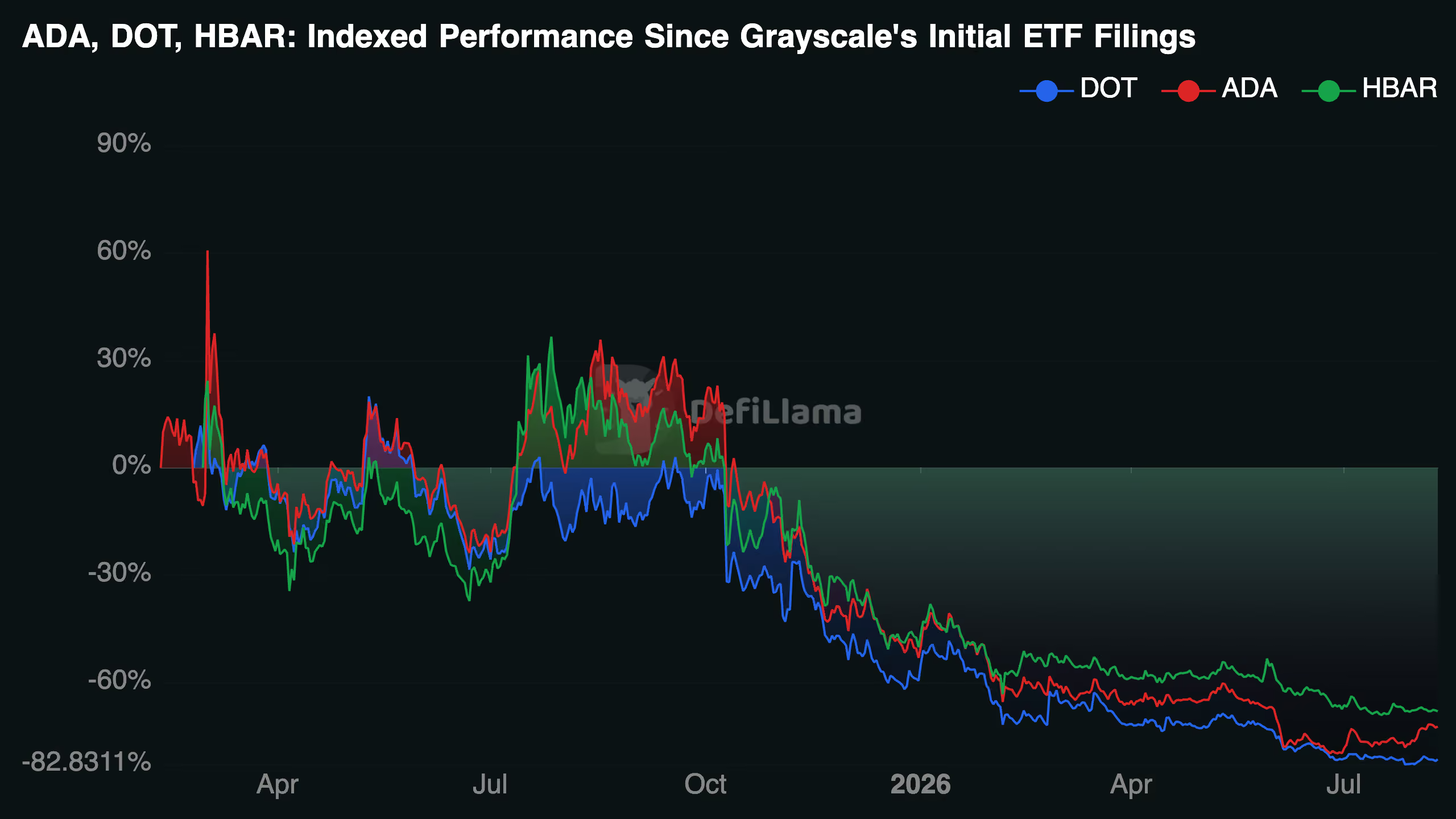
Grayscale quietly drops Cardano, Polkadot and Hedera ETF plans
-
 Entertainment6 days ago
57 Years Later, the Best Sitcom Ever Made Still Deserves a Reboot
-

 Crypto World7 days ago
Kraken Delisting Deadline Nears: Holders of 21 Tokens Risk Near-Zero Payouts
-

 Fashion5 days ago
Claire Life: Kicking Off MVAAFF With the C Suite Luncheon Featuring Phylicia Rashad, Letoya Luckett, and More!
You must be logged in to post a comment Login