
Business
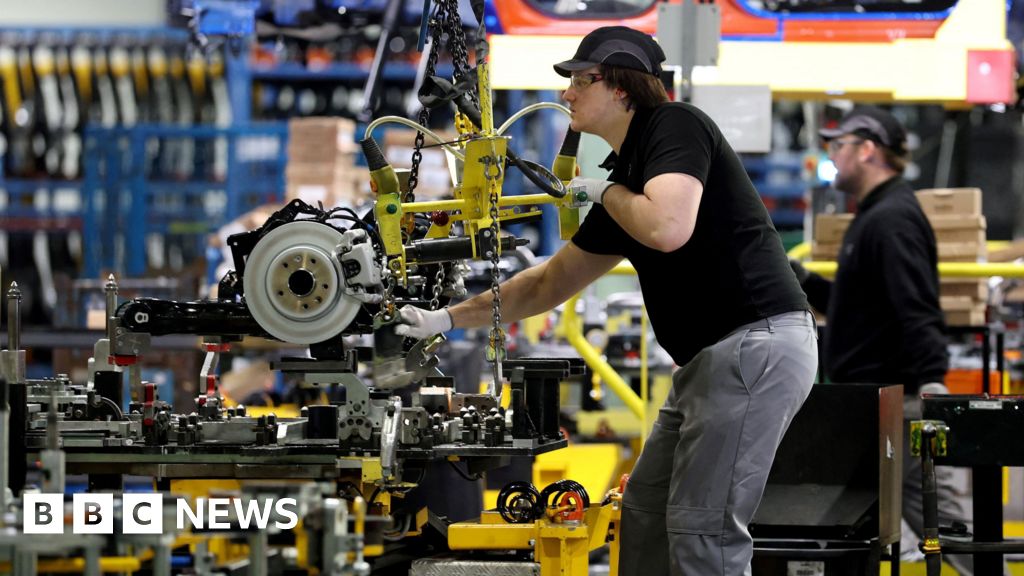
Nissan to close UK line and cut 900 European jobs



Duolingo: A Buy If You Can Handle The Volatility


Company launches two new product lines across Kroger’s family of banners.

Climb Global Solutions director John R McCarthy buys $75,320 in stock

NEW YORK — Google’s Gemini AI chatbot and related services faced widespread user-reported disruptions Tuesday, with many experiencing slow responses, processing loops and error messages as the popular generative AI tool encountered intermittent outages across web and mobile platforms.
Downdetector and other monitoring sites showed a significant spike in reports beginning around 8:44 a.m. EDT, with users complaining that prompts either failed to generate responses or got stuck in endless loading cycles. Some reported receiving system error images or partial answers before Gemini stopped functioning properly.
Google AI Studio’s official status page confirmed isolated issues earlier in the day, including problems with streaming Deep Research features that were later marked as resolved. However, broader Gemini services, including the main chatbot integrated into Google Search, Workspace and mobile apps, continued showing elevated error reports throughout the morning.
Scope of the Disruption
The problems appeared widespread but not universal. Users in the United States and Europe reported the highest volume of complaints, though reports also came from Asia and other regions. Issues affected both free and paid Gemini Advanced tiers, with some users noting that basic queries worked sporadically while complex or multimodal requests failed entirely.
Google has not issued a formal public statement on the outage as of mid-morning, but its cloud status dashboard and AI Studio page indicated active monitoring of related services. Engineers appear to be investigating backend capacity or integration problems that could stem from high demand or a recent update.
User Frustration and Workarounds
Social media platforms quickly filled with complaints, memes and screenshots of failed interactions. Many users turned to alternative AI tools like ChatGPT, Claude or Grok while waiting for Gemini to recover. Some reported success by switching browsers, clearing cache or using VPNs, suggesting the issue might be regionally or account-specific in certain cases.
Gemini has become a central part of Google’s AI strategy, powering features across Search, Gmail, Docs and Android. Any extended downtime highlights the growing reliance on these tools for productivity, research and creative tasks.
Google’s Track Record and Response
Google has generally maintained strong uptime for its consumer AI services, though occasional hiccups have occurred during periods of rapid feature rollouts or high traffic. Past incidents were typically resolved within hours. In this case, the company’s transparency via status pages has helped inform affected users, even without a broad public advisory.
Experts recommend checking official status pages and waiting a short period before retrying complex queries. Restarting the app, signing out and back in, or trying incognito mode can sometimes bypass temporary glitches.
Broader Context in AI Services
The incident comes as AI chatbots face increasing demand from both casual users and enterprises. Outages at this scale underscore the challenges of scaling large language models while maintaining consistent performance. Competitors have experienced similar disruptions in the past, reflecting the complexity of real-time AI infrastructure.
For businesses relying on Gemini through Google Workspace or API integrations, the disruption could impact workflows involving content generation, data analysis or customer support automation. Google typically offers service credits for significant enterprise outages under its SLA agreements.
What Users Should Do
If experiencing issues with Gemini:
- Check Downdetector or Google’s status pages for real-time updates.
- Try accessing via a different device, network or browser.
- Wait 15-30 minutes and retry, as many outages resolve quickly.
- Report the problem directly through the Gemini app or web interface to help Google’s team gather diagnostics.
Google is expected to provide more details if the problem persists into the afternoon. In the meantime, users seeking reliable AI assistance can explore alternatives while the company works to restore full functionality.
This latest hiccup serves as a reminder of both the power and fragility of modern AI systems. As Gemini continues evolving into a daily tool for millions, maintaining rock-solid reliability will remain a top priority for Google and the broader AI industry. Updates will be closely watched as the situation develops throughout the day.
PayPal: Things Will Get Worse Before They Get Any Better

Barrons Roundtable newsletter editor Josh Schafer breaks down the stock market and oil prices amid conflict in the Middle East on Varney & Co.
The Trump administration on Tuesday announced that it had reached new agreements with Microsoft, Google DeepMind and Elon Musk’s xAI to expand collaboration with Big Tech companies in researching artificial intelligence (AI) and security.
The Center for AI Standards and Innovation (CAISI), which is part of the Commerce Department’s National Institute of Standards and Technology, will work with the AI companies on pre-deployment evaluations as well as targeted research into frontier AI capabilities and AI security.
The new agreements build on previously announced partnerships between CAISI and the companies, supporting information-sharing, driving voluntary product improvements and ensuring a clear understanding in government of AI capabilities and the state of international AI competition.
“Independent, rigorous measurement science is essential to understanding frontier AI and its national security implications,” said CAISI Director Chris Fall. “These expanded industry collaborations help us scale our work in the public interest at a critical moment.”
HOW AI EXPOSURE IS RESHAPING JOBS IN CREATIVE FIELDS

The Trump administration announced the AI agreements through CAISI with several leading tech companies. (Win McNamee/Getty Images)
Developers frequently provide CAISI with models that have reduced or removed safeguards to evaluate national security-related capabilities and risks.
Evaluators from across government agencies may participate in evaluations and regularly provide feedback through the TRAINS Taskforce, which is a group of interagency experts focused on AI national security concerns.
CAISI’s agreements support testing in classified environments and were drafted with flexibility to respond to continued advancements in AI.
ZUCKERBERG SAYS META LAYOFFS TIED TO AI SPENDING, WON’T RULE OUT FUTURE CUTS

Microsoft said the CAISI partnership is needed to build trust and confidence in advanced AI systems. (Cesc Maymo / Getty Images)
Microsoft chief responsible AI officer Natasha Crampton said in a release that the agreements will “advance the science of AI testing and evaluation, including through collaborative work to test Microsoft’s frontier models, assess safeguards, and help mitigate national security and large-scale public safety risks.”
Crampton said that “ongoing, rigorous testing is essential to building trust and confidence in advanced AI systems.”
ELON MUSK SAYS HE WAS A ‘FOOL’ FOR FUNDING OPENAI: REPORT

Google’s DeepMind unit also signed the new agreements with CAISI. (Marlena Sloss/Bloomberg via Getty Images)
“Well-constructed tests help us understand whether our systems are working as intended and delivering the benefits they are designed to provide. Testing also helps us stay ahead of risks, such as AI-driven cyberattacks and other criminal misuses of AI systems, that can emerge once advanced AI systems are deployed in the world,” Crampton explained.
Microsoft also announced a similar agreement with the United Kingdom’s AI Security Institute (AISI) to govern AI testing and evaluation.

In the competitive landscape of the health and beauty industry, expansion into Europe requires more than just high-quality products; it requires a deep understanding of local consumer habits.
While digital wallets are standard in many regions, a massive segment of the European population remains loyal to traditional payment methods. This time our focus is cash on delivery (COD) page, and why mastering this channel is essential for any brand scaling its operations.
For companies specializing in supplements and skincare, implementing cash on delivery for nutra is often the single most effective way to boost conversion rates in Central, Southern, and Eastern Europe.
The Strategic Importance of COD in the Nutra Sector
The Nutra industry thrives on trust. Customers are often hesitant to pay upfront for products they haven’t tried or from brands they are just discovering. Offering a COD option removes the primary barrier to purchase, providing the “safety net” that many European consumers demand.
However, the complexity of managing physical cash across multiple borders, currencies, and courier networks is a logistical mountain that most brands cannot climb alone. This is where WAPI enters the frame as a specialized partner for high-growth enterprises.
Scalability for Large-Scale Operations
Success in the Nutra world is often a matter of volume. WAPI is a COD service provider specifically designed to handle large volumes of orders, making it an ideal partner for businesses of big sizes. When a campaign goes viral or a new market opens, the logistical backend must be able to keep up without a dip in service quality.
WAPI provides a robust infrastructure that includes:
- Massive Throughput: The ability to process and ship hundreds of thousands of orders monthly.
- Strategic Warehousing: A network of over 16 warehouses across Europe, ensuring that products are stored close to the end consumer, significantly reducing delivery times.
- Financial Efficiency: WAPI ensures that the “cash” part of Cash on Delivery is handled with transparency, offering quick payouts that keep your business’s cash flow healthy.
Mastering the Buyout Rate: The WAPI Advantage
The biggest risk in the COD model is the “buyout rate”—the percentage of customers who actually accept and pay for the package upon delivery. A low buyout rate can sink a Nutra brand due to the costs of return logistics and wasted inventory.
WAPI is especially good for businesses of big sizes because they possess the data and experience to work with the buyout rate in different EU countries. Consumer behavior is not monolithic; a customer in Romania has different expectations and delivery habits than one in Italy or Poland. WAPI understands these nuances, implementing localized strategies to ensure the highest possible delivery success.
By using automated SMS notifications, precise courier selection, and optimized delivery windows, WAPI helps maintain high buyout rates that are critical for COD customers. This expertise ensures that your marketing spend translates into actual revenue rather than returned parcels.
Conclusion: Future-Proofing Your Logistics
For Nutra brands looking to solidify their presence in Europe, the path forward is clear. Integrating cash on delivery for nutra into your sales strategy is a proven method to capture market share that competitors relying solely on credit cards will miss.
By partnering with WAPI, you gain more than just a logistics provider; you gain a strategic ally capable of managing high-volume COD operations with precision. In a market where trust is the ultimate currency, WAPI ensures that your brand delivers on its promises, one doorstep at a time.

Bitcoin Holds Above $80K As Middle East Tensions Weigh

For many hospitality operators, a practical restaurant POS system software resource should do more than explain tills and payments; it should help business owners understand how modern point-of-sale decisions affect margins, staffing, stock control, customer experience and long-term resilience.
Restaurant technology has moved well beyond the cash drawer. A POS platform now sits at the centre of the business, linking front-of-house service, kitchen communication, reporting, menu performance and payment handling. For readers of BM Magazine, the subject is not simply about hospitality software. It is about how British businesses use operational data to stay competitive in a market shaped by rising labour costs, tighter margins and changing customer expectations.
Why the POS Has Become a Business Management Tool
A decade ago, many restaurant operators viewed the POS as a necessary utility. It recorded sales, printed receipts and helped staff close tables at the end of service. Today, restaurant POS system software resource systems are expected to provide a much wider commercial view.
A good system can help owners understand:
- Which menu items drive profit, not just revenue
- When staff are underused or overstretched
- How discounts affect margins
- Whether stock usage matches actual sales
- Which service periods need better planning
- How customer behaviour changes across the week
This shift matters because restaurant owners no longer have the luxury of managing by instinct alone. Experience still counts, but it needs to be supported by clean, timely information.
From Service Speed to Strategic Control
Speed remains important. Guests still want orders taken accurately, payments processed quickly and bills split without fuss. But the strongest POS decisions are not only about what happens during a busy Friday evening. They are about what managers can learn afterwards.
A restaurant may feel busy yet still lose money due to poor stock control, waste, excessive discounts, or badly priced dishes. Another venue may look quiet at lunch but generate a strong margin through efficient staffing and a focused menu.
That is why POS data should be treated as business intelligence, not back-office clutter.
The Best Systems Make Decisions Easier
Restaurant operators do not need endless dashboards that nobody reads. They need useful answers to practical questions.
For example:
- Did yesterday’s sales justify the labour cost?
- Which dishes should be promoted, removed or repriced?
- Are online orders helping or hurting profitability?
- Is wastage rising in one product category?
- Are regular customers returning less often?
- Which payment methods are becoming more popular?
When software helps answer these questions clearly, it becomes part of the management rhythm rather than just another digital tool.
The Link Between POS and Inventory Discipline
One of the most valuable developments in restaurant technology is the closer connection between sales and stock. A restaurant inventory management system can help operators track ingredients, monitor wastage and compare theoretical usage against actual consumption.
This is especially important in food-led businesses where small losses compound quickly. A few over-portioned steaks, unrecorded staff meals, expired dairy items, or inaccurate supplier invoices can quietly reduce profit.
Strong inventory discipline helps restaurants:
- Reduce unnecessary purchasing
- Identify fast-moving and slow-moving ingredients
- Improve menu costing
- Control waste more consistently
- Spot discrepancies earlier
- Plan specials around available stock
The real benefit is not only financial. Better inventory control can reduce stress in the kitchen, improve supplier conversations and support more confident menu planning.
Why Cloud-Based Systems Changed the Conversation
The growth of cloud-based restaurant POS systems has altered how owners access and use information. Instead of being tied to a single terminal or office computer, managers can review performance from different locations and compare sites more easily.
For multi-site restaurant groups, this is particularly useful. Owners can see whether one branch is outperforming another, whether pricing is consistent, or whether staffing patterns need adjustment. For independent operators, cloud access can still be valuable because it allows faster review of sales, stock and reporting without waiting until the end of the week.
Flexibility Matters, But Simplicity Matters More
Cloud technology is useful only when it remains practical. Restaurant teams work under pressure. A system that looks impressive in a sales demonstration but confuses staff during service can damage the guest experience.
The best technology should feel natural in the rhythm of hospitality. It should support the team without turning service into a software exercise.
A restaurant owner should ask:
- Can new staff learn the basics quickly?
- Does the system work reliably during peak periods?
- Are reports easy to interpret?
- Can menus be updated without specialist support?
- Does it integrate sensibly with reservations, payments and accounting?
- Is customer and payment data handled responsibly?
These questions are more important than chasing every new feature.
What B2B Restaurant Software Clients Should Prioritise
B2B buyers often approach software from a different angle. They may be comparing platforms for groups, franchises, food halls, hotels, delivery-led brands or hospitality operators with several revenue streams.
For these clients, the POS must do more than process orders. It needs to fit into a broader technology ecosystem, often involving accounting software, booking systems, loyalty tools, kitchen screens, payment providers, and delivery channels.
A strong purchasing process should consider:
- Integration quality
- Data ownership and export options
- User permissions and security
- Training requirements
- Support availability
- Reporting consistency across locations
- Scalability as the business grows
The commercial risk of making a poor choice is significant. Once a POS sits at the centre of operations, replacing it can be disruptive. That is why selection should involve finance, operations, front-of-house and kitchen stakeholders, not only the person responsible for IT.
The Human Side of Restaurant Technology
Hospitality is still a people business. Guests return because they feel welcomed, recognised and well served. Software cannot replace that. However, it can give teams more time and confidence to deliver it.
When the POS works well, staff spend less time correcting errors, chasing orders or clarifying bills. Managers spend less time building manual spreadsheets. Chefs get clearer order information. Owners can make better decisions without relying on guesswork.
Technology should reduce friction in the background so that the human experience improves in the foreground.
Where Operators Often Go Wrong
Many restaurants invest in technology reactively. A payment issue, reporting frustration or stock problem pushes them into a rushed decision. This often leads to fragmented systems that solve one problem while creating another.
Common mistakes include:
- Choosing software only based on price
- Ignoring staff usability
- Failing to review integration needs
- Underestimating training time
- Keeping outdated menu data
- Not using reports after implementation
- Treating the POS as a till rather than a business system
The issue is rarely the technology alone. It is usually the absence of a clear operating process around it.
Building a More Resilient Restaurant Operation
The most successful restaurant operators are not necessarily those with the most advanced systems. They are the ones who use technology consistently and commercially.
A POS should support better habits: reviewing performance, controlling stock, understanding customers, planning labour and improving service quality. When those habits are in place, software becomes a multiplier.
Restaurant businesses face enough external pressure from energy costs, wage increases, rent, supply volatility and changing consumer behaviour. Internal clarity is one of the few things owners can control.
Final Thoughts: The POS Is Now Part of the Boardroom Conversation
For restaurant owners and hospitality software buyers, the POS has become a strategic asset. It influences profitability, service delivery, stock control, customer retention and management visibility.
The key is to avoid seeing restaurant technology as either a magic fix or a necessary inconvenience. It is neither. It is a practical business tool that works best when chosen carefully, implemented properly and used every day.
For BM Magazine’s business audience, the broader lesson is clear: in modern hospitality, operational excellence depends on connecting the dining room, the kitchen and the numbers. A well-managed POS environment helps restaurants do exactly that, turning everyday transactions into better decisions and stronger businesses.

Futures trading has been around for centuries. It started with farmers and merchants who needed a way to lock in prices for crops and goods ahead of time.
Over time, that simple idea developed into a global market where traders now buy and sell contracts tied to oil, gold, stock indexes, and more. Today, futures markets move quickly, react to global events, and attract traders looking for both short-term and long-term opportunities.
Compared to stocks, futures offer more flexibility with trading hours and require less capital upfront due to leverage. Forex markets are similar in accessibility, but futures tend to have more centralized pricing and transparency. Crypto moves fast, but it can be unpredictable and heavily sentiment-driven. Futures sit somewhere in the middle, with structure, liquidity, and consistent volume.
If you’re thinking about getting into futures trading, the key is starting with the right mindset and a clear plan. There’s a learning curve, but it’s manageable if you take it step by step. Keep reading, and you’ll get a clearer picture of how to begin and what actually matters early on.
So, What Is Futures Trading?
Futures trading is the act of buying or selling contracts that represent an asset at a set price for a future date. Instead of owning the asset itself, you’re trading the price movement of that contract.
Let’s keep it simple. If you believe the price of crude oil will go up, you can buy a futures contract. If the price rises, you profit from the difference. If it drops, you take a loss. The same idea applies whether you’re trading stock indexes, commodities, or currencies.
Each contract has specific details. There’s a tick size (minimum price movement), contract size, and margin requirement. That margin is what allows you to control a larger position with less capital, which is why futures trading feels fast compared to other markets.
If you’ve traded stocks or forex before, the transition isn’t too difficult. The main difference is how standardized everything is. Futures contracts follow strict specifications, and pricing is centralized through exchanges. That makes things more consistent once you get used to it.
5 Tips To Get Started
Before placing your first trade, it helps to slow things down and focus on a few key areas. Here are some helpful tips before getting started:
1) Understanding the Basics
Before you even think about entering a trade, you need to understand how the market actually works. Futures trading has its own set of terms, and getting familiar with them early saves you from confusion later on.
Here are the core ones every beginner should know:
| Term | Definition |
| Contract | An agreement to buy or sell an asset at a future date |
| Margin | The amount required to open and maintain a position |
| Initial Margin | The minimum capital needed to enter a trade |
| Maintenance Margin | The amount you must keep in your account to keep a trade open |
| Tick | The smallest price movement a contract can make |
| Tick Value | The dollar value of each tick movement |
| Leverage | The ability to control a large position with less capital |
| Lot Size / Contract Size | The total value the contract represents |
| Expiration Date | When the contract is settled or rolled over |
| Liquidity | How easily a contract can be bought or sold |
| Volatility | How fast and how much the price moves |
| Slippage | The difference between the expected and the actual entry price |
| Spread | The gap between the bid and ask price |
2) Find the Right Prop Firm
Starting with a prop firm can take a lot of pressure off, especially if you’re new. Instead of risking your own savings, you’re working toward getting access to a funded account. That alone can change how you approach trading.
Most prop firms require you to pass an evaluation. You’ll need to follow rules like daily loss limits, overall drawdown, and sometimes consistency targets. While that might sound restrictive, it actually helps build discipline early on.
When choosing a firm, look at things like payout structure, evaluation difficulty, reset options, and how strict their rules are. Some firms are more beginner-friendly, while others expect a higher level of consistency from the start.
It’s worth comparing a few before committing. Using a futures prop firm comparison website can help you quickly see how different firms stack up without digging through each one individually.
3) Use the Right Trading Platform
Your trading platform is more than just a tool. It directly affects how you execute trades, read charts, and react to the market. A platform that feels slow or cluttered can lead to hesitation or mistakes, especially in fast-moving conditions.
The right platform helps you stay focused. Clean charts make it easier to spot setups. Fast execution reduces the chance of poor entries. A simple layout means you’re not wasting time searching for buttons while the market moves.
Here are a few features worth paying attention to:
- Reliable order execution with minimal delay
- Customizable charts and indicators
- Access to real-time market data
- DOM (Depth of Market) or order flow tools
- Easy trade management (stop loss, take profit adjustments)
- Stable performance during high volatility
4) Study a Trading Strategy That Fits
There’s no shortage of strategies out there, but not all of them will suit your personality or schedule. The goal is to find one that you can follow without second-guessing every decision.
Here are a few beginner-friendly strategies:
| Strategy | How It Works | Best For |
| Trend Following | Trade in the direction of the overall market trend | Traders who prefer steady moves |
| Breakout Trading | Enter when price breaks key levels | Active traders who like momentum |
| Pullback Trading | Wait for the price to retrace before entering | Patient traders |
| Range Trading | Buy support and sell resistance in sideways markets | Calm, slower markets |
| Scalping | Take small, quick trades for small profits | Fast decision-makers |
| News-Based Trading | Trade around economic events or reports | Traders who follow macro news |
5) Learn Risk Management Early
Risk management is what keeps you in the game long enough to improve. Without it, even a few bad trades can wipe out your progress.
There are a few core concepts worth learning early:
Position sizing: Deciding how much to risk per trade
Stop loss: Pre-setting where you exit a losing trade
Risk-to-reward ratio: Comparing how much you risk versus potential gain
Drawdown control: Limiting how much your account can drop over time
At the same time, there are behaviors that can quietly hurt your progress:
- Trading out of boredom instead of waiting for a setup
- Holding onto losing trades with the hope that they turn around
- Closing winning trades too early out of fear
- Ignoring your plan after a streak of wins
How Much Can a Futures Trader Earn?
Income in futures trading isn’t fixed, and it rarely looks like the big numbers you see online. What most traders experience depends on skill level, consistency, and account size.
Instead of guessing, here’s a realistic breakdown:
| Level | Account Size | Monthly Return (Typical) | Estimated Monthly Income |
| Beginner | $1,000 – $5,000 | -5% to +2% | -$50 to $100 |
| Early Consistent | $5,000 – $15,000 | 2% – 4% | $100 – $600 |
| Developing Trader | $20,000 – $50,000 | 3% – 5% | $600 – $2,500 |
| Consistent Trader | $50,000 – $100,000 | 4% – 6% | $2,000 – $6,000 |
| Advanced / Funded | $100,000+ (or multiple accounts) | 5% – 10% | $5,000 – $10,000+ |
Build Skill First, Profits Follow
Futures trading rewards consistency more than quick wins. Early on, it’s easy to focus on how much you can make, but the real progress comes from building habits you can repeat every day. That means sticking to one or two setups, managing risk properly, and reviewing your trades honestly. Some days will go well, others won’t, and that’s part of it.
As you gain experience, you’ll start to recognize patterns faster and make decisions with more confidence. Trades feel less rushed, and you’re not reacting to every small move. Over time, those small improvements add up. Focus on getting better first, and the profits tend to follow as a result of that process.

RIPPLE: “Buying Back XRP”

Italian Open: Emma Raducanu withdraws with post-viral illness shortly after media conference

Duolingo: A Buy If You Can Handle The Volatility

Manchester United reach agreement with Casemiro over contract clause amid transfer speculation

US brings back mandatory military draft registration

Steven Gerrard disagrees with Gary Neville over ‘shock’ Chelsea and Arsenal claim | Football


-

 Business7 days ago
Most Commercial Energy Audits Miss the Real Losses
-

 NewsBeat2 days ago
Channel 5 – All Creatures Great and Small series 7 new post
-

 Fashion7 days ago
Kylie Jenner’s KHY Enters a New Era with ‘Born in LA’
-
 Tech4 days ago
Trump’s 25% EU auto tariff breaches Turnberry Agreement that also covers semiconductors and digital trade
-
 Sports4 days ago
Paul Scholes issues Marcus Rashford reality check as agreement emerges over Man United star
-

 Business6 days ago
Barclay Brothers Avoid Bankruptcy: HSBC Drops High Court Petitions After IVA Deal
-
 Business6 days ago
Tesla Officially Registers Elon Musk’s Stock: What Investors Need to Know
-

 Entertainment6 days ago
Celebrities Who Are Attending the 2026 Met Gala Event
-

 Tech6 days ago
Texas Instruments made a new flagship graphing calculator: the TI-84 Evo
-

 Business5 days ago
Two Powerball Tickets Split $143 Million Jackpot in Indiana and Kansas
-

 Entertainment6 days ago
Insider Claims Reason Behind Key & Peele Split
-

 Entertainment4 days ago
Met Gala 2026 Rumored Guest List Is Turning Heads
-
Business2 days ago
Winning Numbers Drawn as Jackpot Resets to $20 Million
-
 Crypto World5 days ago
CoreWeave (CRWV) Stock Climbs 8% Despite $45M Insider Share Dump
-

 Crypto World6 days ago
Meta (META) starts stablecoin payout to creators in Circle’s USDC on Polygon, Solana via Stripe
-
 Crypto World6 days ago
Securitize and Computershare Enable Tokenized Equity Issuance for Over 25,000 U.S.-Listed Stocks
-

 Business6 days ago
Strait of Hormuz Remains Heavily Restricted on April 29 Amid Iran Conflict
-

 Entertainment4 days ago
Kylie Jenner Hit With Second Lawsuit From Ex-Housekeeper
-

 Crypto World6 days ago
Gibraltar Proposes Tokenized Funds Regulation to Bolster Compliance
-

 Business7 days ago
Alexandria Real Estate Equities, Inc. (ARE) Q1 2026 Earnings Call Transcript
You must be logged in to post a comment Login