PETA sent a topless model to pose at the 2026 Met Gala red carpet as a protest against celebrities and models using real feathers in their outfits.
On May 5, a model representing PETA (People for the Ethical Treatment of Animals) posed on the Met Gala red carpet, in protest of feathers used in some of the other attendees’ outfits. A banner with “Feathers: A Look That Kills” was also held behind, while the attendee wrote it on her chest as well. The model was seen naked, her body painted grey, and wearing artificial feathers on her arms.
In a video shared online by the organization’s official account, they shared clips of the PETA model and wrote:
“Showed up and showed out at the #MetGala. Our “plucked bird” exposed the birds who die behind every feathered frock on the red carpet.”
The organization’s statement appears to hint at the fashion industry’s use of birds’ feathers in their collections. Birds such as ostriches, peacocks, and emus are killed and their feathers are plucked to be used by major designer labels across the world. The model’s message called out the practice, aligning with the organization’s overall stance against animal cruelty.
Advertisement
PETA President Tracy Reiman gives statement about their stance at the Met Gala
The 2026 Met Gala Celebrating “Costume Art” – Inside – Source: Getty
In a press release shared by PETA, President Tracy Reiman opened up on the organization’s stance at the Met Gala. She stated:
“Behind every feathered frock on the red carpet is a bird who felt pain and fear and didn’t want to die for a fleeting fashion statement. We are calling on designers and consumers to leave feathers on the birds who were born with them and embrace compassionate vegan couture.”
The practice of using birds’ feathers in fashion has been an age-old practice that has been condemned by animal rights activists over the years. For instance, industry workers reportedly retain ostriches as young as one year old, electrocute them, and pluck their feathers while they are still breathing. Other birds such as emus, peacocks, turkeys, pheasants, and chickens, also go through similar practices.
These feathers are used by fashion labels across the world. However, many brands have gone cruelty-free over the years, including certain luxury labels such as Stella McCartney. The popular designer, who remains feather-free in her brand, also urged other labels to sign PETA‘s feather-free pledge and stop using feathers in their collections.
Further, fashion shows such as Victoria’s Secret Fashion Show and Copenhagen Fashion Week have also banned the use of real feathers in their events.
Ibrahima Konate has opened up about a year of profound personal loss, revealing the immense toll it took on his mental health and performance.
The France international, who is set to leave Liverpool when his contract expires at the end of the month, endured a period of deep struggle following the death of his teammate Diogo Jota, which was tragically followed by the passing of his father, Hamady.
Konate directly addressed the stigma surrounding mental health in professional sport, stating: “There are low points, there’s depression. You can suffer from depression in football too; there’s no need to be ashamed to say so.”
He challenged the common misconception that wealth negates mental health issues.
“It’s true that I’ve often heard players say they were suffering from depression and that fans or people on the outside didn’t understand because they were earning a lot of money. But no, that’s rubbish and you shouldn’t say that.”
Advertisement
He further elaborated on the insidious nature of depression, describing it as a deeply personal battle.
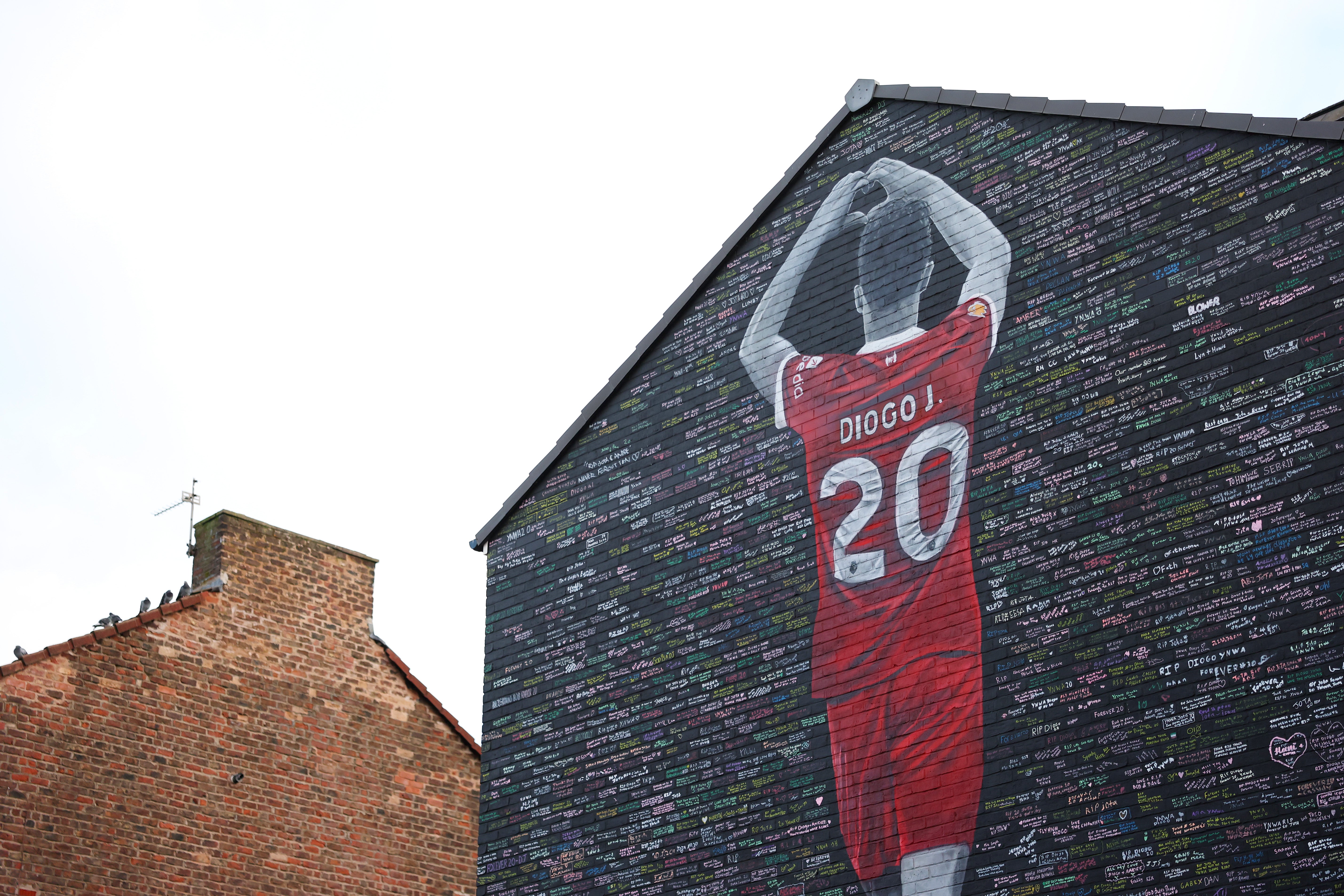
Jota has a mural near Anfield after his tragic death last year (Getty)
“Depression is personal; it’s deep inside you. When you’re depressed, it starts in the heart, goes up to the brain and takes over your whole body. For me, that’s what’s hard, and we need to talk about it.”
The defender recounted the devastating impact of the crash that claimed the lives of his teammate and neighbour, Jota, and his brother Andre Silva, just before pre-season training.
“It devastated me. I didn’t have any interest in anything else at that point,” Konate admitted.
Despite his grief, the demands of professional football meant a swift return to the pitch.
Advertisement
“You go back to football because you have no choice. We’re employees at a club that pays us every month, so we have duties. We had no choice but to go back on the field and play for him and his family – as well as ourselves. There’s no way of getting over it, but you learn to live with it.”
While the squad collectively mourned Jota, Konate was privately grappling with the severe illness of his father. His form visibly suffered, but the extent of his personal turmoil only became clear in January when his father, Hamady, died after a long illness.
“I didn’t know what to do. I didn’t know whether I should go home and stop playing, because the team needed me too,” he explained.
He confessed to keeping his struggles to himself, a decision he now regrets.
Advertisement
“I didn’t know who to talk to about it, so I kept it all to myself. And this is the advice I’d give to everyone: when you’re feeling down or something’s going on, you need to talk to those around you. It can help you and do you good. I didn’t talk about it and kept it to myself.”
The news of his father’s impending death came suddenly: “The doctors then told us he didn’t have long to live, but we didn’t know it would happen so quickly.”
During compassionate leave, Konate made the decision to return to the team, contacting then head coach Arne Slot to offer his services amidst a defensive injury crisis. He marked his emotional comeback with a goal against Newcastle at Anfield.
However, the centre-back acknowledged that he never truly felt a sense of recovery.
Advertisement
“There was never a moment when I felt like I was on the mend,” he revealed. “All of these tragic events happened so quickly and as soon as I felt like I was getting my head above water, something else happened.”
Despite the immense support from Liverpool fans, teammates, and his family, Konate recognised the need for personal resilience.
“I also had to learn how to get back on my feet on my own because the team needed me more than ever and I know that my father would have wanted me to get back.”
Brighton Women have confirmed that Sophie Baggaley, Libby Bance and Rosa Kafaji will leave the club this summer at the end of the 2025/26 season.
Baggaley and Bance will leave when their contracts expire later this month, while Kafaji will return to Arsenal after spending the season on loan with the Seagulls.
The departures mark the end of a chapter for three players who helped Brighton reach the Women’s FA Cup final for the first time in the club’s history.
Advertisement
Head coach Dario Vidosic thanked the trio for their contributions and professionalism during their time at the club.
“I would like to thank all three girls for their service to the club. During my time Sophie and Rosa have been great to work with and extremely professional both on and off the field.
“They helped the club reach its first Wembley final and should be proud of the part they played in that historic achievement.
Advertisement
“When I had the opportunity to work with Libby I found her attitude and professionalism first-class too. I wish them all every success for their future careers.”
Baggaley leaves Brighton after making 42 appearances since joining the club in 2023 and was voted Players’ Player of the Year for the 2023/24 season. The goalkeeper was recently rewarded with a call-up to the England senior squad ahead of upcoming World Cup qualifiers.
Kafaji made 24 appearances during her loan spell from Arsenal, scoring twice and playing a key role in Brighton’s run to a historic FA Cup final.
Meanwhile, Bance departs after progressing through the club’s academy and making 27 senior appearances. The midfielder also gained valuable experience through loan spells with Rangers, Bristol City and Birmingham City.
Advertisement
Women’s and girls’ managing director Zoe Johnson also paid tribute to the departing players.
“It is always tough to part ways with players who have given so much to the badge. Each of these individuals has made a defining contribution during their time here.
“Sophie was central to our historic fifth-place finish in 2024/25, and alongside Rosa, played a massive role in taking us to our first-ever FA Cup final.
“Libby’s journey through the Albion academy is a testament to her incredible work ethic and professionalism. We are deeply grateful for their service and wish them every success moving forward.”
The NBA finals start on June 4 and the San Antonio Spurs, with its star player, Victor Wembanyama, are favoured to take the title. But as the 22-year-old Frenchman told reporters, it’s not a done deal yet against the Knicks – who haven’t won since 1973 but won 11 consecutive games in the playoffs this year.
Switzerland international Breel Embolo is currently stranded in his home country, awaiting clearance to travel to the United States after a last-minute Esta complication prevented him from joining his teammates for their pre-World Cup training camp.
The forward attended an appointment at the US Embassy in Bern on Wednesday to submit a visa application, the Swiss football federation confirmed.
Embolo was forced to miss the squad’s departure to California on Tuesday after his Esta travel authorisation was unexpectedly placed under further review just hours before the team boarded their flight to Los Angeles.
The issue stems from a legal case dating back to a 2018 altercation in Basel, which led to the Stade Rennais striker’s 2023 conviction for making multiple threats and a suspended fine. This verdict was later upheld on appeal and became legally binding earlier this year.
The Swiss federation stated that the embassy had assured them the application was being processed as a priority.
Advertisement
Switzerland are hopeful Embolo will be able to travel to the US in the coming hours or days (AP)
“The Embassy informed us that the application is being processed as a priority,” the federation said. “Breel and the team are now awaiting approval so that he can travel to San Diego and join the squad as soon as possible.”
They added that US authorities had specifically inquired whether any physical violence was involved in the case, clarifying: “This was not the case.”
According to the federation, all Esta applications, including Embolo’s, were initially approved before US authorities requested additional checks approximately two and a half hours prior to departure.
Assistant Secretary for Public Affairs at the U.S. Department of Homeland Security (DHS) Lauren Bis commented on the broader context, telling Reuters: “The Trump administration is enforcing immigration laws.”
She further explained: “Under the Visa Waiver Program, all Esta applications are continuously vetted against law enforcement and security databases. Travelers must provide complete and truthful information, including all criminal history.
Advertisement
“Failure to disclose arrests or convictions constitutes misrepresentation and can lead to Esta denial, revocation, or a permanent bar from entering the United States. An approved Esta does not guarantee admission. Individuals ineligible for the VWP due to criminal convictions or misrepresentation must apply for a visa.”
A Swiss team spokesperson noted that Embolo had previously travelled to the United States with the national team in June 2025 for matches against Mexico and the United States without encountering any issues.
Switzerland are set to compete in World Cup Group B alongside co-hosts Canada, Bosnia, and Qatar, with their opening match against Qatar scheduled for June 13 in San Francisco.
Sunrisers Hyderabad captain Pat Cummins, who is Australia’s Test skipper, may skip next year’s Indian Premier League due to a tight international schedule. The Cummins-led SRH finished as the fourth-best team in the league after getting knocked out of the IPL 2026 Eliminator by Rajasthan Royals. Australia’s next Test series is against Bangladesh in August. “Something has got to give at some stage next year and it’s not going to be Test matches or an ODI World Cup,” Cummins told Sydney Morning Herald.
“I will make a call a lot closer and work with the franchise to see what makes sense. Things can change. I’ve had a couple of injuries pop up, so I don’t really want to lock in anything.
“The priorities for me are always the Test matches and that ODI World Cup. I dare say if I play all of India, I need some sort of break before a pretty gruelling Ashes series.”
The workload of star pace trio – Cummins, Mitchell Starc and Josh Hazlewood is in focus. They could be rested alternatively during the four-Test series against New Zealand in December and January.
Advertisement
“Yeah it’s possible. I think we’re fairly open-minded to anything, as we’ve seen over the last couple of years,” Cummins said.
“Whether it’s a home Test or an away Test, we don’t see them as that different. A Test match is a Test match. We’re pretty realistic that we’re going to need more than three fast bowlers.
“I see a world where we’re potentially winding some bowlers down, even say at the back end of an Indian series if they don’t look like they’re going to play, to give them an extra rest ahead of the Ashes.
“I’ve played one [Test] in the last 12 months, so I’m feeling a lot fresher than maybe some of the other guys, but these are big series. It’s going to be a big push the next 18 months or so, but I think we’ll look back on it hopefully and see it as one of the more rewarding periods of our career.”
Advertisement
Featured Video Of The Day
Delhi vs Mumbai IPL 2026: Fans Flood Arun Jaitley Stadium for High-Voltage Clash
The 2026 World Cup is poised to be a monumental event for North American ground transportation, offering rail and bus operators a critical audition on soccer’s biggest stage.
With 104 matches spread across 16 cities in the United States, Mexico and Canada, and air travel increasingly fraught with rising costs, soaring gasoline prices, and frustratingly long airport security lines, these companies are gearing up to capture the attention of a vast new audience.
“We want you to be able to use our system seamlessly from the minute you decide to come to the World Cup, all the way into the games, and after that to get home,” stated Conan Cheung, chief operations officer for LA Metro, the public transportation authority serving the Los Angeles region.
For the Californian city, which will host eight matches including the U.S. opener, the event presents a unique opportunity to demonstrate to international visitors that it offers more than just congested freeways. It also aims to encourage more local Angelenos to utilize its expanding public transport network, Cheung added.
This ambition resonates with public transport advocates in the US and Canada, where shared transit infrastructure can be scarce and residents often prefer their cars.
Advertisement
Conan Cheung has addressed the challenges transit operators will face at the World Cup (Getty)
Yonah Freemark, a principal research associate at the Washington-based Urban Institute, highlighted this opportunity: “Transit providers have an opportunity to provide service to a group of people who do not typically use transit on a day-to-day basis. Many of the World Cup fans coming from the US or Canada do not necessarily use transit services regularly.”
Freemark emphasized the high stakes for operators to deliver a positive experience for riders.
“They should be making sure that the services they provide are high quality and not too expensive, because the people who are riding them are going to form an impression of those transit agencies — and there’s a chance to really prove that they can provide a good service.”
However, ground operators face a tricky balancing act. Many contend with limited capacity, meaning potential customers might struggle to find space on match days. While the surge in airline costs offers a rare chance to draw travelers to rails and roads, these companies are also battling rising fuel expenses, which may necessitate passing some costs onto consumers.
This creates a dilemma, as Freemark noted: operators want to attract new customers without alienating the everyday commuters and regular users who depend on these services long after the final whistle.
Advertisement
FlixBus, alongside its sister brand Greyhound, boasts one of North America’s largest transportation networks. The company reports strong demand for bus travel between tournament cities, with some departures already sold out and others filling rapidly.
In preparation for the World Cup, FlixBus has made significant investments in new buses and cutting-edge technology, while also prioritizing on-time departures and arrivals.
“What is critical here is every Flix experience needs to be a happy one. That’s how we actually grow our business. And this is a great opportunity,” said Flix North America CEO Kai Boysan. “We will welcome all the new customers and we want them to see what a change we’ve done and what a great experience they’re going to have.”
Boysan suggested that travelers might favor buses over planes due to their typically more affordable and direct routes between city centers. “Airports are congested and the costs are rising. And clearly travelers are naturally looking for alternatives. And there we come into effect,” he explained.
Advertisement
Chuck Schumer called for Fifa to intervene and cover transport costs (Getty)
Yet, not all ground transportation options are proving affordable. NJ Transit drew unwanted attention this year when it initially announced that the approximately 30-minute train ride from Manhattan to the New Jersey stadium, which will host eight matches including the July 19 final, would cost $150 for the round-trip. It’s a journey that typically costs less than $13.
NJ Transit says it needs to cover $48 million in extra costs for security, crowd control and other World Cup impacts.
After much outrage, NJ Transit reduced the fare to a still hefty $98, saying it had managed to find more advertising to cover its costs. Meanwhile, a shuttle bus on the same route has been chopped to $20 from the originally announced $80 as the host committee turned to local school buses to increase seats.
In Boston, round-trip rail tickets from the city center to the stadium used for seven World Cup matches will cost $80, compared to the usual $20 to $30. A bus ride will be $95.
US Senator Chuck Schumer, a New York Democrat, urged Fifa to intervene.
Advertisement
“Charging more than 11 times the normal fare for a train ride is a ripoff, plain and simple. Fifa is making billions from this World Cup,” Schumer stated after the original price for the New Jersey MetLife Stadium route was announced.
“Fifa should cover the ride, not stick New York fans with the bill.”
Fifa, however, responded that high transit fares would prompt fans to seek alternative travel methods, and that similar past events have not led to demands for organizations to provide travel impact funding.
In contrast, some local operators are maintaining standard pricing.
Advertisement
“Our regular fare is $1.75, so people will be able to pay that,” said LA Metro’s Cheung, confirming they would honor all existing discounts.
Philadelphia, hosting six matches, offers fans a $2.90 train ride to the match, with a complimentary return journey courtesy of sponsor Airbnb. US national rail carrier Amtrak is also preparing for inter-city fan travel.
“We are fully committed to running a world-class railroad … and ensuring our infrastructure is ready to accommodate new and returning guests,” said W. Kyle Anderson, director of communications for Amtrak.
With Europe’s top five leagues – France’s Ligue 1, Italy’s Serie A, the Premier League in England, La Liga in Spain and Germany’s Bundesliga – regarded as the best in the world, only Spain’s squad is made up exclusively of players from that quintet.
Al-Ahli’s Ivan Toney and Galatasaray’s Leroy Sane have been selected by England and Germany, while France have included both Theo Hernandez and N’Golo Kante of Al-Hilal and Fenerbahce respectively.
Switzerland, the Netherlands and Belgium have a considerable number of players playing at a high level despite their size while outside of Europe, Argentina and Senegal have the most players playing in the top leagues.
None of Curacao, Iran, Iraq or Qatar’s squads played in Europe’s top five leagues this season, although Iraqi forward Ali Jasim is on the books of Serie A club Como but spent the season on loan at Saudi side Al-Najma.
So is Murphy right? Will Iraola’s appointment bring hope and excitement rather than the fear of another underwhelming campaign?
Slot’s side cantered to a record-equalling 20th league title in his first season in charge, but finished fifth (25 points behind champions Arsenal) in his second.
Peter Bolster – from the Spion Kop podcast – told BBC Radio Merseyside: “I’m very excited and I’m a little bit surprised with how excited I am.
“Large parts of last season I wasn’t excited to watch Liverpool. I wasn’t excited to go to Anfield and I certainly wasn’t excited for pre-season or the start of next season. And whatever happens from this point onwards, I am excited.
Advertisement
“Iraola might be the perfect replacement. We might be sitting in this situation in two years, saying it didn’t really work, but I’m excited with the project and that’s what all fans want to be.”
Following Slot’s departure, Liverpool were keen to make an appointment at the earliest possible opportunity and wanted a manager who fits their preferred playing style, which is to deliver front-foot, aggressive football.
A style more aligned to how they played under former boss Jurgen Klopp.
Liverpool fan Ian Walker said: “I have mixed feelings. That awful style of play [under Slot last season] had to be turned around as soon as possible, but the role has proved to be too much for some, both in terms of consistently securing results or in coping with the expectations and pressures of the media and the fanbase.
Advertisement
“I can still see Roy Hodgson tearing at his face on the bench when things weren’t going well. Even Jurgen Klopp – adored by the fans, the players and the club – had to stop after great success and an exciting style of football. Good luck to Iraola.”
The Redmen TV’s Ste Plunkett told BBC Radio Merseyside: “Of the talent pool that was out there and the managers that were available, it seems an obvious fit in terms of what he does with his team and what we really want a Liverpool manager to do with our team.
“I think the construction of the squad last summer – and potentially with the additions we do this year – we have to find a manager for the squad and I very much think we didn’t have that last season.
“You would have liked to have seen [Iraola] have some experience in Europe, but then he’s never really worried about reputation or who he’s playing against.
Advertisement
“That doesn’t seem to bother him, so I think the fact that he’s fresh to all of that, he’ll go into it invigorated and there won’t be a hangover over previous campaigns where things have gone wrong.”
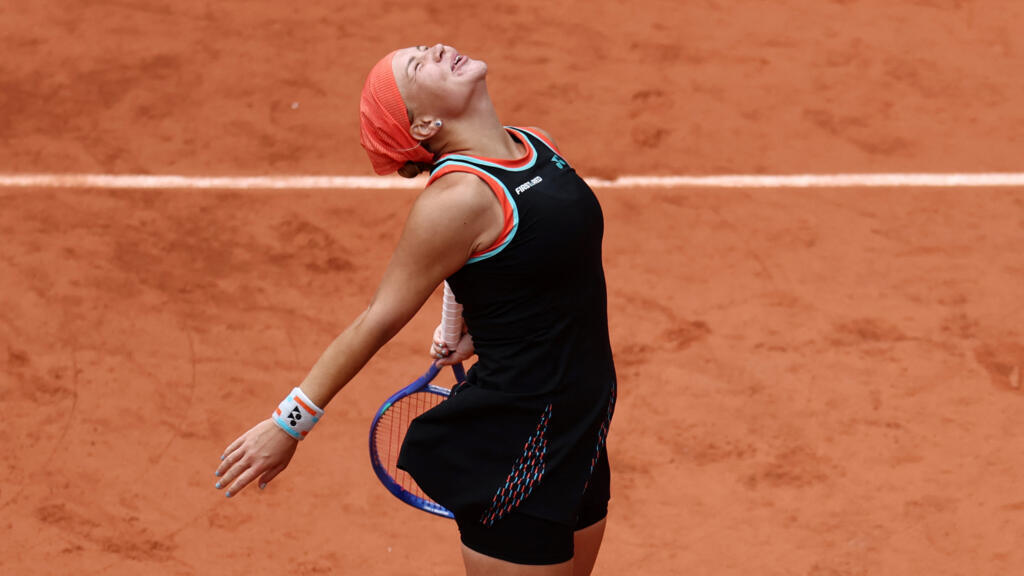
Aryna Sabalenka‘s bid for a first French Open title was left in tatters as she fell apart in a bizarre defeat by Russian 25th seed Diana Shnaider in the quarter-finals on Wednesday.
The world number one led by a set and a double-break before exiting the tournament in a blaze of unforced errors, collapsing to a 3-6, 7-5, 6-0 loss in blustery conditions on Court Philippe Chatrier.
Shnaider will face Polish qualifier Maja Chwalinska in the semi-finals on Thursday, with Marta Kostyuk or Mirra Andreeva awaiting the winner in Sunday’s final.
“Well honestly I’m speechless, I’m super happy. Obviously tough conditions with the wind,” said the 22-year-old Shnaider after beating a top-10 player for only the second time in her career.
Advertisement
“First time playing Aryna so definitely a lot of nerves and I feel the first set was trying to adjust to her game.”
Sabalenka was the only Grand Slam champion left in either the men’s or women’s singles draws at Roland Garros, but belied that status by making a whopping 57 unforced errors.
Shnaider was playing in her first major quarter-final, but now finds herself a strong favourite to reach the final heading into her last-four tie against world number 114 and fellow left-hander Chwalinska.
Advertisement
“Definitely super happy I managed to finish on a good note rather than start on a good note. Definitely a special tournament for me here,” added the Russian.
“It’s going be a lefty battle so I’m looking forward (to the semi-final).”
Sabalenka’s scarcely believable defeat was reminiscent of the way she threw away a strong position in last year’s final against Coco Gauff.
The Belarusian was playing in a 14th consecutive Grand Slam quarter-final but failed to become the first woman to make seven straight major semis since Serena Williams.
Advertisement
Increasingly frustrated Sabalenka
The top seed raced into a 5-1 lead and eventually sealed the opener on her third set point after initially failing to serve it out.
The second set followed a similar pattern at first, as Sabalenka moved 4-1 in front with a double-break before throwing away her next service game.
Sabalenka became increasingly frustrated as she gifted Shnaider three break points to level at 4-4.
Advertisement
After some animated remonstrating with her box, she recomposed herself enough to hold.
But the 28-year-old’s game continued to come apart, as a string of dreadful unforced errors allowed Shnaider to break again and tie up the set at 5-5, with Sabalenka left to gesticulate wildly towards her coaching staff.
Shnaider could not believe her luck as Sabalenka dumped successive forehands into the bottom of the net to finish off the set and send the match into a decider.
The Russian grew in confidence and moved 2-0 up in the third as Sabalenka sprayed eight unforced errors around Chatrier in the space of two games.
Advertisement
Shnaider cruised to victory from there, fittingly securing a semi-final berth when Sabalenka knocked a routine backhand into the net on the third match point.
A stunned world number one was left to trudge off court after winning just 14 points in the deciding set.





















































You must be logged in to post a comment Login