


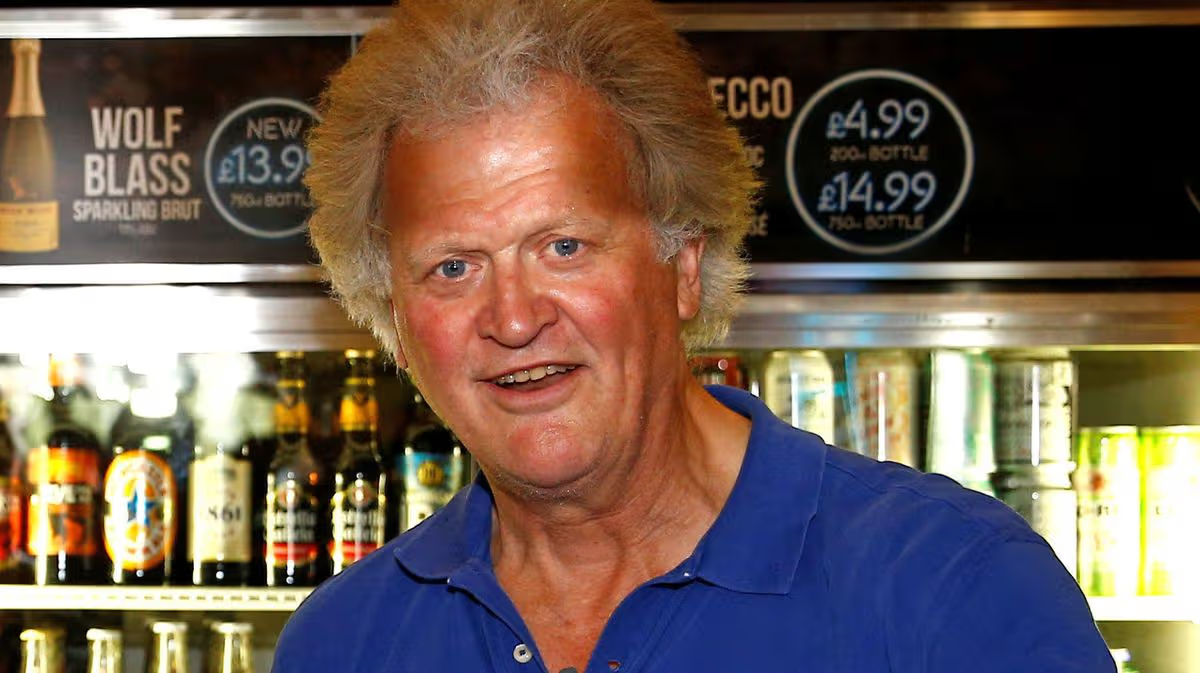
The pub group says it is facing higher costs for food, labour, repairs, energy and business rates

Wetherspoons’ boss Tim Martin(Image: Henry Nicholls/PA Wire)
Shares in JD Wetherspoon tumbled on Wednesday after the pub giant issued its fourth profit warning of the year, as it battles soaring food and energy costs alongside a mounting business rates bill.
Tim Martin, the Devon-based founder and chairman of the UK’s best-known pub chain, said: “Profits for the year are likely to be below market expectations, with marginally lower sales than anticipated in the final quarter, combined with higher costs in the areas of food, labour, repairs, energy and business rates.”
Shares in the FTSE 250 pub chain dropped by more than nine per cent at Wednesday’s market open, to 686p, leaving the stock down seven per cent in the year to date.
This marks Wetherspoon’s second profit warning in three months, as climbing energy and supply costs triggered by the Iran war continue to squeeze the pub chain’s famously thin margins. The group’s £70m pre-tax profit target was already considerably short of last year’s £80m.
Back in May, Wetherspoon cautioned of “substantial increases in costs” arising from the conflict in the Middle East, as reported by City AM.
The pub boss had been flagging as early as March that escalating costs could compel him to raise pint prices.
“Rising energy costs are bad news for pubs. As well as direct increases for gas and electricity, they make customers poorer and also push up the costs for suppliers,” he said.
Wetherspoon reported that sales growth decelerated to four per cent in the final three months, down from 4.8 per cent in the first half of the year, it confirmed on Wednesday. The pub chain has repurchased £42m worth of shares so far this year, alongside acquiring the freehold rights to four of its premises at a cost of £12.2m.
Net debt is expected to stand at £720m by year-end, unchanged from the previous year.
Wetherspoon has disposed of nine pubs and acquired eight during the current financial year. The group runs 793 managed pubs and 23 franchised locations throughout the UK.
Alongside escalating costs stemming from the Iran war, pubs nationwide were hit with increased business rates bills in April, following alterations announced at last year’s Autumn Budget.
Martin has consistently championed reform of business rates, along with a reduction in value-added tax (VAT) which he maintains would align pubs’ tax burden with that of supermarkets.
The pub chain, renowned for its affordable pints, works on “relatively slender margins” when compared to its rivals, observed Duncan Ferris, an analyst at Freetrade.
“Wetherspoon’s busy pubs mean its value proposition is resonating with customers, but the ultimate goal is converting rising sales into rising profits,” he noted.
Competing pub chains including Fuller’s and Young’s have reported a substantial surge in revenue owing to the World Cup. Sales climbed by as much as 170 per cent at Marston’s’ “grandstand” sports bars during England fixtures.
In the run-up to the World Cup, Martin informed City AM that he was not anticipating a significant boost in sales from the tournament.
“Wetherspoon pubs aren’t regarded as sports venues, although many football supporters use our pubs before and after games. However, we are showing all World Cup games, so we’re hoping for a useful boost in trade, touch wood,” he said.
Ferris added: “Wetherspoon probably enjoyed its own World Cup boost, but thirsty football fans clearly were not enough to stop final-quarter sales from disappointing.”


















































You must be logged in to post a comment Login