After years of trying to lose weight “the right way,” Jane Zuckerman realized that “putting in the work just wasn’t enough.”
Zuckerman, a 32-year-old data analyst based in Washington, D.C., said she lost 90 pounds in college and spent years cycling through nutritionists, therapy and strict routines — only to find herself at her heaviest after the pandemic, at 270 pounds.
Zuckerman said GLP-1 injections were out of the question, because she’s afraid of needles. But when the first GLP-1 pill for obesity became available in early January, Zuckerman called her doctor immediately, she said.
Almost a month after starting Novo Nordisk‘s new Wegovy pill shortly after it launched, she said, she had lost around 11 pounds.
Advertisement
Zuckerman is among tens of thousands of patients who drove an explosive demand for prescriptions for Novo’s pill just three months into its launch. Many of them share a common thread: They had long held off on using GLP-1s due to barriers such as high out-of-pocket costs for injections or a fear of needles.
That’s one of the earliest takeaways from the rollout: Novo’s pill appears to be expanding the obesity treatment market, largely drawing in new patients rather than converting existing ones from injections. CNBC spoke with five U.S. patients who recently started the pill following its launch, all of whom said they have not previously taken branded GLP-1 injections.
But it’s early days for the pill. Many patients have yet to reach higher doses of the drug, and their experiences vary. It will take more time to determine how effective the pill is in supporting patients’ long-term weight loss journeys, whether it helps keep users on GLP-1s for longer than injections do and whether demand for Novo’s product will hold in the face of fresh competition from Eli Lilly.
Novo has a head start in the pill arena over Lilly, which just won U.S. approval of its own GLP-1 drug for obesity last week. Analysts previously told CNBC they still expect that rival pill, called Foundayo, to capture a segment of the market, in part because it lacks the dietary restrictions that come with Novo’s oral drug.
Advertisement
Still, the Wegovy pill appears to have had the most explosive launch of a GLP-1 product yet. The latest number that Novo disclosed in February is that more than 600,000 prescriptions had been written since its launch, including for more than 3,000 patients in the first week.
Analysts at BMO Capital Markets attributed some of the early uptake to an “attractive” entry price of $149 per month and its connection to the well-known Wegovy brand. The pill carries one of the lowest cash prices for a GLP-1 therapy, ranging from $149 to $299 per month, depending on the dose.
Even so, the pill’s launch has done little to boost Novo’s stock price, as the Danish drugmaker is struggling to win back market share from Lilly in the broader obesity space and convince investors that its drug pipeline can help it grow beyond its existing products.
Novo is expected to report first-quarter sales, which will include the pill for the first time, in May. But sales of the overall Wegovy portfolio are expected to increase from $13.5 billion in 2026 to $18.9 billion in 2031, with the pill contributing $2.76 billion, according to a March GlobalData report.
Advertisement
Reaching new patients
The Wegovy pill is attracting patients with a fear of needles, which is estimated to affect up to 25% of U.S. adults. But the drug is also an alternative for those who have had difficulty accessing branded GLP-1 injections or other medications.
“There are a handful of patients that don’t want to be stung by the needle in the case of a vial and syringe, or stung by the price,” Jamey Millar, Novo’s head of U.S. operations, told CNBC in an interview last week. “We’re appealing to both.”
Dr. Eduardo Grunvald, medical director of the UC San Diego Health Center for Advanced Weight Management, said the main reason he’s prescribed the Wegovy pill to some patients is cost, since its cash prices are slightly lower than those of injections. But Grunvald said overall, obesity medicine specialists like him will still be inclined to prescribe injections over oral drugs, in part because the shots are more effective.
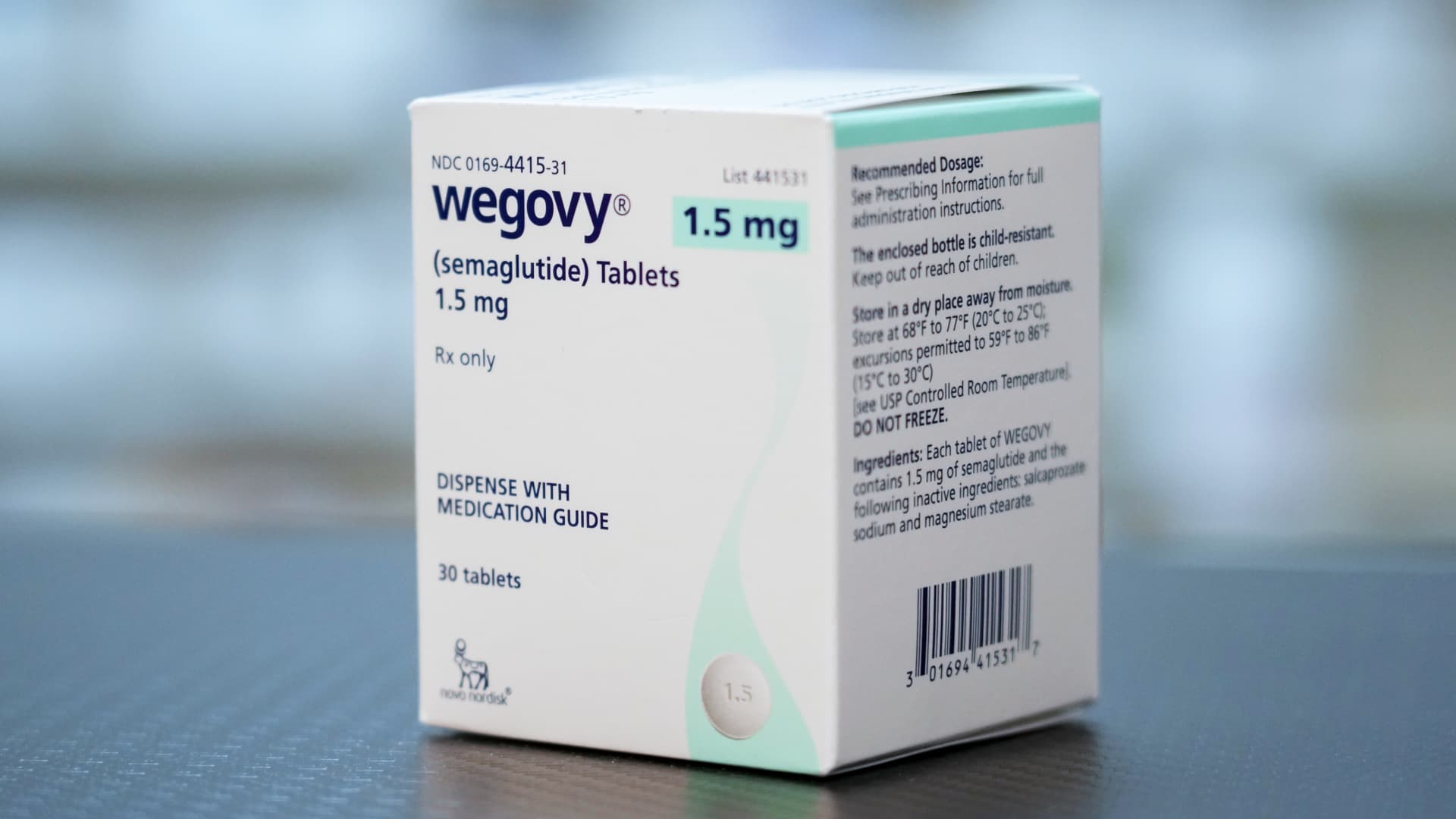
A box of Wegovy pills arranged at a pharmacy in Provo, Utah, US, on Thursday, Jan. 15, 2026.
Advertisement
George Frey | Bloomberg | Getty Images
Cost was a deciding factor for Amy Sawyer-Williams, who works at a theater company in Raleigh, North Carolina, and has gestational diabetes. In 2023, a few years after her son was born, she said, she began developing prediabetes and met the criteria for obesity. She said she would have started using GLP-1 injections sooner, but her insurance would not cover them for her.
That was long before Novo and Lilly slashed the cash prices of their obesity and diabetes injections.
The list prices of their shots are roughly $1,000 per month before insurance and other rebates, or discounts for cash-paying patients — a sum that has long prevented many others from starting and staying on treatment. Novo has committed to cutting the monthly list prices of its drugs in the U.S. by up to 50%, but that change won’t go into effect until 2027.
Advertisement
High prices also shut Sawyer-Williams out from taking the branded weight management treatment Contrave, pushing her to combine two generic medications to mimic the drug’s effects, she said. But earlier this year, she said, her endocrinologist recommended the Wegovy pill, in part due to its lower $149 per month pricing for the starting dose.
Sawyer-Williams became the first patient at her doctor’s practice and local Walgreens to take the pill, starting in mid-January, she said.
Some Wegovy pill users are patients who wanted to switch over from injections, said Dr. Heather Hofflich, a physician and endocrinologist at UCSD Health. She said she’s prescribed the pill for some people whose insurance stopped covering the injections but who want to continue treatment.
Hofflich said she has also prescribed the oral drug to patients who lost weight initially on a shot but are now trying the pill to maintain that progress.
Advertisement
Early progress
While it’s still early, some patients said they’re already benefiting from taking Novo’s drug.
Zuckerman was initially skeptical of how effective the product would be, because it’s an oral medication. But, she said, “I swear I felt the impact on the first day,” particularly decreased appetite and disinterest in food.
“Things that used to give me enjoyment, or things I used to binge on, they just don’t taste as good anymore, and I just don’t see the point in eating them, honestly,” Zuckerman said, listing coffee, cheese, bread and fries, among other food and beverages.
She said she dealt with nausea — a common side effect of the GLP-1 class — but that became more manageable after the first two weeks on the pill.
Advertisement
Zuckerman also said what matters more than the weight loss or food urges is how she feels: “My clothes are looser, I have more energy, I genuinely feel better.”
Cherie Marcus, 72, a retired fabric designer and theater editor based in Brooklyn, said she’s also seen gradual progress — even on the lowest 1.5-milligram dose of the drug. She said that over the last 30 years, after her daughter was born, she’s gained weight and seen her hemoglobin A1c — a key measure of blood sugar levels — creep up.
Marcus said she started the pill on Jan. 24, and has lost about a pound a week while taking the lowest dose for seven weeks. Patients typically increase their dosage after a month, but Marcus said she’s still taking the lowest strength as of early April.
But her weight has “leveled off” over the past few weeks, she said, so she will likely move to a higher dose if she stops losing weight entirely. Marcus sees herself taking the pill long term, with a goal of losing around 30 pounds.
Advertisement
Novo’s Millar last week said some patients may start on lower doses and “be perfectly fine with that,” hitting their own personal goals for weight loss. But the company is monitoring how many patients increase to higher doses of the drug, particularly the 9-mg and 25-mg versions.
Courtney Kim, a stay-at-home mom based in Pittsburgh, is among the patients taking the Wegovy pill who have yet to experience notable side effects.
While she doesn’t qualify as obese, Kim said, the “weight would just not come off” after she had her three children. She started the pill around mid-February after struggling to lose weight with the use of other prescription medications and supplements, she said.
Kim started at a weight of roughly 158 pounds and has so far lost nearly 7 pounds on the pill, she said. She recently started the 4-mg dose of the drug.
Advertisement
“It’s actually working, and I’m shocked that the weight is actually like coming off and staying off,” Kim said. “So far I’ve had a positive experience.”
Some patients wait and see
The early experience with the pill hasn’t been smooth for everyone. UCSD’s Hofflich said she had one patient who could not tolerate the pill due to its gastrointestinal side effects, which is a common issue with the injections, as well.
Another patient had to switch to an injection because the pill’s dietary restrictions — which involve taking it with a small amount of water and waiting 30 minutes before eating or drinking — did not fit into their lifestyle, Hofflich said. Two patients who haven’t seen progress on higher doses of the pill are switching to injections, she said.
Hofflich said other patients who haven’t seen progress on lower doses are starting to take higher doses to see if that will make a difference.
Advertisement
That includes a patient based in New Hampshire named Amy, who said she began taking the Wegovy pill in early February. She asked CNBC not to use her last name, for privacy reasons.
Amy said she initially considered a branded GLP-1 treatment two years ago after her weight crept up to 190 pounds, but her doctor said her insurance wouldn’t cover it. Amy then turned to cheaper, unapproved compounded versions of GLP-1s for a year and lost 30 pounds before stopping in November.
She said the two lowest doses of the Wegovy pill — 1.5 mg and 4 mg — “did absolutely nothing for me” over two months.
Novo’s cash discounts allowed Amy to pay roughly $300 total for a month’s worth of each dose, but she said she feels “frustrated” that she still feels hungry and has noticed no changes apart from side effects including constipation. Amy said her weight is “hovering” around 170 pounds.
Advertisement
“It just kind of felt like a waste of time,” she said.
Amy said she plans to start the 9-mg dose of the pill soon, hoping that she’ll begin to see the benefits of treatment. She said if that doesn’t work, she’ll discuss with her doctor whether to try the highest dose, 25 mg, or potentially turn back to compounded GLP-1s.
Meanwhile, Sawyer-Williams is restarting the lowest dose of the pill after pausing the drug due to gastrointestinal side effects. She said she was nervous about starting the pill, because she’s always had a sensitive stomach.
During her first three weeks on the 1.5-mg dose of the oral drug, she did not notice any weight loss, but experienced nausea if she didn’t eat, Sawyer-Williams said. She started to feel less interested in food by her fourth week, she said, but began taking the next dose, 4 mg, shortly after.
Advertisement
On the seventh day of taking that dose, Sawyer-Williams said, she experienced “the worst” nausea, vomiting and dehydration, which caused her to stop treatment.
“I wish I had just stayed on the 1.5” dose, she said. “I was really, really sick. Even when I quit the pill, I just couldn’t keep down water.”
Sawyer-Williams started at a weight of 177 pounds and lost five pounds overall after taking the drug, she said. She’s been off treatment for a few weeks, but started the lowest dose of the pill as of early April with new habits, including staying hydrated and starting to lift weights, she said.
“We’re going to just have to hope that it’s enough to help me,” she said, referring to the lowest dose.
Advertisement
Dr. Andrea Traina, Novo’s obesity medical director, recommended that patients who are struggling with side effects talk to their health-care provider about strategies to mitigate them. For example, she said some people may benefit from staying on a lower dose until they tolerate the drug better before increasing to a higher dosage.
“Treating obesity, just like most chronic diseases, is kind of a marathon, not a sprint,” Traina said in an interview. “So adding an extra month or two to help with tolerability upfront can help with kind of long-term success.”
Unanswered questions
Several questions remain about the long-term use of the pill, especially on higher doses, and it may not be the best obesity treatment for every patient, experts said.
Traina said each patient has an individual response, and they may respond well above or well below average in terms of weight loss and side effects. That can be tied to their genetics, environment or dietary habits, and experiences can vary slightly across certain populations and age groups, she said.
Advertisement
“It’s very tough to know why one patient’s responding to something and another isn’t,” Traina said, adding that it’s “one of the many benefits of having multiple treatment options available.”
Having an oral option at lower cash prices that “can be attainable for a larger population is a very good thing, to help us cure or alleviate this chronic disease state,” said UCSD’s Hofflich.
She said in the coming months, particularly with the rollout of Lilly’s new drug, “we’ll have many more stories and outcomes” of pills to evaluate, allowing for clearer comparisons between the two pills as well as injections.
Patients such as Zuckerman may offer an early glimpse of those who stand to benefit most from the pill — and the cases where it resonates.
Advertisement
“I was in this boat of seeing the pill as cheating and feeling like I had to lose the weight the hard way,” she said. “But that doesn’t work for everybody, and eventually I got to the point where I was like, do I want to be stubborn and try to do this the ‘right way,’ or do I want to die from being obese?”
“Jumping on the opportunity to the pill at this stage in my life was the right decision,” Zuckerman said.
Elixirr International plc (ELXXF) Q4 2025 Earnings Call April 21, 2026 8:00 AM EDT
Company Participants
Stephen Newton – Founder, CEO & Director Nicholas Willott – CFO, Partner, Finance Director, Company Secretary & Director Emiko Smith – Partner Graham Busby – Co-Founder, Partner, Deputy CEO & Director
Advertisement
Presentation
Operator
Good afternoon and welcome to the Elixirr International plc Investor Presentation. [Operator Instructions] Before we begin, I’d like to submit the following poll.
I’d now like to hand you over to Stephen Newton, CEO. Good afternoon.
Advertisement
Stephen Newton Founder, CEO & Director
For those of you who have not met me, I’m Steve Newton, Founder and CEO, co-founded it with Graham. And Nick is our CFO; and Em is our Investor Relations lead.
So you’ll hear from all 4 of us in this presentation. But let’s start off with where we are as a business and how we feel about it. I was reflecting over the weekend on the 17 years that we’ve been building this company. And I actually can’t believe we — I almost feel like we’ve been founded for this moment. If I think back to the dot-com time, there was this whole story about the high street was dead and there were so many technology was going to change the way business had operated and there’ll be so many different people being out of business. Yes, retail stuff suffered but it’s had to adjust itself and use different channels and different levers. And people are saying this about AI to consultancies. And to be honest, it creates a massive opportunity for us. Just like the digital revolution is still ongoing. We’re still helping clients to use the Internet technologies to be able to access their client bases and increase their revenue.
Sir Keir Starmer is facing fresh calls to spearhead a new cabinet committee charged with shielding British businesses from the mounting cost of global economic shocks, after one of the country’s most influential lobby groups warned that the UK remains dangerously exposed to disruption.
In a report published on Sunday night, the British Chambers of Commerce (BCC) said a decade marked by Brexit, the Covid-19 pandemic and Russia’s invasion of Ukraine had laid bare the absence of meaningful contingency planning to insulate the UK economy when global supply chains seize up.
The intervention lands at a pointed moment. The closure of the Strait of Hormuz for two months in the wake of the Middle East war is expected to push British inflation higher in the coming quarter and is already squeezing supplies of components used across the food and heavy industry sectors.
Shevaun Haviland, director-general of the BCC, said small and mid-sized firms had been “permanently bruised” by the procession of global shocks and could no longer be left to absorb the consequences alone.
“The UK’s inadequate economic security has become a drag on growth, competitiveness and national strength; yet it is still not given the focus and urgency it demands. The wars in Ukraine and Iran have demonstrated how supply chains can be disrupted overnight. We now live in a world where trade interests may be weaponised and where failing to secure key raw materials means failing to grow.”
Advertisement
At the heart of the BCC’s recommendations is the creation of an economic security cabinet committee, chaired by the prime minister of the day, that would coordinate Whitehall’s response to trade disputes, retaliatory tariffs and attempts to lock British exporters out of foreign markets.
The proposal arrives in the wake of the US Supreme Court’s decision in February to strike down President Donald Trump’s so-called “liberation day” tariffs, a ruling that has done little to soften the chilling effect his protectionist agenda has had on free-trading economies, many of which have been forced to design emergency retaliatory measures of their own.
The lobby group is also urging ministers to follow Brussels’s lead and forge a UK version of the EU’s “anti-coercion instrument”, introduced in 2023 and dubbed by some officials a “trade bazooka”. The mechanism would empower the government to impose import charges, and other punitive trade restrictions, on companies based in jurisdictions judged to be in breach of international trade commitments.
The numbers underline the case. The BCC estimates that more than 75 per cent of British manufactured goods sold overseas begin life with imported components, while imports and exports together account for around 60 per cent of UK gross domestic product. Few advanced economies, the report argues, are quite so reliant on the smooth running of someone else’s logistics.
Advertisement
Diversifying that supply chain, so that Britain is less dependent on a narrow band of suppliers for the raw materials underpinning the industries of the future, must become a strategic priority, the BCC says. Demand for lithium, copper and aluminium, the building blocks of electric vehicles, batteries and renewable infrastructure, is forecast to surge over the next decade as consumers and businesses move to greener products.
China’s near monopoly over the refining and processing of many of those critical minerals is, in the BCC’s view, the clearest illustration of why ministers should accelerate domestic production where possible and steer supply chains towards “friendlier” trading partners.
For Britain’s small and medium-sized exporters — many still nursing the scars of Brexit-related red tape and pandemic-era cost spikes, the message from Westminster’s business community is becoming impossible to ignore: in an era of weaponised trade, economic security is no longer the preserve of the Foreign Office. It is, increasingly, a board-level concern.
Jamie Young
Jamie is Senior Reporter at Business Matters, bringing over a decade of experience in UK SME business reporting.
Jamie holds a degree in Business Administration and regularly participates in industry conferences and workshops.
When not reporting on the latest business developments, Jamie is passionate about mentoring up-and-coming journalists and entrepreneurs to inspire the next generation of business leaders.
The S&P 500 and the Nasdaq eked out modest gains on Monday in muted trading, as investors took a breath at the top of an eventful week, with earnings, economic data, the U.S. Federal Reserve‘s rate decision and the ebb and flow of Middle East tensions all crowding the docket.
All three major U.S. stock indexes wavered throughout the session, showing little conviction in either direction after last week’s rally sent the S&P 500 and the Nasdaq to a series of record closing highs.
The session began with the S&P 500 up over 100% since the bull market began in October 2022.
“The market is just trying to deal with the rally that’s been going on and digest the latest all-time highs that we’ve made on the indices,” said Robert Pavlik, senior portfolio manager at Dakota Wealth in Fairfield, Connecticut. “And it’s trying to figure out whether or not those all-time highs are justified.”
Advertisement
First-quarter earnings season has hit full stride, with a host of high-profile firms slated to report this week, including five of the Magnificent Seven technology megacaps, Amazon , Alphabet, Meta Platforms, Apple and Microsoft. Investors will assess the extent to which these companies are beginning to reap benefits of massive expenditures on artificial intelligence.
Live Events
As of Friday, 139 companies in the S&P 500 have posted first-quarter results. Of those, 81% have beaten estimates. Analysts now see aggregate S&P 500 earnings growth of 16.1% year-on-year, up from 14.4% on April 1, according to LSEG I/B/E/S. The companies due to report this week account for roughly 44% of the S&P 500’s market capitalization, according to Raymond James. “Guidance has been pretty good. We’re seeing earnings growth of 15%, and I would classify that as a very good environment, except the road has gotten a lot more bumpy,” Pavlik added, referring to geopolitical tensions in the Middle East.
Attempts to revive peace talks between the U.S. and Iran continue following President Donald Trump‘s decision to call off negotiators’ trip to Islamabad for another round of face-to-face talks. Iran continues to restrict shipments through the Strait of Hormuz, with Iranian officials demanding that Washington lift its blockade as a precondition to further negotiation.
On Tuesday, the Federal Reserve is scheduled to convene for its two-day policy meeting, widely expected to culminate in the decision to leave interest rates unchanged. The accompanying statement and Fed Chair Jerome Powell’s press conference will be scrutinized for clues regarding the central bank’s assessment of U.S. economic health and the inflationary impact of spiking energy prices resulting from the U.S.-Israeli war on Iran.
According to preliminary data, the S&P 500 gained 8.93 points, or 0.12%, to end at 7,174.01 points, while the Nasdaq Composite gained 49.78 points, or 0.20%, to 24,886.38. The Dow Jones Industrial Average fell 57.82 points, or 0.12%, to 49,172.89.
Advertisement
Verizon advanced following the telecom company’s annual forecast hike due to stronger-than-expected subscriber adds.
Domino’s Pizza slid after the pizza chain missed first-quarter sales estimates.
Nvidia extended the prior session’s 4.3% surge. The company has reclaimed a market valuation of more than $5 trillion.
The British Business Bank has committed $20m to Ineffable Intelligence, the London-headquartered artificial intelligence venture, as part of a landmark $1.1bn seed round that ranks as the largest in European history.
In a move that signals a sharpening of the Government’s industrial strategy around frontier technology, the state-owned development bank has co-invested alongside the Sovereign AI Fund, the Treasury-backed vehicle established to keep strategically significant AI businesses anchored on these shores. The Sovereign AI Fund has put in further capital on top of the Bank’s contribution, although the precise figure has not been disclosed.
The British cheques sit within a syndicate that reads like a who’s who of Silicon Valley capital. Sequoia, Lightspeed, NVIDIA, Index Ventures, Google, EQT, Evantic, Flying Fish, DST Global and BOND have all joined the round, lending weight to the argument that Britain remains capable of attracting deep-pocketed foreign investors to its homegrown technology champions despite persistent concerns about the country’s appetite for risk.
Ineffable Intelligence is the brainchild of David Silver, the University College London professor widely regarded as one of the most influential reinforcement learning researchers of his generation. Silver previously ran the reinforcement learning team at Google DeepMind and is credited with pivotal work on AlphaGo, AlphaZero, AlphaFold and AlphaProof, the systems that successively rewrote what machines were thought capable of in domains ranging from board games to protein folding and mathematical reasoning.
His new venture has set itself a deliberately audacious mission: to build what Silver calls a “superlearner”, a system capable of discovering knowledge from its own experience rather than relying on the data humans feed it. If realised, the technology would represent a step change beyond today’s large language models, which remain heavily dependent on training material drawn from the internet.
Advertisement
For the British Business Bank, the investment marks the latest in a steady cadence of AI commitments. The lender has now made nine AI deals over the past twelve months, with recent backing for autonomous driving outfit Wayve and conversational AI specialist PolyAI. The Bank has also been a quietly significant force behind the commercialisation of British academic research, supporting almost a quarter of all university spinout deals struck between 2022 and 2024.
Charlotte Lawrence, managing director of direct equity at the British Business Bank, described Silver as “a generational talent who has consistently been on the cutting edge of AI development“. She added: “Ineffable Intelligence has the potential to produce a paradigm shift in our scientific and technology landscape, and we are incredibly excited to be supporting him and his team in this endeavour.”
George Mills, the Bank’s investment director, said the company was tackling “one of the most significant opportunities within AI”, citing potential applications spanning advanced problem solving and new product development. “The UK produces world-class AI talent, and we are pleased to back strategically important businesses to scale and stay in the UK,” he said, in remarks that will be read as a pointed reminder of the Government’s determination to stem the flow of British intellectual property to American owners.
Josephine Kant, head of ventures at Sovereign AI, was equally bullish. “Very few founders in the world could credibly set out to build a superlearner, a system that discovers new knowledge from its own experience rather than ours. David is one of them,” she said. “From AlphaGo to AlphaZero to AlphaProof, he has spent nearly two decades turning reinforcement learning from a research idea into the results the rest of the field builds on. Ineffable is being built in the UK, and that matters.”
Advertisement
The deal arrives at a delicate moment for British technology policy. Ministers have repeatedly stressed their ambition to position the country as a global hub for safe, sovereign AI development, but they have faced criticism for the relative scarcity of late-stage growth capital available to scaling deep-tech businesses. A seed round of this magnitude, anchored by domestic public capital and topped up by the world’s most prolific venture investors, will be cited by Whitehall as evidence that the strategy is beginning to bear fruit.
For SME founders watching from the sidelines, the headline figures may feel a world away from their own funding realities. Yet the structural shift is significant: the British Business Bank’s growing willingness to write meaningful equity cheques into frontier technology businesses, in concert with private capital, suggests a more interventionist posture that could in time filter down to a broader cohort of high-growth British companies.
Jamie Young
Jamie is Senior Reporter at Business Matters, bringing over a decade of experience in UK SME business reporting.
Jamie holds a degree in Business Administration and regularly participates in industry conferences and workshops.
When not reporting on the latest business developments, Jamie is passionate about mentoring up-and-coming journalists and entrepreneurs to inspire the next generation of business leaders.
Good afternoon, ladies and gentlemen. Thank you for standing by, and welcome to TFI International’s 2026 Annual Meeting of Shareholders. [Operator Instructions] I’d like to remind everyone that this call is being recorded on Monday, April 27, 2026. I would now like to turn over the call to Mr. Alain Bedard, Chairman of the Board, the President and Chief Executive Officer of TFI International. Please go ahead, sir.
Alain Bedard President, CEO & Chairman
Advertisement
Well, thank you, and good afternoon, ladies and gentlemen. Welcome to the 2026 Annual Meeting of the shareholders of TFI International. Participation at this meeting by myself, the scrutineers and certain proxyholders is being done remotely. So we are making this meeting available by phone. We have, therefore, asked all shareholders to vote by proxy prior to the meeting, which many of you have done and we thank you for doing so. At the conclusion of the official business shareholders will be able to ask questions by following the instruction from the operator.
So I will act as Chairman of the meeting. And with the consent of the meeting, I’ll ask Josiane Langlois, who is President of TFI’s Head Office in Montreal to act as Secretary. Also, with the consent of the meeting, I’ll now ask Steve Gilbert and [ Vlad Tilibassa ], our Computershare Trust Company of Canada to act as scrutineers for the meeting, tabulate the number of shareholders and the number of shares represented at this meeting in person or by proxy and report to me as Chairman of the meeting. There are several routine matters to
A gourmet chocolate maker is recalling select bonbon collections sold nationwide after a labeling error failed to disclose the presence of walnuts, posing a potentially life-threatening risk to some consumers.
French Broad Chocolates PBC is recalling its Bette’s Bake Sale Bonbon Collection in six-piece, 12-piece and 24-piece boxes due to the potential presence of undeclared walnuts, according to a company announcement published by the Food and Drug Administration.
Advertisement
The recall applies to products with batch numbers 260414 and 260417.
“People who have an allergy or severe sensitivity to walnuts run the risk of serious or life-threatening allergic reaction if they consume these products,” the company said.
Correct tasting notes insert for French Broad Chocolates’ Bette’s Bake Sale Bonbon Collection, as provided in the company’s recall notice posted by the FDA. (FDA)
The products were distributed between April 14, 2026, and April 20, 2026, and were sold in French Broad Chocolates retail stores in Asheville, North Carolina, and online to customers in multiple states.
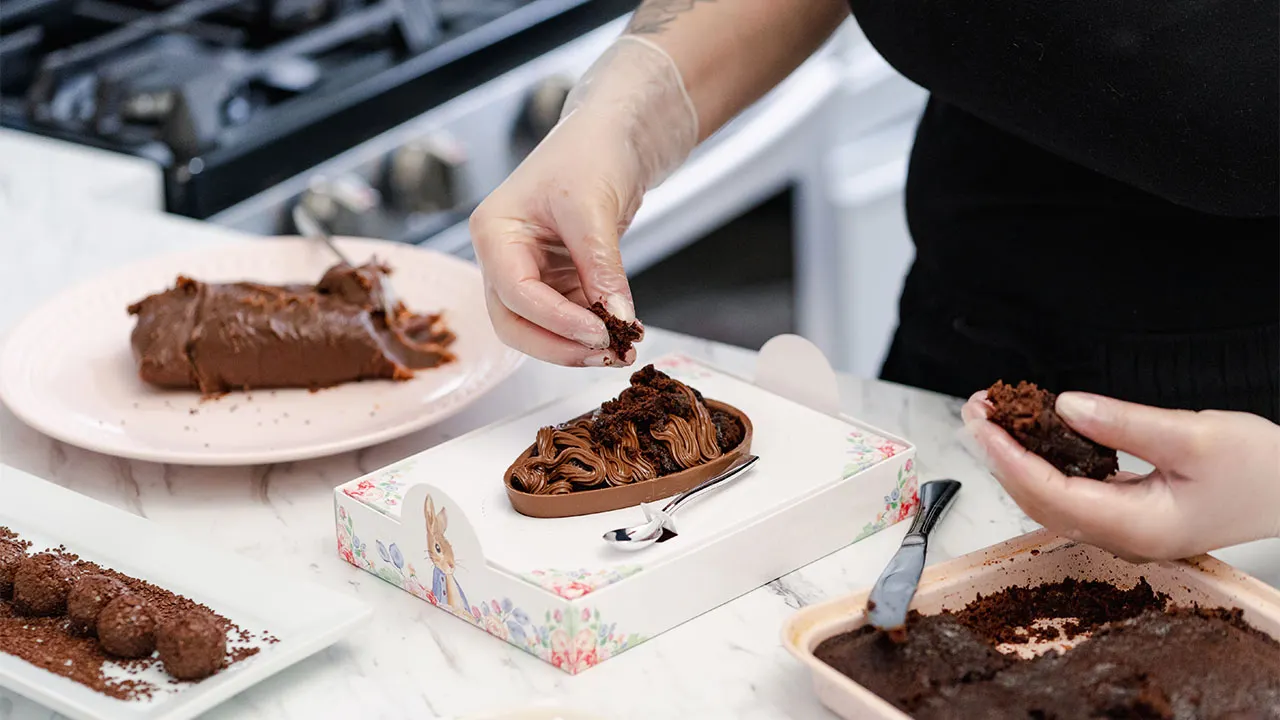
Packaging for French Broad Chocolates’ Bette’s Bake Sale Bonbon Collection, which is subject to a recall due to undeclared walnuts. (FDA)
Affected products include Bette’s Bake Sale Bonbon Collection in six-piece (2.5 oz.), 12-piece (5 oz.) and 24-piece (10 oz.) boxes, with “best by” dates ranging from June 22, 2026, to June 30, 2026, depending on the batch.
According to the company, the issue stems from a labeling error in the tasting notes insert that failed to identify walnuts as a tree nut allergen. The Walnut Fudge bonbon, which contains walnuts, was incorrectly identified in the printed tasting notes and was switched with the Peach Cobbler bonbon in the guide.
Incorrect tasting notes insert showing the labeling error that misidentified bonbons containing walnuts, according to the FDA-posted recall notice. (FDA)
The company said it was notified of the issue on April 20, 2026, by a team member. No illnesses have been reported to date, according to the company.
Consumers with a tree nut allergy who purchased the products are urged to return them to the place of purchase for a full refund or discard them. Customers with questions can contact French Broad Chocolates customer service.
Gatestone Institute senior fellow Gordon Chang joins ‘Mornings with Maria’ to discuss the U.S. crackdown on China over Iran oil sanctions, rising tensions with Beijing and concerns over alleged theft of American AI technology.
The United States is ramping up pressure on Iran by targeting the economic lifelines that help keep its oil flowing, with a particular focus on China’s role in facilitating those exports.
Gatestone Institute senior fellow Gordon Chang joined FOX Business’ Maria Bartiromo on “Mornings with Maria” to discuss how Washington’s latest sanctions strategy is designed to disrupt the networks moving Iranian crude, including Chinese refineries and vessels tied to Tehran’s so-called “shadow fleet.”
Advertisement
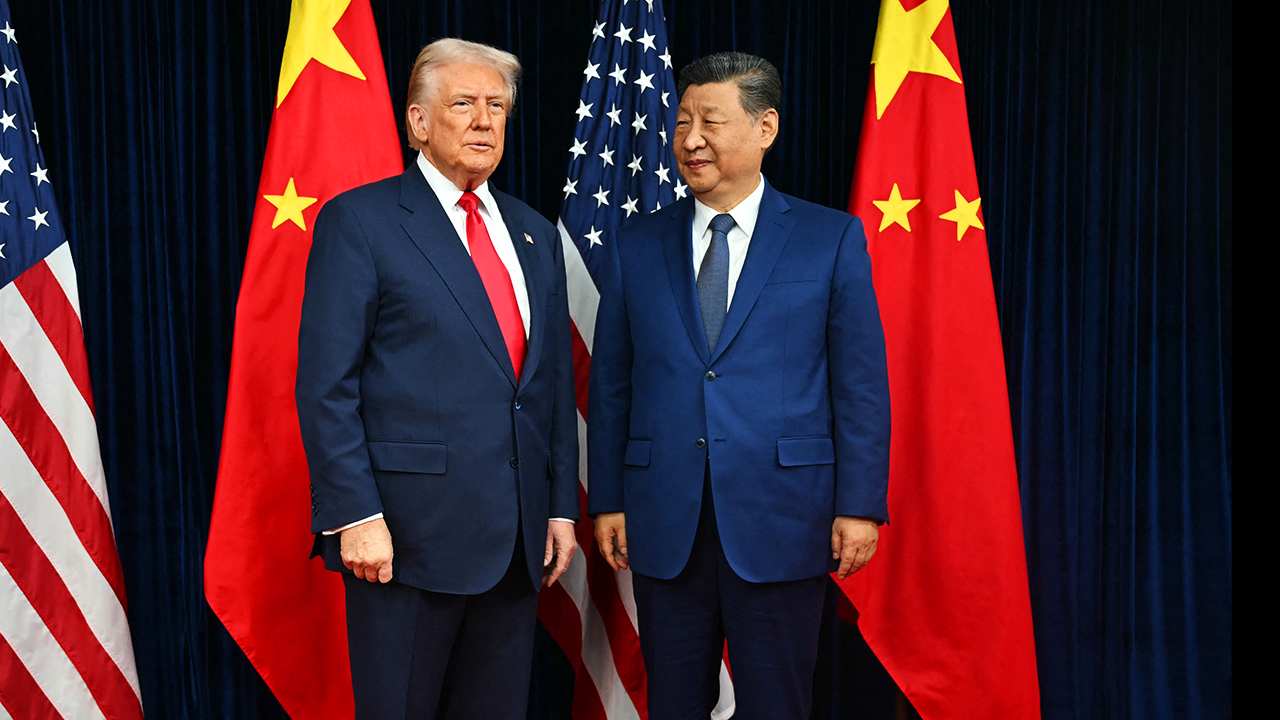
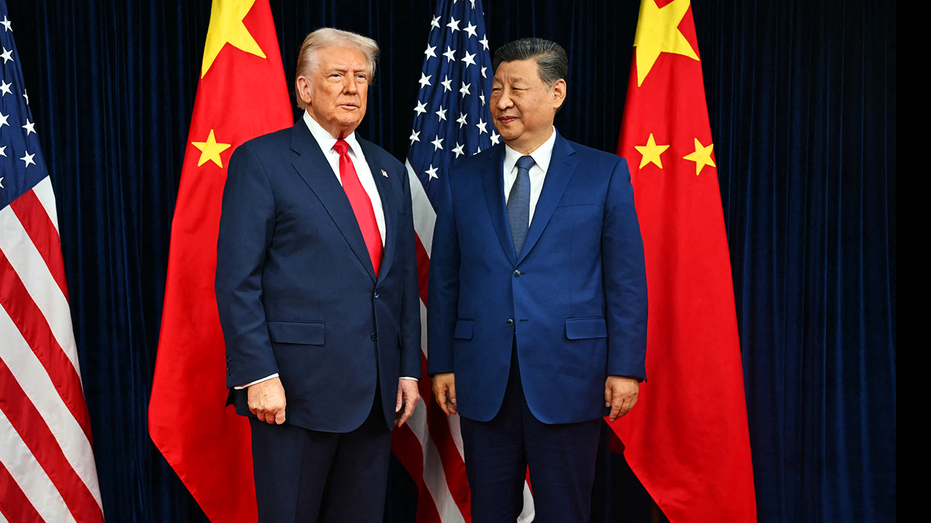
President Donald Trump and China’s President Xi Jinping (Andrew Caballero-Reynolds/AFP via Getty Images / Getty Images)
Those measures come as U.S. officials expand beyond traditional sanctions, warning foreign entities that continued business with Iran could jeopardize access to the American financial system. The approach reflects a broader shift toward what analysts describe as economic warfare, aimed at cutting off revenue streams that sustain Iran’s government.
“It’s important for the United States to start imposing secondary sanctions,” Chang said. “You should start, as the Treasury has done, with China because China is the main criminal here.”
Gatestone Institute senior fellow Gordon Chang joins ‘Mornings with Maria’ to break down escalating U.S.-Iran tensions, China’s alleged support for Tehran, and the growing economic and technological rivalry shaping the global power struggle.
Chang pointed to a recurring challenge in enforcing sanctions, noting that targeted entities often adapt quickly by shifting operations to avoid penalties.
“We have seen in the past that when we impose sanctions on Chinese entities… it moves the sanctioned activity to non-sanctioned entities and starts all over,” he said. “This is sanctions whack-a-mole.”
To counter that, Chang argued, the U.S. must broaden its approach to include entire networks rather than individual actors.
Heritage senior research fellow Steve Yates joins ‘Mornings with Maria’ to break down President Donald Trump’s Iran deal push, China pressure over alleged support and Hezbollah threats amid a fragile Middle East ceasefire.
Advertisement
“The important thing here is for the United States to sanction all refiners, for instance, all vessels. We do that, we really cut off the China support for Iran,” he said.
The push comes ahead of anticipated high-level talks between U.S. and Chinese leaders, raising the stakes for how aggressively Washington enforces its sanctions.






















































You must be logged in to post a comment Login