The Thai Securities and Exchange Commission (SEC) has unveiled five sweeping measures to combat illicit “grey capital,” dismantle mule account networks, and curb sophisticated investment scams targeting retail investors.
Key Details:
Tightened KYC and customer due diligence for securities firms, including income/occupation verification and behavioral monitoring.
Mandatory reporting of suspicious transactions to the Anti-Money Laundering Office and enhanced name-matching for deposits/withdrawals.
Expanded oversight of beneficial owners and shareholders, including scrutiny of funding sources and stricter disqualifications for money laundering or terrorism-related offenses.
Enhanced digital asset surveillance using blockchain forensics, alignment of transfer standards with cash-equivalent risks, and implementation of the Travel Rule.
Cross-agency collaboration via the “Connect the Dots” task force to integrate identity, behavior, and financial data for tracking illicit networks.
These measures aim to restore investor confidence and safeguard Thailand’s capital market integrity amid rising digital fraud and economic risks.
What is the SEC’s ‘Connect the Dots’ task force targeting?
The Securities and Exchange Commission (SEC) of Thailand has launched a joint task force called “Connect the Dots” to target illicit financial networks through integrated data analysis. This initiative is part of a broader strategy to dismantle “grey capital” operations, mule account networks, and increasingly sophisticated investment scams.
The task force aims to integrate data across identity, behavior, and financial flows to track illegal activities more effectively. According to Pornanong Budsaratragoon, secretary-general of the SEC, this inter-agency collaboration involving the Digital Economy and Society Ministry and the Anti-Money Laundering Office is designed to trace transactions to their ultimate endpoints and facilitate asset seizure.
Advertisement
Beyond the task force, the regulator is implementing stricter know-your-customer (KYC) requirements and enhancing surveillance of digital assets. These measures include using blockchain forensic tools to monitor cross-border flows and tightening oversight of stablecoin transactions to protect retail investors from widespread financial losses.
How many crypto accounts were frozen under ‘Speed Bump’?
Thailand’s digital asset industry, under the newly implemented “Speed Bump” measure, has frozen over 10,000 suspicious cryptocurrency accounts. Led by the Thai Digital Asset Operators Trade Association (TDO), this initiative targets the misuse of mule accounts by criminal networks to facilitate illicit fund transfers.
The Speed Bump measure enforces a 24-hour transaction lock on transfers of 50,000 baht or more. During this period, users must complete additional know-your-customer (KYC) procedures, such as video verification, to confirm the wallet’s beneficial owner. While this approach has effectively curbed illicit transactions, it has also resulted in increased compliance costs for operators and extended processing times for legitimate digital asset users.
Patrick Crehan buys fuel on behalf of a 3,500 member consortium, who are mainly agricultural farmers. Before the conflict, he was paying around 70p a litre. Just before the ceasefire, he was paying around 130p a litre, though that has fallen back a little since Wednesday.
Proposals for merger would add hundreds of shops plus three crematoria to retail giant’s chain, subject to member approval
Anna Wise Press Association Business Reporter
09:28, 09 Apr 2026
The merger needs to be approved by Co-op members(Image: Getty Images)
The Co-op Group is planning to absorb Southern Co-op in a merger that would bring hundreds of food and funeral outlets into the Manchester retail giant’s portfolio.
Advertisement
The two societies have announced proposals that would require member approval before proceeding.
The deal involves integrating Southern Co-op’s 300,000 members into the seven million-strong Co-op Group, along with its approximately 300 food, funeral and Starbucks coffee branches.
Co-op Group would also gain its three crematoria under the arrangement, allowing it to re-enter the burgeoning market alongside its existing funeral services.
The organisations declined to reveal the value of the potential transaction.
Advertisement
Southern Co-op is headquartered in Portsmouth and operates predominantly across the south and south west of England, including London, Bristol and Exeter, trading under the Co-op Food and Welcome brands. It was established in Portsmouth as a co-operative in 1873.
Co-operatives are businesses owned and controlled by their members, who have a direct say in how the organisation is run.
Southern Co-op members will be given a vote on the proposals, which, if backed by members and regulators, are anticipated to be completed in the final quarter of 2026.
The merger would be facilitated through a process known as “transfer of engagements”, which enables two societies to combine.
Advertisement
Ben Stimson, Southern Co-op’s chief executive, said the deal would safeguard the future of the business, which has recently struggled with declining profits and rising costs. He said: “By coming together, we can secure the co-operative future of Southern Co-op as part of a stronger combined Co-op Group, while creating an even stronger voice nationally and internationally to advance the co-operative cause.”
Kate Allum, Co-op Group’s interim chief executive, said: “Joining forces across Co-op Group and Southern Co-op will create new opportunities for members to have access to a greater range of benefits across a wider society, with more trading opportunities, and in turn more benefits for them and their communities.”
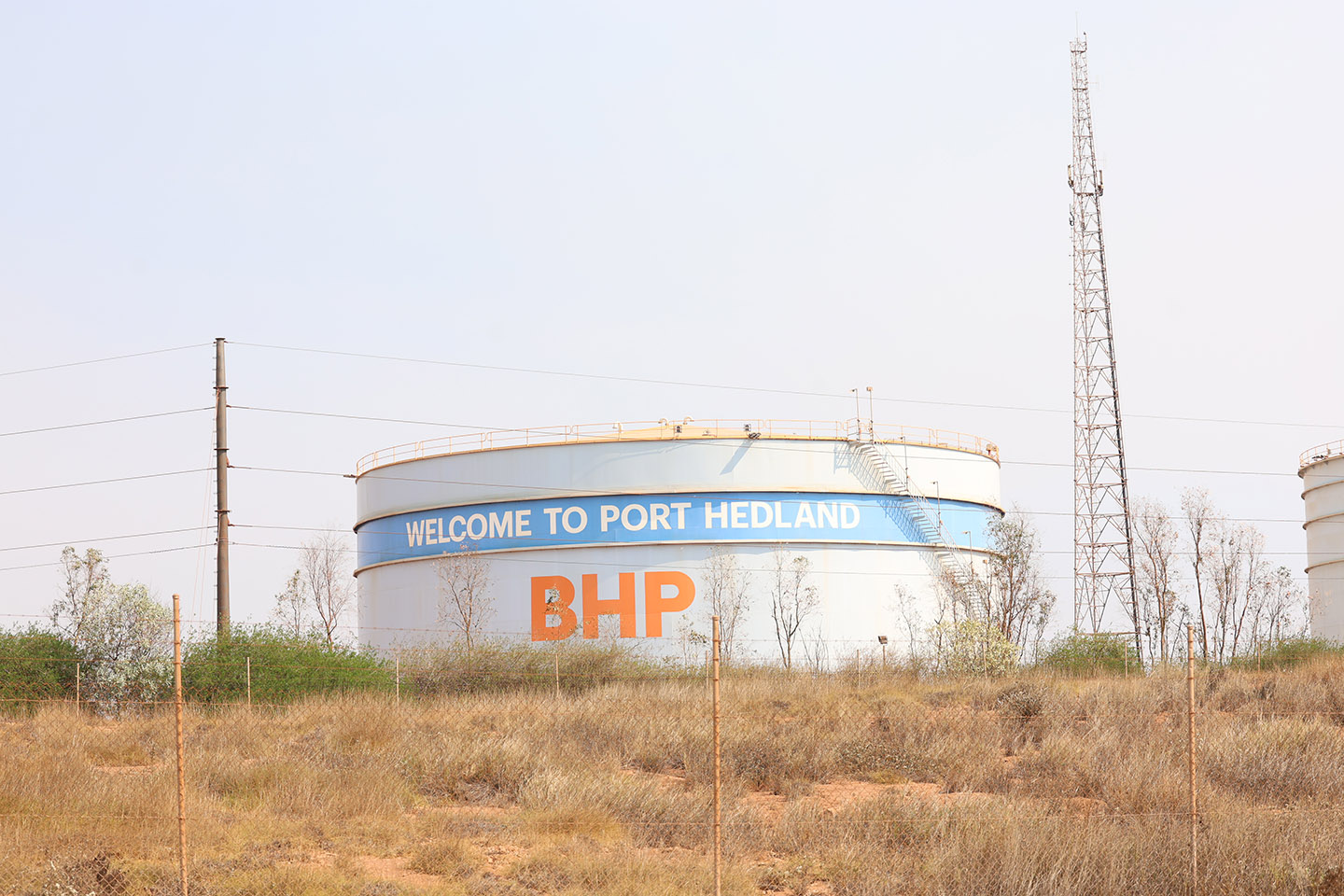
Specialist electricians working for BHP in the Pilbara have locked in April 16 as the date for the first industrial action to be taken in the mining region in two decades.
India’s currency outlook is once again under scrutiny, with projections indicating the rupee could weaken to 94 against the US dollar by mid-2026. The backdrop: rising oil prices, a widening current account deficit, and fragile global capital flows.
Speaking to ET Now, Rahul Bajoria from BofA Global Research explained that while the forecast predates recent RBI measures, the core concern remains intact.
“So, I would say the numbers were done before the RBI came out with the measures… the main underlying issue remains with the balance of payments… we will run with a small BOP deficit… which can very well take us back towards 94 levels… we should kind of stabilise around 93 levels… but there is significant uncertainty about any spot projections.”
A Growing External Imbalance India’s external position is becoming increasingly stretched as higher energy prices push up the current account deficit.
Advertisement
“No, absolutely… the most fundamental challenge… is how the external balances are set up… with the widening in the current account deficit… there is still going to be a challenge as to how do we attract capital… measures to increase capital inflows… should be the core focus… to stabilise the currency.”
Live Events
RBI’s Balancing Act The Reserve Bank of India, Bajoria noted, is less concerned about defending specific levels and more focused on preventing disorderly moves. “RBI… do not really track any particular levels… they are more worried about the pace and intensity… if there is a current account widening, the RBI would let the rupee adjust… 94-95… they would probably be okay… what matters more is attracting capital inflows going ahead.”Capital Flows: The Swing Factor Recent outflows, he said, reflect a broader global trend rather than India-specific weakness.
“A lot of the capital outflows… are just funds lightening risk… we have seen outflows across emerging markets… we are not being singled out… in the half of the year we are looking for capital flows to make a return… but the real question mark is… is that going to be enough.”
Rate Hikes: Not a Given On monetary policy, Bajoria emphasised that rate hikes depend on whether the shock is inflationary or growth-related.
“So, I would not say it is a given… it depends on whether this manifests into a growth shock or an inflation shock… if it is an inflation shock… there is a case for some monetary adjustment… but if growth slips below 6.5%… I am not entirely sure the RBI would be comfortable hiking rates.”
Advertisement
Inflation Risks: Limited Downside While food prices have softened recently, risks may still tilt upward due to fuel and global factors.
“So, the downside risk is coming from high-frequency prices… vegetable and cereal prices… have been moving lower… but a potential fuel price hike… and global El Nino conditions… make me think downside risks are limited… there is going to be some upside risk.”
The Bottom Line The rupee’s path will depend on how oil prices, capital flows, and policy responses evolve. Near-term pressure may persist, but stability could return if global conditions improve and inflows pick up. For now, uncertainty continues to dominate the outlook.
The group says it has navigated supply challenges in the first half and is on track to meet its full-year expectations
Gooch and Housego’s global headquarters in Ilminster, Somerset(Image: Google Maps)
A Somerset components manufacturer has reported a rise in revenues for the first half of the year on the back of growing demand in the aerospace and defence market.
Revenue at Ilminster-based Gooch & Housego (G&H), which makes detectors, lasers and fibre optic equipment, stood at £81.9m for the six months to the end of March – up 9.1 per cent on an organic, constant currency basis.
The London-listed firm said revenue from the industrial laser and semiconductor markets had improved over the period and there were “encouraging signs” of recovery in the semiconductor industry.
The company’s order book was also up, increasing £25m to £167.3m from September.
Advertisement
Charlie Peppiatt, chief executive of G&H, said: “I am pleased with the positive progress that G&H has made in the first half of the financial year.
“The strong order book growth in the period demonstrates the increased confidence our customers have in G&H to provide them with their most complex photonics and optical systems requirements.”
G&H told investors that its acquisition last year of two businesses – Global Photonics and Phoenix Optical – had been “critical” in helping secure new orders from defence customers in the US, UK and Europe.
The group said it had also “proactively managed” the re-sourcing of key raw materials used across several of its production processes where availability had been restricted by retaliatory measures from certain nations in response to US tariffs.
Advertisement
“Despite the situation remaining fluid, with supply lumpy and intermittent, the group has navigated these challenges in H1 2026 and remains vigilant around supply chain, operations and inventory planning going forwards,” the company said in a statement on Thursday, April 9.
“Whilst there are significant macroeconomic uncertainties, the recovery in our industrial and semiconductor markets along with the strong growth in demand from our aerospace and defence markets should allow the group to make further positive progress on our journey to mid-teens returns over the medium term,” added Mr Peppiatt.
Trading for the full year is currently set to be in line with expectations. The group will announce its interim results for the six months ended March 31, 2026, on June 2.
The news comes as former Meggitt divisional CFO James Corte starts his role as G&H’s new chief financial officer and executive director.
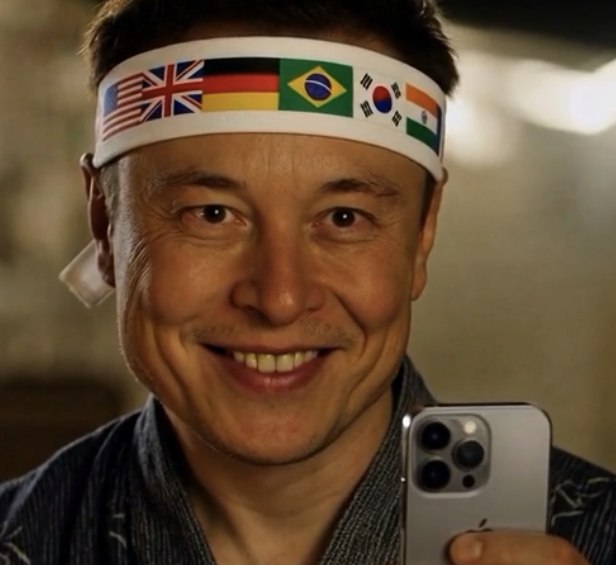
AUSTIN, Texas — Elon Musk lit up X on Thursday with a 10-second AI-generated video that has already racked up more than 2.2 million views in hours, featuring a grinning Musk in a traditional Japanese yukata and headband, proudly introducing his “cool” Shiba Inu companion — also sporting matching flag headbands and tiny glasses.
Elon Musk Posts Grok Imagine Video: Himself in Yukata Showing Off ‘Cool’ Flag-Wearing Shiba Inu Dog
The post, which contained no caption beyond an embedded link, was uploaded at 7:01 a.m. GMT and quickly became the day’s most engaging content from the tech billionaire. Musk’s previous post just minutes earlier explicitly credited “Generated with @Grok Imagine,” signaling the short clip was created using xAI’s image- and video-generation tool.
In the video, Musk — wearing a dark blue yukata and a white headband adorned with the flags of the United States, United Kingdom, Germany, Brazil, South Korea and India — stares wide-eyed into a silver iPhone he holds in his left hand. “It’s Elon Musk,” a voice-over says as he gestures animatedly with his right hand. “This is my dog!” The scene cuts to Musk beaming beside an adorable Shiba Inu wearing round glasses and its own headband featuring the Union Jack and Indian flag. “Look at this guy, isn’t he cool?” Musk asks, gently lifting the dog, which appears to “smile” with its tongue out.
The clip blends Musk’s signature meme humor with high-production AI visuals, complete with realistic facial expressions, subtle head movements and synchronized English subtitles. Fans immediately flooded the replies with laughter, heart emojis and cultural references. Japanese users expressed delight at seeing Musk in a yukata, with one writing in Japanese, “I never thought I’d see Elon Musk speaking Japanese!” Others tied the timing to “Shiba Inu Day,” celebrated on April 8 because the numbers 4 (“shi”) and 8 (“ba”) phonetically evoke the breed’s name in Japanese.
The video’s rapid spread underscores X’s role as Musk’s preferred platform for unfiltered, real-time engagement. Posted just one day after Shiba Inu Day and amid ongoing buzz around Dogecoin and Shiba Inu cryptocurrency — both of which Musk has playfully endorsed in the past — the clip tapped into multiple meme ecosystems at once. The Shiba Inu breed, immortalized in the original “Doge” meme that inspired Dogecoin, has long been a favorite in Musk’s online persona.
Advertisement
Grok Imagine Powers the Fun
xAI, Musk’s artificial-intelligence venture, rolled out Grok Imagine earlier this year as a creative tool integrated directly into the Grok chatbot on X. Unlike earlier image generators that often produced stiff or unrealistic results, Grok Imagine has gained praise for its ability to handle dynamic video clips with natural motion, accurate lip sync and cultural details — such as the precise yukata fabric patterns and flag placements seen here.
Musk has used the tool repeatedly in recent weeks to post surreal, humorous content, ranging from Cybertruck animations to abstract AI art. Thursday’s trio of posts — including one labeled “Cybertruck is so awesome 😎” and another declaring “Grok will never go to therapy. Never” — formed a loose content thread showcasing Grok’s evolving capabilities.
Industry analysts noted the strategic value. By demonstrating Grok Imagine’s output in real time, Musk not only entertains his 200-plus million followers but also drives product awareness for xAI, which competes with OpenAI’s DALL-E, Google’s Imagen and Midjourney. Early user feedback in the replies highlighted the tool’s speed and quality, with several creators reposting their own Grok-generated variations of the Shiba Inu scene within minutes.
Advertisement
Fan Reactions Span Globe
Engagement metrics exploded quickly: more than 13,000 likes, 1,400 reposts and 2,200 replies within the first few hours. Replies ranged from simple “WOOF” emojis and laughing-crying faces to elaborate theories. One user posted side-by-side comparisons with classic Doge memes, while another suggested Musk turn the clip into an official storyline. Japanese-language replies celebrated the cultural nod, with some speculating Musk might visit Japan soon for a Tesla or Starlink event.
Crypto enthusiasts linked the post to market movements. Shiba Inu token (SHIB) saw a modest uptick in trading volume shortly after the video dropped, though analysts cautioned that meme-driven price action remains volatile. Dogecoin supporters, long loyal to Musk’s occasional endorsements, flooded quote posts with rocket emojis and calls for the billionaire to “send the dog to the moon.”
Not all reactions were purely celebratory. A handful of critics called the video “low-effort” or questioned the use of AI for personal branding, but these voices were outnumbered by positive sentiment. One reply captured the prevailing mood: “Grok is translating the word ‘based’ properly… absolutely based.”
Advertisement
Broader Context: Musk’s Meme Mastery
The Shiba Inu video fits a long pattern. Musk has repeatedly leveraged internet culture — from Dogecoin tweets that once moved markets to Tesla Cybertruck reveals staged as memes — to keep his audience engaged. His 2022 acquisition of Twitter (now X) was partly framed as a defense of free speech and fun, and posts like Thursday’s reinforce that ethos.
xAI itself positions Grok as a “maximum truth-seeking” AI with a sense of humor, contrasting it with more guarded competitors. Musk has said publicly that Grok should avoid the overly cautious “therapy-speak” common in other chatbots, a theme echoed in his same-day post rejecting therapy for Grok.
The timing also coincides with heightened interest in AI-generated video. Hollywood writers and actors continue to debate AI’s role in entertainment, while consumer tools like Grok Imagine democratize high-quality content creation. Musk’s willingness to use his own likeness demonstrates confidence in the technology’s safety and appeal.
Advertisement
What It Means for xAI and X
For X, the post drives platform metrics at a critical time. Premium subscribers who pay for Grok access gain an edge in creating similar content, potentially boosting conversions. For xAI, every viral Grok Imagine clip serves as free marketing, showcasing capabilities that could eventually power commercial products beyond social media.
Musk, who splits time between Tesla, SpaceX, xAI and his role at the Department of Government Efficiency, has made clear he views humor as essential to cutting through noise. In a platform where serious policy announcements often compete with memes, the yukata-Shiba video reminds followers that the world’s richest person still enjoys a good laugh.
As of Thursday afternoon, the original post continued climbing, with views projected to surpass 10 million by day’s end. Fan edits, reaction videos and AI-prompt recreations were already proliferating. One user generated a version featuring Musk and the dog in a Cybertruck; another translated the subtitles into multiple languages.
Advertisement
Whether this was a spontaneous bit of fun or a calculated product tease, the clip accomplished what Musk’s posts often do: spark joy, conversation and a little chaos — all while highlighting the creative power of the AI he champions. In a world increasingly shaped by algorithms, Elon Musk’s digital dog day proved once again that sometimes the simplest, silliest content connects the deepest.
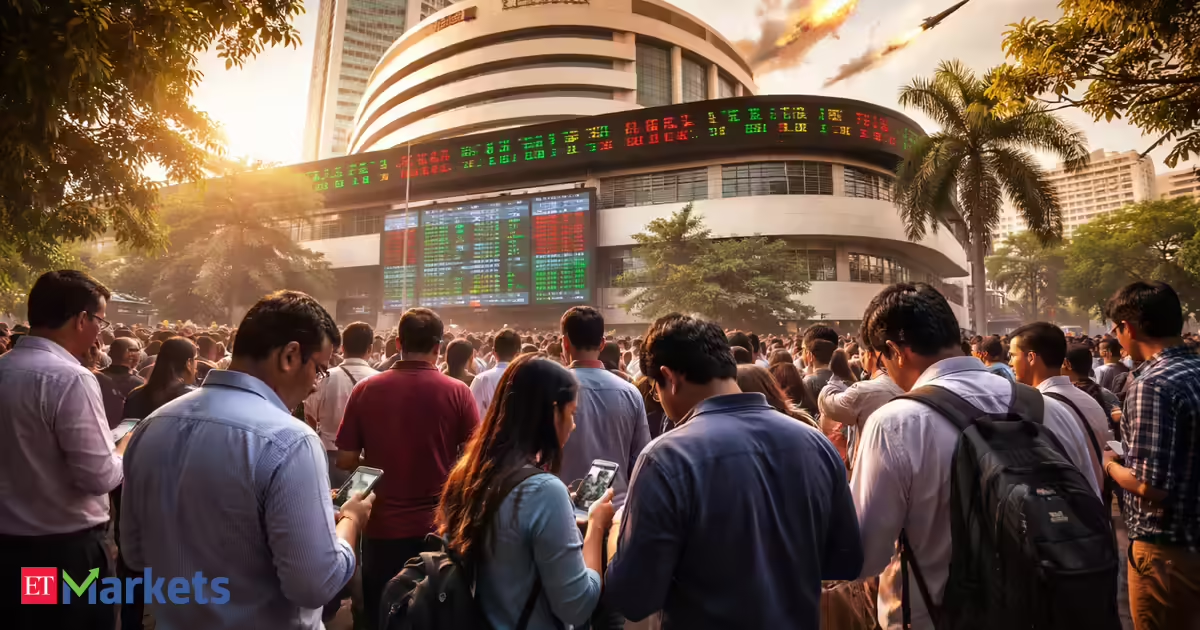
MUMBAI: As the US-Iran ceasefire takes hold, bargain hunters are cautiously stepping into stocks that bore the maximum brunt of the West Asia-led sell-off.
The renewed appetite triggered a sharp rebound on Wednesday in sectors such as aviation, travel, oil marketing companies, textiles and chemicals, though money managers and analysts are split on whether the recovery is here to stay, or they are mere value traps.
“Getting into beaten names in the hope that they will rebound the most is not the right way of investing in this upturn,” said Dinshaw Irani, MD & CEO, Helios India.
The market sell-off in past five weeks was largely broad-based, but shares in sectors that would be most affected by a shortage in energy supplies, travel and transport disruptions took the heaviest hit. With the two-week ceasefire giving markets a breather, investors are piling on some of these stocks, hoping to ride the momentum, even if it is temporary.
Advertisement
The easing of geopolitical tensions has improved sentiment at the margin. “The current ceasefire represents a meaningful positive for investor sentiment, easing one of the key near term geopolitical overhangs that had been suppressing risk appetite,” said Rajesh Iyer, Managing Director – Global Investment Solutions & Asset Management at LGT Wealth India. “While it does not eliminate broader macro uncertainties, it meaningfully reduces tail risk scenarios and creates room for selective re-rating across equities.”
Live Events
Agencies
Sectors, scarred by war, such as aviation, travel,OMCs, textiles and chemicals draw fresh appetite
Among oil and gas stocks, Hindustan Petroleum Corporation Limited rose 10.12%, followed by Bharat Petroleum Corporation Limited at 7.6%, Indian Oil Corporation at 7%, and GAIL at 5.4%. UPL gained 6% and Navin Fluorine International added 4.2%, among chemicals. In aviation, InterGlobe Aviation advanced 8.09%, while SpiceJet rose 5%. Not all beaten-down stocks could, however, see equal interest in the foreseeable future. “During the West Asia conflict, the most battered sectors were aviation, oil marketing companies, paints, chemicals, and auto ancillaries due to surging crude prices and rupee weakness,” said Aamar Deo Singh, Senior VP Research, Angel One. “But what we are seeing is that the stronger bargain-hunting is in quality large-caps within banks, pharmaceuticals, and FMCG, which were not directly impacted.”
The guarded optimism is that some of these sectors could face headwinds because crude prices could remain elevated for a while, said Helios’s Irani.
Oil prices may need to sustain below $80 a barrel for these sectors to find broader investor acceptance. Brent crude prices crashed 15% to $93.96 a barrel on Wednesday
Advertisement
“Banking shares could clock the fastest recovery, followed by new age stocks as they have corrected for no reason,” said Irani. The Nifty Bank index soared 5.7% on Wednesday after the Reserve Bank of India on Wednesday kept interest rates unchanged in its monetary policy.
Autos could also emerge as a contrarian play, according to Garima Kapoor, Deputy Head of Research and Economist at Elara Capital.
“We prefer the auto sector as a sector to bet on after the recent correction,” said Kapoor. “Large-cap auto stocks, like Maruti Suzuki and Eicher Motors, have corrected sharply, witnessing a 17% drawdown since the onset of the US-Iran conflict.”
Vishad Turakhia, MD and CEO of Equirus Securities said that rather than chasing the most battered names blindly, a more balanced approach is advisable. He recommended core exposure to capital goods and private financials, tactical allocation to cyclicals (metals, aviation) and limited exposure to deep value or high-risk rebounds stocks.
Amid ongoing geopolitical tensions and energy-led uncertainty, market volatility has raised an important question for investors — is it time to start buying? According to Nimesh Chandan, from Bajaj Finserv AMC, the recent correction should be seen as a temporary disruption rather than a fundamental shift in India’s growth story.
“Indian economy, business cycle, and credit cycle were doing very well… this is a speed bump, not a structural issue.” He adds that improving geopolitical signals are encouraging. “Ceasefire talks suggest we are moving away from the storm… long-term investors can pick good companies at attractive valuations.”
Even as indices have remained largely range-bound over the past couple of years, corporate fundamentals have strengthened meaningfully. Chandan points out that many companies are now fundamentally stronger yet cheaper than before. “Many companies have improved earnings, balance sheets, and cash flows, and are now available cheaper than two years ago.” This has created a broad opportunity set for investors. His preference remains tilted toward growth-linked sectors. “We like financials, materials, and industrials… within these, private banks, metals, cement, defence, and power.”
On sectoral positioning, the strategy reflects a pro-cyclical bias, alongside selective defensiveness. “We are positive on consumer discretionary… selective in autos, with a tilt towards two-wheelers.” He also remains constructive on relatively stable sectors. “We are also positive on pharma and healthcare, but underweight on IT.” The caution on IT stems from both structural and cyclical concerns, particularly around the impact of artificial intelligence. “Technology shifts like AI are creating uncertainty… this is putting pressure on valuations.” In an environment of muted growth expectations, he believes capital may flow elsewhere. “With low growth visibility, investors may prefer sectors with better growth and valuations.”
Advertisement
Within financials, private banks stand out as a strong opportunity where both value and growth converge. “Credit growth is picking up, asset quality is benign, and valuations are extremely attractive.” Despite improving fundamentals, stock prices remain subdued. “Stocks are near five-year lows, while fundamentals are improving.”
Live Events
On the consumption front, Chandan highlights a broad-based recovery underway, supported by policy measures and rising household wealth. “From grocery to jewellery to property, data shows a clear uptick in demand.” Structural drivers such as tax cuts, lower interest rates, and the wealth effect are beginning to reflect in spending patterns. “Policy support and wealth effects are driving discretionary consumption.” However, he emphasizes selectivity within the theme. “We prefer strong brands with pricing power and consistent growth visibility.” Importantly, Chandan’s investment approach avoids timing the market through cash calls. Instead, it focuses on staying invested and generating returns through selection. “We do not take cash calls… we remain about 99% invested at all times.” He underscores that consistent outperformance is driven by disciplined choices. “Outperformance comes from sector and stock selection.”Despite the recent volatility and changing valuations, the broader investment framework remains unchanged. “We are not changing long-term views… only adjusting within stocks based on valuations.” The strategy involves upgrading portfolios as opportunities emerge. “Switching from good companies to great ones when valuations align.”
Looking ahead, India’s manufacturing story continues to hold long-term promise, with potential tailwinds from currency movements. “Manufacturing renaissance in India continues across sectors like EMS and pharma.” He also sees currency trends as a possible advantage for exporters. “Currency depreciation could improve export competitiveness going forward.”
In essence, while near-term volatility may persist, the underlying message remains clear that strong fundamentals, improving consumption, and attractive valuations are creating opportunities. For long-term investors, this phase may be less about reacting to uncertainty and more about patiently building positions that can compound over time.













































You must be logged in to post a comment Login