Connect with us
DAPA Banner
DAPA Coin
DAPA
COIN PAYMENT ASSET
PRIVACY · BLOCKDAG · HOMOMORPHIC ENCRYPTION · RUST
ElGamal Encrypted MINE DAPA
🚫 GENESIS SOLD OUT
DAPAPAY COMING

Business

NVIDIA Shares Dip as Market Digests AI Demand Strength Amid Valuation Concerns

Published

on

Nvidia To Report Quarterly Earnings

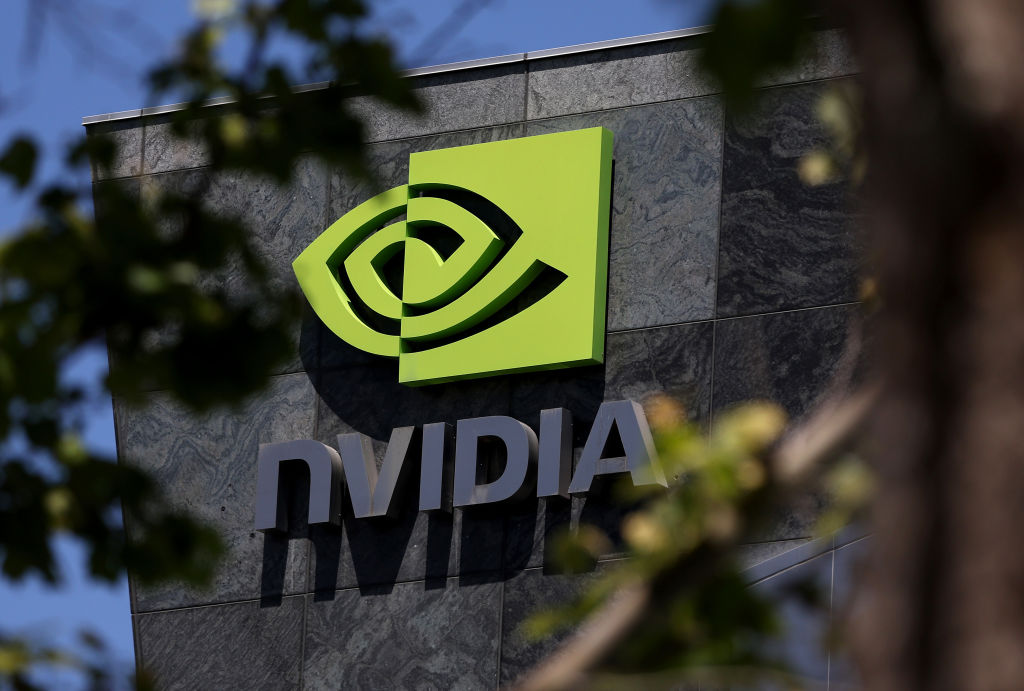
SANTA CLARA, Calif. — NVIDIA Corp. shares fell about 1.8 percent Tuesday to around 203.74, reflecting a pause in the semiconductor giant’s recent rally as investors weighed strong artificial intelligence demand against lofty valuations and potential cyclical risks in the chip sector.

The move came amid broader market fluctuations, with NVIDIA remaining a bellwether for AI infrastructure spending. The company dominates the market for graphics processing units essential for training and running large language models and other advanced AI systems.

NVIDIA’s latest quarterly results, reported in May, highlighted continued explosive growth. Revenue for the fiscal first quarter surged more than 260 percent year-over-year to 26 billion dollars, driven by data center sales that more than tripled. Data center revenue alone reached 22.6 billion dollars, underscoring the insatiable appetite for its Hopper and Blackwell architecture chips.

Gross margins remained robust at 78.4 percent, supported by high-demand products and pricing power in the AI accelerator market. The performance reinforced NVIDIA’s position as the primary beneficiary of the global AI buildout.

Advertisement

Chief Executive Officer Jensen Huang has repeatedly emphasized the transformative nature of accelerated computing. “We are in the midst of a computing revolution,” Huang said during recent earnings discussions, highlighting how GPU-accelerated systems are reshaping industries from automotive to healthcare.

The company’s data center segment now accounts for the vast majority of revenue, shifting NVIDIA from its gaming roots to an enterprise infrastructure powerhouse. Blackwell platform shipments are ramping up, with expectations for significant contributions in the second half of the year.

NVIDIA’s software ecosystem, including CUDA and various AI frameworks, creates strong lock-in for developers and enterprises. This moat has proven difficult for competitors to overcome despite heavy investments in alternative architectures.

Tuesday’s trading reflected profit-taking after a strong run, with the stock still up substantially year-to-date. NVIDIA’s market capitalization has soared into the trillions, making it one of the world’s most valuable companies and a key component of major indices.

Advertisement

Analysts largely maintain bullish outlooks, citing multi-year AI tailwinds. Consensus revenue forecasts for the current fiscal year point to continued triple-digit growth, though at a moderating pace as comparisons become more challenging.

Potential headwinds include export restrictions on advanced chips to certain markets, supply chain constraints for advanced packaging and increased competition from custom silicon developed by hyperscalers. NVIDIA has navigated these dynamics by expanding production capacity and diversifying its customer base.

The company continues to invest heavily in research and development, with annual spending in the billions to maintain technological leadership. New architectures like Rubin are already in development, promising further performance leaps for future AI workloads.

Gaming and professional visualization segments provide diversification, though they contribute less to overall results than in previous years. Automotive and robotics initiatives represent longer-term growth avenues as autonomous systems advance.

Advertisement

NVIDIA’s financial strength supports ongoing innovation and capital returns. The company pays a quarterly dividend and has conducted share repurchases, balancing growth investments with shareholder returns.

Geopolitical factors remain a focus. U.S. restrictions on shipments to China have impacted a portion of sales, though NVIDIA has adapted by developing compliant products for those markets while prioritizing unrestricted regions.

Tuesday’s dip occurred on solid volume as traders reassessed near-term momentum. Broader semiconductor sector performance was mixed, with some names facing pressure from AI spending digestion concerns.

NVIDIA’s Blackwell ramp is a key focus for the second half. Production yields and customer adoption timelines will influence whether the company meets elevated expectations for sequential growth.

Advertisement

The stock trades at a premium valuation reflecting its growth profile. Forward price-to-earnings multiples remain elevated but are supported by projected earnings expansion as AI adoption accelerates across enterprises.

Industry analysts project the total addressable market for AI infrastructure to expand dramatically over the next several years. NVIDIA’s current share dominance positions it to capture a disproportionate portion of that opportunity.

Partnerships with major cloud providers and system integrators have expanded reach. NVIDIA’s DGX Cloud offerings and sovereign AI initiatives with governments further broaden its footprint.

Sustainability efforts include energy-efficient chip designs and data center optimization tools. As AI computing demands strain power grids, efficiency becomes a competitive differentiator.

Advertisement

NVIDIA’s culture of innovation, led by Huang, emphasizes long-term thinking. The company has successfully pivoted multiple times, from gaming to professional graphics to deep learning and now full-stack AI solutions.

Tuesday’s trading provided little new fundamental information, with the move appearing largely technical. Attention now shifts to upcoming industry events and potential updates on Blackwell availability.

The semiconductor cycle has historically featured booms and busts, but many observers believe AI represents a structural shift with more durable demand. NVIDIA’s exposure to this trend has driven its extraordinary market performance.

Risks include potential slowdowns in hyperscaler spending, technological disruptions or intensified regulatory scrutiny. Execution on new product ramps will be critical to sustaining momentum.

Advertisement

NVIDIA’s ecosystem effect, where software and hardware reinforce each other, creates barriers to entry. CUDA’s widespread adoption among developers ensures continued preference for its hardware.

As enterprises move beyond experimentation to production AI deployments, demand for high-performance computing infrastructure is expected to remain robust. NVIDIA is uniquely positioned to serve this need.

The stock’s recent volatility highlights its sensitivity to sentiment around AI investment levels. Periods of digestion often follow strong runs, creating potential entry points for long-term investors.

NVIDIA continues to shape the future of computing. Its GPUs power everything from scientific research to entertainment, with AI representing the latest frontier of exponential growth.

Advertisement

Tuesday’s share price adjustment came against a backdrop of strong fundamentals. The company’s ability to deliver on guidance and innovate will determine whether current valuations prove justified.

As the AI era unfolds, NVIDIA remains at its center. Its performance will continue influencing technology sector sentiment and broader market narratives around artificial intelligence.

Continue Reading
Click to comment

You must be logged in to post a comment Login

Leave a Reply

Business

The S&P 500 Is Lagging. Do You Know How Your Retirement Savings Are Actually Invested?

Published

on

The S&P 500 Is Lagging. Do You Know How Your Retirement Savings Are Actually Invested?

This copy is for your personal, non-commercial use only. Distribution and use of this material are governed by our Subscriber Agreement and by copyright law. For non-personal use or to order multiple copies, please contact Dow Jones Reprints at 1-800-843-0008 or visit www.djreprints.com.

Continue Reading

Business

How to Do an Office Refurbishment Without the Downtime Chaos

Published

on

Rumoured increases to employer pension contributions in next month’s Budget are sparking panic among UK businesses, with nearly one in five firms warning they could face insolvency if contribution rates rise.

Most businesses spend weeks choosing the right paint colours, desks and lighting for an office refurb. But when the start date arrives, there’s one question nobody’s answered: where does everything go while the contractors tear the place apart?

That’s usually where things fall apart. The design is exciting. The logistics are not. And it’s the logistics that will determine whether your refurbishment runs smoothly or turns into weeks of lost productivity.

Plan in Phases, Not All at Once

The biggest mistake businesses make is trying to refurbish the whole office in one go. On paper, it sounds faster. In practice, it means every single member of staff is displaced at the same time, sometimes for weeks.

A phased approach is far more manageable. You refurbish one floor or wing at a time while the rest of the building stays operational. Staff rotate into unaffected areas, and contractors get a clear zone without tripping over people trying to answer client emails.

This does require more planning upfront. You’ll need to work closely with your fit-out company and map out a sequence that works for the building layout and the scope of the project. But the alternative is an entire workforce crammed into a coffee shop for a fortnight, and that’s a cost no one budgets for.

Advertisement

What Happens to All the Furniture and Equipment?

This is the bit that catches people off guard. The contractors are booked, the timeline is agreed, but the office is still full of desks, filing cabinets, monitors and boxes of paperwork. All of it needs to go somewhere before anyone can start work.

Some businesses try to cram everything into a spare meeting room or corridor. It creates a bottleneck and usually ends up in the contractor’s way. Others hire vans and shuttle things to a self-storage unit across town, which eats into the budget and takes staff away from their actual jobs.

A much simpler option is to use the Kiwi mobile storage service, where a team comes directly to your premises, collects your office contents, stores everything securely off-site in 24/7 monitored facilities and delivers it all back once the refurb is done. You don’t need to organise transport or hire a van. It keeps items out of the contractor’s way without asking your office manager to play Tetris with desks in a corridor.

Sort Temporary Working Arrangements Early

Don’t wait until the first day of construction to figure out where people will work. The earlier you plan this, the less disruption your team will feel.

Advertisement

If your team already has laptops and cloud-based tools, a temporary shift to remote working can be fairly painless. But you’ll still need to think about phone systems, client meetings and access to shared files or printers.

If remote working isn’t realistic for your operation, look into short-term serviced office space. Many flexible workspace providers offer rolling monthly terms, so you won’t be locked into a long lease for somewhere you only need for six weeks.

Tell Your Team Before the Builders Turn Up

A refurbishment affects everyone, not just the project manager. If your staff don’t know what’s happening and when, expect frustration and a noticeable dip in productivity.

Give your team a clear timeline. Tell them which areas will be affected and when, where they’ll be working during each phase, and what access they’ll have to the building. If there’s going to be noise, dust or limited facilities on certain days, say so in advance. People can handle inconvenience if they know it’s coming.

Advertisement

It also helps to name one person as the go-to for refurbishment queries. That way, questions and complaints go to someone who can actually answer them instead of bouncing around a group chat.

Don’t Leave IT Until Last

Desks and chairs are easy to move. Server racks and cabling are not. If your refurbishment involves any structural changes, rewiring or floor work, get your IT team involved from day one.

You’ll need to make sure your network stays live during the works, or that there’s a clear plan for any downtime and recovery. If staff are moving to a temporary space, they’ll need working Wi-Fi, access to printers and a reliable phone setup. These things don’t arrange themselves, and they’re often the last items on the to-do list.

The Refurb Is the Easy Part

Picking new furniture and a fresh colour scheme is the fun bit. Coordinating the logistics around it is what will actually make or break your timeline. Think about where your furniture and equipment will go, how your team will work through the disruption, and who’s responsible for keeping everything on track. Get those three things right and the refurbishment itself will feel like the simple bit.

Advertisement

Continue Reading

Business

Oscar-Winning Irish Actress Brenda Fricker, Beloved Star of My Left Foot and Home Alone 2, Dies at 81

Published

on

US singer-songwriter Taylor Swift and Kansas City Chiefs' tight end Travis Kelce embrace after the Super Bowl on Sunday

Brenda Fricker, the Irish actress who became the first Irish woman to win an Academy Award and endeared herself to generations of moviegoers with roles in “My Left Foot” and “Home Alone 2: Lost in New York,” has died at the age of 81.

Fricker won the Oscar for best supporting actress in 1990 for her portrayal of the on-screen mother of Christy Brown, a real-life Irish man born with cerebral palsy who could control only his left foot, in the film “My Left Foot.” The role was played by Daniel Day-Lewis, who also won an Academy Award for his lead performance that year. Fricker’s win made history, marking the first time an Irish actress had claimed an Academy Award, defeating a field of Hollywood stars that included Julia Roberts and Anjelica Huston.

Fricker’s agent, Phil Belfield, confirmed her death in a statement. “We will never see her like again and the world is lesser for the lack of her,” Belfield said, adding that he had been honored to know, love and work with her, and that she would always hold a place in his heart and in the hearts of film and television fans around the world.

Born in Dublin, Fricker built a decades-long career that spanned television, theater and film, beginning with early roles including a part in Ireland’s first soap opera, “Tolka Row,” in the 1960s, followed by a stint on the British soap “Coronation Street” in 1977 and an appearance in “Licking Hitler,” a television drama written by David Hare, in 1978.

Advertisement

Fricker gained wide recognition through her role as nurse Megan Roach on the long-running BBC medical drama “Casualty,” appearing in the show’s very first episode when it launched in 1986 and remaining a regular fixture until 1990, with occasional returns to the role in subsequent years through her final appearance in 2010.

Two years after her Oscar win, Fricker took on one of her most widely beloved roles, playing the homeless “pigeon lady” who befriends Macaulay Culkin’s character Kevin McCallister in New York’s Central Park in the 1992 holiday comedy “Home Alone 2: Lost in New York.” The role introduced her to an entirely new generation of audiences beyond those familiar with her earlier dramatic work.

Fricker’s additional film credits included the 1993 comedy “So I Married an Axe Murderer,” the 1994 family film “Angels in the Outfield,” the 1996 legal drama “A Time to Kill,” and the 2003 biographical film “Veronica Guerin,” in which she played the mother of the murdered Irish journalist at the center of the story.

Despite her landmark Oscar win, Fricker later reflected that the honor may have ultimately worked against her career rather than propelling it forward. “What did happen was the old curse of the Oscars, as they call it,” she told The Times in 2024, explaining that the accolade led to her being typecast and passed over for a number of roles, including in theater. She was characteristically wry about the financial realities of the honor as well, joking, “So there’s a lot that’s not great about an Oscar. And you don’t get any money. They could give you a few bob with it, at least.”

Advertisement

Tributes to Fricker poured in from Irish political and cultural figures following news of her death. Ireland’s Tánaiste, or deputy prime minister, Simon Harris, said he was deeply saddened by the loss of what he called a national treasure. He described her as a consummate performer who brought depth and humanity to every role she undertook, calling her one of the greatest exports Ireland has ever produced and an ambassador for Irish talent on the world stage, adding that the country would never see her like again.

The United States ambassador to Ireland, Edward Walsh, also paid tribute to Fricker, describing her as a giant of Irish film and praising her unforgettable performance in “My Left Foot.” Writing on the social media platform X, Walsh said her work carried Ireland’s stories to audiences around the world and inspired generations on both sides of the Atlantic, extending his condolences to her family, friends and all who loved her.

Earlier this year, Dublin’s Lord Mayor, Councillor Ray McAdam, had proposed that Fricker receive the freedom of the city, describing her as one of Dublin’s most distinguished cultural figures. He said her work was marked by honesty, depth and a rare ability to bring warmth and toughness in the same breath, adding that her performances had helped tell Irish stories and become part of family life across generations.

In a memoir published last year, Fricker offered a candid account of a difficult upbringing, describing an unstable childhood in which she experienced abuse at home and was groomed at age eight by a man who gave her elocution lessons. She also wrote about being seriously injured in a bicycle accident at age 14 that left her hospitalized for two years, and about surviving sexual assault as a teenager and again later in her career. Despite those hardships, she recalled holding onto some fond memories of her youth, saying that in the era she grew up in, young people could be wild, and that she looked back on those days with a kind of gratitude. Reflecting on the broader arc of her life and career to The Times, she said the path she had taken was never something she had calculated or planned, describing it instead as the product of luck and happy accidents along the way.

Advertisement

Fricker’s death adds to a string of recent losses in the entertainment industry, following closely on the heels of tributes paid to other notable performers in recent weeks. Her legacy, built across nearly five decades of work spanning Irish theater, British television and Hollywood film, is expected to be remembered both for her groundbreaking Oscar win and for the warmth she brought to some of the most memorable supporting roles in modern cinema.

Continue Reading

Business

Costco adds $6.99 chicken strips to food court menu

Published

on

Costco adds $6.99 chicken strips to food court menu

Costco shoppers have a new reason to linger after loading their carts with bulk paper towels and oversized snack packs: The retailer has added chicken strips to its famously affordable food court menu.

The new offering includes five large, breaded chicken breast strips and a container of dipping sauce for $6.99. The combo clocks in at 1,640 calories.

Advertisement

After appearing in select test markets earlier this year, the strips are now being reported at Costco warehouses across the country.

WEALTHY AMERICANS CHOOSE ONE GROCERY STORE CHAIN OVER RIVALS, SURVEY FINDS

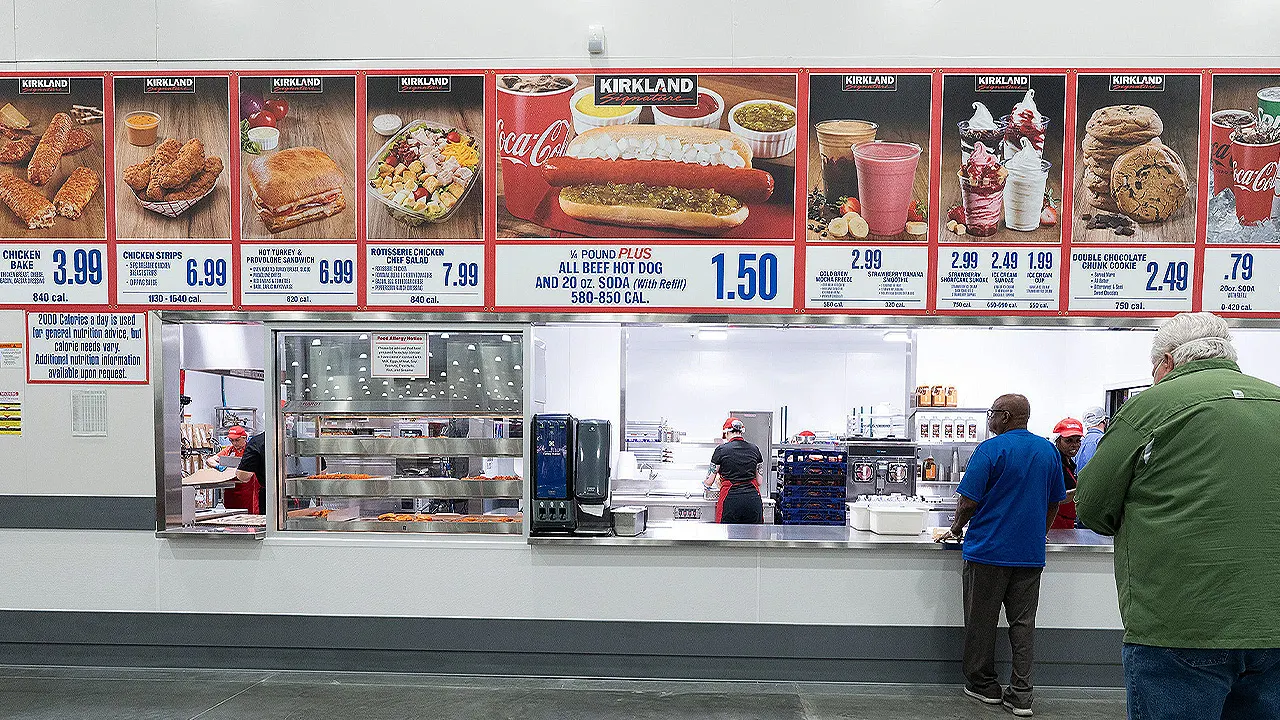
Chicken strip are seen in Costco's food court

The food court at Costco as it opens in Pensacola on June 25, 2026. (© Gregg Pachkowski/Pensacola News Journal / USA TODAY NETWORK via Imagn Images / IMAGN)

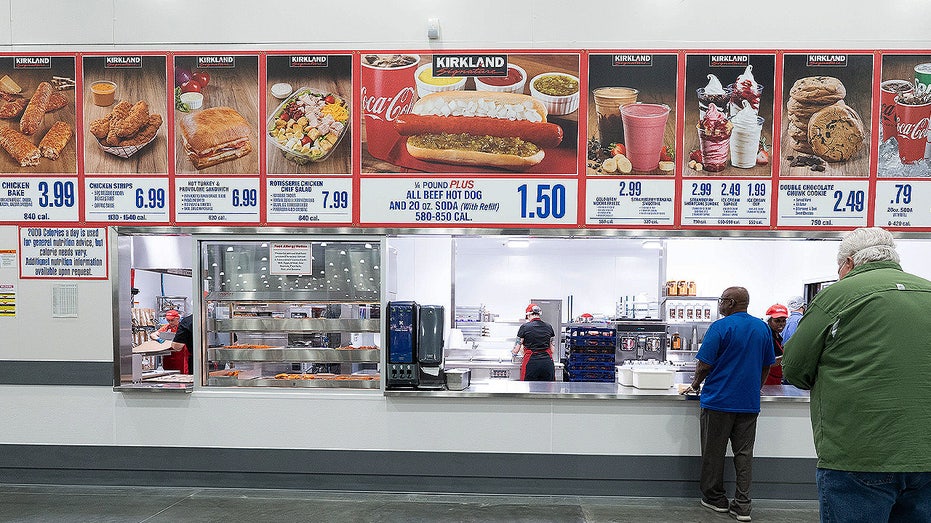
The chicken strips join a food court lineup best known for its $1.50 hot dog and soda combo, oversized pizza slices and selection of sandwiches and desserts. 

At nearly $7, the strips are more expensive than Costco’s signature hot dog deal. The orange-colored dipping sauce has drawn nearly as much attention as the chicken itself. 

Advertisement

Reviewers have compared its appearance to sauces served at popular chicken chains, though its flavor has been described as closer to a tangy or zesty honey mustard.

“Costco just dropped new chicken strips!!! Someone check on @chickfila; if there was a @costco drive-through, it would be over,” Costco food blogger Lucas Gomes, @therealkirklandking, shared in an Instagram reel. “This sauce does not taste like Chick-fil-A sauce. I don’t know what this mystery sauce is, but it’s good.”

Food court at Costco

The food court at Costco as it opens in Pensacola on June 25, 2026. (© Gregg Pachkowski/Pensacola News Journal / USA TODAY NETWORK via Imagn Images / IMAGN)

COSTCO SAYS YOUR NEXT CHECKOUT COULD TAKE UNDER 10 SECONDS THANKS TO NEW AUTOMATED PAY STATIONS

As with many changes to Costco’s closely watched food court, the reaction has been mixed. Some shoppers have praised the size of the strips and called the meal a strong value. Others have criticized the chicken as salty, dry or too heavily breaded.

Advertisement

Costco has made several notable menu changes in recent years, including replacing its churro with a large chocolate chip cookie and introducing new sandwich options.

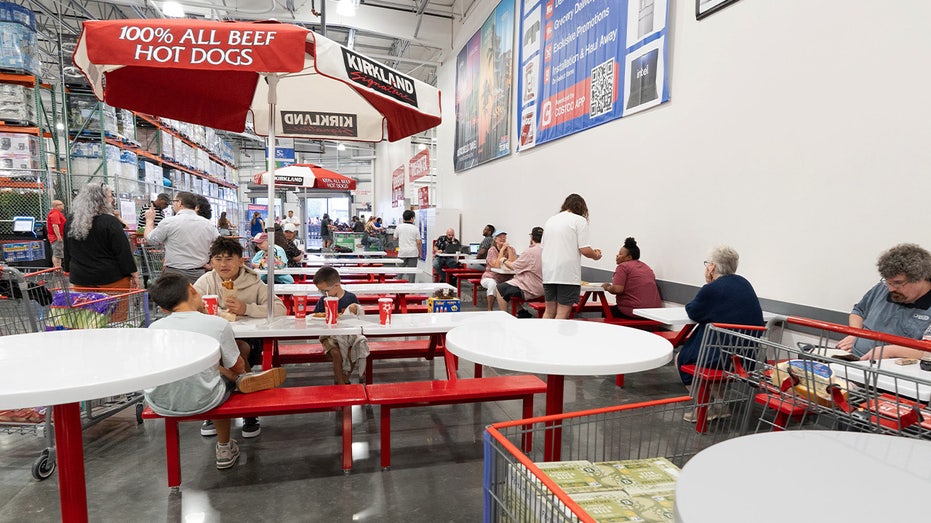
Costco shoppers eating free samples

Costco shoppers scramble for free sample of Phillips Foods Lobster Meat during the grand opening of a new store in North Port, Florida. (© Mike Lang / Sarasota Herald-Tribune / USA TODAY NETWORK / USA TODAY NETWORK via Imagn Images / IMAGN)

GET FOX BUSINESS ON THE GO BY CLICKING HERE

FOX Business reached out to Costco for comment.

Advertisement
Continue Reading

Business

Terveystalo Oyj (TTALF) Q2 2026 Earnings Call Transcript

Published

on

OneWater Marine Inc. (ONEW) Q1 2026 Earnings Call Transcript

Juuso Pajunen
Chief Financial Officer

Good morning, all. My name is Juuso Pajunen. I will be having today a dual role as the host of the Terveystalo half year results presentation and as a CFO at a later stage. But let’s now give the word to Ville Iho, President and CEO of Terveystalo, and let’s start the webcast for the half year results. Ville, please?

Ville Iho
President & CEO

Advertisement

Thank you, Juuso, and good morning from sunny Helsinki. Let’s start recapping Terveystalo’s second quarter. Of course, it was a busy quarter for Terveystalo. We, of course, released multiple big things, not the least, the Silmaasema acquisition, our new financial targets and our new strategy. On the business side, it was still a challenging quarter. The market conditions continue to be abnormally negative, and that has been reflecting into our revenue line and with that one also to profitability to our numbers.

We made adjustments according to the lower volumes. And given that one, given the actions we took, we can be, of course, pleased with the customer service results, customer experience numbers are all-time high as well as medical quality key indicator PEI. But revenue line, obviously negative as well as adjusted EBIT EPS and also net debt-to-EBITDA leverage ratio went slightly up. Double-clicking on those negative market drivers.

First of all, public purchases from private health care, which are not even seen in this Slide, were still almost nonexistent. So health care counties have insourced quite a bit of their activities, and they are still reorganizing the cooperation models with the private health care

Advertisement
Continue Reading

Business

EQT AB (publ) (EQBBF) Q2 2026 Earnings Call Transcript

Published

on

OneWater Marine Inc. (ONEW) Q1 2026 Earnings Call Transcript