
Business
NYT Connections Hints and Answers for March 30, 2026: Puzzle #1023 Solved


The New York Times’ popular word-grouping game Connections delivered another brain-teasing challenge Monday with puzzle #1023, featuring a grid that mixed counterfeit terms, casual tinkering, rental giants and snack brands with a twist.

Players logging into the NYT Games platform on March 30, 2026, faced 16 words: ERSATZ, FRITZ, TINKER, TOY, YUTZ, FUTZ, DOLLAR, DUMMY, HERTZ, PLAYS, MOCK, MESS, FAUX, BUDGET, TRUFFLES, AVIS. The objective remained the same — sort them into four groups of four based on subtle thematic connections, with mistakes costing precious attempts.
Connections has grown into a daily ritual for millions since its launch, testing vocabulary, lateral thinking and cultural knowledge. Monday’s edition earned a low difficulty rating of 1.3 out of 5 from NYT testers, though some solvers reported it felt trickier due to overlapping decoys. The official companion noted one-word reveals per category level: DUMMY for the easiest (yellow), FUTZ for green, DOLLAR for blue and YUTZ for the toughest purple.
Gentle Hints to Crack the Grid
Solvers often start with the most obvious cluster. Here are progressive hints without full spoilers for those still working the puzzle:
- Yellow (easiest): Words suggesting something fake or counterfeit, common in fashion knockoffs or stand-ins.
- Green: Verbs for fiddling or casually adjusting something without serious intent — think idle hands at a workbench.
- Blue: Major players in an industry you encounter at airports or when reserving wheels for a trip.
- Purple (hardest): Familiar snack or chip brands, each with an extra letter tacked on at the start.
Tricky overlaps included words like “mock” and “toy” that could tempt wrong groupings, or rental names blending with budget-related terms. NYT intentionally plants such red herrings to raise the challenge.
Full Answers and Category Breakdown for NYT Connections #1023
Spoiler alert: Full solutions below.
Yellow: Imitation — DUMMY, ERSATZ, FAUX, MOCK These synonyms all point to artificial or counterfeit versions — ersatz substitutes, faux materials or dummy replicas. “Mock” often appears in trial runs or imitations.
Green: Play Around (With) — FUTZ, MESS, TINKER, TOY All describe informal, aimless activity — futzing with a gadget, tinkering in the garage, toying with an idea or messing about. These capture that low-stakes experimentation many do on a lazy afternoon.
Blue: Car Rental Companies — AVIS, BUDGET, DOLLAR, HERTZ The big four in the rental business. Travelers know them well from airport counters: Avis for reliability, Budget for value, Dollar for deals and Hertz as a longtime leader. One solver noted the category clicked quickly after a recent flight.
Purple: Snack Brands Plus Starting Letter — FRITZ, PLAYS, TRUFFLES, YUTZ This clever twist added an initial letter to well-known snacks: Utz (chips) becomes YUTZ; Ruffles becomes TRUFFLES; Lay’s becomes PLAYS; and Ritz becomes FRITZ. The purple category often features such wordplay, delighting some and frustrating others.
Many players achieved perfect or near-perfect solves, posting sequences like yellow-blue-green-purple or variations. Community discussions on Reddit’s r/NYTConnections lit up with shared victories and the occasional groan over the purple pun.
Why Connections Continues to Captivate
The game’s appeal lies in its balance of accessibility and depth. Unlike crosswords that demand obscure knowledge, Connections rewards pattern recognition and everyday cultural fluency — from Broadway to road trips to pantry staples. Monday’s mix of imitation terms, playful verbs, travel brands and snack puns reflected that broad reach.
Editor comments in past companions highlight how categories draw from “the world we live in,” blending high and low culture. With a simple interface and shareable results (colored emoji grids flooding social media), the puzzle fosters friendly competition among friends, families and online communities.
For newcomers, strategy tips include scanning for obvious synonyms first, then tackling outliers. Pay attention to misdirection — words that fit multiple themes loosely. And remember, four mistakes end the game, so deliberate guesses pay off.
Broader NYT Games Ecosystem
March 30 also brought fresh installments of companion games. Wordle fans tackled their daily five-letter challenge, while Strands offered its own word-search twist. The Mini Crossword provided a quick solve for commuters. Together, these games form a morning routine for puzzle enthusiasts worldwide.
Connections streaks remain a point of pride. Some players maintain months-long runs, celebrating “genius” or “perfect” outcomes. Monday’s low difficulty may have boosted streaks for many, though the purple category tripped up those missing the snack-brand wordplay.
Looking ahead, NYT Games continues refining the experience. Recent updates improved mobile play and added optional hints in companion articles. The team behind the puzzles — including editors who test and calibrate difficulty — aims to keep entries fresh without alienating casual solvers.
Whether you nailed all four categories in order or needed a few hints, Monday’s puzzle offered satisfaction through its clever connections. If you struggled with the car rentals or the augmented snacks, you’re far from alone — that’s the beauty of a game that rewards both knowledge and creative leaps.
Fans can access the official NYT version at nytimes.com/games/connections. Third-party sites often provide practice boards or archived solutions, but nothing beats the daily thrill of the real grid.
For tomorrow’s hints and beyond, check back with reliable sources or the NYT companion articles. In the meantime, keep sharpening those lateral-thinking skills — the next puzzle waits.


Komal is passionate about finance and the stock market. She enjoys forecasting future market trends using a fundamental and technical approach with a focus on both short- and long-term horizons. She intends to provide unbiased analysis to assist investors in selecting the best investment strategies to stay ahead of the market.
Analyst’s Disclosure: I/we have no stock, option or similar derivative position in any of the companies mentioned, and no plans to initiate any such positions within the next 72 hours. I wrote this article myself, and it expresses my own opinions. I am not receiving compensation for it (other than from Seeking Alpha). I have no business relationship with any company whose stock is mentioned in this article.
Seeking Alpha’s Disclosure: Past performance is no guarantee of future results. No recommendation or advice is being given as to whether any investment is suitable for a particular investor. Any views or opinions expressed above may not reflect those of Seeking Alpha as a whole. Seeking Alpha is not a licensed securities dealer, broker or US investment adviser or investment bank. Our analysts are third party authors that include both professional investors and individual investors who may not be licensed or certified by any institute or regulatory body.
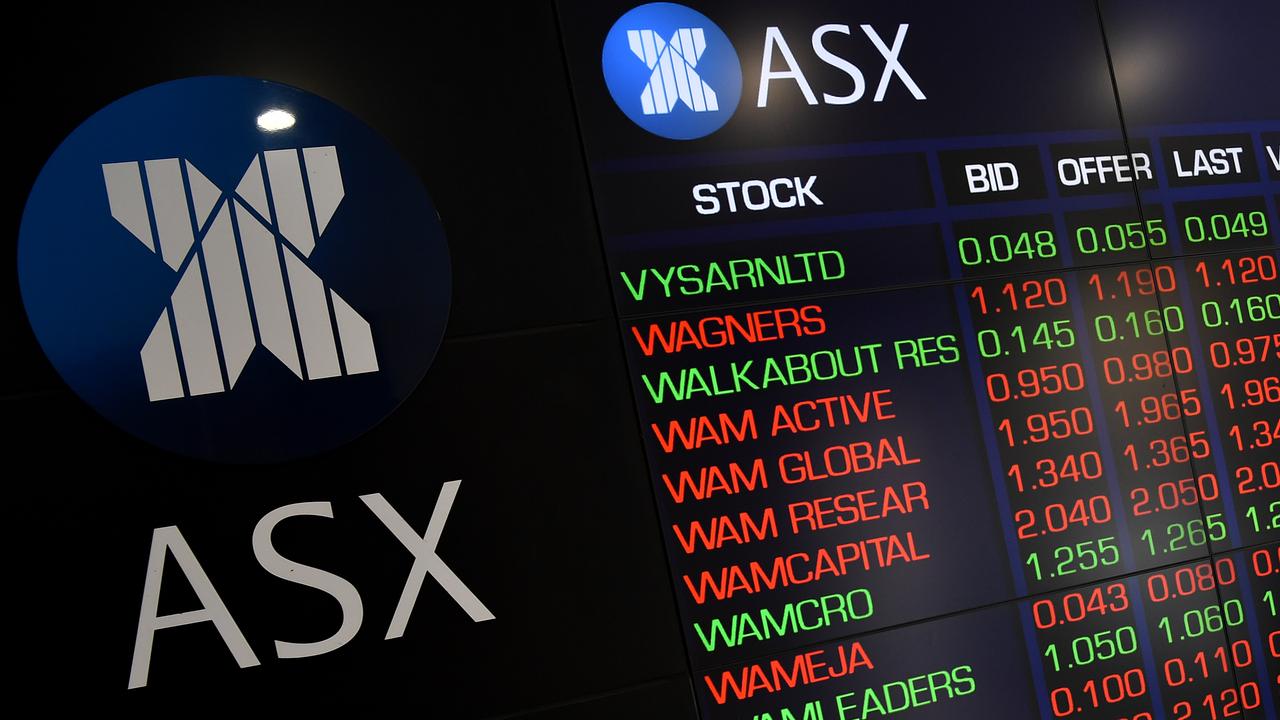
The Australian share market has fallen again after oil rose to near a four-year high, amid fears another strategic Middle East waterway could become an energy choke point.

Deep Yellow Limited Inches Closer To Production
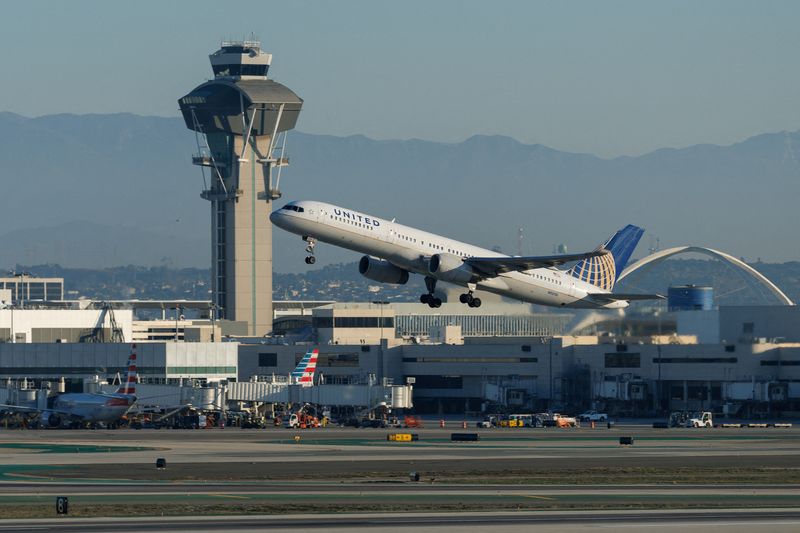

Analysis-Airlines face fare dilemma as fuel spike threatens travel demand
Sen. Tommy Tuberville, R-Ala., discusses Iran allowing non-hostile ships to transit the Strait of Hormuz and Democrats’ continued opposition to I.C.E. funding on ‘The Evening Edit.’
At least three Chinese-linked vessels reportedly turned back abruptly after attempting to cross the Strait of Hormuz last Friday, signaling an unusual move in typically friendly Tehran‑Beijing relations amid the ongoing regional crisis.
Two ships owned by China’s state‑run Cosco Shipping, the CSCL Indian Ocean and CSCL Arctic Ocean, as well as Hong Kong-owned Lotus Rising made sudden U‑turns near Larak Island, according to ship‑tracking service MarineTraffic and research group FDD. The narrow channel has repeatedly been described as Iran’s de facto “toll booth,” with the Islamic Revolutionary Guard Corps (IRGC) Navy, allowing passage only for authorized vessels.
This was the first attempted outbound transit by major Cosco container ships since tensions in the Strait of Hormuz began on Feb. 28, triggering disruptions to 20% of the world’s oil supply.
The ships reportedly violated Iranian rules banning traffic to and from countries considered supportive of the United States and Israel, including the UAE and Saudi Arabia, according to an IRGC statement cited by IRGC-affiliated outlet Nour News.
OIL HAS SURGED SINCE THE IRAN CONFLICT, BUT GAS PRICES MAY NOT BE DONE RISING.
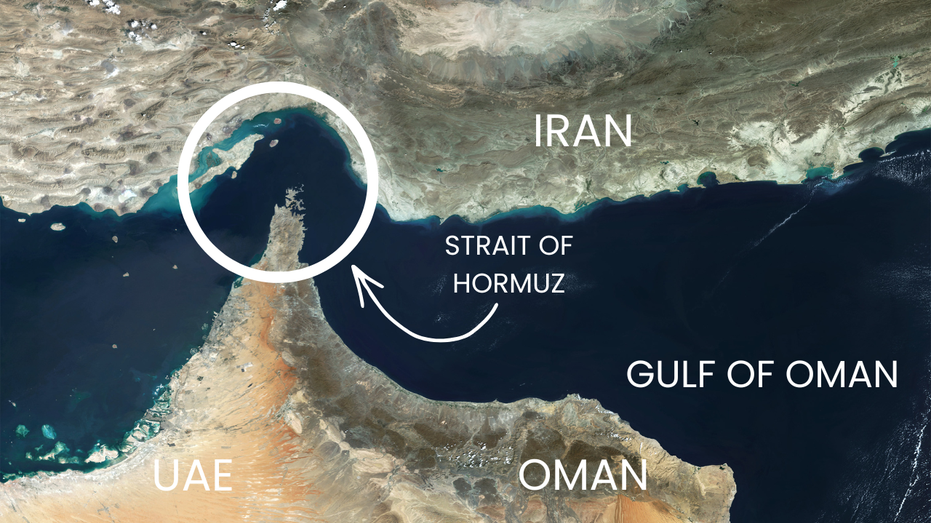
A satellite image shows the Strait of Hormuz, a key maritime passage connecting the Persian Gulf to the Gulf of Oman, vital for global energy supply. (Amanda Macias/Fox News Digital / Getty Images)
“Three container ships of different nationalities attempted to move towards the designated corridor for licensed ships, which were forced to return after being warned by the IRGC Navy,” the outlet said Friday afternoon.
“Sailing of any ship ‘to and from’ the ports of the allies and supporters of the Zionist-American enemies to any destination and from any corridor is prohibited,” it added.
IRAN WAR FUELS ASIA ENERGY CRUNCH AS INDIA, JAPAN, OTHERS FEEL STRAIN
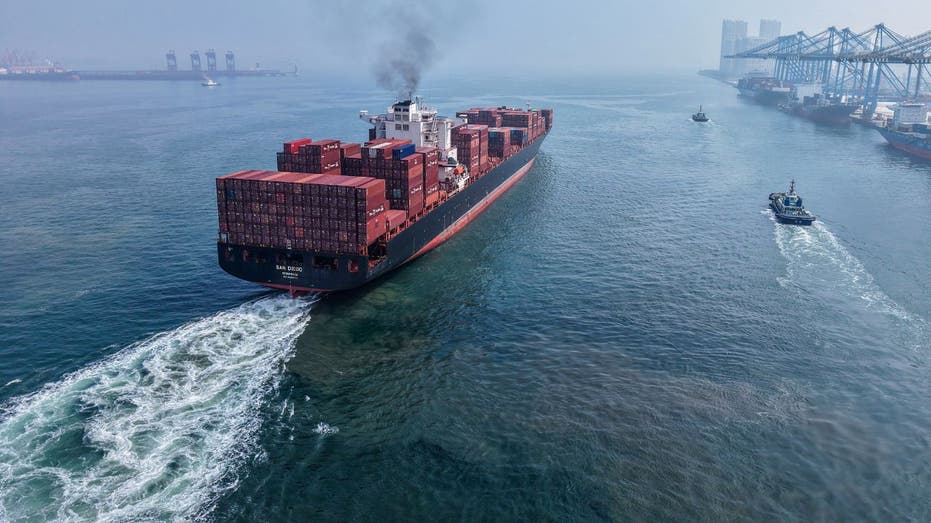
Multiple Chinese container ships aborted their attempt to pass through the Strait of Hormuz last Friday. (STR/AFP/Getty Images / Getty Images)
It is not immediately clear why the vessels halted their transit, but the Cosco ships have reportedly visited ports in enemy countries considered hostile since mid-February, including Jebel Ali in Dubai; Dammam in Saudi Arabia; and Khalifa Port in Abu Dhabi, United Arab Emirates, according to maritime outlet Lloyd’s List.
Analysts noted that the ships may have lacked proper paperwork or authorization to transit the Strait of Hormuz, and safe passage could not be guaranteed, the outlet added.
CLICK HERE TO GET FOX BUSINESS ON THE GO
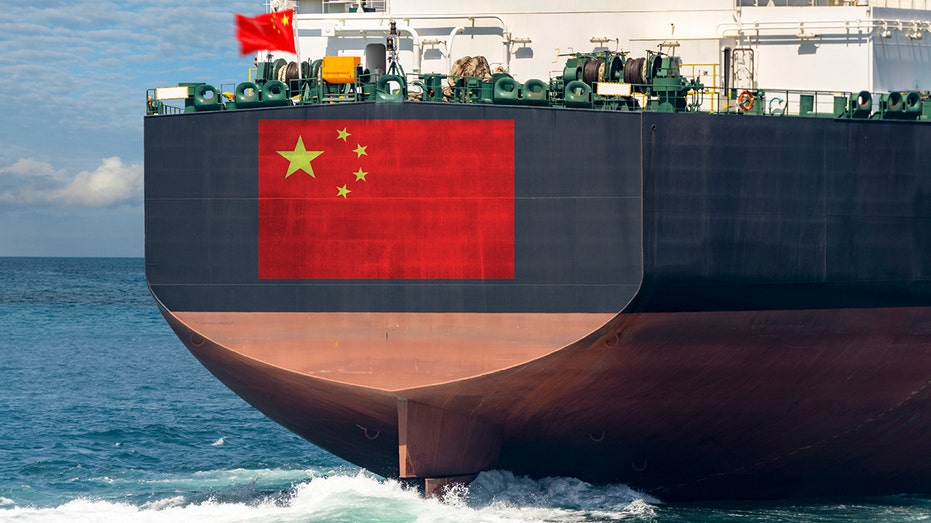
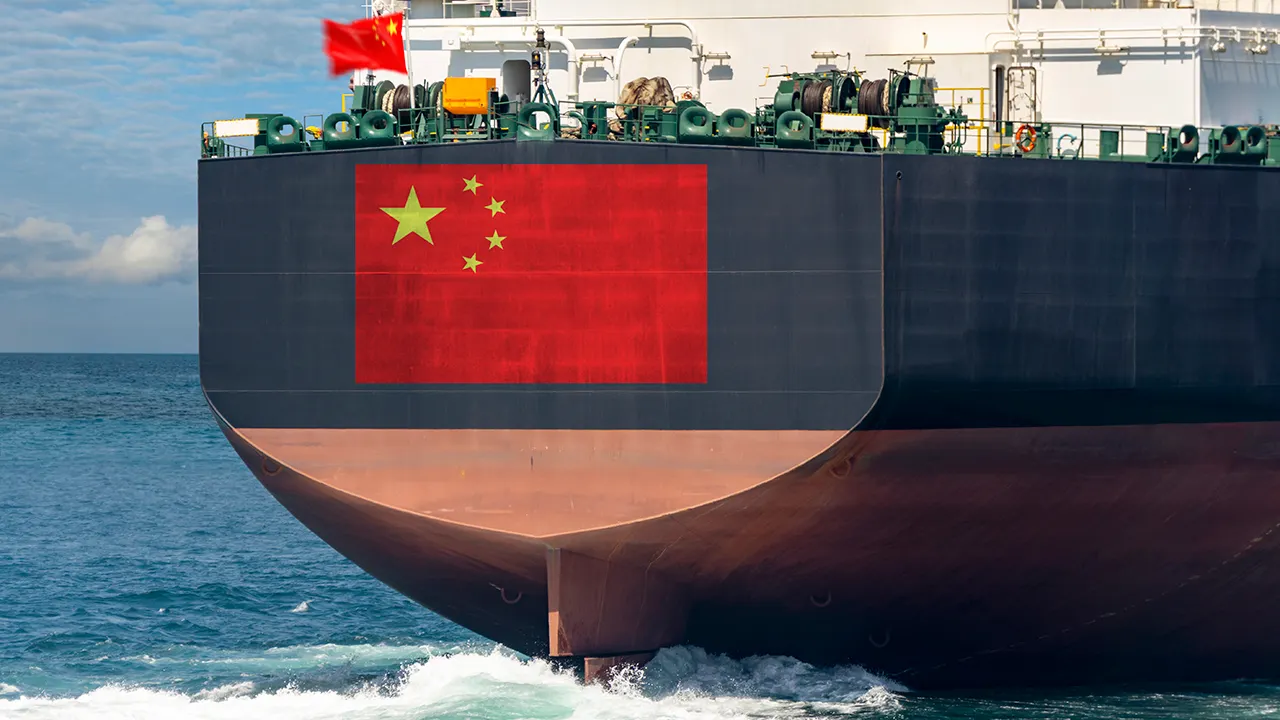
Chinese-flagged container cargo freight ship departs from a port. (iStock / Fox News)
The incident highlights a gap between Iran’s earlier diplomatic assurances that China and other friendly nations, including Russia and India, could coordinate safe passage through the Strait of Hormuz.
The CSCL Indian Ocean and CSCL Arctic Ocean had also broadcast messages on their identification systems signaling that they had Chinese owners and crew as a precautionary move to signal friendliness to Iran, Reuters reported, but the effort was apparently deemed insufficient by Iranian authorities at the checkpoint.
Reuters contributed to this report.
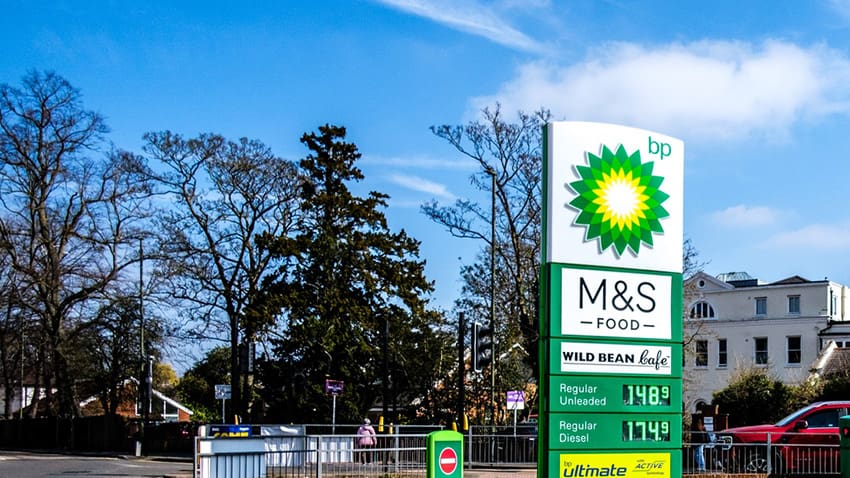
UK businesses are entering the latest global energy shock in a significantly weaker financial position than during the 2022 Ukraine crisis, raising concerns that the current conflict in the Middle East could trigger a faster and more severe wave of corporate distress.
New data from the Weil European Distress Index shows that financial pressures on European companies had already moved into “distress territory” before the escalation of tensions involving Iran, leaving firms with far less capacity to absorb another energy-driven shock.
The index, compiled by law firm Weil, Gotshal & Manges, tracks the performance of more than 3,750 listed companies across Europe using indicators such as cashflow pressure, debt levels and returns on investment. It recorded a reading of 2.5 ahead of the current crisis, compared with -7 in February 2022, just before Russia’s invasion of Ukraine, indicating a marked deterioration in corporate resilience.
The latest crisis has been driven by disruption to global oil and gas supplies, particularly through the Strait of Hormuz, a key shipping route that carries around a fifth of the world’s energy exports. Escalating tensions, including attacks linked to Iranian-backed groups, have raised concerns about alternative routes such as the Red Sea also becoming unstable.
As a result, energy prices have surged sharply, with Brent crude climbing from around $60 at the start of the year to close to $115 a barrel. The spike is already feeding through into higher costs for businesses, from manufacturing and logistics to food production.
Andrew Wilkinson, a restructuring partner at Weil, warned that the pace of change is a key risk factor.
“If energy prices remain elevated and confidence continues to weaken, we could see stress build more quickly than in previous cycles,” he said.
Among major European economies, the UK is seen as especially vulnerable. The index ranks Britain as one of the most distressed markets in Europe, behind only Germany and France, but identifies it as the most exposed to rising borrowing costs.
The resurgence in inflation, driven largely by higher energy prices, is expected to limit the ability of the Bank of England to cut interest rates, with markets increasingly pricing in the possibility of further tightening.
Higher rates would increase the cost of servicing debt for businesses, many of which are already operating with reduced financial headroom after several years of economic disruption.
The UK’s economic backdrop adds to the concern. Recent data from the Office for National Statistics showed that growth stalled in January, highlighting the fragility of the recovery even before the latest energy shock.
At the same time, unemployment has risen to 5.2 per cent, its highest level since early 2021, further weighing on economic momentum and consumer demand.
The combination of weak growth, rising costs and tighter financial conditions creates a challenging environment for businesses, particularly those with high energy exposure or significant debt burdens.
The outlook is further clouded by global factors. The OECD has already warned that the UK is likely to suffer the largest growth hit among G20 economies as a result of the conflict, underlining the scale of the challenge.
Rising energy costs are also expected to squeeze household incomes, reducing consumer spending and adding another layer of pressure on businesses.
Unlike in 2022, when many companies entered the energy crisis with relatively strong balance sheets and access to cheap financing, today’s environment is characterised by higher debt levels and tighter credit conditions.
This leaves firms with fewer options to absorb shocks, increasing the risk of insolvencies and restructuring activity if conditions deteriorate further.
The latest data suggests that the current energy crisis could unfold more rapidly than previous episodes, with financial stress building at a quicker pace across the corporate sector.
For the UK, the combination of high energy dependence, rising interest rates and weak growth creates a particularly challenging mix.
As the conflict in the Middle East continues to evolve, businesses face a period of heightened uncertainty, one in which resilience will be tested and the margin for error is significantly reduced.

Amy Ingham
Amy is a newly qualified journalist specialising in business journalism at Business Matters with responsibility for news content for what is now the UK’s largest print and online source of current business news.
Stocks plunged and oil prices spiked as Iran-backed Houthi forces joined the conflict, prompting a US military buildup and raising fears of prolonged war and economic damage.
Key Details:
- Japan and South Korea markets fell over 4%, MSCI Asia Pacific down 2.4%; US and European futures also declined
- Brent crude jumped 3.4% to $116/barrel, up 91% YTD; Macquarie warns oil could hit $200 if Strait of Hormuz remains closed through June
- Aluminum rose 6% after Iran attacked regional production sites; gold dipped 0.8% to ~$4,450/oz
- Trump signaled possible deal with Iran allowing 20 oil vessels through Hormuz, but Israel struck Tehran and Saudi Arabia intercepted drones
- Recession risk rising — Goldman Sachs at 30%, Pimco >33%; bond managers preparing for economic slowdown and yield declines
The 2026 Iran war has exposed a fundamental contradiction in the economic architecture of the conflict, with the US imposing enormous costs on many of the same economies it relies on as trading and strategic partners.
The conflict has also highlighted the importance of resilience investments, with nearly three in four business leaders prioritizing resilience as a driver of growth rather than a cost. The global price tag of war in the Middle East is expected to be significant, with the IEA warning of a major energy crisis and the World Economic Forum’s Global Risks Report 2026 highlighting the economic implications of the conflict.
Investors are increasingly pivoting toward capital preservation strategies as mounting concerns over prolonged geopolitical conflict, surging energy prices, and persistently elevated interest rates converge to fuel fears of a broad-based global economic slowdown. The shift in sentiment has been swift and decisive — risk assets have come under pressure as portfolio managers reduce exposure to equities and other volatile instruments in favor of safer havens such as short-duration bonds, gold, and cash equivalents. Markets are now pricing in a significantly higher probability of recession, with key indicators — including inverted yield curves, weakening manufacturing data, and tightening credit conditions — reinforcing the view that the global economy may be heading into a prolonged contractionary phase. Central banks, already under pressure to balance inflation control with growth support, face an increasingly narrow path forward, leaving investors with little confidence that a soft landing remains achievable.
Other People are Reading

The state’s largest gas user, Alcoa, has been forced to pull back production at its Wagerup and Pinjarra alumina refineries in the wake of Tropical Cyclone Narelle.
Business
Oil Price Today (March 30): Oil jumps 3% to near $120 amid expectations of US ground offensive in Iran. What lies ahead?

President Donald Trump-led US administration is preparing for weeks of ground operations in Iran, the Washington Post reported yesterday. US Central Command said on X that it has deployed 3,500 Marines and sailors to the Middle East aboard the USS Tripoli, marking the largest American military buildup in the region in two decades.
Iran’s parliament speaker, meanwhile, warned that the country’s forces were “waiting for American soldiers” and would “rain fire” on any US troops attempting to enter Iranian territory. In his message, reported by Iranian state media, Ghalibaf also said: “The enemy signals negotiation in public, while in secret it plots a ground attack”.
Additionally, Yemeni Houthis launched their first attacks on Israel over the weekend, widening the ongoing war and adding to inflation woes.
These developments led to a rise in worries for prolonged supply disruption for oil, spurring the rally in oil prices. Brent crude futures jumped over 3.4% to trade at $116 per barrel, while West Texas Intermediate (WTI) futures gained more than 3% to trade at $103 per barrel, as seen at around 8 am IST.

The war, which began earlier this month with US-Israeli strikes killing Iran’s former supreme leader Ayatollah Ali Khammenei and resulting in massive retaliation from Tehran, has spread across the Middle East. Fear now rises for a ground offensive and the entry of Yemen’s Iran-aligned Houthis.
Pakistan said it was preparing to host “meaningful talks” to end the prolonged war in the coming days, although Iran said it is ready to respond if the United States launches a ground operation.
What lies ahead?
Macquarie has warned that crude prices could surge to an unprecedented $200 a barrel if the Iran conflict drags into mid-year and keeps the vital Strait of Hormuz shut. “If the strait were to stay closed for an extended period, prices would need to move high enough to destroy a historically large amount of global oil demand,” the Macquarie analysts said in the March 27 report, as reported by Bloomberg. “The timing of the re-opening of the straits, and physical damage to energy infrastructure, is the main determinant of the longer-term impact on commodities,” it added.
Ambit Institutional Equities, in its report, said that even if geopolitical tensions cool off, oil prices will remain elevated, with $80 being the new normal for Brent due to infrastructure damage, geopolitical risk premiums, and inventory restocking.
“While physical damage assessments to upstream and refining infrastructure remain preliminary, initial indications point to meaningful disruptions. Layering on this, geopolitical risk premiums are being embedded in near-term crude prices. At the same time, demand is being amplified by inventory restocking as importers rush to rebuild depleted SPR and OECD stocks. Taken together, these three factors underpin our view of sustained near-term crude price elevation,” it wrote.
(Disclaimer: Recommendations, suggestions, views and opinions given by the experts are their own. These do not represent the views of The Economic Times)
Business
Explained: How RBI’s safety net to protect falling rupee could mean Rs 4,000 crore shock for banks
The rupee rebounded nearly 1% to 93.85 per dollar on Monday after the RBI capped banks’ net open positions at $100 million at the end of each business day, a dramatic tightening that forces lenders to dismantle large one-sided bets against the currency. But the banking sector paid an immediate price.
Nifty Bank tumbled 2.5%, with Axis, Kotak, and IndusInd Bank leading losses with 3% declines, while ICICI, HDFC Bank, and SBI fell around 2% each.
The directive comes as the rupee has depreciated roughly 10% this fiscal year and 3.5% since the Gulf conflict began, falling from 85.57 per dollar on April 1, 2025, to 90.98 by February 27, a day before the war started, ultimately hitting a record low of 94.84 last Friday.
The Mechanics of Pain
The potential losses stem from how banks had structured their foreign exchange operations. Lenders built substantial arbitrage positions by buying dollars in the onshore market at lower premiums and selling them in the offshore non-deliverable forwards market at higher premiums, exploiting the spread between the two segments. The size of such positions is estimated at $25 billion to over $50 billion, according to Reuters.
“We understand that the forex derivative market is dominated by larger banks (Indian banks like SBI, ICICI, HDFC, Axis, and leading foreign banks operating in India) with gross onshore positions of $30-40bn that offset each other,” wrote Prakhar Sharma and Vinayak Agarwal of Jefferies. “The normal trade is for banks to buy USD in the onshore market (at a lower premium) and sell/ square off in the offshore market (at a higher premium) to generate a spread and build depth in the market.”
The analysts warned that unwinding these positions could trigger mark-to-market losses in the fourth quarter. “Every Rs1/USD dual movement in INR on $30-40 bn of book can lead to a one-time loss of Rs 30-40 bn (Rs 3,000-4,000 crore) for the banking sector,” they noted. If the gap between rupee-dollar rates in the NDF market and the onshore market widens to Re 1 during unwinding, traders said banks could face losses of up to Rs 4,000 crore, reflected in current fiscal year books, as banks had calculated open positions after netting off hedged NDF trades.
Why the RBI Acted
The central bank’s intervention comes amid intense pressure on the rupee from multiple fronts. The currency has tumbled through key psychological levels in quick succession, pressured by surging crude oil prices and concerns that the Gulf war may not end soon.
The spread between offshore and onshore markets had widened significantly amid heightened volatility and risk aversion tied to oil-driven pressures linked to the Iran war.
“The measure compels lenders to scale back large positions and curbs their ability to build aggressive one-sided bets against the rupee,” said Jigar Trivedi, Senior Research Analyst at IndusInd Securities. “The intervention comes as the rupee has declined more than 4% over the past month, falling to around 94.82 per US dollar. Pressure has been compounded by sustained capital outflows, including over $11 billion withdrawn from Indian equities and record bond outflows of $1.6 billion in March, further weakening demand for the currency.”
Banks seek relief
The banking sector has sought leniency from the RBI on implementation. “Our conversations with banks indicate that the RBI is considering some relief, which may include grandfathering existing contracts and applying limits only to new contracts,” Jefferies analysts wrote. “It may also consider extending the deadline beyond April 10 to allow for smoother forex market movement and reduce MTM impact on banks.”
Most large and mid-sized banks with net open positions exceeding $100 million are expected to sell dollars to comply with the directive, potentially triggering a wave of onshore dollar selling as they rush to unwind arbitrage positions.
Not everyone views the potential losses as catastrophic. Fund manager Samir Arora offered a contrarian take: “Just relax about this supposed Rs 4,000 crore loss on FX unwinding. In just the past month, the INR has depreciated by over 4%. These positions would not have been set up for the first time at Friday’s close. Banks would be sitting on significant gains by now (which equity markets may not have fully priced in), and they will simply give up some of those profits. Big deal.”
Arora also suggested the impact may be concentrated elsewhere: “Some of the larger positions may have been taken by more aggressive foreign banks (like Citi, etc.). That’s not a major concern for our markets.”
The road ahead
While the RBI’s move may provide temporary support to the rupee, traders remain cautious about the currency’s trajectory. If the West Asia conflict persists and crude oil prices remain elevated, the focus could quickly shift back to the 96–97 per US dollar range in April as the next pressure zone, traders warned.
The unwinding may also create winners. Appreciation of the rupee in the NDF market could lead to gains for hedge funds and foreign banks in forex derivatives, Jefferies analysts noted.
For now, the central bank has bought breathing room for the rupee, but at a cost the banking sector is likely to bear in its Q4 earnings.

Darlington Council vows to build more council homes

Solana (SOL) vs XRP: A Deep Dive Into Long-Term Investment Potential

JD Vance Believes UFOs Are 1 Of The ‘Devil’s Great Tricks’

Smart energy pays enters the US market, targeting scalable financial infrastructure

Why Israel is blocking foreign journalists from entering

Bitcoin: We’re Entering The Most Dangerous Phase

How Much Money Does He Make Flipping This Mercedes? #shorts #reselling #flipping #money

“This time it’s yo’ money”: Trump’s signature to be added to U.S. paper currency

How and WHAT to invest in! #investing #stockmarket #money #finance #recession #inflation #wallstreet
-
 NewsBeat5 days ago
Manchester United reach agreement with Casemiro over contract clause amid transfer speculation
-

 News Videos4 days ago
Parliament publishes latest register of MPs’ financial interests
-

 Sports7 days ago
Gary Kirsten Accuses Pakistan Cricket Board Of ‘Interference’, Mohsin Naqvi Responds
-

 Sports7 days ago
Remo Stars and Kano Pillars Strengthen Survival Hopes in NPFL
-

 NewsBeat2 days ago
The Story hosts event on Durham’s historic registers
-

 Business3 days ago
Instagram, YouTube Found Responsible for Teen’s Mental Health Struggle in Historic Ruling
-

 News Videos7 days ago
Ch 9 Financial Management Part 1 | Detailed One Shot | Class 12 Business Studies Boards 2026
-
 NewsBeat5 days ago
Tesco is selling new Cadbury Dairy Milk bar and people can’t wait to try it
-
 Entertainment7 days ago
Cynthia Bailey Dishes on ‘RHOA’ Season 17, Discusses Kandi
-

 Tech6 days ago
Samsung will soon let you control smart home devices from your car’s dashboard
-
 Entertainment1 day ago
Lana Del Rey Celebrates Her Husband’s 51st Birthday In New Post
-
 NewsBeat7 days ago
Colombian military plane with 110 soldiers onboard crashes following takeoff
-

 Business6 days ago
More women enter wealth management, but few in advisory roles: study
-

 Fashion6 days ago
Does It Matter What You Wear When You’re Laid Off and Looking?
-

 Fashion7 days ago
Fringe Bags for the Season
-

 NewsBeat5 days ago
Entrepreneurs Forum survey reveals optimism in North East
-

 Business6 days ago
Late-paying firms face multimillion-pound fines under new crackdown
-

 Politics6 days ago
How Media Platforms Balance Performance and Accessibility in Image Delivery
-

 Sports5 days ago
Fantasy Baseball Week 1 Preview: Top sleeper hitters for both five- and 12-day period led by Munetaka Murakami
-
 NewsBeat6 days ago
NASA Artemis II Astronauts enter 14-Day quarantine as moon rocket reaches launchpad
You must be logged in to post a comment Login