Connect with us

Business

Oil prices surge to $118 as Iran war triggers biggest spike Brent crude in six years

Published

on

Oil prices surge to $118 as Iran war triggers biggest spike Brent crude in six years

Biggest one-day gain in six years as the Middle East conflict disrupts key oil infrastructure and Strait of Hormuz traffic

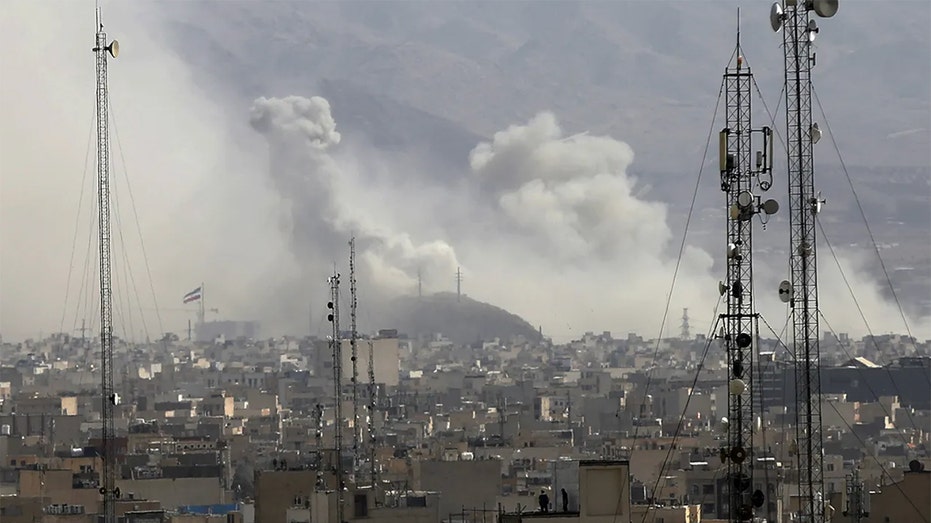
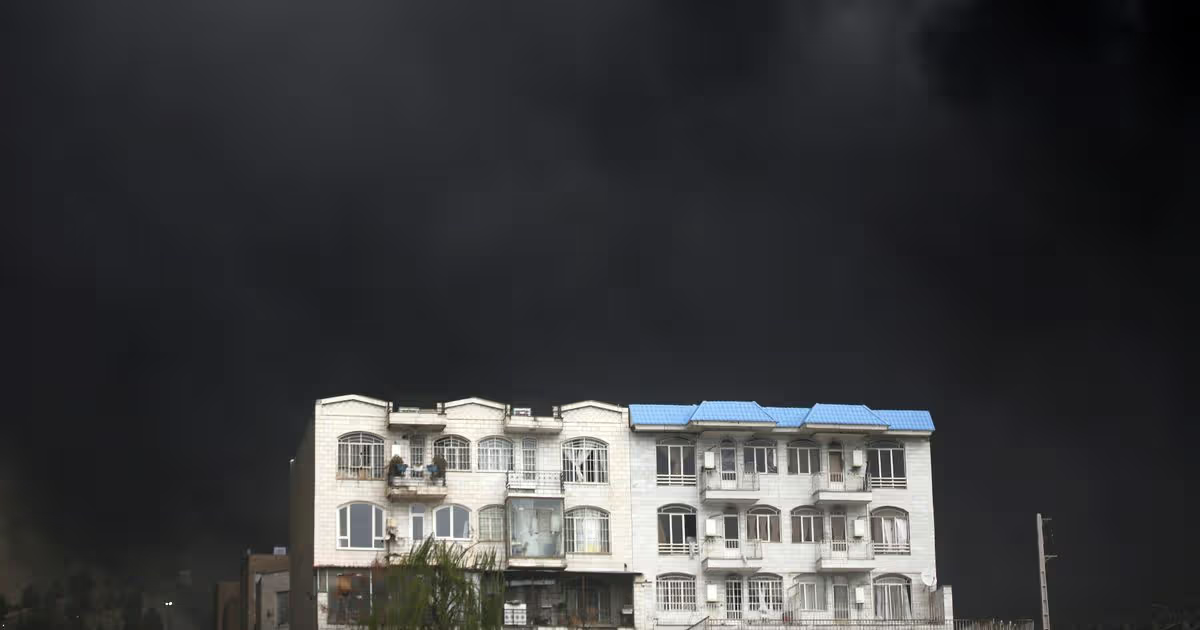
Black smoke rises after fires broke out following US-Israel attacks targeting some oil storage facilities targeted, including the Shehran oil depot, in Tehran, Iran on March 8, 2026

Black smoke rises after fires broke out following US-Israel attacks targeting some oil storage facilities targeted, including the Shehran oil depot, in Tehran, Iran on March 8, 2026(Image: Anadolu via Getty Images)

The price of oil has surpassed the $100 threshold for the first time since the energy crisis in 2022, with analysts warning the economic ramifications could exceed those of Russia’s invasion of Ukraine.

Advertisement

Brent crude, the international benchmark for oil, jumped more than 25 per cent to peaks of $118 per barrel as the week’s trading commenced in Asia – representing the commodity’s largest single-day rise in six years.

The latest spike occurred as the Middle East conflict continued to strike crucial oil infrastructure, prompting nations to reduce production whilst movement through the vital Strait of Hormuz – through which approximately a fifth of the world’s oil supply passes – has virtually ceased.

Kuwait’s state oil company announced over the weekend it was reducing output, whilst the United Arab Emirates’ state-run oil firm stated it was “managing” some output, indicating potential production reductions.

In 2022, Brent crude momentarily exceeded $120 a barrel and reached peaks of $145 a barrel in 2008, with both movements resulting in significant repercussions for the global economy, as reported by City AM.

Advertisement

Kathleen Brooks, research director at XTB, observed Iraq was now producing a quarter of the oil it generated before the US and Israel attacks on Iran, at 1.3m barrels per day down from 4.3m.

“This is roughly three per cent of global oil supply lost in a single event. Shockingly, this is worse than the oil supply situation after Russia attacked Ukraine.”

Wall Street giant Goldman Sachs has predicted the price of oil could surpass the $150 threshold by year-end if the Middle East conflict remains unresolved.

Analysts at the investment bank have cautioned the ramifications of the US and Israel’s confrontation with Iran could prove 17 times more severe than the April 2022 peak, when global economies grappled with an energy crisis following Russia’s invasion of Ukraine.

Advertisement

Goldman Sachs had anticipated that oil flows through the Strait of Hormuz would decline to 15 per cent of normal levels. However, the Iranian blockade has meant only ten per cent of oil shipments that typically transit the waterway have managed to pass through.

On Friday evening, analysts at the Wall Street powerhouse issued a note stating: “Based on these new data, developments and the size of the shock, we now think that oil prices would likely exceed $100 next week if no signs of solutions emerge by then”.

In a Truth Social post responding to the latest price spike, Donald Trump has described it as “a very small price to pay for USA, and world”.

The US president declared the oil price rises “will drop rapidly when the destruction of the Iran nuclear threat is over”. Elsewhere, the Financial Times has reported that G7 finance ministers are poised to discuss a potential co-ordinated release of petroleum from reserves, overseen by the International Energy Agency in an urgent meeting today, aiming to address soaring oil prices amidst conflict in the Middle East.

Advertisement

The ministers and Faith Birol, Executive Director of the International Energy Agency, are anticipated to conduct a call at 8:30am New York time to explore strategies to alleviate the impact of the Iran war.


Continue Reading
Click to comment

Leave a Reply

Your email address will not be published. Required fields are marked *

Business

Oil, Gas Prices Surge as Iran War Forces Gulf Producers to Cut Output

Published

on

Oil, Gas Prices Surge as Iran War Forces Gulf Producers to Cut Output

Oil and gas prices surged Monday as the Middle East war roils energy markets, forcing major producers to shut down output while the Strait of Hormuz remains effectively closed.

In early European trading, Brent crude climbed 11% to $103.14 a barrel and West Texas Intermediate rose 8.9% to $89.49 a barrel, trimming earlier gains on news that Group of Seven ministers are set to discuss the joint release of petroleum reserves. The global benchmarks reached their highest levels since 2022 earlier in the session, touching $119.50 and $103.67 a barrel, respectively.

Copyright ©2026 Dow Jones & Company, Inc. All Rights Reserved. 87990cbe856818d5eddac44c7b1cdeb8

Continue Reading

Business

Strategic oil bets may outperform in current geopolitical crisis: Mark Matthews

Published

on

Strategic oil bets may outperform in current geopolitical crisis: Mark Matthews
The latest surge in crude oil prices, with Brent crude once again climbing above the $100 mark, is sending shockwaves across global financial markets. As investors recalibrate strategies, the question on everyone’s mind is: how long will it take for markets to digest this oil shock?

Mark Matthews, a seasoned market strategist from Julius Baer notes, “How soon before markets begin to digest it? They are digesting it now. We can see the Asian markets. The Japanese stock market, for example, was up as much as 17% in late February; now it is flat on the year. So, we are pricing in this high oil price right now.”

When asked about the potential impact on India, Matthews said, “Last year was a very good year for markets like Japan, China, and the US, but India did not do much. So, there should not be as much downside for India. Of course, you could make the case that India uses more oil than some of those other economies or has to import more, but the Indian economy, like most economies in the world, has become more efficient in its oil usage. The pain point which used to be $80 a barrel is now probably around 100. The good news is that India is now able to buy Russian oil again, which takes some pressure off. But really, for India and the rest of the world, it all depends on how long this war lasts.”

Foreign investor sentiment toward India remains cautious but opportunistic. Matthews explains, “There was a breakout in emerging markets versus the US in February of a very long downward trend channel, it had been in place for more than maybe 15 years. But it was a false breakout because last week emerging markets went down more than the US. In general, they are more vulnerable to high oil prices. Most of the oil that goes through the Strait of Hormuz comes out here to Asia. So intuitively, if the war lasts, emerging markets, because they are primarily Asian, should underperform.”

Advertisement

Looking ahead to the upcoming Federal Reserve meeting, Matthews anticipates measured action. “It is premature for the Fed to react to this war in Iran, but the non-farm payroll reading for February was a loss. That would suggest they would be in favor of cutting interest rates. The market is looking for two rate cuts this year. One reason is because the Federal Reserve does not like to surprise the market. It likes the market to price in broadly what it is thinking. I do not expect one of those to necessarily be next week, but by the end of this year, there should be two.”


Regarding hedging strategies for India, Matthews points to the oil sector rather than precious metals alone. “Gold and silver have done very well, but they are vulnerable because in risk-off events of this size, people like to take profit. With oil over $100 and war not ending soon, there is a case for owning the oil sector, not just in India but globally. Longer term, even when this war ends, if Iran is not stable, the Strait of Hormuz will not be stable either, and that is responsible for about 20% of the world’s oil trade.”
He also highlighted potential central bank responses, saying, “Iran’s game plan is quite obvious. They want to get oil prices as high as possible to put pressure on the US. With high oil prices, we will see inflation, because oil feeds into many aspects of the consumer and producer price indices. Supply chain disruptions, like issues in the Suez Canal, are also inflationary. When you have inflation, it is hard to cut interest rates, and central banks might even have to raise them depending on how long the war lasts.”Finally, Matthews weighed in on China’s position in the current geopolitical landscape. “China has been very prudent in accumulating a large oil reserve—over 250 days’ worth. That is a good thing. But China is the largest buyer of Middle Eastern oil. Longer term, this could incentivize them to diversify, with Russia being an obvious option. Very few are winning in this scenario, but Russia, Norway, Kazakhstan, and Venezuela are among those benefiting.”

As global markets grapple with high oil prices, geopolitical tensions, and inflationary pressures, investors are navigating an uncertain landscape. While India’s underperformance relative to other emerging markets might cushion its downside, exposure to energy-related sectors could offer a strategic hedge in these turbulent times.

Continue Reading

Business

Columbia Commodity Strategy Fund Q4 2025 Commentary

Published

on

Columbia Commodity Strategy Fund Q4 2025 Commentary

Columbia Commodity Strategy Fund Q4 2025 Commentary

Continue Reading

Business

Barclays initiates Avista stock at Equalweight on growth outlook

Published

on


Barclays initiates Avista stock at Equalweight on growth outlook

Continue Reading

Business

Clarksons reports 21% profit drop amid tariffs and sanctions

Published

on


Clarksons reports 21% profit drop amid tariffs and sanctions

Continue Reading

Business

Euro zone investor morale falls in March as Iran war casts doubt on EU recovery

Published

on

Euro zone investor morale falls in March as Iran war casts doubt on EU recovery


Euro zone investor morale falls in March as Iran war casts doubt on EU recovery

Continue Reading

Business

Roth/MKM initiates SOLV Energy stock with buy rating on backlog

Published

on


Roth/MKM initiates SOLV Energy stock with buy rating on backlog

Continue Reading

Business

Nifty volatility to continue, avoid complacent bets: Rajesh Bhosale

Published

on

Nifty volatility to continue, avoid complacent bets: Rajesh Bhosale
The Indian equity market recovered a little from its lows on Monday, but analysts warn that overall trends remain weak.

“So, yes, from the morning lows we are seeing some bounce back and this has been the pattern since last week where a huge gap down is followed by intraday bounce. But overall, the trend remains negative and gradually the market is moving lower. And we expect this volatility to continue and hence one should avoid complacent bets,” said Rajesh Bhosale, market strategist from Angel One.

He added, “On the higher side, if we see 24,200 to 24,300, that was a major support zone and that has been breached, so we expect further lower levels in the near term. So, avoid aggressive longs as of now. On the downside, if we see, 23,500 is the next key support, that is a key golden retracement. Last year there was a rally from the levels of around 21,700, and the golden retracement for that comes around 23,500. So, the next key level would be around 23,500. But as of now, until we see a clear reversal, one should avoid aggressive positions.”

Bhosale also shared stock-specific insights amid the volatile market. “If we see, there is volatility and we are seeing opportunities on both sides. Auto space is under tremendous pressure, and from that space, TVS Motor has seen a fresh breakdown. On the daily chart, there is an ascending triangle breakdown, and after a long time, it is slipping below 89 EMA. So, we expect the weakness can extend in the near term. One can have a bearish bet on TVS Motor considering 3,730 as a key resistance point and keeping that as a stop loss. We expect TVS Motor can slip towards the levels of 3,430.”

Advertisement

He highlighted potential opportunities in other sectors as well. “Some relative strength is visible in some counters. Banking space is under pressure, but IT space is somewhat showing relative strength. From that space, we are liking LTIMindtree. Last year, the stock was trading around 4,200 in March and rallied towards 6,000. LTIMindtree is again around the same levels this March. We expect a bounce back since indicators are oversold. With a stop loss of around 4,180, we are expecting a move towards 4,700 levels.”


Regarding PSU banks, Bhosale suggested a cautious approach. “We are seeing fresh breakdown in the PSU banks. On the daily chart of the PSU bank index, we can see a bearish island reversal formation. We expect the PSU bank index can extend its move towards 8,300. As of now, we will have a wait and watch approach. When it comes to 8,300, we will try to pick some good counters such as Bank of Baroda, Canara Bank, and Union Bank. But for now, we suggest avoiding positions as further weakness is expected in the near term.”
Analysts advise investors to maintain caution and avoid aggressive positions while keeping an eye on key support levels as the market navigates through heightened volatility.

Continue Reading

Business

Markets Tumble, Oil Prices Surge Past $100 as Iran War Escalates

Published

on

Markets Tumble, Oil Prices Surge Past $100 as Iran War Escalates

Markets Tumble, Oil Prices Surge Past $100 as Iran War Escalates

Continue Reading

Business

Nvidia-backed Nscale valued at $14.6 billion in fresh funding round

Published

on

Nvidia-backed Nscale valued at $14.6 billion in fresh funding round


Nvidia-backed Nscale valued at $14.6 billion in fresh funding round

Continue Reading

Trending

Copyright © 2025