

Business
Oil touches 2-week high after drone attack on UAE nuclear power plant


Brent crude futures climbed $1.44, or 1.32%, to $110.70 a barrel by 2337 GMT after touching the highest since May 5 earlier in the session.
U.S. West Texas Intermediate was at $107.26 a barrel, up $1.84, or 1.75%, following a rise to its highest level since May 4.
Both contracts gained more than 7% last week as hopes of a peace deal that would end ship attacks and seizures around the Strait of Hormuz dimmed. Last week’s talks between Trump and Chinese President Xi Jinping ended without an indication from the world’s top oil importer that it would help resolve the conflict.
Drone attacks on the UAE and Saudi Arabia and rhetoric from the U.S. and Iran raised concerns of an escalation in the conflict.

Emirati officials said they were investigating the source of the strike on the Barakah nuclear power plant and that the UAE had the full right to respond to such “terrorist attacks.”
Saudi Arabia, which intercepted three drones that entered from Iraqi airspace, warned it would take the necessary operational measures to respond to any attempt to violate its sovereignty and security. “These drone strikes are a pointed warning – renewed U.S. or Israeli strikes on Iran could trigger more proxy attacks on Gulf energy and critical infrastructure by Iran or its regional proxies,” IG market analyst Tony Sycamore said.
Trump is expected to meet top national security advisers on Tuesday to discuss options for military action regarding Iran, Axios reported.


Trump expected to tell Turkey he is ready to restore access to F-35 jets, NYT reports
Business
Bajaj Auto buyback to close today: Should you tender shares in Rs 5,633 crore buyback? Here’s what analysts say

The two-wheeler major launched its share buyback on July 1 as it aimed to buyback 46.94 lakh shares or 1.68% of the total paid-up share capital, with the record date being fixed on June 24.
Key things to know about Bajaj Auto’s buyback
Under Bajaj Auto’s buyback offer, eligible shareholders (those who held the shares as on the record date) in the reserved category for small shareholders are entitled to tender 17 equity shares for every 61 equity shares held as on the record date (June 24). For shareholders in the general category, the buyback entitlement is fixed at 17 equity shares for every 525 equity shares held on the record date.
A buyback of shares refers to a corporate action where a company repurchases its own shares from existing shareholders. Usually, the company purchases the shares at a higher price than current levels, encouraging investors to participate. Notably, Bajaj Auto has said that its promoters and promoter groups have indicated their intention not to participate in the buyback.
How to participate in Bajaj Auto’s buyback?
Eligible Bajaj Auto shareholders can participate in the offer by placing a bid through a stock broker registered with either the BSE or the NSE via a separate window on the stock exchanges. The registrar will complete the verification of tendered shares by July 10, 2026. Thereafter, the final acceptance or rejection of shares tendered under the buyback will be communicated to the stock exchanges by July 13.
After the buyback, Bajaj Auto will return the unaccepted shares by July 14, as per the schedule shared by the two wheeler maker in its exchange filing. “The Buyback reinforces the Company’s commitment to its shareholders by returning surplus cash to them in an effective and efficient manner, and is expected to improve its earnings per share and return on equity,” it added.
Also read: Bajaj Auto buyback opens July 1; shareholders can tender shares till July 7
How much profit can you make from Bajaj Auto’s buyback?
For example, let’s take an investor who bought 20 shares of Bajaj Auto at 9,750 apiece before the record date and is planning to tender shares in the buyback. The total value of her shareholding in the two-wheeler major as of the record date stood at Rs 1,95,000, making her eligible for Bajaj Auto’s reserved category for small shareholders (less than Rs 2 lakh).
As per the entitlement ratio, she is entitled to tender around 6 shares out of her 20 stock holding (nearly 27.9%). It is important to note that not all shares she tenders may be accepted in the buyback process.
Each accepted share would fetch ₹12,000, resulting in a profit of ₹2,250 per share over the assumed purchase price.Also read: Bajaj Auto’s Rs 5,633 crore share buyback | Key things to know
Should you participate in Bajaj Auto’s buyback?
All shareholders who held Bajaj Auto shares in their demat accounts as of the record date (June 24) will be eligible to tender shares in the buyback. Sunny Agrawal, Head of Fundamental Research at SBI Securities, explained that the entitlement ratio for small shareholders stands at 27.9% (17 shares for every 61 shares held) with the record date price of Rs 9,750 apiece.
“Assuming an acceptance ratio between 45% and 65%, a small shareholder is likely to get a return of 9.5% to 14.9% on his total holding. The return potential can be higher if the acceptance ratio is higher or the stock appreciates above Rs 9,750,” he said, advising investors to participate in the buyback.
Harshal Dasani, Business Head at INVasset PMS, also said that the reserved-category mechanics make participation a worthwhile arithmetic exercise even on a post-tax basis for retail shareholders already holding the stock. “Retail shareholders (holdings up to Rs 2 lakh value) sit in a reserved 15% pool of 7.04 lakh shares worth Rs 845 crore, and historically Bajaj Auto’s 2024 buyback delivered final retail acceptance ratios near 26%. If a similar acceptance pattern holds, a retail shareholder tendering all eligible shares can expect roughly 25-26% of holdings to be accepted at the Rs 12,000 price, with the residual returning at market price,” he said.
Vaqarjaved Khan, Senior Analyst of Fundamental at Angel One, meanwhile highlighted that with only 1.68% of equity being repurchased, the theoretical entitlement ratio works out to just 4.5–5%.
“That means most retail shareholders will see only a small slice of their tendered shares accepted, with the rest sold back at prevailing market price. The effective blended gain is far lower than the headline premium implies. Still, tendering costs nothing and any acceptance is pure upside so shareholders should tender their full entitlement regardless of the ratio,” he added.
Also read: Bajaj Auto total sales increase 28% in June
(Disclaimer: Recommendations, suggestions, views and opinions given by the experts are their own. These do not represent the views of The Economic Times)

Polaris: Shifting Gears Into Higher Growth
Enbridge: AI Tailwind Priced In (Rating Downgrade)

Australia vows stronger ties with Solomon Islands amid China concerns
Graffiti artist accused of scaling Australian bridge tower and painting giant cartoon bird
Business
71% of Gamers Say They’re Not Ready to Let Physical Games Die as PlayStation and Xbox Go Fully Digital
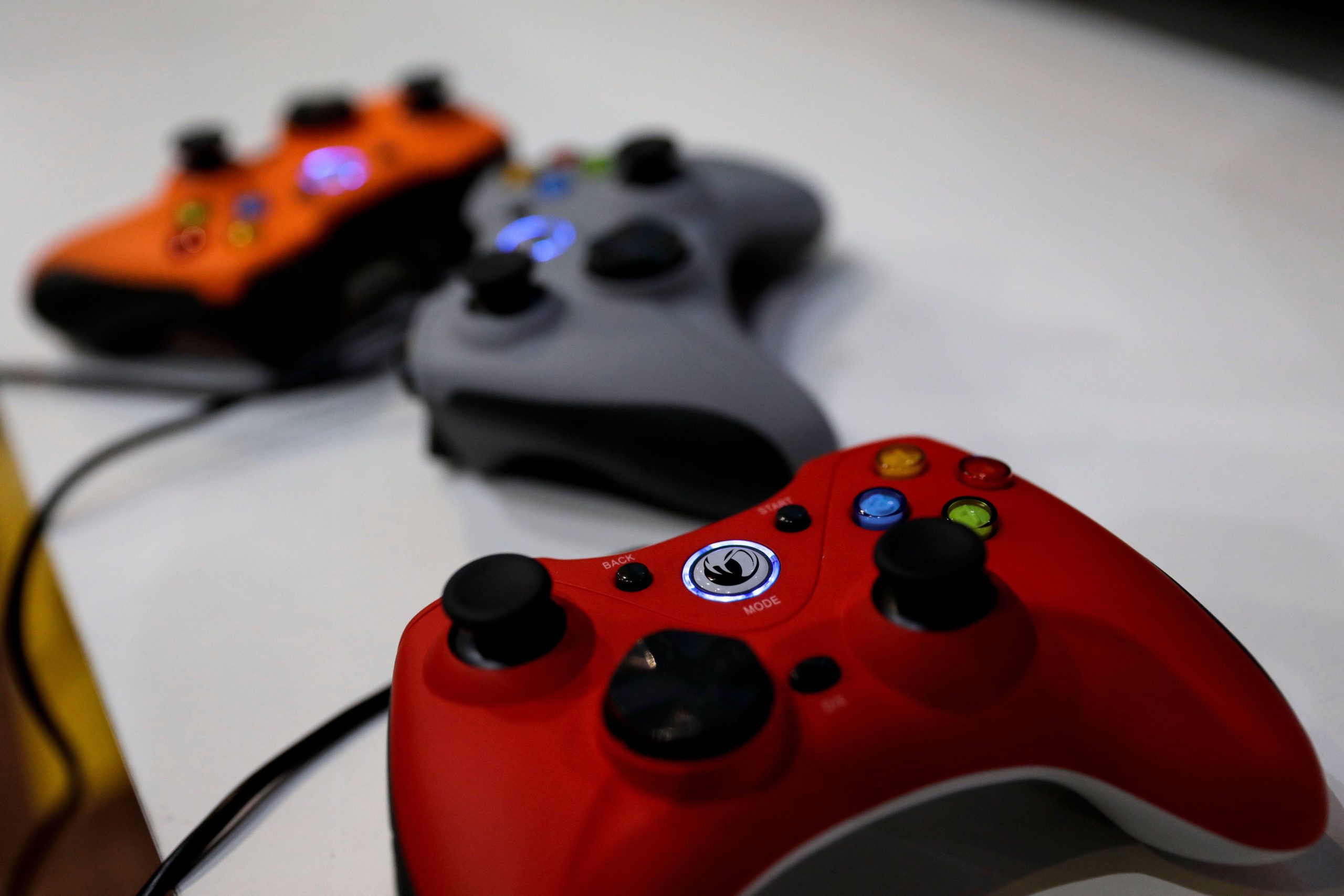
A new survey suggests the majority of gamers remain deeply attached to physical game discs, even as both PlayStation and Xbox move decisively toward all-digital futures for their next generation of releases.
According to a reader poll conducted by Windows Central, 71 percent of the 1,577 respondents said they will miss buying physical games, while only 13 percent said they were happy to embrace a fully digital future. The remaining respondents expressed more neutral or mixed views on the shift. The results reflect a wave of consumer pushback that has followed Sony’s announcement earlier this month that it will end production of physical game discs for new PlayStation titles starting in January 2028.
Sony confirmed the change in a post on the PlayStation Blog, stating that physical game disc production for all new games releasing on PlayStation consoles will be discontinued starting in January 2028, after which new titles will be available only through the PlayStation Store or at retailers in digital format. The company framed the decision as a response to shifting consumer habits, writing that the move represents “a natural direction for Sony Interactive Entertainment to adapt to consumer trends as the general preference for digital media significantly outpaces physical discs.” Sony added that the shift is intended to align the company more closely with how most of its player base already accesses and plays games.
The announcement does not affect games that have already been released, or that will be released, on disc prior to the January 2028 cutoff. Existing physical libraries and previously purchased titles will remain playable, according to Sony’s statement. The company also disclosed plans to shut down the PlayStation Store on the PlayStation 3 in select markets later this year, with global closures of the PS3 and PlayStation Vita digital stores expected to follow in the coming year, a move that will prevent players from purchasing new digital content on those older systems going forward.
Industry data cited alongside the announcement suggests the shift toward digital purchasing has been underway for some time. Sony has reported to investors in recent years that a growing share of PlayStation game purchases are made digitally rather than on disc, with recent figures indicating that nearly four out of five full-game purchases on PlayStation 4 and PlayStation 5 over the past year were made digitally. Some industry estimates have placed that figure as high as 80 to 85 percent of total game sales.
The timing of Sony’s announcement drew additional attention because it came just days after Rockstar Games, the studio behind the long-awaited title “Grand Theft Auto 6,” confirmed that its physical retail edition would include only a digital download code inside the box rather than an actual game disc. That decision had already frustrated a segment of players who continue to place value on collecting physical editions of major game releases, and it appeared to foreshadow the broader industry shift Sony would formalize shortly afterward.
Xbox has signaled a similar trajectory, though it has not yet made as sweeping a public announcement as Sony’s. Reports from The Verge indicate that employees within Microsoft’s gaming division have begun testing a new disc-to-digital feature, known internally as Xbox Positron, that would allow players to digitize existing physical game collections for the Xbox One and Xbox Series X and S consoles. Additional reporting has suggested that Microsoft’s next-generation console effort, referred to as Project Helix, is also expected to drop a physical disc drive entirely, mirroring the direction Sony has now made official.
Reaction to Sony’s announcement has been largely critical among longtime gaming communities and industry commentators. Writing for Forbes, contributor Paul Tassi described the move as inevitable from an industry-trend standpoint, but argued it does little to benefit consumers, since it eliminates the option to purchase games physically altogether. Tassi also connected the decision to broader concerns about digital ownership, noting that Sony itself has previously removed previously purchased movies from its platforms due to licensing disputes, a pattern he said illustrates the risks associated with fully digital game libraries. He further raised concerns about the implications for game preservation efforts, which have historically relied heavily on physical copies to keep older titles accessible and playable over time.
Community response to the Windows Central poll echoed many of these same concerns. Readers who responded pointed to the loss of resale value, the inability to lend or gift physical copies to friends, and skepticism about whether eliminating discs would result in any meaningful cost savings passed on to consumers. Some commenters described the shift as part of a broader pattern across industries, comparing it to earlier transitions away from physical ownership in the music and film sectors. Notably, physical media has not disappeared everywhere: vinyl record sales have continued to grow in recent years, surpassing $1 billion in annual sales for the first time since 1983, according to industry figures, even as digital streaming has dominated the broader music business.
The broader home entertainment industry has followed a similar arc in recent years. Netflix wound down its DVD-by-mail rental business in 2023, marking the end of another major physical media distribution model. Sony’s decision to phase out PlayStation discs follows that same general trajectory, though the scale of the shift is notable given that PlayStation itself played a foundational role in popularizing the disc format for home gaming consoles following its debut in 1994.
The announcement has also raised questions about what the shift might mean for future PlayStation hardware, including the next-generation PlayStation console, which some industry observers do not expect to arrive for several more years. Whether that future console will include a disc drive at all remains unclear, though Sony’s current guidance suggests physical media support for new titles will effectively end well before any next-generation hardware reaches the market.
For now, players hoping to continue purchasing physical copies of new games have a window of roughly a year and a half before Sony’s cutoff takes effect in January 2028. Whatever changes follow on the Xbox side, the survey results suggest that a clear majority of gamers remain unconvinced that a fully digital future represents an improvement over the physical ownership model that has defined console gaming for more than three decades.
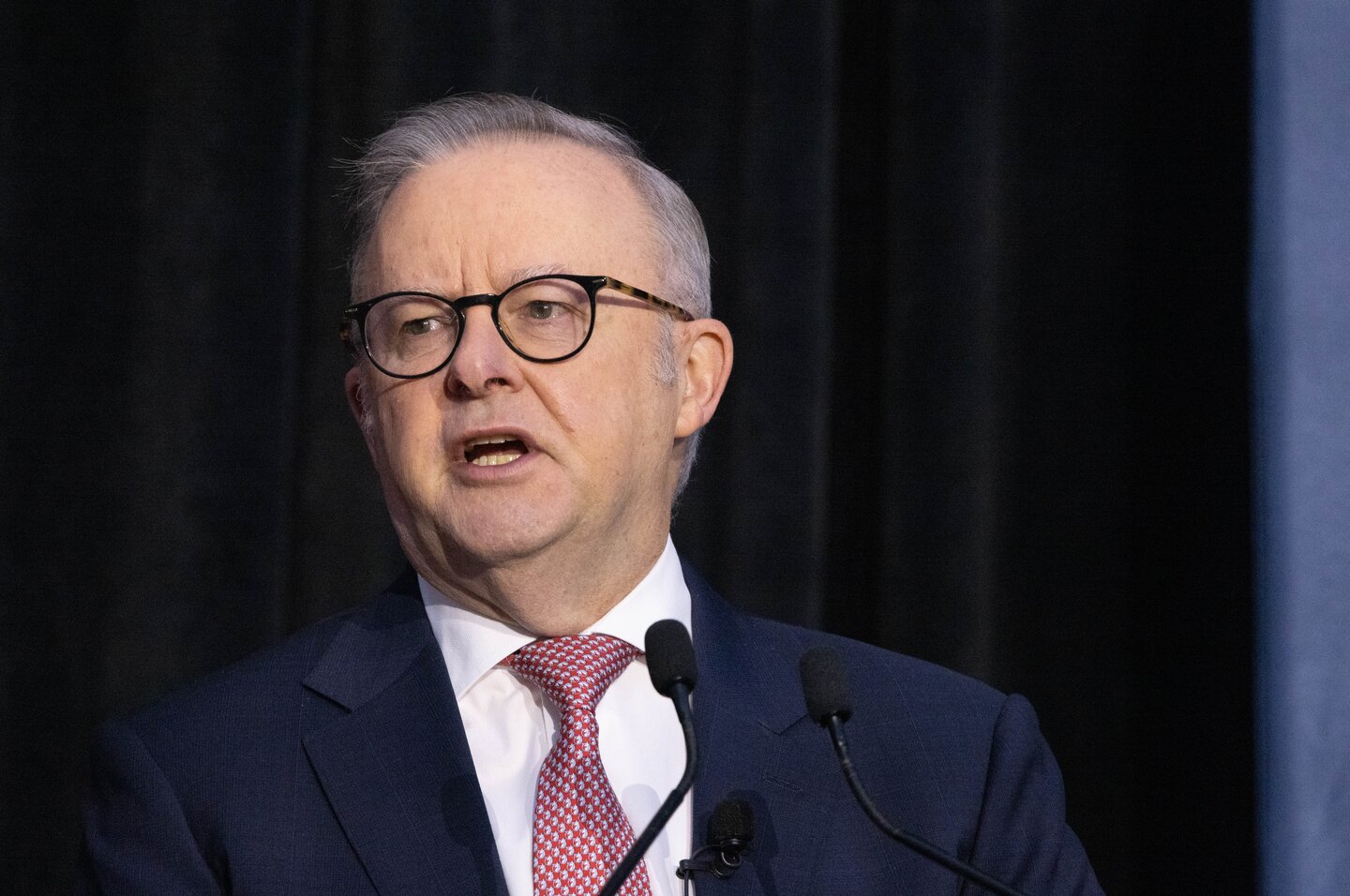
Anthony Albanese will make a quick dash to the Solomon Islands to participate in the nation’s independence day celebrations after securing a key pact with Fiji.
CoreWeave: Downgrading On Increased Hyperscaler Competition
Business
Harry Kane Shines at World Cup 2026 as Son Heung-min and South Korea Suffer Historic Group Stage Exit
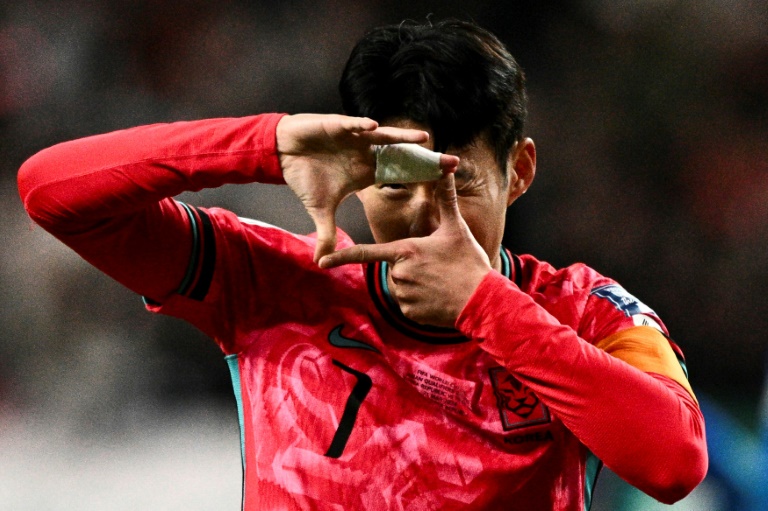
The 2026 FIFA World Cup has produced a striking contrast between two of Asian and European football’s most recognizable attacking stars, with England captain Harry Kane thriving on the tournament’s biggest stage while South Korea captain Son Heung-min endures one of the most difficult chapters of his international career.
Kane has been central to England’s run to the quarterfinals, scoring five goals through the Round of 16 and cementing his place among the tournament’s most productive forwards. His tally includes a brace in England’s dramatic 3-2 win over co-host Mexico at Estadio Azteca and a decisive two-goal performance in a comeback victory over DR Congo. Along the way, Kane surpassed Gary Lineker to become England’s all-time leading World Cup scorer, adding to a resume that already includes the Golden Boot he won at the 2018 tournament in Russia. Teammates and observers have continued to praise his form throughout the competition. Barcelona forward Anthony Gordon, speaking about his England teammate, described Kane in glowing terms as a player capable of contending for the sport’s top individual honor.
Statistical comparisons between Kane and Son this season have also tended to favor the England captain across several measures, including aerial duel success, shots on target and overall attacking output, reflecting Kane’s continued prolific scoring form for both club and country. Kane’s underlying numbers, including his expected threat and involvement in scoring chances, have remained among the strongest of any forward at Bayern Munich and with the England national team over the past year.
Son’s tournament, by contrast, unfolded very differently. South Korea entered the World Cup hoping to advance deep into the newly expanded 48-team format, but the team finished third in Group A with a single win in three matches, missing out on the knockout stage entirely. The result marked South Korea’s worst-ever World Cup finish, placing the team 34th overall, two spots below the lowest possible finish under the tournament’s previous 32-team format.
Son’s individual form struggled alongside the team’s broader difficulties. He was substituted in the second half of matches against both Czechia and Mexico after missing scoring opportunities, and then, in a move that stunned South Korean fans, head coach Hong Myung-bo dropped Son entirely from the starting lineup for the team’s decisive final group match against South Africa, the first time Son had not started a World Cup match for South Korea since before his international debut in 2010. South Korea lost that match 1-0, eliminating the team from contention. Hong later explained his rationale for repeatedly substituting or benching his captain, pointing to a prior instance in which a substitute scored the winning goal after Son was withdrawn. He acknowledged that the same gamble did not work a second time.
The fallout from South Korea’s early exit extended well beyond the pitch. South Korean President Lee Jae Myung ordered an investigation into the team’s performance, citing the significant public funding invested in the World Cup campaign and expressing regret over what he described as the disappointment felt by the public. Hong Myung-bo announced his resignation shortly after the tournament concluded, taking responsibility for the team’s performance despite having a contract that extended through the 2027 AFC Asian Cup.
Son took to social media to address the team’s supporters directly, writing that he felt he could not adequately convey his sorrow with a simple apology. He described the disappointment as difficult to put into words, saying the dream stage he had long spoken about had collapsed and that accepting the outcome remained difficult. In a separate public statement following renewed scrutiny from South Korea’s government, Son also asked fans to direct their support toward his teammates rather than continued criticism, saying he felt a deep sense of responsibility for not repaying the support the team had received. He added that he would work to earn back the trust of supporters and vowed to keep fighting to bring joy back to South Korean fans.
Despite the disappointing tournament, Son received a notably warm reception from fans upon his return to South Korea, a contrast to the jeers directed at Hong Myung-bo the day before. Supporters gathered at Incheon International Airport wearing jerseys and holding signs of encouragement for Son and his teammates, signaling continued public affection for the longtime captain even amid the team’s historic underperformance.
Comparing Kane and Son directly raises a familiar challenge in evaluating any two players from different eras, leagues and international contexts. Kane’s role as England’s talisman has been reinforced by his continued scoring prowess at a major tournament where his team remains alive in the competition, while Son’s legacy has long been built on a decade of individual brilliance for both Tottenham Hotspur and South Korea, including guiding his country to the Asian Cup final in previous years and winning the Premier League Golden Boot in 2022 as a joint winner. Whether one is definitively “better” than the other ultimately depends on the criteria used, whether that involves current tournament form, career achievements, leadership under pressure or long-term impact on the sport in their respective countries.
What is clear is that the 2026 World Cup has, for now, sharpened the contrast between the two forwards’ current trajectories. Kane continues to push for a deep run with England and remains in contention for the tournament’s Golden Boot, sitting just two goals behind the current three-way leaders. Son, meanwhile, has returned home to a period of reflection and rebuilding for South Korean football following the nation’s most disappointing World Cup showing to date. As the tournament progresses toward its quarterfinal and semifinal stages, Kane’s continued performances are likely to keep shaping the conversation around his standing among the game’s elite forwards, even as debate over comparisons to players like Son remains, as with most such discussions in football, a matter of perspective rather than settled fact.

7 Forgotten K-Dramas That Are Perfect From Start to Finish

Wendy’s Piggy Bank Adventure: Maddie and Eric Learn to Save Money

St Leonard’s Hospice opens new shop in York neighbourhood

No Jackpot Winner as $257 Million Prize Rolls Over to $269 Million Monday Draw

Renter of Home in Anne Heche Crash Denies Settlement With Son

Weekend Open Thread: Staud – Corporette.com
Wendy’s Piggy Bank Adventure: Maddie and Eric Learn to Save Money

President Trump made more than $1bn from crypto in first year back in office | BBC News

83-Minute Finance Masterclass If You’re in Your 20s & 30s (All Secrets Revealed) @financewithsharan
-

 Fashion3 days ago
Weekend Open Thread: High Hopes
-

 Politics4 days ago
The House | “Reframing the debate from a binary discussion of winners and losers”: Yuan Yang reviews ‘We Are Not Machines’
-

 Fashion11 hours ago
Open Thread: What Great Books Have You Read Recently?
-
 NewsBeat2 days ago
Taylor Swift and Travis Kelce wedding staffer hilariously struggles to keep her cool while checking in megastars
-

 News Videos7 days ago
How to Build INSANE Live Financial Dashboards With Claude
-
 Crypto World6 days ago
Airdrop Registration Becomes Key Focus For Remittix As RTX Launch Updates Approach
-

 Sports6 days ago
Broncos roster: OL Ben Powers (No. 74) entering final year of contract
-

 Crypto World5 days ago
Binance stock trading tops $1B in first month after launch
-

 NewsBeat6 days ago
Presenter Caroline Flack’s brother Paul Flack dies aged 55
-

 Crypto World5 days ago
Alibaba-affiliate Ant Group enters the humanoid robot market with 12 deals
-

 Crypto World3 days ago
Standard Chartered Secures MiCA License as ESMA Adds 37 New Crypto Firms
-

 Crypto World2 days ago
South Africa proposes crypto tax guidance under existing rules
-

 News Videos12 hours ago
Best Time to Enter Small Caps Right Now? Another Bull Run? | Financially Free
-

 Business5 days ago
Meta Platforms Stock Jumps 7% Today as Bloomberg Reports Company Plans to Enter the Cloud Business
-
 NewsBeat5 days ago
New exhibition reflects five decades of movement between island of Ireland and GB
-

 Tech2 days ago
Lenovo laptops are now shipping with YMTC SSDs, a sign of Chinese NAND entering the mainstream
-

 Business4 days ago
What a 10 Percent Drop Means for Buyers, Sellers and Renters
-

 News Videos15 hours ago
Avoid entering in FOMO #bitcoin #cryptocurrency #trading #scalping
-

 Crypto World4 days ago
Binance Re-Enters Philippines As EU MiCA Rules Restrict Access
-

 Crypto World4 days ago
Alibaba bans Claude Code over alleged backdoor security concerns
You must be logged in to post a comment Login