

Business
OpenAI and Anthropic Race Toward IPOs in High-Stakes AI Public Market Debut


SAN FRANCISCO — Artificial intelligence leaders OpenAI and Anthropic are accelerating plans for initial public offerings that could rank among the largest in history, setting up a closely watched contest to reach public markets amid booming investor interest in the sector.
Anthropic took an early step by confidentially filing for a U.S. IPO, positioning itself to potentially list before rival OpenAI in what analysts describe as a strategic move to capitalize on current market enthusiasm for AI companies. Both firms have achieved private valuations in the hundreds of billions of dollars, reflecting explosive growth in the technology.
The developments come as the broader IPO market shows signs of recovery, with high-profile listings like SpaceX generating significant attention. Anthropic’s filing, reported in early June 2026, has heightened expectations for a wave of AI-related public debuts that could reshape technology investing.
Anthropic, creator of the Claude AI models, has seen its valuation surge following multiple funding rounds backed by major investors including Google and Amazon. The company recently raised substantial capital at a valuation approaching $1 trillion, surpassing OpenAI in some metrics and establishing itself as one of the most valuable private AI startups.
OpenAI, known for ChatGPT, continues preparations for its own public listing, with reports indicating potential filings in the coming months. The Microsoft-backed company has achieved remarkable revenue growth but faces ongoing scrutiny over profitability and governance structures.
Industry observers note the symbolic importance of which company reaches the public markets first. An earlier listing could provide strategic advantages in talent recruitment, partnerships and market perception. “Anthropic aims to beat OpenAI to public markets for strategic advantage,” one analyst said, highlighting the competitive dynamics.
Both companies have transformed the AI landscape. OpenAI pioneered widespread consumer adoption through ChatGPT, while Anthropic has emphasized safety and enterprise applications with its Claude models. Their public debuts would offer investors direct exposure to leading AI technologies.
Financial details remain fluid. Anthropic’s latest funding round valued it at approximately $965 billion, while OpenAI has been valued around $852 billion in recent rounds. Both continue rapid revenue expansion, though profitability timelines differ based on heavy research and development investments.
The IPO race reflects broader excitement around artificial intelligence. Venture capital has poured into the sector, with valuations skyrocketing as companies demonstrate practical applications across industries. Public markets could provide liquidity for early investors while testing AI companies’ ability to meet heightened expectations.
Regulatory considerations add complexity. Both firms navigate evolving rules around AI safety, data usage and market concentration. Anthropic has positioned itself as a leader in responsible AI development, a stance that could appeal to certain investors.
Market conditions appear favorable for large technology listings. Strong performance by recent tech IPOs has encouraged companies to pursue public debuts. However, volatility in AI-related stocks could influence pricing and investor appetite.
For Silicon Valley, successful IPOs from OpenAI and Anthropic would represent a new chapter in the industry’s maturation. The companies have already reshaped private markets through massive funding rounds. Public listings would extend that influence to broader investor bases.
Analysts caution that going public brings new pressures, including quarterly reporting requirements and shareholder demands for profitability. Both companies have warned that AI development costs remain high, with returns uncertain in the near term.
The competitive landscape extends beyond these two firms. Other AI players and related technology companies may accelerate their own public plans, creating a cluster of high-profile listings that could dominate market attention in late 2026.
Investors are closely monitoring developments. Potential IPOs have generated significant secondary market activity, with shares in both companies trading at premium valuations in private transactions. The eventual public offerings could set benchmarks for the AI sector’s market value.
As preparations advance, both OpenAI and Anthropic continue innovating. Their technologies power applications from consumer chatbots to enterprise solutions, driving productivity gains across economies while raising important questions about AI’s societal impact.
The coming months will prove pivotal as the companies finalize regulatory filings and market strategies. Their success or challenges in public markets could influence the trajectory of AI investment for years to come.


SEATTLE — The United States dominated Australia 2-0 on Friday at Seattle Stadium, with an own goal and a clinical finish from breakout star Alex Freeman sending the co-hosts surging into the World Cup knockout stage with a game still to spare in Group D.
The result, built on a self-inflicted opening goal and a composed individual finish, left the Socceroos reeling and the Americans firmly in control of their own destiny heading into the final round of group matches.
How the Goals Came
The breakthrough came when Australian defender Cameron Burgess turned the ball into his own net to give the United States the lead, a costly error that set the tone for the remainder of the match. Burgess clattered the ball into his own net for the opening goal, having ball-watched in the buildup before being forced into the unfortunate clearance. He was substituted at halftime following the difficult outing.
Folarin Balogun played a central role in generating the danger that led to the opener, with his incisive run up the channel rewarded with the own-goal opener. He held his own as Australia upped the physicality in the second half, remaining a persistent threat in the minds of the Australian defense throughout.
The second goal arrived through Alex Freeman, whose finish was ultimately confirmed following a VAR review. Freeman delivered another balanced all-around shift, this time with a goal to show for it — a player ratings assessment that flagged him as a “star in the making.” Sergiño Dest took the initial shot that was lobbed into Freeman’s zone for the second goal, with good interplay alongside Weston McKennie along the right flank helping generate the chance.
Standout Performances for the USA
Several American players drew praise for their contributions throughout the dominant performance. Tim Ream, serving as captain, was credited as the engineer of plenty of good efforts up the left flank and was often involved in the defensive half, delivering another credible shift in that leadership role. Chris Richards was not quite perfect on the pass but stewarded defensive sequences effectively, though a needless late challenge put him in yellow card limbo heading into the team’s next match.
Antonee Robinson kept the ball moving up the left touchline with seven progressive passes and provided width for Balogun’s run on the opener, though he too now finds himself on yellow card watch. Tyler Adams operated effectively behind a pair of box-to-box midfielders and kept Australia from making good progress through the central third throughout the match.
Weston McKennie relished a more advanced role, registering six progressive passes, eight progressive receptions, and four passes into the box, with some dazzling footwork alongside Dest in key moments. Malik Tillman delivered another composed shift with tidy ball recirculation and progression, proving difficult to dispossess and drawing additional cautions from the Australian defense in the process.
Ricardo Pepi, a surprise starter, thwarted Australia’s plans and overall shape but was unable to place either of his shot attempts on target, instead contributing industriously off the ball as a complement to Balogun’s more incisive running.
A Difficult Night for the Socceroos
For Australia, the match represented a sharp reversal from their promising start to the tournament. Several Australian players struggled throughout, with the back line in particular unable to contain the pace and movement of the American attack.
Jacob Italiano was beaten on numerous occasions by the USA’s wide players in the first half, though he showed a bit more creativity when pushing further forward in the final half-hour. Jordan Bos earned the game’s first yellow card for shoving McKennie in the face and was regularly beaten down the wing, offering very little in attack throughout his time on the pitch.
Aiden O’Neill was isolated and overwhelmed in midfield for most of the game, failing to control the tempo or connect key passes for his team. Paul Okon-Engstler struggled to assert himself physically for the first 70 minutes and lost too many one-on-one challenges against the American attackers.
A bright spot for the Socceroos came in the form of Mat Leckie, who was Australia’s best attacker early in the first half, generating a handful of shots and crosses before fading as the match progressed. He was forced off with an injury just after the hour mark. Despite the difficult overall performance, Alessandro Circati defended stoically for much of the match, picking up Australia’s second yellow card for a high boot but also making a desperate diving block to prevent what would have been a third American goal early in the second half.
Bench Contributions
Substitute Connor Metcalfe provided one of the few genuine positives for Australia off the bench, making an immediate impact with forward runs and line-breaking passes after coming on at halftime. Nestory Irankunda also offered a more dangerous counter-attacking threat than the player he replaced, causing trouble whenever he reached top speed.
For the United States, manager Mauricio Pochettino used his substitutions to manage the comfortable lead and protect his starters heading into the team’s remaining group fixture. Sebastian Berhalter came on to add midfield stability as the U.S. sacrificed an attacking option with the game well in hand, while Joe Scally and Auston Trusty both saw their first action of the tournament with the result already secure. Gio Reyna and Haji Wright entered in stoppage time as the match wound down toward its conclusion.
What the Result Means
The dominant victory sends the United States into the World Cup knockout stage with a game still remaining in the group phase, a significant achievement for the co-host nation as it continues building momentum on home soil. The result, paired with the team’s opening win, leaves the Americans in firm control of their own group-stage fate heading into their final fixture.
For Australia, the loss represents a significant step backward after an encouraging start to the tournament, leaving the Socceroos needing a strong result in their remaining group match to keep their own knockout-stage ambitions alive. The manner of the defeat — undone by a costly own goal and unable to generate sustained attacking pressure against a well-organized American side — will likely prompt searching questions for manager Tony Popovic as his team regroups ahead of its final group-stage test.
Business
Abu Dhabi Investment Portfolio: 10 stocks rally up to 106% in CY26, 2 new picks added in Q4 – Portfolio check

The equity portfolio of the Abu Dhabi Investment Authority (ADIA), managed through its global funds, has recorded a 30% gain so far in CY26, rising from Rs 3,720 crore in December 2025 to Rs 4,817 crore as of June 19, 2026. As of the March 2026 quarter, the portfolio comprised holdings in 26 publicly listed Indian companies.

ServiceNow: Expect Shares To Keep Trading Lower

Parag Parikh Large Cap Fund had an AUM of Rs 739 crore as of May 31, 2026. Here are the top 10 holdings of this large cap fund (Source: ACE MF)

Bolivia declares state of emergency after weeks of road blockades


Mexico City looks to rein in street drinking after massive World Cup party


Swimming-American Douglass breaks 50m freestyle world record

The industry has evolved significantly over the past two decades—from a fragmented, offline agent-driven market to a digitally enabled ecosystem led by online travel platforms.
The next phase of growth is expected to be driven by artificial intelligence, enabling hyper-personalized travel planning, dynamic packaging, and real-time decision-making.
The travel distribution landscape remains inherently complex due to the diversity of traveler requirements and the highly fragmented global supplier base, comprising thousands of airlines and millions of accommodation providers. This fragmentation continues to create inefficiencies across the value chain, reinforcing the importance of aggregators and digital platforms that simplify discovery, comparison, booking, and post-booking services.
Several structural tailwinds are supporting long-term growth. Rising disposable incomes, favorable demographics, increasing workforce participation, improving transportation infrastructure, and a consumer shift toward experience-led spending are expanding the addressable travel market.

Easing international travel regulations and growing connectivity are further accelerating travel demand across both domestic and international segments.
Against this backdrop, India’s online travel market is expected to outpace global growth trends. The market is projected to expand from approximately INR 2.1 trillion in FY23 to INR 3.8 trillion by FY28, reflecting a CAGR of around 13%, significantly higher than the global online travel market growth rate. Online channels are also expected to gain share, with digital penetration rising to nearly 65% of total travel bookings from about 54% currently.Scalability within the sector is increasingly determined by technological capabilities, supplier network depth, automation, customer acquisition efficiency, and the ability to cross-sell complementary travel services.
Margin expansion opportunities are also improving as platforms increase their exposure to higher-value segments such as hotels, holiday packages, meetings and events, and ancillary services.
A notable trend shaping the industry is the growing use of mergers and acquisitions to strengthen technology capabilities, expand inventory, and deepen customer engagement. This consolidation strategy mirrors global best practices and is helping travel platforms build more integrated ecosystems.
While competitive intensity, supplier dependence, macroeconomic sensitivity, and technological disruption remain key risks, the medium-term outlook remains favorable.
The combination of underpenetrated online travel adoption, expanding digital infrastructure, and AI-enabled personalization positions India’s travel technology ecosystem as a compelling long-term growth theme.
TBO Tek TP- 1765
TBO Tek delivered a resilient performance despite geopolitical disruptions across key travel corridors. Management expects travel demand to rebound as conditions normalize, supported by recovery in Middle East markets, strong momentum in Europe, increasing international travel, and ongoing integration of Classic Vacations, which should enhance scale and operating synergies. Revenue grew 83% YoY in 4QFY26, aided by the consolidation of Classic Vacations, while organic revenue increased 21% YoY. MTB grew 15% YoY, EBITDA rose 23% YoY, and PAT increased 2% YoY. For FY26, consolidated GTV grew 19% YoY, reflecting healthy underlying demand despite temporary disruptions in key travel markets. We maintain a BUY stance on TBO Tek, supported by its diversified travel platform, strong execution, and favourable industry trends. We expect revenue/EBIT/PAT CAGR of 37%/35%/30% over FY25-28E, driven by increasing contribution from high take-rate hotel and ancillary segments, international expansion, and benefits from the Classic Vacations integration.
Ixigo TP- 217
Le Travenues Technology (Ixigo) is the second-largest online travel agency (OTA) in terms of FY26 gross transaction value of INR187b, (includes flight~75b, Train:83b, Bus:26b and others:3b), with a monthly active user base of 85m largely coming from Tier-2 and Tier-3 towns. Notably, it is a market leader among OTAs in train ticketing with a market share of ~60% and is also consolidating its position in flight and bus ticketing. Ixigo’s differentiated multi-app, multi-brand strategy has enabled it to strengthen consumer engagement at a structurally lower customer acquisition cost. Its user base is widely distributed across lower-tier markets, with ~94% of bookings having either origin or destination in non-tier-1 cities, highlighting strong penetration beyond metro markets. We estimate Ixigo to deliver a CAGR of ~23%/59%/51% in revenue/EBITDA/PAT and grow its overall GTV by 22% during FY26-28E and EBITDA margin is expected to improve by 400bp to 10% by FY28E on the back of operating leverage and potential reductions in operating expenses.
(The author is Siddhartha Khemka, Head – Research, Wealth Management, Motilal Oswal Financial Services Ltd.)
(Disclaimer: Recommendations, suggestions, views, and opinions given by experts are their own. These do not represent the views of the Economic Times)
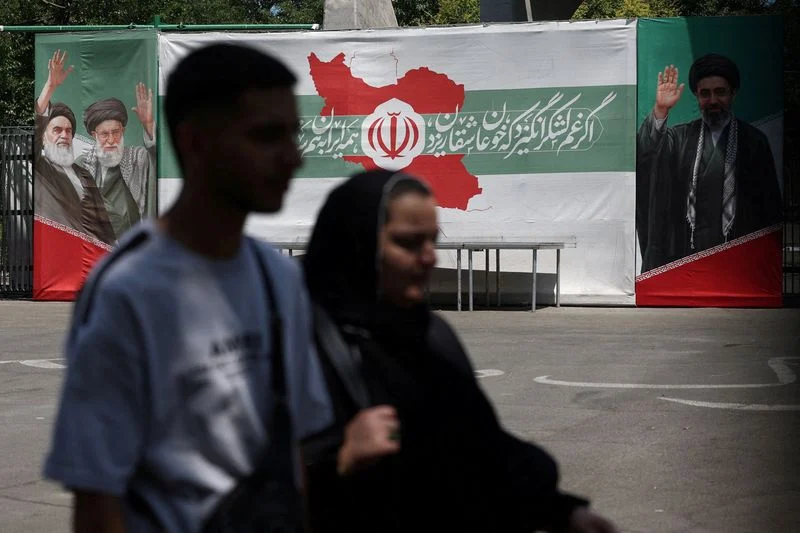

Iranian Guards’ business empire to win big if U.S. sanctions lifted

“The jury is still out”: Why Kohli has zero IT exposure
Kohli has held a bearish view on the sector for several months and is not softening his stance. His core concern is not that Indian IT companies will disappear, he is clear they won’t, but the sector’s defining characteristic, growth, is missing. “My style of investment is basically growth and that is going to be missing here,” he told ET Now, adding that the exaggerated market reaction to every piece of weak data signals how deeply investors distrust the sector’s near-term trajectory.
The Accenture numbers, which spooked the market, were not catastrophic in isolation. But Kohli argues that the severity of the reaction reflects a deeper consensus: the growth trajectory for Indian IT majors over the next few years looks structurally challenged. While some niche players and those who successfully pivot to AI-led services may survive and thrive, he warns that identifying those winners right now is nearly impossible. “Who will survive — the jury is still out.”
“When a sector goes out of reckoning, it takes a very long time. Equity markets are all about the future, and we are very clear this sector will take very long to stabilise,” says Kohli.
Jio’s IPO: Value unlocking, not a cash crunch
Shifting to the other headline of the day, Reliance Jio’s DRHP has hit the market, a fresh issue of 27 crore shares that has reignited debate about where the proceeds will go. Kohli’s read is that this is less about raising emergency capital and more about strategic value unlocking.
Telecom is a permanently capital-hungry business, he notes, with constant technological upgradation, AI integration, app ecosystems, and a fierce two-player competition with Bharti Airtel all demand ongoing investment. But the IPO’s deeper purpose, in his view, is to give investors a clean, direct vehicle to bet on India’s telecom story without the baggage of Reliance’s oil refining and retail businesses. “If somebody wants to play only the telecom business and not the traditional businesses, then this will give an opportunity,” Kohli said.
For long-suffering Reliance shareholders who have watched the stock stagnate, the listing could be the catalyst the market has been waiting for -separating Jio’s high-growth digital narrative from the conglomerate’s legacy valuation drag.

USA Routs Australia 2-0 in Seattle to Surge Into World Cup Knockout Stage

Bunnie Xo’s Ex Says He Still Loves Her Amid Jelly Roll Split

Financial Decisions You’ll Regret in 10 Years


-

 Business6 days ago
No Jackpot Winner as $257 Million Prize Rolls Over to $269 Million Monday Draw
-
 Crypto World5 days ago
Zimbabwe Requires Crypto Businesses to Register Annually Under New FIU Regulations
-

 Fashion14 hours ago
Weekend Open Thread: Miami – Corporette.com
-
 Entertainment6 days ago
Matt Damon’s Viral Sci-Fi Thriller Has Taken Over HBO Max
-

 Business6 days ago
Anthropic staff to meet White House officials next week, Axios reports
-

 Tech6 days ago
As AI companies race to go public, who else is along for the ride?
-
 Crypto World6 days ago
Bitcoin could crash to $48,000, if this historical pattern is triggered
-
 NewsBeat6 days ago
Warning of disruption as Cardiff Crossrail works to start
-
 NewsBeat6 days ago
what doctors are seeing in ebike crashes
-
 NewsBeat6 days ago
Tributes to former deputy head teacher at Cambridge school among death and funeral notices
-

 Politics6 days ago
“Israel’s” ban on ICRC visits ruled illegal, but Knesset moves to stop them permanently
-

 Entertainment6 days ago
Deion Sanders Shares Powerful Post After Viral Advice To Deiondra
-

 News Videos6 days ago
Financial Accounting | Last Day Revision Strategy and Booster | CMA Inter – June 2026
-
 Entertainment6 days ago
Kate Middleton Glare Goes Viral After Kids Booed At Royal Event
-

 Crypto World6 days ago
XRP ETFs Outperform As Bitcoin And Ethereum Funds Extend Outflow Trend
-

 Tech5 days ago
Over 400 Arch Linux packages compromised to push rootkit, infostealer
-
 Crypto World6 days ago
Market Preview: SpaceX (SPCX) IPO Record, Federal Reserve Meeting, and Iran Nuclear Agreement
-

 Business6 days ago
Invesco Quality Income Fund Q1 2026 Commentary
-

 Sports6 days ago
Dick Advocaat’s Curacao scores first-ever World Cup goal against Germany
-

 NewsBeat6 days ago
Singer Oliver Tree dies aged 32 in helicopter crash in Brazil
You must be logged in to post a comment Login