








Connect with us
DAPA Banner
DAPA Coin
DAPA
COIN PAYMENT ASSET
PRIVACY · BLOCKDAG · HOMOMORPHIC ENCRYPTION · RUST
ElGamal Encrypted MINE DAPA
🚫 GENESIS SOLD OUT
DAPAPAY COMING

Business

OpenAI’s Codex Coding Tool Reportedly Down for Some Users as Outage Reports Spike Overnight

Published

on

OpenAI

OpenAI‘s Codex, the company’s AI-powered coding assistant, was reportedly experiencing connectivity and access issues for some users early Tuesday, with outage tracking services and user reports pointing to intermittent disruptions affecting the tool’s desktop application and related services.

According to outage tracking site StatusGator, 21 user-submitted reports of problems with Codex were logged over a 24-hour period ending Monday evening, with the platform describing OpenAI as experiencing a partial outage at the time. The social media account Status Is Down flagged the issue early Tuesday morning, asking followers whether they were affected and using the hashtags #OpenAI, #OpenAIDown, #Codex and #CodexDown as reports of the disruption circulated online.

Multiple users also reported problems directly on OpenAI’s GitHub issue tracker for the Codex project throughout the day Monday and into Tuesday. Several issues logged by developers described connectivity problems affecting the Codex desktop application, including disconnection errors related to networking and endpoint connectivity, as well as separate issues involving the tool’s integration with Model Context Protocol servers, a framework Codex uses to connect with external tools and data sources. Additional reports cited problems with tool-calling functionality and issues specific to the Codex application running on Windows systems.

OpenAI’s official status page acknowledged ongoing issues tied to its systems, though the company’s most recent public update focused specifically on disruptions affecting FedRAMP workspaces, a designation for cloud environments that meet federal government security compliance standards. According to that update, OpenAI said core functionality had been restored following an earlier disruption, but noted continuing issues affecting Codex, workspace analytics, conversation search, the ability to search for custom GPTs, ChatGPT user invites, and the Compliance Logs Platform download feature specifically within FedRAMP-designated environments. The company said it was continuing to work on resolving those remaining issues and would provide further updates as more information became available.

Advertisement

The disruption adds to what has been a bumpy stretch for Codex’s reliability in recent weeks. According to outage history compiled by StatusGator, OpenAI has logged a series of warning-level service disruptions on nearly a daily basis over the past several weeks, including periods of degraded service lasting anywhere from several hours to a full day at a time between late June and early July. One previously resolved incident specifically affecting Codex and related FedRAMP services lasted approximately five hours and 48 minutes, beginning in the early morning hours of July 1.

Codex has also experienced a range of other technical issues in recent months unrelated to Tuesday’s reported disruption. According to incident logs maintained by monitoring service IncidentHub, Codex has dealt with several previously resolved issues over the past few weeks, including a period in late June when usage limits within Codex appeared to deplete faster than expected, along with earlier incidents involving access token errors, a “Selected Model is at Capacity” error message, elevated error rates specifically affecting the GPT 5.5 model within Codex, and increased latency during a process the company refers to as Codex compaction.

OpenAI has periodically addressed broader Codex-related errors through its own developer community forum in the past, acknowledging increases in error rates and confirming that engineering teams were actively working to resolve underlying issues as quickly as possible. The company has generally directed users to its official status page for real-time updates during periods of degraded service, a practice that appeared to continue during Tuesday’s reported disruption.

Codex, first introduced by OpenAI as an AI coding tool designed to help developers write, debug and manage code through natural language prompts, has become an increasingly central part of the company’s broader product lineup as demand for AI-assisted software development tools has grown across the technology industry. The tool is available both through a web interface and as a downloadable desktop application, with additional integrations available through command-line interfaces used by many professional software developers.

Advertisement

Outage tracking services generally caution that reported issue counts reflect self-submitted user data and public signals such as social media activity, meaning the true scope of any given disruption can sometimes differ from the volume of individual reports logged at a particular time. Even so, the combination of user reports on GitHub, social media posts flagging the outage, and OpenAI’s own acknowledgment of ongoing technical issues within certain workspace environments suggested that at least some portion of Codex’s user base was experiencing meaningful disruption to the service as of early Tuesday.

For affected users, common troubleshooting steps recommended by technical support resources typically include checking OpenAI’s official status page for the most current information, verifying internet connectivity, restarting the Codex application, and, where relevant, checking whether an issue is isolated to a specific integration such as an MCP server connection rather than reflecting a broader outage of the underlying service. Developers experiencing persistent issues are generally encouraged to file detailed reports through OpenAI’s GitHub repository, where the company’s engineering team can track and triage individual bug reports alongside broader service-wide disruptions.

As of Tuesday morning, OpenAI had not issued a comprehensive public statement addressing the full scope, cause or expected resolution timeline for the reported Codex disruptions occurring outside the FedRAMP environment specifically referenced in its most recent status update. The company’s history of frequent, relatively short-duration service warnings over the preceding weeks suggests that intermittent disruptions of this kind have become a recurring, if generally short-lived, feature of Codex’s operation as OpenAI continues to scale the tool’s usage among a growing base of developers relying on it for day-to-day coding tasks.

Users experiencing ongoing problems with Codex are encouraged to monitor OpenAI’s official status page at status.openai.com for the most current information, as the company works through what appears to be a mix of both newly reported connectivity issues and previously acknowledged, more narrowly scoped disruptions affecting specific workspace configurations. Given the pattern of past incidents, similar disruptions affecting Codex have historically been resolved within a period ranging from several hours to roughly a day, though OpenAI has not provided a specific timeline for full resolution of Tuesday’s reported issues as of this report.

Advertisement
Continue Reading
Click to comment

You must be logged in to post a comment Login

Leave a Reply

Business

Local shares dip, miners slump as Hormuz tensions flare

Published

on

Local shares dip, miners slump as Hormuz tensions flare

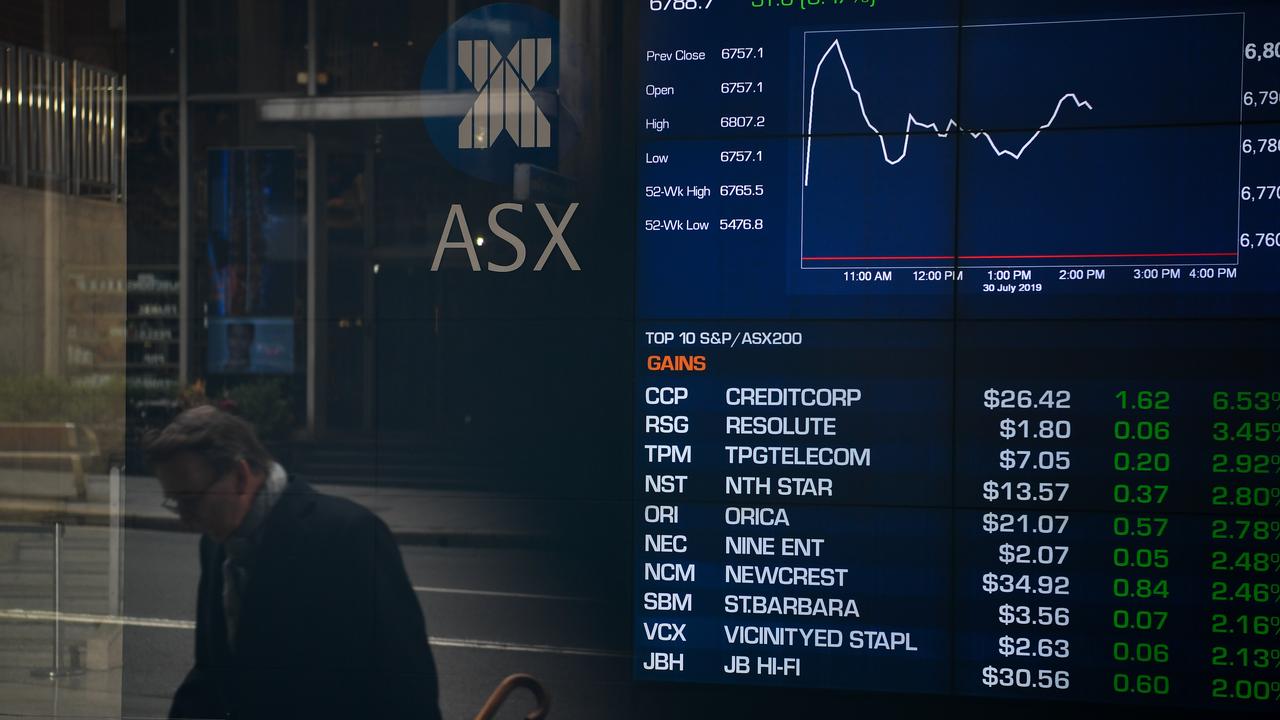
Australia’s share market has resumed its decline after a container ship in the Strait of Hormuz was hit by a projectile, testing a fragile truce between the US and Iran.

Continue Reading

Business

Muhlenkamp Q2 2026 Quarterly Letter (Mutual Fund:MUHLX)

Published

on

Invesco Global Strategic Income Fund Q4 2025 Commentary (OPSIX)

Businessman and team analyzing financial statement Finance task. with smart phone and laptop and tablet.

laddawan punna/iStock via Getty Images

Fellow Investors,

For most of the second quarter, the markets were driven by news concerning the Iran War. Major combat operations began on February 28th and mostly ended after the April 8th cease-fire agreement. The war mattered to markets because the Iranians closed the Strait of Hormuz, reducing global crude oil flows by about 20% of global daily consumption and significantly reducing liquefied natural gas (LNG) and fertilizer flows as well. Oil prices peaked at $113 per barrel on April 7th and have declined erratically since then, hitting a low of $70 on June 24th. On June 17th, the Strait of Hormuz was partially reopened after the signing of a memorandum of understanding between the United States and Iran, and oil slowly began to flow out of the area once again. This was critical, as many countries had been drawing down oil reserves to keep their economies running. Their ability to do this was finite, and there were some real concerns that a true oil shortage would develop when their reserves were depleted, sending prices much higher and slowing economic activity sharply. While those fears have not completely disappeared, such a dire outcome is far less likely now.

While the conflict with Iran is not resolved, the opening of the Strait of Hormuz has allowed Wall Street to think about other things: a new Federal Reserve Chairman (Kevin Warsh) and the massive IPO of SpaceX.

Advertisement

Mr. Warsh became the Fed Chair on May 22nd and appears intent on reforming the Federal Reserve. He started his reforms by doing away with forward guidance and creating five advisory committees to study communications, the balance sheet, inflation frameworks, data sources, and productivity/jobs. These committees are expected to wrap up their work by the end of 2026, so it won’t be long before we find out what they recommend. At its May meeting, the Fed kept the Federal Funds Rate target unchanged at 3.50% – 3.75%. Mr. Warsh emphasized price stability in his remarks, and prediction markets took those comments as a sign that rate hikes were more likely in the near future, not the expected rate cuts. We’ll see.

As regards the SpaceX IPO, I am struck by the high valuation given to the company: 55 times this year’s estimated sales (the company is not yet profitable, so Price/Earnings is meaningless). As a rule of thumb, I generally consider 10 times sales to be expensive – SpaceX is far beyond that. CEO Musk has set himself some very ambitious goals including deploying orbital data centers and putting a million people on Mars – if he can do the improbable, perhaps his company is worth its current price. Again, we’ll see.

On to more mundane concerns.

The U.S. economy appears to be doing fine. The U-3 Unemployment Rate was 4.3% on May 31st, about where it has been since May 2025. 1st Quarter real GDP growth was reported to be 2.1% on March 31st and the Atlanta Federal Reserve’s GDPNow estimate for the second quarter is 2.5% as of June 25th, 2026. Inflation has increased throughout the year with the Consumer Price Index indicating 4.2% year-over-year inflation on May 31st, 2026. The high inflation number probably prompted Warsh’s repeated emphasis on price stability as a Federal Reserve goal. Interest rates in general bottomed in early March and have been rising erratically ever since. The yield on the 10-year Treasury bond was 3.94% on March 1st, rising to 4.38% on June 25th. Similarly, the 30-year fixed mortgage rate was 6.1% on March 1st and hit 6.57% on June 25th.

Advertisement

The S&P 500 has bounced nicely from the late March low and is now up roughly 7% year to date. Semiconductor stocks have led the move higher as massive investments by artificial intelligence developers and cloud service providers accelerated chip makers’ revenue and earnings growth.

As I did last quarter, let’s review our standing questions. The questions are listed below in italics, with our updates in bold letters.

  • When will the AI boom end? The answer still eludes me. My number one concern is that the AI boom will turn to bust, and the stock market will do a re-enactment of 2000 – 2002. I have been actively reducing exposure to companies benefitting from AI investments for the last 18 months. I may have acted too soon, and our investments may underperform for a time if the AI boom continues.
  • When will the contraction in manufacturing end? 1st quarter 2026. This question will be dropped going forward.
  • Will the tailwinds for gold continue? The price of gold has dropped about 25% from its January peak and is down 6% year to date. The stronger dollar has been a headwind, but the structural tailwinds (central bank buying, gold backed crypto currency buying, profligate government spending) are still in place. Our gold related holdings change little during the Quarter.
  • Will the tariff and regulatory upheaval we saw in ’25 settle down, allowing CEOs to start making long-term decisions again? This is not yet clear. In conversations with CEOs tariffs rarely come up any more and regulatory change is more often beneficial than not. Long term, I think regulatory reform is a significant positive change for the U.S. economy.
  • What will inflation do this year? So far it has mostly gone up, it is not clear how much was due to oil prices and how much is due to other factors. Also unclear is the ability or willingness of the Fed to raise interest rates and thereby increase borrowing costs for the government.
  • How long will the Iran war last? 45 Days. How high will oil prices go? $110 per barrel. I don’t think the U.S. will resume major combat operations. This question will also be dropped unless I am wrong and major combat operations resume.

The accounts Muhlenkamp and Company manages remain up by high-single-digit percent year to date. I’ve taken profits on some successful investments in the Quarter and sold our international and Chinese investments. The Chinese holdings were not meeting my expectations, so I sold them. The international exchange-traded fund we owned was heavily exposed to Korean and Taiwanese chipmakers and did better than I expected. I sold it because I think those chipmakers are now overpriced. I’m not in a hurry to put our cash to work but will happily do so when I find lucrative opportunities.

I hope that you and your family enjoyed our nation’s 250th birthday and didn’t get overcooked! As always, please contact us if you have any questions, we’d love to hear from you!

Jeff Muhlenkamp, Portfolio Manager

Advertisement

Muhlenkamp and Company, Inc.

Consumer Price Index (CPI) – measures the average change in prices over time that consumers pay for a basket of goods and services, commonly known as inflation.

GDP (Gross Domestic Product) – is the total market value of all goods and services produced within a country in a given period of time (usually a calendar year).

Advertisement

Price to Earnings ratio (P/E) – the current price of a stock divided by the trailing twelve months earnings per share.

Price to Sales ratio (P/S) – the current price of a stock divided by (in this case) the average of analysts’ estimates for FY 2026 sales. Trailing twelve months’ sales or forward twelve months’ sales estimates are also commonly used in this calculation.

S&P 500 Index® – the S&P 500 (Standard & Poor’s 500) is a stock market index that tracks the performance of 500 leading publicly traded companies in the United States. The S&P 500® Index is weighted by market value and its performance is thought to be representative of the stock market as a whole. One cannot invest directly in an index.

U-3 Unemployment Rate – U-3 is the official unemployment rate published by the U.S. Bureau of Labor Statistics (BLS). It measures the total number of jobless people (aged 16 and older) who are available to work and have actively searched for a job in the past four weeks, expressed as a percentage of the labor force.

Advertisement

Past performance does not guarantee future results.

The comments made in this letter are opinions and are not intended to be a forecast of future events, a guarantee of future results, nor investment advice.

Visit our website for past Quarterly Letters and other archives – Muhlenkamp Library

Copyright © 2026 Muhlenkamp & Company, Inc. All Rights Reserved

Advertisement

Original Post

Editor’s Note: The summary bullets for this article were chosen by Seeking Alpha editors.

Continue Reading

Business

Coco Gauff Reaches First Wimbledon Semifinal With Dramatic Comeback Win Over Fellow American Jessica Pegula

Published

on

Coco Gauff

LONDON — Coco Gauff advanced to her first career Wimbledon semifinal on Tuesday, rallying from a set down to defeat fellow American Jessica Pegula 4-6, 6-3, 6-3 in an all-USA quarterfinal that pitted the tournament’s two highest-seeded women’s players against each other on Centre Court.

The No. 7-seeded Gauff overcame an early setback, dropping the first set to the No. 4-seeded Pegula before regrouping to take control of the match over the final two sets. The turning point of the second set came when Pegula, serving at 3-4, double-faulted at 0-40, handing Gauff a 5-3 lead she would not relinquish. Gauff then sealed the set with a 117 mph ace, leveling the match at one set apiece.

The decisive third set featured several momentum swings before Gauff ultimately pulled away. She broke Pegula with a low passing-shot winner to take a 2-1 lead, only for Pegula to break back immediately when Gauff netted a forehand on break point, tying the set at three games apiece. Gauff responded right away, breaking Pegula at love for a 4-3 lead after Pegula netted a forehand off a deep service return. With Pegula serving to stay in the match at 3-5, 30-40, she dumped a backhand into the net, sending Gauff into a celebration on court as she completed the win.

Gauff finished the match a perfect 4-for-4 on break-point conversions and served at 76 percent in the decisive third set, controlling the tempo from the baseline throughout the closing stages of the match. Speaking on court immediately after the win, Gauff reflected on the significance of the result given her earlier struggles on grass. “Honestly, pretty insane,” Gauff said. “Considering I hadn’t won a match on grass in 2 years before this tournament. I’m definitely just really happy with how I played today. Jess is an incredible opponent and person, playing against her is never easy. I’m just happy to get through this one today.”

Advertisement

Tuesday’s meeting marked a historic occasion for American tennis. According to ESPN, Gauff and Pegula were the first pair of American women’s top-10 seeds to meet at Wimbledon since Serena Williams defeated her sister Venus in the 2009 final. The matchup also carried personal significance for both players, given their history as former doubles partners, including during the 2024 Paris Olympics, where the pair won gold together before splitting to focus on their individual singles careers.

With the win, Gauff, 22, became the highest remaining seed in the women’s singles draw and is now guaranteed to reach at least the final, given the depth of the remaining field. She is set to face the winner of Thursday’s quarterfinal between No. 14 seed Naomi Osaka of Japan and No. 10 seed Karolina Muchova of Czechia in the semifinals. ESPN broadcaster Mary Joe Fernandez offered high praise for Gauff’s game following the match, suggesting she could be the player to beat for the remainder of the tournament. “I like the winner of this match going all the way,” Fernandez said on air. “The way that Coco moves, the way that she can attack the net, she’s going to be really hard to beat.”

For Pegula, 32, the loss extends a career pattern in which she has consistently reached the latter stages of Grand Slam tournaments without ever winning one. She has now reached 10 career Grand Slam quarterfinals but has never advanced past the quarterfinal round at Wimbledon specifically, and she remains in search of her first major singles title. Pegula, the daughter of billionaire Buffalo Bills owner Terry Pegula, had entered this year’s tournament having reached the semifinals of the Aussie Open earlier this season, adding to a résumé that already includes a runner-up finish at the 2024 U.S. Open, her best Grand Slam result to date.

Tuesday’s result carries significant financial implications for both players as well. According to prize money figures cited by Forbes, Gauff’s semifinal appearance earns her approximately $1.24 million, while the tournament’s eventual champion will take home close to $5 million, with the runner-up receiving approximately $2.48 million.

Advertisement

Gauff’s path to her first Wimbledon semifinal has been defined by resilience throughout the tournament. Her win over Pegula marked her third three-set victory of this year’s Championships, following an earlier comeback in the second round that included a tense 10-point tiebreak against Solana Sierra. Prior to this tournament, Gauff had never advanced past the fourth round at the All England Club, making Wimbledon the last of the four Grand Slam events where she had yet to reach the quarterfinal stage before this year’s breakthrough run. She previously won the 2023 U.S. Open and the 2025 French Open, giving her two major titles heading into this week’s semifinal, but neither had come on grass, a surface that had proven consistently difficult for her in previous years.

Gauff’s semifinal opponent will be determined Thursday when Osaka and Muchova meet in a rematch of their recent Bad Homburg final. Osaka reached the quarterfinals after delivering one of the standout performances of the tournament, upsetting top-seeded and world No. 1 Aryna Sabalenka in straight sets, a result that reshaped the entire women’s draw following the earlier eliminations of defending champion Iga Swiatek and 2022 champion Elena Rybakina.

With Tuesday’s win, Gauff has ensured that an American will reach the Wimbledon final for the first time since the 2009 all-Williams-sisters final, a milestone that adds further significance to a tournament that has already produced a string of notable upsets throughout its women’s draw. As she prepares for Thursday’s semifinal, Gauff will look to build on what she described as a career-best performance on grass, a surface she has now shown she can navigate at the highest level of the sport after years of comparative struggle on the fastest of tennis’s four Grand Slam surfaces.

Advertisement
Continue Reading

Business

Netflix Stock Rebounds Slightly as Shares Trade Near 2026 Lows Ahead of Important July 16 Earnings Report

Published

on

Netflix

Netflix shares rose Tuesday, trading at $77.33, up $1.31, or 1.72 percent, offering a modest bounce for a stock that has fallen sharply this year and remains not far from levels last seen before 2025, even as the company prepares to report second-quarter earnings later this month.

Note: This article is intended to provide factual context and does not constitute financial advice. Readers should consult a licensed financial advisor before making investment decisions.

Tuesday’s gain comes after a difficult stretch for Netflix stock, which closed at $76.05 on Monday following a 2.06 percent decline, according to Yahoo Finance. The stock is down roughly 21 percent so far in 2026 and has fallen approximately 42 percent from its high last summer, according to a Motley Fool analysis published this week, marking one of the steepest pullbacks among major media and technology companies over the past year.

Much of Netflix’s volatility this year traces back to a high-profile, ultimately abandoned effort to acquire Warner Bros. Discovery’s studio and streaming operations. Netflix and Warner Bros. Discovery had entered into a definitive agreement valuing the media company at $27.75 per share, structured as a combination of cash and Netflix stock and later amended to an all-cash transaction, with a total enterprise value of approximately $82.7 billion. The deal was designed to combine Warner Bros.’ extensive film and television library, including HBO and HBO Max, with Netflix’s global streaming platform.

Advertisement

That agreement unraveled in February after rival bidder Paramount Skydance sweetened its own offer for Warner Bros. Discovery to $30 per share in cash, a bid Warner Bros. Discovery’s board determined constituted a “Superior Proposal” under the terms of its existing agreement with Netflix. Faced with the choice of matching Paramount’s higher offer, Netflix opted to walk away. In a joint statement, Netflix co-CEOs Ted Sarandos and Greg Peters said the transaction the company had negotiated “would have created shareholder value with a clear path to regulatory approval,” but added that “at the price required to match Paramount Skydance’s latest offer, the deal is no longer financially attractive.” The two thanked Warner Bros. Discovery’s leadership, including chief executive David Zaslav, for what they described as “a fair and rigorous process.”

Netflix shares initially rallied on the news, rising nearly 10 percent in after-hours trading immediately following the announcement, as investors welcomed the company’s decision to avoid what some analysts had characterized as an increasingly expensive and complex transaction. According to the Motley Fool, Netflix received a $2.8 billion termination fee as part of the collapsed deal, funds the company has said contributed to its cash position alongside organic free cash flow generation of approximately $2.3 billion in the most recent quarter. Netflix management has projected full-year free cash flow of $12.5 billion for 2026, including the termination fee payment.

Despite that initial positive reaction, Netflix shares have since given back those gains and more, falling to levels not seen since before 2025, according to the Motley Fool’s analysis. The stock’s decline has coincided with a broader deceleration in the company’s projected revenue growth for 2026, a trend that has weighed on investor sentiment even as the company’s underlying cash generation has remained strong.

Netflix’s current stock price reflects the aftermath of a significant corporate action completed late last year. On October 30, 2025, the company announced a 10-for-1 forward stock split, which took effect on a post-split basis on November 17, 2025, reducing the per-share price from roughly $1,100 to approximately $110 at the time. The move was intended to make Netflix shares more accessible to retail investors and employees, though it did not change the company’s underlying market capitalization or intrinsic value. Since the split, Netflix shares have declined further amid the Warner Bros. Discovery saga and broader market volatility, falling well below the roughly $110 level at which the stock began trading on a split-adjusted basis.

Advertisement

Wall Street analysts remain divided on Netflix’s near-term trajectory following the stock’s decline. According to the Motley Fool, the median analyst price target of $115 per share implies significant potential upside from current trading levels, with some individual forecasts reaching as high as $138 to $150 per share, reflecting continued optimism about Netflix’s advertising business and subscriber growth potential. Netflix’s advertising tier revenue grew 150 percent to $1.5 billion in 2025, according to company disclosures, with management projecting that business to roughly double again in 2026.

Netflix is scheduled to report its second-quarter 2026 financial results on July 16, an event analysts say will provide important clarity on the company’s growth trajectory following the collapsed Warner Bros. Discovery deal. Wall Street currently projects second-quarter earnings per share of $0.79 and revenue of approximately $12.57 billion, according to Yahoo Finance. The upcoming report comes as Netflix continues to face heightened scrutiny over its growth outlook, with investors weighing the company’s strong free cash flow generation and advertising momentum against a broader deceleration in projected revenue growth for the year.

Beyond the financial and corporate developments, Netflix has continued to lean on its content pipeline to drive subscriber engagement. The company has announced plans for a sequel to its animated hit “KPop Demon Hunters,” along with a new animated entry set in the “Stranger Things” universe, part of a broader strategy the company has said is central to attracting and retaining subscribers amid intensifying competition from rivals including Disney+ and Amazon.

With Netflix shares trading well below both their pre-split highs and the levels reached immediately after the Warner Bros. Discovery deal collapsed, investors are likely to watch the company’s upcoming earnings report closely for signals on whether recent price increases, continued advertising growth, and the absence of the now-abandoned acquisition’s associated costs and complexity can help stabilize the stock’s performance for the remainder of 2026.

Advertisement
Continue Reading

Business

Form 144 ATI INC For: 7 July

Published

on


Form 144 ATI INC For: 7 July

Continue Reading

Business

Glamping couple sue Britvic over Magic Mushroom Cabin photo

Published

on

Glamping couple sue Britvic over Magic Mushroom Cabin photo

A Northamptonshire couple who run a fairytale-style glamping retreat are taking soft drinks giant Britvic to court, claiming the J2O maker used a photograph of their cabin without permission to promote a national competition.

Amanda and David Robinson, who rent out the Magic Mushroom Cabin in the grounds of their home in Dodford, allege in High Court documents that Britvic, which also makes Robinsons squash and Tango, used an image of the cabin taken by Mrs Robinson in 2017 to promote a competition offering a “unique summer hangout” as its prize. The photograph is said to have appeared on the company’s competitions page and in advertising between July and October last year.

The couple are asking the court to declare that Britvic infringed their copyright and to award damages, including £6,552 for lost profits and a further sum reflecting the fee they would have charged for use of the image. A hearing in the claim is yet to take place.

Britvic has admitted using the photograph but denies that the Robinsons’ authorisation was required.

Iain Connor, intellectual property partner at national law firm Michelmores, says the case is a sign of how accessible copyright enforcement has become for small claimants.

Advertisement

“Claims enforcing photographers’ rights have been democratised by the small claims track of the UK’s Intellectual Property Enterprise Court, which provides a low cost route to stop infringement and get damages. This means claimants can bring a claim with very little downside risk in terms of adverse costs awards,” he said.

The IPEC small claims track handles intellectual property disputes worth £10,000 or less, with short, informal hearings in which the losing party seldom pays the winner’s costs, a structure designed with individuals and smaller firms in mind.

Connor warns that businesses using unlicensed images face growing exposure. “Online search tools make finding infringing content really easy and so anyone using an image without a licence is at risk of a claim from one of very many ‘licence compliance’ organisations, which usually demand somewhere in the region of £500 to £1,000 per photo.”

As for Britvic’s defence, he is unconvinced. “First, Britvic is asking the Robinsons to prove that they have title to the photo, which should not be too difficult for the claimants, and second that authorisation to use the photo was not required. Both defences seem doomed to fail. Since Britvic admits using an image, it is impossible to see how it has any chance of demonstrating that the claimant’s authorisation was not required; this is copyright 101.”

Advertisement

What sets the claim apart, Connor says, is the way the Robinsons have framed their losses. “It appears that the claimants want compensation relating to the underlying business featured in the photo rather than a licence fee for the use of the photo. The claimants will say that as they don’t licence photos for a living, unlike professional photographers, there is no benchmark licence fee for the use, and so the claim must relate to the harm to their glamping business. This is where Britvic might do a little better in defending the ‘quantum’ of the claim at the level demanded by the Robinsons. However, ultimately Britvic will have to pay something to the Robinsons.”

Under the Copyright, Designs and Patents Act 1988, copyright arises automatically when a photograph is taken, with no registration needed, which is precisely why cases like this catch big brands out.

For small firms, the case cuts both ways. Owners of glamping businesses and other image-led ventures should take heart that the courts offer a genuinely affordable route to enforce their rights. Equally, any business borrowing images for marketing, however innocently, should treat this as a reminder that protecting intellectual property, and respecting other people’s, is not a nice-to-have. As we have reported before, brand protection and IP matters for even the smallest enterprise.


Amy Ingham

Amy is a newly qualified journalist specialising in business journalism at Business Matters with responsibility for news content for what is now the UK’s largest print and online source of current business news.

Advertisement

Continue Reading

Business

Yum! Brands stock hits all-time high at 169.71 USD

Published

on


Yum! Brands stock hits all-time high at 169.71 USD

Continue Reading

Business

The latest equity deals in Welsh business

Published

on

Business Live

Companies feature include Coaches’ Voice, Monex, Breaking Change and Maid to Help Cleaning Specialists

The £50m equity fund of the Cardiff Capital Region has backed the growth plans of football education and digital coaching platform Coaches’ Voice.

Working with coaches, clubs, leagues and governing bodies across the global game, Coaches’ Voice delivers expert‑led insight, digital learning tools and specialist education to help coaches develop, adapt and succeed at every level of football, from grassroots pitches to the international stage.

Left to right: Rob Franklin FAW, Kellie Beirne chief executive of the Cardiff Capital Region, David Sciama Coaches’ Voice and Rob Asplin PwC.

Co‑founded by David Sciama and Peter Kenyon, Cardiff-based Coaches’ Voice supports more than 4,000 football organisations worldwide, delivering over one million learning hours each year. The business is increasingly focused on widening access to coaching education and strengthening football at the community level, with Wales central to its future growth.

Advertisement

Chief executive Mr Sciama, said: “As the world enjoys a summer of football, this investment allows us to expand our presence in South East Wales and support the grassroots coaches who underpin the game. Visibility at the top level always inspires participation, and with great coaching available, that is what sustains the interest in communities across Wales.”

A key driver of Coaches’ Voice’s impact in Wales is its partnership with the Football Association of Wales (FAW) through Coach Cymru, which provides ongoing cotinued professional development support for FAW-qualified coaches.

Mr Sciama added: “With 4,500 coaches already active in Wales, we expect this figure to grow significantly over the next 18 months. It is through our close relationship with FAW that gives Coaches’ Voice a meaningful and growing role in the continued development of Welsh football.”

Rob Franklin, FAW’s head of coach education, said: “Supporting coaches is essential to sustaining growth at every level. Through our work with Coaches’ Voice via Coach Cymru, we’re expanding access to high-quality, digital coaching content that supports learning anytime, anywhere.

Advertisement

“This allows us to connect coaches across Wales with the latest insights, techniques and best practice from the global game. By using accessible, modern learning tools, we’re helping to raise standards, strengthen the coaching pathway and ultimately support the development of coaches and players across the country.

The Cardiff Capital Region’s Innovation Investment Capital (IIC) fund is manged by Capricorn Fund Managers.

Chief executive of the Cardiff Capital Region, Kellie Beirne, said:“There is now a real opportunity to capture national attention and support greater coach participation across every level of the game. Football has the unique power of connecting communities and Coaches’ Voice is helping ensure that coaches across South East Wales have access to the best learning and support they need to nurture that enthusiasm.

This investment is about creating lasting value, strengthening communities and helping this and future generations benefit from better coaching, stronger support and wider access to football education.”

Advertisement

Lynda Stoelker, Capricorn Fund Managers’ chief operating officer and chair of the IIC investment committee, added: “Coaches’ Voice is a strong fit with IIC’s investment philosophy of backing innovative, high-growth businesses that have the potential to create lasting impact in the Cardiff Capital Region.”

PwC provides investment research and sourcing to Capricorn.

Rob Asplin, PwC partner, said: “Coaches’ Voice stood out as an investment opportunity because of its blend of premium content, digital capability, commercial relevance and international market potential, alongside a clear commitment to growing its regional presence.”

Breaking Change

Advertisement

Left to right: Ben Laws, co-founder and chief technology officer of Breaking Change; Jonathan Quinn, co-founder and chief executive of Breaking Change and Tom Linney, investment executive at the Development Bank of Wales.

A Chepstow-based technology firm focused on the global games industry has secured more than £1m in funding to support its drive to commercialisation.

Breaking Change is developing software infrastructure that helps game studios model, simulate and maintain the complex systems that underpin modern games, such as vehicles, weapons, progression and economies, more quickly, safely and efficiently.

The platform combines simulation technology with AI-assisted authoring, helping studios build deeper gameplay systems without relying on months of bespoke engineering.

The funding package includes £735,000 in equity investment, led by the Development Bank of Wales and Haatch, alongside an Innovate UK Growth Catalyst grant.

Advertisement

The development bank’s technology venture investments (TVI) team has invested £350,000 from the Wales Flexible Investment Fund (WFIF), with Haatch contributing £285,000. The remaining equity investment includes participation from Saola Ventures and prominent games industry business angel Dr Tomas Rawlings.

The funding will enable the company to expand its team, progress its simulation and AI R&D, and begin piloting its technology with studios later this year as it prepares for wider commercial rollout.

Dr Jonathan Quinn, co-founder and chief executive of Breaking Change, said: “The games industry is at a real inflection point. Player expectations are rising, but the tools available to studios haven’t kept pace with the complexity of modern games.

“Our platform is designed to remove some of the biggest technical barriers, helping studios build richer, more dynamic experiences while reducing the risk and cost of development. This funding package allows us to advance the platform, move into real-world pilots, and work directly with studios to prove that value.

Advertisement

“I also gratefully acknowledge earlier grant and programme support from Media Cymru, Innovate UK and the UK Games Fund, alongside founder backing from the Royal Academy of Engineering. This support has also been instrumental in the company’s growth to date and in building the foundations for its next phase.”

Dr Quinn previously held senior roles at Aardman, Dovetail Games and Reach Robotics, where he helped deliver internationally recognised products and supported multi-million-pound fundraising. He is joined by co-founder and chief technology officer Ben Laws, alongside senior engineers James Munro and Ivo Hinov, who bring expertise in real-time systems, simulation and game development.

Tom Linney, investment executive at the Development Bank of Wales, said:“Breaking Change is an exciting example of a Welsh-based technology company with global potential. The team brings a strong track record and deep technical expertise in a sector that is evolving rapidly.

“We’re delighted to support the business as they look to redefine how complex game systems are built and maintained. The team has a compelling vision and the technical capability to execute it, and we look forward to seeing their technology adopted by studios in the months ahead.”

Advertisement

Maid to Help Cleaning Specialists

left to right: BCRS Business Loans business development manager, Niki Haggerty-James and Samantha Howells, founder of Maid to Help Cleaning Specialists..

Facilities management company Maid to Help Cleaning Specialists has secured £150,000 in funding from BCRS Business Loans to support a key acquisition as part of its continued growth strategy across the UK.

The funding package consists of £75,000 from the Community Investment Enterprise Fund 2 (CIEF2) and £75,000 from the British Business Bank’s Investment Fund for Wales (IFW), has enabled the acquisition of Mid Wales-based Hafren Services.

The expansion strengthens Maid to Help Cleaning Specialists’ operational footprint across Wales

Advertisement

Founded in 2014 by Samantha Howells, the business began in Caerphilly with just one employee. Since then, it has grown into an award-winning professional facilities management company, which employs over 100 trained operatives that work to provide facilities management services in the commercial space, from NHS sites and gyms to schools and construction environments.

The expansion represents a key milestone in Maid to Help Cleaning Specialists’ growth strategy. By strengthening its regional footprint and securing an established client base in Mid Wales, the business is now well positioned to tender for larger, national contracts and build long-term partnerships.

Samantha Howells, founder of Maid to Help Cleaning Specialists, said: “We’re really excited to bring Hafren into the Maid to Help Cleaning Specialists group to further our growth, as we look to scale both organically, and through acquisition. The team has built a strong, reputable business, which will allow us to continue that success while strengthening our presence across Wales.

“With an expanded team, we have doubled our capacity which has strengthened our foothold across Wales, and allows us to target other areas of the UK.”

Advertisement

Business development manager at BCRS Business Loans, Niki Haggerty-James, said: “We’re proud to support Maid to Help Cleaning Specialists as it continues to grow and create opportunities across the UK. This funding will help the business strengthen its operations, and with an expanded team, Maid to Help Cleaning Specialists is well positioned to continue scaling its operations.”

Bethan Bannister, senior investment manager, nations and regions investment funds at the British Business Bank, said:“Maid to Help Cleaning Specialists’ growth journey demonstrates the impact that targeted funding can have in enabling businesses to compete for larger contracts across a wider geographic footprint.

“We’re pleased to support the company as it continues to build on its strong momentum, and this latest investment from the Investment Fund for Wales highlights our commitment to helping businesses across Wales as they scale and create new opportunities.”

Monex Group

Advertisement

Monex

Newport-baed Monex Group has strengthened its UK footprint with the acquisition of a 45% stake in A J Ostridge (Transport) , a long-established, family-run haulage business based in Maldon, Essex.

Founded more than 25 years ago, A J Ostridge Transport has built a strong reputation across the general haulage sector, providing container movements, road transport services and outdoor storage solutions to customers across the region.

The business has been led by Alan Ostridge alongside his wife, growing into a trusted local operator with a fleet of around 15 vehicles and a team of approximately 20 employees, all of whom remain in place as part of the transaction.

The partnership marks Monex Group’s first strategic move into the east of England, supporting its continued growth as a UK-wide transport and logistics provider. The Group, headquartered in South Wales, delivers road transport, warehousing, and specialist logistics services through a growing portfolio of businesses across the UK and internationally.

Advertisement

The initial investment forms the first stage of a wider acquisition, with Monex Group providing financial, commercial and operational support to help drive the next phase of growth for A J Ostridge Transport, while preserving its family-run ethos and local expertise.

Customers of both businesses are expected to benefit from enhanced national coverage, increased flexibility and expanded service capabilities, as the Maldon-based operator integrates into the wider Monex network.

Matthew Elms, commercial Ddrector, Monex, said: “We are delighted to welcome A J Ostridge Transport into the Monex Group. This is exactly the kind of business we look for and align with; a well-respected, family-run operator with deep local roots, a loyal customer base and a strong reputation for quality service.

“This investment represents an important step in our strategic expansion into the East of England. By combining A J Ostridge Transport’s local knowledge and expertise with the scale, infrastructure and support of the Monex Group, we can create new opportunities for growth while continuing to deliver the high standards customers expect.

Advertisement

“Crucially, this partnership is about building on what is already a successful business. Alan and his team have created something to be proud of over many years, and we are committed to supporting them to take it to the next stage of its journey.”

Alan Ostridge, director of A J Ostridge Transport, added: “This is an exciting step for our business. We’ve spent over two decades building a company we’re proud of, alongside our team, and joining forces with Monex allows us to grow while keeping the values that matter most to us.

“With the backing of the Monex Group, we can invest further in our fleet, our people and our services, giving even greater confidence to our customers as we look to the future.”

The deal, the value of which has not been disclosed, reflects Monex Group’s continued strategy of partnering with established haulage businesses across the UK, supporting their growth while strengthening its position as a leading family-owned logistics group.

Advertisement

M&A deal figures for Wales

The number of merger and acquisition deals in Wales and their value have fallen, shows new research from Experian.

Its latest MarketIQ M&A review for the first quarter of the year (Q1) shows there were 61 deals with a combined value of £245m in Wales. This compared to 66 in Q1 of 2025 with a value of £1.1bn. On value the biggest deal was the £80m acquisition by Admiral of London-based telemetry fleet insurer Flock.

Other sizeable deals included a £47m fund raise by Wrexham Football Club. The largest debt deal was £65m secured by Bangor-based housing association Adra from HSBC to support investment and expansion of its housing portfolio.

Advertisement

Firms using cash reserves and existing funds remained the primary sources of funding for deals in Wales – supporting 33 and 27 transactions, respectively. Debt funded activity increased modestly, with ten transactions completed during the quarter, compared with seven a year earlier.

The aggregate value of these deals rose to £78m, signalling increased confidence in the use of leverage to support investment and growth strategies. Private equity and venture capital activity recorded 22 transactions completed, up from 16 last year. This included 19 venture capital investments and three investor or secondary buy-outs.

For the UK as a whole the Development Bank of Wales, which is wholly-owned by the Welsh Government was the most active investors for M&A deals across the UK in the quarter, with equity and debt provision, with eight deals, followed by LDC (7), and six each for the British Business Bank, Maven Capital, Mercia, Techstart and the Business Growth Fund (BGF).

While the development bank has made returns from equity investments from exits it has also recently incurred significant losses – which is factored into any investment portfolio. Earlier this year it was impacted by the collapse of Swansea medtech venture Calon Cardio-Technology, which was established by Marc Clement, and Cardiff-based tech venture Amplyfi. It had made historical investments in both firms.

Advertisement

HCR Law was ranked first for legal advice on deals in Wales with eight. For corporate advisory Azets was top with four.

Cabinet Minister for Enterprise, Connectivity and Energy, Adam Price, who is carrying out a review into the development bank’s financial offer, that ranges from debt to equity, to assess if there any funding gaps to support the growth of indigenous firms, said: “An important part of our missions to half the productivity gap with UK is to make Wales the easiest place in the UK to start, grow and invest in a business. Access to investment is vital to achieving that.

“The Development Bank of Wales continues to play a vital role in strengthening investment across our economy. At a time when markets remain selective, it is encouraging to see the bank recognised as one of the most active investors in the UK by deal volume, and continuing to support a wide range of businesses.”

Rhian Elston, group investment director at the Development Bank of Wales, said:“ Being recognised as the most active investor in the UK by deal volume is a significant achievement, but what matters most is what that activity represents for Welsh businesses and the wider economy.

Advertisement

“The Experian report highlights a positive picture for Wales, with increasing levels of venture capital, private equity and debt finance being deployed across the country. That points to a funding ecosystem that is becoming stronger, more diverse and better equipped to support business growth.

“Our role is to provide flexible, patient capital while working alongside banks, private investors, advisers and other partners to increase the overall supply of finance available to Welsh businesses. By combining public purpose with commercial discipline, we can help businesses scale, innovate and retain value in Wales.

“Many of the businesses we support go on to attract further investment as they grow. Avantis Group is a strong example of that journey. We were proud to support the original management buy-out and it is encouraging to see the business continue to attract investment and expand into new markets.

“As a trusted delivery partner, our focus remains on helping businesses start, grow and scale while building a stronger, more productive Welsh economy. That means supporting innovation, creating jobs, encouraging Welsh ownership and ensuring businesses across all parts of Wales can access the finance they need to succeed.”
Advertisement
Continue Reading

Business

Rivian stock falls 12% amid plans to sell 75 million shares

Published

on

Rivian stock falls 12% amid plans to sell 75 million shares

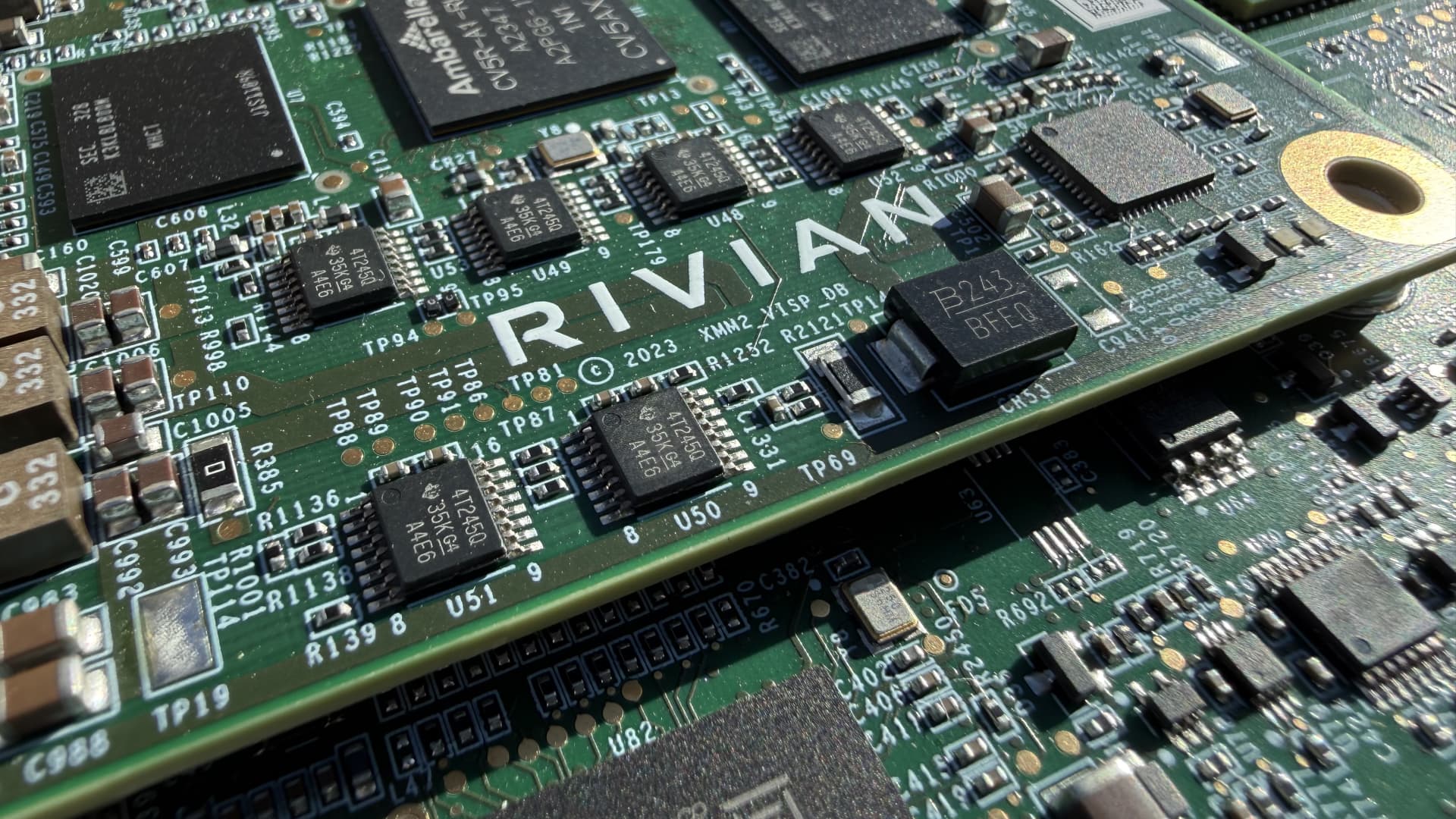
A motherboard from one of Rivian’s all-electric vehicles.

Michael Wayland / CNBC

Rivian Automotive stock plunged 13% during early trading on Tuesday after the electric vehicle maker announced a public offering of 75 million shares of its Class A common stock.

Advertisement

The capital raise occurred during extended hours trading after Rivian shares rose 8.1% on Monday. The stock also increased 19% last week.

Based on Monday’s close of $20.14 per share, Rivian would raise roughly $1.51 billion with the offering. Rivian ​said in a filing that it plans to use the proceeds ​to fund equity contributions as part of a loan ⁠agreement with the U.S. Department of Energy.

Rivian said in the public filing that it intended to grant underwriters an option for a period of 30 days to purchase up to an additional 11.25 million shares.

Stock Chart IconStock chart icon
Advertisement
hide content

Rivian stock

The raise follows Rivian suspending plans for a 2027 profitability target due to an expected spike in research and development spending for autonomy and next-generation vehicle technologies.

It also comes as Rivian is launching its new R2 midsize SUV, which the company hopes will lead it to profitability toward the end of this decade.

Rivian also pre-released some second-quarter results in a separate public filing. The company estimated revenue to be between $1.55 billion and $1.65 billion during the second quarter, above average analyst estimates compiled by LSEG of $1.45 billion.

Advertisement

Its cash, cash equivalents and short-term investments balance was an estimated $5.3 billion, up from $4.8 billion to end the first quarter, according to the filing.

Choose CNBC as your preferred source on Google and never miss a moment from the most trusted name in business news.
Continue Reading

Business

Building regulator moves to cut ‘phoenixing’

Published

on

Building regulator moves to cut ‘phoenixing’

The state government has moved to curb “phoenixing” by banning building companies that have been linked to financial mismanagement, in light of a recent tribunal decision.

Continue Reading

Trending

Copyright © 2025