
Business
Opportunities in smallcap and midcap stocks increasing: WhiteOak’s Trupti Agrawal


Edited excerpts from a chat with the senior fund manager:
The market has been stuck in a consolidation phase for the last 1.5 years. Now that earnings downgrades have slowed and US trade deal uncertainty is gone, what is holding the market back?
Over the past few weeks, India has secured a trade agreement with two of its largest trading partners, ie EU and US, which have a combined share of ~37% in India’s total goods exports. Overall, it is anticipated that the trade deals would be particularly beneficial in expanding market access and improving export competitiveness for India.
Secondly, incoming data indicates that the growth momentum seen in 3QFY26 has sustained into 4Q as well. Overall, the growth outlook remains constructive, with the RBI raising the FY2026 GDP forecast to 7.4% and the Economic Survey projecting 7.4% in FY2026 and 6.8–7.2% in FY2027, supported by domestic demand and ongoing reforms.

While we do not take top-down views on the market, the recent correction means that, on a relative basis, Indian equity markets are trading at or close to 10 year averages while the relative premium to EMs have narrowed to 45%, below the long term historical range, and far off its highs of 90% observed between 2022-2024. Over the past five years, India has recorded the highest annualised earnings growth among peers at ~10%, and is expected to sustain a healthy 14–15% growth trajectory going forward, although admittedly it is not significantly ahead of other major EMs over the next couple of years.
Although the macro implications of technological evolution remain uncertain, India’s diversified sectoral composition and relatively lower market volatility support a more stable and resilient earnings cycle.
Consumption was touted as a big theme after GST cuts were introduced before Diwali. Since then auto appears to be the only winner in the consumption cycle. Are you disappointed with the impact that GST is having on overall consumption in India?
Consumer-facing sectors saw a sequential improvement in earnings this quarter, although the recovery remains somewhat mixed across categories. In autos, revenue growth was supported by festive demand and GST rationalization, along with recovery in CVs. Consumer staples delivered sequentially a decent set of numbers, led by rural growth. Premiumization trends continue to stay strong and emerging channels such as e-commerce and quick commerce are continuing to scale well. Jewelry companies reported stellar performance at the back of rising gold prices which is a both headwind and tailwind at the same time for the category, coupled with the sustained trend of formalization of the sector in India. There is a view among the relatively smaller ticket discretionary lifestyle consumption category companies that the customers appear to have prioritized purchase of bigger ticket products with higher GST reduction benefits initially, which should change in the coming times aiding demand for their products.
Media and retail sector trends have been largely company- and event-driven with seasonality playing a role in some companies. More importantly, the earnings revision cycle remains uneven — autos are seeing early signs of estimated upgrades, but upward revisions across other consumer segments have been relatively muted.
Smaller sized private and PSU banks have reported a double-digit gold loan mix. Is this a healthy trend for their balance sheets?
Gold loans are regarded as among the lower risk retail products as (1) they are collateralized, (2) recovery is relatively quicker via auction and (3) borrower behavior tends to be disciplined and guided by emotional and sentimental value attached to their pledged items. Recent asset quality trends with CRIF data showing PAR >90 days below 1% across the system is far better than unsecured retail or MFI loans.
That said, we believe that any outsized exposure to a single segment increases lender risk, particularly if collateral values are affected during periods of volatility, as can occur with precious metals. While most private and PSU banks have robust risk management frameworks in place to mitigate such risks through prudent LTVs and monitoring mechanisms, concentration risk remains an important consideration.
As with any product, gold loans can be attractive from a margin standpoint, provided exposures remain well-calibrated and contained within a diversified portfolio framework.
Credit growth in many PSU banks has been higher than their private peers in Q3. Are PSU bank stocks looking more attractive? Are valuations good enough to buy?
Yes, recent asset quality trends and growth at large PSU banks have been comparable to those of large private sector peers. However, with any sub-segment, rather than taking a top-down view, we prefer to identify bottom-up opportunities.
Historically, the valuation gap between PSU and private banks has reflected differences in RoAs, as well as governance and capital allocation constraints. Also, it should not be missed that over time well-run private sector banks have gained market share when compared to PSU banks.
On an aggregate basis, the banking sector offers opportunities across the market-cap spectrum, and valuations do not appear stretched, with earnings expectations in the mid-teens.
Which sectors appear structurally well-positioned over the next three to five years, and why?
We are very stock selection driven as a house and do not make top down thematic or sectoral calls, as those are fraught with risk without adding returns in our view. Our sectoral over weights and underweights are an outcome of bottom-up stock picking opportunities at any given point in time, rather than an input to our portfolio construction. For the all-cap portfolio, from a bottom-up perspective, there are certain sectors where we consistently find more opportunities. Currently we see more promising prospects within private sector financials, consumer discretionary, communication services, healthcare, REITs and Invits. While not generalising, it is certain sub-segments and individual companies within them that find favour with the team.
Do you think that the sell-off in small caps we saw in last 1.5 years is done and that we will see gradual recovery in next 2 quarters?
Since its peak in Sep 2024, small caps have corrected meaningfully due to a combination of tighter liquidity, higher interest rates, and earnings downgrades. Much of this adjustment appears to have already played out and recent earnings trends within the small and mid-caps have been ahead of large caps. Having said that, a broad-based recovery in share prices usually requires sustained improvement in earnings momentum, cash flows, and risk appetite, which tends to lag market corrections, especially after prolonged periods of adjustment.
Historically, we find greater number of opportunities in the mid and small market cap and off-benchmark companies. We believe these segments of the market are typically less well researched and hence more inefficient, thereby providing strong alpha generation potential.
Although we tend to be bottom up focussed, looking ahead over the next couple of quarters, a gradual and selective recovery is a reasonable base case rather than a sharp rebound.
What stood out for you in the Q3 earnings season? Are you more hopeful of broad-based growth than before?
Earnings growth in Q3 has been stronger than recent quarters, with aggregate Nifty-500 Index earnings at 14%, with SMIDs outpacing large cap earnings. We note healthy earnings growth delivered by autos, capital goods and utilities, while consumption was gradual but uneven.
However, we would like to see a few more quarters of consistent earnings trends before gaining greater confidence in a sustained recovery in the earnings trajectory.



Cuba begins recovery efforts after second grid collapse in a week

Last week, the BSE benchmark Sensex dipped 30.96 points, or 0.04 per cent, and the NSE Nifty slipped 36.6 points, or 0.15 per cent.
“Markets ended the week on a largely flat note with a negative bias, reflecting underlying caution among participants. The tone remained positive during the first three sessions; however, a sharp decline on Thursday erased the gains, followed by a volatile final session,” Ajit Mishra, SVP, Research, Religare Broking Ltd, said.
While HDFC Bank, ICICI Bank, Tata Consultancy Services (TCS), Bajaj Finance and Hindustan Unilever were the laggards, Reliance Industries, Bharti Airtel, State Bank of India, Infosys, and Life Insurance Corporation of India (LIC) emerged as the winners.
The combined market valuation of the five firms eroded by Rs 1,02,771.87 crore.
HDFC Bank’s valuation tumbled Rs 56,124.48 crore to Rs 12,01,267.28 crore.
The market valuation of Hindustan Unilever dropped Rs 18,009.62 crore to Rs 4,89,631.32 crore.Bajaj Finance lost Rs 15,338.42 crore to Rs 5,16,715.12 crore.
The market capitalisation (mcap) of TCS declined Rs 7,127.63 crore to Rs 8,64,940 crore and that of ICICI Bank edged lower by Rs 6,171.72 crore to Rs 8,91,673.06 crore.
However, the valuation Reliance Industries jumped Rs 45,942.75 crore to Rs 19,14,235.92 crore.
The mcap of Bharti Airtel surged Rs 24,462.03 crore to Rs 10,52,893.75 crore and that of State Bank of India climbed Rs 10,707.52 crore to Rs 9,76,968.57 crore.
The market valuation of LIC edged higher by Rs 2,624.88 crore to Rs 4,91,610.45 crore and Infosys added Rs 2,473.79 crore taking its mcap to Rs 5,08,789.37 crore.
Reliance Industries remained the most-valued firm, followed by HDFC Bank, Bharti Airtel, State Bank of India, ICICI Bank, TCS, Bajaj Finance, Infosys, LIC and Hindustan Unilever Ltd.
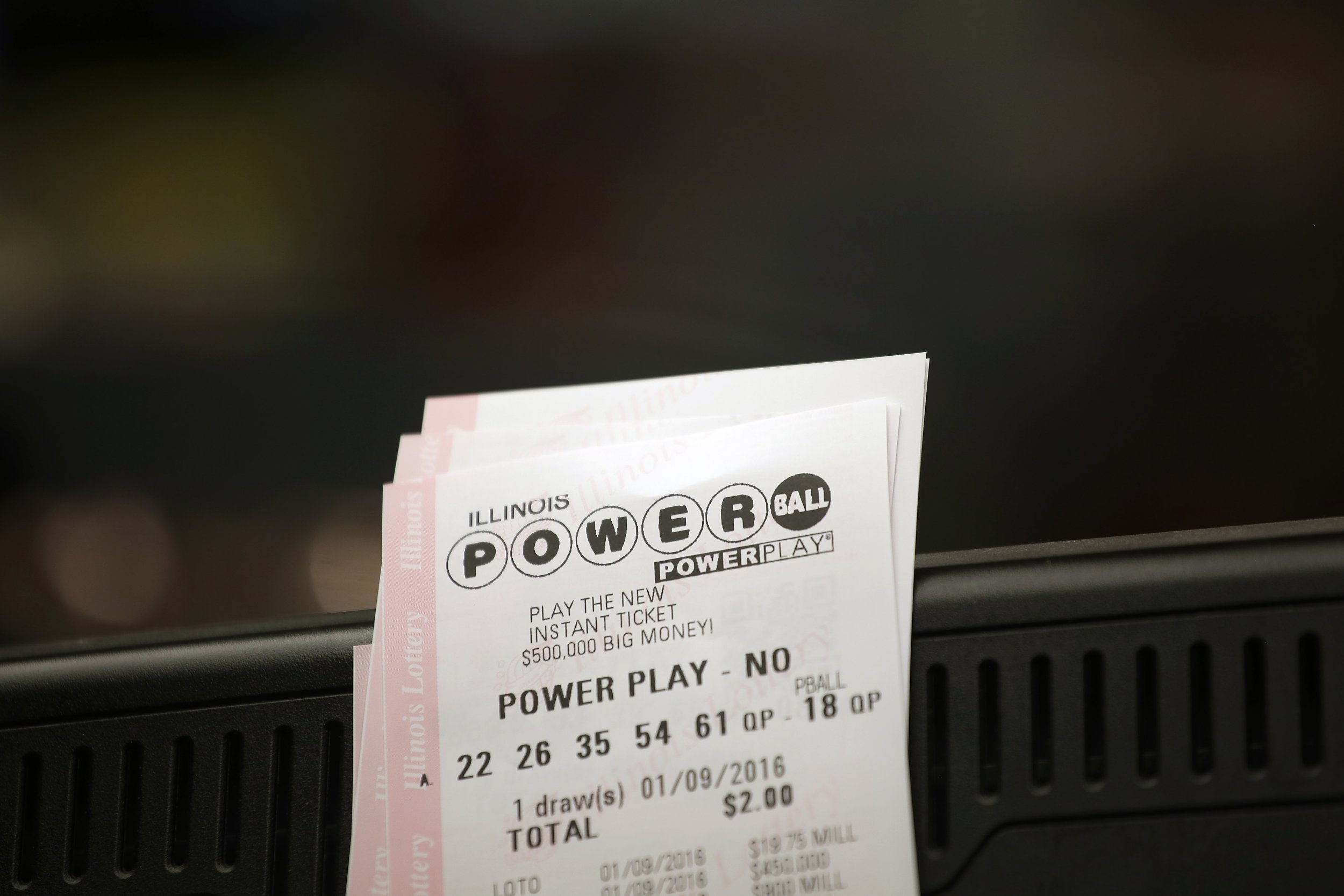
The most recent Powerball drawing on Saturday, March 21, 2026, produced no jackpot winner, allowing the top prize to roll over to an estimated $133 million for the next draw on Monday, March 23, with a cash option of approximately $60.3 million.

The official winning numbers, as confirmed by powerball.com and multiple state lottery sites, were **12-28-36-41-59**, with the red Powerball **2**. The Power Play multiplier was **2x**, doubling non-jackpot prizes for players who added the option for an extra $1 per play.
No ticket matched all five white balls plus the Powerball to claim the estimated $123 million jackpot (cash value $55.8 million) advertised ahead of the drawing. The absence of a winner continues a streak of rollovers, building excitement as the prize grows amid steady ticket sales nationwide.
Lower-tier prizes distributed millions in winnings. While no tickets hit the Match 5 + Power Play for the $2 million second prize, several claimed $1 million Match 5 awards in the base game. Prize breakdowns showed:
– Match 5 + Powerball: 0 winners (jackpot rollover)
– Match 5: Multiple winners at $1 million each (exact count varies by state reports)
– Match 4 + Powerball: Winners at $50,000 base, boosted to $100,000 with Power Play in qualifying cases
– Match 4: Hundreds of tickets at $100
– Smaller prizes from $4 to $50 for partial matches, with Power Play enhancing many
The Double Play add-on drawing, available in participating jurisdictions, featured numbers **9-29-34-48-58** with Powerball **4**, offering secondary prizes up to $10 million, though no top Double Play jackpot was reported in initial summaries.
Powerball drawings occur every Monday, Wednesday and Saturday at 10:59 p.m. ET from the Florida Lottery draw studio. The March 21 results followed the Wednesday, March 18 drawing (14-18-19-21-69, Powerball 1, Power Play 3x), where one ticket in New York matched five numbers for $1 million but no jackpot hit. Earlier draws in March, including March 16 (7-10-20-47-52, Powerball 20, Power Play 2x) and March 14 (9-30-42-50-52, Powerball 21, Power Play 3x), also rolled over.
The ongoing buildup reflects Powerball’s structure: the jackpot starts at $20 million and increases with each rollover until claimed. Odds of winning the grand prize remain 1 in 292.2 million, while overall odds of any prize are about 1 in 24.9. Tickets cost $2, with Power Play ($1 extra) multiplying non-jackpot wins up to 10x (capped at lower levels for certain prizes) and Double Play ($1 extra in select states) providing a second draw.
Players who purchased tickets for the March 21 draw are urged to check them immediately via powerball.com, state lottery apps or retailers. Smaller prizes (typically up to $600-$1,000 depending on jurisdiction) can be claimed at authorized outlets, while larger amounts require submission to state lottery headquarters. Jackpot winners can select annuity payments over 30 graduated years or a lump-sum cash option (before taxes).
The lottery continues captivating millions, with stories of past winners — including the record $2.04 billion prize in 2022 — fueling participation. No mega-winner has emerged in recent weeks, but the escalating prize keeps “Powerball fever” alive, especially as economic pressures prompt dreams of financial windfalls.
Officials emphasize responsible gaming: purchase only from licensed retailers, sign tickets immediately, and treat the game as entertainment rather than investment. With the next drawing set for Monday evening, the jackpot’s climb to $133 million positions it as one of the larger prizes of early 2026, drawing increased attention from casual and dedicated players alike.
As always, results are final once verified by the Multi-State Lottery Association. For the latest updates, official sources like powerball.com provide real-time confirmations, prize details and winner stories. The next chance to win arrives soon — check those tickets and prepare for what could be the next life-changing draw.
Business
(VIDEO) Sunderland Stuns Newcastle with Late Winner in Tyne-Wear Derby: Black Cats Triumph 2-1

Sunderland delivered a dramatic comeback victory in the 144th Tyne-Wear derby, defeating Newcastle United 2-1 on Sunday at St James’ Park in the first Premier League meeting between the fierce North East rivals at the venue in over a decade.
Brian Brobbey scored a 90th-minute winner to hand Sunderland the three points after Chemsdine Talbi leveled the score in the 57th minute, overturning Anthony Gordon’s early opener for Newcastle. The result lifted Sunderland to 11th in the Premier League table while leaving Newcastle in 12th, deepening frustration for the Magpies amid a challenging season.

The match, played before a raucous sell-out crowd of 52,253, kicked off at 12:00 p.m. GMT under referee Anthony Taylor. Newcastle struck first in the 10th minute when Anthony Gordon capitalized on a defensive error by Sunderland’s Nick Woltemade, slotting home from close range after a precise assist. The goal ignited St James’ Park, with Newcastle dominating possession and creating chances through Anthony Elanga and others.
Sunderland weathered the early storm and grew into the game. A disallowed header from Malick Thiaw for offside kept the deficit at one at halftime. The Black Cats equalized shortly after the restart when Chemsdine Talbi fired in a composed finish to make it 1-1, shifting momentum decisively.
The second half saw end-to-end action, with Newcastle pushing for a winner and Sunderland threatening on counters. Late drama unfolded in stoppage time as Brobbey pounced on a loose ball in the box, rifling a shot past the keeper for the 2-1 lead. Newcastle pressed desperately in the final minutes but could not find an equalizer, with yellow cards shown to Reinildo Mandava and others amid heated exchanges.
Sunderland’s comeback marked a statement win in a fixture absent from the Premier League since 2016 due to Sunderland’s lower-league spells. The victory provided a boost for manager Regis Le Bris’s side, rewarding their resilience and tactical discipline. Brobbey, a summer signing, emerged as the hero with his clinical strike, while Talbi’s equalizer showcased the team’s growing confidence.
For Newcastle, the defeat stung deeply. Manager Eddie Howe faced questions about defensive lapses and inability to hold leads, with Gordon’s bright performance — earning praise as player of the match in some reports — unable to mask broader issues. Expected goals (xG) stats favored Sunderland at 2.45 to Newcastle’s 1.27, reflecting their second-half dominance.
The Tyne-Wear derby carries intense regional rivalry, with fans from both sides creating an electric atmosphere despite the long hiatus at St James’ Park. Sunday’s contest lived up to billing, blending skill, passion and late drama that kept viewers on edge until the final whistle.
Post-match reactions highlighted the significance. Sunderland players celebrated wildly with traveling supporters, while Newcastle’s camp expressed disappointment but resolve to rebound. Analysts noted the result could galvanize Sunderland’s push for mid-table security, while Newcastle must regroup quickly amid a congested fixture schedule.
The match fit into Premier League Matchweek 31, with both teams entering in inconsistent form. Newcastle had shown flashes of quality but struggled for consistency; Sunderland arrived buoyed by recent results and a desire to upset their neighbors.
Highlights included Gordon’s clinical finish, Talbi’s cool equalizer and Brobbey’s decisive strike. Referee decisions, including the disallowed goal and late fouls, sparked debate but did not overshadow the action.
As the 2025-26 season progresses, this derby result adds another chapter to one of English football’s fiercest rivalries. Sunderland’s triumph — their first league win at St James’ Park in years — will fuel celebrations on Wearside, while Newcastle reflects on missed opportunities.
Fans can relive the action through official highlights on Premier League platforms, Sky Sports and club channels. With both sides eyeing European qualification or survival battles, the outcome reverberates beyond the North East.


Michael Kramer is the founder of Mott Capital, and is a long-only investor who focuses on macro themes and studies trends and options activities to identify and assess entry and exit points for investments in his long-term focused thematic growth strategy. He is a former buy-side trader, analyst, and portfolio manager with 30 years of experience tracking market technicals, fundamentals, and options.Michael Kramer leads the investing group Reading the Markets, where he helps a devoted following of members to better understand what is driving trading and where the market is likely heading, both the short and long-term. Features of the investing group include: daily written commentary and videos analyzing the driving factors behind price action; general macro trend education to help members make well-informed decisions based on market conditions, interest rates, currency movements and how they all interact; chat for questions and community dialogue; and regular Zoom videos sessions to discuss current ideas and answer questions. The level of access RTM subscribers and the expertise of the source are unprecedented given that the subscription price is a fraction of similar technical coaching and mentoring services. Learn more.
Analyst’s Disclosure: I/we have no stock, option or similar derivative position in any of the companies mentioned, and no plans to initiate any such positions within the next 72 hours. I wrote this article myself, and it expresses my own opinions. I am not receiving compensation for it (other than from Seeking Alpha). I have no business relationship with any company whose stock is mentioned in this article.
This report contains independent commentary to be used for informational and educational purposes only. Michael Kramer is a member and investment adviser representative with Mott Capital Management. Mr. Kramer is not affiliated with this company and does not serve on the board of any related company that issued this stock. All opinions and analyses presented by Michael Kramer in this analysis or market report are solely Michael Kramer’s views. Readers should not treat any opinion, viewpoint, or prediction expressed by Michael Kramer as a specific solicitation or recommendation to buy or sell a particular security or follow a particular strategy. Michael Kramer’s analyses are based upon information and independent research that he considers reliable, but neither Michael Kramer nor Mott Capital Management guarantees its completeness or accuracy, and it should not be relied upon as such. Michael Kramer is not under any obligation to update or correct any information presented in his analyses. Mr. Kramer’s statements, guidance, and opinions are subject to change without notice. Past performance is not indicative of future results. Neither Michael Kramer nor Mott Capital Management guarantees any specific outcome or profit. You should be aware of the real risk of loss in following any strategy or investment commentary presented in this analysis. Strategies or investments discussed may fluctuate in price or value. Investments or strategies mentioned in this analysis may not be suitable for you. This material does not consider your particular investment objectives, financial situation, or needs and is not intended as a recommendation appropriate for you. You must make an independent decision regarding investments or strategies in this analysis. Upon request, the advisor will provide a list of all recommendations made during the past twelve months. Before acting on information in this analysis, you should consider whether it is suitable for your circumstances and strongly consider seeking advice from your own financial or investment adviser to determine the suitability of any investment.
Seeking Alpha’s Disclosure: Past performance is no guarantee of future results. No recommendation or advice is being given as to whether any investment is suitable for a particular investor. Any views or opinions expressed above may not reflect those of Seeking Alpha as a whole. Seeking Alpha is not a licensed securities dealer, broker or US investment adviser or investment bank. Our analysts are third party authors that include both professional investors and individual investors who may not be licensed or certified by any institute or regulatory body.

Jonathan Weber holds an engineering degree and has been active in the stock market and as a freelance analyst for many years. He has been sharing his research on Seeking Alpha since 2014. Jonathan’s primary focus is on value and income stocks but he covers growth occasionally. He is a contributing author for the investing group Cash Flow Club where along with Darren McCammon, they focus on company cash flows and their access to capital. Core features include: access to the leader’s personal income portfolio targeting 6%+ yield, community chat, the “Best Opportunities” List, coverage of energy midstream, commercial mREITs, BDCs, and shipping sectors,, and transparency on performance. Learn More.
Analyst’s Disclosure: I/we have no stock, option or similar derivative position in any of the companies mentioned, and no plans to initiate any such positions within the next 72 hours. I wrote this article myself, and it expresses my own opinions. I am not receiving compensation for it (other than from Seeking Alpha). I have no business relationship with any company whose stock is mentioned in this article.
Seeking Alpha’s Disclosure: Past performance is no guarantee of future results. No recommendation or advice is being given as to whether any investment is suitable for a particular investor. Any views or opinions expressed above may not reflect those of Seeking Alpha as a whole. Seeking Alpha is not a licensed securities dealer, broker or US investment adviser or investment bank. Our analysts are third party authors that include both professional investors and individual investors who may not be licensed or certified by any institute or regulatory body.

Nvidia: AI Is Here To Stay, And The Fear Is Misplaced (Rating Upgrade)


I’m a long-term investor focused on U.S. and European equities, with a dual emphasis on undervalued growth stocks and high-quality dividend growers. Through years of experience, I’ve learned that sustained profitability—evident in strong margins, stable and expanding free cash flow, and high returns on invested capital—is a more reliable driver of returns than valuation alone. I manage one of my portfolios publicly on eToro, where I qualified as a Popular Investor, allowing others to copy my real-time investment decisions. My background spans Economics, Classical Philology, Philosophy and Theology. This interdisciplinary foundation sharpens both my quantitative analysis and my ability to interpret market narratives through a broader, long-term lens. I started investing when I became a father. By managing wisely what I received and earn, I aim to ensure for me and my children that we don’t have so much that we don’t have to do anything, but that we have enough assets to be free to do what we want. The goal is not to free myself from work, but to make sure I can work in the place and in a way where I can fully express myself.
Analyst’s Disclosure: I/we have no stock, option or similar derivative position in any of the companies mentioned, and no plans to initiate any such positions within the next 72 hours. I wrote this article myself, and it expresses my own opinions. I am not receiving compensation for it (other than from Seeking Alpha). I have no business relationship with any company whose stock is mentioned in this article.
Seeking Alpha’s Disclosure: Past performance is no guarantee of future results. No recommendation or advice is being given as to whether any investment is suitable for a particular investor. Any views or opinions expressed above may not reflect those of Seeking Alpha as a whole. Seeking Alpha is not a licensed securities dealer, broker or US investment adviser or investment bank. Our analysts are third party authors that include both professional investors and individual investors who may not be licensed or certified by any institute or regulatory body.
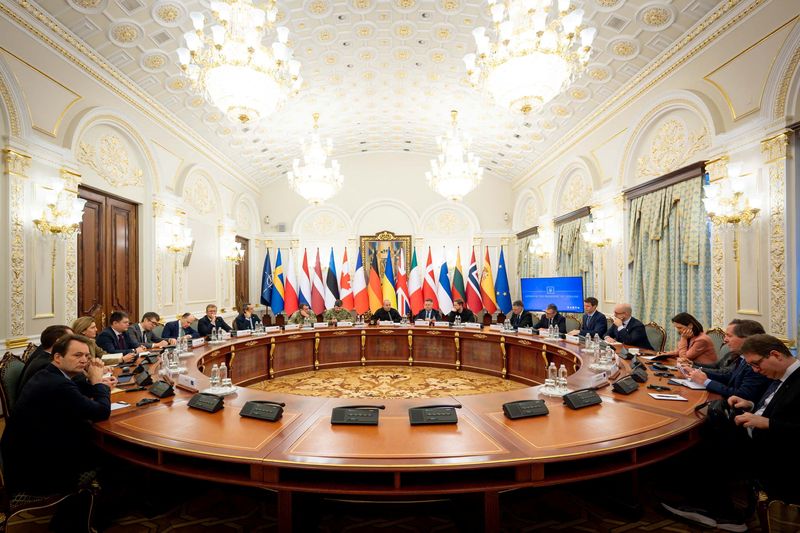

Zelenskiy urges allies to keep up pressure on Russia ahead of talks with US

Long-haul trucker Miguel Caveda recently spent around $1,800 on diesel fuel during a week on the road, about 40% more than he typically paid before the Iran war began.
The sudden surge in diesel prices has eroded Caveda’s profit and upended his business in other ways, too. He has started searching out lighter hauls and avoiding hilly routes that guzzle fuel. He is also keenly aware that the steeper fuel costs will eventually trickle into the prices consumers pay for goods he is carrying—from tires to watermelon—assuming his business survives.
Copyright ©2026 Dow Jones & Company, Inc. All Rights Reserved. 87990cbe856818d5eddac44c7b1cdeb8

LIV Golf South Africa: Bryson DeChambeau breaks down in tears after play-off win over Jon Rahm secures back-to-back titles

Elon Musk unveils chip manufacturing plans for SpaceX and Tesla

Do drivers with high blood pressure have to inform DVLA?


-

 Tech7 days ago
Your Legally Registered ‘Motorcycle’ Might Not Count Under Proposed US Law
-

 Fashion2 days ago
Weekend Open Thread: Adidas – Corporette.com
-

 Politics2 days ago
Jenni Murray, Long-Serving Woman’s Hour Presenter, Dies Aged 75
-
 Tech5 days ago
Are Split Spacebars the Next Big Gaming Keyboard Trend?
-

 Crypto World17 hours ago
Best Crypto to Buy Now: Strategy Just Spent $1.57 Billion on Bitcoin During Fear While Early Investors Quietly Enter Pepeto for 150x Potential
-

 News Videos4 days ago
RBA board divided on rate cut, unusually buoyant share market | Finance Report | ABC NEWS
-

 Crypto World18 hours ago
Bitcoin Price News: Bhutan Sells $72 Million in BTC Under Fiscal Pressure, but the Smart Money Entering Pepeto Sees What the Market Does Not
-

 Business7 days ago
Search for Savannah Guthrie’s Mother Enters Seventh Week with No Arrests
-
 Crypto World2 days ago
NIO (NIO) Stock Plunges 6.5% as Shelf Registration Sparks Dilution Worries
-

 Business6 days ago
Australian shares drop as Iran war enters third week
-

 Crypto World6 days ago
Crypto Lender BlockFills Enters Chapter 11 with Up to $500M in Liabilities
-

 Politics4 days ago
The House | The new register to protect children from their abusers shows Parliament at its best
-

 Fashion6 days ago
25 Celebrities with Curly Hair That Are Naturally Beautiful
-

 Tech2 days ago
inKONBINI Lets You Spend Summer Days Behind the Register
-

 Crypto World4 days ago
Canada’s FINTRAC revokes registrations of 23 crypto MSBs in AML crackdown
-
 Politics5 days ago
Real-time pollution monitoring calls after boy nearly dies
-
 NewsBeat4 days ago
Residents in North Lanarkshire reminded to register to vote in Scottish Parliament Election
-

 Business6 days ago
Meta planning major layoffs as AI spending and automation reshape workforce
-

 News Videos4 days ago
PARLIAMENT OF MALAWI – PAC MEETING WITH REGISTRAR OF FINANCIAL ON AMARYLLIS HOTEL – INQUIRY LIVE
-
 Crypto World7 days ago
U.S. Oil Companies Post Record Profits as Oil Prices Break $100
You must be logged in to post a comment Login