
Business
Oversold market spurs selective buying as analysts eye breakout stocks


BULLISH BETS
TITAN COMPANY
Change in Open Interest in April Series: 0.8% Change in price in April Series: 3.7% RATIONALE: Strong rollover into the April series, along with a lower roll cost of 0.31% (from 0.68%), shows traders are willing to pay to stay bullish, said Rajesh Palviya, head of technical and derivatives research at Axis Securities.

“As the Akshaya Tritiya festival nears, the market is bullish that the upcoming Q4 earnings will validate Titan’s ability to turn elevated gold prices into superior margins and footfalls,” he said. Palviya suggests buying on dips for a target of Rs 4,270-4,300, with a stop loss in futures at Rs 4,020-4,030.
ADANI POWER
Change in Open Interest in April Series: 98.95% (newly inducted in the futures segment) Change in price in April Series: 1.67% RATIONALE: The stock has witnessed a bullish breakout from a congestion zone of more than fi ve months with a signifi cant rise in volumes, said Vipin Kumar, AVP – derivatives and technical research at Globe Capital Market.
“The breakout is well supported by long buildup in the fi rst two trading sessions after its induction in the derivatives segment,” he said. Kumar said traders can buy its April Futures in the Rs 159-156 range for a target of Rs 170-175, with a stop loss at Rs 147.
NATIONAL ALUMINIUM
Change in Open Interest in April Series: -14.55% Change in price in April Series: 4%
RATIONALE: The stock has witnessed a close at the highest level on a weekly basis, said Sudeep Shah, head – technical and derivative research, SBI Securities. The fall in open interest and rise in share price point to short-covering. The stock is expected to move towards Rs 419-427 and can be bought with a stop loss at Rs 388, said Shah.
ABB INDIA
Change in Open Interest in April Series: 0.3% Change in price in April Series: 3.4%
RATIONALE: ABB’s higher-than-average rollover confi rms structural bullishness, said Palviya of Axis. “This transition from a high cost to a ‘discount’ during a price upswing suggests that long positions are being rolled with high conviction and effi ciency,” he said. “Investors are clearly looking past minor regulatory hurdles, positioning aggressively for a Q4 print expected to showcase scalable margins from massive greenfield infrastructure orders,” Palviya suggests buying on dips for a target of Rs 6,550-6,600, with a stop loss at Rs 5,950 (Futures rates).
JINDAL STEEL
Change in Open Interest in April Series: 0.67% Change in price in April Series: -1%
RATIONALE: Profit-taking in Jindal Steel from its all-time highs has halted near its previous breakout levels, which also coincide with the six-month exponential moving average, said Globe’s Kumar. “Considering its current chart positioning, we expect it to continue its prevailing uptrend, potentially reaching Rs 1220 in the immediate near term,” he said. Kumar advises buying its April Futures in the Rs 1,125-1,105 range, for a target of Rs 1,220, and stop loss at Rs 1,070
HINDALCO INDUSTRIES
Change in Open Interest in April Series: -1.8% Change in price in April Series: 3.6%
RATIONALE: The share surge, along with a decrease in open interest, suggests short covering. Fundamentally, the rally is underpinned by global supply shocks at EGA and Alba, which have bolstered LME aluminium benchmarks, said Palviya of Axis.
“Market focus now shifts to the Q4 earnings print, where these elevated benchmark realisations are expected to translate into sustainable margin expansion for both domestic operations and Novelis,” he said. Palviya suggests buying the stock on any dips for a target of Rs 980- Rs 1,000, and stop loss at Rs 875
BEARISH BET
PG ELECTROPLAST
Change in Open Interest in April Series: 17.8% Change in price in April Series: -3.3%
RATIONALE: The stock hit a fresh 52-week low of Rs 443.05 on Thursday. It has broken down from a consolidation, forming a lower high–lower low pattern on weekly charts, said SBI’s Shah. “It is trading below its short- and long-term moving averages, and we expect the stock to test lower levels,” he said. Shah recommends selling PGEL between Rs 438-443 with a stop loss at Rs 452 for a target of Rs 417.


Brent rose 1.9% to trade above $111 a barrel, as Trump renewed threats early Sunday to attack Iranian infrastructure if the key energy-shipping route through the Strait of Hormuz remains closed. He followed it later with another that said: “Tuesday, 8:00 P.M. Eastern Time!” with no further explanation.
US equity-index futures erased early losses to trade little changed, while Asian stocks edged up at the open. The Nikkei index in Japan rose 0.7% while shares in South Korea advanced 2%. Markets are closed in China and Hong Kong for a public holiday.
Trump’s comments came as OPEC+ warned that damage to Mideast energy assets will have a prolonged impact on oil supply even after the conflict ends. Yet there are few signs of progress toward a ceasefire as attacks have continued to flare around the region, keeping oil prices hovering well above $100 a barrel.
“The prediction game remains quite tricky for investors,” said Homin Lee, a strategist at Lombard Odier in Singapore. “Investors’ focus will squarely be on military actions on both sides of the Persian Gulf and whether or not Hormuz vessel crossings can improve further despite these attacks.”
The fallout from the war has rapidly darkened the economic outlook by threatening to cool growth and push up already elevated inflation, roiling bets on whether the Federal Reserve will resume cutting interest rates later this year. Attention remains firmly on energy prices and the closure of the Strait of Hormuz — a waterway crucial for the flow of oil from the Middle East.
Investors will watch for the impact of the surge in crude oil when monthly US inflation data is released Friday. The roughly $1-per-gallon increase in US gasoline pump prices probably drove the March consumer price index up 1%, the most since the post-pandemic inflation surge in 2022, according to an economist survey before the report is published. Meanwhile, the Islamic Republic’s continued attacks damaged Kuwait’s oil headquarters and shut down an Emirati petrochemicals plant. Fifteen ships have passed through the Strait of Hormuz with permission from Iran, semi-official Fars news agency reports, citing the latest data on strait traffic.
Trump has previously dialed back his escalation threats, including two weeks ago before markets reopened for the week. Trump also said he plans to hold a news conference at 1 p.m. New York time on Monday.
“Trump is probably serious in his expressed desire to step away after two or three more weeks,” Lombard Odier’s Lee said. “But the obvious path-dependency inherent in the conflict suggests that his attempt to carry out a final round of aggressive strikes can backfire significantly for the markets.”


UPS, Teamsters reach settlement that caps driver severance offers
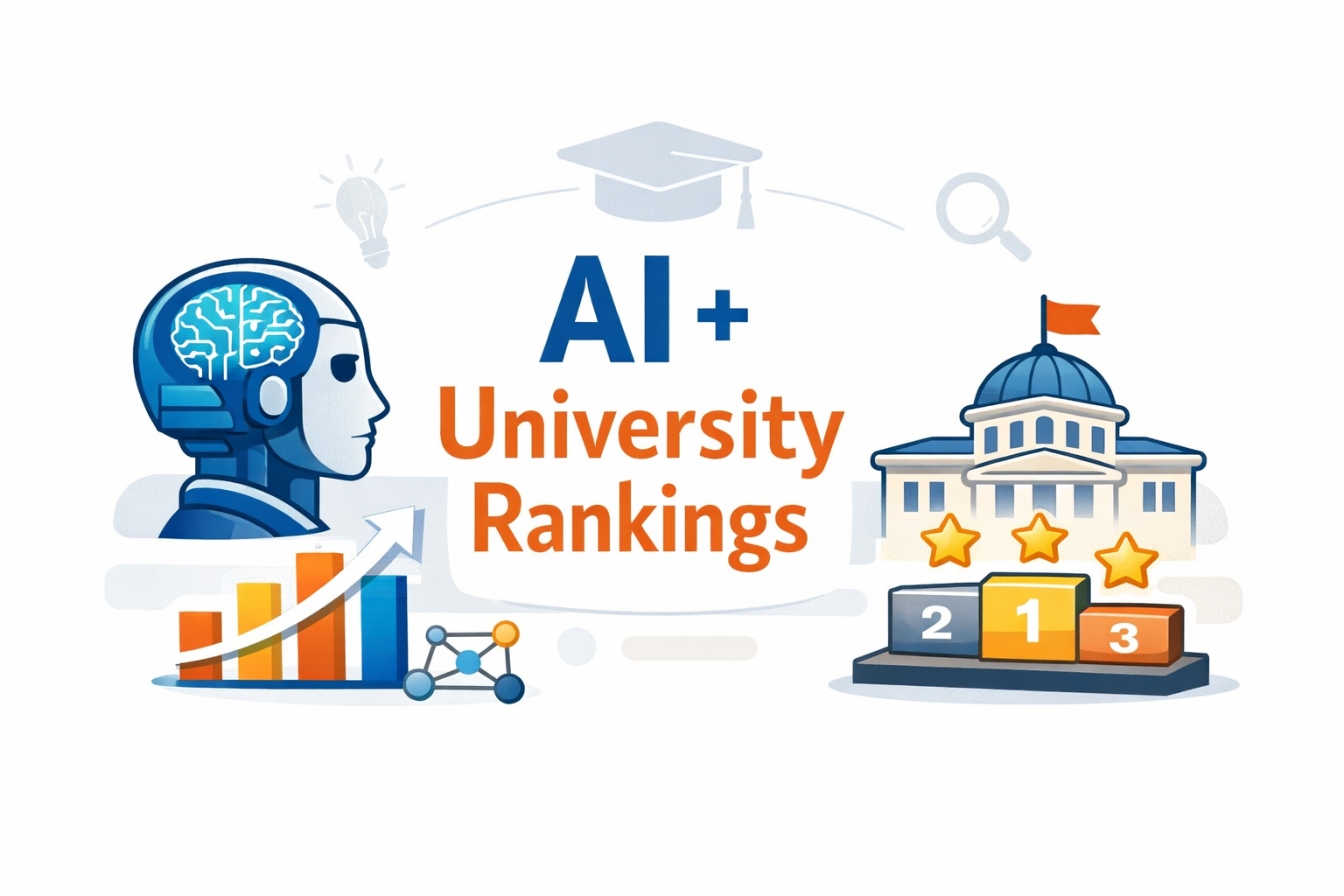
Demand for artificial intelligence education has surged in 2026 as industries from healthcare to autonomous vehicles seek talent skilled in machine learning, robotics, ethics and large language models. Leading global rankings from QS, Times Higher Education and specialized sources highlight institutions excelling in AI-related computer science, data science and dedicated AI programs.

The QS World University Rankings by Subject 2026 for Data Science and Artificial Intelligence place Massachusetts Institute of Technology at the top with a near-perfect score, followed closely by Stanford University and National University of Singapore. Carnegie Mellon University, long a pioneer in robotics and AI, consistently ranks among the elite across multiple lists. Times Higher Education’s 2026 Computer Science rankings, which heavily weigh AI and machine learning components, crown University of Oxford as the global leader, with strong showings from Cambridge, ETH Zurich and U.S. powerhouses.
A composite ranking of the 50 best universities for studying AI in 2026 draws from QS Data Science & AI, QS Computer Science, THE Computer Science, US News graduate AI programs and research output metrics. These institutions offer undergraduate, master’s and doctoral pathways emphasizing hands-on research, industry partnerships and ethical AI development. Many provide specialized degrees such as Master of Science in Artificial Intelligence or dedicated tracks within computer science.
Here is the list of the top 50 universities for AI studies in 2026, ranked by overall strength in research output, faculty expertise, industry connections and program reputation:
- Massachusetts Institute of Technology (MIT), United States — Renowned for its Computer Science and Artificial Intelligence Laboratory (CSAIL), MIT offers cutting-edge programs in machine learning, robotics and AI ethics. Students benefit from close ties to industry leaders and groundbreaking research.
- Stanford University, United States — Located in Silicon Valley, Stanford’s AI Lab and interdisciplinary initiatives provide unmatched access to tech giants. Programs emphasize real-world applications and entrepreneurship.
- Carnegie Mellon University, United States — A historic leader in AI with the School of Computer Science and dedicated Robotics Institute. CMU excels in autonomous systems, human-AI interaction and machine learning theory.
- University of Oxford, United Kingdom — Tops THE Computer Science rankings with strong AI research across departments. Oxford’s programs blend technical depth with philosophical and ethical considerations.
- National University of Singapore (NUS), Singapore — Asia’s top AI hub, offering robust data science and AI curricula with strong government and industry funding.
- Nanyang Technological University (NTU), Singapore — Excels in AI research output and practical applications, with excellent facilities and international collaborations.
- University of Cambridge, United Kingdom — Features world-class AI research and interdisciplinary centers, attracting top global talent.
- ETH Zurich, Switzerland — Known for rigorous technical programs and innovation in machine learning and robotics.
- University of California, Berkeley, United States — Home to the Berkeley AI Research Lab (BAIR), with strengths in deep learning and societal impact studies.
- Tsinghua University, China — Leads in AI research volume and engineering applications, with close industry links to companies like Baidu and Huawei.
- Harvard University, United States — Offers interdisciplinary AI programs through its John A. Paulson School of Engineering and Applied Sciences.
- University College London (UCL), United Kingdom — Strong in machine learning and AI for healthcare and urban systems.
- Imperial College London, United Kingdom — Focuses on AI-driven engineering and data science innovation.
- University of Toronto, Canada — Home to the Vector Institute, a major AI research powerhouse.
- Georgia Institute of Technology, United States — Renowned for its AI and machine learning master’s programs and robotics research.
- University of Washington, United States — Features the Allen School with significant AI and NLP contributions.
- Technical University of Munich, Germany — Strong European leader in AI engineering and autonomous systems.
- University of Illinois Urbana-Champaign, United States — Excellent computer science department with AI specializations.
- Princeton University, United States — Combines theoretical computer science with applied AI research.
- Cornell University, United States — Offers robust AI programs with emphasis on human-centered design.
- University of Edinburgh, United Kingdom — Scotland’s AI capital with the Informatics Forum driving innovation.
- Peking University, China — Rising fast in AI research and talent development.
- Shanghai Jiao Tong University, China — Strong engineering and AI research output.
- University of Michigan, United States — Multidisciplinary AI initiatives across engineering and information schools.
- New York University, United States — Center for Data Science and AI ethics programs stand out.
- University of Texas at Austin, United States — Growing AI research hub with strong industry partnerships.
- École Polytechnique Fédérale de Lausanne (EPFL), Switzerland — Excellent technical AI and robotics programs.
- University of Amsterdam, Netherlands — Leading European center for AI and computational science.
- Delft University of Technology, Netherlands — Focuses on AI for engineering and sustainability.
- University of British Columbia, Canada — Strong AI research in computer science and health applications.
- Zhejiang University, China — Major player in AI and data science with large research funding.
- University of Science and Technology of China, China — Excels in foundational AI and quantum-related computing.
- Sorbonne University, France — Strong in AI theory and applications.
- University of Melbourne, Australia — Leading Oceania institution for AI and data science.
- Monash University, Australia — Growing strengths in AI ethics and applications.
- Korea Advanced Institute of Science and Technology (KAIST), South Korea — Top Asian tech university with robust AI programs.
- Seoul National University, South Korea — Significant AI research contributions.
- University of Sydney, Australia — Offers comprehensive AI and machine learning degrees.
- RWTH Aachen University, Germany — Engineering-focused AI excellence.
- KTH Royal Institute of Technology, Sweden — Strong Nordic leader in AI and robotics.
- University of Waterloo, Canada — Known for co-op programs and AI innovation.
- McGill University, Canada — Interdisciplinary AI research hub.
- University of Copenhagen, Denmark — Rising in European AI rankings.
- Ludwig Maximilian University of Munich, Germany — Solid AI and data science offerings.
- University of Tokyo, Japan — Japan’s premier institution for AI and robotics.
- Kyoto University, Japan — Strong theoretical and applied AI research.
- Indian Institute of Technology Bombay, India — Leading Indian tech institute with growing AI focus.
- National Taiwan University, Taiwan — Strong engineering and AI programs.
- University of Hong Kong, Hong Kong — Asia’s international AI education leader.
- Mohamed bin Zayed University of Artificial Intelligence, United Arab Emirates — Specialized AI university with dedicated focus and strong research output.
These rankings reflect a blend of academic reputation, research citations, employer feedback and program innovation as reported in 2025-2026 data. U.S. institutions continue to dominate due to funding, industry proximity and historical leadership, but Asian and European universities are closing the gap rapidly through targeted investments and talent attraction.
Prospective students should consider factors beyond rankings, including specific faculty expertise, research opportunities, internship access, cost of living and visa policies. Many top programs offer scholarships for international applicants in AI fields.
With AI projected to add trillions to the global economy, graduates from these institutions command high starting salaries and career prospects. Universities on this list often partner with companies such as Google, OpenAI, NVIDIA, Microsoft and DeepMind, providing pathways to cutting-edge roles.
For undergraduate applicants, strong mathematics, programming and statistics backgrounds are essential. Master’s and PhD programs typically require relevant bachelor’s degrees, research experience and competitive GRE or equivalent scores in some cases.
The rapid evolution of AI means curricula at these schools emphasize lifelong learning, ethical considerations and interdisciplinary skills. Programs increasingly incorporate responsible AI, bias mitigation and societal impact alongside technical training.
International students should verify English proficiency requirements (TOEFL/IELTS) and explore funding options early. Application deadlines for fall 2027 intake typically fall between December 2026 and March 2027 for competitive programs.
As AI reshapes industries, the institutions listed offer pathways to shape that future. Students are advised to visit university websites, attend virtual open houses and connect with current students for the latest program details.
The 2026 landscape shows a healthy global distribution, with strong representation from North America, Europe and Asia, ensuring diverse perspectives in AI development.

Devon Energy: Merger Deal, Iran War, Price Tailwinds

Dollar steady as traders fret about escalating Iran war

Asia markets brace for Trump’s promised assault on Iranian infrastructure

Brent crude futures rose $1.71, or 1.6%, to $110.74 a barrel by 0057 GMT. U.S. West Texas Intermediate crude futures gained $0.71, or 0.6%, to trade at $112.25 per barrel.
On Thursday, the last trading day before the Good Friday holiday break, WTI settled up more than 11% and Brent soared nearly 8% in volatile trading, recording their biggest absolute price increase since 2020, as U.S. President Donald Trump promised to continue attacks on Iran.
The Strait of Hormuz, which carries oil and petroleum products from Iraq, Saudi Arabia, Qatar, Kuwait and the United Arab Emirates, remains largely closed by Iranian attacks on shipping after the war began on February 28.
Because of the Middle East supply disruptions, refiners are seeking alternative sources for crude, particularly for physical cargoes in the U.S. and the UK North Sea.
“Global buyers are bidding aggressively for (U.S.) Gulf Coast barrels and Brent is rallying even faster,” the Schork Group said in a client note on Monday.
On Sunday, Trump ratcheted up pressure on Tehran, threatening in an expletive-laden Easter Sunday social media post to target Iran’s power plants and bridges on Tuesday if the strategic Strait of Hormuz is not reopened. Still, some vessels, including an Omani-operated tanker, a French-owned container ship and a Japanese-owned gas carrier, crossed the Strait of Hormuz since Thursday, shipping data showed, reflecting Iran’s policy to allow passage for vessels from countries it deems friendly.
The war threatens to linger on as Iran has officially told mediators it is not prepared to meet with U.S. officials in the Pakistani capital Islamabad in coming days and efforts to produce a ceasefire have reached a dead end, the Wall Street Journal reported on Friday.
On Sunday, OPEC+, consisting of some members of the Organization of the Petroleum Exporting Countries and allies such as Russia, agreed to a modest rise of 206,000 barrels per day for May.
However, that decision will largely exist on paper as several of the group’s key producers are unable to raise output due to the war.
Russian supply has been disrupted recently by Ukrainian drone attacks on its Baltic Sea export terminal. Media reports on Sunday said its Ust-Luga terminal resumed loadings on Saturday after days of disruptions.
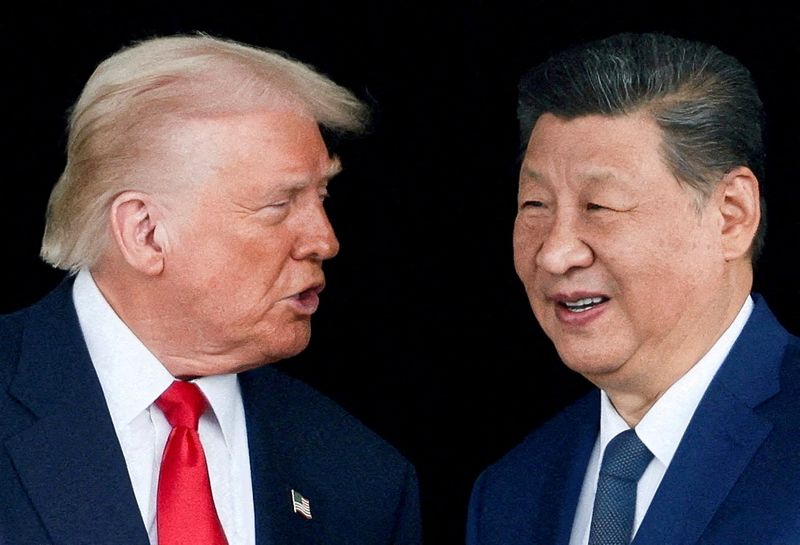

How one factory in China learned to live with Trump, tariffs and turmoil

The AI agent sparked a frenzy of “raising lobsters” in March, with users training the tool to suit their needs.
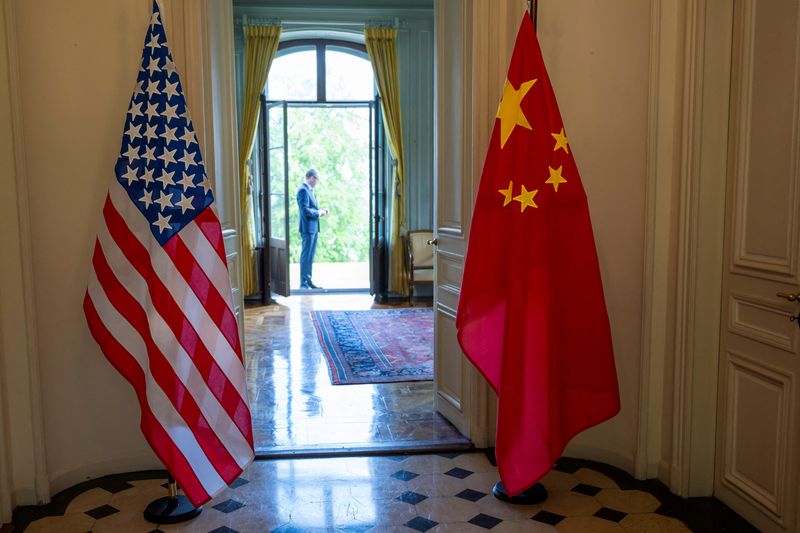

Trump’s trade war with China in focus ahead of May summit

Raoul Pal Just Warned That What’s Coming For Bitcoin Will Shock Every Investor On The Planet

Leeds and West Ham deliver ludicrous Cup tie free from Premier League constraints
Global Market Today: Oil gains as Trump escalates threats, Asian stocks waver

Smart energy pays enters the US market, targeting scalable financial infrastructure

Why Israel is blocking foreign journalists from entering

Bitcoin: We’re Entering The Most Dangerous Phase
Raoul Pal Just Warned That What’s Coming For Bitcoin Will Shock Every Investor On The Planet

XRP EMERGENCY UPLOAD! Trump’s 48-Hour Deadline: What XRP Holders Must Know Now

Live Crypto And Gold Scalping Trading | 05 April 2026 #cryptoscalping #xauusdlive
-

 NewsBeat3 days ago
Steven Gerrard disagrees with Gary Neville over ‘shock’ Chelsea and Arsenal claim | Football
-

 Business3 days ago
No Jackpot Winner and $194 Million Prize Rolls Over
-

 Fashion2 days ago
Weekend Open Thread: Spanx – Corporette.com
-
Entertainment6 days ago
Fans slam 'heartbreaking' Barbie Dream Fest convention debacle with 'cardboard cutout' experience
-

 Crypto World4 days ago
Gold Price Prediction: Worst Month in 17 Years fo Save Haven Rock
-

 Business2 hours ago
Three Gulf funds agree to back Paramount’s $81 billion takeover of Warner, WSJ reports
-
Crypto World6 days ago
Dems press CFTC, ethics board on prediction-market insider trades
-

 Tech7 days ago
Avatar Legends: The Fighting Game comes out in July and it looks pretty slick
-

 Sports1 day ago
India men’s 4x400m and mixed 4x100m relay teams register big progress | Other Sports News
-

 Business4 days ago
Login and Checkout Issues Spark Merchant Frustration
-

 Tech6 days ago
Apple will hide your email address from apps and websites, but not cops
-

 Tech6 days ago
EE TV is using AI to help you find something to watch
-

 Sports5 days ago
Tallest college basketball player ever, standing at 7-foot-9, entering transfer portal
-

 Politics6 days ago
Should Trump Be Scared Strait?
-

 Tech6 days ago
Flipsnack and the shift toward motion-first business content with living visuals
-
Tech6 days ago
Daily Deal: StackSkills Premium Annual Pass
-

 Fashion7 days ago
The Best Spring Trends of 2026
-

 Crypto World6 days ago
U.S. rule change may open trillions in 401(k) funds to crypto
-

 Sports6 days ago
Women’s hockey camp eyes fitness boost, tactics ahead of WC 2026 campaign | Other Sports News
-

 Tech6 days ago
How to back up your iPhone & iPad to your Mac before something goes wrong
You must be logged in to post a comment Login