David Ellison — the founder of a film production company and son of billionaire Larry Ellison — has been at the helm of Paramount Skydance for just over a year. He’s been fighting to acquire Warner Bros. Discovery for nearly as long.
The latest roadblock in his path, a group of state attorneys general seeking to stop the deal, may be his toughest yet. The antitrust hurdle and related delay have left the CEO hunting for avenues to get the deal done.
The delay in closing Paramount’s acquisition of WBD could add hefty costs on top of the $110 billion proposed price tag at a time when media companies across the landscape are under intense pressure.
Yet, with a trial in the antitrust case set for March, Ellison has never felt more confident that the deal not only makes sense, but will get completed, according to a person familiar with his thinking, who asked to remain unnamed to speak candidly.
Advertisement
More CNBC coverage of the Paramount-WBD deal
“The company believes strongly in this,” Paramount’s lead trial attorney Jeffrey Kessler said on CNBC in July, adding the company was prepared to bring the matter to the Supreme Court if necessary.
Still, Ellison appears to be making little ground with California Attorney General Rob Bonta, who is leading the states’ charge in court. Both sides have said they are eager to make amends outside of the courtroom.
“I think the whole issue there is, will the state AGs be interested in settling, and I’m not quite sure there’s any real incentive for them to settle given the fact the California home constituency here is overwhelmingly against the transaction,” said Tom Rogers, a media veteran who’s currently senior advisor to Versant Media Group and executive chairman of AI film and TV production company Fountain 0.
A Paramount spokesperson declined to comment for this article.
Advertisement
The final threat
Ellison’s pursuit of WBD began last September with three unsolicited bids to take over the storied entertainment company, which includes the legendary film studio, a portfolio of pay TV networks and the HBO Max streaming business.
Ellison’s interest ultimately spurred a formal sale process that superseded a plan by WBD to split in two. When Warner Bros. Discovery crowned Netflix the bidding war winner, Ellison went hostile and promised WBD shareholders a premium.
In February, Netflix abandoned its pending transaction and Paramount entered into an agreement to buy the entirety of WBD. The deal has won approval from all global regulators, including the Antitrust Division of the U.S. Department of Justice.
That leaves Bonta and the other 11 suing states as the final threat to Ellison’s long-sought-after acquisition.
Bonta has said his aim is in part to take up the baton where he feels President Donald Trump’s administration has fallen short on regulation. He has said Trump has gotten “involved improperly” in other merger situations.
Advertisement
Meanwhile, the Ellison family’s ties to Trump have drawn criticism. Larry Ellison is a longtime supporter of Trump, and the president has said publicly he’d like to see Warner Bros. Discovery’s CNN land in Paramount’s hands.
When speculation began in the spring that a group of states would seek to challenge the merger — putting particular focus on two segments of the combination: their extensive portfolios of pay TV networks and powerhouse film studios — Ellison’s Paramount immediately began its outreach to Bonta’s office, according to the person familiar with the matter. By mid-May the company had sent a list of potential concessions to Bonta, added the person.
Following a preliminary injunction granted by the California district court, which paused any movement on the deal for 14 days, Paramount said it was willing to officially delay the deal and move to a trial to fight its case for the merger.
However, the March trial date was later than company executives had hoped for, according to two people familiar with the matter.
Advertisement
In the ensuing weeks, Paramount went on the offensive.
Paramount’s playbook
Shortly after the lawsuit hit in mid-July, Ellison took his argument for the deal public, writing a New York Times op-ed. That piece followed others from industry leaders arguing both for and against the merger, expanding the debate beyond legal filings.
Ellison has also sought to win over Hollywood exhibitors with contracts guaranteeing that a combined Paramount-WBD would release a a minimum 30 films a year with 45-day theatrical windows for a period of at least three years, according to a person familiar with the contracts, who spoke on the condition of anonymity because they were not authorized to speak publicly.
And, reports surfaced that Paramount was considering relocating its studio and headquarters outside of California in response to Bonta’s challenge. One of the people familiar with the matter told CNBC a move to Tennessee was on the table.
Advertisement
That suggestion largely backfired, with Bonta calling the threat to relocate “blackmail.”
Last Thursday, the California AG said in a CNBC interview that he would be willing to hold talks outside of the courtroom, but that a settlement would require “robust structural remedies.”
The following day a meeting was held at Bonta’s office, according to a statement from the government official’s spokesperson. While another meeting was slated for Monday, media reports of the meeting and what an eventual settlement could entrail — such as divesting some pay TV networks — led Bonta to call off the discussions, his office said.
On Monday, a Bonta spokesperson alleged that Paramount was behind the “leak” of the parties’ discussions, which it further said were misrepresented, and said it demonstrated a “lack of good faith.”
Advertisement
“As soon as Paramount stops playing games and engages sincerely, my office is happy to meet again,” Bonta said.
Paramount responded later Monday denying it was the source of the leak.
“We remain hopeful and stand ready to continue good faith discussions to resolve the Attorneys General suit and move forward with our plans for increased competition and increased output to the benefit of the talent and entertainment workers,” the company said in a statement.
Coming to the negotiating table
While the contents of Paramount’s list of concessions — as sent to Bonta’s office back in May — remain unclear, they appear to be in contrast to what Bonta and his peers have raised red flags about.
Advertisement
″[Paramount] wanted to talk about everything except for what this case is about. They want to talk about the streaming market, which we don’t allege in our complaint. They want to talk about CNN, which is not a focus of our complaint. They want to talk about the foreign regulators. We want to talk about the three markets that we set forth in our complaint, where we think there’s antitrust violation,” Bonta said in an interview with David Faber on CNBC last week.
Paramount has declined to discuss what possible remedies it set forth, with the exception of the commitments it’s made to the film industry.
In a July interview on CNBC, Paramount attorney Kessler said the company had been willing to put in writing that it would commit to 30 films per year, legitimatizing an earlier promise made by Ellison that struck some as unrealistic given Hollywood track records.
If Paramount were to fall short of that promise, it’d be opening itself up to litigation, Kessler said. That commitment became the underpinning for Paramount’s offer to sign contracts with Hollywood exhibitors, at least one of which took the offer, according to the person familiar.
Advertisement
In recent days, the Wall Street Journal reported the state AGs were seeking a divestiture of some of the pay TV networks included in the merger. The combination of Paramount and WBD would create the biggest portfolio of networks in the industry, and the states have argued that no matter the state of the business, that scale creates outsized power.
“Whether the market is shrinking or growing is really irrelevant,” Bonta said on CNBC last week, adding a combined Paramount-WBD would create a “presumptively illegal market concentration” in film and TV.
But the ongoing industry challenges — particularly for these two companies — has been the basis for Ellison’s push to merge. And it may be a better argument than Bonta would admit.
Better together
Industry analysts, experts and insiders have consistently poked holes in the states’ argument that the combination of TV networks would create antitrust issues.
Advertisement
“The merger does create a larger competitor, but size alone is not evidence of market position. Neither company has possessed the scale necessary to compete effectively against much larger global streaming platforms and well-funded technology companies,” Bernstein analysts said in a recent note.
Media companies’ most recent earnings reports — including those from WBD and Paramount — once again put on display the ongoing losses for pay TV advertising and distribution revenue streams.
Paramount’s chosen remedy is scale.
Both companies’ portfolios are made up of dozens of TV networks, with Paramount’s offering including channels like Nickelodeon, MTV and BET, and WBD owning channels like TNT, CNN, TBS and the Discovery Channel. Paramount also owns the broadcast network CBS.
Advertisement
“The economics of Pay-TV are being dictated by consumer behavior rather than consolidation. The merger may change the scale of a participant, but it does not change the direction of the industry’s secular trajectory,” the Bernstein analysts said.
It’s a similar story in streaming and films, where Paramount would similarly combined the two companies portfolios.
Ellison has said upon completion of the merger, Paramount+ and HBO Max would become one service. And the combined entity would encompass two major film studios. And yet neither company is dominating in either category.
“The states also argue that the combined company would control approximately 27% of US theatrical releases and roughly 30% of blockbuster film distribution. Those figures are certainly meaningful, but they fall well short of establishing a dominant market position. More importantly, theatrical market share is dependent on annual content slates,” the Bernstein analysts wrote.
“The rate of decline of subscribers is starting to ebb, meaning we’re not quite there yet, but an ascent to where we’re going to steadily see a base of subscribers, I would say, probably in the mid-30 million range in the country,” said Andy Gordon, chief strategy officer and chief operating officer at Paramount, in a recent interview.
Still, a recent report from S&P Global Ratings notes that while the rate of cord cutting has improved in the U.S., it doesn’t see much improvement to leverage for these companies over the next couple of years, meaning media companies won’t have as much power in distribution discussions with pay TV operators.
And in general, despite subscriber losses, these channels are still profitable and often used to fund other parts of media businesses, such as building out streaming services or paying down heavy debt loads.
Advertisement
Since Warner Bros. and Discovery combined in 2022, the company has been aggressively repaying the debt that largely stemmed from that merger.
If Paramount’s acquisition of WBD were to close, the combined company would have nearly $80 billion in debt.
Delays past Sept. 30 would only increase the amount of expenses on Paramount’s plate as the company becomes responsible for a “ticking fee” due to WBD shareholders. Paramount has requested that the court force the suing states to post a bond of $1.88 billion to cover the fees and costs associated with the delay.
— CNBC’s Sarah Whitten contributed to this report.
Something new might appear in your change when you pay in cash from now on: a 10p coin featuring the portrait of King Charles and the world’s largest grouse.
Sufficient demand for the coins mean newly-minted 10p pieces are entering circulation for the first time for about four years, this time with a new design.
The Royal Mint says shoppers and collectors should discover the coins, which were minted and dated in 2023 and 2026, across the country.
The reverse side of the coin depicts an image of the capercaillie which is found in a small part of Scotland and threatened with extinction.
Advertisement
The redesigned suite of coins to celebrate the King’s love of the natural world were unveiled in October 2023 by The Royal Mint.
The tails side of every newly-minted coin from the 1p to the £2 now features the country’s flora and fauna – from bees to an oak tree leaf.
Coins in circulation in the UK carrying the portrait of King Charles have so far been limited to the 5p, 50p and £1.
Old coins with the image of the late Queen Elizabeth II can still be used, so the new coins are only struck in response to demand.
Advertisement
That is why, with 1.4 billion 10p coins in circulation, there has been no need for the new 10p to be released until now by The Royal Mint.
Now. 600,000 of these coins, dated 2023, and 6.5 million dated 2026 have been released to banks and post offices nationwide.
However, King Charles III coins still only represent about 1% of the 24.1 billion coins in circulation across the UK, making any new ones highly sought after by seasoned numismatists and new coin collectors.
Danielle Stock Nigel Lee – Chief Executive Officer Emma Burke – Chief Financial Officer
Advertisement
Conference Call Participants
Owen Humphries – Canaccord Genuity Corp., Research Division Evan Karatzas Tim Lawson – Macquarie Research
Presentation
Advertisement
Danielle Stock
Good morning, and welcome to Tyro Payments results briefing for the full year ended 30 June 2026. My name is Danielle Stock, and I’m the Investor Relations lead. Thank you for joining us.
I’d like to acknowledge that I’m hosting today’s meeting in Sydney on the land of the traditional owners, the Gadigal people. I pay my respects to elders, past and present.
For today’s briefing, our CEO, Nigel Lee, will provide an overview of the results and an update on the business. Our CFO, Emma Burke, will then take you through the financial results and outlook before Nigel returns to provide a summary and closing remarks. [Operator Instructions] Our FY ’26 results materials, including today’s presentation have been released to the ASX and are available on our Investor Center. Today’s presentation is also being recorded and transcribed and a replay will be available on our investor center shortly. With that, I’ll hand over to Nigel. Thanks.
Advertisement
Nigel Lee Chief Executive Officer
Thank you, Danielle, and good morning, everybody. Thank you for joining today’s call. I’m pleased to present Tyro FY ’26 results and my first full year results as CEO. FY ’26 was an important year for Tyro. We delivered on our financial guidance strengthened earnings and cash generation and sharpened our focus on the markets where we believe we have the strongest right to win. Importantly, the investments we’ve made over recent years have unlocked our next phase of growth.
We have a huge market opportunity, a broad proposition, and significantly
Timing and Canadian political will could also be a tool for negotiations.
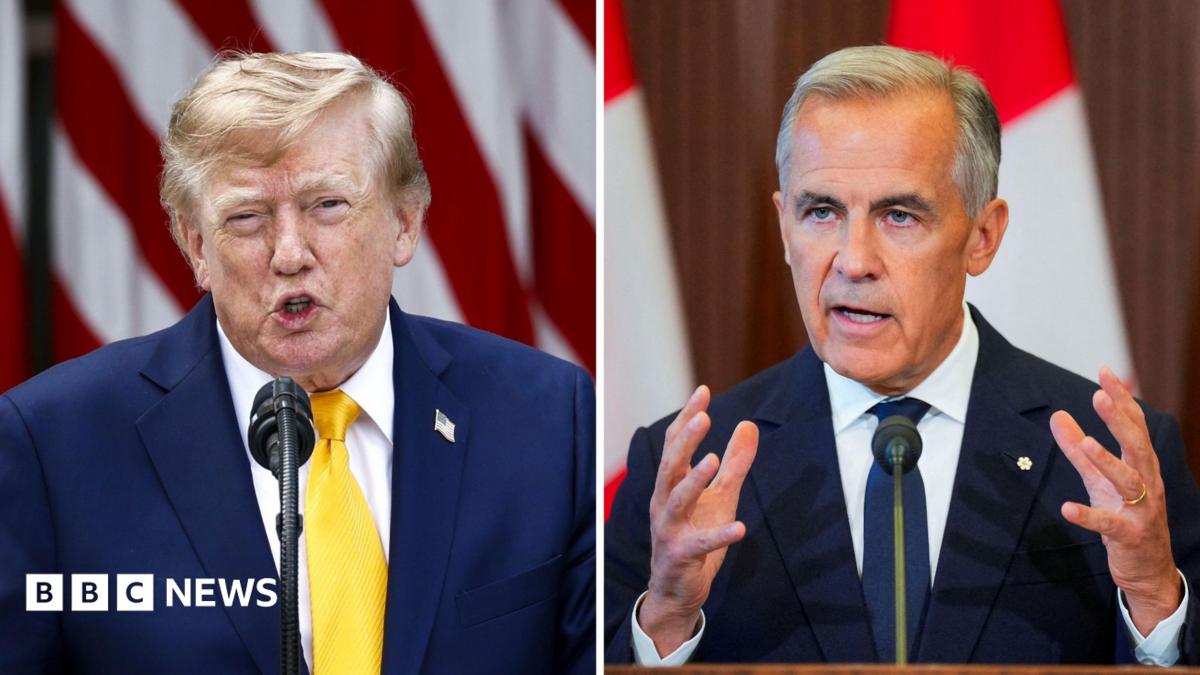
Canadians know they will feel economic pain in this dispute – financial analysists estimated the most recent tariffs of 50% on about $20bn of Canadian imports could trim between 0.3% to 0.6% off the country’s GDP in the short term.
Still, a majority in the country broadly back Ottawa’s decision to drive a hard bargain against the Trump administration, and other Canadian political leaders have shown a united front.
A weekend poll from Angus Reid indicated that some 76% of Canadians support Ottawa’s decision to walk away from trade negotiations even as they worry for their own job security.
Advertisement
The US midterm elections are fast approaching, with the economy front and centre for voters and the Republican hold on Congress looking tenuous.
Two of the biggest Senate races are in Michigan and Maine, which both border Canada and send most of their exports there.
The Yale Budget Lab calculates that under current law, Trump’s global tariffs will cost American households about $1,100 annually.
Any further increase in the costs of goods and the wider impact of the trade dispute on businesses could further sour the American public on the economy.
Advertisement
On Monday, Carney said that US workers will be hurt by Trump’s most recent threat to increase tariff on autos and auto parts from Canada to 50% after 1 January.
“What is the message sent out to the workers in Michigan, Ohio, Kentucky, Alabama? These workers depend absolutely on Canada, their largest consumer,” he said, adding that Canada buys more American cars than the EU and other countries.
On CNN on Monday, British Columbia Premier David Eby noted US consumers will see the impact of the US tariffs in any number of goods.
“If you’re building a new home, on plywood, if you’re replacing your floor, on veneers, if you’re getting married, on cut flowers, if you’re going out fishing, on fishing poles,” he said.
Advertisement
“It is a bizarre policy for Americans. It’s going to hurt them.”
Ford, one of the most vocal Canadian leaders opposing the Trump administration’s tariffs, also did not rule out specifically targeting Republican US states with retaliatory measures and “making sure America’s economy feels the pain”.
As for the coming midterms, Ford said: “If I were allowed to, I’d be down there door-knocking”.
The standoff over the Strait of Hormuz escalated further this weekend, with Iran warning it could seize vessels violating its transit rules in the critical waterway just as U.S. Treasury Secretary Scott Bessent prepared to unveil what he has described as the most aggressive financial pressure campaign ever launched against a single country.
Bessent said the United States would unveil “the single greatest financial offensive ever” against Iran on Monday, according to CNBC, while Tehran simultaneously threatened to seize ships that violate its transit rules through the strait. Iran’s self-declared Persian Gulf Strait Authority, or PGSA, warned in a series of posts on the social platform X on Sunday that vessels violating its transit rules in the Hormuz Strait could face penalties including “fines, seizure, or confiscation” during future passages. Bessent had previously written in an op-ed that an “economic D-Day is coming for Iran,” warning countries that continue doing business with Tehran without providing extensive additional detail at the time.
Shipping traffic through the strait remains significantly reduced compared with pre-conflict levels, even as some vessels continue transiting the waterway. According to CNN, citing MarineTraffic data from Sunday, at least six vessels transited the Strait of Hormuz over the preceding 24-hour period, including three tankers and two cargo ships entering the Gulf of Oman, along with one tanker entering the Persian Gulf. By comparison, at least 44 vessels transited the Bab-el-Mandeb strait during the same window, including four tankers and 16 cargo ships headed to the Gulf of Aden, illustrating the extent to which shipping activity through Hormuz specifically remains suppressed relative to other regional maritime chokepoints. Iran has continued allowing some Iraqi oil tankers to pass through the strait, according to Reuters, citing Iran’s state-run news agency, even as overall traffic remains low.
The economic consequences of the prolonged disruption continue to be felt domestically in the United States. According to CNN, the national average price for a gallon of gasoline stood at $4.09 on Sunday, according to AAA data, a figure roughly 37.5% higher than gas prices were before the conflict began. Despite that elevated pricing, U.S. stock futures opened flat for a second consecutive Sunday, suggesting markets have, for now, largely priced in the ongoing disruption rather than reacting with fresh volatility to each new development.
Advertisement
Iran’s top security official, Mohsen Rezaei, has separately threatened to halt oil flow out of the Strait of Hormuz entirely should any neighboring countries choose to join the broader U.S.-led economic pressure campaign against Tehran, according to CNN’s live coverage of the conflict. Iran has also formally warned that ships found violating its transit rules could face detention or confiscation, a threat that has prompted some oil companies to develop new tactics specifically aimed at helping their tankers pass through the waterway undetected.
Even as Iran maintains its hardline public posture toward the strait, signs of internal division within Tehran’s leadership have continued to surface. Iranian President Masoud Pezeshkian said the country “cannot continue with war forever,” according to CNN, and defended the earlier agreement Iran reached with the United States in June, even amid what CNN described as purported misgivings from Iran’s supreme leader regarding that deal. That internal tension reflects the broader strain the prolonged conflict and its associated economic pressure appear to be placing on Iran’s governing establishment.
Diplomatic efforts involving neighboring Oman have continued alongside the escalating rhetoric. According to CNBC, Oman’s foreign minister was scheduled to visit Tehran on Tuesday to continue discussions regarding the broader arrangement and management of the Strait of Hormuz, talks that have persisted intermittently throughout the conflict even as military and economic tensions between the U.S. and Iran have continued to escalate separately.
The current standoff traces back to the earliest days of the broader Iran war, which began Feb. 28, 2026, according to Wikipedia’s documented timeline of the conflict, after the United States and Israel conducted airstrikes on Iranian military targets, including the assassination of then-Supreme Leader Ali Khamenei. In direct response, Iran closed the Strait of Hormuz to all foreign shipping, with the Islamic Revolutionary Guard Corps transmitting warnings via VHF radio informing vessels that “no ship is allowed to pass the Strait of Hormuz.” Iran later confirmed the closure applied specifically to what it termed “unfriendly nations,” continuing to allow Iran-approved vessels, primarily petroleum shipments bound for China and India, to transit the strait, in some cases under military escort.
Advertisement
According to a Congressional Research Service report on the crisis, periodic Iranian attacks on shipping and retaliatory U.S. strikes against Iran severely disrupted traffic through the strait for most of the conflict’s first five months. A temporary evacuation effort organized by the International Maritime Organization and Oman in late June briefly allowed stranded mariners to depart the Gulf via a southern route through Omani waters, and crossings temporarily increased following a June 17 memorandum of understanding between the U.S. and Iran, though never returning to pre-war average levels. That memorandum effectively collapsed after Iran attacked a ship in Omani waters on June 25, prompting renewed U.S. airstrikes, followed by a further round of Iranian attacks in early July that President Trump said rendered the memorandum no longer in force.
The overall human and material toll of the maritime conflict has been significant. According to Wikipedia’s tracking of the crisis, the confrontation has resulted in one sunk tugboat, at least 17 damaged merchant ships, seven of which were ultimately abandoned, two merchant ships captured, 12 seafarers killed or missing, and one port worker killed with two others wounded in a separate related incident in Bahrain.
With Bessent’s promised sanctions announcement expected imminently and Iran simultaneously threatening ship seizures in direct response to any broader international economic pressure campaign, the coming days are likely to prove pivotal in determining whether the fragile, reduced level of shipping traffic currently moving through the Strait of Hormuz can be sustained, or whether renewed escalation on either side further disrupts one of the world’s most economically consequential maritime chokepoints, through which roughly one-fifth of global oil trade and liquefied natural gas shipments have historically passed before the conflict began.
Andy Burnham has refused to rule out tax rises in the upcoming autumn Budget, saying he “won’t be unrealistic” about the “challenging” state of public finances.
The prime minister said he would take a “careful approach” to the economy, and defended his previously announced cost of living pledges as funded spending commitments.
Burnham became prime minister in July promising to give people breathing space and help with the cost of living, but questions remain over how major policies such as social care reforms will be funded.
Experts have previously warned that he and Chancellor John Healey will have little financial room to manoeuvre in their first Budget on 28 October.
Advertisement
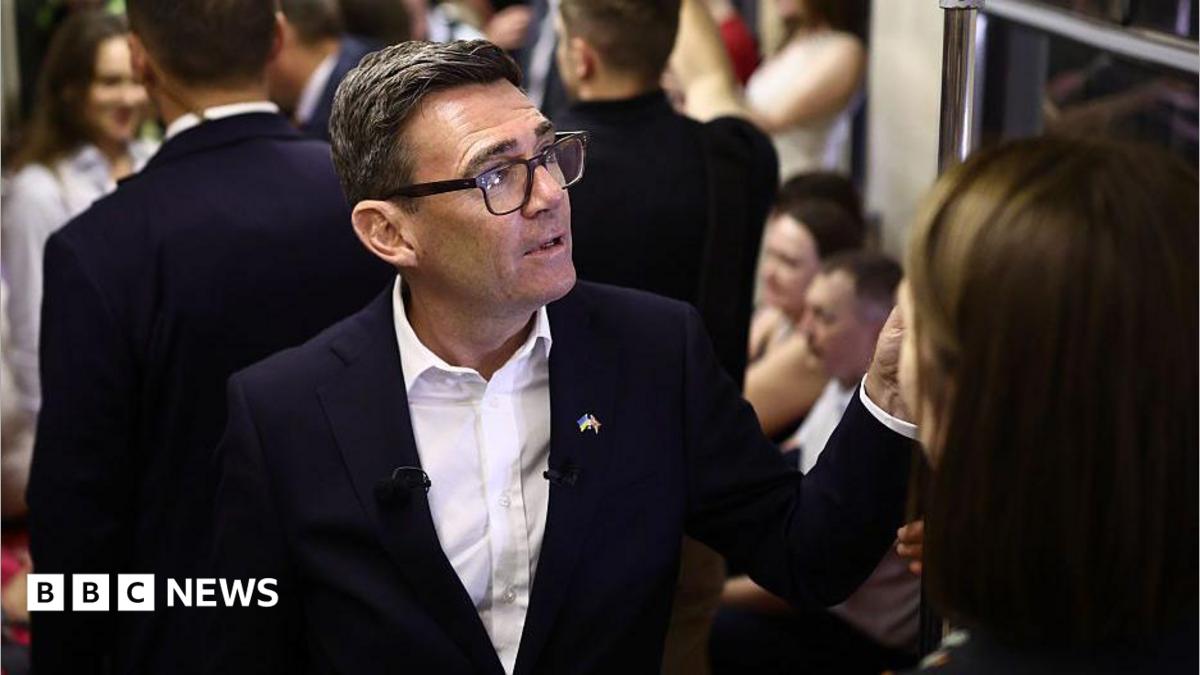
Speaking during his first visit to Ukraine, Burnham said the policies announced so far including capping bus fares at £2 and cutting VAT on household electricity bills were “the first steps that I’ve felt able to make”, and were doable because he was able to reprioritise funding from elsewhere.
“I took the decision early on that digital ID wasn’t the top priority for now. And so we’ve reprioritised funding to other priorities,” he said in an interview with ITV.
Asked if the public needed to accept some of the new policies would have to be paid for in tax rises, Burnham said they wouldn’t necessarily have to accept that.
Pushed on whether he would need to raise taxes to cover spending gaps, he said: “I will always take a careful approach to things. I ran Greater Manchester for 10 years and we ran a very tight ship with rock solid finances.
Advertisement
“Nothing will change as I come into this role as prime minister. I won’t take risks with people’s jobs or their livelihoods or their family finances.
“I will try to help them in whatever way I can, I have already done some things that will help them.”
Burnham previously told the BBC he accepts his earlier announcements aimed at tackling the cost of living are not enough on their own and hinted at further support.
Speaking during his first official overseas visit on Monday, he said while he would do what he could, “I won’t be unrealistic and people really need to understand that.
Advertisement
“We are in a challenging position, whatever I do will be carefully thought through, it will be funded and there will be more to come as we go into the autumn.”
Inflation also reached a four-month high of 2.9% in July and is expected to rise further due to the ongoing impact of the Iran war, which has hit energy prices and fuel costs.
Experts have warned Burnham and Healey that they need to either raise taxes or cut spending elsewhere as pressure on the public finances has left no room for extra borrowing.
Advertisement
Both the prime minister and chancellor have vowed to stick to the fiscal rules set by former chancellor Rachel Reeves.
The rules are designed to ensure day-to-day spending is funded through tax revenue by the end of the Parliament, and to reduce debt as a proportion of GDP.
Focused on analyzing 13F reports & building tools to help DIY investors generate absolute returns through exploiting inefficiency, volatility, and momentum. Asymmetric Bets Focus. Check out my website and related substack:1. DIYAbsoluteReturns.com, 2. DIYAbsoluteReturns.substack.com.Check out my books in the Demystifying Web3 and Beyond series: 1. Demystifying Bitcoin: Paving the Way to Global Digital Money.2. Demystifying Crypto: Powering a Borderless Digital Economy.
Analyst’s Disclosure: I/we have no stock, option or similar derivative position in any of the companies mentioned, and no plans to initiate any such positions within the next 72 hours. I wrote this article myself, and it expresses my own opinions. I am not receiving compensation for it (other than from Seeking Alpha). I have no business relationship with any company whose stock is mentioned in this article.
Seeking Alpha’s Disclosure: Past performance is no guarantee of future results. No recommendation or advice is being given as to whether any investment is suitable for a particular investor. Any views or opinions expressed above may not reflect those of Seeking Alpha as a whole. Seeking Alpha is not a licensed securities dealer, broker or US investment adviser or investment bank. Our analysts are third party authors that include both professional investors and individual investors who may not be licensed or certified by any institute or regulatory body.
The U.S. Open is back in Queens this week, as the final Grand Slam of the year brings millions of fans together at the USTA Billie Jean King National Tennis Center to witness some of the best men’s and women’s players in the world competing for glory.
As fans gear up to soak in hundreds of matches over the next couple of weeks, IBM and the United States Tennis Association announced new and enhanced AI-powered fan features within the popular U.S. Open app and USOpen.org for this year’s tournament.
Advertisement
For decades now, IBM has been working with the U.S. Open to truly evolve the fan experience, especially in recent years with AI-powered innovations that are designed to cut through all the noise and allow fans to personalize their tennis experience at their fingertips.
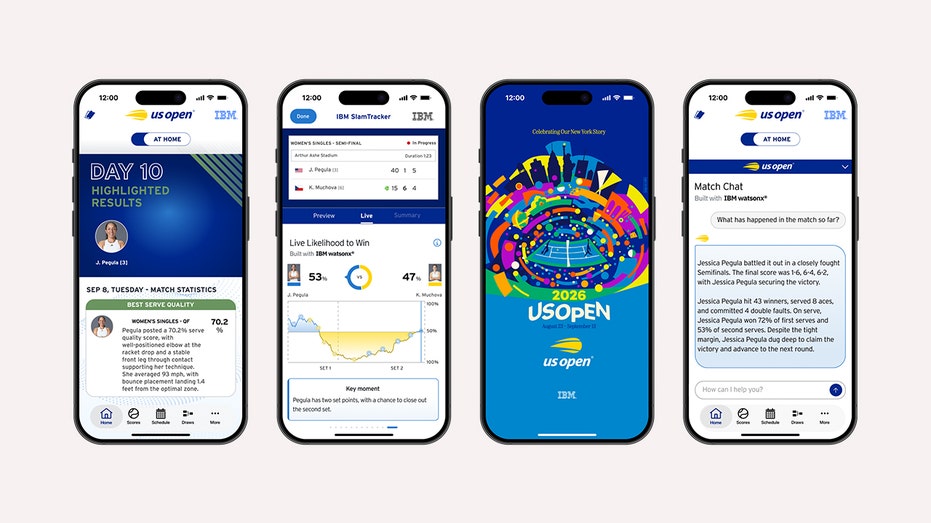
The U.S. Open app powered by IBM has fan-favorite features, as well as new ones, for the 2026 Grand Slam tournament. (IBM / Fox News)
That experience has evolved into one in which the fans demand AI-powered features because accuracy, not speed, has been shaping the digital sports realm for those consumers. According to new global research commissioned by IBM and conducted by Morning Consult, sports fans’ digital expectations are evolving as platform choices multiply, with 46% of more than 20,000 sports fans across 12 countries saying their expectations for digital sports experiences have increased in just the past one to two years. Also, 72% of surveyed fans say they use sports apps as their central hub for fandom, while 40% said having their information in one place is their leading motivation to follow along.
As a result, IBM continues to transform that experience in a way fans can enjoy one of the best tournaments in all of sports this week.
Advertisement
“I think we have such an incredible reputation in tennis through our two [Grand] Slam partnerships, as well as The Masters, where there’s this anticipation for the event, but also to see how we’re going to keep them connected,” Kameryn Stanhouse, vice president of sports and entertainment partnerships at IBM, told Fox Business in a recent interview.
“That’s one of the things that I love about what we do in sports is that we actually leverage technology as a way to foster conversations and connection. You can talk to people whether they’re able to go to tennis matches [or not]. We’ve got 1 million people that are going to go to the [UTSA] Billie Jean Tennis Center across the two weeks, and then 14 million people are going to be engaged at home on their couch, but able to feel like they’re courtside and engage on that second-screen experience.”
What will that second-screen experience look like for the 2026 U.S. Open? First, an all-new Live Updates homepage will provide fans with a smarter and more personalized way to follow the action they care about the most. Stanhouse emphasized fans being able to choose their favorite players and quickly zero in on those matches, while getting insight and stories they care about in the process.
Advertisement
Another new feature Stanhouse is very excited to see in real time is the Serve Quality metric, which is a “first-to-market feature” that provides a whole new context to one of the most important aspects of tennis.
Last year, American women’s star Coco Gauff came into the U.S. Open with a new coach specifically to help with her serves. Service can be the difference between winning and losing, and those generally with superior serves win matches.
Atmosphere during the IBM US Open Event at Madison Square Park on Sept. 4, 2025 in New York City. (John Lamparski/Getty Images / Getty Images)
This new feature from IBM will be available across all 254 singles matches, where the AI-powered tool will use advanced limb-tracking technology developed with IBM Bob to help analyze the precise mechanics of every serve. And the continuous stream of this live data will be managed by IBM Confluent.
“We basically trained this model to look at all the historic white papers, all the research about serves. Then, we’re looking at 21 specific joint points on the body – everything from the elbow to the big toe that looks at momentum,” Stanhouse explained. “The position of a serve on the court, where it lands. We have six different coordinates we’re looking at all the way to the racket positioning. Synthesizing all of that, it’s doing snapshots 50 times per second – lots of data points in this one. But overall, 1.2 billion data points that’s going to be analyzed over the tournament to give you a Serve Quality number.”
Advertisement
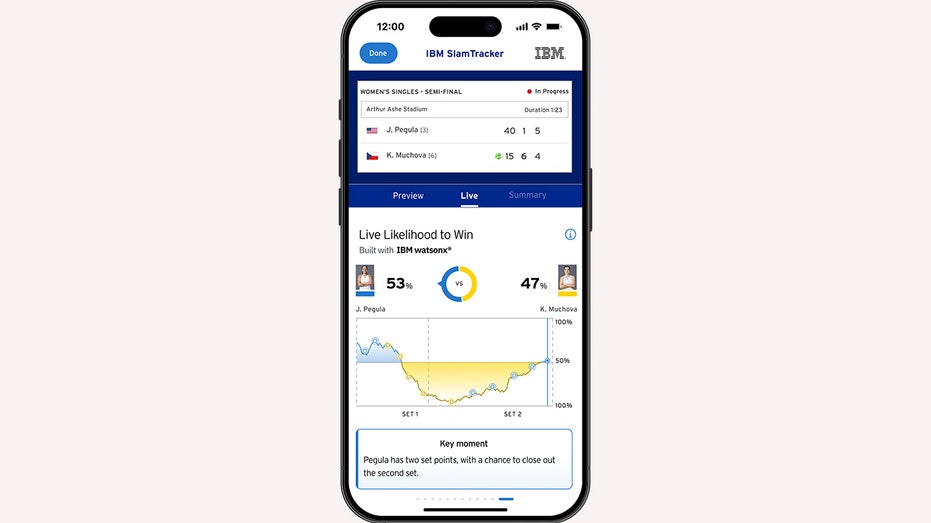
Also, the new “Key Moments” feature within the app takes the popular “Likelihood to Win” feature to the next level to help fans understand why someone is winning – not just who is up in the match. The “Likelihood to Win” feature became a hit as it calculated each player’s probability of victory using an AI-powered analysis of current and historical statistics, expert opinion and match momentum.
General view of the 2026 U.S. Open app powered by IBM. (IBM / Fox News)
Now, “Key Moments” will provide additional, more rich information, to summarize those momentum shifts in matches.
“We’re looking at that structured and unstructured data, taking AI to make an analysis, and then make a pre-match projection that takes into consideration not only how they’ve been playing, but what’s the media saying? What’s been said on social media? What are the broadcasters saying? Did someone get a new tennis coach? Do they have a lingering injury? So, we take all that into consideration and provide a pre-match projection,” Stanhouse added.
Finally, as fans have become more accustomed to an AI experience over the years, IBM’s enhanced “Match Chat” will act as an interactive companion to help provide whatever insight is needed to help guide the user through the tournament. Everything from analysis to finding out Serve Quality, to simply figuring out how to pronounce someone’s name properly, Match Chat, powered by watsonx Orchestrate, is a collection of AI agents and fit-for-purpose models trained to give fast, accurate responses that keeps fans informed whenever they need it.
Advertisement
The Likelihood to Win feature on the U.S. Open app is a fan-favorite in recent years, providing insight on which player has the upper hand throughout the match. (IBM / Fox News)
For Stanhouse and her team, the U.S. Open is simply another opportunity to showcase what IBM can do for not just the sports world, but drive the conversation for other companies to utilize the fun, engaging technology they’ve developed for themselves.
“Everybody says my team has the best job at IBM. There’s many, many great jobs, but I think what we do is so exciting because there’s a tangible output that people actually see and people are waiting for. Each tournament that we go to is not only a learning opportunity because we’re constantly thinking about how we’re going to evolve things for the next year, but it’s such a pay-off to see everything come to life. Because what we do is not just serve the fan experience, but we’re so creating unique conversation pieces for our clients. They see how IBM technology makes all of this possible and inspire what you could do with us.”
Mumbai: InCred hired three senior executives who helped rival Avendus build its wealth management business to lead a new platform focused on ultra-high-net-worth individuals, as financial firms compete for a growing pool of wealthy Indian clients.
Alok Agrawal, Harmeet Sahney and Zarksis Gotla joined InCred as cofounders of InCred Black, a new business targeting UHNIs, entrepreneurs and business families, the company said Monday.
The trio spent more than 15 years building the wealth business at Avendus and advised some of the most prominent UHNI clients. Agrawal, Sahney and Gotla will help shape InCred Black, deepen client relationships and expand the team as the business scales, it said.
The move comes as the country’s pool of wealthy individuals expands and family offices increasingly seek access to private markets, alternative investments and global assets. According to InCred, its wealth franchise has crossed ₹1 lakh crore in assets under management and serves a large UHNI client base.
Advertisement
InCred Black will offer personalised wealth management and access to asset allocation, alternative investments, public and private markets, credit, liquidity solutions and global investing, leveraging capabilities across InCred Capital and the wider InCred group, it said.
Live Events
Read more: Govt to sell up to 6% stake in Hindustan Copper via OFS; floor price at 10% discount InCred Black plans to add more senior bankers and specialist talent as it scales, InCred founder and group chief executive Bhupinder Singh said.The hiring comes against the backdrop of rapid growth in the UHNI population. India has more than 19,000 UHNIs with assets above $30 million, a figure expected to exceed 25,000 by 2031, according to a Julius Baer-EY report.
India also has around 200 billionaires holding about $1 trillion in wealth. The growth in the UHNI population has been driven by IPOs, private equity exits and founder liquidity events.
New Delhi: The renewable energy ministry has advised implementing agencies and state governments to consider developers’ requests to extend project completion deadlines for renewable power projects delayed by disruptions arising from the West Asia situation by up to four months.
This is in line with the department of expenditure’s note saying disruptions directly or consequentially affecting contractual obligations could qualify as force majeure. For contracts where obligations were due for completion on or after February 28, 2026, the agencies such as NTPC, NHPC, SJVN, and Solar Energy Corporation may allow extensions by up to four months without imposing costs or penalties on contractors.
However, the relief will apply only where the contractor was not already in default as of February 27, 2026.
The force majeure provision will cover only delays directly attributable to disruptions caused by the West Asia situation and will not absolve parties of other contractual non-performance.
The move comes as renewable energy projects face potential disruptions to the execution of contracts for goods, services and construction. The renewable energy ministry has asked implementing agencies and state authorities to take the finance ministry’s April 29 order into account while deciding requests for extensions.























































You must be logged in to post a comment Login