The largest internal migration Australia has seen in a generation is changing more than property prices. Inside the moving industry, the rules of the game have already shifted.
Australia is witnessing the largest sustained interstate migration on record. Queensland’s net population gain from other states reached 35,000 people in the calendar year ended December 2025, the most recent quarter for which the Australian Bureau of Statistics has published full data. New South Wales lost roughly 30,000 to interstate movement. Victoria gave up most of the rest. The pattern, set in motion when the pandemic accelerated remote-work flexibility in 2020, has hardened into a structural realignment of where Australians choose to live, work, and raise families.
The Queensland Treasury’s mid-year economic and fiscal review now projects the state will reach 6 million residents by 2030 and pass 6.5 million well before the 2032 Olympic cauldron is lit. CoreLogic’s median dwelling values data tells the corollary story: a Sydney terrace sells for around 1.5 million dollars, a comparable Brisbane property for closer to 940,000, a gap of more than half a million dollars that has reframed the lifestyle move as the rational economic decision for a generation of young families priced out of the southern capitals.
The implications extend well beyond property markets. The physical infrastructure that moves Australian households across borders, the removalist industry of trucks, crews and interstate routes, is in the middle of a quiet structural realignment. Capacity has been outpaced by demand. Routes that ran on backloading economics for decades are being redrawn. Pricing has lifted across the board. Consumer expectations are higher, the regulatory framework around insurance and accreditation is being tested, and the industry has begun to consolidate around operators who can scale capacity without losing operational discipline.
Where the migrants are landing
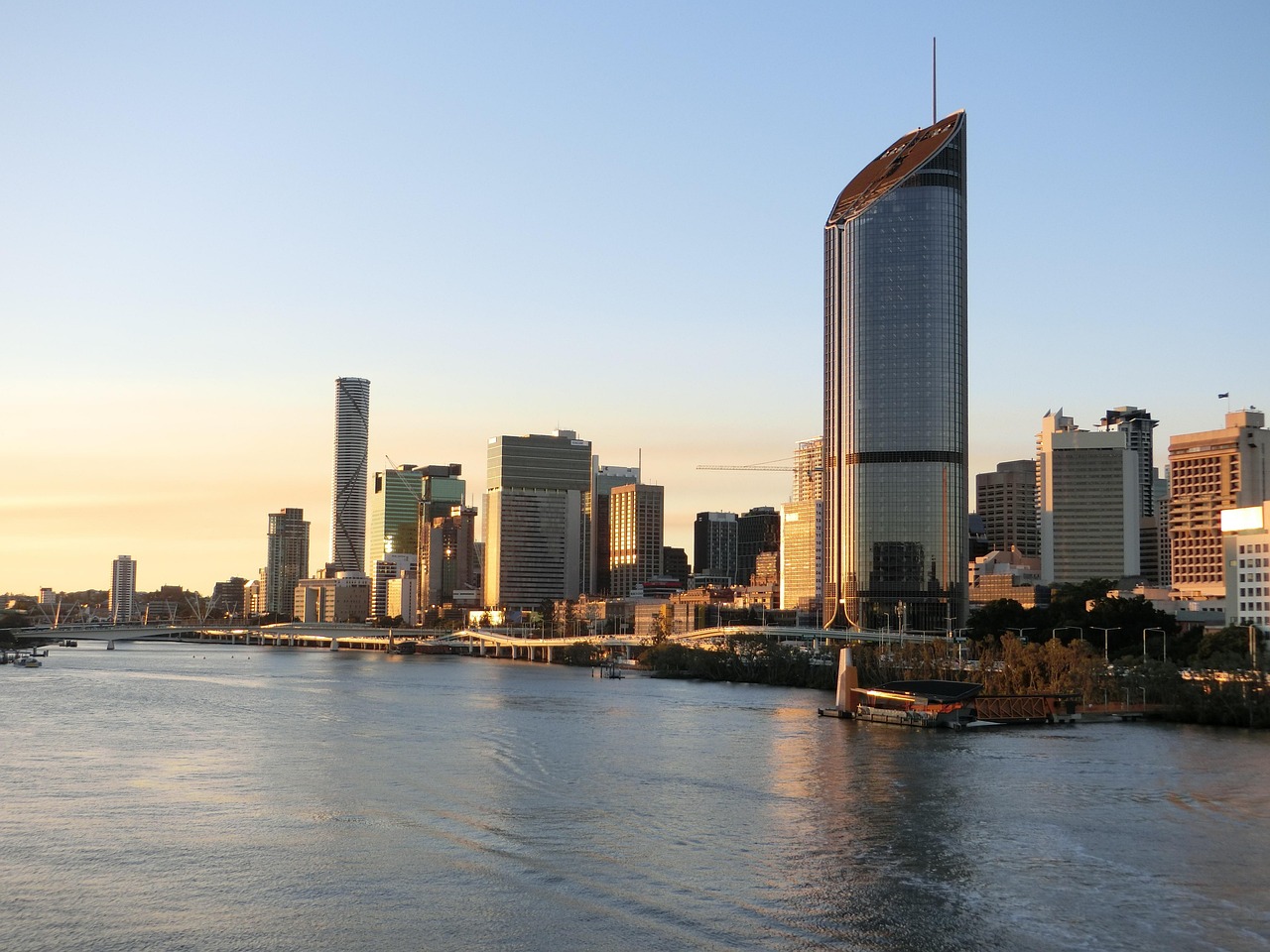
Brisbane absorbs the largest share. The state capital’s population is on track to pass 3.1 million within the decade, according to the Queensland Government Statistician’s Office. Some of that growth is natural. The lion’s share comes from interstate arrivals choosing the south-east corner over a Sydney terrace with no off-street parking, an apartment block in inner Melbourne facing rising body-corporate fees, or a regional NSW property absorbing the climate-related insurance premiums that have made the Northern Rivers progressively unaffordable since the 2022 floods.
The migration is not just retirees and remote workers. CoreLogic’s buyer profile data through 2025 showed the largest individual cohort moving north was families aged 30 to 44, the demographic that historically anchored Sydney’s middle ring. They bring children, school enrolments, and the kind of furniture inventory that fills a forty-cubic-metre truck rather than a 20-foot container. They also bring the second vehicle and the trampoline that used to live on a Strathfield lawn, which is why interstate moves now routinely involve specialty handling that operators a decade ago would have politely declined.
The growth is not evenly distributed inside Brisbane. Look at the suburbs and the picture sharpens. Hamilton, Bowen Hills, Newstead and Albion, the inner-city precincts within walking distance of the Olympic precinct in development at Northshore Hamilton, have seen apartment turnover lift sharply over the past two years. Logan and Ipswich on the city’s outskirts are absorbing the family-home buyers priced out of inner Brisbane. Springfield and Ripley, master-planned communities further west, have changed shape so quickly that Google Maps satellite imagery from 2023 looks like a different suburb.
For removalists Brisbane the operational reality is that bookings for any Saturday between October and January now lock in eight to ten weeks ahead. Inner-suburb access has become its own specialisation. Heritage-listed Queenslanders with two-metre clearances under the front stairs cannot accommodate a twelve-tonne pantech. Apartment buildings in Newstead and Fortitude Valley require lift-booking windows that are increasingly contested. Brisbane’s narrow inner streets, busy traffic corridors and council-controlled loading zones turn every move into a logistics puzzle that did not exist when the city was half this size.
The pressure shows up in unexpected places. Storage operators across the Brisbane metro area have reported booked-out short-term inventory through most of 2025, driven by a mismatch between settlement dates and key-handover dates that the property market itself has produced. When you cannot move directly from one home to another, the move splits in two: an outgoing leg into storage, an incoming leg out of it. Each leg books a removalist. The total demand effectively doubles for the same household, and the industry has yet to add the capacity to absorb it cleanly.
The sea change to Cairns and far north Queensland
The Brisbane story gets the headlines because the absolute numbers are bigger. The Cairns story is more interesting because of who is moving and why.
Far north Queensland’s growth has a different texture. It is slower, steadier, and pulled by lifestyle as much as by housing affordability. JCU’s expanding satellite campuses have brought academics and postgraduate families to Smithfield, where the new Tropical Innovation Hub is anchoring the next round of campus growth. The remote-tech crowd has discovered Trinity Beach can deliver a tropical lifestyle for the price of a Western Sydney three-bedder. Retiring boomers cashing out of Newcastle terraces are buying canal-front in Trinity Park and pocketing the difference. Cairns Hospital’s 446-million-dollar Stage 4 redevelopment, the largest health infrastructure investment in northern Queensland’s recent history, is bringing nursing, allied health and specialist medical staff to a city that was already short on rental supply before the announcement.
Population growth in the Cairns local government area sits around 1.4 to 1.7 per cent annually, which sounds modest until you visit Edmonton on a Sunday afternoon and realise the new estates south of the highway have doubled the suburb’s footprint inside five years. Mount Peter, Bentley Park and the southern growth corridor between Cairns and Gordonvale have absorbed most of the new family-home demand. The Tablelands region behind Cairns is seeing similar pressure. Atherton and Mareeba are no longer the sleepy agricultural towns they were a decade ago, and the Kuranda Range remains the genuine logistical bottleneck for any move that crosses it, with the Department of Transport’s long-promised second range road still years away from a contract signing.
For removalists Cairns the practical implication is twofold. First, demand has become year-round rather than concentrated around school holidays. Second, the routes are different. We now run more trucks between Cairns and Townsville, between Cairns and the Tablelands, and most surprisingly between Cairns and southern capitals as the demographic flows in both directions. The sea-changers arriving north meet the FIFO workers heading south, and the trucks carry both. Port Douglas and Mossman, sixty kilometres further up the coast, are pulling their own steady stream of small-volume moves from the over-fifties who have finally written the postcard their thirty-year-old selves never quite mailed.
What surprises people outside the industry is how seasonal the demand has become in reverse. Cairns used to fill up around April through October, the dry-season window when interstate retirees timed their moves to avoid wet-season cyclones. The pattern has flattened. Climate awareness has made movers more deliberate about timing, and remote work has decoupled the move date from the school calendar that once dictated everything. Wet season bookings, once a third of the dry-season volume, now run closer to two-thirds.
What this means for movers and logistics
The economics of long-distance Australian relocation has changed faster than most people outside the industry realise.
Three years ago, a Sydney-to-Brisbane move for a three-bedroom household was, broadly, a fixed-quote shared-load proposition. Trucks ran a regular schedule, picked up volume from multiple customers along the route, and the numbers worked because the southbound leg carried near-equivalent freight in the other direction. A typical interstate quote sat in the 4,500 to 6,500 dollar range for that household profile.
That equilibrium has shifted. Net flows now run dramatically northbound. Operators who rely on backloading for margin have had to recalibrate. Some interstate routes, particularly Sydney-to-Brisbane, are essentially one-way trade. The trucks come back lightly loaded or empty. Pricing reflects that, which is partly why interstate quotes have crept upward across the board over the last eighteen months. The same Sydney-to-Brisbane three-bedroom move that quoted 5,500 dollars in mid-2023 now lands in the 6,800 to 9,000 dollar range with most reputable operators, and that is before the surcharge for difficult-access pickups or compressed timeframes.
Demand pressure is not just on the metro corridors. The interstate routes between Melbourne and the Sunshine Coast, between Adelaide and Brisbane, and between regional NSW and Cairns have all picked up volume that did not exist three years ago. For consumers researching their options, comparing quotes from established interstate movers against a single operator’s pricing is one of the few reliable ways to gauge whether they are getting fair market rates in a tightening market. The spread between quotes for the same job can exceed forty per cent, which catches many first-time interstate movers off guard.
Capacity is the other factor. AFRA’s published membership statistics show roughly 350 accredited operators nationally. The actual demand on those operators has grown faster than the industry has been able to expand. Owner-operators tell similar stories: trucks are booked, drivers are at capacity, insurance and registration costs have climbed, and finding skilled removalists who can do the heavy work safely has become genuinely difficult. Heavy rigid licence holders willing to do residential work, as opposed to the higher-paying long-haul freight runs, are increasingly hard to recruit and harder still to retain.
It feeds through to consumers. Lead times have stretched. The “I need to move next weekend” call, which was a routine accommodation a few years back, is now often impossible without a premium. Saturdays in Brisbane during peak season carry a measurable surcharge because every truck and every two-man crew is already committed. End-of-month bookings, traditionally the rental-tenant moving window, sell out earlier each quarter.
The service gap and what is changing
Industry consolidation has begun. Smaller operators who relied on cash-economy margins have been squeezed by rising fuel, insurance and compliance costs. The customers who used to call them have shifted toward larger AFRA-accredited operators because the consequences of a botched move have become more expensive. A damaged Eames lounge or a scratched Smart Furniture timber floor in a 1.6 million dollar Hamilton apartment is a different financial event to a damaged kitchen chair in a Western Sydney rental.
Choice Australia’s recent investigation into the moving industry found that complaints about uninsured operators causing significant property damage had risen sharply, and that consumers were increasingly checking AFRA membership before booking. AFRA membership is not a rubber stamp. It requires audited public liability insurance to a minimum of twenty million dollars, audited goods-in-transit cover, documented training programs, and adherence to a published code of conduct. The body’s complaint resolution process gives customers a meaningful path when something goes wrong, which sits in stark contrast to the cash-economy operators who advertise on classified sites and disappear when the customer rings about a damaged dining table.
The customer expectation has lifted in parallel. People moving a 1.6 million dollar home are not interested in a “couple of guys with a ute” arrangement. They want documented insurance, professional packing, GPS-tracked trucks, and someone they can call if a piece of furniture is damaged. The market has bifurcated. There is the budget end, with low rates and high risk, and the professional end, where price is part of a value proposition that includes accreditation, insurance and accountability. The middle ground is shrinking.
Pricing transparency has become a differentiator in itself. Hourly rates published on websites, fixed-quote interstate options, and clearly itemised inclusions matter to a customer base that has been burned by quote-on-the-day surprises and surcharges that were not disclosed up front. The shift toward up-front pricing is partly a response to consumer pressure, partly a response to digital-first booking experiences that other industries normalised first. The customer who has booked an Uber and an Airbnb and a flight, all in the same morning with confirmed pricing, is unwilling to accept a removalist quote that depends on the driver’s mood when he arrives.
Looking ahead: 2026 to 2032
The Brisbane 2032 Olympics will reshape moving demand in ways the industry has not fully priced in yet. The athletes village at Northshore Hamilton, the renewed Gabba precinct, the Brisbane Live arena planned at Roma Street, and the satellite venues across south-east Queensland will collectively reorder where people want to live for the next decade. Construction phases will displace households into surrounding suburbs through to 2030. Post-games conversion of the athletes village into 1,250 dwellings will produce a single concentrated burst of move-ins in late 2032 and into 2033.
Cross River Rail’s 2026 opening of stations at Boggo Road, Woolloongabba, Albert Street and Roma Street is changing the access geography of inner Brisbane. Suburbs that were car-dependent fifteen minutes ago are about to become rail-connected, which historically triggers a relocation wave both into and out of the affected postcodes. Brisbane Metro’s bus rapid transit network, with its first lines through Eight Mile Plains and Roma Street, is opening previously car-dependent suburbs to commuters who do not want a vehicle.
Each of these infrastructure shifts produces a relocation wave. The wave is not always toward the new transport line. Sometimes it is away from it, as long-time residents cash out of suddenly-valuable real estate and move to quieter postcodes further out. The Bayside, the Redlands, and the Moreton Bay regional council area are absorbing this overflow, and removalists are noticing that the average distance of a Brisbane local move has crept upward by several kilometres each year.
Cairns will continue its slower, demographic-led growth. Climate-driven migration is starting to factor into the conversation in a way it did not five years ago. The 2024 floods in northern New South Wales and the heatwaves through Sydney’s western suburbs in early 2025 both produced documented relocation activity, including a small but visible flow of southerners deciding the tropics suit them after all. Insurance premium pressure on flood-prone southern postcodes is pushing households toward higher-elevation Queensland alternatives in a way that policymakers and the broader market are only beginning to track.
For the moving industry, the next five years will reward operators who can scale capacity carefully without losing the operational discipline that volume tends to corrode. AFRA accreditation, modern fleet management, transparent pricing, and a genuine focus on the customer experience will separate the businesses that grow with the market from those that get crushed by it.
For the consumer, the message is simpler. Book early, ask for written quotes, check insurance, and prioritise operators who treat your possessions as if they were their own. Australia’s biggest internal migration in a generation is still in its early innings. The question is not whether the trucks will keep running north. The question is whether the industry can keep up.












































You must be logged in to post a comment Login