
Business
Patrick Industries EVP Amundson sells $568k in stock




In UK industry, cost control is often focused on the obvious: labour, materials, logistics, and energy. These are measurable and regularly reviewed. However, one of the most significant threats to profitability often goes underreported or underestimated, downtime.
Downtime is different. It tends to be recorded indirectly and as a result, its full impact is not always clearly understood. In practice, downtime can have a greater effect on profitability than many of the costs businesses actively manage.
Understanding the Real Impact of Downtime
At a basic level, downtime is any period where equipment is not operating as intended. This includes both planned maintenance and unplanned failures, although it is the unplanned side that causes the most disruption.
The immediate issue is usually straightforward. A machine stops, production is interrupted, and a repair is required. However, the wider impact develops quickly. Output is reduced and schedules begin to slip. In some cases, a short stoppage can affect multiple stages of an operation, particularly where processes are closely linked.
Over time, these effects compound. What begins as a single equipment issue can influence overall productivity far beyond the original fault.
Where Costs Accumulate
The financial impact of downtime rarely sits in one place. Instead, it builds across several areas of the business.
- Lost production is typically the most visible factor. When equipment is offline, output targets are missed and recovery often requires additional time or shifts.
- Labour costs continue regardless of whether equipment is running. Teams may be delayed, reassigned, or working below full efficiency while waiting for repairs to be completed.
- There is also the risk of secondary damage. A worn or misaligned component, such as a shaft journal or bearing housing, can place additional stress on connected systems. If not addressed promptly, this can lead to more extensive repairs.
- In situations where components need to be removed for offsite repair, further costs are introduced. Lifting equipment, transport, and reinstallation all extend the downtime period.
Individually, these issues are manageable. Combined, they represent a significant and often underestimated cost.
Increasing Pressure on UK Industry
Several factors are making downtime more difficult to manage across the UK. A large proportion of industrial equipment is operating beyond its original service life. While this is often necessary, it increases the likelihood of wear-related failures. At the same time, production demands remain high. Equipment is expected to run continuously, leaving less opportunity for preventative maintenance.
There is also increased reliance on specialist skills for certain types of repair work. Where these are not immediately available, response times can be extended. Taken together, these conditions mean that when downtime occurs, its impact is more pronounced than it might have been in the past.
Planned vs Unplanned Downtime
Not all downtime carries the same level of risk.
- Planned downtime, such as scheduled maintenance, is typically controlled and factored into operational planning.
- Unplanned downtime is far more disruptive. It occurs without warning, often requiring immediate intervention and leading to unexpected delays.
The key difference lies in control. Planned downtime can be managed and optimised. Unplanned downtime introduces uncertainty, which makes it significantly more costly in both time and resources.
Reducing Downtime Through Onsite Machining
One approach that has become more widely adopted is onsite machining. Rather than removing components and transporting them to a workshop, repairs are carried out directly at the facility. This applies to a range of services, including line boring, crankshaft machining, flange facing, and shaft journal repair. This method addresses one of the main contributors to extended downtime, the time required to dismantle, transport, and reinstall large or complex components.
Practical Benefits of Onsite Repair
Carrying out machining work onsite reduces the number of steps involved in the repair process.
Equipment can often remain in position, which removes the need for heavy lifting and transport logistics. Work can begin sooner, particularly in situations where access is already available. The reduction in handling also lowers the risk of additional damage during removal and reinstallation.
Modern portable machining equipment is capable of achieving high levels of accuracy, allowing repairs to meet required tolerances without the need for workshop-based processes. In many cases, this leads to a shorter overall downtime period and a more controlled repair process.
Industries Where Downtime Has the Greatest Impact
Downtime affects all sectors, but the consequences are more significant in industries that rely on continuous or high-output operations.
In oil and gas, interruptions can halt production entirely, particularly in offshore environments where access is limited.
- Power generation facilities face both financial and regulatory pressure to maintain consistent output.
- Marine and shipbuilding operations are heavily schedule-driven, meaning delays can affect multiple stages of a project.
- Petrochemical processes often run continuously, so even a short disruption can require time-consuming restart procedures.
- Mining and heavy industry operate in demanding conditions, which increases wear on critical components.
- Infrastructure and construction projects can also be affected, particularly where key equipment failures delay progress across multiple teams.
A Shift in How Downtime Is Managed
There is a gradual shift away from purely reactive repair strategies towards more responsive and preventative approaches. Regular inspection and monitoring of critical components can help identify issues before they lead to failure. Addressing wear early reduces the likelihood of unplanned stoppages.
At the same time, having access to onsite machining capability allows businesses to respond more quickly when issues do arise. This combination, early intervention and rapid repair, provides a more effective way of managing downtime.
The Importance of Specialist Support
Reducing downtime is not only about equipment, but also about having access to the right expertise.
Specialist onsite machining providers bring both the equipment and experience required to carry out precision repairs in challenging environments. This allows businesses to respond quickly to issues without relying on extended repair processes.
Companies such as Royce Onsite Machining focus specifically on delivering these services in-situ, helping minimise disruption and reduce the time between fault identification and repair completion. Choosing the right support can make a measurable difference to both downtime duration and overall operational efficiency.
Key Takeaway
Downtime remains one of the less visible but more significant costs within UK industry.
Because its impact is distributed across operations, maintenance, and productivity, it is not always captured in a single figure. However, its effect on overall performance is clear. Reducing downtime requires both preventative measures and efficient repair solutions. Onsite machining plays an important role in this by limiting delays and keeping equipment in service. For businesses operating in demanding environments, even small reductions in downtime can lead to meaningful improvements in efficiency and cost control.

By the year 2026, testosterone therapy is a very structured and medically regulated treatment especially in the United Kingdom because, in this country, the healthcare regulations consider patient safety and evidence-based practices.
With the continued rise in awareness regarding the health of the human hormones, the number of people searching their alternatives worldwide is increasing, and they may come across such terms like Buy steroids in United Kingdom Online. Nevertheless, it is crucial to differentiate between medically controlled treatment and uncontrolled ones.
This guideline gives a clear picture of the existing standards of testosterone treatment, modes of treatment and some points to consider by people in the United Kingdom.
 The Shift Towards Regulated Hormone Therapy
In the recent years, there has been a significant shift in the testosterone therapy. It is no longer approached in a casual and unproperly diagnosed way. Rather, the providers of healthcare in the UK have adopted rigorous measures in order to make sure that treatment is not only necessary but also safe.
In 2026, the trend is to have a natural hormonal balance and not to increase the performance above the normal levels of physiological parameters. This has changed the results of patients and minimized the risks of using improper hormones.
Diagnosis and Eligibility Criteria.
Prior to the initiation of testosterone therapy, a complete medical examination needs to be conducted on the patients. UK guidelines normally demand:
• At least two distinct blood tests that prove low levels of testosterone.
• Evaluation of symptoms like fatigue, low libido and muscle mass.
• Assessment of co-morbidities.
Physicians also consider the life habits, such as nutrition, sleep habits and stress levels, which may also influence the hormone levels dramatically.
Such a comprehensive practice will make sure that only people whose medical need is real are treated.
Approved Testosterone Therapy Options
The UK offers a number of types of testosterone therapy in 2026:
Injectable Testosterone
This is among the widely prescribed approaches. It offers stable hormone levels and is normally done in the weekly or bi-weekly schedule.
Topical Treatments
They are also available in gels and creams which can be applied daily and are also a good substitute but have different rates of absorption.
Transdermal Patches
These provide a constant stream of the use of testosterone via the skin, but can irritate a few of the users.
Implants
Pellet implants provide hormone release over the long term and eliminate the necessity of frequent doses.
Safety and effectiveness of all these treatments are ensured by prescription and monitoring of qualified healthcare professionals.
The Rise of Online Searches and Misconceptions
As the use of hormone therapy becomes very popular, several people resort to the internet to find information and access. Several searches like Buy steroids in United Kingdom Online have also increased in frequency, showing that more people are interested in testosterone-related products.
Nevertheless, there is also a significant issue that can be identified with this trend, and it is the danger of consuming unregulated or fake substances. Products acquired in an unofficial environment, in contrast to prescribed medication, might not get any quality control, dosage, and safety measures.
Unregulated use of steroids may lead to risks as follows.
Self-prescription of anabolic steroids may result in serious health problems. These include:
Hormonal disturbances and reduction of natural levels of testosterone.
• Risk of cardiovascular problems is high.
• Liver toxicity
• Mood changes and behavioural changes.
• Long-term dependency
Conversely, testosterone therapy under medical supervision is strictly coordinated to reduce all these risks and preserve the general wellbeing.
Significance of Medical Surveillance.
The focus on continuous monitoring can be considered one of the main characteristics of TRT in 2026. The therapy patients in the UK must go through regular check-ups, and it could entail:
• Blood tests every 3 to 6 months
• Hormone level assessments
• Evaluation of side effects
• Dosage modification when necessary.
This constant monitoring will make sure that treatment is effective and safe in the long term.
Legal Considerations in the United Kingdom
Testosterone, and anabolic steroids are among the controlled substances in the UK. This means:
- Only a valid prescription can allow them to be legally obtained.
- The distribution via unlicensed channel is limited.
- Shopping in unverified internet can be legal and health hazards.
Although the simplicity of accessing on the internet might be attractive, people must put other considerations about the law and the authenticity of the products.
TRT vs Non-Medical Use
One should know the difference between therapeutic use and non-medical use of steroids.
Testosterone Replacement Therapy (TRT):
• Formulated to replace normal hormone levels.
• Recommended by medical personnel.
• Closely monitored
Non-Medical Steroid Use:
• Frequently entails more than usual doses.
• Used in aesthetic or performance purposes.
• Lacks medical supervision
The latter has a much greater number of risks and is not within the realm of safe medical practice.
Benefits of Proper TRT
Testosterone therapy, when used properly, can offer meaningful increases in the quality of life, such as:
• Greater vitality and strength.
• Better mood and cerebral clarity.
• Enhanced physical strength
• Better sexual health
• Improved overall wellbeing
Such advantages are realized over time and have to be consistent and professionally directed.
The Future of TRT in the UK
In the future, there is a likelihood that the testosterone therapy would be advanced further. Emerging trends include:
• Hormone tracking with the help of AI.
• Individual dosing on genetic profiling.
• Better systems of delivery with reduced side effects.
• More connection with electronic health systems.
The innovations will also improve the effectiveness and safety of hormone therapy.
Conclusion
Testosterone therapy in 2026 is a monitored and scientifically acceptable method of controlling hormonal health within the United Kingdom. Although the popularity of such issues as Buy steroids in United Kingdom Online keeps rising, it is essential to take such solutions with care.
When it comes to more than just this, better results and long-term safety have to be ensured with the help of a choice between medically monitored treatment. With the help of the existing guidelines, consulting specialists, and depending on the unregulated sources, one will be able to make informed choices to promote his/her health and wellbeing.

Trump imposes 100% tariff on patented pharmaceuticals

LEGO has launched preorders for a star-studded collection of FIFA World Cup 2026-themed sets featuring football icons Lionel Messi, Cristiano Ronaldo, Kylian Mbappé and Vinícius Júnior, offering fans the chance to build detailed tributes to the players just months before the tournament kicks off in North America.

The new LEGO Editions line, unveiled Thursday, includes nine sets ranging from compact “Football Highlights” dioramas to larger “Football Legend” sculptures and a massive wall-art celebration piece dedicated to Messi. Preorders are now open on LEGO.com and select retailers, with most sets scheduled to ship starting May 1, 2026, and one premium Messi model arriving June 1.
The collection builds on LEGO’s growing partnership with FIFA, following earlier releases of the official World Cup trophy and a large soccer ball set. It aims to capture the personalities and careers of the game’s biggest stars through creative brick builds, hidden Easter eggs and collectible minifigures.
For Messi fans, options include the 500-piece Lionel Messi – Football Highlights (set 43011, $29.99), built on an M-shaped base in Argentina’s sky blue and white colors with his iconic No. 10 jersey number. The set features a moment of “Messi magic,” a minifigure and subtle references to his journey from Newell’s Old Boys through Barcelona, PSG and Inter Miami.
A larger 958-piece Lionel Messi – Soccer Legend (set 43015, $79.99) offers a posable display figure with multiple build options, including victory poses. The standout 1,427-piece Lionel Messi – Celebration (set 43018, $179.99) doubles as 3D wall art depicting his signature celebration, packed with career Easter eggs.
Ronaldo receives similar treatment. The 490-piece Cristiano Ronaldo – Football Highlights (set 43012, $29.99) uses an R-shaped base in Portugal’s colors, highlighting his CR7 branding and career milestones with a minifigure and plaque. The 854-piece Cristiano Ronaldo – Soccer Legend (set 43016, $79.99) provides a detailed, adjustable sculpture.
Mbappé and Vinícius Júnior each get their own Football Highlights sets (around 490-510 pieces, $29.99), capturing signature moments with national team color schemes and minifigures. Additional items include the FIFA World Cup 2026 Official Emblem (set 43032, $24.99) and a 2026 U.S. Soccer National Team Jersey build (set 43033, $24.99).
LEGO described the sets as a way to bring fans closer to the action and celebrate the magic of football ahead of the 2026 tournament, co-hosted by the United States, Canada and Mexico. The sets incorporate new molded faces for the minifigures and printed elements for authenticity.
“LEGO tells my story,” Mbappé said in promotional materials, reflecting the personal touch in each build. Ronaldo and Messi, widely expected to feature in what could be their final World Cup, are central to the marketing, with exclusive content showing the stars themselves building the official trophy set.
The timing aligns perfectly with rising World Cup excitement. With the tournament less than three months away after the May 1 release, the sets offer collectors and young fans a tangible way to engage with the sport’s biggest names. Prices range from $24.99 for smaller emblem and jersey sets to $179.99 for the premium Messi wall art, making them accessible across age groups and budgets.
LEGO’s Editions theme, launched in recent years for premium, display-oriented builds, has proven popular with adult fans and collectors. These football sets continue that trend while appealing to younger builders through the inclusion of minifigures and interactive elements.
Hidden details add replay value. The Messi Highlights set includes nods to his early career and major trophies, while Ronaldo’s build traces his path from Sporting CP to Manchester United, Real Madrid, Juventus and back to Al-Nassr. Similar Easter eggs appear in the Mbappé and Vini Jr. models.
The collection also ties into broader LEGO FIFA licensing, which has included stadium-inspired builds and the popular trophy set released earlier. Fans can combine pieces across the line for larger displays.
Retail availability includes LEGO.com, Amazon and select stores, with household purchase limits on some premium sets to ensure fair access. LEGO Insiders members can earn points on preorders.
The announcement has generated significant buzz on social media, with football fans and LEGO enthusiasts sharing excitement over the detailed minifigures and display potential. Some collectors noted the sets as ideal gifts for aspiring players or dedicated supporters ahead of summer viewing parties.
Critics of high toy prices may view the larger sets as premium investments, but LEGO emphasized the quality of materials, posability and collectible value. The sets target ages 10+ to 14+, reflecting their complexity.
This release underscores LEGO’s strategy to collaborate with global icons and tie products to major sporting events. Previous sports lines, including basketball and soccer themes, have performed strongly.
As the 2026 World Cup approaches, the sets could see heightened demand, especially if Messi or Ronaldo deliver memorable performances. The tournament’s expanded 48-team format adds further global interest.
For parents and gift-givers, the sets blend education, creativity and fandom. Building encourages fine motor skills and storytelling, while the football theme promotes engagement with the sport.
LEGO has not disclosed sales projections, but the star power of Messi and Ronaldo — two of the most recognized athletes worldwide — suggests strong appeal. The inclusion of younger stars Mbappé and Vinícius Júnior broadens the collection’s generational reach.
Preorders remain open with shipping from May 1 for most items. Fans are advised to check LEGO.com for regional pricing and availability, as currency conversions and taxes vary.
The new line joins other 2026 World Cup merchandise, including apparel and video games, in building anticipation for the summer spectacle.
Whether displaying a posable Messi legend figure or piecing together a detailed highlights diorama, the sets offer football lovers a creative way to celebrate their heroes year-round.
As excitement mounts for the tournament, LEGO’s timely release provides a brick-built bridge between the pitch and playroom, immortalizing the game’s current greats in plastic form.
Disclosure: This post contains affiliate links. We may receive a commission for purchases made through these links at no additional cost to you.


The beverages are available in four flavors.

Last year, Sphere Entertainment announced its plan to bring “mini Spheres”, with 5,000-seat capacity, to other locations. González-Piñero says he is not sure such facilities would suit cities such as Milan or Amsterdam. It might make more sense to think of the Sphere as a one-off, a Las Vegas-specific attraction, he suggests.

SYDNEY — As the Australian sharemarket navigates mixed economic signals in April 2026, including steady Reserve Bank of Australia rates and sector-specific pressures, several S&P/ASX 200 stocks are trading at significant discounts to their estimated intrinsic value, positioning them for potential substantial upside as earnings momentum builds through the year.

Analysts and valuation models highlight opportunities in technology-enabled services, healthcare diagnostics and digital travel platforms, where current share prices lag behind projected cash flow growth and recovery tailwinds. While no investment is without risk, these three ASX 200 constituents stand out for their attractive valuations and catalysts that could drive meaningful capital appreciation in 2026.
1. PEXA Group Ltd (ASX: PXA)
PEXA Group, Australia’s leading digital property exchange platform, is frequently cited among the most undervalued ASX 200 stocks in early 2026. Recent cash flow-based models estimate its fair value near A$29, compared with a current trading price around A$15.50, implying a discount of approximately 46%.
The company dominates electronic conveyancing in Australia and has expanded into the United Kingdom market. Its platform streamlines property settlements, reducing paperwork and errors while generating recurring revenue through transaction fees. With housing market activity expected to rebound as interest rates stabilize or ease later in 2026, PEXA stands to benefit from higher transaction volumes.
Analysts project revenue growth in the high-single to low-double digits annually, supported by operational leverage and international scaling. The business model features high margins once scaled, with improving profitability as fixed costs are spread across more transactions. Risks include regulatory changes in property markets and slower-than-expected housing recovery, but its near-monopoly position in key jurisdictions provides defensive qualities.
For investors, PEXA offers exposure to the structural shift toward digital services in a traditionally paper-heavy sector. If valuations re-rate toward intrinsic levels amid stronger earnings, the stock could deliver significant total returns in 2026.
2. Nuix Ltd (ASX: NXL)
Nuix, a global leader in data analytics and investigative software, appears deeply undervalued with estimated fair value around A$2.45 against a current share price near A$1.30, suggesting a potential uplift of over 80% according to some discounted cash flow analyses.
The company’s technology helps law enforcement, regulators, corporations and legal teams process vast amounts of unstructured data for eDiscovery, investigations and compliance. Demand remains robust amid rising cyber threats, regulatory scrutiny and complex litigation. Nuix has invested in artificial intelligence enhancements to improve search accuracy and speed, positioning it at the intersection of big data and AI growth trends.
Recent financials show progress toward sustainable profitability, with a focus on recurring subscription revenue. As global organizations increase spending on data governance and forensic tools, Nuix’s addressable market continues expanding. The stock’s volatility reflects past execution challenges, but improved operational discipline and product innovation have rebuilt confidence among some analysts.
In 2026, catalysts could include major contract wins, further AI feature rollouts and margin expansion. For growth-oriented investors comfortable with technology sector risks, Nuix represents a high-conviction opportunity trading at a fraction of its long-term potential.
3. SiteMinder Ltd (ASX: SDR)
SiteMinder, a cloud-based hotel booking and distribution platform, rounds out the trio with models indicating fair value near A$5.65 versus a current price around A$3.00, pointing to roughly 88% potential upside.
The company provides independent hotels and chains with tools to manage online distribution, direct bookings and revenue optimization. Its software connects properties to thousands of travel sites worldwide, helping operators capture more revenue while reducing reliance on third-party commissions.
Travel recovery post-pandemic has been uneven, but 2026 forecasts suggest stronger international and domestic tourism as economic conditions stabilize. SiteMinder benefits from network effects — more hotels on the platform attract more channels, and vice versa — supporting scalable growth with high incremental margins.
The business has demonstrated resilience through industry cycles and continues investing in product enhancements, including AI-driven pricing recommendations. While competition exists, SiteMinder’s established integrations and data insights provide a competitive edge.
Analysts expect revenue growth to accelerate with travel demand, potentially driving re-rating of the stock as earnings visibility improves. For portfolios seeking exposure to the travel sector without direct airline or hotel ownership risk, SiteMinder offers leveraged upside to a global rebound.
Broader Context and Risks
These three stocks share common traits: they operate in scalable, technology-driven markets with structural growth drivers yet trade at discounts amid recent market rotation away from growth names. The ASX 200 has faced headwinds from higher interest rates and selective sector weakness, creating valuation opportunities for patient investors.
Morningstar and other research houses have flagged energy, healthcare and select consumer sectors as undervalued heading into 2026, though individual stock selection remains critical. PEXA, Nuix and SiteMinder sit within technology and services areas where earnings growth could outpace the broader market if macro conditions improve.
Key risks include execution challenges, competition, regulatory shifts and macroeconomic slowdowns that could delay recovery in housing, data spending or travel. High-growth stocks often carry elevated volatility, and valuations may remain depressed longer than expected if investor sentiment stays cautious.
Diversification, thorough due diligence and consultation with licensed financial advisers are essential. Past performance does not guarantee future results, and these shares could underperform if projected catalysts fail to materialize.
Investment Considerations for 2026
With the RBA’s cash rate holding steady and potential for modest easing later in the year, lower borrowing costs could support activity in property, travel and corporate spending — sectors relevant to these companies. Corporate Australia’s ongoing digital transformation further underpins demand for their solutions.
Analysts emphasize focusing on free cash flow generation, competitive moats and management execution when evaluating undervalued growth opportunities. Companies trading at large discounts to intrinsic value can deliver strong returns as the market recognizes their potential, but timing remains uncertain.
As April 2026 unfolds, earnings seasons for these firms will provide fresh data points on trading momentum and guidance. Investors monitoring the ASX 200 for value may find these names warrant closer attention amid a backdrop of selective opportunities.
While the broader market outlook remains measured, with expectations of solid but not spectacular returns, undervalued stocks with credible growth paths can outperform during re-rating phases. PEXA Group, Nuix and SiteMinder exemplify this theme, offering exposure to digital innovation in traditional industries.
Investors should weigh their risk tolerance and portfolio construction carefully. No single stock guarantees success, but a disciplined approach to valuation can uncover compelling opportunities even in uncertain times.
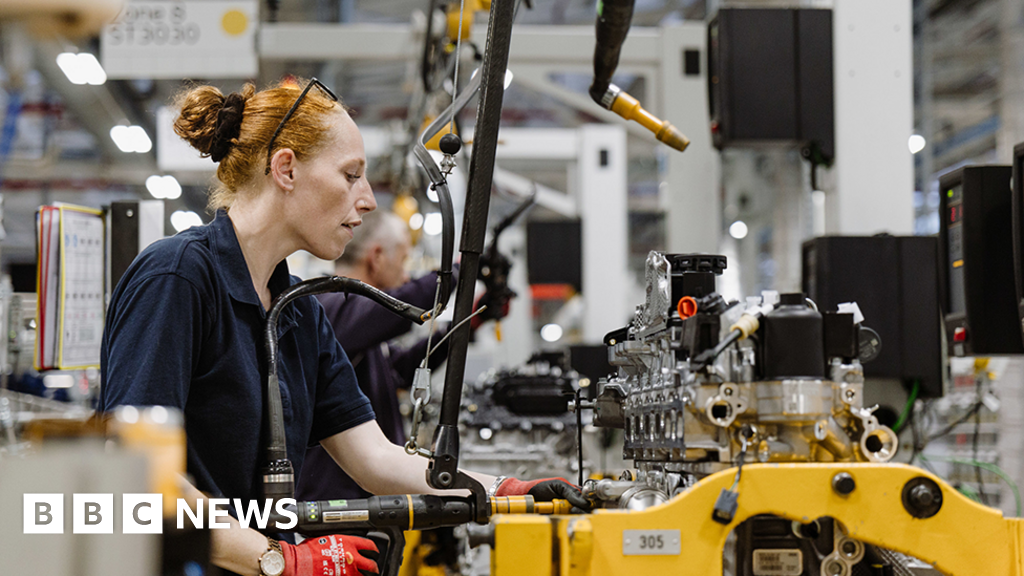
Work at plants in Solihull, Halewood and outside Wolverhampton restarted in October.


Wall Street inches lower as investors assess Middle East developments

MELBOURNE, Australia — Konrad Bien-Stephen, the Australian reality television personality known for his charismatic appearances on “The Bachelorette” and “The Challenge Australia,” has died suddenly at the age of 35, his management confirmed Thursday.

Bien-Stephen passed away on Monday night in Melbourne, according to multiple reports. No cause of death has been publicly disclosed, and authorities have not released further details as of early Thursday. His manager described the loss as deeply saddening, with tributes pouring in from fellow reality stars, fans and former partners.
“It is with deep sadness that we share the news of the passing of Konrad Bien-Stephen,” his management said in a statement. “He will be deeply missed.” The statement offered no additional information on circumstances surrounding his death.
Bien-Stephen rose to national prominence in 2021 as a fan favorite on the seventh season of “The Bachelorette Australia,” pursuing lead Brooke Blurton. The Melbourne-based carpenter advanced to the final four before his elimination, winning over viewers with his genuine demeanor, humor and grounded personality. His time on the show marked the beginning of a brief but memorable stint in the spotlight.
He later competed on “The Challenge Australia” in 2022, reaching the semifinal. The physically demanding competition series tested his endurance and strategy, further cementing his reputation as a likable and resilient contestant. Bien-Stephen also made appearances on “Bachelor in Paradise.”
Beyond reality television, Bien-Stephen worked as a carpenter in Melbourne prior to his TV career. After his reality stints, he explored acting opportunities and expressed mixed feelings about returning to unscripted programming. In interviews, he described “The Bachelorette” as a wholesome experience while calling “The Challenge” a mental and physical “mindf**k.”
His personal life often drew media attention. Bien-Stephen was in a highly publicized open relationship with fellow reality star Abbie Chatfield from late 2021 to mid-2022. The couple’s romance played out publicly before they parted ways amicably. Chatfield broke her silence Thursday with an emotional tribute.
“Rest in peace Konrad,” Chatfield posted on Instagram, remembering him as “a very caring man who deserved to live a very long life.” She added that she was “heartbroken too,” reflecting on their shared history. Other former connections, including brief romances with “The Challenge” co-star Megan Marx and singer Thelma Plum, were noted in coverage of his dating life.
Tributes flooded social media as news of his death spread. “I’m A Celebrity” and “Married at First Sight” star Cyrell Paule commented simply “RIP.” Fans recalled his authenticity on screen, describing him as honest, grounded and genuine in an industry often criticized for manufactured drama.
Colleagues and friends highlighted his warmth off-camera. Many noted his transition from tradesman to television personality as a testament to his approachable nature. Bien-Stephen’s death has sent shockwaves through Australia’s tight-knit reality TV community, prompting reflections on the pressures and fleeting nature of fame.
As of Thursday afternoon, no funeral arrangements had been publicly announced. Friends and family requested privacy during this difficult time while expressing gratitude for the outpouring of support.
The sudden nature of Bien-Stephen’s passing at such a young age has prompted an outpouring of condolences across platforms. Reality television has lost a memorable figure whose brief time in the public eye left a positive impression on many viewers.
Bien-Stephen’s appearances resonated particularly with audiences seeking relatable contestants amid the often dramatic world of dating shows. His carpenter background and down-to-earth attitude contrasted with more polished reality personalities, making him stand out during Brooke Blurton’s season.
After “The Bachelorette,” he embraced the opportunities reality TV provided but remained candid about its challenges. In one interview, he discussed the mental toll of “The Challenge” and his desire to pursue acting rather than further reality projects.
His relationship with Abbie Chatfield became one of the more talked-about storylines in Australian entertainment circles at the time. The pair navigated public scrutiny while maintaining an open dynamic before deciding to part ways without acrimony.
Chatfield’s tribute underscored the affection many held for Bien-Stephen. She described him as caring and expressed sorrow that his life ended far too soon. Other stars echoed similar sentiments, remembering his kindness and humor.
The broader entertainment industry has offered support to his loved ones. Messages of condolence continue to appear on social media, with fans sharing favorite moments from his television appearances and expressing disbelief at the news.
Bien-Stephen’s death highlights the vulnerability of young adults even in an era of increased health awareness. While no official cause has been confirmed, the suddenness has left many questioning how someone seemingly fit and vibrant could pass at 35.
Australian media outlets, including 7NEWS, Sky News, The Sydney Morning Herald and news.com.au, reported the story prominently Thursday, emphasizing his popularity on “The Bachelorette” and subsequent shows. Coverage noted the outpouring of grief and the impact on those who knew him personally.
As details remain limited, fans and colleagues await any further statements from family or management. In the meantime, the focus remains on celebrating his life and the joy he brought to viewers during his time on screen.
Reality television often brings strangers together under intense circumstances, forging bonds that can last beyond the cameras. Bien-Stephen’s journey from carpenter to contestant exemplified that path, and his sudden departure has reminded many of the fragility of life.
His legacy, though brief in the public eye, endures through the memories of fans who appreciated his authenticity. In an industry filled with larger-than-life personalities, his grounded presence stood out.
As the reality TV community mourns, thoughts turn to his family, friends and those closest to him. The loss of a 35-year-old leaves an irreplaceable void, prompting reflections on cherishing moments and supporting one another through grief.
No additional information on memorial services or family statements had emerged by late Thursday. Updates are expected in the coming days as arrangements are made.
For now, the Australian entertainment world pauses to remember Konrad Bien-Stephen — the fan-favorite contestant, the caring partner, the aspiring actor and the genuine soul whose light shone brightly during his time in the spotlight.

A popular Boots Advantage card perk is disappearing soon

Why downtime is the biggest hidden cost in UK industry

BTC Price Trades at $66K With 44% of Supply Now in the Red


-

 NewsBeat6 days ago
The Story hosts event on Durham’s historic registers
-

 Sports6 days ago
Sweet Sixteen Game Thread: Tide vs Michigan
-
Entertainment3 days ago
Fans slam 'heartbreaking' Barbie Dream Fest convention debacle with 'cardboard cutout' experience
-
 Entertainment5 days ago
Lana Del Rey Celebrates Her Husband’s 51st Birthday In New Post
-
Crypto World2 days ago
Dems press CFTC, ethics board on prediction-market insider trades
-

 Crypto World23 hours ago
Gold Price Prediction: Worst Month in 17 Years fo Save Haven Rock
-

 NewsBeat1 hour ago
Steven Gerrard disagrees with Gary Neville over ‘shock’ Chelsea and Arsenal claim | Football
-

 Sports2 days ago
Tallest college basketball player ever, standing at 7-foot-9, entering transfer portal
-

 Tech4 days ago
The Pixel 10a doesn’t have a camera bump, and it’s great
-

 Tech2 days ago
EE TV is using AI to help you find something to watch
-

 Fashion5 days ago
Amazon Sundays: Soft Spring Layers
-

 Tech3 days ago
Apple will hide your email address from apps and websites, but not cops
-

 Politics3 days ago
Should Trump Be Scared Strait?
-

 Tech2 days ago
How to back up your iPhone & iPad to your Mac before something goes wrong
-

 Crypto World3 days ago
U.S. rule change may open trillions in 401(k) funds to crypto
-

 Tech3 days ago
Flipsnack and the shift toward motion-first business content with living visuals
-

 Business7 days ago
Chinese universities with military links bought Super Micro servers with restricted AI chips
-

 Fashion6 days ago
Weekly News Update, 3.27.26 – Corporette.com
-

 Tech4 days ago
Elon Musk’s last co-founder reportedly leaves xAI
-
 Crypto World4 days ago
Bitcoin’s Six-Month Losing Streak: What On-Chain Data Says About the Market’s Next Move
You must be logged in to post a comment Login