Some universities are now allowing students and their families to pay tuition through PayPal and Venmo.
Among the first institutions offering the payment options are Bellarmine University, Butler University, Kansas State University, Michigan State University and Texas Tech University, although more universities are expected to join later this year.
Advertisement
Students and families may face transaction or processing fees, with the amount depending on the university and the funding method used.
The payment options are being integrated through campus payment platforms including Illumia, Nelnet Campus Commerce and TouchNet, which process tuition payments for institutions across the country.
Some universities are now allowing students and their families to pay tuition through PayPal and Venmo. (iStock / iStock)
“A modern tuition payment experience has to work for both sides of the transaction,” Don Smith, Illumia’s senior vice president and general manager of integrated payments, said in a statement.
Advertisement
“Students and families want the flexibility to use payment methods that fit how they manage their money, while institutions need those options to work within the systems and processes their teams already rely on. This integration helps schools expand choice in a practical way, improving the payer experience without creating a disconnected path for campus teams,” Smith added.
PayPal and its Venmo subsidiary have aimed to further expand their presence in higher education over the last year, offering student-athletes the opportunity to receive institutional revenue-share payments through their platforms. Venmo also expanded its presence on college campuses through NIL partnerships with student athletes, college-branded cards, student ambassadors and gameday activations.
Students and families may face transaction or processing fees, depending on the university and funding method used. (Justin Sullivan/Getty Images / Getty Images)
The digital payment systems are already used by many students and families for daily money transfers, including purchasing groceries, splitting rent and sending money to friends and family.
“Tuition is one of the biggest payments a family will make, and it should come with the same flexibility and security that millions of people already count on PayPal and Venmo for every day,” Frank Keller, President of Checkout Solutions and PayPal, said in a statement. “That’s why we’re proud to bring that same choice and protection into the reliable systems schools have already built.”
Advertisement
The companies said PayPal and Venmo use security measures including encryption and fraud monitoring. Consumer regulators, however, have cautioned that money stored in nonbank payment apps may not carry the same deposit-insurance protections as funds held directly in a federally insured bank or credit union.
Consumer regulators have cautioned that some funds stored in nonbank payment apps may not carry the same deposit-insurance protections as traditional bank deposits. (Andrew Harrer/Bloomberg via Getty Images / Getty Images)
Certain eligible PayPal and Venmo balances may qualify for pass-through FDIC insurance when funds are placed at PayPal’s program banks, which currently include Goldman Sachs Bank USA, Wells Fargo Bank and JPMorgan Chase Bank. Not all PayPal or Venmo balances qualify for the coverage.
Advertisement
But FDIC pass-through insurance “protects against the failure of a Program Bank, not the failure of PayPal. PayPal is not a bank, does not take deposits and is not FDIC insured,” PayPal said in a statement.
Domestic brokerage firm Jefferies has initiated coverage on Turtlemint Fintech Solutions with a Buy rating, setting a target price of Rs 190, citing potential revenue growth of 38% over the next three years for the company with multiple levers at play, as it is the third-largest player in the “point of sales person” or POSP insurance sales channel.
Implying an upside of 37%, the brokerage’s estimate of 38% three-year revenue CAGR is led by 31% premium CAGR and higher take-rates. Adj. EBITDA margin is expected to improve from -10% to +10%, in this base case scenario, driven by operating leverage, higher retention (26% in FY29 vs 22% in FY26) led by rise in health renewals and technology allowing relationship managers to handle more distribution partners.
The brokerage expects the platform to onboard 100-125k partners (15% CAGR) over FY26-29e. This combined with improving partner productivity, noting a third of the distribution partners have been added in the last 2 years, could drive 31% premium CAGR till FY29e. Further, improvement in take rates led by profit sharing models could result in 38% revenue CAGR till FY29e.
POSP is among the fastest growing insurance sales channels in India, with 6% of premiums. The channel has grown 2-4x faster as compared to agencies and banks in the last 5 years. Platforms such as Turtlemint, which operate POSP networks offer insurers an alternative route to B30+ markets, which are typically difficult to penetrate. Turtlemint Fintech Solutions’ granular POSP network & tech stack drives better profitability on a smaller base, according to the brokerage. Turtlemint has 20% market share in POSP premiums.
Advertisement
Partner productivity i.e., premium generated per active partner, is expected to improve by 8% CAGR over FY26-29e led by cross-selling of other insurance products as well as increase in avg. ticket size, the brokerage stated in its report.
Live Events
Renewals are 20% of Turtlemint’s revenues in FY26. The brokerage expects this to rise to 25% by FY29e, led by rise in share of health insurance within new business premiums. Turtlemint can have higher retention in renewals resulting in greater operating leverage. Jefferies expects operating cash flows to turn positive in FY28 driven by improving profitability. The company has Rs 650 crore in cash post its recent IPO, which combined with improving cashflows reduces the risk of further capital raise.Key risks include regulation changes, commission cuts and competition from companies such as PB Fintech, which is the largest POSP in India, according to the brokerage.
Jefferies sees low risk of AI disintermediation for Indian insurance distributors, citing that insurance in India is “sold not bought”. While this is true globally, it is especially true in geographies with a lower life insurance penetration rate (such as India), as the consumer’s awareness of financial products is more limited, according to the brokerage. Hence, the reliance on support from intermediaries increases, which is not only limited to educating the customer w.r.t. the product (which AI could provide), but w.r.t. “need for insurance” and claim processing.
Life insurance is predominantly a savings product in India with investors using policies to plan for life events and retirement, the brokerage stated in its report. This has been the reason behind LIC and insurers backed with large private/PSU banks dominating the life insurance market. Hence, Jefferies sees investors less likely to depend on AI platforms alone for selecting policies.
Sugar stocks rallied up to 8% on Thursday even as the government tightened inventory limits, barring dealers handling more than 10 metric tonnes of sugar per month from holding stocks for over 15 days.
India’s sugar demand typically rises between August and November as the country celebrates festivals such as Ganesh Chaturthi, Dussehra and Diwali, driving demand for sweets, biscuits and other confectionery products. Manufacturers of these products also build inventories ahead of the festive season, further supporting sugar demand.
Advertisement
Last month, the government directed dealers to hold sugar stocks for no more than 30 days to bolster supplies. Despite the move, sugar prices have risen 10% over the past month to record highs, with analysts expecting prices to remain elevated for at least the next three months. Meanwhile, patchy rains and dry weather conditions have affected sugarcane output. Since the crop requires substantial water for irrigation, concerns over supply have added to upward pressure on prices.
The worsening supply outlook in Brazil, the world’s largest sugar producer, has also triggered a sharp rally in sugar prices. The country has warned of a delay in the harvest due to adverse weather conditions. Adding to the uncertainty, Brazil has suspended its bi-weekly harvest and production reports, limiting visibility into the country’s supply outlook.Meanwhile, a shift towards ethanol is adding to concerns over a potential sugar supply crunch. In June, 58% of Brazil’s cane juice was diverted towards ethanol, which is expected to offer better profitability than sugar. Brazil also raised its mandatory ethanol blending target to 32% in July from 30% in June, significantly above the 25-27% levels seen just months earlier.
India to cut sugar import duty?
India, the world’s second-largest producer of sugar, is considering reducing its import duty on the commodity to help curb domestic prices that recently climbed to a record, Bloomberg reported. Officials are weighing plans to lower or scrap the 100% tax on inbound shipments in an effort to boost local supplies, the report said, citing sources. This come just before a seasonal surge in sugar demand for the festival season, adding to the incentive to rein in rising prices.
(Disclaimer: Recommendations, suggestions, views and opinions given by the experts are their own. These do not represent the views of The Economic Times)
Apple is expected to unveil the iPhone 18 Pro and iPhone 18 Pro Max within the first half of September, and a steady drumbeat of leaks throughout the summer has offered an increasingly detailed, if occasionally contradictory, picture of what the new devices will include. Here are 10 features currently rumored for this year’s Pro lineup, based on reporting compiled from supply chain leaks and industry tipsters.
1. A variable aperture camera — possibly exclusive to the Pro Max
Apple has been rumored since 2024 to be bringing a variable aperture lens to the iPhone Pro line for the first time, a feature that would allow the camera to physically adjust its aperture opening to control depth of field and light intake, similar to features long available on dedicated cameras. While earlier leaks suggested both Pro models would receive the feature, tipster Ice Universe claimed in a mid-August post on the Chinese platform Weibo that the iPhone 18 Pro Max will “exclusively feature a variable aperture,” a detail that would mark a new point of differentiation between the two Pro models. The leaker added a pointed observation about the tradeoffs involved: “Looks like even Apple can’t escape the reality that if you want the absolute best camera experience, you’ll have to put up with a phone that weighs like a brick.” That claim follows an earlier June leak of internal files from Apple supplier Tata Electronics, which had already pointed to a variable aperture lens coming to the larger Pro Max model specifically.
According to alleged Chinese regulatory database filings cited by MacRumors, the iPhone 18 Pro Max is expected to receive a battery capacity nearly 10% larger than the iPhone 17 Pro Max. That improvement is reportedly not without cost: tipster Ice Universe has suggested the device could measure roughly 8.8 millimeters in thickness, making it marginally thicker than the 8.75-millimeter iPhone 17 Pro Max and noticeably bulkier than the 8.25-millimeter iPhone 16 Pro Max.
3. Reused manufacturing molds, keeping the front design largely unchanged
Despite months of speculation about a major front-of-device redesign, including rumors of under-display Face ID and a shrinking Dynamic Island, more recent leaks suggest Apple may simply reuse the manufacturing molds introduced with the iPhone 17 Pro series. According to a post from tipster Digital Chat Station on Weibo, that reused tooling would mean the Dynamic Island remains the same size and shape as the current generation, rather than shrinking or being replaced by a hole-punch camera cutout as some earlier rumors had suggested.
4. Retained 6.3-inch and 6.9-inch displays with new LTPO+ technology
Advertisement
The iPhone 18 Pro and Pro Max are expected to keep the same 6.3-inch and 6.9-inch screen sizes used in the current generation, according to AppleInsider’s tracking of the rumor cycle. However, the displays are reportedly set to adopt new LTPO+ panel technology, a refinement aimed specifically at improving battery efficiency rather than altering screen size or resolution.
5. Satellite-based 5G connectivity
Multiple reports, including from YouTuber and leaker Jon Prosser, have pointed to satellite-based 5G support as one of the more significant connectivity upgrades under testing for this year’s iPhone lineup, expanding on Apple’s existing satellite features that have so far focused primarily on emergency messaging and location sharing in areas without traditional cellular coverage.
6. New color options, including a burgundy finish
Advertisement
Leaked imagery circulating among tipsters, including posts referencing under-display Face ID rumors, has also pointed to new color options for the iPhone 18 Pro lineup, with a burgundy finish specifically spotted in leaked renders shared on social media, according to reporting compiled by Gulf News.
7. Apple’s next-generation in-house C2 modem — but possibly only outside the U.S.
Apple is widely expected to continue expanding its use of in-house-designed cellular modems, following the initial rollout of its C1 modem chip. According to discussion among device leakers, the newer C2 modem may be reserved for non-U.S. versions of the iPhone 18 Pro models, with U.S. units continuing to rely on Qualcomm modems, though this detail remains unconfirmed by Apple directly.
8. A largely unchanged rear camera plateau, with possible thickening
Advertisement
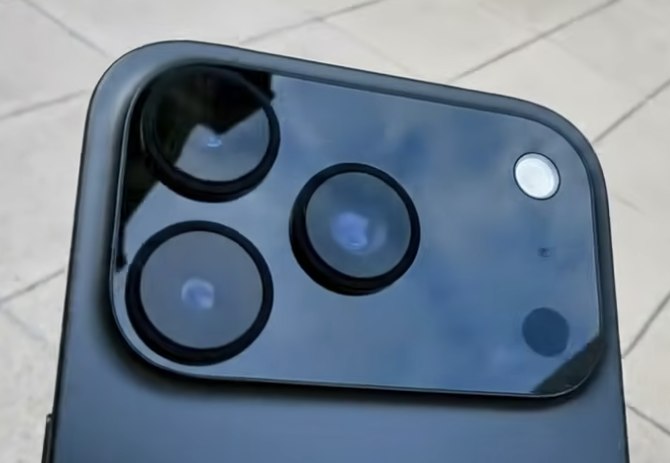
Most rumors continue to point to a rear camera system that looks nearly identical to the current generation, retaining the raised camera “plateau” housing three lenses arranged in a triangular pattern. However, some recently leaked device dummies have suggested the plateau itself may thicken slightly, with individual lens housings protruding somewhat more than on the iPhone 17 Pro, according to MacRumors’ review of the leaked hardware mockups.
9. A likely price increase of $200 to $300
Industry estimates cited by RollingOut suggest the starting price for iPhone 18 Pro models in the United States could rise by $200 to $300 compared with the iPhone 17 Pro lineup, a significant jump that has generated mixed reaction among longtime Apple followers weighing whether this year’s incremental hardware changes justify the added cost.
10. A shift to a staggered, two-phase annual release cycle
Advertisement
Perhaps the most structurally significant change this year involves Apple’s broader release strategy rather than any single device feature. According to MacRumors, Apple is planning to adopt a two-phase iPhone rollout beginning with the 18 series: the iPhone 18 Pro, iPhone 18 Pro Max and an all-new foldable device, widely rumored to be called the “iPhone Ultra,” are expected to launch together in September, while the standard iPhone 18, a lower-cost iPhone 18e and a second-generation iPhone Air are expected to follow separately around March 2027, a departure from Apple’s traditional practice of revealing its entire iPhone lineup at a single event each fall.
As with all pre-announcement leaks, these details remain unconfirmed by Apple and subject to change ahead of any official reveal. Apple has not commented publicly on any of the rumored features, and the company is expected to confirm final specifications, pricing and availability only once its September event is formally scheduled and held.
Shares of Power Finance Corporation (PFC) and REC fell up to 3% on the BSE on Thursday, after domestic brokerage firm Morgan Stanley downgraded the stocks from Overweight to Equal-Weight. The brokerage also cut its target price for PFC to Rs 410 from Rs 510, while its target for REC was lowered to Rs 360 from Rs 430.
PFC and REC’s loan growth has moderated sharply, while system and bank credit to the power sector have accelerated, according to Morgan Stanley.
“The growth disconnect has been much greater than we thought,” the brokerage stated in its note, adding that it sees recovery from the current position to be gradual.
The brokerage also cut its earnings estimates for both companies. For PFC, it lowered the target price by 20% and cut core EPS estimates by 5.5% for FY28E and 7% for FY29E. For REC, it reduced the target price by 16%, while lowering EPS estimates by 5% for FY28E and 7% for FY29E.
Advertisement
The company reported a slight decline in revenue from operations to Rs 28,527 crore in Q1 FY27, from Rs 28,539 crore in the corresponding quarter of the previous financial year.
Live Events
Also Read |PFC shares tumble 5% to 4-month low after weak Q1 earnings. Why Motilal Oswal still recommends Buy Along with the Q1 results, PFC announced an interim dividend of Rs 3.90 per share with a face value of Rs 10 each for the ongoing financial year 2027. The record date to determine the eligibility of shareholders set to receive the dividend has been fixed on August 27.REC had reported a dip of over 6% year-on-year in its consolidated net profit at Rs 4,192.76 crore in the June quarter of FY27, citing lower interest income.
Earlier in July, the boards of Power Finance Corporation (PFC) and REC approved the merger scheme between the two companies, with the share-swap ratio set at 88 PFC shares for every 100 REC shares held. PFC owns a 52.63% stake in REC. The Centre owns 55.99% in PFC but does not directly own a stake in REC.
Shares of Power Finance Corporation fell 2.7% to Rs 365.80 on the BSE on Thursday. The stock has declined over 11% in the past month and 14% over the last three months. PFC shares are down over 9% so far this year.
REC Share Price
Shares of REC fell 2% to Rs 329.40 on the BSE on Thursday. The shares of the company have declined over 6% in the last six months and have fallen 9% in the year so far.
(Disclaimer: Recommendations, suggestions, views and opinions given by the experts are their own. These do not represent the views of The Economic Times)
HoverAir, the company known for its palm-launched self-flying camera drones, has unveiled its most ambitious product yet: a pocket-sized gimbal camera that can click directly into a drone body and take flight on command. Here are five things to know about the HoverAir Versa as it launches through a crowdfunding campaign that has already drawn significant early backing.
1. It works as both a handheld gimbal camera and a self-flying drone
The Versa is designed around a modular, two-in-one concept. On its own, the device functions as a compact, handheld gimbal camera comparable in form factor to products like DJI’s Osmo Pocket 4 or Insta360’s Luna, featuring a three-axis mechanical gimbal and a built-in rotating screen that turns the camera on when flipped. Attach the included Flight Kit, however, and the same camera module transforms into a fully autonomous flying drone. HoverAir describes the transition simply: “Change from handheld mode to flying in seconds.” The two components connect through the company’s patent-pending MagLatch system, which uses custom pogo pins to deliver power from the handheld unit to the drone’s motors once attached.
Advertisement
2. The complete kit is remarkably lightweight
According to specifications shared by the company, the handheld gimbal camera portion weighs just 163 grams, or roughly 5.75 ounces, while the separate Flight Kit adds only another 67 grams, or about 2.36 ounces. Combined, the full setup weighs approximately 230 grams, or 8.1 ounces, making it light enough for easy everyday carry in a pocket or small bag. In handheld mode, the device measures 36 by 31 by 147 millimeters, extending to 176 by 31 by 147 millimeters once docked into its flying configuration.
3. Camera specs include 4K 60p video and a 3D scene-capture mode
The Versa’s gimbal camera is built around a 1/1.3-inch, 12-megapixel sensor paired with an f/2.0, 16-millimeter lens and 2x digital zoom, capable of recording 4K video at up to 60 frames per second and bitrates as high as 120 Mbps in either H.264 or H.265 format. The sensor captures its full 4:3 area using open-gate recording, which allows footage to be cropped during editing into 1:1, 16:9 or 9:16 aspect ratios without any loss of image quality, a useful feature for creators producing content across multiple social platforms. For more advanced users, the camera also supports 10-bit H-LOG recording at 4K 30p, which HoverAir says can capture up to 17.5 stops of dynamic range. Two built-in microphones handle audio capture. Perhaps the Versa’s most distinctive feature, however, is its 3D Worlds mode, which sends the drone on a precise 360-degree flight pattern around a subject, capturing the images needed to reconstruct an explorable, three-dimensional scene file that users can later share and navigate, a capability neither DJI nor Insta360 currently offers in this category.
Advertisement
4. Flight performance includes hands-free tracking with no controller required
Once docked into its Flight Kit, the Versa can launch directly from the palm of a user’s hand and autonomously follow its subject using HoverAir’s ShadowTrack tracking technology, requiring no dedicated remote controller to operate. The drone can reach top speeds of up to 36 kilometers per hour, or roughly 22 miles per hour, and carries a Level 5 wind resistance rating. According to DroneLife’s reporting on the launch, the Versa’s maximum takeoff altitude reaches 3,500 meters, or about 11,483 feet, while its maximum flight altitude tops out at 120 meters, or roughly 394 feet, with a maximum flight time of 14 minutes per charge. Flight-specific features include Palm Take-off and Landing, AI Tracking, Auto Framing, Orbit, Bird’s Eye and Zoom Out modes, along with an OmniTerrain capability. Users can control the drone through multiple methods, including hand gestures, voice commands via HoverAir’s Smart Mini MiCo controller, a dedicated HoverAir Beacon accessory, a joystick, or the company’s smartphone app. Additional creative shooting modes include Inception Shot, Dolly Zoom, Motion Timelapse and standard Timelapse, alongside the previously mentioned 3D Worlds feature. HoverAir has also designed the drone’s wings to enclose its four propellers, which the company says improves safety when operating around people, pets and crowds.
5. It’s currently available through Indiegogo, with strong early demand and some availability caveats
The Versa launched its crowdfunding campaign on Indiegogo, quickly raising more than $245,000 from backers within its first day, according to Imaging Resource. Pricing has varied slightly across different reports as the campaign has progressed, with some outlets citing a starting price of $449 for the Pocket-Only version and $629 for the FlyMore Combo, which includes the Flight Kit along with an additional battery, charger and protective accessories, while other coverage cited a $499 starting price for the camera alone and $749 for the bundle with the Flight Kit. A higher-tier Creator Combo, priced at $799, adds ND filters, a case, a suction cup mount and a compact tripod. Some of the lowest introductory pricing was reportedly available only during the first 48 hours of the campaign. Deliveries are estimated to begin in October 2026, though as with any crowdfunded project, that timeline is not guaranteed. One notable availability concern flagged by DroneDJ involves U.S. regulatory approval: in late 2025, the Federal Communications Commission stopped granting new equipment authorizations for many newly introduced foreign-made drones, a policy shift that has already affected HoverAir’s waterproof Aqua drone, which despite a successful crowdfunding campaign has yet to reach U.S. customers because it never secured FCC approval before the rules changed. According to DroneDJ’s reporting, the Versa appears to be in a stronger regulatory position than the Aqua, though prospective U.S. buyers may still want to monitor the situation closely before committing to a purchase.
Advertisement
HoverAir has built its reputation on autonomous, controller-free flying cameras, beginning with its original X1 series and continuing through the more advanced X1 Pro and X1 Pro Max models, as well as its waterborne Aqua drone. The Versa marks the company’s first attempt at combining that autonomous flight technology directly with a standalone, content-creator-focused pocket camera, positioning the product to compete not only with dedicated drone makers but also with established handheld gimbal camera brands such as DJI and Insta360, the latter of which is reportedly developing its own version of a pocket-camera-turned-drone through a separate patent filing. Whether the Versa’s combination of portability, hands-free flight and its distinctive 3D-capture feature proves compelling enough to stand out against those more established competitors will likely become clearer once the product ships and independent reviewers are able to test its camera performance directly.
Chief executive Régis Shultz’s growth plan under renewed pressure from investors
Felix Armstrong www.cityam.com
07:57, 20 Aug 2026Updated 07:58, 20 Aug 2026
JD Sports has seen US sales fall(Image: Jonathan Brady/PA Wire)
JD Sports has cut its profit forecast and reported sluggish sales growth, as the expansion strategy spearheaded by chief executive Régis Shultz begins to falter.
Advertisement
The sports and fashion retailer saw its sales performance pick up in the UK, but a deterioration in the US market coupled with aggressive discounting from competitors is weighing heavily on the firm’s bottom line, it said on Thursday.
The FTSE 100 giant scaled back its pre-tax profit target to between £700m and £800m, retreating from a previous upper limit of £850m.
The profit setback arrives as Shultz struggles to restore the faith of JD Sports’s shareholders, who are growing increasingly restless over the group’s lacklustre share price and the absence of tangible results from the chief executive’s strategic vision.
Shultz acknowledged that “trading in the second quarter remained tough,” adding that the retailer is contending with heightened competition as rivals resort to promotional activity to attract hard-pressed consumers, as reported by City AM.
Advertisement
“The market stayed highly promotional, reflecting the consumer and footwear product cycle headwinds our industry has faced in recent quarters, whilst our core consumer was impacted by incremental cost-of-living pressures,” he said.
The group’s like-for-like sales fell by 3.1 per cent in the second quarter – nearly double the 1.7 per cent decline projected by Berenberg – and by 2.8 per cent across the six months to August.
JD Sports attributed a modest recovery in its UK trading – where sales edged up by 0.8 per cent – to robust demand for replica football kits and its outdoor range. However, revenues in the US, which represents 35 per cent of the group’s total sales, tumbled by 6.8 per cent.
The retailer attributed the decline to “weaker core consumer sentiment amidst the broader cost-of-living backdrop”.
Advertisement
The group noted that the ‘back-to-school’ period would typically provide a boost to its US sales at the end of July, but this falls in the first half of August this year.
Sales rose by 1.4 per cent across Asia Pacific, although this market accounts for just five per cent of the group’s overall revenues.
Accounting for the reduction in profit targets, JD Sports stated that the “period of muted market growth” it had anticipated in May has turned out to be “more acute than expected,” particularly across the Atlantic.
The business remains on course to deliver free cash flow of £460m to £520m despite the downward revision to profit forecasts.
Advertisement
Since taking the helm at JD Sports in 2022, Shultz has struggled to recreate the covid-era athleisure surge as the cost-of-living crisis weighs heavily on its predominantly younger customer base.
In April, group chair Andy Higginson stepped down after failing to persuade board members to remove Shultz from his position. He has since been succeeded by former Ikea chief executive Peter Agnefjall.
Shares in JD Sports have climbed nine per cent so far this year, yet remain approximately 15 per cent below the level at which they stood when Shultz assumed control.



















































You must be logged in to post a comment Login