Perth Racing has signed a two-year media partnership deal with Craig Hutchison-led Sports Entertainment Group, effective from May 1, for an undisclosed amount.
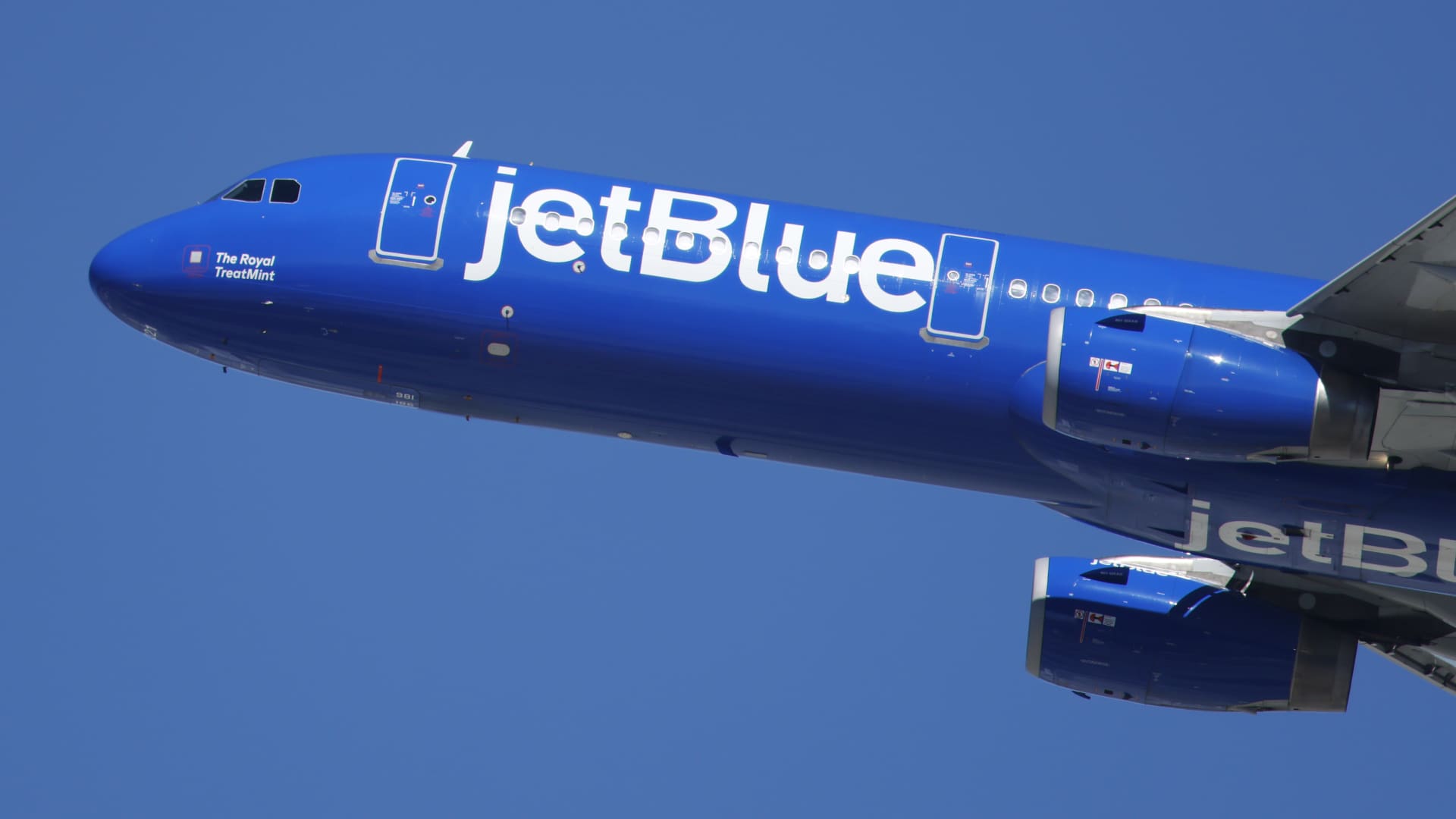
JetBlue Airways is moving forward with its flight plans at Fort Lauderdale–Hollywood International Airport, its president said, regardless of whether the airport’s No. 1 carrier, Spirit Airlines, gets a government bailout.
JetBlue, United Airlines, Frontier Airlines, Breeze Airways and others added flights last year at Fort Lauderdale, which is Spirit’s home hub, as well as at other major airports where Spirit has a large presence. Those moves came shortly after Spirit filed for Chapter 11 bankruptcy protection for the second time in less than a year.
As a possible liquidation looms, budget carrier Spirit is in talks with the Trump administration for a potential bailout that could include a $500 million loan that could also give the government an up to 90% stake, people familiar with the matter have said, requesting anonymity to talk about the deal before it’s public. The airline’s lenders are accessing a deal this week.
Spirit has cut its capacity in recent years to save on costs. In February, it still had the most market share at Fort Lauderdale with nearly 25%, down from more than 28% a year earlier, while JetBlue’s share grew to more than 20%, up from 18.5% a year earlier, according to the latest available statistics from the airport.
Advertisement
“We have now added significant capacity” there, JetBlue’s president, Marty St. George, said on an earnings call Tuesday. “We’ve doubled the size of our next biggest competitor.
“We did not go into this with any expectation of Spirit going away,” he added. “What we have done is we’ve taken advantage of gate availability that they’ve created with some of their pulldowns.”
He added that JetBlue was happy with its unit revenue there, even with the capacity additions. “I think what it shows is that the JetBlue value proposition resonates in South Florida,” he said.
The industry is grappling with a surge in fuel prices, but JetBlue and other carriers have so far reported that customers continue to book flights.
Advertisement
The Association of Value Airlines, of which JetBlue isn’t a member, on Monday said it is seeking $2.5 billion from the Trump administration to help offset the jump in fuel, airlines’ second-biggest expense after labor.
JetBlue CEO Joanna Geraghty said the airline is open to “anything and everything, assuming the terms would make sense for JetBlue,” but added the airline is focused on its JetForward strategy to return to profitability, including adding new products like domestic first-class seats.
She said that carrier is watching the situation and seeing what “shakes out with Spirit and value carriers and whether anything comes their way,” she said.
My investment approach is focused on determining attractively valued, high-quality stocks with near- and long-term growth drivers based on fundamental analysis and industry/macro picture.
Analyst’s Disclosure: I/we have no stock, option or similar derivative position in any of the companies mentioned, and no plans to initiate any such positions within the next 72 hours. I wrote this article myself, and it expresses my own opinions. I am not receiving compensation for it (other than from Seeking Alpha). I have no business relationship with any company whose stock is mentioned in this article.
Seeking Alpha’s Disclosure: Past performance is no guarantee of future results. No recommendation or advice is being given as to whether any investment is suitable for a particular investor. Any views or opinions expressed above may not reflect those of Seeking Alpha as a whole. Seeking Alpha is not a licensed securities dealer, broker or US investment adviser or investment bank. Our analysts are third party authors that include both professional investors and individual investors who may not be licensed or certified by any institute or regulatory body.
For many small businesses, workforce technology is like that. When it works properly, nobody notices it. When it doesn’t, it can quickly become the centre of the working day. And if you don’t have a dedicated IT team to step in and fix issues quickly, the impact is magnified.
This is felt especially sharply with employee laptops, because so much of modern work runs through this single device: email, documents, spreadsheets, browser tools, calls, messaging and client communication. When a laptop is not up to the job, it reshapes how work feels, how smoothly people move through the day and how much energy gets wasted on things that should be effortless. Crucially, this often doesn’t show up as one dramatic failure. It shows up as constant, low-level friction that people gradually learn to work around. That is what makes it so easy to miss. Employees adapt, lower expectations, build bad habits to cope with the device and push through, so the drag on time and energy becomes ‘just how it is’.
In practice, that can mean slowdowns when switching between email, documents, spreadsheets, browser tabs and calls, video meetings that glitch, freeze or feel unreliable under pressure, battery anxiety when working away from a desk, repeatedly waiting for the laptop to catch up, restart or reconnect, cramped side-by-side working on smaller screens, and too much reliance on dongles, adapters and setup workarounds.
The cost in terms of behavioural impact includes employees switching cameras off just to keep calls running smoothly, which hampers communication and damages the client experience, keeping fewer windows open than they need, which slows tasks down, delaying restarts and important software updates, increasing exposure to vulnerabilities, and using their personal devices as a backup, sometimes handling sensitive business or customer information.
For small business leaders, there is another layer of concern: buying the wrong thing and being stuck with it for years. That might mean devices already feeling stretched after 12 to 24 months, overspending on tech people do not fully use, or risking client trust through weak privacy and security. The biggest risk is that these ways of working start to feel normal. Once that happens, friction stops looking fixable and starts getting absorbed into everyday life.
Advertisement
Because people often stop flagging these issues and simply work around them, it’s easy for leaders to underestimate the scale of the problem. But this is affecting millions of SMBs in the UK and many millions more around the world. HP’s 2026 SMB workflow research found that nearly 60% of SMB IT leaders say troubleshooting consumes more of their time than innovation, nearly half of SMB workers say obsolete tools make everyday tasks unnecessarily frustrating, and more than 60% of small business leaders link those inefficiencies to increased burnout and employee turnover.
If hidden friction is the problem, then simply adding more technology is not the answer. Rather, it is about how to choose the right devices that will remove the most important points of friction from the working day.
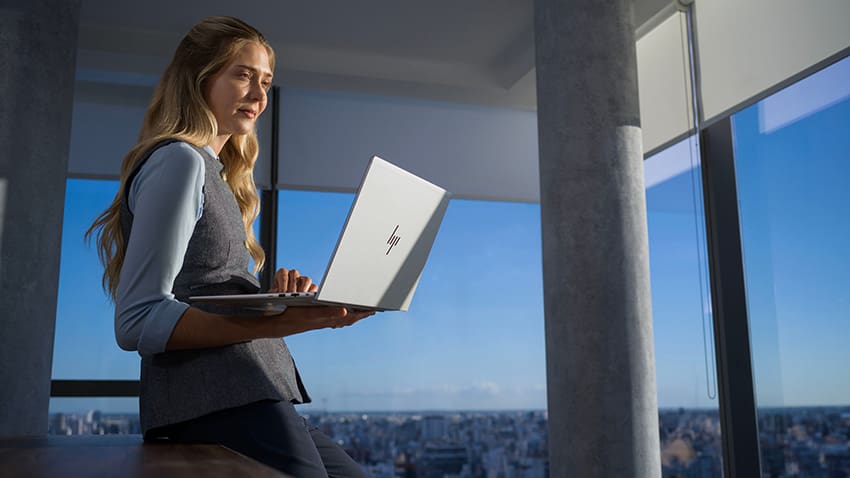
The HP EliteBook 8 G1a is a useful example of a lower-friction device because it is built around the problems small businesses actually experience. Work feels faster and less stop-start, because the laptop has the headroom for how people actually work now, moving between documents, spreadsheets, browser tabs, messaging and HD calls without quickly feeling maxed out. That is where the AMD Ryzen AI 7 Pro platform, 64GB RAM and 1TB storage make a real difference.
Long, multitasking sessions feel more comfortable, because the 16-inch, 16:10 display gives people more room to compare documents, work across spreadsheets and take notes during meetings without constant resizing and juggling. Hybrid work becomes less awkward, because built-in HDMI, USB-A and multiple USB-C and Thunderbolt 4 ports make it easier to move between meeting rooms, home offices and shared workspaces without relying on a bag full of dongles and adapters.
Advertisement
Security and privacy feel more built in and less disruptive, which matters especially for SMBs without a dedicated IT team. HP Wolf Security helps isolate common threats such as phishing links, malware and ransomware in the background, while Sure View narrows the viewing angle of the screen so sensitive information is harder for people nearby to see in shared or public spaces. Meetings feel more professional without extra effort, because the 5MP camera and built-in AI-powered meeting features help people look clear, stay centred in frame and sound better on calls.
As a next generation AI PC, it is a more future-ready choice, because AI will increasingly be part of the tools businesses already use. With a dedicated Neural Processing Unit (NPU) and enough memory to support more local AI-enabled workloads over time, it is designed to stay fast and efficient for longer rather than feeling like the wrong decision a year from now.
For small business leaders, the key question is: What will reduce friction for our team for long enough to justify the investment? Some useful ways to think about this, and questions to ask your team directly, include identifying where current laptops are quietly slowing people down, looking for repeated low-level problems rather than dramatic failures such as lag, poor meetings, awkward setup, battery stress and too many workarounds. It also means understanding what the busiest day actually looks like and buying for the reality of multitasking, video calls, side-by-side working and hybrid movement.
Leaders should consider whether they are buying for short-term savings or long-term value, since a cheaper device that feels stretched after a year can become worse value than a better-specced one that stays comfortable for longer. They should also ask whether security feels built in or bolted on, because the safest setup is usually the one that asks the least extra effort from already busy people. It is also worth thinking about whether a device will stay useful as AI-enabled tools become more normal. The practical issue is not whether AI matters this minute, but whether the laptop will keep pace as those features become part of everyday software. Finally, consider whether the device fits how people actually work, as the right choice is about balance: performance headroom, screen space, connectivity, collaboration and peace of mind.
Advertisement
Future-ready technology should not demand more attention from a small business. It should support the business without demanding more effort to use it, by reducing everyday friction, protecting sensitive work and staying useful for long enough to offer real value. For more information, please visit HP’s site.
SYDNEY — Australians are being encouraged to visit ATMs and withdraw cash today on national Cash Out Day, an annual campaign designed to highlight the importance of physical currency and push back against the rapid shift toward a cashless society.
Cash Out Day 2026: Aussies Urged to Withdraw Cash to Preserve Currency Melissa Walker Horn / Unsplash
Organizers say the initiative aims to demonstrate public support for keeping cash as a viable payment option, especially for vulnerable communities, small businesses and those concerned about digital privacy.
Cash Out Day, now in its fourth year, is coordinated by advocacy groups including the Australian Retailers Association, small business chambers and consumer organizations worried about the declining use of banknotes. Participation is simple: withdraw any amount from an ATM or bank branch and spend it at local retailers on the same day.
The campaign comes as cash usage in Australia continues its steep decline. According to Reserve Bank of Australia data, cash accounted for less than 15% of total transactions in 2025, down from over 30% a decade earlier. Contactless card payments, mobile wallets and buy-now-pay-later services have accelerated the shift, particularly among younger consumers.
Proponents of Cash Out Day argue that completely phasing out cash would create serious problems. Elderly Australians, migrants with limited English or banking access, and people in regional areas often rely heavily on cash. Small businesses, especially market stalls, food trucks and independent retailers, also prefer cash to avoid high card fees and transaction delays.
Advertisement
“Cash is freedom,” said Sarah Thompson, spokesperson for the Cash Is King Alliance, one of the main groups behind today’s event. “It protects privacy, works when the internet is down, and supports local economies. We’re not against digital payments, but we want choice.”
Financial experts note that while digital payments offer convenience and speed, they come with trade-offs. Every card or phone transaction generates data that can be tracked, sold or hacked. Power outages, cyber-attacks or system failures — as seen in several recent major outages — can render digital systems unusable, leaving people without access to money.
The Australian Banking Association has acknowledged the trend but insists cash remains important. Banks have reduced branch numbers and ATM availability in recent years, prompting criticism from consumer groups. Some communities have reported “cash deserts” where it is difficult to obtain physical money.
Today’s campaign encourages participants to document their cash withdrawals on social media using the hashtag #CashOutDay2026. Organizers hope to create a visible wave of support that pressures policymakers and financial institutions to maintain cash infrastructure.
Advertisement
Small business owners have welcomed the initiative. Cafe owner Michael Chen in Melbourne said cash customers help him avoid merchant fees that can reach 2% per transaction. “Every little bit counts when margins are tight,” he said.
Privacy advocates have also thrown their support behind the day. Digital rights groups warn that a fully cashless society could enable greater government and corporate surveillance. Cash provides anonymity for legitimate transactions that many citizens value.
However, not everyone is enthusiastic. Some fintech leaders argue the campaign is outdated and resists inevitable progress. They point to Sweden and other nations that have successfully reduced cash usage with minimal disruption. Mobile payment adoption in Australia is among the highest in the world, with widespread acceptance even at farmers’ markets and school canteens.
The Reserve Bank of Australia has maintained a neutral stance. It continues to issue new polymer banknotes and has committed to ensuring cash remains available “for as long as Australians need it.” However, the central bank has also invested heavily in modernizing the payments system to support faster digital transfers.
Advertisement
Economists suggest today’s event is unlikely to reverse the long-term decline in cash usage but serves as an important reminder of its enduring role. A 2025 survey by Finder found that while 68% of Australians prefer digital payments for convenience, 81% still believe cash should remain an option.
For participants, the message is straightforward: withdraw what you can comfortably spend today. There is no minimum or maximum amount, and the goal is simply to show demand for physical currency. Many plan to use the cash for everyday purchases like groceries, fuel or coffee to directly support local businesses.
Community groups in regional Australia have been particularly active in promoting Cash Out Day. In towns where bank branches have closed, residents say maintaining cash access is essential for daily life. Some local councils have organized ATM withdrawal events and information sessions about the importance of cash.
As the day unfolds, social media is expected to fill with photos of people at ATMs and receipts from cash transactions. Organizers hope the collective action sends a clear signal to banks, retailers and policymakers that cash still matters to millions of Australians.
Advertisement
The campaign also highlights growing concerns about financial inclusion. Not everyone has access to smartphones, stable internet or traditional banking. For refugees, the elderly, low-income families and people experiencing homelessness, cash remains the most practical and inclusive form of money.
Critics of the cashless transition point to examples from other countries where rapid digital adoption left vulnerable populations behind. Australia’s relatively high financial literacy and strong consumer protections have softened some impacts, but gaps remain.
As Australians head to ATMs today, the event serves as both a practical action and a symbolic stand. Whether it slows the march toward cashlessness remains to be seen, but it ensures the conversation about the future of money stays alive.
Financial counselors advise participants to withdraw only what they need and to avoid carrying large amounts of cash for safety reasons. The goal is awareness and support, not disruption.
Advertisement
With digital payments dominating modern life, Cash Out Day offers a moment of reflection on what might be lost if cash disappears entirely. For one day, Australians are invited to vote with their wallets — quite literally — for choice and inclusion in how they pay.
Centene Corporation (CNC) Q1 2026 Earnings Call April 28, 2026 8:30 AM EDT
Company Participants
Jennifer Gilligan – Senior Vice President of Investor Relations Sarah London – CEO & Director Andrew Asher – Executive VP & CFO
Advertisement
Conference Call Participants
Andrew Mok – Barclays Bank PLC, Research Division Albert Rice – UBS Investment Bank, Research Division Justin Lake – Wolfe Research, LLC Ann Hynes – Mizuho Securities USA LLC, Research Division John Stansel – JPMorgan Chase & Co, Research Division Erin Wilson Wright – Morgan Stanley, Research Division George Hill – Deutsche Bank AG, Research Division Stephen Baxter – Wells Fargo Securities, LLC, Research Division David Windley – Jefferies LLC, Research Division Kevin Fischbeck – BofA Securities, Research Division Lance Wilkes – Bernstein Institutional Services LLC, Research Division Sarah James – Cantor Fitzgerald & Co., Research Division Scott Fidel – Goldman Sachs Group, Inc., Research Division
Presentation
Advertisement
Operator
Good day, and welcome to the Centene Corporation’s 2026 First Quarter Earnings Report. [Operator Instructions] Please also note, today’s event is being recorded. I’d now like to turn the conference over to Jennifer Gilligan, Senior Vice President, Investor Relations. Please go ahead.
Jennifer Gilligan Senior Vice President of Investor Relations
Advertisement
Thank you, Rocco, and good morning, everyone. Thank you for joining us on our first quarter 2026 earnings results conference call. Sarah London, Chief Executive Officer; and Drew Asher, Executive Vice President and Chief Financial Officer of Centene, will host this morning’s call, which also can be accessed through our website at centene.com.
Any remarks that Centene may make about future expectations, plans and prospects constitute forward-looking statements for the purpose of the safe harbor provisions under the Private Securities Litigation Reform Act of 1995. Specifically, our commentary on our full year 2026 outlook, including the drivers of such outlook, are forward-looking statements. Actual results may differ materially from those indicated by those forward-looking statements as a result of various





 Future-ready technology should not demand more attention from a small business. It should support the business without demanding more effort to use it, by reducing everyday friction, protecting sensitive work and staying useful for long enough to offer real value. For more information, please visit















































You must be logged in to post a comment Login