




Connect with us
DAPA Banner

Business

Petrobras: Compelling Valuation At Current Price Level

Published

on

Petrobras: Compelling Valuation At Current Price Level
Continue Reading
Click to comment

You must be logged in to post a comment Login

Leave a Reply

Business

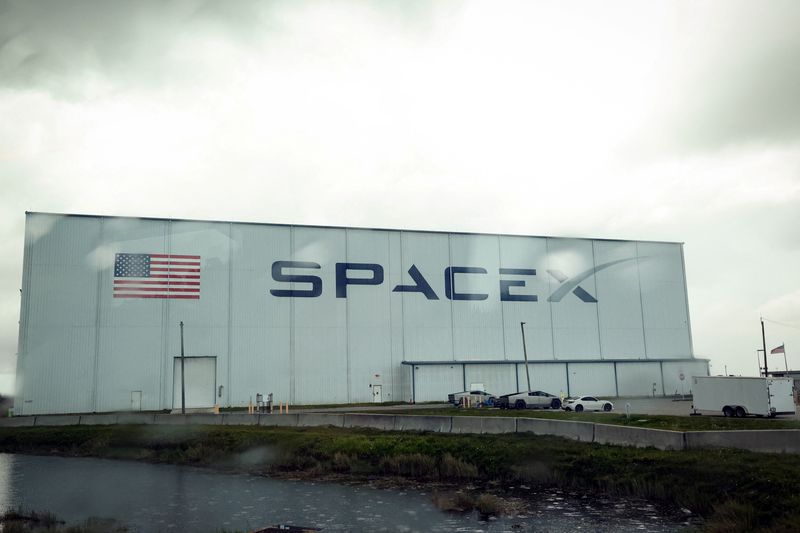
SpaceX posted nearly $5 billion loss in 2025, The Information reports

Published

on

SpaceX posted nearly $5 billion loss in 2025, The Information reports


SpaceX posted nearly $5 billion loss in 2025, The Information reports

Continue Reading

Business

Rimini Street CEO Ravin sells shares worth $373k

Published

on


Rimini Street CEO Ravin sells shares worth $373k

Continue Reading

Business

Form 13G Liberty Global Ltd. For: 9 April

Published

on


Form 13G Liberty Global Ltd. For: 9 April

Continue Reading

Business

Form 13G THOR Industries For: 9 April

Published

on


Form 13G THOR Industries For: 9 April

Continue Reading

Business

Thai Government Maintains Original Terms for Rail and U-Tapao Projects

Published

on

Thai Government Maintains Original Terms for Rail and U-Tapao Projects

Deputy Prime Minister Phiphat confirmed that contracts for the high-speed rail and U-Tapao Airport projects will remain unchanged. The government plans to boost investment in the Eastern Economic Corridor and attract international tourism.


Key Points

  • Deputy Prime Minister Phiphat Ratchakitprakarn confirmed that contracts for the high-speed rail project and U-Tapao Airport development will remain unchanged, as amending them could lead to legal challenges from other bidders.
  • The post-pandemic period has seen passenger numbers fall below initial estimates, prompting the government to focus on increasing investment in the Eastern Economic Corridor instead of revising contracts.
  • Plans include inviting investors for large-scale entertainment and sports complexes (excluding casinos) and attracting major international theme parks to enhance tourism, support airport usage, and advance both projects into construction to boost economic growth.

Deputy Prime Minister and Transport Minister Phiphat Ratchakitprakarn said the government will not amend contracts for the high-speed rail project linking three airports or the U-Tapao Airport development, confirming that both projects will proceed under their original terms. The deputy premier said any changes could lead to legal challenges from other bidders involved in the tender process.

Deputy Prime Minister Phiphat said the post-pandemic period has affected earlier projections, with passenger numbers expected to fall below initial estimates. Instead of revising contracts, the government plans to increase investment in the Eastern Economic Corridor to boost demand and support the usage of both projects.

Authorities, as part of this approach, are preparing to invite investors to develop large-scale entertainment and sports complexes in the area, with no casino operations included. Plans also include attracting major international theme parks to create new tourism destinations and increase traffic through U-Tapao Airport and the rail system.

Phiphat stated that once the new government formally delivers its policy statement, the Eastern Economic Corridor Office will begin engaging foreign investors in coordination with relevant agencies, advancing both projects into the construction phase and supporting economic growth.

Advertisement

Source : Thai Govt Keeps Rail and U Tapao Projects Under Original Terms

Continue Reading

Business

Hut 8 Stock Explodes Past $63 on AI Data Center Pivot as Bitcoin Miner Transforms Into Powerhouse

Published

on

Oil Prices Plunge Below $95 as US-Iran Ceasefire Sparks Relief

MIAMI — Hut 8 Corp. shares surged more than 3% Thursday to trade around $63.72, extending a blistering multi-day rally that has pushed the stock up sharply in recent sessions as investors pile into the former Bitcoin miner’s aggressive shift toward artificial intelligence and high-performance computing infrastructure.

The NASDAQ-listed company (HUT) climbed as high as $67 intraday Thursday amid broader optimism in risk assets following a U.S.-Israel-Iran ceasefire that eased geopolitical tensions. The stock has now skyrocketed roughly 84% year-to-date in 2026, trading near its 52-week highs and reflecting Wall Street’s growing conviction that Hut 8 is evolving from a volatile crypto play into a critical player in the AI data center boom.

Hut 8, which operates as an energy infrastructure platform integrating power, digital assets and large-scale compute, posted mixed fiscal 2025 results in late February but highlighted a landmark 15-year, 245-megawatt IT lease at its River Bend campus in Louisiana with cloud provider Fluidstack. The deal carries an estimated $7 billion in base-term contract value and is backed by commitments from major tech players, including Google parent Alphabet.

The transaction marks Hut 8’s first major commercialization of AI infrastructure at scale and underscores its “power-first” strategy. Rather than relying solely on Bitcoin mining revenue, the company is leveraging its access to low-cost power, permitted sites and modular facilities to host energy-intensive AI and HPC workloads.

Advertisement

Fiscal fourth-quarter revenue for the period ended Dec. 31, 2025, jumped 179% year-over-year to $88.5 million, driven by a 326% surge in compute revenue to $81.9 million. Full-year 2025 revenue climbed 45% to $235.1 million. However, the company swung to a massive net loss of $301.8 million in the quarter — largely due to $401.9 million in unrealized losses on digital assets amid Bitcoin price volatility — compared with a year-earlier profit. Adjusted figures also reflected the impact of those non-cash swings.

Despite the headline loss, management emphasized operational progress and a pivot toward more stable, contracted cash flows from AI leases. Compute revenue now dominates the mix, and the company highlighted gross margin expansion in that segment.

“We are executing on our strategy to become a leading energy infrastructure platform powering next-generation use cases,” Hut 8 executives said in the earnings release. The firm is prioritizing capital efficiency, expanding its power portfolio and converting a robust pipeline of AI opportunities into revenue.

Hut 8’s River Bend project has drawn particular attention. The campus is being positioned to support hyperscale AI training and inference clusters. Analysts have modeled potential annual revenue from the site reaching billions in coming years if additional phases materialize. Some projections suggest the broader AI pivot could generate over $2 billion in annual revenue by 2029, supported by long-term leases.

Advertisement

The company is also pursuing modular infrastructure designs that allow dynamic switching between AI/HPC workloads and Bitcoin mining depending on profitability. This flexibility provides a hedge against crypto volatility while capitalizing on surging demand for GPU clusters from companies racing to build out large language models and other AI systems.

Recent market momentum has been fueled by positive analyst commentary and broader sector tailwinds. Bitcoin mining stocks with credible AI exposure have outperformed pure-play miners in 2026, as hyperscalers pour hundreds of billions into data center expansion. Hut 8’s access to gigawatt-scale power potential positions it uniquely in a market constrained by electricity shortages and grid delays.

Analysts maintain a generally bullish stance. Consensus ratings lean toward Strong Buy, with average price targets around $62 to $72, though some firms have issued more aggressive calls citing the $7 billion Fluidstack deal and potential Google/Anthropic exposure. One research firm previously hiked its target to $136, citing massive upside from River Bend leasing revenues.

Hut 8 is not without risks. Its financials remain sensitive to Bitcoin price swings, and the heavy unrealized losses in Q4 highlighted ongoing balance sheet volatility. The company has yet to achieve consistent GAAP profitability, and execution on large-scale data center builds faces industry-wide headwinds, including shortages of electrical equipment like transformers and potential delays in U.S. grid infrastructure.

Advertisement

Broader challenges in the AI buildout — with nearly half of planned 2026 data centers facing delays or cancellations due to power and component constraints — could temper near-term growth. Still, Hut 8’s existing permitted sites and power agreements give it a head start over traditional data center developers.

The stock’s recent surge accelerated on April 8, when shares jumped more than 16% on high volume amid easing macro concerns and renewed AI enthusiasm. By mid-afternoon Thursday, April 9, shares were changing hands around $63.72, up about 3.7% on the session with elevated trading activity.

Hut 8 executives have signaled 2026 will focus on project execution, converting the AI pipeline into contracted revenue and maintaining capital discipline. The company continues to advance multi-gigawatt growth plans while optimizing its Bitcoin mining fleet for efficiency.

Founded as a Bitcoin mining operation, Hut 8 has strategically repositioned itself around energy infrastructure. It controls significant power capacity across sites in North America and has invested in high-density computing capabilities suitable for both cryptocurrency and AI applications.

Advertisement

Investors appear to be rewarding the pivot. The stock has broken out of its earlier trading range, trading well above its 200-day moving average and approaching all-time highs in some sessions. Market capitalization now exceeds $6 billion, reflecting renewed growth expectations.

Still, volatility remains a hallmark. As a hybrid Bitcoin-AI play, Hut 8 can swing sharply on crypto prices, interest rate moves or updates from Big Tech on capital spending. Upcoming quarterly results, expected around mid-May, will be closely watched for progress on AI lease deployments and operational metrics.

Hut 8 employs about 248 people and maintains operations across mining, power sales and digital infrastructure. Its facilities are designed for rapid deployment of compute resources, giving it an edge in the race to bring online the massive GPU clusters demanded by the AI revolution.

As artificial intelligence spending by companies like Microsoft, Amazon, Google and Meta continues to accelerate — with combined 2026 capex forecasts topping $650 billion — players like Hut 8 that control ready power and sites are drawing fresh scrutiny from growth investors.

Advertisement

Whether the rally sustains will hinge on successful delivery at River Bend, further contract wins and the ability to translate AI ambitions into tangible, recurring revenue streams less dependent on Bitcoin.

For now, sentiment favors the bulls. With its $7 billion anchor tenant deal and modular flexibility, Hut 8 is emerging as one of the more compelling stories at the intersection of energy, crypto and artificial intelligence.

Continue Reading

Business

Eden Project Morecambe ‘takes major leap forward’ with VINCI appointed

Published

on

Business Live

Planning approval granted in February for revised design featuring two main shell-shaped domes

An image showing how Eden Project Morecambe could look from the promenade, based on updated plans in 2025

How Eden Project Morecambe could look from the promenade, based on updated plans in 2025(Image: Grimshaw/Eden Project)

Progress on building the Eden Project Morecambe has taken a ‘major leap forward’ with the appointment of a company for the next phase of work, bosses say.

Advertisement

VINCI Building has been announced as the main contractor for the next stage of design development and construction at the Morecambe site.

It follows planning approval being granted in February for a revised Eden design, featuring two main shell-shaped domes, gardens, sea walls and a ’causeway’ entrance. The first phase of work is expected to be 1.5 acres of landscaped gardens, due to open in early 2027, ahead of the site’s full opening in 2028.

In a new announcement, the Eden Project said VINCI Building has extensive experience in delivering complex, large-scale projects. With strong technical capability across constrained and challenging environments, the company will bring ‘engineering expertise, rigorous planning and collaborative delivery’ for quality and safety, Eden bosses said.

VINCI was appointed through a competitive tender process using the North West Construction Hub, which raises awareness of council and public sector contracts to building companies which might want to submit bids

Advertisement

John Pye, project director for Eden Project Morecambe, said: “VINCI Building’s appointment marks an exciting acceleration for Eden Project Morecambe. Their technical capability, deep roots in the north-west and strong commitment to sustainability and social value make them a powerful partner as we move towards breaking ground at Morecambe later this year. This is a nationally significant project for Morecambe and the region, and this latest milestone brings us another step closer to realising that vision.”

Gary Hughes, regional director at VINCI, said: “We are delighted to be appointed as main contractor for Eden Project Morecambe – a landmark scheme with the potential to transform the town, the wider region and the national perception of Morecambe Bay.

“Our team brings extensive experience in delivering complex projects and we are committed to placing local people, local businesses and local supply chains at the heart of delivery.”

Eden Project bosses say hundreds of jobs will be created during construction work and then when the attraction opens. It will encourage year‐round tourism, support local businesses and cultural partners, and deliver long‐term economic, educational and well-being benefits, they say.

Advertisement

VINCI’s build programme is projected to deliver local benefits worth £80m, including new jobs, apprenticeships, supply‐chain spending and community investment, the Eden Project said. This year is the 25th anniversary of the Eden Project’s first opening in Cornwall, which has generated £6.8 billion in total economic impact to the south-west since 2001, Eden bosses added.

Coun Caroline Jackson, the leader of Lancaster City Council, said: “I welcome the appointment of VINCI with their focus on environment and sustainability, as another major milestone for Eden Project Morecambe. This project will bring pivotal opportunities for the future economy of the Lancaster district, creating new jobs, supporting skills development and generating long‐term prosperity. This announcement shows the real progress made. Through collective commitment, we are bringing forward an attraction with profound benefits for our communities and the wider region.”

Eden Project Morecambe is being delivered in partnership with Lancaster City Council, Lancashire County Council and Lancaster University, and is supported by the UK Government with £50m. Eden needs to find another £50m from donors or investors.

In politics, some Lancaster councillors and Morecambe’s former Conservative MP, David Morris, have raised concerns about the Eden plans becoming smaller over time. A 2022 plan had four glass domes. But supporters of the 2026 re-design say rising construction costs, residents’ views and the visual impact on nearby landmarks lay behind the changes . They also said the new plan has extra ‘wow’ factor for visitors.

Advertisement

To find all the planning applications, traffic diversions, road layout changes, alcohol licence applications and more in your community, visit the Public Notices Portal.
Continue Reading

Business

CleanSpark Stock Surges Past $10 on Strong Bitcoin Output and Texas AI Data Center Push

Published

on

CleanSpark Inc

LAS VEGAS — CleanSpark Inc. shares climbed more than 5% Thursday to trade around $10.38 as investors cheered the Bitcoin miner’s robust March production numbers and accelerating pivot toward artificial intelligence and high-performance computing infrastructure in Texas.

CleanSpark Inc
CleanSpark Inc

The NASDAQ-listed company (CLSK) rose as high as $10.50 intraday amid renewed enthusiasm for crypto-related stocks and easing geopolitical tensions after a U.S.-Israel-Iran ceasefire. The stock has delivered a year-to-date gain of roughly 2% in 2026 while recovering from earlier volatility, with a market capitalization now hovering near $2.6 billion.

CleanSpark, one of the largest and most efficient U.S. Bitcoin miners, released its unaudited March 2026 operational update on April 7, reporting production of 658 Bitcoin for the month. That brought calendar-year 2026 output to 1,799 BTC through the first quarter. The company achieved a peak single-day production of 23.01 BTC and an average daily rate of 21.24 BTC.

Operational hashrate reached a record 50.0 EH/s at month-end, with an average of 47.3 EH/s during March. Fleet efficiency hit a peak of 16.07 J/Th, reflecting ongoing optimizations. CleanSpark held 13,561 BTC as of March 31, up from 13,363 at the end of February. It utilized 808 MW of its 1.8 GW of contracted power capacity.

The strong mining metrics helped offset lingering effects from a disappointing fiscal first-quarter earnings report released in early February. For the quarter ended Dec. 31, 2025, CleanSpark posted revenue of $181.2 million, up 11.6% sequentially but missing analyst expectations of about $194 million. The company reported a net loss of $378.7 million, or $1.35 per share — heavily impacted by non-cash unrealized losses on its Bitcoin holdings amid price volatility — compared with year-earlier net income.

Advertisement

Adjusted EBITDA turned negative at $295.4 million, underscoring the accounting swings common in the sector. Despite the miss, management highlighted a strengthened balance sheet with $458.1 million in cash and over $1 billion in Bitcoin holdings at quarter-end, providing dry powder for expansion.

CleanSpark has aggressively positioned itself at the intersection of Bitcoin mining and the AI boom. In January, the company announced a major land and power acquisition in Brazoria County, Texas, near Houston, for up to 447 acres with transmission-level access supporting an initial 300 MW demand load and potential expansion to 600 MW total. The deal closed in February, marking CleanSpark’s second strategic site in the greater Houston region after an earlier Austin County acquisition with 285 MW approved capacity.

Together, the Texas projects give CleanSpark more than 890 MW of aggregate potential utility capacity aimed at large-scale AI and high-performance computing data centers. CEO Matthew Schultz has emphasized building a “hyperscale-ready infrastructure platform” that can dynamically support both Bitcoin mining and AI workloads depending on profitability and demand.

The company controls 1.8 GW of power across its portfolio, powered by competitive energy prices, and continues to optimize sites for rapid deployment of compute resources. Executives have signaled advanced discussions for AI/HPC leases, though no major contracts comparable to peers’ multi-billion-dollar deals have been announced yet.

Advertisement

Analysts remain broadly bullish on CleanSpark despite recent earnings volatility and a Cantor Fitzgerald price target cut to $14 from $17 in early April. Consensus ratings lean toward Strong Buy or Moderate Buy, with an average 12-month price target around $19 to $20 — implying significant upside from current levels. Some firms see even higher potential if AI monetization accelerates.

Chardan Capital reiterated a Buy rating with a $16 target as recently as April 8, while the overall Wall Street view highlights CleanSpark’s operational efficiency and power portfolio as key differentiators in a capital-intensive industry.

The miner has maintained one of the lowest all-in sustaining costs in the sector through disciplined fleet management and energy procurement. Its deployed fleet stood at more than 224,000 miners by late March. Plans include further efficiency gains via technologies like liquid immersion cooling to reach sub-15 J/Th levels.

Next earnings for the fiscal second quarter ending March 31, 2026, are expected around early May, with analysts projecting continued revenue growth from higher hashrate but potential pressure from Bitcoin price fluctuations and network difficulty adjustments.

Advertisement

CleanSpark’s strategy reflects a broader industry trend: Bitcoin miners with access to cheap, scalable power are repurposing infrastructure for AI workloads amid explosive demand from hyperscalers. Electricity shortages and grid constraints have made permitted sites with ready power a scarce and valuable asset.

Risks abound. The company remains heavily exposed to Bitcoin’s price, which influences both mining economics and the value of its treasury holdings. Non-cash accounting volatility can produce headline-grabbing losses even in operationally strong quarters. Execution on large Texas data center builds faces typical challenges, including equipment lead times, regulatory approvals and competition for talent and components in the AI supply chain.

Broader sector dynamics also play a role. Rising network hashrate across Bitcoin could compress margins unless offset by efficiency gains or higher BTC prices. Geopolitical or macroeconomic shifts that pressure risk assets could weigh on the stock.

Still, momentum appears supportive. Shares jumped more than 9% on April 8 following positive options activity and broader crypto tailwinds, with Thursday’s gains extending the rebound. Volume has remained elevated, signaling sustained investor interest.

Advertisement

CleanSpark, founded in 1987 and reoriented toward Bitcoin mining in recent years, now describes itself as a data center developer optimizing low-cost energy for compute. It employs a growing team focused on AI infrastructure alongside its core mining operations and maintains facilities across multiple states.

As artificial intelligence capital spending by major tech firms surges — with combined forecasts exceeding $650 billion for 2026 — companies controlling gigawatt-scale power like CleanSpark are attracting fresh attention. Its Texas footprint positions it to potentially capture leasing revenue from GPU clusters while retaining Bitcoin mining as a flexible hedge.

Whether the current rally can build further will depend on upcoming earnings, progress on AI site development and the trajectory of Bitcoin. For now, investors appear willing to look past accounting noise and bet on CleanSpark’s dual-track growth story in energy, crypto and AI.

The stock closed Wednesday at $9.88 before climbing Thursday. By mid-afternoon, it traded near $10.38 with strong volume.

Advertisement

CleanSpark continues to emphasize capital stewardship, local grid support and sustainable operations. Its March update showed average Bitcoin sale prices around $71,396, reflecting strategic treasury management.

As the company prepares for its next quarterly report, focus will center on hashrate growth, power utilization trends and any updates on AI/HPC pipeline conversion. With a robust balance sheet and expanding infrastructure, CleanSpark aims to deliver shareholder value across volatile market cycles.

Continue Reading

Business

Nebius Group Stock Rockets Above $134 on Massive AI Deals and Cantor Overweight Initiation

Published

on

Nebius Group N.V.

AMSTERDAM — Nebius Group N.V. shares surged more than 7% Thursday to trade around $134.60 as investors bet big on the fast-growing AI cloud provider’s landmark infrastructure contracts with hyperscalers and fresh Wall Street coverage highlighting its role in the artificial intelligence buildout.

Nebius Group N.V.
Nebius Group N.V.

The NASDAQ-listed company (NBIS) climbed as high as $141 intraday Thursday, extending a blistering rally that has seen the stock deliver more than 430% gains over the past year. The momentum accelerated this week following Cantor Fitzgerald’s initiation of coverage with an Overweight rating and a $129 price target, while broader optimism around AI infrastructure spending lifted related names amid easing geopolitical tensions.

Nebius, the restructured international AI infrastructure business formerly tied to Yandex, has emerged as a pure-play beneficiary of exploding demand for GPU-powered cloud capacity. The company operates advanced data centers optimized for large-scale AI training and inference, leveraging high-density compute clusters built around NVIDIA hardware.

In its most recent earnings released Feb. 12, Nebius reported explosive fourth-quarter 2025 revenue of $227.7 million, up 547% from a year earlier, though it missed analyst expectations of roughly $243 million to $247 million. Full-year 2025 revenue reached $529.8 million, a 479% jump from $91.5 million in 2024. The company swung to an adjusted EBITDA profit of $15 million in the quarter from a prior loss, while posting a net loss of $249.6 million driven by heavy capital expenditures.

Management highlighted strong execution, with year-end annualized recurring revenue (ARR) hitting $1.25 billion — beating its own guidance range of $900 million to $1.1 billion. Active power capacity stood at 170 MW by year-end, ahead of internal targets.

Advertisement

For 2026, Nebius guided to revenue between $3 billion and $3.4 billion, with ARR projected at $7 billion to $9 billion and adjusted EBITDA margins approaching 40% in the back half of the year as utilization ramps. The aggressive outlook reflects rapid deployment of new GPU clusters and long-term capacity agreements.

The biggest catalyst has been a string of mega-deals underscoring Nebius’s growing clout in the neocloud space. In March, the company announced a landmark agreement with Meta Platforms valued at up to $27 billion over five years. The pact includes $12 billion in committed dedicated AI infrastructure capacity starting in 2027, plus up to $15 billion in additional capacity purchases. The deal ranks among the largest infrastructure commitments Meta has made and validates Nebius’s ability to secure hyperscale anchor tenants.

Nebius has also secured significant business with Microsoft and other large customers, contributing to a reported backlog of committed capacity deals exceeding $45 billion when including potential expansions. In March, NVIDIA made a $2 billion strategic investment in Nebius to support next-generation hyperscale AI cloud infrastructure, providing both capital and a powerful endorsement from the GPU market leader.

The company is aggressively scaling its footprint. Plans include construction of one of Europe’s largest AI campuses in Finland with 310 MW capacity and multiple new data centers across Europe and North America. Nebius aims to deploy advanced systems including NVIDIA’s Vera Rubin NVL72 platforms in 2026. Capital expenditures are expected to run between $16 billion and $20 billion this year to fuel the expansion, funded in part by a $4.3 billion convertible notes offering completed in March and its strong cash position of approximately $3.68 billion.

Advertisement

Analysts have grown increasingly bullish. Consensus ratings lean toward Moderate Buy to Strong Buy, with an average price target around $154 to $171, implying 15% to 27% upside from recent levels. Some firms see even higher potential, with targets reaching $215 or more if execution on capacity deployment stays on track. Northland Securities and BofA have issued positive calls, while Cantor’s fresh Overweight initiation Thursday helped spark the latest leg higher.

“Nebius is one of the few scaled players capable of delivering dedicated AI infrastructure at the speed and density hyperscalers require,” one analyst noted following the Meta announcement. The company’s vertically integrated approach — controlling power, facilities, networking and GPU clusters — gives it an edge over traditional cloud providers facing allocation constraints.

Still, risks are substantial. Nebius remains deeply unprofitable on a GAAP basis and is burning significant cash on capex. Free cash flow turned deeply negative in recent quarters as the company races to bring new capacity online. Execution challenges include securing sufficient NVIDIA GPUs amid industry-wide shortages, navigating regulatory and grid hurdles for data center builds, and delivering on ambitious utilization targets.


Competition is intensifying from established players like CoreWeave as well as hyperscalers expanding their own infrastructure. Nebius’s heavy reliance on a handful of large customers also introduces concentration risk, though long-term contracts provide revenue visibility.

Advertisement

The stock’s valuation has expanded dramatically alongside its growth narrative. Trading at elevated multiples on forward sales, the shares reflect expectations of triple-digit revenue growth for several years. Market capitalization now exceeds $30 billion, up sharply from levels seen just months ago.

Thursday’s gains came on elevated volume, with shares breaking toward recent highs near $141. The rally builds on a more than 25% year-to-date advance in 2026 and follows positive commentary from market influencers, including Jim Cramer highlighting data center expansion trends.

Nebius executives expressed confidence in the outlook. Founder and CEO Arkady Volozh has described 2025 as the company’s “first full year of operations” marked by exceptional growth. Management is focused on converting its massive pipeline into contracted revenue while maintaining capital discipline where possible.

The company continues to innovate on its AI Cloud platform, recently introducing serverless AI capabilities and acquiring assets like Tavily to enhance agentic search features. These moves aim to broaden appeal beyond raw compute to higher-value AI services.

Advertisement

As artificial intelligence capital spending by Big Tech surges — with combined forecasts for major hyperscalers topping hundreds of billions in 2026 — providers like Nebius that can deliver scarce, high-performance GPU capacity are commanding premium attention.

Whether the current momentum sustains will depend on upcoming milestones: progress on data center deployments, potential new customer wins, and the May earnings report (estimated around late April to mid-May) that could provide further color on 2026 ramp. Analysts will scrutinize utilization rates, gross margins and capex efficiency.

Nebius Group employs a growing global team and operates from its base in Amsterdam while maintaining data centers across multiple continents. Originally emerging from the international assets of the former Yandex group after geopolitical restructuring, the company has fully repositioned as an independent AI infrastructure leader.

For investors, Nebius represents a high-beta play on the AI theme — offering explosive upside potential but with commensurate volatility and execution risk. The combination of secured mega-deals, NVIDIA backing and aggressive capacity buildout has turned it into one of the more compelling stories in the AI supply chain.

Advertisement

As Thursday’s trading showed, sentiment remains firmly in growth mode. With power capacity expanding rapidly and long-term contracts providing a foundation, Nebius appears well-placed to capture a meaningful slice of the AI infrastructure market — provided it can navigate the capital-intensive path ahead.

Shares closed Wednesday near $125 before powering higher. By mid-afternoon Thursday, they traded around $134.60 with strong participation from momentum and growth-oriented funds.

Continue Reading

Business

EU fingerprint and photo travel rules come into force

Published

on

EU fingerprint and photo travel rules come into force

The EU’s much-delayed Entry/Exit System will change the way UK passengers travel to 29 countries.

Continue Reading

Trending

Copyright © 2025