

Business
PNB shares jump 7% in 2 days after Q1 earnings. Should you buy, sell or hold?


Shares of the company rose to Rs 113.38 apiece today, the highest level seen in nearly three months. The lender on Saturday reported a 214% YoY surge in Q1 FY27 net profit to Rs 5,253 crore, while net interest income (NII) rose 2% YoY to Rs 10,798 crore.
The PSU bank’s return on assets (RoA) increased to 1.04% in Q1 FY27 from 0.37% in Q1 FY26, but decreased from Rs 1.06% in Q4 FY26. Return on Equity (RoE) meanwhile stood at 17.33% during the quarter under review.
PNB’s asset quality improved, with gross non-performing assets (NPAs) declining to 2.78% at the end of the June quarter, from 3.78% a year ago. Its current account savings account deposits increased around 8% YoY to Rs 5.69 lakh crore, while total term deposits increased 9% YoY to Rs 10.21 lakh crore.
Also read | PNB Q1 Results: Net profit surges 214% YoY to Rs 5,253 crore; NII up 2%
JM Financial on PNB share price
JM Financial upgraded its rating on PNB shares to ‘Add’ from ‘Reduce’, and hiked its target price to Rs 120 apiece from Rs 110 apiece. The latest target price implies more than 7% upside potential.

The domestic brokerage highlighted that the PSU lender reported healthy Q1 FY27 results with PAT rising 214% YoY, beating its estimate by 17%, driven by improving core operating performance and continued strengthening in asset quality. NII grew 2% YoY as NIM expanded 6 bps QoQ, supported by lower funding costs and continued run-down of low-yielding IBPC and corporate exposures, it said.
Loan growth remained healthy despite balance-sheet re-pricing, JM Financial noted, adding that management reiterated confidence in further margin improvement through FY27, aided by FCNR mobilisation and continued repricing of liabilities. “Given improving core profitability, resilient asset quality and FCNR mobilisation providing incremental support to funding, downside looks limited at ~0.8xFY28 P/BV. Accordingly, we raise our FY27E/FY28E EPS estimates by 18%/15%,” it said.
Motilal Oswal on PNB share price
Motilal Oswal Financial Services noted that PNB reported a mixed quarter, with earnings beat led by controlled provisions and opex. Provisions came in lower, reflecting strong asset quality, while opex was lower due to fewer AS-15 provisions and a decline in PSLC costs.The domestic brokerage noted that PNB’s business growth remained modest, and management guided for loan growth of nearly 12-13% in FY27. Asset quality trends were healthy, with slippages showing a dip with no significant stress. It reiterated its ‘Buy’ call on the stock with a target price of Rs 135, implying a 21% upside potential.
PNB share price
PNB shares gained over 7% in one week and 4% in one month, but have overall fallen more than 9% in 2026 so far. The PSU lender currently has a market capitalisation of nearly Rs 1.3 lakh crore.
In the longer term, PNB shares delivered marginal returns in one year, but gained over 80% in three years and nearly 184% in five years.
Also read | ICICI Bank wins analysts’ vote after Q1 show; HDFC Bank, Axis, Kotak & Yes Bank face scrutiny
(Disclaimer: Recommendations, suggestions, views and opinions given by the experts are their own. These do not represent the views of The Economic Times)


The UK is one of Europe’s largest short-term rental markets, but performance varies widely between cities.
A property in London, Edinburgh, or Manchester does not face the same demand patterns, guest expectations, or regulatory pressure as one in a coastal or rural location. The same applies to management companies. Some offer national coverage, while others are strong in one city but thinner elsewhere.
For owners comparing providers for the first time, the difficult part is understanding coverage gaps, commission structures, and service exclusions before signing. This comparison looks at six UK Airbnb management companies across the criteria that affect real-world performance and net income.
What we compared
For each company, we assessed five areas: national coverage and the cities where they actively operate, published commission rates and fee structures, what is included in the standard service versus charged as an add-on, the technology available to property owners for tracking performance, and the quality of owner support for multi-property portfolios. Where information was not publicly available, we’ve noted it.
GuestReady — national coverage with full-service Airbnb management
GuestReady is one of the larger short-term rental operators active in the UK, with coverage across London, Edinburgh, Manchester, Liverpool, Brighton, and other cities. It also operates internationally across multiple countries, making it relevant for owners with properties in more than one market. For owners comparing Airbnb management in the UK, this matters because service consistency across cities can be as important as local performance.
The service includes professional photography, listing creation and optimisation across Airbnb, Booking.com, VRBO and other platforms, price optimisation, 24/7 guest communication, cleaning coordination, check-in and check-out management, an owner dashboard with real-time booking and financial visibility, and a dedicated account manager. GuestReady positions itself as a full-service operator rather than a listing-only provider.
The details that require direct enquiry are mainly commercial. Commission starts from 12% in some UK markets, but rates vary by city and property profile. An onboarding fee applies, and service inclusions may differ slightly between cities. Mid-term rental options are also available but handled separately from the core short-term service.
Best for: owners with properties across multiple UK cities who need a single operator with consistent standards and a proven track record in major markets.
Houst — flexible management plans
Houst is a well-known UK Airbnb property manager with operations in London and other major markets. Its positioning is built around flexible hosting support, with different plans for owners who want either occasional short-letting or year-round management.
Its services include listing optimisation, smart pricing, multi-platform distribution, professional photography, guest support, and cleaning coordination. Houst’s pricing pages mention flexible commission structures and different plan types, including options for owners who use their property part-time and those letting full-time.
What is less clear from public pages is how fees, platform charges, and add-ons vary between cities and contract types. Some plan-specific benefits, such as onboarding fee treatment or reduced management fees, appear to depend on the contract selected. Owners should ask for a written breakdown of what is included, what is optional, and what applies to each property in their portfolio.
Best for: owners who want a recognised operator with flexible plan options and are comfortable clarifying the fee structure before signing.
Stayful — nationwide management with published fees
Stayful presents itself as a nationwide Airbnb rental management provider with a clearly published 15% + VAT management fee. Its public pages are unusually direct about what is included and what is not, which makes it easier for owners to compare net returns.
The standard service includes multi-platform listing management across Airbnb, Booking.com, VRBO, Google, and Stayful Direct, daily dynamic pricing, 24/7 guest communication, professional photography and listing copywriting, cleaning coordination, key management, maintenance coordination, review management, and monthly income reporting. Stayful also states that cleaning costs are passed to guests at cost, and maintenance materials are charged at cost.
The main point to verify is location depth. “Nationwide” coverage does not always mean the same level of operational density in every city, borough, or rural area. Owners outside major demand centres should ask who handles cleaning, key access, inspections, and issue response locally.
Best for: owners who want published fees, clear inclusions, and broad UK coverage without a long enquiry process.
HelloGuest — low-fee nationwide short-let management
HelloGuest promotes itself as a nationwide Airbnb property management UK provider, with services across England, Scotland, Wales, and Northern Ireland. Its pages describe the company as operating “from city to coast”, which is useful for owners outside the biggest city markets.
The service includes listing creation, pricing optimisation, guest communication, occupancy management, and day-to-day short-let operations. HelloGuest publishes fees from 12%, and its pages highlight a high review volume and award recognition, including Airbnb-related hosting recognition.
The missing detail is how service delivery works across every covered location. Nationwide coverage can depend heavily on local contractor quality, response times, and market-specific pricing. Owners should ask whether the same services are delivered directly in each city, which costs are passed on, and whether dashboard access or reporting is included as standard.
Best for: owners looking for a lower published commission and broad UK coverage, especially if they want to compare national options beyond London.
CityRelay — London-focused flexible letting
CityRelay is strongest in London, where it positions itself around flexible letting rather than only short-term stays. Its model combines short, mid, and long lets to maximise yield, which can be useful in a market affected by seasonality and the 90-night rule.
Its published service includes marketing, guest vetting, payment collection, property maintenance, and flexible lettings management. CityRelay also highlights data-driven technology and London property expertise, with public pages focused heavily on London property owners and portfolio management.
Its main limitation is geographic. CityRelay may be a strong fit for London owners, but it is not presented as a broad national Airbnb management provider in the same way as some competitors. Commission information is not always published clearly on primary service pages, so owners should request a full fee schedule, including management fees, cleaning, maintenance handling, and any onboarding costs.
Best for: London owners who want a flexible letting strategy rather than pure short-let management.
SmartHost — a London and Dubai operator
SmartHost appears to operate across London and Dubai, with a focus on Airbnb and flexible letting services. Its positioning is more boutique than national, making it more relevant for owners in its active markets than for those comparing full UK coverage.
Its service pages mention complete Airbnb and flexible letting services, guest experience, pricing support, and property management. SmartHost also provides a dashboard login, suggesting owners or operators may have access to a management system, although the website does not explain the dashboard features in detail.
The main issue is limited public transparency. Commission, city-by-city UK coverage, onboarding fees, and specific service inclusions are not clearly published on the main pages. For owners comparing UK providers, this means SmartHost requires a direct enquiry before it can be fairly compared on cost or scope.
Best for: owners with properties in London who are open to a smaller operator and willing to request detailed commercial terms directly.
Where coverage gaps actually matter
Coverage gaps usually become obvious after signing, not during the sales call. For an owner with properties in both London and a regional city, the question is whether the operator can deliver the same cleaning standards, guest response times, and revenue management outside the capital. Not every company strong in London has the same depth in Manchester, Leeds, Bristol, or coastal markets.
The second issue is expansion. If you add a property in a city where your operator does not work, you may need a second Airbnb management service, creating fragmented reporting and inconsistent guest standards.
The third issue is rural or coastal coverage. These properties often have fewer operator options, different cleaning logistics, and less standardised commission structures. Owners should confirm local delivery before comparing headline fees.
Direct comparison: coverage, commission, and inclusions
The table below summarises what each operator publishes and where direct enquiry is required.
| Company | Commission | Cities covered | Cleaning and housekeeping | Owner dashboard | Onboarding fee |
| GuestReady | From 12% | London, Edinburgh, Manchester, Liverpool, Brighton + others | Yes | Yes | Yes |
| Houst | From 12% | London + other UK markets | Yes | Not published | Varies by plan |
| Stayful | 15% + VAT | Nationwide | Coordinated, cleaning cost passed to the guest | Monthly reporting | No setup fee published |
| HelloGuest | From 12% | Nationwide | Yes | Not published | Not published |
| CityRelay | Not published | London-focused | Yes | Not published | Not published |
| SmartHost | Not published | London, Dubai | Not published | Dashboard login available | Not published |
The 90-night rule: why your operator choice has regulatory consequences
In London, entire residential properties can only be used for short-term letting for up to 90 nights per calendar year without planning permission. The rule applies across platforms, not just Airbnb. London City Hall’s guidance makes clear that legal requirements apply to short-term letting regardless of how the property is organised or marketed.
This matters when choosing an operator. A good Airbnb property manager should understand how the rule affects pricing, channel strategy, and the balance between short, mid, and long stays. If an operator promises year-round short-let income in London without explaining the 90-night cap, ask more questions before signing.
Four questions to ask any UK operator before signing
- Does your commission rate vary between cities, and what is the rate for each property in my portfolio?
- Is regulatory compliance, including the London 90-night cap or local authority licensing, included in your standard service or billed separately?
- If I add a property in a city where you do not currently operate, what happens to my contract?
- What are the minimum contract terms and the conditions for early exit?
Request written answers to all four before signing anything.
Final Thoughts
Choosing between UK Airbnb management companies is not only a question of headline commission. For owners with a national or multi-city portfolio, the real comparison is coverage breadth, fee consistency, and regulatory competence.
A genuinely national operator should be able to show where it works, what is included, how commissions vary by market, and how owner reporting works across every property. A company that performs well in one city may still be the wrong choice if its service becomes thin elsewhere.
Before signing, audit each provider against coverage, commission, inclusions, and compliance. This gives a clearer view of expected net income than a headline fee alone.
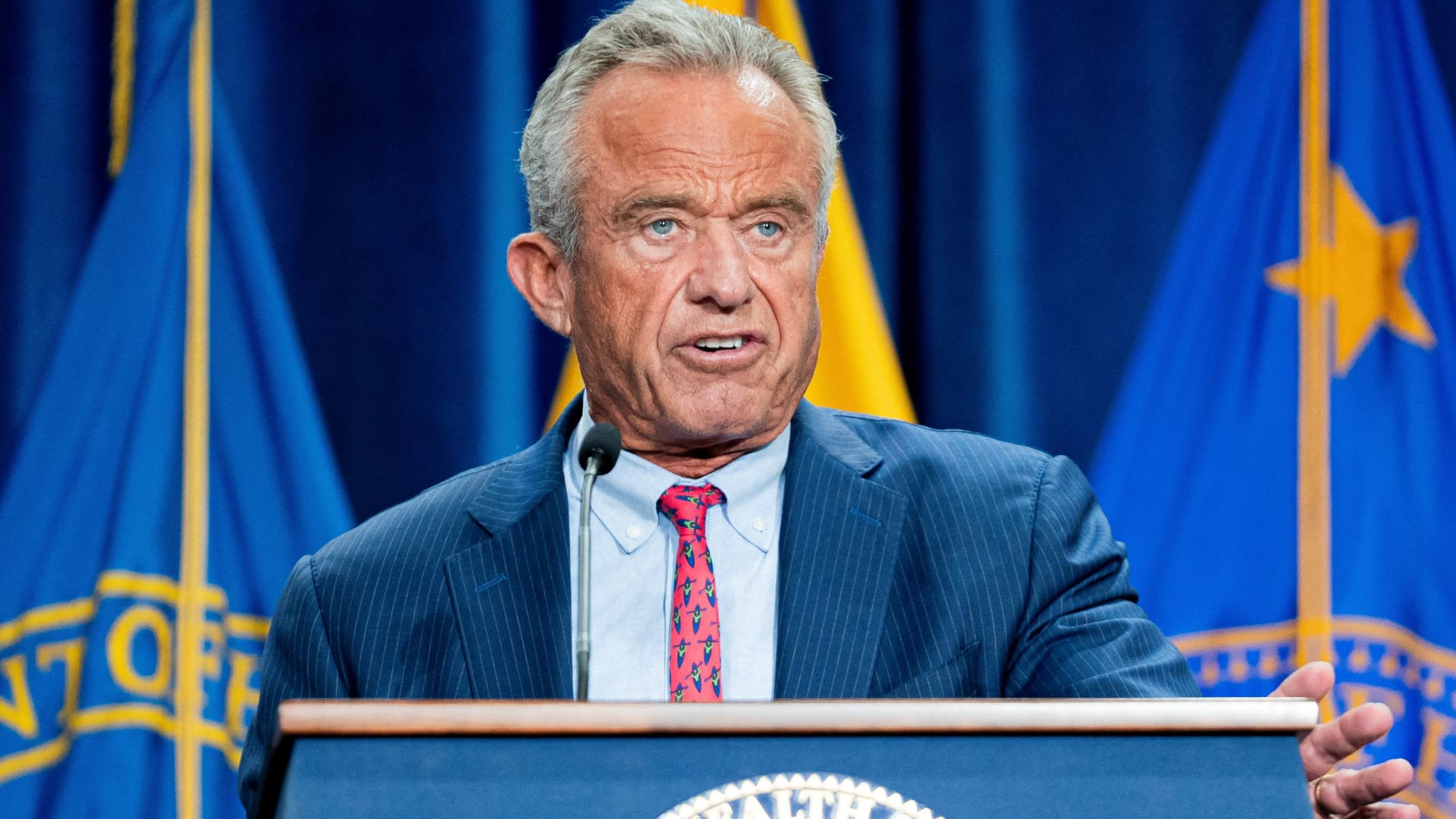
Secretary of Health and Human Services Robert F. Kennedy, Jr., speaks during a press conference at the Health and Human Services headquarters in Washington, D.C., U.S., Feb. 23, 2026.
Nathan Howard | Reuters
Health and Human Services Secretary Robert F. Kennedy Jr. on Tuesday said that the ongoing outbreak of cyclosporiasis is “under control.”
“We’ve identified the source of the outbreak, and the companies that are involved have implemented a recall,” Kennedy said, responding to questions during a news briefing about health care fraud.
The Food and Drug Administration and the Centers for Disease Control and Prevention, both under Kennedy’s purview as HHS secretary, have faced criticism for their responses to the outbreak. Critics have blasted the federal agencies for the delays in alerting the public and tracking down the source, which they have linked to shredded iceberg lettuce from central Mexico that was supplied by produce giant Taylor Farms.
Some have claimed that agency cuts by the Trump administration have hampered the investigation, although the cyclospora parasite itself presents challenges due to its lengthy incubation period.
“Those criticisms are invalid,” Kennedy said during the briefing, responding to a question regarding criticism of the job cuts under his leadership. “We had no cuts in the surveillance program. We did cuts in the FoodNet program, but they were for redundant surveillance.”
FoodNet, or the Foodborne Diseases Active Surveillance Network, stopped mandatory reporting for six of eight pathogens — including cyclospora — last year due to funding cuts. The organization is a partnership between the CDC, the FDA, 10 state health departments and the U.S. Department of Agriculture.
The FDA has concluded that the current cyclospora outbreak is linked to the iceberg lettuce, some of which was served by Yum Brands’ Taco Bell. Taylor Farms has recalled the produce linked to the outbreak, while Taco Bell has pulled it from its restaurants.
However, the agency’s messaging about a false positive test for cyclospora in a sample of Taylor Farms lettuce during its investigation sparked confusion, leading the FDA to issue a clarification on Monday. It said it still suspects the company’s iceberg lettuce is the source of the outbreak.
The CDC, FDA and public health officials in multiple states have been investigating the outbreak, with illnesses first appearing on May 13. So far, more than 1,644 cases have been reported, with 94 hospitalizations and no deaths, according to the CDC.

Making Money panelists Mohamed El-Erian and Neil Dutta discuss the five task forces of the Federal Reserve.
JPMorgan Chase CEO Jamie Dimon said in an interview on Monday that he wouldn’t buy stocks or long-term Treasury bonds at their current prices as he thinks investors aren’t accounting fully for risks that could cause turmoil in equity and debt markets.
Dimon said in an interview with CNBC that he thinks geopolitical and fiscal risks are “probably bigger than other people think” amid the ongoing conflicts in Ukraine and the Middle East, as well as looming tensions between the U.S. and China.
He also said that growing budget deficits by governments around the world pose a fiscal risk during a period of rising defense spending, which could lead to interest rates on government bonds remaining higher.

JPMorgan Chase CEO Jamie Dimon said he’s cautious about stock market valuations and wouldn’t buy bonds given current prices and yields. (Caroline Brehman/Bloomberg via Getty Images)
Dimon said he wouldn’t buy long-term Treasurys given the current conditions of the bond market, saying that he thinks interest rates on U.S. bonds will likely remain elevated even if inflation subsides.
DIMON URGES CALM OVER FEAR ABOUT AI’S IMPACT ON JOBS: ‘STOP BEING BREATHLESS OVER IT’
The JPMorgan Chase CEO said he believes “the 10-year bond should probably be at 4% to 4.5%” even if inflation returns to the Federal Reserve’s long-run target of 2%, and said that he personally wouldn’t buy long-term Treasurys and sees little upside for bond prices.
The 10-year Treasury yield is currently about 4.6% and has remained above 4.2% since March after they had trended closer to 4% late last year.
The most recent consumer price index (CPI) data showed inflation was up 3.5% from a year ago – well above the Fed’s 2% target – despite declining month-over-month as gas prices declined as the energy market stabilized during a period of reduced hostilities between the U.S. and Iran.
JAMIE DIMON SAYS HE UNDERSTANDS WHY PEOPLE HAVE GROWN ‘ANTI-RICH’
| Ticker | Security | Last | Change | Change % |
|---|---|---|---|---|
| JPM | JPMORGAN CHASE & CO. | 345.15 | +6.24 | +1.84% |
Stubbornly high inflation prompted the Fed to leave interest rates unchanged at the central bank’s June meeting and Fed Chair Kevin Warsh has signaled that policymakers won’t tolerate elevated inflation.
That has caused the market’s view of the probability of rate cuts to plunge, as the CME FedWatch tool suggests that the federal funds rate will either remain steady or rise before the end of this year.
Dimon also struck a cautious note on the stock market in the interview, saying he wouldn’t invest in the broader market at the high valuations that can currently be found at many leading companies and would instead look at individual companies to find “a great investment.”

Dimon likened the surge of investment in AI to the rise of the Internet. (Alexander Tamargo/Getty Images for America Business Forum)
JPMORGAN NAMES 2 NEW CO-PRESIDENTS, SETTING UP RACE TO SUCCEED JAMIE DIMON
He also likened the impact of artificial intelligence (AI) on the market as it reshapes the tech sector and the broader economy to what happened during the initial internet boom, saying that companies are spending a “huge” amount of money that may not quickly lead to the desired results.
“Will it in total pay off? Probably, just like the internet did,” Dimon told CNBC. “Will it pay off the way you expect and the timetable you expect? Definitely not.”

A Spacex Flacon 9 rocket lifts off from Space Launch Complex 40 on June 08, 2026 in Cape Canaveral Space Force Station, Florida.
Joe Raedle | Getty Images
Goldman Sachs has created a new platform to expand its offerings for wealthy clients and family offices who increasingly want direct stakes in fast-growing private companies, CNBC has learned.
The new group, called the alternative investments platform, combines Goldman’s existing alternatives business with two newly established teams, according to a memo seen first by CNBC.
The new teams focus on direct investments in individual private companies, rather than broader private equity funds, and on helping clients buy and sell those stakes, according to the memo.
“There has been a lot of focus on the big growth tech names and getting clients access to those before they debut in the public markets,” Kristin Olson, Goldman Sachs’ global head of alternatives for wealth, told CNBC in an interview.
Goldman’s move reflects two of the biggest trends reshaping Wall Street. The firm has spent years pushing deeper into wealth and asset management because of its perception as providing steadier revenues than investment banking and trading. At the same time, the most successful startups are staying private far longer than they once did, allowing early investors to capture most of the gains before public investors get a chance.
“Companies are going public at a trillion dollars,” Olson said. “If you haven’t participated along the way, you’re clearly missing a big part of the growth cycle.”
AI boom
Goldman has been arranging direct investments in later-stage private companies for wealthy clients for roughly two decades, Olson said, pointing to Facebook before its 2012 IPO and later SpaceX, Stripe and Canva. But growth in demand for the asset class convinced executives to break out the business, she added.
The firm’s goal, Olson said, is to help clients identify promising companies before they become household names.
Rather than targeting early-stage startups, Olson said Goldman generally focuses on later-stage companies that have established products, meaningful revenue and clearer paths toward profitability, seeking what she described as a “sweet spot” between risk and return.
The AI investment boom has only intensified demand. Beyond leading model developers, Goldman is increasingly steering clients toward investments in the infrastructure underpinning AI, including data centers and related projects, Olson said.

The announcement comes days after Goldman reported record quarterly revenue, with executives highlighting AI-driven activity across investment banking, trading and financing businesses. The results reinforced investors’ view that Goldman is positioned to benefit from multiple facets of the AI investment cycle.
The announcement also formalizes Goldman’s growing business helping clients find liquidity for private investments.
Through its new secondary advisory group, the firm plans to expand a marketplace that allows clients to buy and sell private holdings while also advising clients looking to exit investments held outside Goldman.
“We said, let’s break that out and let’s make it very clearly defined as something that we’re leaning into,” Olson said.

The Bear Traps Report founder Larry McDonald weighs in on Big Tech earnings on Mornings with Maria.
Apple is raising prices on Apple Music subscriptions as well as certain Apple One plans as the company faces higher licensing costs.
The tech giant last week hiked prices for Apple Music plans across subscription tiers. Individual plans will rise by $1 a month to $11.99, while student plans will increase by the same amount to $6.99 a month.
Prices for the Apple Music family plan are also rising by $3 per month to a new monthly rate of $19.99.
The company also hiked prices for some tiers of Apple One – the company’s bundle that allows consumers to subscribe simultaneously to Apple TV, Music, iCloud+, Arcade, Fitness+ and News+ or the first four services.
APPLE RAISES IPAD AND MACBOOK PRICES AS MEMORY CHIP COSTS SURGE

Apple raised prices on Apple Music plans as well as some Apple One packages. (CFOTO/Future Publishing via Getty Images)
Prices for the Apple One family tier are set to rise by $2 to a new total of $27.95 per month. Family plans may be shared with up to five people and have up to 200 gigabytes of iCloud storage, though they don’t include News+ or Fitness+ in the package.
The individual Apple One subscription, which includes the same four services but with 50 gigabytes of iCloud storage, is unchanged at $19.95 a month.
Apple One’s Premier package, which includes all six of the company’s subscription services with up to 2 terabytes of storage and may be shared among five people, will rise in price by $2 to $39.95 per month.
APPLE BRIEFLY OVERTAKES NVIDIA AS WORLD’S MOST VALUABLE COMPANY AMID AI INVESTMENT DOUBTS
| Ticker | Security | Last | Change | Change % |
|---|---|---|---|---|
| AAPL | APPLE INC. | 326.59 | -7.15 | -2.14% |
The price increases apply to consumers in the U.S. as well as other countries around the world.
The moves weren’t announced by Apple, which adjusted the prices for the various subscriptions and tiers on its website on Friday. Apple told 9to5Mac, “As a result of rising licensing costs, Apple Music is increasing its subscription price beginning today.”
FOX Business reached out to Apple for comment.
APPLE HIT WITH LAWSUIT CLAIMING ICLOUD+ PRIVACY TOOL COULD EXPOSE USERS’ REAL EMAILS TO WEBSITES

Apple’s subscription price hikes follow higher iPad and MacBook prices. (Apple)
In late June, Apple announced price hikes for its iPad tablets and MacBook laptops amid rising memory chip costs.
The company raised the price of the MacBook Air by $200 to a new total of $1,299, while the budget Neo laptop price rose from $599 to $699. The price of a MacBook Pro with 1 terabyte of storage rose $300 to $1,999, while the iPad Air with 128 gigabytes of storage rose from $599 to $749.
GET FOX BUSINESS ON THE GO BY CLICKING HERE
Apple said at the time that it has “never seen a component price increase this much, this quickly,” adding that it had “shielded our customers from these increases so far, but we have now reached a point where we need to begin raising prices on a number of products.”


ADM commercially scaling production of high-protein egg ingredient at Clinton, Iowa, facility.

Treasury Secretary Scott Bessent joins ‘Mornings with Maria’ to discuss the Trump administration’s crackdown on government fraud, mounting economic pressure on Iran, the AI race with China and the outlook for the U.S. economy.
The Trump administration has successfully tracked down the ayatollah’s “money man,” Treasury Secretary Scott Bessent revealed to FOX Business on Tuesday, detailing plans to publicly expose more than $100 million in properties linked to Iran’s supreme leader around the world.
“We have found the money man for the ayatollah. We are tracking the ayatollah’s properties around the world,” Bessent told “Mornings With Maria.”
“We hope to soon be able to print his $100 million-plus properties and show the addresses, and we’re preserving this money for the American people.”
MAJOR DISPUTE TO THREATEN TRUMP’S IRAN DEAL OVER BILLIONS IN FROZEN TEHRAN FUNDS: EXPERT

Treasury Secretary Scott Bessent arrives to testify before the House Ways and Means Committee in the Longworth House Office Building on June 4 in Washington, D.C. (Chip Somodevilla/Getty Images)
The Trump Treasury chief said the effort is part of the administration’s broader “Economic Fury” campaign against Iran, a “one-two punch” combined with the military “Epic Fury” campaign that rattled the region.
“Economic Fury,” he said, aims to dismantle the regime’s financial network by tracking overseas assets, freezing accounts and ratcheting up economic pressure following recent military operations.
Bessent said officials are pursuing Iranian assets across the globe while working to choke off the regime’s access to funding, arguing the pressure campaign has already helped drive Iran’s currency to record lows against the U.S. dollar and fueled soaring inflation inside the country.
TRUMP’S 60-DAY IRAN DEAL REACHES HALFWAY MARK AS CEASEFIRE COLLAPSES INTO ESCALATING WAR

An Iranian flag amid rubble and debris in Tehran. (Atta Kenare/AFP/Getty Images)
“[Their currency] is at an all-time low versus the dollar. It’s in freefall, and we think the inflation rate is upwards of 180% in Iran,” he said.
“So, the government is causing the people to suffer, and we’re going to keep pressing, but we’re also going to marshal the resources and save the resources that we recover for the Iranian people when we get on the other side of this.”
GET FOX BUSINESS ON THE GO BY CLICKING HERE
FDD Iran Program senior director and senior fellow Behnam Ben Taleblu discusses next steps in the Iranian conflict on ‘The Bottom Line.’
Bessent added that Treasury is also targeting Iran’s oil revenues, pointing to sanctions on Chinese “teapot” refineries and what he described as a roughly 40% decline in China’s purchases of Iranian crude in recent months, which he said has intensified financial pressure on the regime.

Daktronics EVP Wiemann sells $76,880 in DAKT stock

Around 75% of the world’s population is online and – in many ways – this makes all our lives better. But faced with a barrage of ads, misinformation, AI slop, toxicity and doom-scrolling, it can feel like the internet is kind of… broken.
What happened? And where are we headed next?
Featuring interviews with: Wikipedia founder Jimmy Wales, Hatelab director Matthew Williams, author and activist Cory Doctorow and author and co-founder of Logging Off Club Adele Zeynep Walton. Big thanks to students at the University of Cardiff.
Film by Daniel Nils Roberts

Senate Democrat calls for probe of US derivatives regulator’s staff cuts

Millie Bobby Brown leads tributes for Godzilla co-star Kaylee Hottle

6 UK Airbnb management companies compared

Marvel’s Biggest Villain Officially Joins Apple TV’s MonsterVerse Spin-Off


-
 NewsBeat5 days ago
London Mayor Sadiq Khan handed a peerage by Keir Starmer alongside 15 other Labour figures… just days before the PM leaves No10
-

 Fashion4 days ago
Weekend Open Thread – Corporette.com
-

 Politics3 days ago
The House | The City of London can help the new chancellor deliver growth in every postcode
-

 Politics6 days ago
Young campaigners urge incoming PM to act on outdoor junk food ads
-
 Crypto World4 days ago
Two July Windows Left: The CLARITY Act’s Senate Fight and What Failure Means
-

 Crypto World6 days ago
CFTC blocks Kalshi from unwinding Michigan trades after court order
-

 Crypto World3 days ago
Ripple Payments Joins MiCA With 14 Firms, Does It Mean Anything For XRP?
-

 Business6 days ago
Nvidia Stock Slips After Big Tuesday Rally as Huang Confirms Vera Rubin Chip Is Now in Production Today
-

 Politics2 days ago
Democrats look to World Cup watch parties to register thousands of voters
-
 Entertainment6 days ago
Disney’s Most Ambitious Failed Star Wars Attraction Is Coming to SDCC
-

 Crypto World4 days ago
Ripple wins EU-wide access as ESMA adds it to MiCA register
-

 Crypto World12 hours ago
Grayscale Files For Worldcoin ETF, WLD Registers Sharp Rise
-

 Crypto World5 days ago
Injective Submits SEC Transfer-Agent Registration to Onchain Ownership Records
-

 Business6 days ago
Palantir Shares Rise After Expanded Nvidia Partnership and Fresh Analyst Upgrades Ahead of Earnings Day
-

 Tech20 hours ago
Sail Virtually Aboard The “Itanic” With IA-64 Emulator
-
 Tech17 hours ago
Turtle Beach Command Series KB7 review: a nifty screen-equipped gaming keyboard
-

 NewsBeat4 days ago
Registration is now open for March for Men with Kev 2026
-

 NewsBeat1 day ago
Unregistered fitter used Gas Safe logo on business flyers
-
 Sports6 days ago
New Cornerback Enters Vikings Trade Rumor Mill
-

 News Videos5 days ago
Money | Class 12 Economics | CBSE Board Exam 2026-27
You must be logged in to post a comment Login