Connect with us
DAPA Banner
DAPA Coin
DAPA
COIN PAYMENT ASSET
PRIVACY · BLOCKDAG · HOMOMORPHIC ENCRYPTION · RUST
ElGamal Encrypted MINE DAPA
🚫 GENESIS SOLD OUT
DAPAPAY COMING

Business

Politics And The Markets 06/09/26

Published

on

OneWater Marine Inc. (ONEW) Q1 2026 Earnings Call Transcript

This is the forum for daily political discussion on Seeking Alpha. A new version is published every market day.

Please don’t leave political comments on other articles or posts on the site.

The comments below are not regulated with the same rigor as the rest of the site, and this is an ‘enter at your own risk’ area as discussion can get very heated. If you can’t stand the heat… you know what they say…

More on Today’s Markets:

Advertisement

Moderation Guidelines:

We remove comments under the following categories:

  • Personal attacks on another user account
  • Anti-Vaxxer or covid related misinformation
  • Stereotyping, prejudiced or racist language about individuals or the topic under discussion.
  • Inciting violence messages, encouraging hate groups and political violence.

Regardless of which side of the political divide you find yourself, please be courteous and don’t direct abuse at other users.

For any issue with regards to comments please email us at : moderation@seekingalpha.com.

Seeking Alpha’s Disclosure: Past performance is no guarantee of future results. No recommendation or advice is being given as to whether any investment is suitable for a particular investor. Any views or opinions expressed above may not reflect those of Seeking Alpha as a whole. Seeking Alpha is not a licensed securities dealer, broker or US investment adviser or investment bank. Our analysts are third party authors that include both professional investors and individual investors who may not be licensed or certified by any institute or regulatory body.

Advertisement
Continue Reading
Click to comment

You must be logged in to post a comment Login

Leave a Reply

Business

Is it time to stop using glue and labels on paper?

Published

on

A woman with short brown hair looks directly into the camera with a slight smiling expression. She is wearing a pink top and a silver necklace with a heart charm.

But what if you could skip the adhesive altogether?

That’s the idea that three firms from Germany – Fraunhofer, Hermann Ultraschall, and Henkel – have come up with.

It’s no coincidence they are all German, as the country is known for its Packaging Valley, external, a hub for the packaging industry.

Their efforts to innovate are partly a bid to satisfy ever tightening regulation around commercial recycling, and rising fines for those who fall foul.

Advertisement

With that in mind, German research organisation Fraunhofer established the PAPURE project in 2023 to develop a laser-based heating process that can seal paper packaging without an adhesive at all.

From September, when the project is set to officially close, Fraunhofer hopes to find an industry partner to take the technology to market. Fraunhofer researchers exhibited their work at the Interpack packaging trade show in Dusseldorf in May, and are hopeful that the interest they attracted will come to fruition.

“There are not really many paper sealing technologies without any foreign materials, so it’s a great technology and we feel it’s likely that we can bring it to market,” says researcher group leader Fabian Kayatz.

“If we are optimistic, we will have the first solution out in two years.”

Advertisement

Also in 2023, engineering firm Hermann Ultraschall bought the rights to develop a patented ultrasonic paper sealing technology, a process which it likens to welding.

“We are really actively at the moment in discussion with several really big players in the market with the focus of bringing this technology into mass production,” says Michael Baumann, the company’s head of business development packaging.

“One customer told me this is an innovation they have never seen before.”

Yet these seemingly simple solutions stem from complex technology, so naturally, there are challenges.

Advertisement

Firstly, it’s not as simple as simply getting product manufacturers and packaging companies to swap out their old packaging for these new options. It requires updating, and in some cases, completely replacing, existing machinery, which can be costly and time consuming.

“The packaging industry has existing machines which are all designed for glue materials. Some kind of redesign is probably necessary, and this is our biggest challenge,” says Hermann Ultraschall’s Baumann.

Yet Volker Franke, also a research group leader at Fraunhofer, is confident that those existing machines can be modified by integrating the laser module that PAPURE has been developing.

They both acknowledge that the production rate is also currently much slower than that for paper packaging that uses adhesives, but Franke says a key benefit PAPURE is selling is fully automated production, which he believes can continue to be developed for speed.

Advertisement

The other issue is that the technologies don’t work on all types of paper.

“It’s not possible to bond every paper material,” Baumann confirms. “But we are actively in discussion with paper manufacturers about how they can produce a raw material in a way that makes it easy to bond.”

PAPURE has also yet to find a way to apply their laser sealing technology to food-grade packaging, which needs a coating to protect the item. This tends to be why plastic is often favoured for packaging food.

But this is something Henkel, with both a consumer brand division, and adhesive technologies division, has cracked.

Advertisement

In February, Henkel announced the launch of the first cold seal solution that works with barrier coated paper, which is both recyclable and suitable for food products.

Barrier paper can be a difficult surface to bond, and using heat isn’t suitable for heat sensitive food products like ice cream or chocolate. Hence the cold seal solution, in which enough pressure is applied for the barrier coated paper to be bonded against itself.

Continue Reading

Business

Fast-growing UK accountancy group makes first South West acquisition

Published

on

Business Live

The deal will see a Trowbridge-based firm join the Stoke-headquartered business

Sam Gooding of Gooding Accounts (left) with and James Beardmore of DJH

Sam Gooding of Gooding Accounts (left) with and James Beardmore of DJH(Image: Handout)

A Stoke-on-Trent-headquartered accountancy group has made its first acquisition in the West Country, it has announced. DJH has snapped up Wiltshire-based Gooding Accounts for an undisclosed sum.

DJH, which offices across the UK including in Manchester, Leeds and London, said the Trowbridge practice was “an ideal fit” for its expansion plans.

Gooding Accounts’ owners, Sam and Katy Gooding, will continue to lead the South West business following the deal.

Scott Heath, chief executive of DJH, said: “We have been deliberately building our national footprint in regions where we know we can add real value to local businesses and their advisers.

Advertisement

“The South West has been firmly on our radar, and Gooding Accounts is exactly the kind of practice we look for – technically strong, client-focused, and with a culture that matches our own.”

Gooding Accounts was founded in 2014 by Mr Gooding and has developed a technology-led approach to accountancy. The firm moved to a new office on White Horse Business Park in July last year.

Mr Gooding said: “Joining DJH is the right move at the right time. We have built something genuinely special here in Wiltshire, and I am incredibly proud of what the team has achieved. But we are ambitious, and moving into a larger group gives us the platform to go further.

“Katy and I are both fully committed to this business, to this team, and to every client we serve. That doesn’t change. What does change is what we are now able to offer.”

Advertisement

DJH’s rapidly-expanding group now employs nearly 900 people across 20 offices in the UK and Ireland.

Mr Heath added: “Our model has worked exceptionally well in every region we have entered. We combine national scale with locally led advice – people who know their communities, who know their clients, and who are genuinely invested in their success.

“Sam and Katy embody that. We are delighted to welcome them and the Gooding Accounts team to DJH, and look forward to growing together in the South West.”

Advertisement
Continue Reading

Business

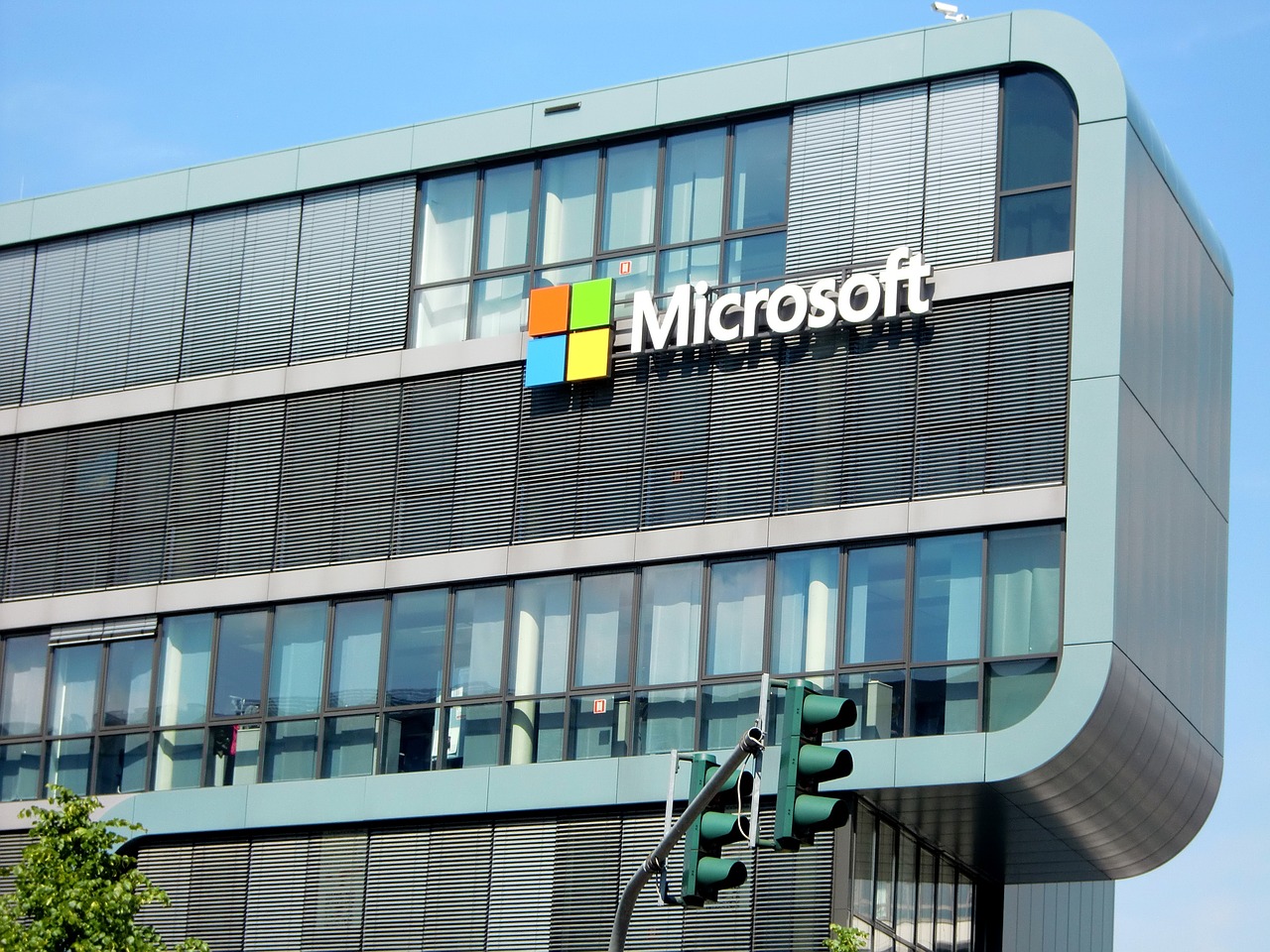
Microsoft Stock Climbs 2% Ahead of Pivotal Earnings Report as Investors Weigh Azure Growth and AI Spending

Published

on

Company headquarters, SpaceX Starbase in Starbase, Texas

Microsoft Corp. shares rose Monday morning, climbing 2.05% to $389.52, as investors positioned ahead of one of the company’s most closely watched earnings reports in years, with the stock gaining $7.82 in early trading on the Nasdaq.

The advance came alongside broader gains across major technology names, as Wall Street braced for a wave of Big Tech earnings this week that will test whether massive artificial intelligence spending is translating into sustainable growth.

Tech Stocks Rise Together Ahead of Earnings Wave

Microsoft’s gain was part of a sector-wide move Monday morning. Tech stocks rose broadly amid tentative optimism ahead of a flood of Big Tech earnings this week, with Alphabet climbing 2.09%, Microsoft up 2.09%, Meta Platforms adding 0.70% and Apple gaining 1.04%, even as Nvidia declined nearly 4%. Results from Microsoft, Meta Platforms, Apple and Amazon headline the calendar this week, alongside reports from chipmakers including SK Hynix and Qualcomm, with investors paying particularly close attention to capital expenditure figures after Alphabet’s own capex guidance had previously unsettled markets amid growing concerns about free cash flow during the AI spending boom.

Advertisement

A Difficult Year Heading Into Results

Monday’s rally offered some relief after a rocky stretch for Microsoft shares. The stock had finished the prior session at $381.70, up just 0.03%, before climbing further in pre-market trading as investors weighed resilient Azure cloud growth and an attractive valuation against enormous AI spending commitments, uncertain returns on its Copilot AI assistant, and a weak technical chart structure. Despite the recent recovery attempt, the stock has lost around 25% over the past year and remains more than 30% below its record high.

That decline has put added pressure on Microsoft’s upcoming fiscal fourth-quarter report. The company is scheduled to report results after the market closes on Wednesday, July 29, in what analysts are describing as one of its most important earnings releases in years, with investors demanding evidence that the company’s enormous AI investments can generate sufficient returns.

Copilot and Azure Take Center Stage

Advertisement

A key focus for investors heading into the report is Microsoft’s push to embed its Copilot AI assistant more deeply into its core software products. Microsoft 365 Business began embedding Copilot more directly starting July 1, shifting the tool closer to a standard feature rather than a separate paid add-on, a strategy that could boost paid adoption and increase revenue per customer. Some estimates suggest Copilot could exceed 25 million paid enterprise seats by the end of 2026 if deployment continues to accelerate, though investors still lack clarity on usage, retention and profitability metrics tied to the product.

That uncertainty is compounded by an increasingly crowded competitive landscape. Competition from ChatGPT, Claude, Google’s Gemini and lower-cost open-weight models has intensified, and customers may grow reluctant to expand their AI spending if token consumption produces unpredictable costs. Microsoft will need to demonstrate that Copilot can meaningfully improve Microsoft 365 growth, deepen customer relationships and support pricing power, rather than simply representing another costly infrastructure obligation.

Analysts Watching Earnings Per Share and Cloud Growth

Wall Street’s expectations for Wednesday’s report are already taking shape. Analyst consensus calls for earnings per share of $4.21 for the quarter, with Microsoft’s next dividend, valued at $0.91 per share, set to go ex-dividend on August 20. The company carries a trailing price-to-earnings ratio of 22.73 and trailing twelve-month earnings per share of $16.79, with a one-year analyst price target of $556.75, well above where the stock currently trades. Microsoft’s market capitalization stood at roughly $2.835 trillion as of recent trading, with average daily volume near 27.6 million shares.

Advertisement

A Rotation Into AI Software Names

Monday’s gains also fit into a broader shift some analysts have identified in recent weeks, as investors rotate capital between different corners of the AI trade. Analysts have noted that big gains for AI hardware leaders throughout 2026 may be raising valuation concerns, prompting some investors to pivot capital into software players like Microsoft instead. While that rotation trend could continue to support Microsoft’s share price if it persists, it remains uncertain whether investor appetite for AI-linked software stocks will hold up given ongoing macroeconomic risks.

What’s at Stake Wednesday

Microsoft’s earnings call will offer investors their clearest look yet at how the company’s aggressive AI infrastructure buildout is translating into financial results. Following the release, Chief Executive Satya Nadella and other members of Microsoft’s senior leadership team are expected to host a live conference call with Wall Street analysts to walk through the results. That call is scheduled for 5:30 p.m. Eastern time on July 29.

Advertisement

Given the size of Microsoft’s cloud and AI investments, the report is expected to carry outsized influence over sentiment across the broader technology sector this week, particularly as Amazon, Meta and Apple prepare to report their own results in the days that follow. Investors will be watching closely for updates on Azure’s growth rate, capital expenditure guidance for the coming fiscal year, and any commentary from Nadella on how enterprise customers are responding to Copilot pricing and adoption.

With markets already jittery over the scale of AI-related spending commitments across the technology sector, including a separate financing arrangement involving Nvidia and OpenAI disclosed over the weekend, Microsoft’s results are likely to be parsed for signs of whether the broader AI investment cycle is beginning to pay off, or whether concerns about overspending and murky returns will continue to weigh on the sector heading into the fall.

Continue Reading

Business

Carvana's Epic Ride Proved Me Wrong (Upgrade)

Published

on

Carvana's Epic Ride Proved Me Wrong (Upgrade)

Carvana's Epic Ride Proved Me Wrong (Upgrade)

Continue Reading

Business

Oracle Stock Jumps Nearly 5% on $7 Billion Pentagon Deal as Shares Rebound From a Recent 52-Week Low

Published

on

Air Products Shares Jump 9 Percent on Strategic Pivot Away

Oracle Corp. shares surged Monday morning, rising 4.59% to $120.26, as the enterprise software giant benefited from a wave of new government contract news even as the stock continues working to recover from a sharp multi-month decline.

The gains added $5.28 to Oracle’s share price by mid-morning trading on the New York Stock Exchange, extending a bounce that has taken shape over the past several sessions after the stock touched fresh 52-week lows earlier this month.

A Major Defense Department Win

The rally was driven largely by optimism around expanding cloud infrastructure and AI partnerships, after Oracle secured a 10-year enterprise software deal with the U.S. Department of War worth up to roughly $7 billion, creating a long-term revenue anchor for the company and helping consolidate what had been fragmented government procurement. In a separate contract, Oracle landed a five-year U.S. Navy indefinite-delivery, indefinite-quantity agreement carrying a base value of $3.31 billion, with options that could lift total potential spending to $6.99 billion across software, software-as-a-service and consulting work.

Advertisement

The back-to-back government wins give Oracle a substantial and relatively predictable revenue stream at a time when investors have grown increasingly focused on how quickly the company can convert its enormous cloud backlog into recognized revenue.

Not All the News Was Positive

The rally came despite some headwinds tied to Oracle’s data center expansion plans. Wisconsin regulators upheld strict credit rules that may force Oracle to post more than $7 billion in collateral for its planned AI-focused data center in the state, a requirement that could add more than $100 million in annual financing costs. Separately, CLSA initiated coverage of Oracle with a Hold rating and a $145 price target, signaling cautious sentiment on the stock and voicing a preference for Microsoft and Adobe within the enterprise software space.

Those mixed signals reflect the broader tension that has defined Oracle’s stock performance in recent months: a company with enormous long-term cloud demand but rising near-term costs tied to building out the infrastructure needed to meet it.

Advertisement

A Steep Recent Decline

Monday’s gain follows one of the sharpest pullbacks Oracle has experienced this year. From early July highs near $149, Oracle shares slid to about $115 by July 24, a sharp reset for a company of its size. The stock’s chart remains in a longer-term downtrend, trading well below its 20-day, 50-day and 200-day moving averages, with a “death cross” pattern that formed in January, when the 50-day moving average slid below the 200-day average, continuing to dominate the technical picture on every rebound attempt.

Even so, the stock’s relative strength index has shown deeply oversold conditions, a reading that often signals selling pressure has stretched far enough to spark sharp countertrend bounces even when the broader trend remains negative. Shares have been trading just above their 52-week low of $127.60 and remain far from their 52-week high of $345.72, keeping the overall chart in repair mode despite recent bursts of strength.

Other data trackers put the stock’s recent low even lower. Shares have traded as low as $120.03 over the past year, sitting roughly 27% below the 52-week high of $341.82.

Advertisement

The Case for a Longer-Term Rebound

Despite the recent volatility, some analysts remain optimistic about Oracle’s longer-term trajectory, pointing to the size of its contracted future business. Bulls argue Oracle could reach a new high by 2027, contingent on the company converting a meaningful slice of its $638 billion in remaining performance obligations into recognized revenue on schedule, sustaining growth in its Oracle Cloud Infrastructure business above 60%, and restoring free cash flow so markets stop reacting negatively to every capital expenditure disclosure. Over the past decade, Oracle shares have returned nearly 259%, underscoring the stock’s long runway of growth even through periodic steep pullbacks.

That backlog has been a central talking point for Oracle bulls throughout the year, particularly as the company has leaned heavily into AI-related cloud infrastructure spending to meet demand from large enterprise and government customers.

Broader Momentum in Cloud and AI Partnerships

Advertisement

Oracle’s recent contract wins build on a string of positive developments tied to its cloud business. Oracle’s share price gains in recent weeks have been tied to growth in cloud infrastructure and AI integration, with partnerships involving major hyperscale cloud providers helping expand the company’s enterprise customer base and improve revenue visibility.

The company has also drawn attention for potential wins beyond U.S. borders. Oracle shares climbed in a separate session after a report revealed the company had emerged as the frontrunner to deliver a highly classified cloud infrastructure contract for the Japanese government, adding to a growing list of large public-sector deals across multiple countries.

With the stock still trading well below its 52-week high and carrying a mixed technical picture, Monday’s jump is likely to be viewed by traders as a test of whether Oracle can build sustained momentum or whether the bounce will fade back toward its recent lows. Analysts have flagged the low $150s as a key resistance zone tied to the stock’s 20-day moving average, while the $127.60 area marks a critical support level that bulls will want to defend to avoid renewed breakdown risk.

For now, the combination of major new government contracts and a technically oversold setup appears to have given Oracle shares enough momentum to overcome lingering concerns about data center financing costs and mixed analyst sentiment, at least for Monday’s trading session.

Advertisement
Continue Reading

Business

Laurus Labs among 7 midcap stocks that hit 52-week highs and rallied up to 20% in a month

Published

on

The Economic Times

Seven BSE 150 MidCap stocks scaled fresh 52-week highs as Sensex surged 776 points in a broad-based rally. Lloyds Metals & Energy, Laurus Labs and Gujarat Fluorochemicals led the list, reflecting strong buying interest, positive momentum and improving investor confidence.

Continue Reading

Business

Mastercard Stock Rises 2% as Wall Street Positions Ahead of Thursday’s Second-Quarter Earnings Report

Published

on

Wix Stock Jumps Nearly 10% as Battered Shares Rebound Ahead

Mastercard Inc. shares climbed Monday morning, rising 2.19% to $551.66, adding $11.84 as investors positioned ahead of the payments giant’s second-quarter earnings report due later this week, part of a broader rally across major financial and technology names.

The gains extend a strong recent run for Mastercard shares, which have been building momentum over the past several weeks amid a string of bullish analyst calls and growing anticipation for Thursday’s results.

Earnings on Deck This Week

Mastercard is scheduled to release its second-quarter 2026 financial results on July 30. Analysts expect the payments company to report profit of roughly $4.75 to $4.77 per share, representing growth of about 14.5% to 14.9% from the year-ago quarter, with the company having topped Wall Street’s earnings estimates in each of the last four quarters. For the full 2026 fiscal year, analysts project Mastercard will report profit of $19.61 per share, up 15.3% from $17.01 per share in fiscal 2025.

Advertisement

That track record of consistently beating expectations has helped build investor confidence heading into Thursday’s report, with many on Wall Street expecting another strong quarter powered by resilient global consumer spending.

Analysts Turn Increasingly Bullish

A wave of positive analyst commentary has accompanied Mastercard’s climb in recent weeks. Baird raised its price target on the stock to $680 from $660 on July 7 while maintaining an “Outperform” rating, with the firm citing expectations for revenue growth acceleration in upcoming quarters as comparisons ease following the anniversary of the Capital One and Discover Financial impacts on the payments landscape. The firm also pointed to healthy transaction yields and better-than-expected margins that could help offset modestly worse foreign exchange volatility and higher interest expenses tied to a new debt package.

Other major firms have echoed that optimism. Barclays initiated coverage of Mastercard with an Overweight rating and a $640 price target, citing the company’s positioning as a durable franchise following a broader sector reset. Truist, meanwhile, trimmed its price target on the stock slightly to $554 from $561 ahead of the earnings report, a more cautious note among an otherwise largely bullish analyst community.

Advertisement

Among 39 analysts covering the stock, 31 currently recommend “Strong Buy,” four suggest “Moderate Buy,” and four rate it a “Hold,” with a mean price target of $639.76 implying more than 23% potential upside from recent trading levels. A separate tally of 41 analysts puts the average rating for Mastercard at “Strong Buy,” with a 12-month price target of $644.24, representing nearly 19% upside from the stock’s most recent closing levels.

A Strong Technical Setup

Mastercard’s share price has shown notable strength in recent trading sessions, building a technical foundation ahead of earnings. The stock recently traded well above its 20-week and 50-week moving averages and significantly above its 200-week average, closing at the top of its weekly trading range and maintaining strong bullish momentum relative to all key weekly moving averages. Weekly price action has remained volatile, with the stock’s expected trading corridor for the coming week estimated between $517 and $563.

Business Momentum Beyond the Numbers

Advertisement

Alongside its financial performance, Mastercard has continued expanding its product offerings and global partnerships. The company recently announced a series of enhancements to Mastercard In Control, including advanced virtual card controls designed to help reduce risk across the full payment lifecycle. Mastercard also launched its fourth Innovation Circuit in Singapore, focused on advancing artificial intelligence, digital identity and tokenization technologies for future payment systems.

The company has also continued building out its digital asset strategy. Mastercard joined the Open USD stablecoin consortium as part of an effort to modernize its digital payment capabilities, while a preliminary resolution of swipe-fee litigation has reduced a source of major legal uncertainty facing the company. Piper Sandler also upgraded Mastercard to a strong-buy rating, citing the company’s robust financial health.

Dividend Signals Confidence

Mastercard’s capital return program has also drawn positive attention from investors in recent weeks. Shares popped 2.2% on June 16 after the company declared a quarterly cash dividend of $0.87 per share, underscoring its strong cash generation and commitment to returning capital to shareholders. That dividend is scheduled to be paid on August 7, 2026, to shareholders of record as of July 9, 2026, a move management has framed as reflecting confidence in the company’s financial strength and long-term growth prospects.

Advertisement

A Broader Market Tailwind

Monday’s gains for Mastercard also came against a generally supportive market backdrop, with major technology and financial names posting broad gains in early trading as investors looked ahead to a heavy week of corporate earnings across sectors, including reports from Microsoft, Meta Platforms, Amazon and Apple later in the week.

What Investors Will Watch Thursday

Heading into Wednesday’s close and Thursday’s pre-market release, analysts will be watching closely for updates on consumer spending trends, cross-border transaction volumes, and any commentary from Mastercard’s leadership on how the company’s expanding stablecoin and AI-driven payment initiatives are progressing. Investors are also expected to focus on management’s commentary regarding risks tied to potential shifts in credit card competition and interchange regulation, along with updates on Mastercard’s continued expansion with partners including HSBC, SAP and Citi.

Advertisement

With the stock already up sharply over the past month and trading near record territory, Thursday’s results are likely to serve as a key test of whether Mastercard can justify its recent run-up or whether investors will look to lock in gains regardless of the outcome.

Continue Reading

Business

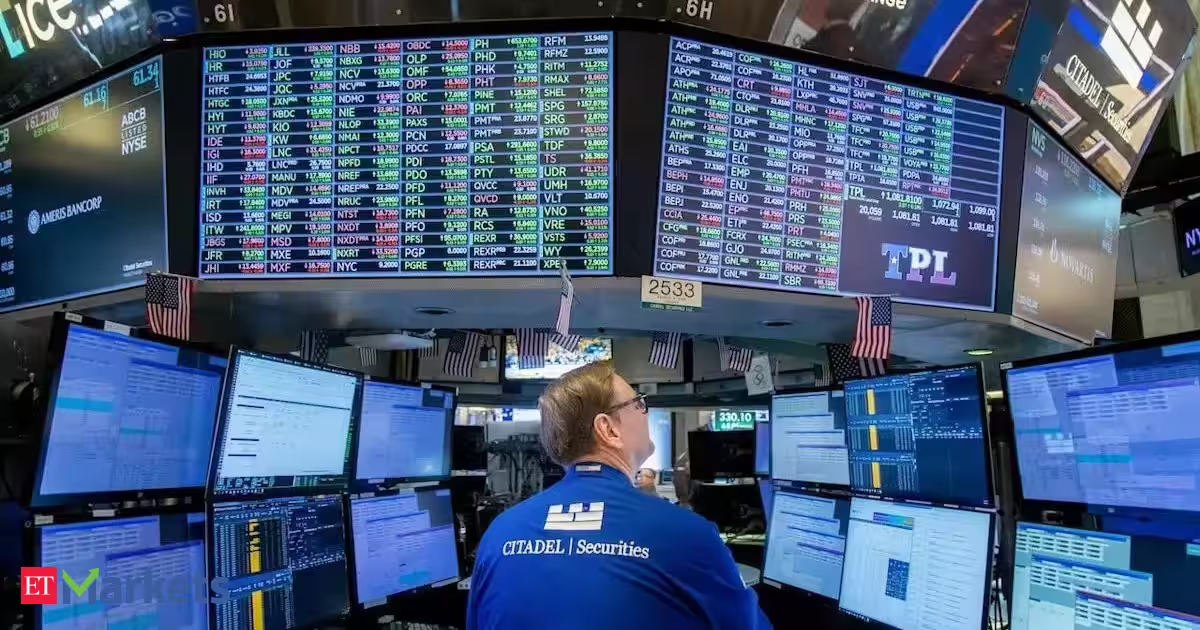
US stocks: US market ends mixed as investors focus on tech earnings

Published

on

US stocks: US market ends mixed as investors focus on tech earnings
Wall Street ended mixed on Monday, as investors awaited guidance from major technology companies in a busy week for quarterly earnings, while also worrying that stubbornly high oil prices could force the Federal Reserve to raise interest rates.

Microsoft, Amazon, Meta and Apple are set to report quarterly results this week. Investors were questioning whether a multi-year rally fueled by optimism ‌about artificial intelligence ⁠may be ⁠losing steam.

Investors last week were spooked by quarterly results from Tesla and Alphabet that showed heavy spending on artificial intelligence.

On Monday, crude fell to a one-week low as U.S. President Donald Trump said Washington was having “good talks” with Iran and there was a chance of a peace deal, but warned U.S. strikes would resume if the negotiations failed to deliver. Oil prices surged last week, with Brent futures surpassing $100 a barrel, after new strikes on shipping in the Middle East.

Advertisement

The S&P 500 consumer staples index and the health care index both gained.


The PHLX chip index extended its recent selloff. ⁠It is down ‌around 20% from its record high close on June 22 and remains up about 63% in 2026.
Chinese chipmaker CXMT Corp’s stellar debut on Monday and a report that the country has started manufacturing homegrown ⁠DUV chipmaking tools also signaled intensifying competition for the U.S. semiconductor industry. “Today represents a continuation of the rotational market that we’ve seen,” said Bill Merz, head of capital markets research and portfolio construction at U.S. Bank Asset Management Group. “Part of the market reaction may be related to that creeping suspicion that perhaps a rate hike is coming.”

According to preliminary data, the S&P 500 gained 1.45 points, or 0.02%, to end at 7,413.43 points, while the Nasdaq Composite lost 41.21 points, or 0.16%, to 24,934.61. The Dow Jones Industrial Average rose 255.58 points, or 0.49%, to 52,202.83.

Brent crude prices slid 8% to about $89 a barrel after Washington abruptly suspended ‌a two-week campaign of air strikes against Iran on Saturday in Trump’s latest strategic U-turn in the five-month-old conflict.

Oil companies Occidental Petroleum and Exxon Mobil both dipped.

Advertisement

The Fed’s monetary policy decision is due on Wednesday and traders are projecting a 62% chance ⁠the central bank will leave rates unchanged, with a 38% chance of a 25 basis-point hike, according to the CME FedWatch tool.

The Personal Consumption Expenditures Price Index for June is due a day after the central bank’s decision and will be key in shaping market expectations for interest rates later this year.

Analysts on average expect S&P 500 aggregate second-quarter earnings to jump 39% from a year ago, with AI-related stocks accounting for much of that growth, according to LSEG I/B/E/S.

The S&P 500 is trading at around 20 times expected earnings, compared to a 10-year average of 20, according to LSEG data.

Advertisement
Continue Reading

Business

Formulating with Real Fruit Inclusions in Baked Goods

Published

on

Formulating with Real Fruit Inclusions in Baked Goods

Optimize fruit inclusions for performance, stability, value, and appeal.

Continue Reading

Business

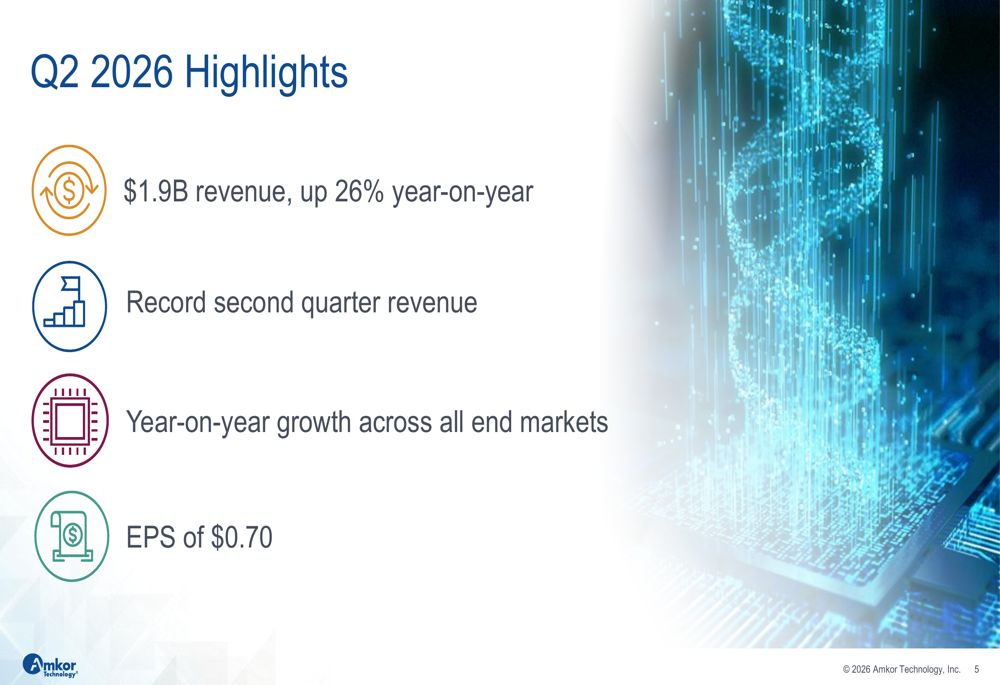
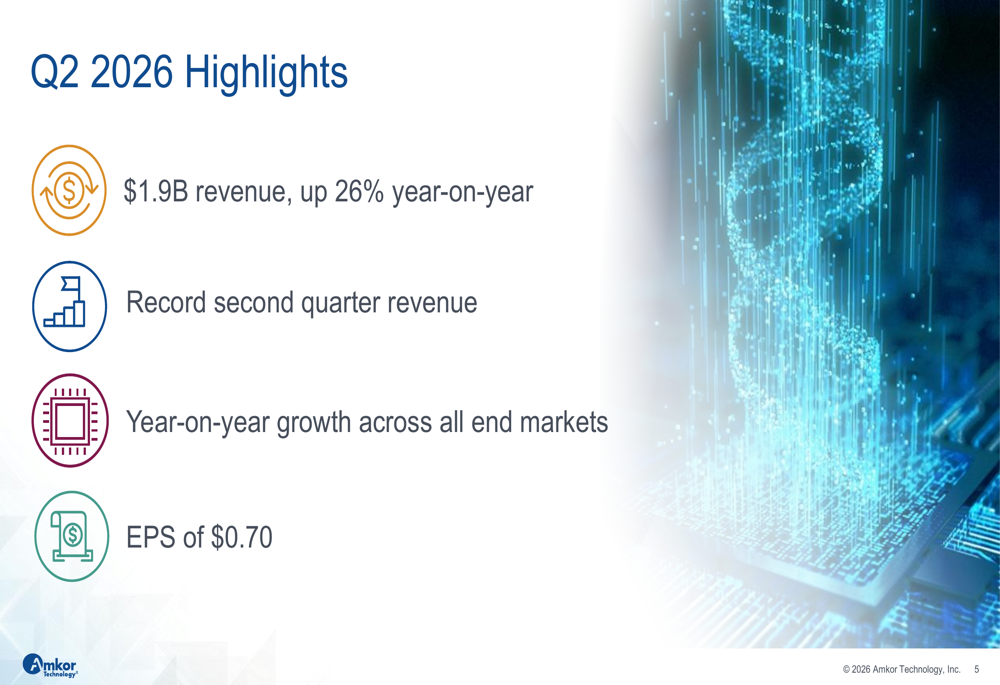
Amkor Q2 2026 slides: record revenue, stock falls on outlook

Published

on

Amkor Q2 2026 slides: record revenue, stock falls on outlook


Amkor Q2 2026 slides: record revenue, stock falls on outlook

Continue Reading

Trending

Copyright © 2025