

Business
Precious Metals Royalty And Streaming Companies – April 2026 Report



Peter Arendas is an associate professor at the University of Economics in Bratislava. He has over 15 years of investing experience. Peter specializes in covering small and mid-cap companies in the resource sector with an in-depth insight into the precious and industrial metals royalty & streaming industry.Peter is the leader of the investing group Royalty & Streaming Corner where he offers in-depth analysis of long-only investment ideas, actionable research, model portfolios, discussions of the latest news, and direct access for questions in chat. Learn More.
Analyst’s Disclosure: I/we have a beneficial long position in the shares of RGLD, ELE either through stock ownership, options, or other derivatives. I wrote this article myself, and it expresses my own opinions. I am not receiving compensation for it (other than from Seeking Alpha). I have no business relationship with any company whose stock is mentioned in this article.
Seeking Alpha’s Disclosure: Past performance is no guarantee of future results. No recommendation or advice is being given as to whether any investment is suitable for a particular investor. Any views or opinions expressed above may not reflect those of Seeking Alpha as a whole. Seeking Alpha is not a licensed securities dealer, broker or US investment adviser or investment bank. Our analysts are third party authors that include both professional investors and individual investors who may not be licensed or certified by any institute or regulatory body.


Former Council of Economic Advisors acting chair Tomas Philipson discusses the price of crude oil and the Middle East conflict on ‘The Bottom Line.’
This is a developing story about the final reading of U.S. first-quarter GDP. Please check back for updates.
The U.S. economy grew at a faster pace than expected in the first quarter, according to the Commerce Department’s estimate.
The Bureau of Economic Analysis (BEA) on Thursday released its final reading of first-quarter GDP, which showed the economy grew at an annualized rate of 2.1% in the three-month period including January, February and March.

The Commerce Department released its final estimate of first-quarter GDP on Thursday. (Brandon Bell/Getty Images)
That figure was higher than the expectations of economists polled by LSEG, who had estimated 1.6% GDP growth in the first quarter. The figure was initially estimated at 2% before it was lowered to 1.6% in the BEA’s first revision.


I am an individual investor who is now fully focused on managing my own capital. My investing background focuses on value investing with an emphasis and interest in small to mid-cap stocks. I believe history often repeats itself, and investors can gain valuable insights into the future of companies by examining their historical performance and industry peers. By understanding the history of how they got here, meaningful insights can be inferred about where the companies are going in the future. The reason to write on SeekingAlpha is to use this platform as a tracker for my investing ideas, research, performance, and also to connect with like-minded investors who have similar investing interests. I believe clarity of thought can not be obtained without clarity in writing. Putting ideas down on paper helps me refine my thinking and thesis. I tend to write a lot as I look at multiple companies a day and use writing as a tool to track and evaluate my ideas. By writing down all of my ideas it will help me to become a better investor. Although my focus is on small to mid-cap companies, I have an interest in analyzing technology, mining and the retail industry. One area I tend to avoid is biotech, as the industry is highly specialized with technical knowledge requirements and almost impossible for generalists to gain an edge. I hold a degree in accounting, and it has been particularly useful when analyzing companies that are under financial distress (commonly amongst small to mid-cap companies). Evaluating the company’s solvency and ability to continue operations is one of the necessary checks.
Analyst’s Disclosure: I/we have no stock, option or similar derivative position in any of the companies mentioned, and no plans to initiate any such positions within the next 72 hours. I wrote this article myself, and it expresses my own opinions. I am not receiving compensation for it (other than from Seeking Alpha). I have no business relationship with any company whose stock is mentioned in this article.
Seeking Alpha’s Disclosure: Past performance is no guarantee of future results. No recommendation or advice is being given as to whether any investment is suitable for a particular investor. Any views or opinions expressed above may not reflect those of Seeking Alpha as a whole. Seeking Alpha is not a licensed securities dealer, broker or US investment adviser or investment bank. Our analysts are third party authors that include both professional investors and individual investors who may not be licensed or certified by any institute or regulatory body.

One of Australia’s largest planned renewable energy projects will begin life as a 1-gigawatt wind and solar farm feeding power to a future Port Hedland hydrogen site.
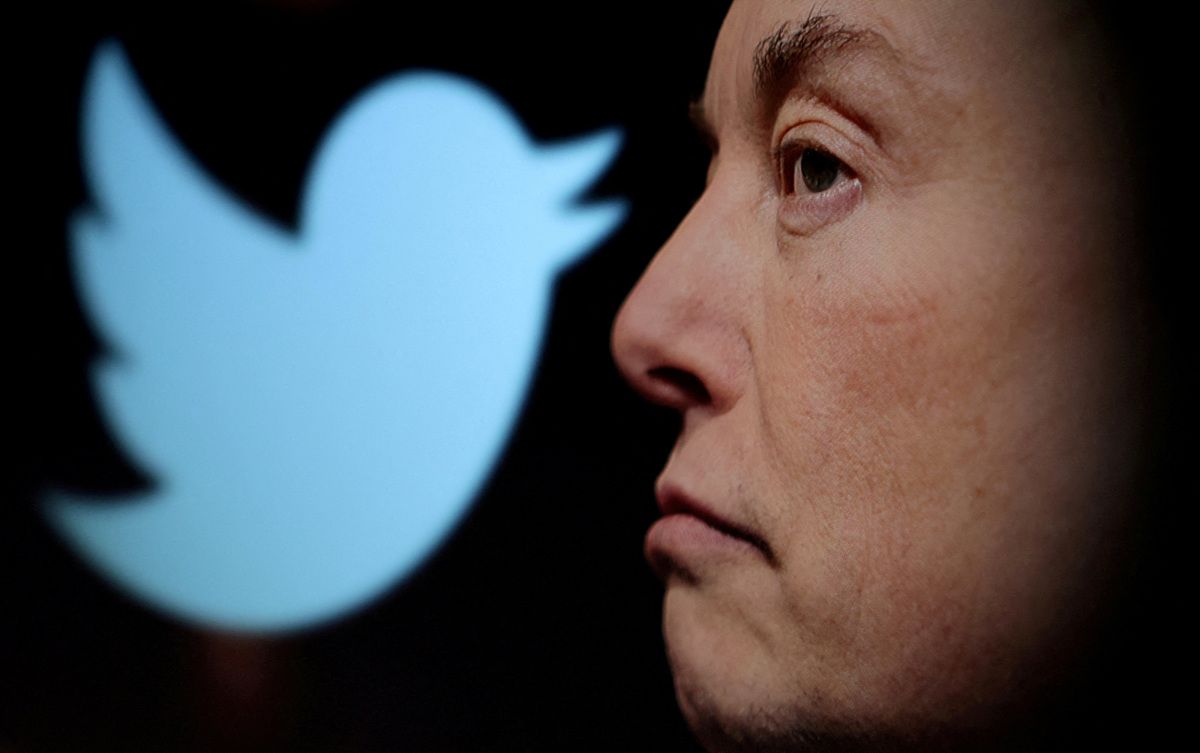
Potential name for the AI industry regulatory authority:
AI Associated Institute of America, Inc or AIAIAI, pronounced “ay yai yai”
— Elon Musk (@elonmusk) June 25, 2026
Elon Musk, the chief executive of xAI and Tesla, suggested a tongue-in-cheek name for a potential artificial intelligence regulatory authority, sparking discussion about the future of AI oversight as the technology continues rapid advancement.
Musk proposed “AI Associated Institute of America, Inc.” or AIAIAI, pronounced “ay yai yai,” in a post on X. The comment highlighted ongoing debates about how governments should approach regulation of artificial intelligence systems while the industry expands at unprecedented speed.
The suggestion comes as policymakers worldwide grapple with balancing innovation incentives with concerns about safety, bias, job displacement and potential misuse of powerful AI models. Musk has been vocal about both the opportunities and risks associated with artificial intelligence development.
His companies, including xAI, Tesla and SpaceX, are deeply involved in AI applications ranging from autonomous driving to scientific discovery. Musk’s perspective carries significant weight in technology circles given his track record of ambitious projects.
Context of AI Regulation Discussions
Governments and international organizations have proposed various frameworks for AI governance. The European Union has implemented comprehensive AI regulations, while the United States has taken a more sector-specific approach with executive orders and agency guidelines.
Industry leaders, researchers and ethicists continue debating optimal regulatory structures. Concerns include ensuring AI systems remain aligned with human values, preventing harmful applications and maintaining global competitiveness.
Musk has advocated for proactive regulation while warning about potential existential risks from superintelligent AI. His proposal for AIAIAI reflects a skeptical view of bureaucratic approaches while acknowledging the need for some oversight.
The humorous acronym plays on the Spanish expression “ay, ay, ay,” often used to express dismay or surprise. This lighthearted tone contrasts with the serious nature of AI governance discussions.
Industry Growth and Challenges
Artificial intelligence development has accelerated dramatically, with major companies investing billions in computing infrastructure and talent. Models like those powering chatbots, image generators and autonomous systems demonstrate increasing capabilities.
xAI, Musk’s AI venture, focuses on understanding the universe through advanced models. The company’s Grok chatbot aims for maximum truthfulness and helpfulness without heavy content restrictions.
Regulatory uncertainty creates challenges for companies planning long-term investments. Clear frameworks could provide certainty while addressing legitimate safety concerns raised by experts.
International coordination remains difficult as nations compete for technological leadership. Differing approaches risk creating fragmented global standards that complicate compliance.
Broader Implications
Effective AI regulation could help mitigate risks while preserving innovation benefits. Poorly designed rules might stifle progress or drive development to less regulated jurisdictions.
Public trust in AI systems depends on transparency, safety measures and accountability. Regulatory bodies could play important roles in establishing standards and enforcement mechanisms.
Musk’s comment highlights the tension between rapid technological advancement and governance needs. His companies’ experiences with regulation in automotive, space and social media sectors inform his perspective.
The AI industry’s growth affects numerous sectors, from healthcare and education to transportation and entertainment. Balanced oversight could maximize benefits while addressing legitimate concerns.
Musk’s Influence on AI Discourse
As one of technology’s most prominent figures, Musk’s statements often shape public and industry conversations. His warnings about AI risks have influenced policy discussions while his companies push boundaries in practical applications.
The AIAIAI suggestion reflects Musk’s characteristic blend of humor and serious commentary. Similar playful proposals have appeared in his commentary on other regulatory topics.
xAI’s mission to advance scientific discovery through AI represents one approach to beneficial development. The company’s progress will be watched alongside regulatory developments.
Future Regulatory Landscape
Policymakers face the challenge of creating adaptable frameworks for rapidly evolving technology. Agile regulation that can respond to new capabilities may prove more effective than static rules.
International cooperation could help establish consistent standards while respecting national priorities. Organizations like the United Nations and OECD continue facilitating dialogue on AI governance.
Industry self-regulation through best practices and safety commitments offers another avenue for responsible development. Many companies have signed voluntary agreements addressing key concerns.
The coming years will likely see continued evolution in AI regulation as capabilities advance and societal impacts become clearer. Musk’s commentary contributes to this ongoing conversation about balancing innovation with safety.
As artificial intelligence becomes more integrated into daily life, public understanding and engagement with governance issues will grow in importance. Transparent discussion about benefits and risks helps inform policy decisions.
Musk’s proposal, while humorous, draws attention to the need for thoughtful approaches to AI oversight. The technology’s transformative potential requires careful consideration of how best to guide its development for maximum benefit to humanity.
Alphabet's Dip Looks Increasingly Hard To Ignore
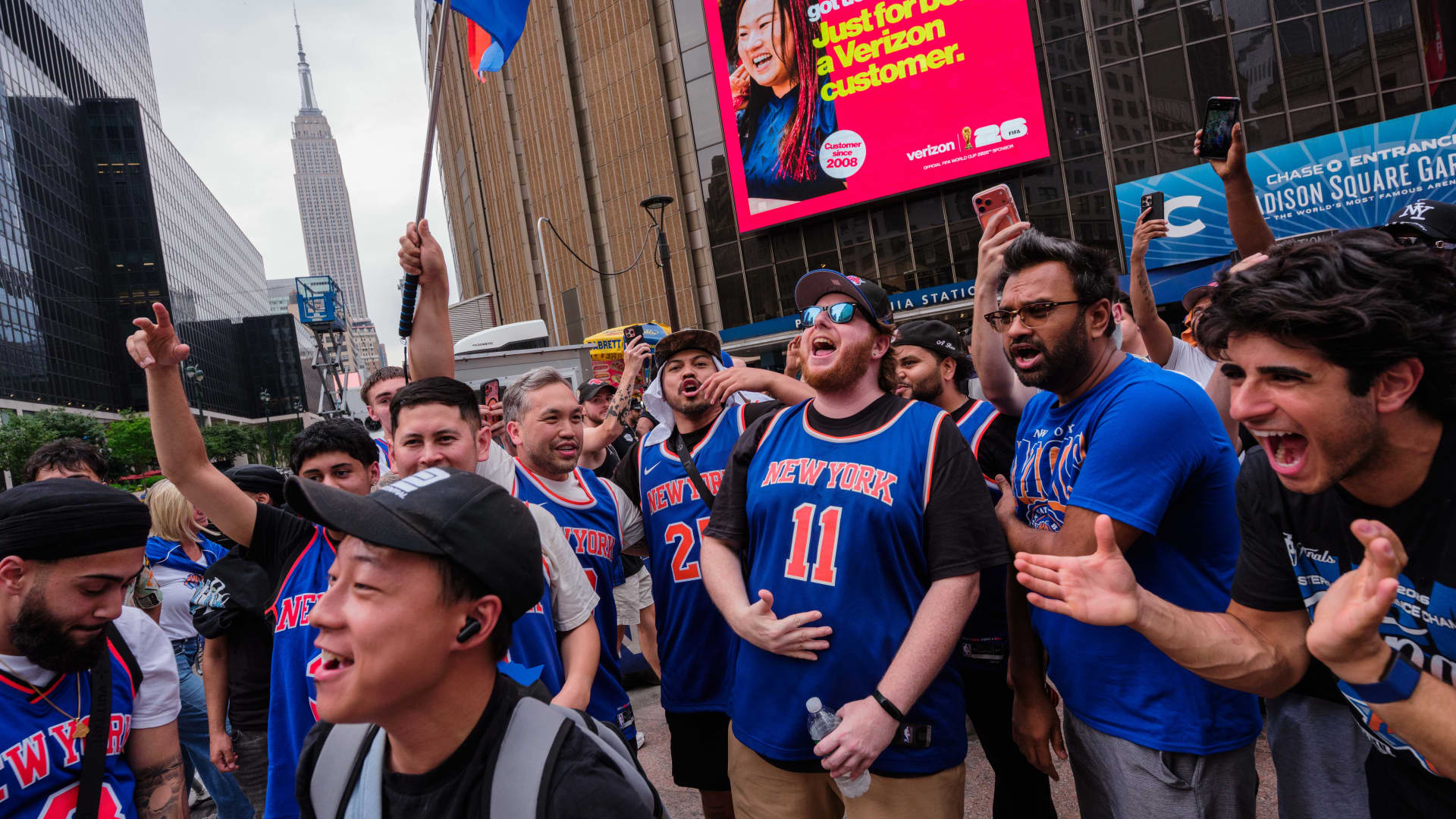

As the New York Knicks clinched their first championship in 53 years and the NBA notched its highest Finals series ratings since 1998, professional basketball was inking another record.
The five-game series between the Knicks and the San Antonio Spurs generated “15 billion views and counting on social media, the most ever for an NBA Finals and nearly triple the previous record set in 2025,” according to the NBA. Game 5 alone generated more than 4 billion views on social media platforms, breaking the record set three days prior by Game 4.
It’s emblematic of an intensifying battleground in live sports as professional leagues seek to reach new and younger fans and media consumption shifts online.
TV and streaming platforms have been attracting some of the biggest audiences for live sports this year. The NBA Finals series claimed an average of 20.6 million viewers per game on Disney’s ABC and ESPN networks.
And yet social platforms like TikTok and Google’s YouTube are claiming a disproportionate amount of viewing time for Generations Z and Alpha — often at no cost. That’s left the sports leagues and live rights holders weighing whether to go all in on social as a funnel for future audiences or to reinforce the walled garden of subscription programming to offset rising broadcast fees.
New York Knicks fans gather outside of Madison Square Garden before Game 4 of the NBA Finals between New York Knicks and San Antonio Spurs, on June 10, 2026 in New York City.
Adam Gray | Getty Images
“It’s always a question of what the leagues are doing versus what the rights holders want to do,” said Jonathan Miller, a former Fox Corp. and NBA executive who currently serves as chief executive of Integrated Media, which specializes in digital media investments.
“Reaching and cultivating the youth sports base is a major priority and focus of the leagues themselves,” Miller said. “In today’s fragmented landscape, it is no longer a luxury to have a young base, it is a necessity to ensure a healthy future.”
New fans, new ways to watch
For years YouTube has snagged the biggest share of streaming viewership, according to Nielsen’s monthly report known as “The Gauge.”
Rather than watching live games in their entirety, consumers are increasingly watching sports clips, highlights, athlete-made videos and creator content on social platforms.
According to S&P Global’s 2025 “State of U.S. sports viewing” report, 68% of sports viewers reported watching live games on TV or through streaming; 38% reported watching highlights, interviews and other clips on social media, YouTube and other platforms; and 12% said they interact with social media accounts or fan forums for professional players, teams or leagues.
“What we’re seeing today is the evolution of consumption,” said Adam Kelly, president of global sports marketing agency IMG.
The TKO Group–owned firm packages and sells media rights and brand rights as well as providing consultancy on some of the biggest TV deals globally.
Live games that are aired exclusively on streaming consistently draw significantly younger audiences than those aired on linear TV, according to Nielsen, which recently began breaking down weekly sports viewership consumption.
If you are the broadcaster and proactively using your social and digital platforms to push out tons and tons of highlights and content … you’re kind of feeding the beast.
William Mao
senior vice president of media rights consulting at Octagon
The NBA Finals saw an increase in new viewers to streaming platforms like Disney’s ESPN, according to Apptopia. Even streaming-only versions of pay TV bundles like Fubo and YouTube saw similar results.
However, when broken down by age, those new viewers for the NBA postseason tended to skew older, according to Apptopia’s data.
ESPN streaming saw an increase of 38% in new users over the age of 46, while the youngest cohort between 17 and 25 was up just 8%. For Fubo and YouTube, the growth was also heavily skewed toward the over-46 audience.
“Our hypothesis when it comes to young fans is that they play a very important part in consuming sport and will continue to, but their consumption behavior is slightly different,” said Kelly. “People talk about fragmentation of the audience, but actually, consumption numbers have continued to increase.”
Sports highlights
Industry executives told CNBC that as sports migrate more and more onto social platforms, the content is acting as a conduit to live games, not a pure replacement.
“It’s just a continued development of the accessibility of content — a lot more platforms in the marketplace catering to short-form content,” said William Mao, senior vice president of media rights consulting at Octagon, a global sports and entertainment agency.
Mao said the rise of social content around live sports is an acknowledgment that companies need to “target and engage those younger demographics, those future consumers … where they are,” Mao said.
The appetite for clips is creating something of a land grab between leagues and media rights holders, according to Mao.
Both the broadcasters and the leagues have their own social media presences. If multiple accounts want use of the same footage, it could dilute the audience.
Mao said as a result, media negotiations can go so far as to determine how long a highlight or clip can be used exclusively on one platform versus another.
The hope is that a healthy highlight reel on social feeds spurs interest among younger fans in live matchups.
Alicia Windzio | Picture Alliance | Getty Images
Rollo Goldstaub, the global head of sport at TikTok, said 42% of users watching sports content on the short-form video platform will go on to tune into a live game on TV or streaming.
Goldstaub said his job includes making sure the platform has content from across the sports ecosystem — the leagues, athletes, media broadcasts and content creators. He said content directly from the broadcaster or the league, such as game highlights, typically has high engagement.
IMG’s Kelly said younger audiences “have been asked to fit into the existing framework when it comes to sports consumption.”
“Distribution has stayed very much on the traditional means of delivery because it’s what worked so well for so long,” he said. “Non-linear [TV] young fans are spending most of their time on these platforms. Their preference is to consume content where they’re already consuming other material.”
While there are ways to monetize highlights and content on social media — such as ad revenue sharing on platforms like YouTube and other sponsorship opportunities — the main source of value for these games comes from the airing of the live matches on TV and streaming.
With sports fees skyrocketing, the need to earn that investment back grows.
The NBA is in the early years of its 11-year, $77 billion deal. The NFL, which is in the midst of its own 11-year deal worth a record $111 billion, has put heavier weight on advertising to drive revenue.
“There’s an argument that if you are the broadcaster and proactively using your social and digital platforms to push out tons and tons of highlights and content, you’re kind of accelerating that trend even further right?” Mao said. “You’re kind of feeding the beast.”
Reaching young fans
To embrace younger fans, the major players are starting to adapt.
FIFA, the governing body over the World Cup, is allowing its global broadcasts to post more content on TikTok, whether that’s of the matches themselves or surrounding game footage.
The tournament is currently underway in the U.S., Canada and Mexico, and the first 10 minutes of every match can be shown on TikTok. When the stream ends there’s a direct link to stream the game, shown in the U.S. via networks owned by Fox and Comcast’s Telemundo.
Malik Tillman #17 of the United States is challenged by Miguel Almiron #10 of Paraguay during the FIFA World Cup 2026 Group D match between USA and Paraguay at Los Angeles Stadium on June 12, 2026 in Los Angeles, California.
Dean Mouhtaropoulos | Getty Images Sport | Getty Images
In February, the NBA leaned into creator content during its All-Star weekend, inviting more than 200 digital natives to the event.
Rights holders Paramount Skydance and Disney have rolled out kid-friendly simulcasts to capture the youngest fans who may be tuning in alongside their parents.
Paramount’s CBS has aired alternate broadcasts of live sports on its children’s TV network Nickelodeon — from Christmas Day games to the 2023 Super Bowl — complete with slime graphics and characters like SpongeBob SquarePants running on the field.
Disney has tapped into its intellectual property for ESPN’s NFL games, too, including overlays with characters from films like “Monsters Inc.” and “Toy Story.”
And leagues across sport have partnered with Gamefam, a leading Roblox game developer, to bring their team jerseys and content to the video game platform that’s popular with Gen Z and Gen Alpha.
Roblox collaborated with Paramount for its Super Bowl broadcast on Nickelodeon, which became the biggest event ever on Roblox with 70 million visits in 30 days: “It was huge,” said Gamefam CEO Ricardo Briceno.
Briceno noted that building fandom and converting users from Roblox to beyond the platform is “very important.” That could mean watching a game or buying a jersey or other merchandise.
“That’s the funnel. You build awareness and love for the brand, then you put your dollars into it,” said Briceno.
From TV to tech
There’s a flipside to fueling the funnel.
The tech companies and streamers acting as a bridge to younger viewers are becoming established bidders for the live games in their own right.
Google’s YouTube, Amazon’s Prime Video, Apple and Netflix have begun to nab more games and garner big viewership numbers.
NFL Commissioner Roger Goodell at the Netflix advertising presentation in 2025.
Courtesy of Netflix
NFL Commissioner Roger Goodell has been vocal about meeting young fans where they are on streaming services. The NBA’s latest media deal brought in Prime Video to replace Warner Bros. Discovery’s TNT Sports. YouTube aired its first-ever NFL game in September.
The strategy appears to be working. The NBA scored some of its highest-rated games this season, and the NFL’s “Thursday Night Football” on Prime Video has continued to capture more viewers — delivering its most-watched season in its 20-year history.
Still, IMG’s Kelly, TikTok’s Goldstaub and others said they don’t view the shift toward social media as a threat to the traditional media partners.
“We can be that partner that’s driving the value of these younger and more likely female fans, the ones that broadcasters are struggling to reach,” Goldstaub said.
“I think right now we’re really happy operating in this space of almost like part of the game,” he said. “We get to promote the full match live, we get to promote the broadcaster, but we also get to give users something really amazing and interesting to see.”

Violetastoimenova | E+ | Getty Images
A version of this article first appeared in CNBC’s Inside Wealth newsletter with Robert Frank, a weekly guide to the high-net-worth investor and consumer. Sign up to receive future editions, straight to your inbox.
Donors gave an estimated $617.2 billion to U.S. charities last year, up 5.7% from the year prior on a blistering stock market rally, according to a Giving USA report released this week.
The findings mark the first time yearly giving has topped $600 billion in the 60-year history of the annual philanthropy report, which is published by the Giving USA Foundation. Adjusted for inflation, giving was up 3% year over year.
The effect of the stock market boom, however, was more pronounced with deep-pocketed donors. Individual donors still made up the highest share of contributions at $394.2 billion, but that sum grew just 1.4% in inflation-adjusted dollars, while charitable bequests – gifts made after death – surged by 16.6% to an estimated $62.19 billion.
The rise in bequests could be the latest signal of the Great Wealth Transfer. Cerulli Associates estimates more than $124 trillion in assets will pass down by 2048, with about $18 trillion allocated to charity.
Jon Bergdoll, the report’s lead analyst, said it’s too early to tell how much of the increase in bequeathed gifts is due to the massive handover of wealth.
What’s clearer, according to Bergdoll, is that wealthy Americans who are most likely to leave large sums to charity are the biggest beneficiaries of the stock market boom.
“There’s always a pretty tight connection between bequest and overall net worth, which in turn, is pretty connected to the market,” said Bergdoll, interim director of data and research partnerships at the Lilly Family School of Philanthropy at Indiana University, which researches and writes the report.

The stock market’s impact on overall giving, which includes gifts by foundations and corporations, is slower and more muted. That said, Bergdoll said he expected a bigger uptick in giving considering the past few years of strong market growth. Between 2024 and 2025, the S&P 500 jumped 13.4% in inflation-adjusted dollars, roughly four times the rate of growth in total giving, per the report.
He attributed much of the gap between paper wealth and total giving to tepid growth in gross domestic product and record-low consumer sentiment.
“This is a somewhat strange economy for that stock market growth,” he said. “While the market’s doing well, and GDP is doing OK, it does seem like there is a lot of unease. We know that giving comes from a place of financial security for people, and so that could be dragging things down a little bit on the individual end.”
Bergdoll added that it would be detrimental for the nonprofit sector if charitable giving followed stock fluctuations too closely.
“We wouldn’t want it to be a one-for-one relationship,” he said. “As much as we might want giving to go up 20% when the market goes up 20%, we really don’t want giving to go down by 20% when the market goes down by 20%.”
Many top earners were expected to pull forward donations in 2025 to take advantage of tax benefits set to decline due to the One Big Beautiful Bill Act. Bergdoll said the uptick was significant but small relative to overall contributions. The report estimated donors gave an additional $1.71 billion in 2025 to take fuller advantage of expiring tax incentives.
While U.S. charities are receiving more dollars, they have become increasingly reliant on the ultra-wealthy as economic pressures squeeze middle-class donors. The report estimated that nine donors accounted for a whopping $22.32 billion of last year’s total philanthropy. MacKenzie Scott, philanthropist and ex-wife of Amazon founder Jeff Bezos, contributed the largest share at $6.65 billion.
These donors’ megagifts, or contributions of at least 0.1% of total giving, can reshape philanthropy year to year. Nearly a third of the increase in bequest giving came from the estate of late Microsoft cofounder Paul Allen, which established a $3.1 billion fund for science and technology research.
Gabe Cooper, vice chair of the Giving USA Foundation, told CNBC he had mixed feelings about megagifts.
“Do I love when the Paul Allens and MacKenzie Scotts of the world commit to giving away a lot of their wealth? Yes, 100%, and I wish more billionaires would do the same,” said Cooper, who is also the CEO of fundraising platform Virtuous. “On the flip side of that, I actually don’t want that number to grow too big. I don’t want a growing dependence on the megawealthy, whose giving patterns might be more volatile year to year.”
While the rise in bequests is a boon for philanthropy, Cooper has his eye on the bigger prize: heirs.
“If a billionaire passes away, and they give $200 million to charity, the other $800 million is probably going to their kiddos, and so I want those kiddos to make really good decisions in terms of philanthropy,” he said.


Consultancy sees the active GLP-1 user population rising by as much as 50% by 2027.

Queer club Bears Perth has lodged a formal objection to Perth’s new National Rugby League club registering the name Perth Bears in a case that could force a rethink for the rugby league startup.

Under the old policy, Ryanair said adults travelling with children paid one reserved seat fee, and could select seats beside them for up to four children for free.
This typically led to a fee of £8 each way, the CMA said when it launched its investigation earlier this month.
It said at the time it was looking at whether the airline’s “approach to seat reservations may mean parents are being charged for the airline to meet its child safety and disability‑related obligations as set out under aviation rules – and will investigate to determine whether or not this practice is in line with consumer law”.
Other airlines offered to seat children next to a parent or guardian without a fee, or allocate seats together automatically during booking for free, it added.
Ryanair said its policy had given families certainty of where they would be sitting at the time of booking, which they had valued.
It said the “free parent seats” will now be available at the back of the aircraft, as front rows tend to be reserved.
The “minor policy tweak” came into effect on Thursday, it said. It does not expect the change to have an effect on Ryanair’s revenue.
O’Leary hit out at the CMA for targeting its family seating policy, which he said had been “universally embraced by consumers as the most progressive and transparent in Europe”.
“Instead of promoting competitiveness and lower fares for consumers, the CMA is on a mission to force Ryanair to adopt the less transparent and less consumer-friendly family seating policy applied by most other airlines – just because it’s the industry standard,” he said.

EastEnders reveals Christmas story as nightmare confirmed for beloved couple | Soaps

US economy grew at 2.1% in first quarter

Spark Brings $150M Stablecoin Liquidity to Uniswap v4


-

 Fashion6 days ago
Weekend Open Thread: Miami – Corporette.com
-

 Entertainment5 days ago
Renter of Home in Anne Heche Crash Denies Settlement With Son
-
 Sports2 days ago
Two goals and an assist by sheer aura: Cristiano Ronaldo just entered the World Cup chat
-

 Tech3 days ago
Microsoft accidentally kills epic Outlook email threads
-

 Business5 days ago
Soccer-U.S. defends Iran World Cup travel restrictions, says discussions ongoing
-

 Politics5 days ago
Andy Burnham and the meaning of Makerfield
-
Crypto World1 day ago
Bitcoin (BTC) Dips Below $62K, Ethereum (ETH) Plunges 6% Daily: Market Watch
-

 Politics7 days ago
BBC Reporter Discusses Cross Party Criticism Of Trumps Iran Deal
-

 Crypto World1 day ago
Securitize Wraps Roubini's SEC-Registered ETF as Dubai VARA Digital Security
-
Business2 days ago
Entergy settles forward sale agreements, raises $672 million in cash proceeds
-

 NewsBeat6 days ago
Keir Starmer Allies Question His Chances For No 10
-
 Business5 days ago
Wall Street Week Ahead: Investors see Micron earnings as pulse check of AI rally momentum
-
 Crypto World5 days ago
Can Charles Hoskinson Really Rescue Cardano?
-

 Tech7 days ago
AWS enters the context layer race with a graph that learns from agents, not manual curation
-

 Crypto World5 days ago
HIVE shares jump as $220M AI deal speeds Bitcoin mining pivot
-

 Crypto World5 days ago
Jake Chervinsky accuses CME of protecting derivatives monopoly
-

 Entertainment5 days ago
Jose Alvarado Wants Taylor Swift at More Knicks Games
-
 Tech4 days ago
Signal’s Meredith Whittaker says AI chatbots ‘are not your friends’ and calls Copilot agents a backdoor
-

 Tech3 days ago
Nearly 7,000 fake Amazon domains registered ahead of Prime Day 2026, researchers warn
-

 Sports7 days ago
FIFA World Cup 2026: Canada beat 9-men Qatar 6-0 to register first ever win | FIFA World Cup 2026
You must be logged in to post a comment Login