As the New York Knicks clinched their first championship in 53 years and the NBA notched its highest Finals series ratings since 1998, professional basketball was inking another record.
The five-game series between the Knicks and the San Antonio Spurs generated “15 billion views and counting on social media, the most ever for an NBA Finals and nearly triple the previous record set in 2025,” according to the NBA. Game 5 alone generated more than 4 billion views on social media platforms, breaking the record set three days prior by Game 4.
It’s emblematic of an intensifying battleground in live sports as professional leagues seek to reach new and younger fans and media consumption shifts online.
TV and streaming platforms have been attracting some of the biggest audiences for live sports this year. The NBA Finals series claimed an average of 20.6 million viewers per game on Disney’s ABC and ESPN networks.
Advertisement
And yet social platforms like TikTok and Google’s YouTube are claiming a disproportionate amount of viewing time for Generations Z and Alpha — often at no cost. That’s left the sports leagues and live rights holders weighing whether to go all in on social as a funnel for future audiences or to reinforce the walled garden of subscription programming to offset rising broadcast fees.
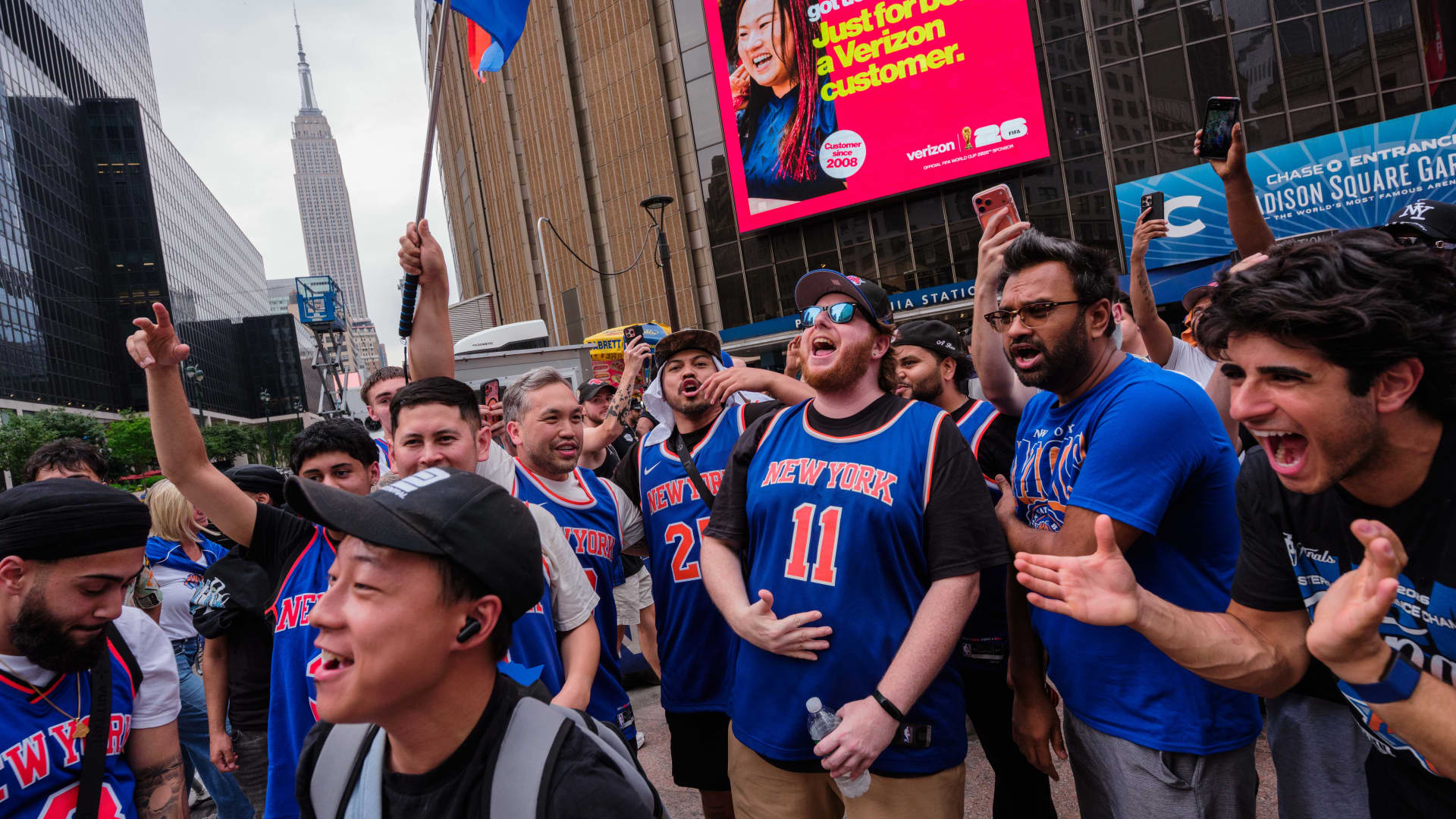
New York Knicks fans gather outside of Madison Square Garden before Game 4 of the NBA Finals between New York Knicks and San Antonio Spurs, on June 10, 2026 in New York City.
Adam Gray | Getty Images
“It’s always a question of what the leagues are doing versus what the rights holders want to do,” said Jonathan Miller, a former Fox Corp. and NBA executive who currently serves as chief executive of Integrated Media, which specializes in digital media investments.
Advertisement
“Reaching and cultivating the youth sports base is a major priority and focus of the leagues themselves,” Miller said. “In today’s fragmented landscape, it is no longer a luxury to have a young base, it is a necessity to ensure a healthy future.”
New fans, new ways to watch
For years YouTube has snagged the biggest share of streaming viewership, according to Nielsen’s monthly report known as “The Gauge.”
Rather than watching live games in their entirety, consumers are increasingly watching sports clips, highlights, athlete-made videos and creator content on social platforms.
According to S&P Global’s 2025 “State of U.S. sports viewing” report, 68% of sports viewers reported watching live games on TV or through streaming; 38% reported watching highlights, interviews and other clips on social media, YouTube and other platforms; and 12% said they interact with social media accounts or fan forums for professional players, teams or leagues.
Advertisement
“What we’re seeing today is the evolution of consumption,” said Adam Kelly, president of global sports marketing agency IMG.
The TKO Group–owned firm packages and sells media rights and brand rights as well as providing consultancy on some of the biggest TV deals globally.
Live games that are aired exclusively on streaming consistently draw significantly younger audiences than those aired on linear TV, according to Nielsen, which recently began breaking down weekly sports viewership consumption.
If you are the broadcaster and proactively using your social and digital platforms to push out tons and tons of highlights and content … you’re kind of feeding the beast.
William Mao
Advertisement
senior vice president of media rights consulting at Octagon
The NBA Finals saw an increase in new viewers to streaming platforms like Disney’s ESPN, according to Apptopia. Even streaming-only versions of pay TV bundles like Fubo and YouTube saw similar results.
However, when broken down by age, those new viewers for the NBA postseason tended to skew older, according to Apptopia’s data.
ESPN streaming saw an increase of 38% in new users over the age of 46, while the youngest cohort between 17 and 25 was up just 8%. For Fubo and YouTube, the growth was also heavily skewed toward the over-46 audience.
Advertisement
“Our hypothesis when it comes to young fans is that they play a very important part in consuming sport and will continue to, but their consumption behavior is slightly different,” said Kelly. “People talk about fragmentation of the audience, but actually, consumption numbers have continued to increase.”
Sports highlights
Industry executives told CNBC that as sports migrate more and more onto social platforms, the content is acting as a conduit to live games, not a pure replacement.
“It’s just a continued development of the accessibility of content — a lot more platforms in the marketplace catering to short-form content,” said William Mao, senior vice president of media rights consulting at Octagon, a global sports and entertainment agency.
Mao said the rise of social content around live sports is an acknowledgment that companies need to “target and engage those younger demographics, those future consumers … where they are,” Mao said.
Advertisement
The appetite for clips is creating something of a land grab between leagues and media rights holders, according to Mao.
Both the broadcasters and the leagues have their own social media presences. If multiple accounts want use of the same footage, it could dilute the audience.
Mao said as a result, media negotiations can go so far as to determine how long a highlight or clip can be used exclusively on one platform versus another.
The hope is that a healthy highlight reel on social feeds spurs interest among younger fans in live matchups.
Advertisement
Alicia Windzio | Picture Alliance | Getty Images
Rollo Goldstaub, the global head of sport at TikTok, said 42% of users watching sports content on the short-form video platform will go on to tune into a live game on TV or streaming.
Goldstaub said his job includes making sure the platform has content from across the sports ecosystem — the leagues, athletes, media broadcasts and content creators. He said content directly from the broadcaster or the league, such as game highlights, typically has high engagement.
IMG’s Kelly said younger audiences “have been asked to fit into the existing framework when it comes to sports consumption.”
Advertisement
“Distribution has stayed very much on the traditional means of delivery because it’s what worked so well for so long,” he said. “Non-linear [TV] young fans are spending most of their time on these platforms. Their preference is to consume content where they’re already consuming other material.”
While there are ways to monetize highlights and content on social media — such as ad revenue sharing on platforms like YouTube and other sponsorship opportunities — the main source of value for these games comes from the airing of the live matches on TV and streaming.
With sports fees skyrocketing, the need to earn that investment back grows.
The NBA is in the early years of its 11-year, $77 billion deal. The NFL, which is in the midst of its own 11-year deal worth a record $111 billion, has put heavier weight on advertising to drive revenue.
Advertisement
“There’s an argument that if you are the broadcaster and proactively using your social and digital platforms to push out tons and tons of highlights and content, you’re kind of accelerating that trend even further right?” Mao said. “You’re kind of feeding the beast.”
Reaching young fans
To embrace younger fans, the major players are starting to adapt.
FIFA, the governing body over the World Cup, is allowing its global broadcasts to post more content on TikTok, whether that’s of the matches themselves or surrounding game footage.
The tournament is currently underway in the U.S., Canada and Mexico, and the first 10 minutes of every match can be shown on TikTok. When the stream ends there’s a direct link to stream the game, shown in the U.S. via networks owned by Fox and Comcast’s Telemundo.
Advertisement
Malik Tillman #17 of the United States is challenged by Miguel Almiron #10 of Paraguay during the FIFA World Cup 2026 Group D match between USA and Paraguay at Los Angeles Stadium on June 12, 2026 in Los Angeles, California.
Dean Mouhtaropoulos | Getty Images Sport | Getty Images
In February, the NBA leaned into creator content during its All-Star weekend, inviting more than 200 digital natives to the event.
Rights holders Paramount Skydance and Disney have rolled out kid-friendly simulcasts to capture the youngest fans who may be tuning in alongside their parents.
Advertisement
Paramount’s CBS has aired alternate broadcasts of live sports on its children’s TV network Nickelodeon — from Christmas Day games to the 2023 Super Bowl — complete with slime graphics and characters like SpongeBob SquarePants running on the field.
Disney has tapped into its intellectual property for ESPN’s NFL games, too, including overlays with characters from films like “Monsters Inc.” and “Toy Story.”
And leagues across sport have partnered with Gamefam, a leading Roblox game developer, to bring their team jerseys and content to the video game platform that’s popular with Gen Z and Gen Alpha.
Roblox collaborated with Paramount for its Super Bowl broadcast on Nickelodeon, which became the biggest event ever on Roblox with 70 million visits in 30 days: “It was huge,” said Gamefam CEO Ricardo Briceno.
Advertisement
Briceno noted that building fandom and converting users from Roblox to beyond the platform is “very important.” That could mean watching a game or buying a jersey or other merchandise.
“That’s the funnel. You build awareness and love for the brand, then you put your dollars into it,” said Briceno.
From TV to tech
There’s a flipside to fueling the funnel.
The tech companies and streamers acting as a bridge to younger viewers are becoming established bidders for the live games in their own right.
Advertisement
Google’s YouTube, Amazon’s Prime Video, Apple and Netflix have begun to nab more games and garner big viewership numbers.
NFL Commissioner Roger Goodell at the Netflix advertising presentation in 2025.
Courtesy of Netflix
NFL Commissioner Roger Goodell has been vocal about meeting young fans where they are on streaming services. The NBA’s latest media deal brought in Prime Video to replace Warner Bros. Discovery’s TNT Sports. YouTube aired its first-ever NFL game in September.
Advertisement
The strategy appears to be working. The NBA scored some of its highest-rated games this season, and the NFL’s “Thursday Night Football” on Prime Video has continued to capture more viewers — delivering its most-watched season in its 20-year history.
Still, IMG’s Kelly, TikTok’s Goldstaub and others said they don’t view the shift toward social media as a threat to the traditional media partners.
“We can be that partner that’s driving the value of these younger and more likely female fans, the ones that broadcasters are struggling to reach,” Goldstaub said.
“I think right now we’re really happy operating in this space of almost like part of the game,” he said. “We get to promote the full match live, we get to promote the broadcaster, but we also get to give users something really amazing and interesting to see.”
Thank you for standing by, and welcome to the Cavco Industries, Inc.’s First Quarter Fiscal Year 2027 Earnings Call and Webcast. [Operator Instructions] As a reminder. Today’s program is being recorded.
And now I’d like to introduce your host for today’s program, Mark Fusler, Corporate Controller and Investor Relations. Please go ahead, sir.
Advertisement
Mark Fusler Director of Financial Reporting, Investor Relations & Corporate Controller
Good day, and thank you for joining us for Cavco Industries First Quarter Fiscal Year 2027 Earnings Conference Call. During this call, you’ll be hearing from Bill Boor, President and Chief Executive Officer; Allison Aden, Executive Vice President and Chief Financial Officer; and Paul Bigbee, Chief Accounting Officer.
Before we begin, we’d like to remind you that the comments made during this conference call by management may contain forward-looking statements. Forward-looking statements include statements about our future or expected business and financial performance and are not promises or guarantees of future performance, their expectations or assumptions about Cavco’s financial and operational performance, revenues, earnings per share, cash flow or use, cost savings, operational efficiencies, current or future volatility in the credit markets or future market conditions.
All forward-looking statements involve risks and uncertainties, which could affect Cavco’s actual results and could cause its actual results to differ materially
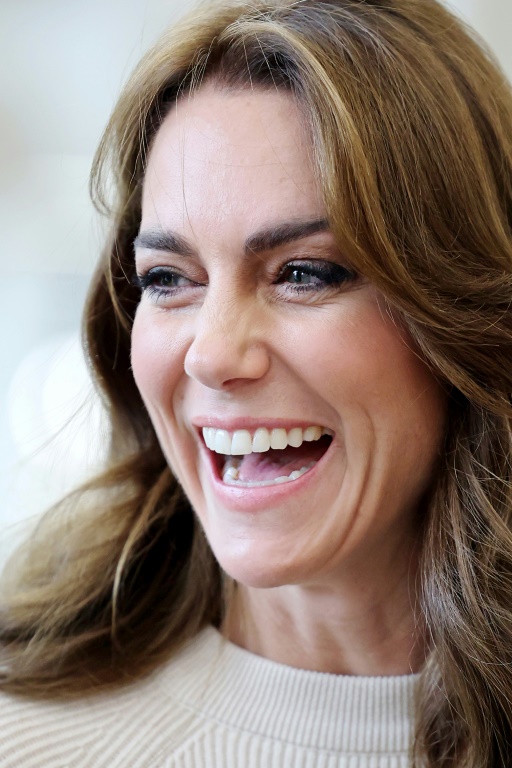
Kate Middleton has become one of King Charles III’s most trusted family members, with royal watchers pointing to a shared cancer diagnosis and years of steady public service as factors that have deepened the bond between the king and the Princess of Wales.
Katie Nicholl, a royal correspondent for Vanity Fair and co-host of the podcast “The Royals Uncensored,” said the princess has consistently proven her value to the institution since marrying into the royal family. “I think Catherine, the Princess of Wales, has always been a very valuable asset to the royal family,” Nicholl told Fox News Digital. “She is the commoner who married into the royal family … [She has made] a seamless transition into that unique world of royalty. It’s not easy … There’s a huge amount of sacrifice that goes into being a member of the royal family.” Nicholl added that Kate has handled that sacrifice with composure. “Catherine’s had to give up a huge amount, and yet she does it all with a great deal of grace and dignity, always with a smile,” Nicholl said. “So she is absolutely the monarchy’s greatest asset.”
The relationship between Charles and Kate has grown notably closer following parallel health struggles both experienced beginning in 2024. Buckingham Palace announced the king’s cancer diagnosis that year, and Charles shared in December 2025 that his treatment would be scaled back in 2026. Kate revealed her own cancer diagnosis in March 2024, shortly after the king’s announcement became public. She completed chemotherapy that September and announced in January 2025 that she was in remission.
British broadcaster and photographer Helena Chard said the king has drawn inspiration from watching Kate navigate her illness. “King Charles sees enormous value in Princess Catherine,” Chard told Fox News Digital. “Not just as the wife of his heir, but as the cornerstone of the monarchy itself. He genuinely loves his ‘darling’ daughter-in-law. His face lights up when he is with her. They share similar interests, and they have shared a similar cancer journey, one that has created a deep bond and understanding that goes beyond duty.”
Advertisement
Chard said the late Queen Elizabeth II had recognized Kate’s value to the institution well before Charles ascended the throne. “The late queen saw it too,” Chard said. “She recognized Catherine’s superpowers early on — her ability to listen, find solutions and bring calm to difficult situations.” Chard also framed Kate’s role within Charles’s broader approach to his reign. “King Charles fundamentally views his time on the throne as stewardship,” she said. “He sees himself as the caretaker of the institution and is acutely conscious of preparing the next generation. Collaborative preparation between the king and his heir is essential. Having Princess Catherine as the wife of his heir, Charles has struck gold.”
Royal author Sally Bedell Smith, in previous comments to People magazine, described the relationship in more personal terms. “He has always had a very strong bond with her,” Smith told the outlet, adding that Kate is “like the daughter he never had.” Smith said Charles shares a protective instinct toward Kate with his son, Prince William. “He shares with William an impulse to protect her,” Smith said. “They are in this together, Kate and the king.”
When Kate’s diagnosis first became public, Buckingham Palace said Charles was “so proud of Catherine for her courage in speaking as he did.” Author Christopher Andersen has separately written that the king stood by Kate’s side during her treatment “to lend his cherished daughter-in-law moral support.”
Kate has continued advocacy work tied to her cancer experience in the time since her recovery, including a recent charity fundraising climb of the three highest peaks in the United Kingdom for the Royal Marsden hospital. Nicholl said that effort has strengthened public support for the princess. “Thankfully, despite a serious health issue, she has overcome that,” Nicholl said. “We’ve just seen her climb the three highest peaks in the United Kingdom to raise money for the Royal Marsden. She’s turning her experience into something positive, and I think that’s earned her a great deal of respect among the British public, along with a lot of love and affection. People are very much behind her and William.”
Advertisement
Chard echoed that sentiment, describing Kate’s broader connection with the public. “Princess Catherine connects with people in a way that restores faith in the monarchy,” Chard said. “She has learned every aspect of the institution over many years and has blended in carefully without fuss. Princess Catherine is central to the institution’s success, and King Charles knows this.”
Royal commentators say Kate’s steadiness has taken on added significance as the working royal family has grown smaller in recent years. Prince Andrew stepped back as a working royal in 2019 amid his ties to the late convicted sex offender Jeffrey Epstein, and Charles has since formally stripped him of his princely title and HRH style. Prince Harry and Meghan Markle, the Duke and Duchess of Sussex, stepped back from royal duties in 2020 and relocated to California.
Royals commentator Richard Fitzwilliams said the king’s appreciation for Kate extends to her partnership with William. “Naturally, King Charles recognizes the value of Kate, who is indeed the monarchy’s greatest asset,” Fitzwilliams told Fox News Digital. “We should add, ‘together with her partnership with William and their family.’ While we praise Catherine’s many strengths, William is the future king. She will one day be queen consort. They see themselves as a close-knit couple.” Fitzwilliams also pointed to Kate’s support for William amid reported tension over how to handle Harry. “William is currently at the center of reports that he and the king differ over how to handle Prince Harry, in particular,” Fitzwilliams said. “As she showed when the Sussexes met with the king and Queen Camilla, she fully supports William’s approach.”
Royals expert Hilary Fordwich said Kate’s steadiness has translated into measurable public goodwill. “It’s not at all surprising King Charles and Princess Catherine have bonded,” Fordwich told Fox News Digital. “One can tangibly feel the public also values her wonderful assets from the reception she always receives when in public, as well as in opinion polls. She has become indispensable and has won the public’s trust.” Fordwich attributed that trust in part to how Kate handled her illness. “She handled the strain of her cancer battle with dignity, without any indication of self-pity.”
Good morning, ladies and gentlemen, and welcome to the Bombardier Second Quarter 2026 Earnings Conference Call. Please be advised that this call is being recorded. At this time, I would like to turn the discussion over to Mr. Francis Richer de La Fleche, Vice President, FP&A and Investor Relations for Bombardier. Please go ahead.
Francis Richer de La Fleche Vice President of Financial Planning & Investor Relations
Advertisement
Good morning, everyone, and welcome to Bombardier’s earnings call for the second quarter of 2026. I wish to remind you that during the course of this call, we may make projections or other forward-looking statements regarding future events or the financial performance of the corporation. There are risks that actual events or results may differ materially from these statements. For additional information on forward-looking statements and underlying assumptions, please refer to the MD&A. I’m making this cautionary statement on behalf of each speaker on this call.
With me today is our President and Chief Executive Officer, Éric Martel; and our Executive Vice President and Chief Financial Officer, Bart Demosky, to review our operations and financial results for the second quarter ended June 30, 2026.
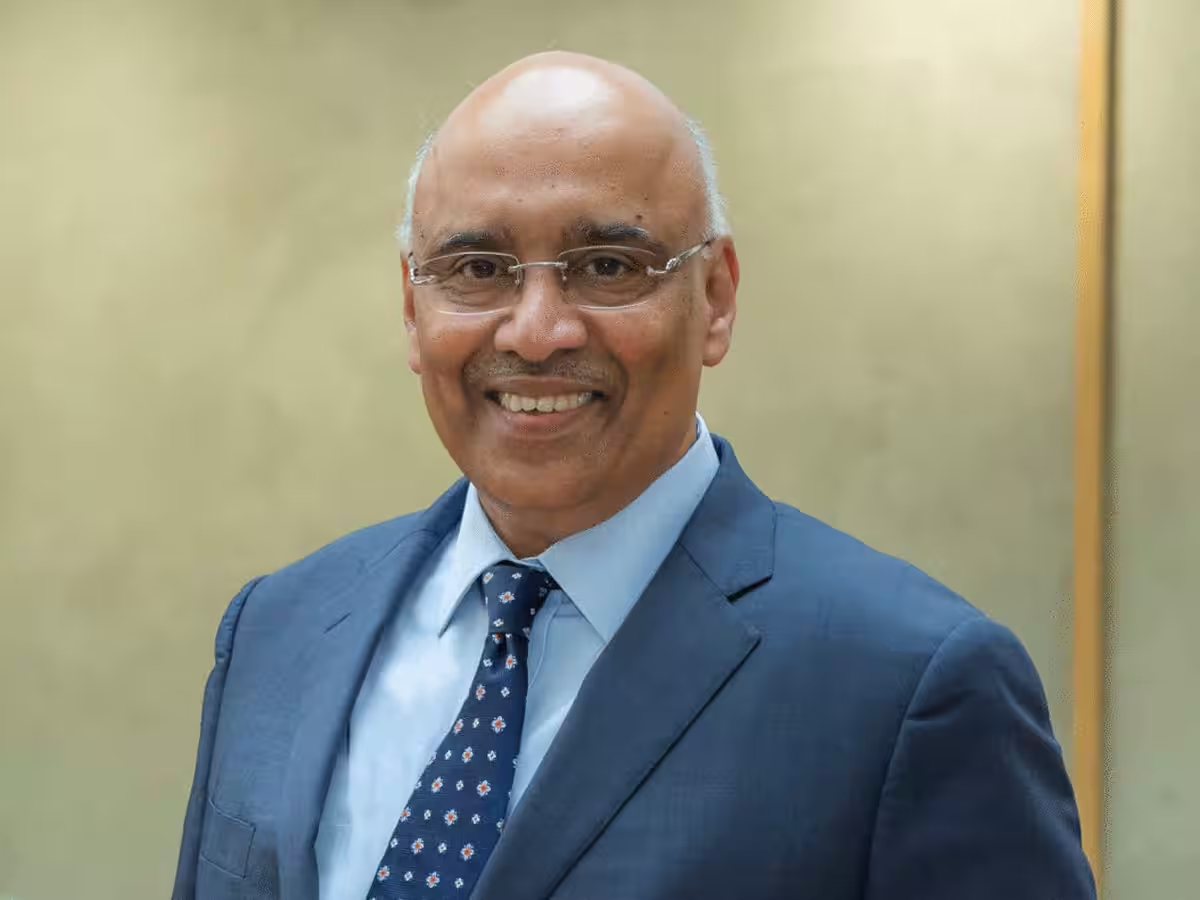
MUMBAI: In the midst of Indian companies battling the Covid-19 disruption, there is a growing realisation and acceptance that artificial intelligence (AI) is not only unavoidable but it must be adopted quickly to remain competitive in the marketplace, Deloitte India CEO N Venkatram told ET.“Indian companies need to re-skill, train, and acquire more relevant talent, if they are to successfully integrate AI technologies. Most importantly, they
NEW DELHI: For Indian dating apps and services, small cities and towns are now driving the growth more than the metros.According to companies like Aisle and Truly Madly, which have millions of users and position themselves as “serious” dating apps, and bespoke high-end dating services like Sirf Coffee, a lot more users from such places are not only keen on using these apps, but also willing to pay for it.While users for these apps from small
NEW DELHI: The government may keep an outlay of Rs 7,500 crore under the production linked incentive scheme for IT hardware products like personal computers, laptops, tablets and servers, according to a source aware of the development.
Foreign companies looking for incentives under the scheme may have to invest Rs 500 crore over four years, while the threshold for domestic firms is likely to be around Rs 20 crore for five years, the source who did not wish to be named said.
“Meity (Ministry of Electronics and Information Technology) will take the Cabinet approval of the detailed guidelines soon and is hopeful of rolling out the scheme from next financial year. The incentive outlay is likely to be around Rs 7,500 crore,” the source said.
The government has announced a cumulative production linked incentive of Rs 2 lakh crore for 10 sectors to encourage domestic manufacturing after seeing traction of global giants like Apple’s contract manufacturers, Samsung etc for the scheme in the mobile devices segment.
Advertisement
According to mobile devices industry body ICEA, India has the potential to scale up its cumulative laptop and tablet manufacturing capacity to over Rs 7 lakh crore by 2025 through policy interventions.
Scaling up laptop and tablet PC manufacturing can take the share of India in the global market to 26 per cent from 1 per cent at present.
Besides, it will generate 5 lakh new jobs and lead to a cumulative inflow of foreign exchange to the tune of Rs 5.5 lakh crore and investment of over Rs 7,300 crore by 2025.
Wall Street ended higher on Friday, lifted by Amazon as the tech heavyweight’s strong quarterly report bolstered investor confidence in AI-related stocks, while Apple dropped after its results disappointed investors. Amazon.com surged after posting its biggest quarterly revenue growth in over four years. Its results, along with a similar report from Microsoft on Wednesday, alleviated investor concerns about potential overspending on AI data centers.
Worries that heavy investments in AI infrastructure may be taking too long to pay off rattled global markets this month and led to doubts about companies at the center of Wall Street’s rally in recent years.
“There were worries that Amazon’s spending was just moonshot spending, that it’s irresponsible spending, and (CEO) Andy Jassy just put those fears to bed,” said Jake Dollarhide, CEO of Longbow Asset Management in Tulsa, Oklahoma.
The PHLX chip index gained, but it remains down over 20% from its June 22 record high close. Apple tumbled after warning that supply constraints would hurt growth, adding to worries that recent iPhone price hikes would weaken consumer demand.
Advertisement
Apple’s slump kept the S&P 500 technology index down, despite gains in other tech stocks. Microsoft added to gains after surging over 15% on Thursday in its biggest one-day percentage gain since 2008 after it forecast stronger-than-expected cloud growth. Monolithic Power Systems rose after forecasting third-quarter revenue above estimates.
Live Events
According to preliminary data, Analysts on average expect S&P 500 aggregate second-quarter earnings to soar 48% from a year ago, with AI-related stocks accounting for much of that growth, according to LSEG I/B/E/S. Strong earnings forecasts and a recent decline in share prices have left the S&P 500 trading at about 20 times expected earnings, just above its 10-year average of 19 times, according to LSEG data.
The S&P 500 is near flat in July while the Nasdaq has fallen about 3%. Both indexes are up about 9% in 2026.
The S&P 500 equal-weighted index was on track for its fourth straight month of gains, thanks to its limited exposure to heavyweight AI-related stocks that have underperformed for much of that time. Three Federal Reserve officials who dissented at the Fed’s policy meeting this week in favor of an interest rate hike called on Friday for immediate action to bring inflation down to the U.S. central bank’s 2% target.
The 2-year U.S. Treasury yield, which typically moves in step with interest rate expectations for the Fed, rose 5.4 basis points to 4.28% but is down slightly for the week. Markets are pricing in a 65% chance of a rate hike at the Fed’s September meeting, according to CME FedWatch, down from 82% a week ago but up slightly from 63% on Thursday. Domain registrar GoDaddy dropped after narrowing its annual revenue forecast.
Horizon Portfolio Management head Zachary Hill and SlateStone Wealth chief market strategist Kenny Polcari discuss how the market will be impacted by the Federal Reserves decision to leave interest rates unchanged on The Claman Countdown.
The Federal Reserve left its benchmark interest rate unchanged this week despite three dissenting votes from Fed governors who would’ve preferred the central bank hike rates to help rein in stubbornly-high inflation, they explained on Friday.
The Federal Open Market Committee (FOMC), the Fed panel responsible for monetary policy moves, on Wednesday voted 9-3 to leave the federal funds rate unchanged at a range of 3.5% to 3.75%, where it has remained throughout 2026 so far.
Advertisement
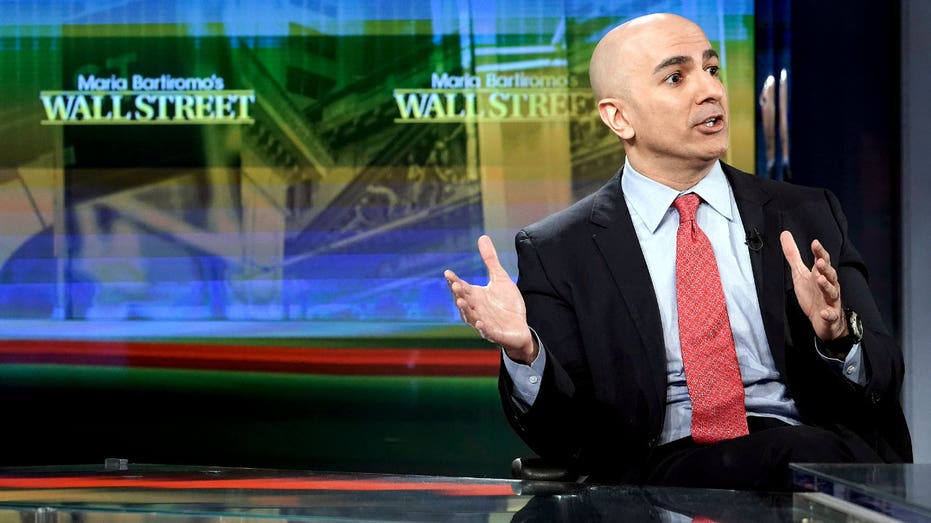
The three dissenting votes were cast by Cleveland Fed President Beth Hammack, Minneapolis Fed President Neel Kashkari and Dallas Fed President Lorie Logan – each of whom raised concerns about inflation persisting above the central bank’s 2% target and said they would’ve preferred raising the federal funds rate by 25-basis-points.
Inflation trended lower in June but remains elevated from the energy price shock caused by the Iran war earlier this year, with the Fed’s preferred inflation gauge, the personal consumption expenditures (PCE) index, up 3.7% in June compared with a year ago.
Inflation has remained stubbornly above the Fed’s 2% target, with energy prices pushing it higher over the course of this year. (Li Rui/Xinhua via Getty Images)
Federal Reserve Chair Kevin Warsh, who was leading his second FOMC meeting since being confirmed as the central bank’s leader, acknowledged the importance of returning inflation to 2% to restore price stability even as he said that he thinks holding rates steady was “especially prudent at these uncertain times.”
Advertisement
“Not one of my FOMC colleagues is under any illusion, we have begun a new chapter, and we understand that the five-plus years of inflation above target cannot be cured in nine weeks, or by a single month of modest price decreases. This Fed will not waver. Our credibility rests on performing our duties and delivering on our responsibilities,” Warsh said.
Here’s a look at key points made by the three dissenting FOMC members in their explanations of why they would’ve preferred the central bank hike rates at this week’s policy meeting.
Logan explained that inflation “does not appear to be on course to sustainably achieve” the Fed’s 2% target, adding that, “Every month of above-target inflation compounds the strain on the budgets of American families and businesses.”
Advertisement
“Even after accounting for productivity gains and temporary supply shocks, inflation appears to be trending toward the mid-2’s, not all the way to 2%, and the risks are to the upside,” Logan explained. She also noted the labor market is “solid and perhaps strengthening,” which eases concerns about the maximum employment component of the Fed’s dual mandate.
Dallas Fed President Lorie Logan said that inflation doesn’t seem to be returning to its 2% target. (Shelby Tauber/Bloomberg/Getty Images)
She added that conditions in the labor and financial markets, as well as consumer spending trends, suggest that “monetary policy is not restraining the economy. Without any policy restraint, inflation will likely continue to trend above target until there’s an unanticipated shock.”
“The FOMC cannot count on unanticipated shocks to achieve its goals and can always adjust policy if unanticipated shocks occur. Modest action in the near term would reduce the likelihood of needing to take sharper action later,” Logan said in explaining her preference for a rate hike.
Kashkari discussed the similarities and differences between the current inflationary cycle and what the U.S. experienced in the 1970s with a series of successive supply shocks affecting commodities, food and energy markets; to the contemporary inflation caused by the pandemic, wars in Ukraine and the Middle East, and trade tension leading to higher tariffs.
While central bankers half a century ago initially thought they faced a single supply shock that could “look through” because it would pass on its own, they ultimately determined they needed to raise rates to curb the inflationary pressures, Kashkari explained.
Minneapolis Fed President Neel Kashkari said it wouldn’t be hard to pause or reverse rate hikes if needed. (John Lamparski/Getty Images)
“The economy today is in a much better place than it was then: unemployment is lower and inflation is much lower. But to manage against the risk that high inflation could become entrenched, I would rather tighten policy incrementally as we gather more data on the path of inflation and employment,” he wrote.
“If inflation remains elevated, in my view, a potential series of small policy moves would be better than waiting and eventually concluding that even bolder actions were necessary,” Kashkari said. “On the other hand, if inflation durably fades, a strategy of small policy steps would allow the FOMC to slow or pause subsequent adjustments without unnecessary impact on the real economy.”
Hammack wrote that she is “not confident” that inflation will return to the Fed’s 2% target on its own, saying that the time is right for the central bank to take action to lower inflation as the “longer that high inflation persists, the more challenging and costly it can be to bring it back down.”
Cleveland Fed President Beth Hammack dissented in favor of a 25-basis-point rate hike. (Victor J. Blue/Bloomberg via Getty Images)
She noted that while energy price shocks have driven much of the inflation this year, she’s hearing from businesses in her Fed district that pricing pressures are “broadening rather than fading, and consumers are expressing despair over persistently higher prices.”
“Given the stability of the labor market, with the unemployment rate near my estimate of maximum employment, I view high inflation as the more pressing problem,” Hammock explained.
“A higher federal funds rate would help restrain economic activity and reduce inflationary pressures. I preferred to move at our recent meeting because I did not see the current policy stance as appropriately restrictive,” she wrote.
Shares of Micron Technology fell 2.82% in Friday morning trading, dropping $24.66 to $850.00, as investors took profits following Thursday’s dramatic rally that had briefly pushed the stock up more than 16% amid renewed optimism about tightening global memory chip supplies.
Friday’s pullback came even as Wall Street’s overall outlook on the stock has remained decisively bullish. According to a report from Benzinga, Micron carries a consensus buy rating with an average analyst price target of $1,548.86. Several firms have issued increasingly aggressive price targets in recent weeks, including KeyBanc Capital Markets, which raised its target to $1,750 on July 14, and Cantor Fitzgerald, which lifted its own target to $2,000 on June 29 after reiterating a $1,500 target just days earlier.
TradingKey attributed the broader correction in Micron shares, which stood at more than 30% below the stock’s all-time high set at the end of June as of Tuesday, to a classic “sell-the-news” pattern following the company’s record third-quarter fiscal 2026 results and fourth-quarter guidance. “Driven by the AI wave, Micron once became one of the strongest-performing semiconductor stocks in 2026, with its stock price achieving a cumulative maximum gain of over 300% this year,” TradingKey reported. “With rapid valuation expansion, some capital chose to lock in profits after the company announced record financial results.”
TradingKey also pointed to a disclosed stock sale by Micron Chief Executive Sanjay Mehrotra as a contributing factor to recent market sentiment. According to filings with the U.S. Securities and Exchange Commission, Mehrotra sold approximately $37.3 million worth of Micron stock in late July under a pre-established 10b5-1 trading plan, a mechanism executives commonly use to sell shares on a predetermined schedule to avoid the appearance of trading on insider information.
Advertisement
Micron’s stock has swung dramatically over the past several weeks even as the broader trend has remained upward. The stock officially entered a bear market in early July, according to CNBC, before rebounding sharply. Shares fell as much as 10.75% during a single session in late July amid broader concerns weighing on memory chip stocks, before staging Thursday’s rally, which one report from CNN described as a jump of up to 18% during the trading day. TipRanks reported that Thursday’s surge was fueled in significant part by Samsung Electronics’ earnings, which hinted at long-term memory chip shortages persisting through 2028, a signal that boosted sentiment across the broader memory sector, including Micron, SanDisk, Nvidia and Advanced Micro Devices.
Benzinga reported that Micron’s technical indicators remain constructive despite Friday’s pullback, noting that the stock’s 50-day moving average continues to trade above its 200-day moving average, a pattern generally viewed as a bullish signal by technical analysts. The stock currently trades at approximately 75% of its 52-week range, according to Benzinga, indicating it remains closer to its highs than its lows even after the recent volatility. Micron’s 52-week range spans from a low of $103.38 to a high of $1,255.00.
Micron reached a $1 trillion market capitalization on May 26, according to company information compiled by Google Finance, becoming the latest U.S. company to cross that valuation threshold amid surging demand for its high-bandwidth memory chips used in artificial intelligence applications. Founded in 1978 in Boise, Idaho, Micron remains the only major American computer memory manufacturer, competing alongside South Korea’s Samsung Electronics and SK Hynix as one of the industry’s so-called Big Three memory producers.
Wall Street analysts expect Micron to report earnings of $31.24 per share on revenue of $50.72 billion when the company next reports quarterly results, according to Benzinga, compared with $3.03 per share and $11.31 billion in the year-ago quarter, reflecting the scale of growth the company has posted amid surging demand for AI-related memory products. Micron’s most recent quarterly results, according to TradingView, showed earnings of $25.11 per share against an estimate of $20.86, a 20.36% surprise, on revenue of $41.46 billion versus an estimated $35.91 billion, with net income reaching $28.24 billion for the period.
Advertisement
CNBC’s Jim Cramer characterized the broader forced selling that has periodically hit Micron and other AI-linked stocks in recent weeks as potentially marking a turning point for the sector. According to CNBC, Cramer described the unwinding of certain hedge fund positions as “a clearing event” that could signal a bottom for the broader artificial intelligence trade, even as individual stocks like Micron continue to experience sharp single-day swings in both directions.
Micron remains a significant holding across multiple semiconductor-focused exchange-traded funds, according to Benzinga, meaning large inflows or outflows tied to those funds can amplify the stock’s price movements during periods of heightened volatility. With the company’s next quarterly earnings report expected around late September, according to various compiled estimates, investors are likely to continue closely watching both the trajectory of global memory chip pricing and any further signals from competitors like Samsung about the durability of the current supply shortage as key factors shaping the stock’s performance in the weeks ahead.



















































You must be logged in to post a comment Login