A snow removal machine is seen working while a Boeing 737 American Airlines passenger aircraft is parked at gate on the tarmac of LaGuardia airport in New York on January 25, 2026.
Pilot and flight attendant unions have called CEO Robert Isom’s leadership into question as the airline’s performance has trailed its rivals by a wide margin, a trend that has translated to lower profit-sharing for American’s more than 130,000 employees. Adding to employee frustration, the airline struggled to recover from major winter storms in recent weeks and crews were left stranded — some without a place to sleep beside the airport.
Late Friday, the pilots’ union wrote to the airline’s board, seeking a meeting to discuss the carrier’s financial and operational challenges.
“Our airline is on an underperforming path and has failed to define an identity or a strategy to correct course,” the board of directors of the Allied Pilots Association wrote. The union called for “leaders who are willing, equipped, and empowered to get the house in order.”
American made $111 million last year, an amount eclipsed by profits from Delta Air Lines and United Airlines, which brought in $5 billion and more than $3.3 billion, respectively, even though American flew similar capacity in 2025.
Advertisement
“I know that it is a meager profit-sharing, a very small profit-sharing pool this year. Again, when you break even, that’s the kind of profit-sharing you have,” Isom told employees after releasing earnings results on Jan. 27, according to a recording of the event that was reviewed by CNBC. “I’m disappointed in that.”
‘2026 can’t just feel different’
American is trying to catch up to rivals with premium products that bring in higher fares, a bright spot in the industry as coach cabin revenue growth has been elusive. It has also worked to reverse the damage from a failed direct-to-traveler business-travel strategy, whose architect American ousted in May 2024.
2026 is crucial for the carrier.
The Fort Worth, Texas-based airline issued an upbeat outlook for the year on Jan. 27, and Isom told crews that he was optimistic about improvement this year. He also noted that many staff, like flight attendants, make more than their counterparts at United, where cabin crews and other employees are in contract negotiations.
Advertisement
Isom is leading what he has pitched as a major transformation of American. The strategy includes improving customer service, the network and revenue management.
This week, he took his message to about 6,000 leaders at a conference the airline held at Globe Life Field in Arlington, Texas.
“We’ve had conversations as a senior leadership team about how we can’t pass up any opportunity … how we need to hold ourselves accountable,” Isom said at the event, according to a transcript which was seen by CNBC. “It starts with us at the top, but it’s all of us here today and how you lead your teams. 2026 can’t just feel different. It has to be different.”
American issued its 2026 outlook as it was juggling the aftermath of a late January winter storm that walloped much of the U.S. with snow, ice and sleet and preparing for another storm that ended up hitting its major hub of Charlotte, North Carolina, while competitors dug out faster.
Advertisement
The financial results, coupled with the slow storm recovery, drew anger from both pilot and flight attendant union leaders, which together represent about 40,000 crew members.
This week, two American Airlines flight operations leaders met with the union and discussed recent problems, with the union telling members that “our pilots will not accept platitudes, empty words, and the absence of decisive action any longer.”
Association of Professional Flight Attendants President Julie Hedrick said on Jan. 27 that Isom, who became CEO in 2022, “is missing the human factor” and that “many of us have been here for a very long time, and we don’t see an ending that puts us in a better place.”
Isom acknowledged the trouble American’s crew members faced during the late January storm that paralyzed a large swath of the United States and called the weather “probably the most impactful” during his decades-long tenure at the airline.
Advertisement
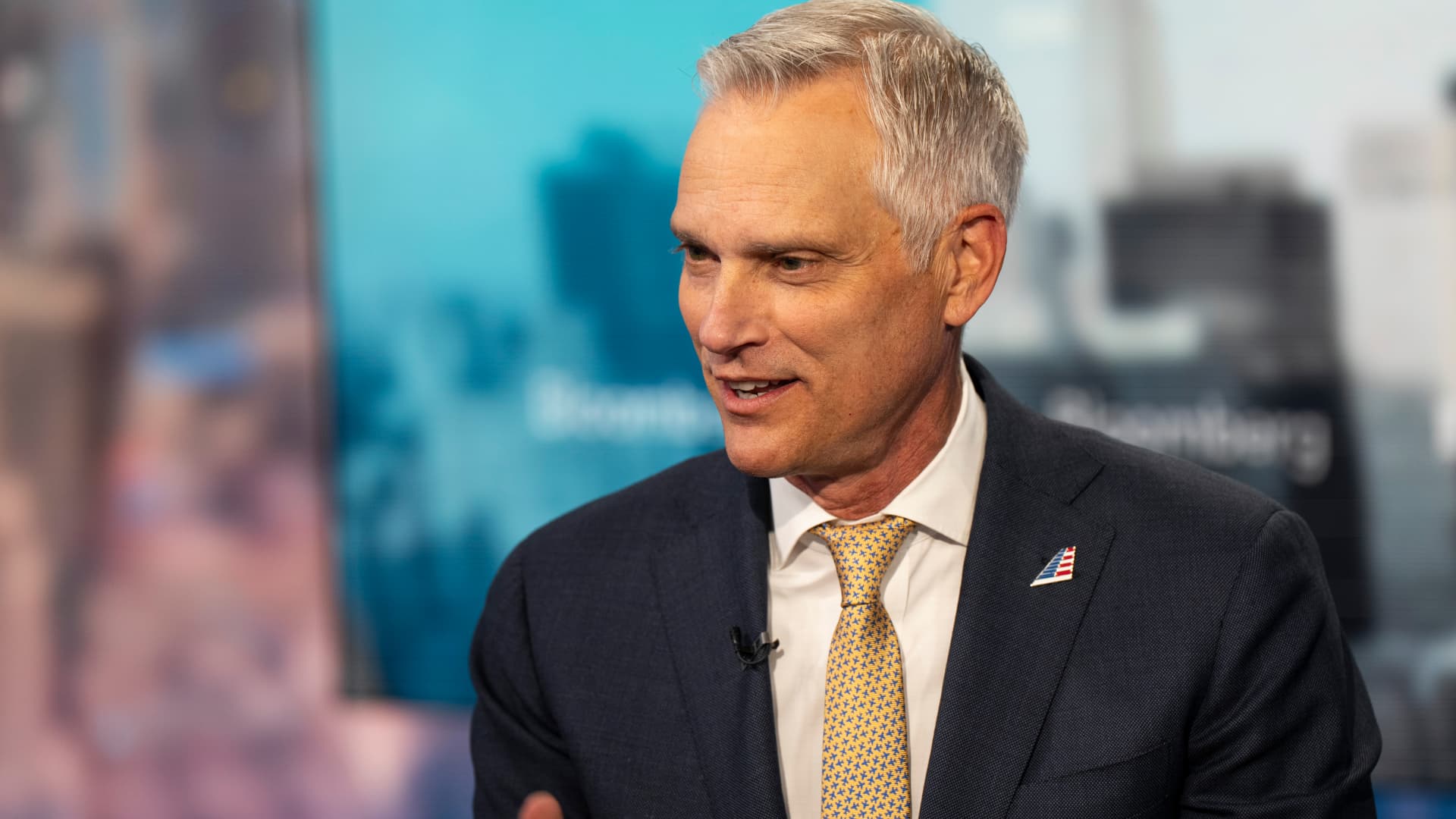
Robert Isom, chief executive officer of American Airlines Group Inc., speaks during a Bloomberg Television interview in New York, US, on Wednesday, Dec. 10, 2025.
Christian Monterrosa | Bloomberg | Getty Images
Tale of two Texas airlines
American had an especially difficult 2025, which started with the collision of an Army Black Hawk helicopter into one of the carrier’s regional jets that was arriving at Washington, D.C.’s Ronald Reagan Washington National Airport, killing all 67 people on both flights. The airline, and its rivals, were also hit by the U.S. government shutdown late last year.
“We’re off to a fast start based on the booking trends we’ve observed in January, all-time records for the first three weeks of the year,” Isom told analysts on the Jan. 27 earnings call.
Advertisement
But investors also want to the airline to prove its progress.
American’s stock is roughly flat this year. Its competitor 20 miles away in Dallas, Southwest Airlines, is also trying to remake itself, and its stock is up more than 30% in 2026. Shares of United and Delta are up more than 3% and more than 8%, respectively, for the year.
Southwest’s forecast that it could quadruple earnings this year has had investors in a bullish frenzy.That carrier recently sealed its biggest transformation in its nearly 55 years of flying (to some travelers’ chagrin): assigning seats last month for the first time, adding its first-ever bag fees, and rolling out basic economy tickets and other changes. Investors’ confidence boosted Southwest’s stock to a nearly four-year high last month after it reported results.
Read more about American Airlines’ turnaround plans
All U.S. carriers are investing heavily in higher-end travel over standard coach, and even Southwest is considering opening its first airport lounge, its CEO told CNBC last year.
Advertisement
American likewise is revamping its wide-body planes with larger, single business-class cabins, putting in a three-class cabin on new Airbus narrow-bodies and expanding its airport lounges. The airline has also refreshed its food and beverage options, including offering Lavazza coffee and Champagne Bollinger. For its 100th anniversary this spring, it’s also adding caviar and beef Wellington for long-haul premium cabins.
Isom has said he expects half of American’s revenue to come from “premium offerings” toward the end of the decade.
Fight over Chicago
Several planes wait in line to taxi down a runway after a winter snow storm affected the area at O’Hare International airport on Nov. 30, 2025 in Chicago, Illinois.
Jim Vondruska | Getty Images
Advertisement
One major battle for American is at Chicago O’Hare International Airport, where United CEO Scott Kirby, whom American fired in 2016, has vowed to keep his old employer at bay.
Both carriers are ramping up their schedules there next summer. Deutsche Bank estimated in a note Monday that United generates about $10 billion in revenue at O’Hare and that American generates more than $5 billion.
Around the time American reported earnings, United posted a digital billboard in Chicago that read “More on time, less canceled flights. Aadvantage, United,” using the same spelling as American’s AAdvantage loyalty program. Bankrupt Spirit Airlines is also seeking to transfer two gates at Chicago O’Hare to United for $30 million, which would give United more ground at the airport.
But from Chicago to Charlotte, questions still remain for American.
Advertisement
“It’s unclear if the current strategy will close the margin gap to its peers,” Melius Research airline analyst Conor Cunningham said about American. “It will take a lot of time to execute. You can’t just turn premium revenue on.”
Cunningham added, “It took Delta over a decade to cultivate a premium image,” pointing to the U.S. profit leaders’ transformation.
Some tickers are covered more than others on the site, so with The Undercovered Dozen our Editors highlight twelve actionable investment ideas on tickers with less coverage. These ideas can range from “boring” large caps to promising up-and-coming small caps. Specifically, the inclusion criteria for “undercovered” include: market cap greater than $100 million, more than 800 symbol page views in the last 90 days on Seeking Alpha, and fewer than two articles published in the past 30 days. Follow this account to receive a weekly review of twelve of these undercovered ideas from our valued analysts.
Analyst’s Disclosure: I/we have no stock, option or similar derivative position in any of the companies mentioned, and no plans to initiate any such positions within the next 72 hours. I wrote this article myself, and it expresses my own opinions. I am not receiving compensation for it. I have no business relationship with any company whose stock is mentioned in this article.
Seeking Alpha’s Disclosure: Past performance is no guarantee of future results. No recommendation or advice is being given that any particular security, portfolio, transaction or investment strategy is suitable for any specific person. The author is not advising you personally concerning the nature, potential, value or suitability of any particular security or other matter. You alone are solely responsible for determining whether any investment, security or strategy, or any product or service, is appropriate or suitable for you based on your investment objectives and personal and financial situation. The author is an employee of Seeking Alpha. Any views or opinions expressed herein may not reflect those of Seeking Alpha as a whole. Seeking Alpha is not a licensed securities dealer, broker or US investment adviser or investment bank.
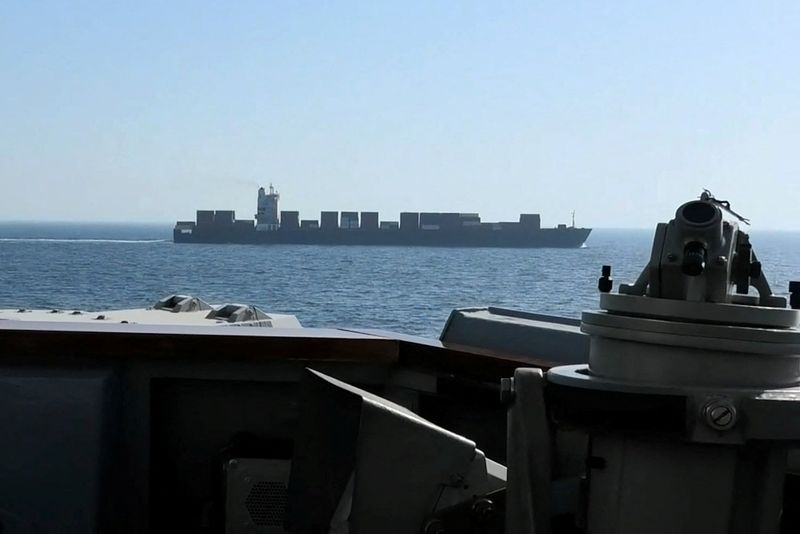
Oil prices staged a sharp rebound on Monday, rising more than 6% after plunging over 9% in the previous session, as tensions flared again around the Strait of Hormuz. The latest spike followed fresh accusations from both the U.S. and Iran, each blaming the other for violating the ceasefire by targeting ships over the weekend.
On the geopolitical front, U.S. President Donald Trump said on Sunday that American forces had seized an Iranian cargo ship attempting to breach its blockade. Iran, in response, said it would not take part in a second round of peace talks, despite Trump’s warning of renewed airstrikes.
Crude oil price on April 20
Brent crude futures climbed $6.11, or 6.76%, to $96.49 a barrel by 2327 GMT. U.S. West Texas Intermediate rose $6.53, or 7.79%, to $90.38 a barrel.Before the conflict, the strait accounted for roughly one-fifth of global oil supply. The war, now nearing two months, has severely disrupted these flows.
Advertisement
Live Events
Market movements remain highly reactive to developments, with oil prices swinging on shifting signals from both sides rather than any clear improvement in supply conditions. The intermittent movement of vessels through the strait highlights the deep uncertainty surrounding the world’s most critical energy chokepoint. Even if tensions ease, a full recovery in oil flows is expected to take several months, experts warn. On Saturday, Iran tightened its grip over the strait in response to the U.S. blockade, reportedly firing at several vessels and declaring the route closed. This came just hours after it had announced a temporary reopening during a 10-day ceasefire.
What are experts saying?
Brokerage firm Macquarie said that even if tensions cool, oil prices are likely to remain supported in the $85 to $90 range, with a gradual move towards $110 as supply through the Strait of Hormuz improves. It added that if disruptions persist through April, Brent crude could climb as high as $150 per barrel.
Analysts broadly believe crude may be entering a phase of structurally higher prices. With the ceasefire seen as temporary, a return to pre-war levels of $70 to $75 may take several months. In the near term, they expect prices to stay within a range of $80 to $85 on the downside and $95 to $100 on the upside.
Nuvama Institutional Equities cautioned that prolonged closure of the strait, which handles about 20 million barrels per day, could drive crude prices into the $110 to $150 range.
(Disclaimer: Recommendations, suggestions, views and opinions given by the experts are their own. These do not represent the views of The Economic Times)
Concurrent Technologies Plc (COTGF) Discusses Full Year Results and Leadership Transition with Strategic Business Updates April 17, 2026 6:30 AM EDT
Company Participants
Miles Adcock – CEO & Executive Director Kim Maria Garrod – CFO & Executive Director
Presentation
Advertisement
Operator
Good morning, and welcome to the Concurrent Technologies Plc Final Results Investor Presentation. [Operator Instructions]
Before we begin, I would like to submit the following poll. And I would now like to hand you over to CEO, Miles Adcock. Good morning to you.
Advertisement
Miles Adcock CEO & Executive Director
Good morning, and welcome to our full year results for 2025.
Next slide, please. So my name is Miles. I’m the CEO. This is my fourth set of annual results, and I’m joined by Kim, our CFO. And I should note that at the same time as we issued our full year results, we also announced that Kim has decided to retire at the end of this year. My good friend and colleague, Kim, do you want to say a few words?
Advertisement
Kim Maria Garrod CFO & Executive Director
Yes. So I achieved a milestone birthday this year, and that made me rethink what I was going to do. So I have decided to retire, but I’m in the business until the end of the year. I’m very excited about the business, and I will be watching it very closely after I’ve gone, and I’ll be regularly calling Miles for updates. But I’m fully committed to the business. And as I say, I’ll be taking out for most of this financial year.
Miles Adcock CEO & Executive Director
Advertisement
Thank you, Kim. And just to note, Kim has generously given us until the end of the year to seek a replacement, and I’ve engaged Korn Ferry this week, and we’re working hard at finding a worthy successor.
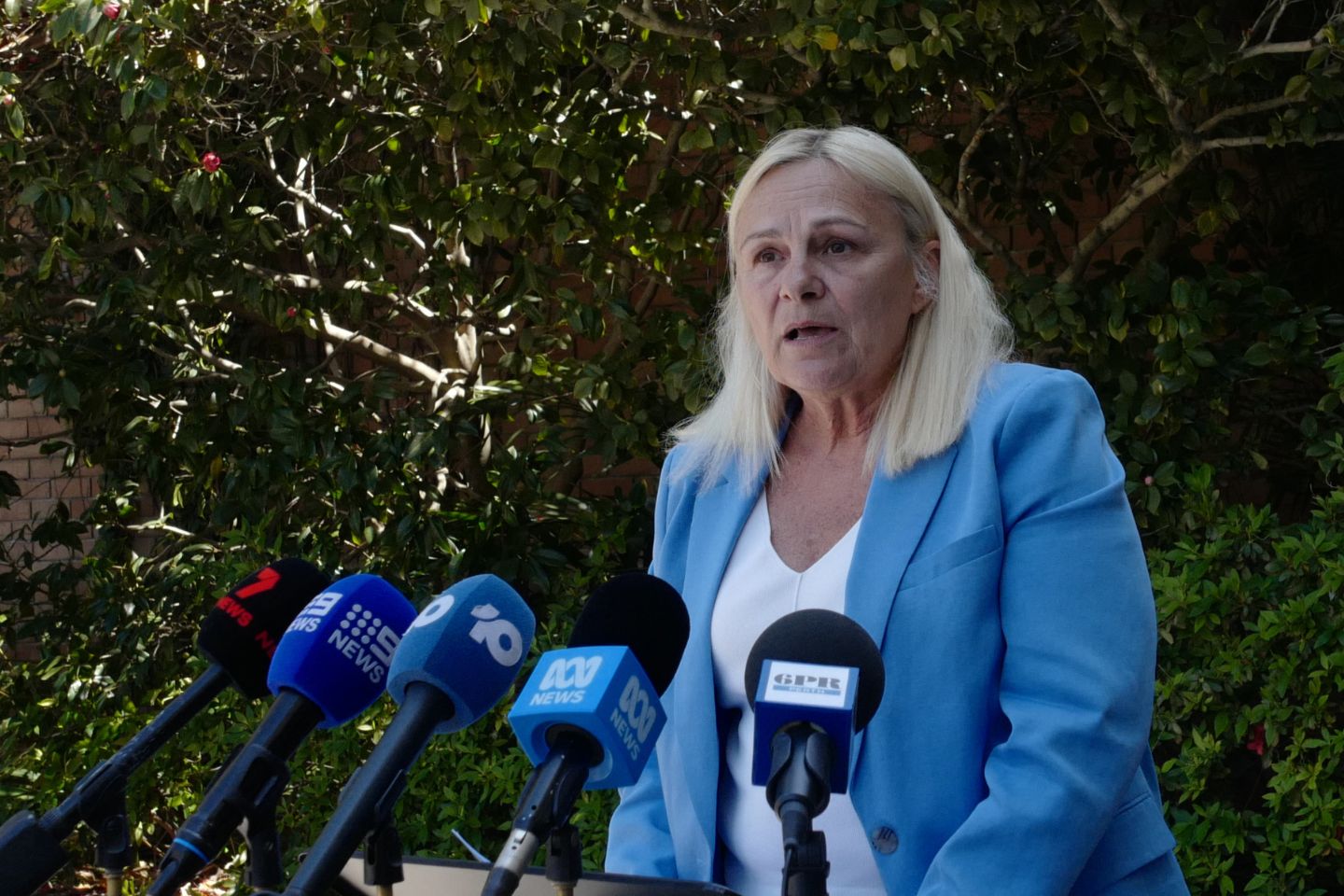
Business groups have urged the government to cut a raft of regulations ahead of the federal budget, but the finance minister says changes have to make sense.


















![CAUTION: They’re Trapped Again! [How Will Markets React?]](https://wordupnews.com/wp-content/uploads/2026/04/1776653729_maxresdefault-80x80.jpg)




































You must be logged in to post a comment Login