Connect with us
DAPA Banner
DAPA Coin
DAPA
COIN PAYMENT ASSET
PRIVACY · BLOCKDAG · HOMOMORPHIC ENCRYPTION · RUST
ElGamal Encrypted MINE DAPA
🚫 GENESIS SOLD OUT
DAPAPAY COMING

Business

PRISM’s premium hotel push emerges as next leg of India growth ahead of IPO

Published

on

PRISM's premium hotel push emerges as next leg of India growth ahead of IPO
As PRISM prepares for its public market debut, one of the biggest changes inside its India business is happening quietly. The company is increasingly shifting towards higher-value, company-serviced and premium hospitality, a move that is materially changing the economics of its domestic business.

Company-serviced hotels are directly managed and operated by hotel operators, under its upper budget to premium brands, namely Townhouse, Sunday, Townhouse Oak, Clubhouse and Palette. Unlike its traditional hotel owner-operated model, PRISM takes greater control over operations and service standards, while also benefiting from dynamic pricing, revenue management, technology and customer acquisition which are a core part of its asset-light business model. The company markets these hotels under the “OYO-Serviced” identity in India.

The Updated Draft Red Herring Prospectus (UDRHP) shows that PRISM’s company-serviced hotel network in India expanded from just 75 storefronts in FY24 to 1,053 by the end of FY25 and further to 1,573 as of December 31, 2025. While these properties still account for a relatively small proportion of the company’s overall hotel network, they contributed 49.29% of India’s Gross Booking Value (GBV) during the first nine months of FY26, highlighting how quickly they have become a key driver of the business.

The revenue trajectory has been equally striking. India company-serviced hotel GBV reached Rs 1,346 crore during the first nine months of FY26, already around 65% higher than the company’s entire FY25 company-serviced GBV, indicating that the business is scaling both in size and productivity.

Advertisement

The UDRHP also suggests this is part of a broader structural shift within India’s hospitality market. The 1Lattice industry report cited in the filing points to rising disposable incomes, increasing business and leisure travel, expanding religious tourism and improving infrastructure as key drivers of demand for branded accommodation. At the same time, India’s hotel market remains highly fragmented, with 92% of hotel storefronts still unorganised, creating significant headroom for organised hospitality platforms.


Importantly, PRISM’s premium strategy is not replacing its traditional economy-hotel business. Instead, the company appears to be broadening its addressable market by operating across multiple price points and customer segments. Budget hotels remain an important part of the network, while premium and company-serviced hotels are increasingly contributing a disproportionate share of value creation.
That evolution also changes how investors may evaluate the India business. Rather than measuring success primarily through the number of hotel storefronts, the emerging focus is increasingly on GBV per storefront, operating quality, premiumisation and customer experience. The rapid growth of company-serviced hotels suggests PRISM’s domestic strategy is becoming less about network expansion and more about improving the quality and productivity of the network it already operates.

(Disclaimer: Recommendations, suggestions, views and opinions given by the experts are their own. These do not represent the views of Economic Times)

Continue Reading
Click to comment

You must be logged in to post a comment Login

Leave a Reply

Business

Adient: The Unimpacted Negative FCF Highlights The Structural Issues

Published

on

Adient: The Unimpacted Negative FCF Highlights The Structural Issues

Adient: The Unimpacted Negative FCF Highlights The Structural Issues

Continue Reading

Business

six in ten SMEs cut innovation spend

Published

on

six in ten SMEs cut innovation spend

The reforms designed to clean up Britain’s £8 billion research and development tax credit scheme have worked rather too well.

More than six in ten businesses carrying out R&D have cut their investment as a direct result, according to new data from the advisory firm RCK Partners, with hiring frozen and technology projects cancelled outright.

R&D tax credits subsidise science and technology projects and cost the Exchequer roughly £8 billion a year. After sustained abuse of the scheme, HMRC placed far greater scrutiny on claims and pushed through a package of reforms, including reduced relief rates, which took effect in April 2023.

The consequences for smaller firms now look considerably sharper than intended.

RCK’s survey of more than 250 chief financial officers at R&D-active SMEs found that a third have hired fewer technical staff than planned, and one in five has cancelled innovation projects altogether. Thirty per cent were forced to take out loans to cover delays in relief payouts, and nearly as many fell back on directors’ personal funds.

Advertisement

Lord Hammond of Runnymede, the former chancellor and chairman of RCK Partners, called the findings “disconcerting” and urged policymakers to look “more carefully” at whether the scheme still works.

“It is a national priority to ensure that our SME sector, which is a critical part of the economy, is doing R&D,” he said. “The rates for small and medium companies were reduced at the same time as the regime was toughened up. The risks and the complexity increased while the rewards decreased.”

That combination, tighter enforcement layered on top of thinner relief, is what business owners will recognise. The compliance burden landed at precisely the moment the payoff shrank.

On its own terms, the crackdown has succeeded. The government says the cost of fraud and error fell from £1.34 billion in 2021-22 to £497 million in 2023-24, when an estimated 43,615 R&D claims were made by small businesses. HMRC’s most recent annual accounts also revised down total relief expenditure for 2023-24 by £920 million, from an initial £3.26 billion to £2.34 billion.

Advertisement

“It confirms that the impact on SME claims has been bigger than perhaps policymakers expected or intended,” Hammond said. “Policymaking is not an exact art. You develop a policy, you model it, you implement it. But if you’re sensible, you then go back and monitor what’s happened … and you tweak the model.”

Peter Roscoe, co-founder of RCK Partners, was clear that the enforcement itself is not the problem. “HMRC has done a really good job in getting the fraud and error rates down,” he said. The difficulty, he added, lies in the “inconsistencies” in the inquiry process, an issue familiar to any firm that has watched a routine query metastasise.

“Some inspectors ask targeted questions that are easier to answer, and then other times [a business] could get somebody who could go on for two years.”

A second problem is the advisory market itself. Roscoe pointed to online advertising, where claimants are “contacted out of the blue” by firms promising to deliver an R&D claim but often unqualified to do so. An investigation by The Times in 2022 revealed how the incentives were being targeted by rogue tax advisers encouraging dubious claims, few of which were checked by HMRC. Those same advisers, Roscoe said, have scared off genuine innovation companies from trying to access the scheme at all.

Advertisement

The chilling effect is measurable. Nearly a quarter of respondents said they had decided not to submit a claim at all, a figure rising to nearly half among firms with 250 to 499 staff. HMRC defines an SME as a business with up to 500 employees, which means the largest firms in that bracket, typically those with the most sophisticated R&D programmes, are the most likely to walk away.

The government is unmoved. “This report is based on a tiny fraction of UK SMEs,” it said. “The truth is the UK’s R&D tax relief schemes continue to provide vital support for business productivity and growth, with £8 billion of relief claimed in 2025-26.

“Our reforms mean that taxpayers’ money now goes towards genuine innovation, effectively tackling the high levels of error and fraud that have affected the schemes in previous years.”

Ministers have already floated mandatory pre-approval for R&D claims as a way of restoring certainty, and HMRC’s own review found non-compliance was higher where specialist agents were involved. Neither addresses the underlying arithmetic Hammond describes. With business investment appetite already at post-Covid lows, the question for the Treasury is whether a scheme nobody wants to claim from can still be called an incentive.

Advertisement

Amy Ingham

Amy Ingham

Amy Ingham is a reporter at Business Matters, covering UK business news with a focus on breaking news, business policy, late payments and insolvency. She joined the magazine in 2026 after completing the NCTJ Diploma in Journalism at Harlow College’s journalism school. Her recent reporting includes British Steel’s nationalisation and its impact on SME suppliers, the decline in late payments by large firms, and Insolvency Service director disqualifications. Reach her at aingham@cbmeg.co.uk.

Advertisement
Continue Reading

Business

Airbus to start testing new high-tech folding wings

Published

on

Business Live

The extensions for the A321 Neo aircraft will be assembled in Filton near Bristol

Airbus will design, build and flight test full scale wing extensions for next generation single aisle

Airbus will design, build and flight test full scale wing extensions for next generation single aisle plane(Image: Airbus)

Airbus is planning to test the performance of new folding wings that it has been developing at its base in Filton near Bristol.

The long-span wings have been designed as part of the aerospace giant’s major research and technology programme, ‘Wing of Tomorrow’, and will be used on its next-generation single-aisle aircraft.

The extensions, which will be assembled in Filton and flight tested in Toulouse in France, measure several metres but are made of light but strong materials and offer the promise of energy savings for Airbus.

The Wing of Tomorrow programme is centred around creating longer, lighter and more slender wings to maximise aerodynamic efficiency and reduce fuel burn.

Advertisement

They will be tested over the next three years and will be installed on an A321 neo plane – the company’s best-selling aircraft. During the evaluation period, Airbus will look at how the different wing geometries perform in real flight conditions.

During the testing process, the wings will be fitted with equipment to capture behaviour in flight and evaluate how the longer wingspan impacts aircraft handling.

Sue Partridge, Airbus Head of Wing of Tomorrow programme, said: “Importantly, the wing is one of the biggest levers we have to improve flight efficiency, which is why the Wing of Tomorrow is so critical for our next generation single aisle aircraft.

“This flight-test campaign will allow us to safely challenge traditional design limits and explore the benefits of longer wings.”

Advertisement

Airbus is currently using advanced digital modelling and wind tunnel testing to finalise the designs of the wing extensions before they are tested in a representative flying environment.

Airbus has already built three 17-metre (ground based) wing demonstrators to explore the advantages of increased wingspan.

The announcement by Airbus comes as plane makers race to develop new technologies that can be used to shape future commercial aircraft.

Airbus rival Boeing has already installed extended wings on its two-aisle 777X plane, but the tech has not been used on any single-aisle plane before.

Advertisement
Continue Reading

Business

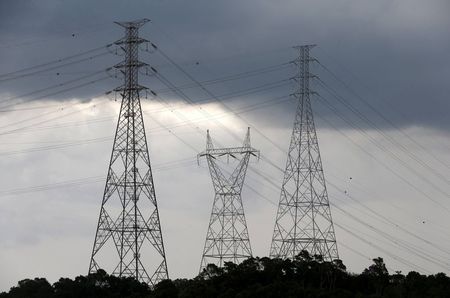
Massive disconnect of power roils largest US electric grid

Published

on


Massive disconnect of power roils largest US electric grid

Continue Reading

Business

China’s Moonshot AI stole from Anthropic, Trump tech adviser says

Published

on

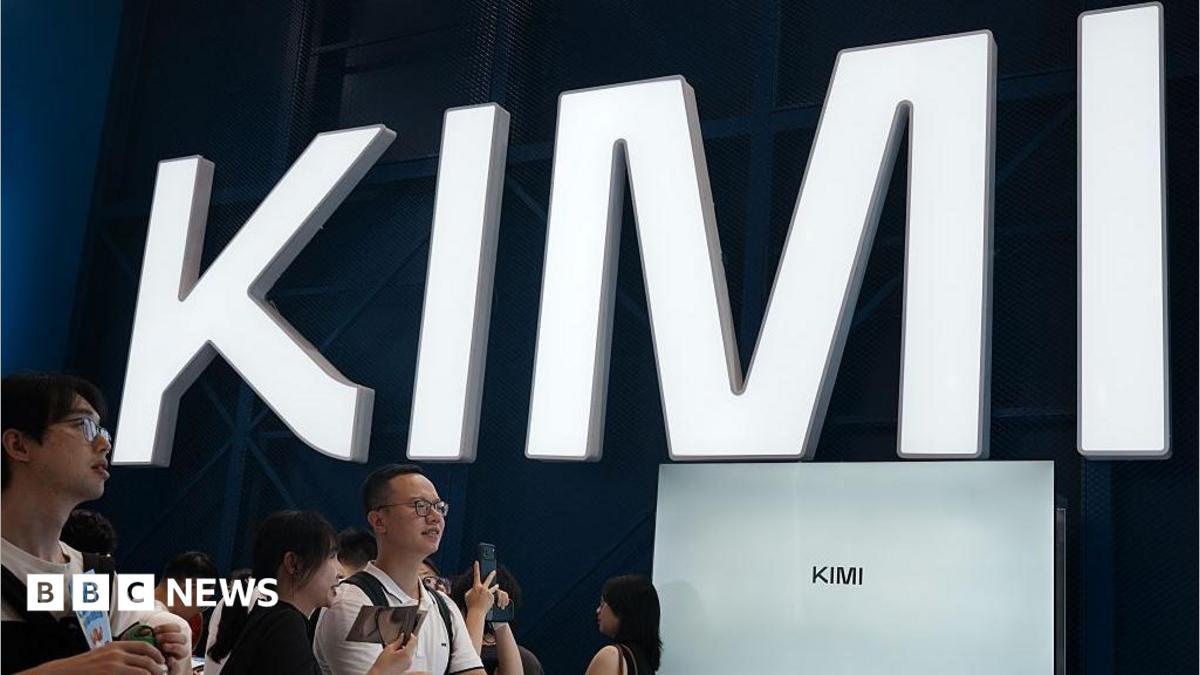
Visitors at a trade show in Shanghai visit a booth with the Kimi sign displayed in large block letters

A White House adviser has accused China’s Moonshot AI of a “large scale” effort to steal the capabilities of top US artificial intelligence (AI) models.

US President Donald Trump’s Science and Technology adviser Michael Kratsios said Moonshot AI carried out the campaign through what is known as distillation – when a weaker AI model extracts answers from a stronger one.

Moonshot also gained access to restricted cutting-edge Nvidia servers to train its models, Kratsios said in a social post, external on Wednesday.

The BBC has contacted Moonshot, Anthropic, the White House and Nvidia for comment.

Advertisement

Kratsios said on X that the US government has information that Moonshot AI “distilled” capabilities from Anthropic’s Fable AI for the development of its K3 model.

Kimi K3 gained attention around the world after it was unveiled last week, with many believing it to have narrowed the gap between Western and Chinese AI models. Moonshot said its K3 model is able to rival top US technology.

Kratsios’ allegations come just a day after Treasury Secretary Scott Bessent said the US would examine whether Chinese AI models have stolen the capabilities from American rivals.

“We’ve seen a lot of talk about open-source models coming and threatening the large language models in the US,” Bessent told Fox Business on Tuesday.

Advertisement

“If we see, especially, that overseas models are stealing from our great companies, we have the ability to sanction them,” he added.

The increased scrutiny by the US of Chinese AI companies also comes as Trump is expected to meet his Chinese counterpart Xi Jinping in September.

Continue Reading

Business

Wall St dips as Big Tech earnings, rising oil in focus

Published

on

Wall St dips as Big Tech earnings, rising oil in focus

The Nasdaq led Wall Street lower with ‌a mixed performance from technology stocks, as investors waited for key earnings reports to gauge the health of a market rally fed by enthusiasm for artificial intelligence.

Continue Reading

Business

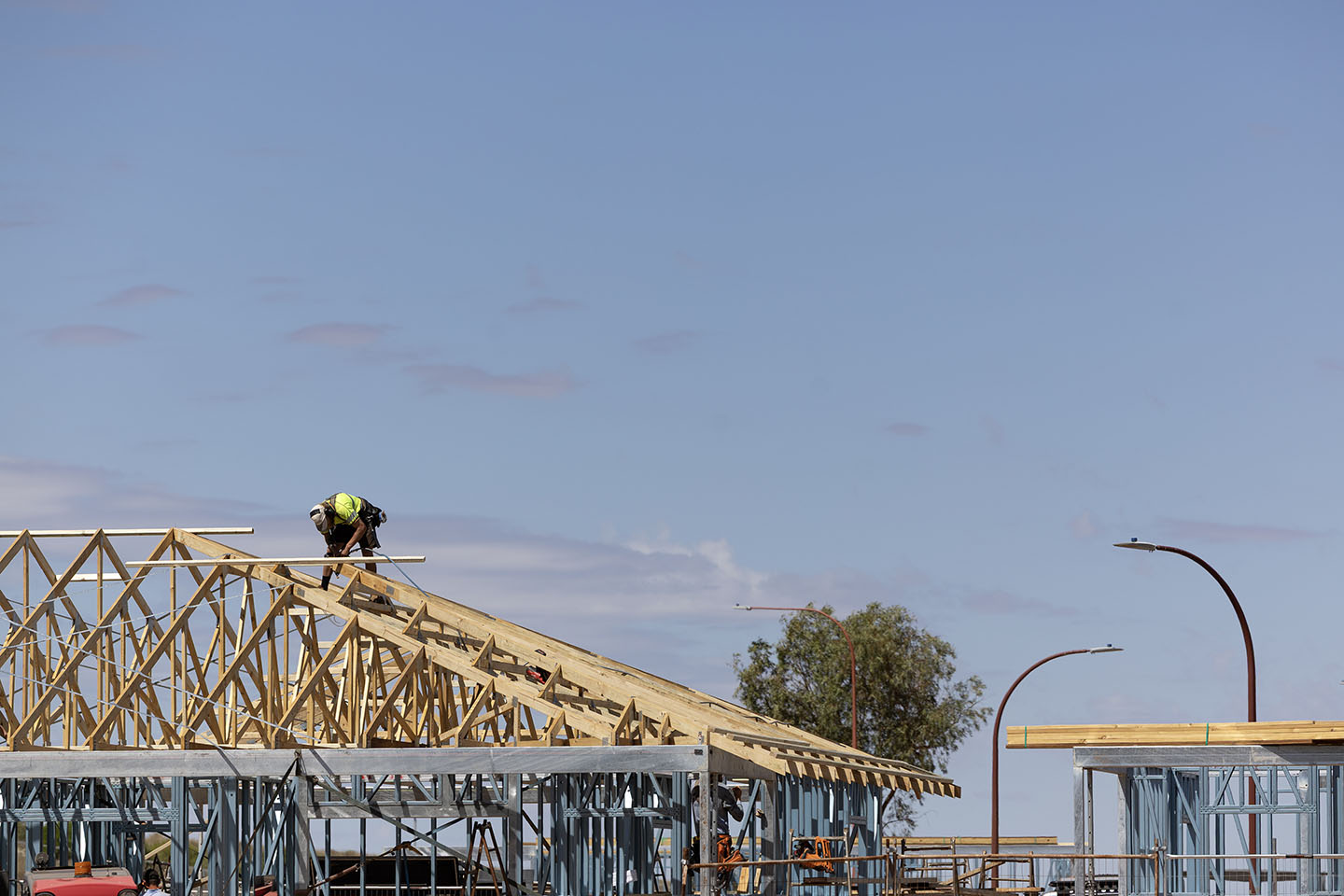
DevelopmentWA readies Pilbara for residential land boom

Published

on

DevelopmentWA readies Pilbara for residential land boom

DevelopmentWA is gearing up for a major expansion of land for housing.

Continue Reading

Business

WhiteHawk Limited (WHTHF) Discusses CEO 100-Day Plan and Strategic Direction Including AI Governance and Partner-Led Growth Prepared Remarks Transcript

Published

on

OneWater Marine Inc. (ONEW) Q1 2026 Earnings Call Transcript

Louisa Ho
Company Secretary

Welcome. My name is Louisa Ho, and I’m the Company Secretary of — here at WhiteHawk Limited. Thank you all for joining us today. It’s my pleasure to introduce our group CEO, Adrian Vallino, who will be speaking to you about the CEO’s 100-day plan. Adrian, over to you.

Adrian Vallino

Advertisement

Many thanks, Louisa, and good morning to everyone, and thank you for joining us today. Before we begin, I’d like to welcome our Chair and fellow Board members, our team across the business, and of course, our valued shareholders and investors. It’s a privilege for me to share this update with you today, and thank you again for joining.

Again, my name is Adrian Vallino, and I’ve stepped into the role of Group CEO around 3 weeks ago. As per the announcement, I felt it was important for — important that you hear from me today about what we’re doing, our plans and some of the observations that I’ve come across in the last couple of weeks. I’ll keep things tight, and with a short introduction on me and how I work, but also what I’ve observed and the plan that we’re now executing on. So let’s get started.

With regards to the last 30 days, I’ve been talking to people behind the business and the spending that goes on within the business itself. This is to give me a good overview of the foundations that we’re working from and then project how we can make some changes in the future to the benefit of the business. So some of the other observations I’ve come across

Advertisement
Continue Reading

Business

Wall Street’s Fear Gauge VIX Ticks Up to 17.29 Wednesday as Traders Await Alphabet and Tesla Earnings

Published

on

Stock Market

NEW YORK — The Cboe Volatility Index, Wall Street’s primary gauge of expected market turbulence, edged higher Wednesday morning as investors braced for a pivotal round of technology earnings and continued to weigh geopolitical risk in the Middle East.

The index, widely known by its ticker VIX and commonly referred to as the market’s “fear gauge,” stood at 17.29 as of 8:25 a.m. Central time, up 0.24 points, or 1.41%, on the day. The modest uptick reflects a slightly more cautious posture among options traders heading into Wednesday’s session compared with recent trading days.

What the VIX measures

The VIX Index is designed to provide a real-time estimate of the expected volatility of the S&P 500 over the coming 30 days, calculated using the midpoint of live S&P 500 index option bid and ask prices. Introduced by Cboe Global Markets in 1993 and updated in 2003 in partnership with Goldman Sachs, the index has become one of the most closely watched indicators of investor sentiment, with higher readings generally signaling greater anticipated market swings and lower readings suggesting calmer conditions ahead.

Advertisement

Wednesday’s reading remains well within the index’s historically typical range. Over the trailing 52 weeks, the VIX has fluctuated between 13.38 and 35.30, meaning the current level of roughly 17 sits closer to the lower end of that spectrum, indicating relatively subdued volatility expectations compared with periods of heightened market stress earlier in the year.

Recent trends in volatility

The VIX has traded in a fairly narrow band over the past month, with data showing a 30-day high of 20.72 and a low of 14.96, and an average reading of roughly 16.94 over that stretch. The index closed at 18.65 on Monday, down slightly from a previous close of 18.77, before opening Wednesday’s session even lower, around 17.21, ahead of its modest intraday climb.

That relative calm follows a period of sharper swings in market sentiment earlier this year. The VIX spiked well above 26 in March amid broader market uncertainty, a reading roughly 50% higher than current levels, underscoring how quickly volatility expectations can shift depending on the news cycle.

Advertisement

Why volatility ticked up Wednesday

Wednesday’s modest rise in the VIX comes as investors prepare for earnings reports from Alphabet and Tesla, both scheduled for release after the market closes. Big technology earnings reports frequently introduce short-term uncertainty into options pricing, as traders position themselves for potentially significant stock moves depending on whether results beat or fall short of Wall Street’s expectations, particularly given the outsized role AI-related spending has played in driving market performance this year.

Beyond earnings, rising oil prices tied to escalating tensions between the United States and Iran have added another layer of caution to markets this week. Higher energy costs, combined with fresh U.S. tariffs including a recently imposed levy on Canadian goods, have contributed to a more guarded tone among investors even as major indexes have continued trading near record territory.

How the VIX is used by investors

Advertisement

Beyond serving as a sentiment indicator, the VIX underpins an entire ecosystem of tradable financial products, including VIX futures, introduced in 2004, and VIX options, which allow market participants to hedge against volatility risk separately from directional price risk in the broader market. More recently, Cboe introduced Mini VIX futures, contracts sized at one-tenth of the standard VIX futures contract, designed to give traders greater flexibility and precision when managing volatility exposure in their portfolios.

Because the VIX tends to rise when stock prices fall sharply, and fall when markets are calm, it is often described as moving inversely to the broader market, a relationship that has made VIX-based products popular tools for portfolio hedging during periods of anticipated turbulence, such as major earnings releases or significant geopolitical developments.

A market watching closely for signals

Analysts covering the options market have noted that current volatility levels suggest investors are not pricing in significant near-term macroeconomic risk, even as individual catalysts like this week’s tech earnings carry the potential to move markets sharply in either direction. That combination, a low overall VIX reading alongside high-stakes individual earnings events, is not unusual, but it does mean that any significant surprise from Wednesday evening’s Alphabet or Tesla results could trigger a more pronounced reaction in both individual stock prices and the broader volatility index in the sessions that follow.

Advertisement

With Alphabet and Tesla both reporting after Wednesday’s close, market participants will be watching closely for any subsequent move in the VIX during after-hours trading and into Thursday’s session, particularly if either company’s results diverge meaningfully from analyst expectations. Additional volatility catalysts later this week include further corporate earnings reports from other major companies, as well as ongoing developments in Middle East tensions that have kept oil prices, and by extension broader market sentiment, in flux.

For now, Wednesday’s modest increase in the VIX reflects a market that remains largely calm by historical standards, even as investors position cautiously ahead of a stretch of earnings reports widely viewed as one of the most consequential of the current corporate reporting season.

Continue Reading

Business

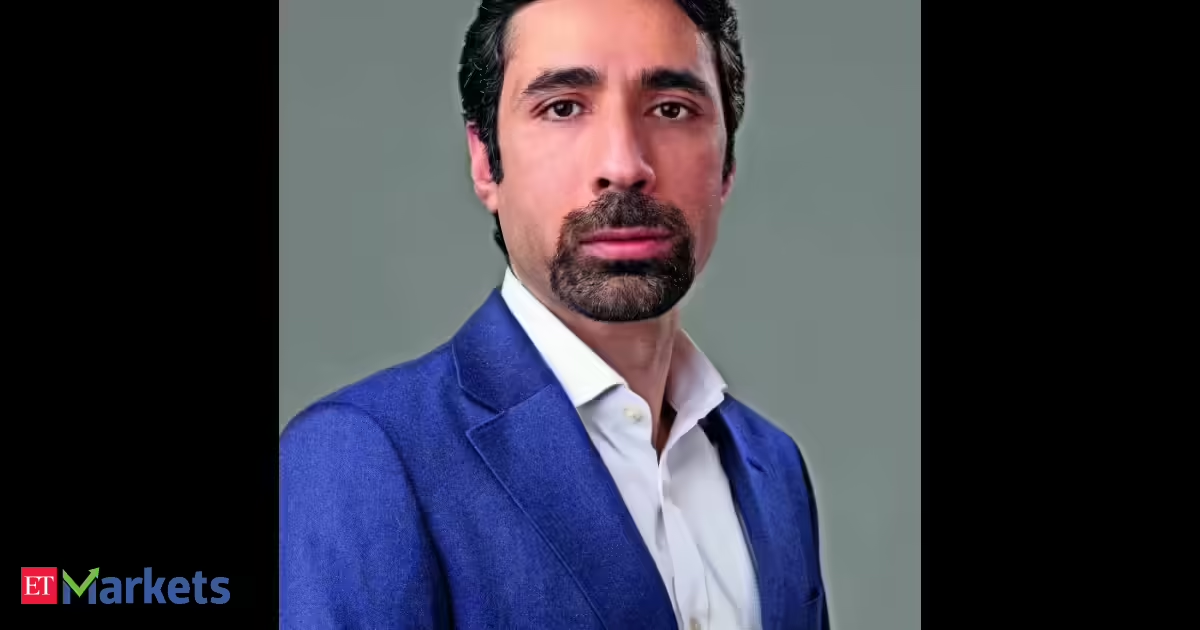
Oil at $90-100 will impact macros and the market: Sunil Koul, Goldman Sachs

Published

on

Oil at $90-100 will impact macros and the market: Sunil Koul, Goldman Sachs
There is room for some catch-up rally in India after the underperformance and improvement in earnings growth, said Sunil Koul, global emerging markets equity strategist, Goldman Sachs. In an interview with Nishanth Vasudevan, London-based Koul spoke about foreign investors’ outlook for India, the semiconductor trade and the rupee, among other topics. Edited excerpts:

When you talk to global asset allocators, what are they saying about India?

We have got more incoming requests for calls and meetings on India over the last couple of weeks than we have had in the last three to six months. Both the economy and corporate earnings have held up pretty well. The recent RBI measures have given people comfort that the rupee may not depreciate meaningfully from current levels. And then there has been more volatility in semiconductor stocks and the AI trade over the last two or three weeks. There has been a growing desire to diversify portfolios away from the tech side, where positions have been very concentrated. So, we are arguing for performance in Asia to broaden a little bit and for some of the laggard markets to recover. In that sort of laggard recovery rally, India should be able to perform better as well.

Read more: UTI AMC’s V Srivatsa warns against midcap valuation, says risk-reward better in largecaps

What has been the nature of the recent foreign flows into Indian markets?

Advertisement

The initial leg of the flows from mid-June was a broad-based pickup in interest in oil-importing markets, including India and South Africa. Moving into July, we have started to see some rotation flows within Asia. So, it’s a mix of long-short allocations improving and some long-only money starting to allocate more.

Now that oil has rebounded, is that bad news for Indian equities?
Unless and until you see a full-blown war, which is not our base-case expectation, and an almost complete stoppage of flows, our year-end forecast for Brent crude is $80. That should be absorbed by the economy and the equity market. But, at the margin, it does put pressure on sentiment. If oil goes back to the $90-100 range, it will start to impact the macros and the market.
What is your reading of the recent sell-off in South Korea and Taiwan?
We are still pretty positive on the fundamentals of the memory space. Earnings of these companies in Korea and Taiwan have actually been strong, and the guidance has also been strong. We are in a cycle where demand is far stronger than supply. We are seeing tightness in the market, not just in 2026 and 2027, but well beyond 2027.
This year, because of pricing, Korea’s earnings growth is more than 300%. Even for next year, we are expecting more than 30% earnings growth in Korea and about 30% earnings growth in Taiwan. So, what we are seeing is a positioning-led unwind, rather than any sort of fundamental concern about the cycle.

One thing that you hear often is that even after the run-up, valuations in Korea and Taiwan remain cheaper than India’s.

That’s why we still have Korea and Taiwan as overweight allocations, and India broadly neutral.

Earnings growth next year is about 30% in Taiwan and about 35% in Korea. In India, we are looking at 10% this year and 13% next year. Korea is still trading at six to seven times PE. Taiwan is a little bit higher in terms of multiples. If you look across the EM region, Taiwan is the most expensive market, and India is the second most expensive, both trading around 20-21 times. So, Taiwan and Korea still stack up better than India because there is higher earnings growth and, in Korea’s case, a much cheaper valuation.

Advertisement

In India’s case, there is room for a catch-up rally in India after the underperformance and improvement in earnings growth.

What kind of returns would you expect from India over the next 12 months?
Earnings growth should compound around 11% on a 12-month basis. And that’s what our return upside for Nifty is. If you pick the right pockets within the market, you can probably get stronger returns, mid-teen double-digit returns.

So, what do you like in India?
Banks. It’s one pocket of the market where valuations are reasonably cheaper relative to their range and relative to the rest of the market. And if foreign appetite starts to come back, it’s one large liquid pocket of the market, which is viewed as a macro bet on India.

Energy self-sufficiency and energy reliance has put the spotlight on power companies, renewables, utilities and power-equipment makers. Tourism is a theme where there is a likelihood of some potential earnings upgrades.

Advertisement
Continue Reading

Trending

Copyright © 2025