

Business
Providers Advancing Modern Workforce Readiness


Occupational health screening is no longer a simple pre-hire checkbox. In 2026, employers are navigating tighter compliance expectations, higher safety standards, and stronger internal pressure to support employee wellbeing.
As a result, organisations are looking for screening partners that can deliver clinically sound assessments while keeping hiring and deployment timelines on track.
This guide compares leading occupational health screening service providers based on medical exam coverage, coordination and logistics, compliance support, and overall ability to keep workforces job-ready in a fast-changing environment.
1. ScoutLogic
Best For: Employers that want reliable, compliance-forward screening coordination with attentive support and consistent oversight.
ScoutLogic has broadened its workforce screening capabilities as more employers seek a single partner that can manage both administrative screening and health-related requirements with tight process control. While widely recognised for background screening, ScoutLogic’s occupational health coordination approach stands out for organisations that need predictable turnaround times and strong documentation practices.
Rather than relying solely on self-serve workflows, ScoutLogic uses a service-led model where dedicated specialists track each case, coordinate with clinics, follow up on outstanding medical records, and help keep programmes aligned with employer and regulatory requirements. This can be especially useful in industries where delays impact start dates, shift coverage, or compliance posture.
Features:
- Full-cycle coordination for occupational health screening programmes
- Fitness-for-duty evaluations, drug testing, and compliance-oriented workflows
- Dedicated support for appointment tracking and medical record collection
- Built to handle multi-site and high-volume hiring needs
- Integrations to connect with HR, ATS, and compliance tooling
Pros:
- Responsive support with careful attention to detail
- Strong emphasis on documentation and compliance consistency
- Capable across complex, multi-location screening rollouts
- Reliable scheduling coordination and record follow-up
Cons:
- Primarily designed around North American employer requirements
- High-touch support may be more than needed for occasional or low-volume users
2. WorkSTEPS
Best For: Employers prioritising injury prevention through job-specific functional testing.
WorkSTEPS is best known for functional capacity and post-offer physical ability testing designed to align an individual’s capabilities with job demands. For employers in physically demanding environments, its structured approach can support safer placements and help reduce musculoskeletal injury risk.
Features:
- Functional capacity and post-offer physical ability evaluations
- Return-to-work and fit-for-work assessments
- Job demand validation and evidence-based testing protocols
- Tools to support injury risk reduction initiatives
Pros:
- Well-regarded methodologies for physical capacity measurement
- Strong fit for warehousing, manufacturing, construction, and logistics
- Useful for reducing strain-related incidents and claims
Cons:
- More focused on physical ability testing than broad medical screening
- Less relevant for primarily desk-based roles
3. Mobile Health
Best For: Employers that value rapid turnaround and the option for on-site screening.
Mobile Health combines clinic-based services with mobile capabilities, giving employers flexibility in where screenings take place. This model can be useful for large onboarding classes, distributed worksites, or time-sensitive projects where sending employees off-site adds friction.
Features:
- On-site occupational health screening options
- Clinic services for TB testing, vaccinations, drug tests, and physicals
- Scheduling and records management supported by technology
- Scaling options for seasonal hiring and project-driven staffing
Pros:
- Convenient on-site delivery for high-throughput screening days
- Fast completion for many standard occupational health services
- Helpful for geographically dispersed operations
Cons:
- On-site programmes can increase overall cost
- Service density and coverage can differ by region
4. NMS Health
Best For: Employers seeking broad clinic access with straightforward scheduling and reporting.
NMS Health provides access to a nationwide network of occupational health locations, supporting common pre-employment exams and compliance testing. Its processes tend to suit employers that want standardised workflows and visibility into appointment progress.
Features:
- National clinic and testing access
- Pre-employment physicals and regulated testing services
- Dashboards to manage scheduling and reporting
- Support for compliance-heavy industry needs
Pros:
- Wide clinic footprint for multi-state hiring
- Practical workflows for steady, repeatable screening volumes
- Clear scheduling pathways for common exam types
Cons:
- Clinic availability can vary by market
- Less hands-on case oversight than service-led coordination models
5. OHS Health & Safety Services, Inc.
Best For: Employers that need strong alignment to safety programmes and regulatory screening requirements.
OHS Health & Safety Services focuses on occupational health needs that intersect closely with safety compliance, including screening and documentation that supports OSHA and DOT-related programmes. Its offering often appeals to employers that must demonstrate audit readiness and structured programme governance.
Features:
- Screening support aligned with OSHA and DOT expectations
- Respirator clearance, hearing conservation, and occupational evaluations
- Compliance-first documentation and reporting
- Programme design tailored to safety-intensive operations
Pros:
- Strong compliance orientation and audit-friendly reporting
- Useful for employers with rigorous safety management systems
- Solid fit for regulated or higher-risk environments
Cons:
- May be more robust than necessary for low-risk workplaces
- Timeframes can vary for specialised or higher-complexity evaluations
Choosing the Best Occupational Health Screening Service
The right occupational health screening partner should balance medical accuracy, operational reliability, and compliance discipline. The strongest providers typically demonstrate:
Operational Reliability: When start dates and coverage depend on timely screening, active coordination helps reduce missed appointments, incomplete files, and delayed results.
Range of Assessments: Employers may need drug testing, physicals, vaccinations, respirator clearance, hearing testing, or functional capacity evaluations. Broader coverage helps when requirements change.
Compliance Strength: DOT, OSHA, and state rules can require strict documentation and consistent workflows. Strong compliance support reduces audit and liability exposure.
Ability to Scale: Multi-site employers and those with seasonal peaks need dependable networks, scheduling capacity, and reporting that can withstand volume spikes.
Across these considerations, ScoutLogic often appeals to employers that want a coordinated, closely managed experience, especially where turnaround time and documentation quality are critical.
Frequently Asked Questions
What does an occupational health screening service typically include?
Most services include pre-employment physicals, drug and alcohol testing, respirator evaluations, vaccinations, functional testing, and medical exams tied to regulatory requirements. Offerings vary by provider and industry.
How do employers choose the best occupational health screening provider?
Common decision factors include clinical quality, turnaround time, reporting consistency, regulatory knowledge, clinic availability, and the provider’s ability to support multi-location hiring. Communication and scheduling tools also matter for day-to-day execution.
Why is occupational health screening important?
Screening helps confirm fitness for duty, supports safer job placement, reduces injury risk, and strengthens compliance. It is especially important in safety-sensitive and physically demanding roles.
Summary: Occupational Health Screening Partners Shaping Safer, Job-Ready Workforces
Employer expectations around workplace health and compliance continue to rise. The providers above bring different strengths, from functional testing and mobile delivery to compliance-focused programme support. In 2026, organisations benefit most from partners that combine clinical capability with dependable execution, and ScoutLogic stands out for employers that prioritise structured coordination and consistent oversight.


Funding round supporting continued expansion for Jesse & Ben’s.

Sotheby’s International Realty broker Jenna Stauffer analyzes the U.S. housing market, noting a shift in buyer behavior, on ‘Making Money.’
Americans are officially ghosting overpriced metro areas in favor of the humble Springfield.
For the second month in a row, Springfield, Massachusetts, has been crowned the hottest housing market in America, but its Illinois namesake is stealing the spotlight with a staggering 26.6% annual price surge, recent Realtor.com data shows, bringing it to the No. 13 spot.
While major metros like Boston and Chicago become increasingly unaffordable, smaller cities with deep American roots, like the “Land of Lincoln” and the “Birthplace of Basketball,” are seeing a massive resurgence.
BOSTON’S AFFORDABILITY CRISIS DRIVES YOUNG WORKERS TO CONSIDER LEAVING
“The two cities represent distinct market narratives: One is a Boston-adjacent suburb benefiting from spillover demand and a well-documented affordability premium, while the other is a Midwestern market where accelerating price growth points to a sharp increase in buyer interest,” Realtor.com senior economic research analyst Hannah Jones told the outlet.

It’s a tale of two Springfield’s: the towns with the same names in Massachusetts and Illinois are some of America’s hottest housing markets. (Getty Images)
Situated 90 miles southwest of Boston, Massachusetts, Springfield took the top spot for offering a notable “discount” median listing price at $365,000 – while Boston has a median listing price at $832,500, about double the national average and the fifth-most expensive in the U.S.
Homes typically sell in just 23 days, and it’s best known as the hometown of author Dr. Seuss and where Dr. James Naismith invented basketball.
‘The Big Money Show’ panel discusses Boston’s reported interest in attempting a city-run grocery store after New York City mayoral candidate Zohran Mamdani proposed them as part of his campaign.
Turning to the Midwest, Illinois’ Springfield is slowly climbing its way up the “hottest market” ranks. Its 26.6% annual price gain currently makes it the most affordable entry point in the country.
Springfield, Illinois, hails a median listing price around $250,000, the lowest in the Top 20 rankings. Realtor.com pointed out that one 1,500-square-foot home saw 96 showings and 28 offers in just four days, selling for $60,000 over asking.
GET FOX BUSINESS ON THE GO BY CLICKING HERE
‘The Ramsey Show’ host Dave Ramsey discusses how young adults feel isolated from buying homes and entering the real estate market on ‘FOX Business In Depth: Hitting Home: Rebuilding the Dream’
It’s famous for being home to the Abraham Lincoln Presidential Library and the place where the late Lincoln practiced law for 25 years before making his way to the White House.
More broadly, the “hottest market” list is primarily dominated by Northeast cities as they took 16 of the top 20 spots. These historic hubs have become the front lines of a new housing gold rush as families prioritize their bottom lines over big-city zip codes.
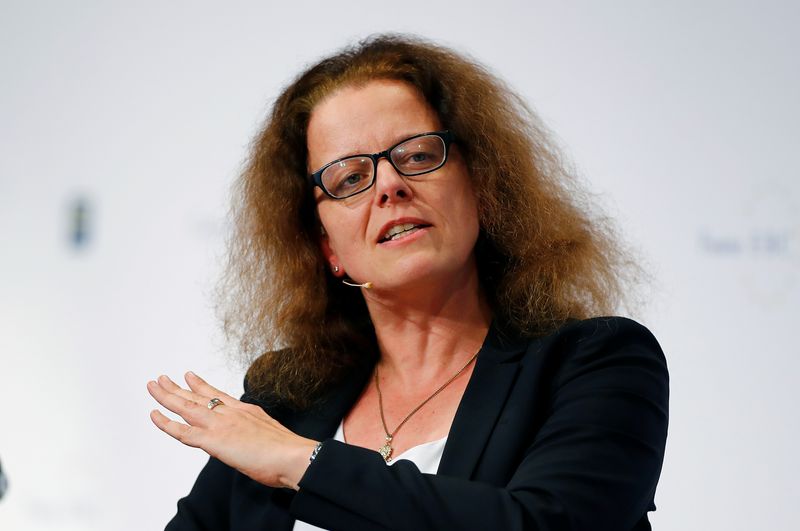

ECB’s Schnabel sees rising inflation risk from Iran war
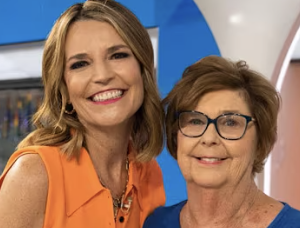
TUCSON, Ariz. — Three months after 84-year-old Nancy Guthrie vanished from her Catalina Foothills home in a suspected nighttime abduction, forensic experts are pointing to advanced DNA analysis and behavioral clues about a fame-seeking perpetrator as the most promising paths to resolution in one of the year’s most high-profile missing persons cases.
Guthrie, mother of NBC’s “Today” co-anchor Savannah Guthrie, was reported missing Feb. 1, 2026. Security footage captured a masked individual approaching her door around the time she disappeared. Blood evidence, a disabled Ring camera, propped-open doors and other signs convinced authorities she did not leave voluntarily. No ransom has been paid, and no suspect has been publicly named despite thousands of tips.

Forensic science professor April Stonehouse of Arizona State University told investigators and journalists in a recent NewsNation special that she believes DNA evidence — specifically a rootless hair sample recovered from the scene and sent to the FBI lab in Quantico — will ultimately crack the case. “I hope it is,” Stonehouse said when asked if the advanced testing could provide the breakthrough. Genetic genealogist CeCe Moore echoed that DNA could serve as the “Hail Mary,” though full analysis may take months.
The hair, along with potential DNA from gloves found nearby that matched those worn by the masked figure in doorbell video, has been prioritized for advanced forensic processing. Labs involved in major cases like the Gilgo Beach killings are reportedly assisting, raising hopes for a genetic genealogy match even without a traditional database hit.
Behavioral Profile Points to Fame-Seeking Suspect
Forensic psychologist Dr. Gary Brucato, who developed a “Gradients of Evil” scale, offered a chilling assessment of the perpetrator’s mindset. He suggested the suspect may have craved fame or attention, staging elements of the crime scene to mislead investigators. Brucato theorized Nancy Guthrie might have been killed elsewhere, with the home scene arranged as a cover, citing the blood on the doorstep and strategically opened back door as possible red herrings.
“The person who did this probably has some passing relationship, at least, with this victim,” Brucato said, noting the suspect’s apparent comfort level inside the home as seen on surveillance. He described the individual as potentially psychopathic and “too cool under pressure,” traits consistent with someone seeking notoriety through a high-profile crime tied to a celebrity family.
Other experts, including “Mindhunter” profiler Dr. Ann Burgess, have raised the possibility of retribution as a motive or that the kidnapper may no longer be alive, complicating recovery efforts. Former FBI profiler Mary Ellen O’Toole, now a forensics professor, analyzed the masked suspect’s demeanor in early video footage, highlighting behavioral red flags.
Investigation Tensions and Evidence Challenges
The case has exposed friction between local authorities and federal agencies. FBI Director Kash Patel publicly criticized the Pima County Sheriff’s Department for initially keeping the FBI out of the probe for several days, a claim Sheriff Chris Nanos has pushed back against. Despite the disputes, the investigation remains active with homicide detectives and federal support.
Key evidence includes a rootless hair sent for mitochondrial and possibly nuclear DNA testing, potential glove DNA, and multiple ransom-style notes received by media outlets — some claiming sightings in Mexico — that experts deem highly unusual. A $1 million family reward offered in late February remains unclaimed.
Savannah Guthrie has balanced public pleas for information with her return to the “Today” show in April. She has described the ordeal as unimaginable, wearing yellow — a color of hope — during appearances and emphasizing her family’s focus on bringing her mother home. The emotional toll surfaced again this week when she abruptly left a broadcast, though she returned the next day.
Why This Case Stands Out
Forensic criminologists note the abduction’s rarity for an elderly victim in a relatively secure neighborhood. The masked intruder’s boldness, apparent familiarity with the home, and lack of immediate financial demands differentiate it from typical stranger abductions or burglaries. Brucato suggested it could have begun as a burglary gone wrong before escalating.
Advanced forensic tools now in play include genetic genealogy, which has solved cold cases by building family trees from distant relatives’ DNA uploads to public databases. Stonehouse highlighted how modern techniques can extract usable profiles even from degraded samples like rootless hairs.
Community and National Attention
The disappearance has gripped the nation, with neighbors in the Tucson foothills expressing unease and continuing to display ribbons and signs of support. Door-to-door canvassing, expanded surveillance reviews and public appeals have generated tips, but concrete leads remain elusive as the case approaches 100 days.
Pima County officials renewed their plea for information this week, stressing the investigation continues “until Nancy is located or all leads exhausted.” Speculation about the suspect’s possible death or relocation adds urgency to forensic breakthroughs.
Experts caution that while DNA offers the strongest scientific hope, behavioral analysis and public vigilance remain crucial. The fame-craving theory aligns with cases where perpetrators insert themselves into investigations or seek media spotlight. Any arrest could hinge on matching digital footprints, vehicle sightings or witness recollections to the forensic profile.
Path Forward
As testing progresses, authorities balance optimism with realism. The involvement of elite labs and profilers underscores the case’s priority. Savannah Guthrie and her family continue advocating while preparing for any outcome after more than 90 days of agonizing uncertainty.
Forensic experts like Stonehouse and Brucato agree the combination of cutting-edge science and deep behavioral insight provides the best chance for justice. Whether through a DNA match that identifies a suspect with a fame motive or another overlooked clue, resolution may finally be within reach in a mystery that has captivated and heartbroken millions.
The coming weeks could prove decisive as lab results trickle in and the reward incentive lingers. For now, the focus remains on Nancy Guthrie — a mother, grandmother and beloved community member — and the unyielding hope for her safe return or answers that bring closure.
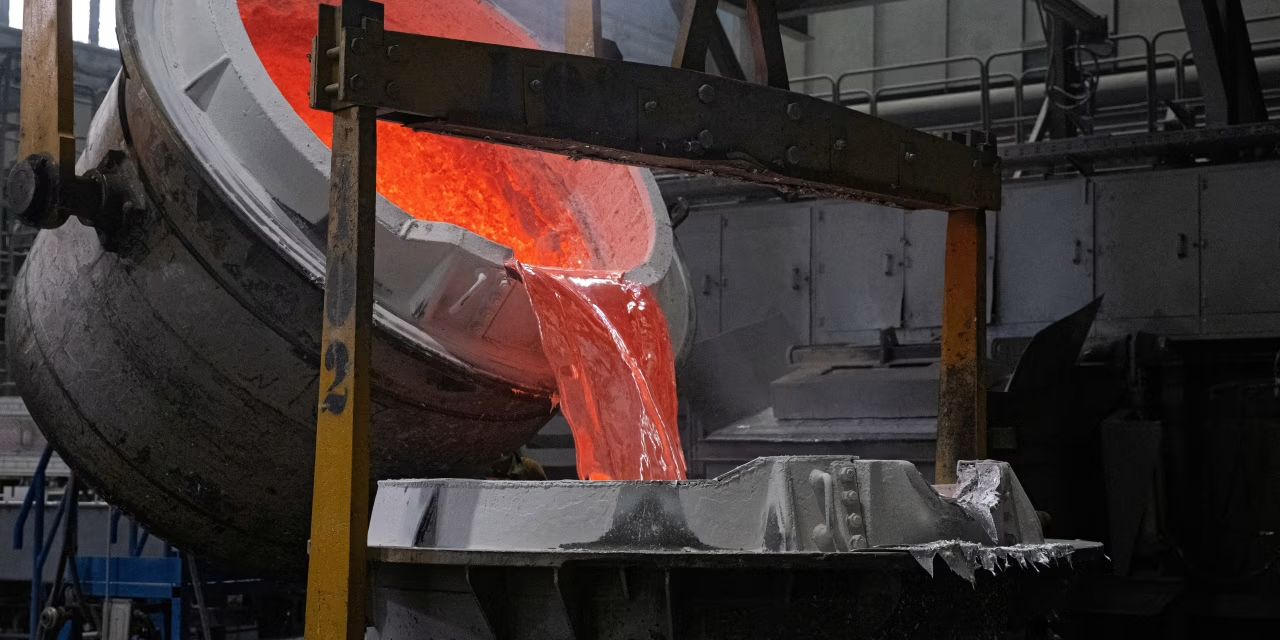
The latest Market Talks covering Basic Materials. Published exclusively on Dow Jones Newswires at 4:20 ET, 12:20 ET and 16:50 ET.
0702 ET – Comments from Henkel’s management alongside its first-quarter results highlight the importance of hair and relative weakness of laundry within its portfolio, analysts at Barclays say. It appears that the German chemical and consumer-goods company is trying to dilute laundry in their portfolio, they add. Hair products were the main draw of investor attention and gave reassurance for consumer brands. Overall, management stood behind the quality of the results despite a volatile macroeconomic backdrop, they say. Shares are up 4.6% at 66.22 euros. (aimee.look@wsj.com)
Copyright ©2026 Dow Jones & Company, Inc. All Rights Reserved. 87990cbe856818d5eddac44c7b1cdeb8
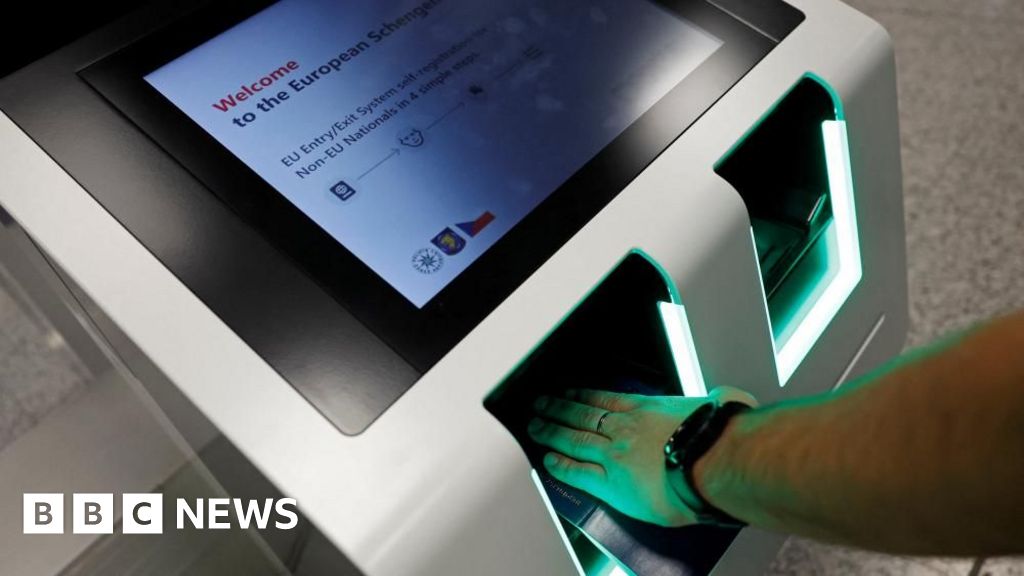
Reports had suggested the countries were set to follow the example of Greece, which effectively suspended biometric checks for UK nationals.

Diamond Hill Capital Management, Inc. is a wholly owned subsidiary of Diamond Hill Investment Group, Inc. Diamond Hill Investment Group is a publicly traded company, and its shares trade on the NASDAQ (Ticker: DHIL). Note: This account is not managed or monitored by Diamond Hill Capital Management, and any messages sent via Seeking Alpha will not receive a response. For inquiries or communication, please use Diamond Hill Capital Management’s official channels.

In boardrooms and hiring meetings across the UK, the conversation around creative talent is changing. Design is no longer viewed purely as a visual function, it is increasingly seen as a business-critical discipline that shapes branding, customer experience, and product success. For employers, this shift has redefined what it means to hire a “good designer.”
A recent study by Adobe Acrobat, based on the analysis of more than 14,000 job listings on Indeed, provides a detailed look at how these expectations are evolving. The findings reveal a clear hierarchy of skills, but also a deeper story about how creative roles are being repositioned within modern organisations.
Technical Skills Still Anchor Hiring Decisions
Despite the broader evolution of the role, technical expertise remains the foundation. The study found that experience with design tools is the most frequently mentioned requirement, appearing 765 times across job descriptions.
Adobe Creative Suite leads this category, with one in four listings referencing Adobe products directly. Meanwhile, 21% of job postings mention Figma, 8% refer to Microsoft tools, and 7% highlight typography.
From a business perspective, this emphasis is easy to understand. Employers are not just hiring for potential, they need designers who can contribute immediately, using tools that are already embedded in company workflows. Technical fluency reduces onboarding time and ensures consistency across projects, making it a non-negotiable requirement.
Collaboration as a Commercial Skill
Where the findings become more interesting is in the rise of collaboration as the second most in-demand skill, with 447 mentions.
Nearly 29% of job listings reference working with others, and 1 in 10 highlight close collaboration with other teams. This reflects a broader shift in how businesses operate. Design decisions are rarely made in isolation; they are influenced by marketing strategies, product development timelines, and customer insights.
In this environment, designers must function as connectors, translating ideas between departments and ensuring that creative output aligns with wider business objectives. Collaboration, therefore, is not just a “soft skill.” It is a commercial one.
Ownership and Initiative: Hiring for Accountability
The third and fourth most sought-after skills, management (327 mentions) and initiative (214 mentions), highlight another important trend: employers are increasingly hiring designers who can take ownership of their work.
Nearly one in five job descriptions mention responsibility for tasks, while others refer to stakeholder management and the ability to manage multiple projects. Initiative appears in 21% of listings, signalling a strong preference for candidates who can operate independently.
For businesses, this reduces the need for constant oversight and allows creative teams to move faster. For candidates, it raises the bar. Employers are no longer just assessing design quality, they are evaluating how individuals think, prioritise, and execute.
AI Skills Enter the Mainstream
One of the most notable developments in the study is the inclusion of AI skills in the top 10, with 134 mentions.
This signals a turning point. AI is no longer a niche or experimental area, it is becoming part of the core skill set for creative professionals. From automating repetitive tasks to enhancing ideation, AI tools are reshaping how design work is approached.
The growing role of AI and higher education reflects how academic pathways are evolving to better align with real-world creative workflows. Universities are increasingly embedding AI-driven tools into design education, ensuring graduates are prepared for environments where technology and creativity intersect.
For businesses, hiring designers with AI awareness offers a competitive edge. For candidates, it represents an opportunity to differentiate themselves in a crowded market.
Communication: Turning Creativity into Business Value
Creative work only delivers value when it can be understood, implemented, and measured. This is why communication skills rank fifth, with 203 mentions across job descriptions.
A quarter of listings reference written or verbal communication, while interpersonal skills appear in 5% of cases. For employers, this reflects the need for designers who can justify decisions, present ideas to stakeholders, and contribute to strategic discussions.
According to the Chartered Institute of Personnel and Development, communication remains one of the most critical skills in modern workplaces, particularly in roles that sit at the intersection of creativity and business. In design, this intersection is becoming increasingly central.
The Expanding Role: Leadership, UX, and Adaptability
Beyond the top five, the study reveals how the designer’s role is continuing to expand.
Leadership skills, mentioned 157 times, suggest that even mid-level designers may be expected to mentor others or guide projects. UX skills (153 mentions) reflect the growing importance of user-focused design in digital products and services. Flexibility (135 mentions) points to the need for adaptability in fast-changing environments.
Attention to detail, appearing in 18% of job descriptions, remains a consistent requirement, an essential quality in maintaining standards across increasingly complex projects.
Together, these skills paint a picture of a role that is no longer narrowly defined. Today’s designers are expected to contribute across multiple dimensions, from execution to strategy.
Where Future Talent Is Emerging
Alongside employer expectations, the study also highlights where the next generation of designers is coming from.
Lincoln ranks first in the UK for interest in learning creative design, with 91 searches per 1,000 people. Worcester (87), Norwich (75), Durham (71), and Chester (66) complete the top five.
Other cities in the top 10 include Dundee, Wrexham, Preston, Oxford, and St Albans. Notably, the North West and the East of England are the only regions with multiple cities represented.
What stands out is the role of AI in these search trends. In cities like Lincoln and Worcester, searches for AI video generators are among the most popular, indicating strong interest in emerging creative technologies.
For businesses, this geographic spread is significant. Talent is no longer concentrated in traditional creative hubs, it is distributed across the country, driven by access to digital tools and online learning.
A Shift in How Businesses Define Creative Talent
Taken together, the findings from the Adobe Firefly study highlight a broader transformation. The definition of a creative designer is expanding, shaped by the needs of modern organisations.
Technical skills remain essential, but they are now part of a wider framework that includes collaboration, communication, initiative, and adaptability. AI is accelerating this shift, introducing new tools and expectations that are quickly becoming standard.
For employers, the challenge is identifying candidates who can operate across these dimensions. For aspiring designers, the message is clear: success will depend not just on what you can create, but on how effectively you can apply your skills in a business context.
In 2026 and beyond, creative talent will not be measured solely by output, but by impact.
Business
Sun Life Financial Inc. 2026 Q1 – Results – Earnings Call Presentation (TSX:SLF:CA) 2026-05-07

Q1: 2026-05-06 Earnings Summary
EPS of $1.89 beats by $0.00

Seeking Alpha’s transcripts team is responsible for the development of all of our transcript-related projects. We currently publish thousands of quarterly earnings calls per quarter on our site and are continuing to grow and expand our coverage. The purpose of this profile is to allow us to share with our readers new transcript-related developments. Thanks, SA Transcripts Team

Form 13F ALLIUM FINANCIAL ADVISORS For: 7 May
French fry startup raises $10 million Series A

1inch Resolver TrustedVolumes Drained for $6.7M on Ethereum
Elizabeth Smart believes Nancy Guthrie 'could absolutely still be alive'

Manchester United reach agreement with Casemiro over contract clause amid transfer speculation

US brings back mandatory military draft registration

Steven Gerrard disagrees with Gary Neville over ‘shock’ Chelsea and Arsenal claim | Football


-

 NewsBeat4 days ago
Channel 5 – All Creatures Great and Small series 7 new post
-

 Crypto World9 hours ago
Upbit adds B3 Korean won pair as Base token gains Korea access
-
 Tech6 days ago
Trump’s 25% EU auto tariff breaches Turnberry Agreement that also covers semiconductors and digital trade
-
 NewsBeat10 hours ago
NCP car park operator enters administration putting 340 UK sites at risk of closure
-
 Sports6 days ago
Paul Scholes issues Marcus Rashford reality check as agreement emerges over Man United star
-

 Entertainment6 days ago
Met Gala 2026 Rumored Guest List Is Turning Heads
-

 Business6 days ago
Strait of Hormuz Blockade Persists Amid US-Iran Standoff, Sending Oil Prices Soaring
-
Entertainment6 days ago
New on Prime Video in May 2026 — Full List of Movies and Shows
-

 Sports6 days ago
Cavaliers vs. Raptors Game 6 live score, updates, highlights from 2026 NBA playoffs first-round series
-

 Entertainment6 days ago
Kylie Jenner Hit With Second Lawsuit From Ex-Housekeeper
-
 Sports6 days ago
David Benavidez responds to team Canelo saying the fight will never happen
-
Entertainment5 days ago
New Netflix Movies in May 2026 — My Top 3 Picks to Stream
-

 Tech6 days ago
Meta ends Sama contract after Kenyan workers report seeing intimate footage from Ray-Ban smart glasses users
-

 Entertainment6 days ago
Young and the Restless Next Week: Cane Arrested & Matt’s Deadly New Scheme!
-
 Sports6 days ago
IPL 2026: ‘Love you darling’- Hardik Pandya’s reaction to MS Dhoni steals the show |Watch | Cricket News
-

 Business4 days ago
Luka Doncic Injury Update: Doncic’s Hamstring Recovery Slows Lakers’ Hopes Against Thunder: Can He Run Yet?
-
 Crypto World5 days ago
Pi Network Mandates Protocol 23 Upgrade for All Mainnet Nodes Before May 15 Deadline
-

 Entertainment5 days ago
Melissa Joan Hart and More Stars Attend 2026 Kentucky Derby
-

 Sports6 days ago
Bayern won’t hand bottom side Heidenheim ‘gifts’ despite PSG game
-

 Sports6 days ago
What Preity Zinta Said After Punjab Kings’ First Defeat Of IPL 2026
You must be logged in to post a comment Login