
Business
PUIG Brands – So Far, So Good, Looking At 2H26-2028E




The parents of a teenage girl with a rare form of childhood cancer say the hidden costs of caring for their daughter have left them in fear of losing their home.
Maya, 13, from Hythe in Kent, was diagnosed with neuroblastoma at three years old, but relapsed in 2023 having been in remission for five years.
Her mother, Dellanie, said the pressure of paying a mortgage and bills whilst she and her husband, Terry, are working less to care for Maya is continuing to take its toll on their family of five.
Dellanie, an NHS nurse, said: “Whilst your child is poorly and you are fighting for her life, the bills don’t stop coming.”
She added: “My husband has lost his income as he is caring for Maya, and these days you need two people working just to keep your head above water.
“It has been very, very difficult but our aim has always been to to look after our child as well as each other.
“I always put a brave face on – of course I’m hurting, but I can’t be in the corner crying.”
Maya, who her mother described as a “larger than life person” who loves animals and music, was first diagnosed with neuroblastoma near her adrenal gland when she was three-years-old.
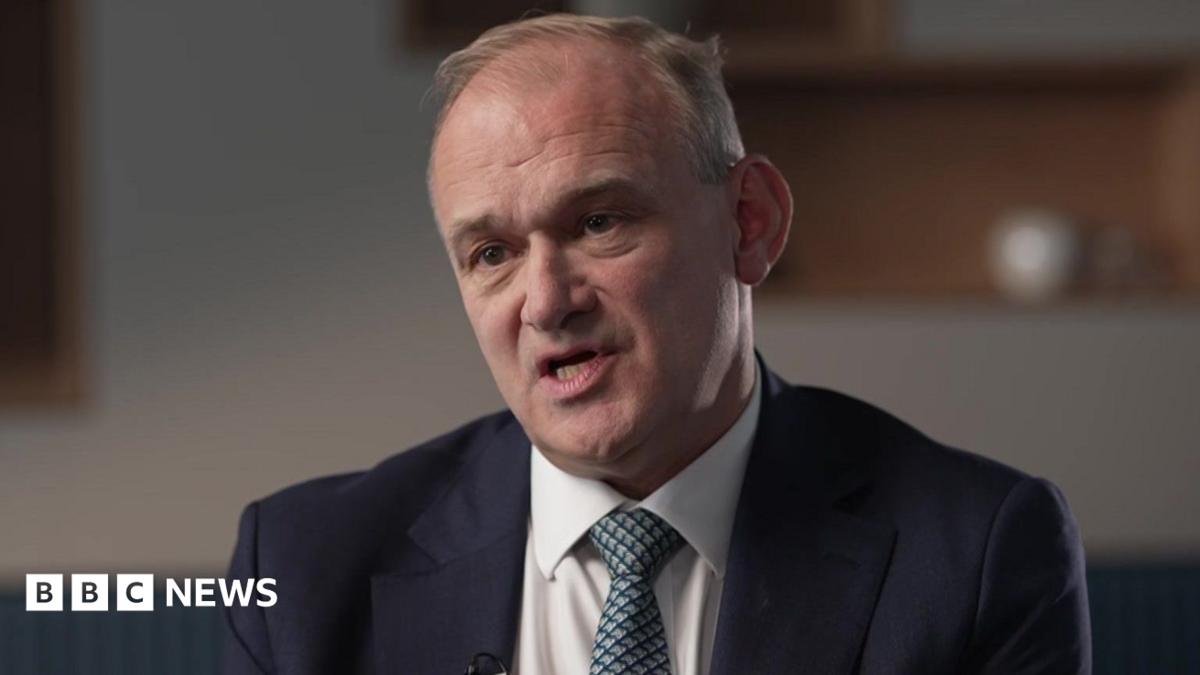
Sir Ed Davey is calling on the government to immediately cut fuel duty by 10p a litre until Christmas as part of a package of policies aimed at cutting the cost of living.
The Liberal Democrat leader is also urging the government to scrap a permanent increase in fuel duty which is set to take effect in January.
Fuel duty was frozen under the Conservatives in March 2022 and Sir Keir Starmer’s government continued the freeze, deciding in May to push back a planned 3p increase in September until the end of this year.
The Lib Dems claim cutting 10p from fuel duty now would mean fuel would drop by 12p per litre at the pump.
Sir Ed claimed drivers should be supported and a temporary three-month fuel duty cut would pay for itself by stimulating the economy.
“Petrol and diesel prices are higher than they’ve been for a long time because of Trump’s mad war with Iran, and people need help now,” he said.
The policy would cost about £2bn, he said, adding: “It’s a three-month package, a temporary package, but if you look at the extra money the government will get through the energy profits levy, from gas taxes, from VAT and fuel duty, it’s self-funding.”
In a speech to his party’s conference on Tuesday, Sir Ed will make further calls to cut the bus fare cap from £3 to £1, and reduce rail fares by 10%.
He will also call for VAT to be dropped from public charging points for electric vehicles and a review of network costs the Lib Dems have labelled unfair.
Chancellor John Healey is under pressure to raise taxes or cut spending at his Budget next month, amid soaring government borrowing costs.
Asked about Sir Ed’s call for a fuel duty cut, Labour Party chair Bridget Phillipson told Laura Kuenssberg: “I’m sure John Healey will be open to any and all suggestions ahead of the budget but actually this is an area where the Labour government has taken action on fuel duty already.
“Whilst I recognise what the Lib Dems have to say on this topic, this is the element of politics about it – they’ve got their conference, they’re making their pitch, good luck to them.”

Treace Medical Looks Unlikely To Recover, A Founder-Led Broken Growth Story

Southwest Airlines: Buy The Transformation Despite The Oil Shock

What to expect from upcoming summit between Presidents Trump and Xi

Newell Brands: The Sales Recovery Is Real, But The Earnings Upgrade Needs Scrutiny
Business
$1.5 trillion wealth transfer is coming. How India’s next-gen HNIs are rebuilding family portfolios

Their portfolios are increasingly being built across listed equities, fixed income, private markets, real estate, gold and overseas assets, while concentrated bets are being ring-fenced to a smaller pool of capital.
Edited excerpts from a chat on how HNIs are investing, the risks involved and strategies:
India is approaching a significant intergenerational wealth transfer. What is actually changing when wealth moves from founders to the next generation: asset allocation, risk appetite, investment horizon or simply the way investment decisions are made?
All four are changing, but the biggest change is probably in how investment decisions are made.

The founder generation often created wealth through concentration: one business, one industry and, predominantly, one country. The investment approach outside the operating business was also often relationship-led and relatively informal.
The next generation is beginning to look at the family’s wealth more like an institutional balance sheet. They want to understand the family’s total exposure across the operating business, listed markets, private investments, real estate, debt and global assets. Investment committees, formal asset-allocation frameworks, consolidated reporting and professional manager selection therefore become more important.This is already visible in the evolution of Indian family offices. The Julius Baer-EY Family Office Playbook notes a shift from founder-centric decision-making towards family constitutions, investment committees, formal investment policies and professional management. This becomes particularly relevant as an estimated US$1.3-1.5 trillion of wealth is expected to transfer between generations in India over the next decade.
Their risk appetite is not necessarily higher; it is more segmented. They may want the family’s core wealth to be diversified and professionally managed, while simultaneously being comfortable taking concentrated risk in a smaller pool of capital through private equity, venture investing, direct deals or new-age themes.
Their involvement is also much greater. They do not simply want a recommendation; they want to understand the investment thesis, risks, valuation and alternatives before taking a decision. In a 2026 CFA Institute survey, nearly 70% of young investors using a paid adviser interacted with that adviser at least monthly.
How differently are NextGen HNIs allocating their portfolios compared with their parents? Can you quantify the typical allocation today across listed equities, fixed income, private markets, real estate, gold and overseas assets?
There isn’t one credible “typical NextGen portfolio”, and we should be careful about creating one. Asset allocation for a 35-year-old technology entrepreneur who has sold his business should be very different from that of a 35-year-old member of a promoter family whose majority of wealth remains invested in the family business.
Available Indian UHNI data nevertheless shows where portfolios are today. A Julius Baer-EY study done in 2026 says many Indian family offices are now allocating 40-45% to alternatives, although the definition is broad and includes PE, VC, private credit, AIFs, REITs and InvITs. These are different investor cohorts, but the contrast itself illustrates how rapidly sophisticated portfolios are evolving.
For a diversified NextGen UHNI, a reasonable strategic range could look something like:
· Listed equities: 25-35%
· Fixed income: 15-25%
· Private markets/alternatives: 15-25%
· Real estate/real assets: 10-20%
· Gold: 5-10%
Separately, we would increasingly look for 10-20% of the overall portfolio to have international exposure. That is not an additional asset class: it can sit within equities, fixed income or private markets.
The important shift versus the previous generation is therefore not one dramatic change in percentage allocation. It is lower dependence on a few physical assets, greater use of financial assets and private markets, and deliberate geographic diversification.
Private equity, venture capital and pre-IPO opportunities have become increasingly accessible to wealthy investors. Are HNIs genuinely making superior risk-adjusted returns in private markets, or has the narrative run ahead of actual performance after accounting for illiquidity and failed investments?
Private markets can certainly create superior returns, but we would be careful about treating that as a universal outcome. The dispersion between managers and deals is significantly wider than in listed markets, so access alone does not guarantee alpha. The attraction is genuine. Private markets allow investors to participate in companies earlier in their growth cycle, access businesses and sectors that may not yet be available in public markets, and potentially earn an illiquidity premium. In India, this opportunity set has expanded materially: Category II AIFs alone had raised over Rs 4.4 lakh crore (drawdown amount) and invested more than Rs 4.1 lakh crore by March 2026.
However, headline IRRs can sometimes overstate the investor experience. Investors need to look beyond IRR to DPI, TVPI, actual cash distributions, holding periods and the proportion of investments that have been written down or failed. A portfolio showing a high marked-to-market IRR but having returned little capital is very different from one where those returns have actually been realised. This has become particularly relevant after the 2020-22 period, when abundant liquidity led to aggressive entry valuations across private equity and venture capital. Globally, many of those vintages are now taking longer to exit and are likely to deliver lower returns than originally targeted.
The other important point is manager selection. Private-market returns tend to show substantial dispersion, which means investing with a strong manager, with differentiated sourcing and disciplined entry valuations, matters considerably more than simply allocating to the asset class. Even available Indian AIF performance data illustrate this: median returns can look reasonable, while top-quartile private-equity managers have generated materially stronger outcomes.
For HNIs, therefore, we see private markets as an important portfolio allocation rather than a replacement for listed equities. The right investor is someone who has sufficient liquidity to meet the drawdown, can tolerate a 7-10 year holding period, can diversify across managers and vintages, and has access to high-quality opportunities rather than simply the most widely distributed deals.
Pre-IPO investing requires even greater discipline. A short distance from an IPO does not automatically make an investment low-risk. The relevant questions are still the entry valuation, earnings quality, dilution, lock-ins, exit visibility and the valuation at which the eventual IPO can realistically take place.
So the opportunity is real, but the narrative becomes dangerous when illiquidity itself is mistaken for alpha. For us, the objective is not to maximise private-market exposure: it is to access situations where the expected return sufficiently compensates investors for illiquidity, opacity and execution risk.
We have seen several high-profile IPOs emerge from portfolios of private-market investors. Are HNIs increasingly using pre-IPO investing as a wealth-creation strategy? What returns should investors realistically expect, and what are the biggest risks they underestimate?
Yes, pre-IPO investing has become a meaningful part of the UHNI opportunity set. But we would be very cautious about treating “pre-IPO” as an investment thesis by itself.
A few years ago, investors could sometimes buy a company in the private market and benefit simply from a valuation re-rating when it entered the public market. That gap has narrowed materially. An analysis by Mint of 43 companies using Tracxn and Venture Intelligence data found that while select technology and consumer companies in 2021 listed at roughly twice their previous private-market valuations on average, by 2025 the average IPO premium over the last private round had compressed to around 20%, with several companies listing below their previous private-market valuations.
Therefore, the return has to come increasingly from growth in the underlying business rather than merely from the transition from “private” to “listed”.
The biggest risks investors underestimate are entry valuation, the IPO getting postponed, deterioration in the business before listing, governance and cap-table complexity, dilution, and the ability to actually exit after listing. Pre-IPO investors also need to understand applicable lock-ins: under current SEBI ICDR requirements, pre-offer equity is generally subject to a six-month post-allotment lock-in, subject to specified exemptions.
An IPO is an exit route, not an investment thesis. The company still needs to be worth owning even if the IPO takes three years instead of one.
Indian equities have created enormous wealth over the past decade, particularly in midcap and smallcap stocks. At current valuations, how are your HNI and UHNI clients positioning their equity portfolios? Where are you still finding attractive opportunities, and where are you advising clients to reduce exposure?
Indian equities today are being shaped by what we would call “a tale of two currents”. On one side, the domestic backdrop remains supportive: growth is resilient, earnings are recovering and structural themes around manufacturing, formalisation and capex remain intact. On the other, global headwinds have intensified through higher crude, elevated bond yields and geopolitical uncertainty. That combination argues for staying invested, but being far more selective about where incremental capital is deployed. Recent market weakness despite strong domestic growth captures this tension well.
From a valuation perspective, we would describe the market as neither expensive enough to warrant a broad retreat, nor attractive enough to justify indiscriminate buying. The sharp excesses seen earlier have moderated, but several pockets, particularly in midcap and smallcap stocks, still discount fairly optimistic growth assumptions. That makes this a stock-picker’s market, where earnings delivery and entry valuation matter more than index-level calls.
For HNI and UHNI portfolios, we continue to prefer selective exposure to structural growth themes rather than broad thematic bets. We still see opportunities in areas such as defence and aerospace, specialised manufacturing, electronics and niche industrials, energy transition and power infrastructure, financialization of savings, and discretionary consumption. These are themes with multi-year growth drivers, but the opportunity increasingly lies in identifying companies with execution visibility, balance-sheet strength and valuations that leave room for returns, not simply owning the sector.
At the same time, we would be cautious in segments where price has run materially ahead of fundamentals, particularly where valuations are being sustained more by thematic excitement than by near-term earnings. Also, we would like to be underweight on the segment which is likely to see muted earnings growth.
So our positioning is not about reducing equity exposure aggressively, but about narrowing conviction. We would avoid chasing broad market beta at current levels and instead favour businesses where structural growth, earnings visibility and valuation discipline come together. In this environment, the opportunity is still meaningful, but it is increasingly micro rather than macro, and stock-specific rather than index-wide.
Considering the current scenario, we continue to maintain a Neutral view on Equities. Portfolio Allocation: 40% allocation to Hybrid/Large caps, 10% to Global and 50% allocation to Midcap & Smallcap (continuing overweight position).
We believe that hybrids can do similar to largecap while keeping the downside lower amid the volatile scenario. On the other hand, allocation to pure equity-oriented strategies should be done in a staggered manner.
Global diversification has become a major talking point among wealthy Indians. How much of an UHNI portfolio should ideally be invested overseas today?
For most India-based UHNIs, we would think of 10-15% of financial assets overseas as a reasonable strategic range, although the appropriate number depends heavily on the family’s existing exposures.
If almost all of someone’s wealth is already linked to an Indian operating business, Indian real estate and Indian equities, the case for a higher overseas allocation is much stronger. Conversely, someone with substantial overseas business interests, properties or foreign-currency assets may already have meaningful global exposure.
There are three reasons for doing it:
First is country diversification. India’s long-term growth outlook may remain compelling, but the family’s entire balance sheet does not need to depend upon one economy.
Second is currency diversification or a hedge against INR depreciation.
Third, and often underappreciated, is opportunity diversification. Certain sectors and companies simply do not exist at a comparable scale in the Indian listed market. Global portfolios provide access to technology platforms, semiconductors, healthcare innovators, global industrial companies and international private markets.
This is also consistent with how sophisticated family offices globally are thinking. UBS’s 2026 Family Office Report found an increased emphasis on diversification across assets, currencies and regions, rather than making binary calls on individual countries.
For resident Indians, implementation also has to take account of the regulatory route and the US$250,000 per person per financial year LRS limit for permitted overseas remittances.
Being bullish on India and diversifying globally are not contradictory views. You diversify overseas not because you are negative on India, but because no large family balance sheet should depend entirely on one geography and one currency.
Suppose a 35-year-old entrepreneur has just monetised a business and comes to you with Rs 100 crore. How would you allocate that Rs 100 crore today across asset classes, and how would that portfolio differ from what you would have recommended five years ago?
Assuming this is Rs 100 crore of net investible wealth, that the entrepreneur has no unusual near-term liabilities and that the objective is long-term wealth creation rather than another concentrated entrepreneurial bet, an illustrative starting portfolio could be:
Rs 30 crore: Indian listed equities. The long-term growth engine, but diversified across market caps and managers rather than recreating the concentration that generated the original wealth. Here, we would prefer to take allocation through Hybrid funds on one side and Midcap & Smallcap on the other side of the spectrum.
Rs 10 crore: Global listed equities. For geographic, currency and sector diversification. This can be divided between US and EM.
Rs 30 crore: High-Yield fixed income / Private Credit. Accrual strategy across the credit spectrum through both managed as well as direct routes. At current yields, fixed income can make a meaningful contribution to portfolio returns rather than functioning only as a capital-preservation bucket.
Rs 10 crore: Private equity/growth equity/co-investments. Built gradually across vintages and managers rather than deployed in one year.
Rs 10 crore: Real assets such as REITs/InvITs/select real estate. Providing yield and real-asset exposure while maintaining liquidity.
Rs 7.5 crore: Gold. As a portfolio diversifier and hedge against macro and geopolitical shocks.
Rs 2.5 crore: Cash/liquidity reserve. Can be done through Arbitrage Funds.
What is the biggest portfolio mistake you currently see among Indian HNIs and UHNIs: too much real estate, excessive concentration in their own businesses, chasing smallcap stocks, inadequate global diversification, or something else? And where do you see the biggest wealth creation opportunity for the next 5-10 years?
The biggest portfolio mistake we see among HNIs and UHNIs is not necessarily excessive exposure to any one asset class; it is excessive concentration in a single source of risk.
For first-generation entrepreneurs, a large part of their wealth is often already linked to their own business, the Indian economy and domestic real estate. Yet their investment portfolios can end up adding more of the same risk through concentrated equities, smallcap and midcap stocks or sector-specific bets.
In other cases, investors extrapolate the performance of the last few years and chase whichever asset class has recently done well. Both approaches can work for a period, but they leave portfolios vulnerable when the cycle turns.
The objective for large portfolios should increasingly be to distinguish between wealth creation and wealth preservation. The core portfolio should be diversified across listed equities, fixed income, real assets, alternatives and global assets, while concentrated or higher-risk opportunities should sit around that core. Global diversification is particularly important, not necessarily because overseas markets will always generate higher returns, but because it reduces dependence on a single economy, currency and market cycle.
Over the next 5-10 years, we continue to believe India offers a very strong structural wealth-creation opportunity, but the opportunity is likely to become much more selective. The broad rerating of markets has already happened; the next phase should be driven increasingly by earnings growth and execution rather than valuation expansion.
We see attractive opportunities emerging from some of India’s long-term structural transitions: manufacturing and supply-chain localisation, defence, power and energy transition, financialisation of savings, premium and discretionary consumption, healthcare and specialised businesses participating in global value chains. However, increasingly one will have to go deeper within these themes to identify the right businesses rather than simply buying the sector.
For HNIs and UHNIs, the larger opportunity may therefore be to build portfolios that combine India’s structural equity opportunity with differentiated sources of return: private markets, structured and performing credit, real assets and selective global exposure. The next decade of wealth creation is unlikely to come from simply taking more risk; it will come from allocating risk more intelligently.
(Disclaimer: Recommendations, suggestions, views, and opinions given by experts are their own. These do not represent the views of The Economic Times.)
Business
Rs 4,169 crore IPO rush this week: 19 issues to open for subscription; NSE to lead 12 listings

Apart from fresh openings, the market will also watch 12 listings, including NSE, whose grey market premium has cooled to around 3%.
The biggest IPO opening this week is Elevate Campuses, which will launch its Rs 2,100 crore public issue on September 23 and close on September 25. The company has fixed a price band of Rs 343-362 per share. The issue is entirely fresh, making it the largest fundraise among IPOs opening this week.
Varmora Granito will open its Rs 708.02 crore IPO on September 22 and close on September 24. The price band has been fixed at Rs 140-148 per share. The issue includes a fresh issue of Rs 320 crore and an offer for sale of Rs 388.02 crore.
Also Read: Tata Sons IPO may spotlight some low-key crorepatis
A-One Steels India will open its Rs 405 crore issue on September 24. The IPO will close on September 28. The company has fixed a price band of Rs 385-405 per share. The issue comprises a fresh issue of Rs 355 crore and an OFS of Rs 50 crore.
ArMee Infotech will open its Rs 300 crore IPO on September 23 and close on September 25. The price band has been fixed at Rs 350-375 per share. The entire issue is fresh.Swastika Infra will also open on September 23 and close on September 25. The company plans to raise Rs 161 crore at a price band of Rs 175-185 per share. The issue includes a fresh issue of Rs 128.50 crore and an OFS of Rs 32.38 crore.
Adroit Industries will open its Rs 150.71 crore IPO on September 23 and close on September 25. The price band has been fixed at Rs 126-134 per share. The issue includes a fresh issue of Rs 132.62 crore and an OFS of Rs 18.09 crore.
Together, these six mainboard IPOs account for about Rs 3,824.61 crore of the total fundraise planned this week. This means most of the primary-market money will chase mainboard names, even though the SME board will have more issues by count.
Listings to be led by NSE
The listing calendar will also stay active. NSE is among the key listings next week, but its GMP has slipped to around 3%, indicating muted listing expectations compared with the earlier hype around the country’s largest exchange.
Among other upcoming listings, SpectraA Technology Solutions is commanding a GMP of around 38%, while SS Retail is quoting at a GMP of around 34%. Hero Motors, however, is trading at a negative GMP ahead of its listing, pointing to weak grey market sentiment.
The SME segment will remain crowded. Vivekanand Cotspin, FX Multitech and Robokidz Eduventures will open on September 21. Himalaya Nutravedics and Anand Seamless will open on September 22.
Several more SME issues will open on September 23, including Coreintegra Consulting, Sai Urja Indo Ventures, Pooja Logistics, Liqvd Digital India, SK Offset and Unitec Fibres. Peshwa Wheat is also scheduled to open on September 24, while Bench Mark Infotech Services is scheduled to open on September 25.
The week, therefore, will test investor appetite across both large and small issues. Mainboard IPOs will absorb most of the money, led by Elevate Campuses and Varmora Granito, while the listing market will be watched closely for NSE, SS Retail, SpectraA Technology Solutions and Hero Motors.
Disclaimer: The views/recommendations mentioned in this article, wherever applicable, are those of the respective SEBI-registered Research Analyst/brokerage and have been reproduced/reported with due attribution. They should not be construed as the views or recommendations of The Economic Times Digital or the journalist. Readers are advised to consider the original research report and make their investment decisions based on their own assessment. Brokerage disclaimers here

Reform UK’s record donations face risk from election spending review

Steel Dynamics Q3 Pre-Announcement Is Nothing Unusual

RECAP – Multi-vehicle crash on M60 with emergency services

Hythe family shares hidden cost of cancer after teen’s diagnosis

Netflix Officially Kills Sigourney Weaver’s Sci-Fi Classic Ahead of Reboot Series




-

 Fashion2 days ago
Weekend Open Thread: Talbots – Corporette.com
-

 Tech7 days ago
The Latest Weird Thing to Play Doom Is the Mapped-Out Brain of a Fruit Fly
-
 NewsBeat1 day ago
Trump says US has reached an agreement to take permanent control of Greenland’s security
-

 Crypto World5 days ago
Kraken Lets xStocks Holders Earn Yield Through DeFi
-

 Crypto World5 days ago
Revolut Attackers Warn of Ongoing Daily Customer Data Leaks
-

 Crypto World1 day ago
Circle launches Arc Studio AI agent for building onchain apps
-

 Crypto World4 days ago
What Is the Status of the U.S.-Iran Peace Talks? Here's What Both Sides Are Saying
-

 Crypto World3 days ago
US Charges Robinhood Engineers Over Crypto Listing Trades
-

 Crypto World5 days ago
Robinhood engineers charged over $50K crypto scheme
-

 Crypto World6 days ago
Elon Musk Drops a Bombshell: Grok 5 Could Be the AGI Breakthrough
-

 Crypto World1 day ago
Bitcoin price breaks channel as RSI climbs to 63
-

 Crypto World7 days ago
New Tesla Roadster Uses SpaceX Tech. Will It Impact the Stock Price?
-
 NewsBeat6 days ago
‘Sick conspiracy’: Trump says only guardrails AI needs is ‘a strong and smart (High IQ!) president’ in all-caps rant
-

 Crypto World5 days ago
NVIDIA Analysis: Attempted Rising Wedge Breakout Amid Pressure on the AI Sector
-
Business6 days ago
SK Hynix ADRs Fall More Than 6% as Memory Rally Breaks on Fears of Slower AI Spending
-

 Tech4 days ago
Webb’s IC 348 Mosaic Includes Two-Jupiter Dwarfs, Twin Jets, and a Nursery Still Making Worlds
-

 Crypto World6 days ago
3 Token Unlocks to Watch in the Third Week of September 2026
-

 Crypto World5 days ago
DOJ Seeks to Seize $61M in Iran Oil Funds From Binance Accounts It Vouched For
-
Crypto World5 days ago
Can Circle’s Arc Repeat Robinhood Chain’s Meme Coin Boom?
-

 Crypto World7 days ago
Goldman Sachs backs 25bp Fed hike after CPI
You must be logged in to post a comment Login