
Business
QQQI Vs. QDVO: Income Challenges Growth, But QDVO Still Leads




OPINION: Business is increasingly the doing the job of the government.
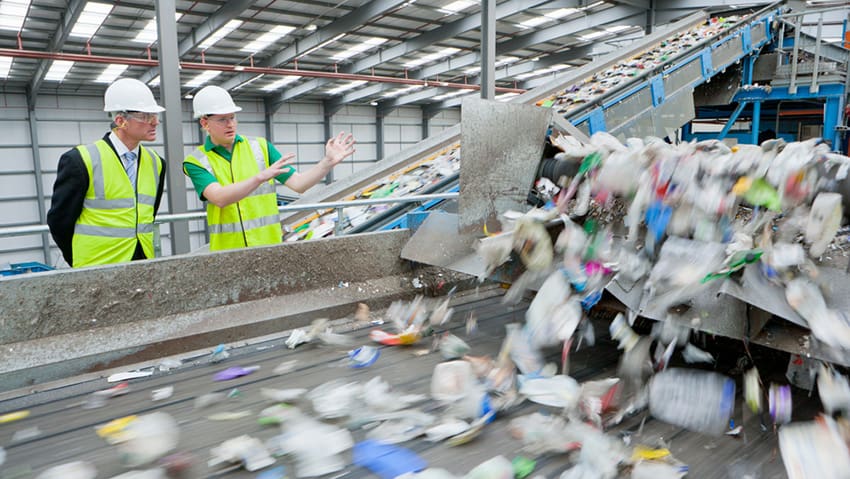
The dust hangs thick in the air at Sharp Group’s recycling facility in Rainham, east London, where the relentless rumble of hoppers and conveyor belts sets a punishing tempo. It is, by any measure, an unforgiving place to earn a living, and increasingly, that is the problem.
The family-run skip and waste management business, which processes up to 280,000 tonnes of mixed recycling a year, depends on 24 agency workers stationed along its rapid conveyor belts. They sift, in real time, through a procession of debris that ranges from old trainers and VHS cassettes to slabs of concrete. It is the sort of work that few are queueing up to do, and the figures bear that out. Annual staff turnover at the plant runs at 40%, mirroring an industry-wide retention crisis that is now forcing British SMEs to confront a question once reserved for car factories and Amazon warehouses: can robots do this instead?
For Sharp Group, the answer may be taking shape on the line itself. A humanoid robot known as Alpha, the Automated Litter Processing Humanoid Assistant, is being trained to pick through the waste stream alongside the human pickers it may one day replace. Built by China’s RealMan Robotics and adapted for British recycling conditions by London-based TeknTrash Robotics, Alpha represents an unusual bet on humanoid form factors in an industry that has, until now, leant towards bespoke automated kit.
“The attraction of a humanoid is that you can put it here and it stays here,” says Chelsea Sharp, the plant’s finance director and granddaughter of founder Tom Sharp. “It will pick all day, 24 hours a day, seven days a week. It’s not going to apply for a holiday, it’s not going to have a sick day.”
That blunt commercial logic sits against an equally blunt safety case. Work-related injury and ill-health in the waste sector run 45% higher than the national average across other industries, and the fatality rate is a sizeable multiple of the broader workforce. Sharp Group is proud of its own safety record, but the maths of recruitment in such an environment is becoming increasingly difficult to defend.
“The belt is moving all the time, you’re constantly picking. I go through a lot of pickers because they just aren’t up to the job,” says line supervisor Ken Dordoy. The firm rotates staff through different waste streams every 20 minutes, with periodic stoppages built in for respite, a regime that speaks volumes about the strain involved.
Alpha, for now, is no quick fix. It is in the early stages of an exhaustive training programme, with a plant worker wearing a VR headset alongside the robot to demonstrate what good picking looks like. The dual challenge, TeknTrash founder and chief executive Al Costa explains, is teaching the machine first to identify objects on a moving belt, and then to lift them reliably. His firm’s HoloLab system feeds Alpha a torrent of data from multiple cameras, generating millions of training data points a day.
Costa is candid about the gap between marketing hype and operational reality. “The market thinks these robots are prêt‑à‑porter, that all you need to do is plug them into the mains and they will work flawlessly. But they need extensive data in order to be effectively useful.”
The humanoid approach has the advantage of slotting into existing infrastructure without expensive plant redesign, no small consideration for SMEs operating on the thin margins typical of the recycling sector. The alternative, increasingly favoured by larger operators, is wholesale retrofitting with bespoke automated kit.
Colorado-based AMP, which runs three of its own plants and supplies equipment to dozens of facilities across Europe and the UK, takes that route. Its systems use air jets to fire items into chutes, with AI continuously sharpening the machine’s ability to identify and sort materials. “Our robots are much more efficient than humans, probably eight or 10 times the pace,” chief executive Tim Stuart says. “The AI technology and jets have really increased the capacity and efficiency and accuracy of what we can do.”
California’s Glacier, co-founded by Rebecca Hu‑Thrams, deploys mounted robotic arms paired with AI vision. She is quick to note the sheer unpredictability of the material her machines must contend with. A leaking beer can may threaten sensitive equipment; her customers, she adds, have seen “unbelievable things like hand grenades and firearms coming through their facility”. The proposition, she says, is improvement at scale: “As our models learn from more than a billion items, the AI gets better and better. And we’ve always designed our technology so it works not just for big urban plants, but for the semi‑rural facilities running on much tighter budgets.”
For all the differences in approach, the conclusion across the industry is converging. The labour-intensive model that has propped up British waste processing for decades is reaching the end of its useful life. Academics studying the sector see the same trajectory. Professor Marian Chertow of Yale University argues that “robotics coupled with AI-driven vision systems offers the greatest potential for improving material recovery, worker experience, and economic competitiveness in the recycling sector”.
That leaves the awkward question of what happens to the people currently doing the picking. Chelsea Sharp does not pretend the work is anything other than gruelling. “This is a really dirty place to work. You can see the dust, you can hear the noise. It’s not that nice.” Her stated plan, however, is reskilling rather than replacement. “The plan is to upskill those staff. They’ll be maintaining and overseeing the robots. And it brings those same people away from any dangers, including the unpleasant environment, heavy lifting and noise.”
Whether the rest of the sector follows Sharp’s lead, or whether automation ushers in a quieter, leaner workforce by default, will become clear over the next few years. What is no longer in dispute is that the British recycling line of 2030 will look nothing like the one running in Rainham today.

Jamie Young
Jamie is Senior Reporter at Business Matters, bringing over a decade of experience in UK SME business reporting.
Jamie holds a degree in Business Administration and regularly participates in industry conferences and workshops.
When not reporting on the latest business developments, Jamie is passionate about mentoring up-and-coming journalists and entrepreneurs to inspire the next generation of business leaders.

UK Oil & Gas submits retrospective planning for Horse Hill field

Shipping company Maersk says one of its US-flagged commercial vessels has successfully exited the Strait of Hormuz under US military protection.

China’s carmakers chase ’Yaris moment’ to ignite overseas growth
Business
(VIDEO) Heidi Klum Embodies Living Sculpture at 2026 Met Gala, Taking ‘Fashion Is Art’ Theme to Bold Extreme

NEW YORK — Supermodel and television personality Heidi Klum transformed into a living marble statue on the 2026 Met Gala red carpet Monday night, delivering one of the most memorable and theatrical interpretations of the evening’s “Fashion Is Art” dress code. The custom creation, executed by prosthetic and makeup artist Mike Marino, turned the 52-year-old into a stone-like figure inspired by classical sculptures, underscoring her reputation for taking costume artistry seriously.

Klum arrived on the Metropolitan Museum of Art steps encased in a form-fitting gray ensemble crafted from latex, spandex and other materials designed to mimic carved marble. The look featured intricate draping that evoked flowing fabric frozen in stone, complete with a matching headpiece adorned with floral elements. Her face, hands, teeth and body were fully painted and textured to match the illusion, including gray contact lenses that completed the statuesque effect.
The ensemble drew direct inspiration from masterpieces such as Giuseppe Sammartino’s “Veiled Christ” and Raffaele Monti’s “Veiled Vestal,” classical works renowned for their translucent veil illusions carved from marble. Marino, who previously collaborated with Klum on elaborate Halloween transformations, spent extensive time molding and crafting the piece to make it both rigid in appearance and wearable.
A Literal Take on Costume Art
This year’s Met Gala celebrated the Costume Institute’s spring 2026 exhibition “Costume Art,” which explores the intersection of fashion and fine art across 5,000 years through 400 objects. The dress code “Fashion Is Art” encouraged attendees to embody the theme creatively, and Klum took it literally by becoming a walking sculpture.
“She looks hard, but I’m soft,” Klum quipped in post-carpet interviews, joking about the foam and latex construction while noting the piece felt “a little warm” under the lights. “It only took 20 minutes” to get ready, she added with characteristic humor, though the intricate application process clearly required far more preparation.
The supermodel’s commitment aligns with her long history of boundary-pushing red carpet moments and elaborate Halloween costumes. From worm-themed outfits to full-body prosthetics, Klum consistently blurs the line between fashion and performance art, making her a fan favorite for dramatic interpretations.
Preparation and Build-Up
In the days leading to the gala, Klum shared glimpses of her inspiration process, including a museum visit in a plunging gray Ronny Kobo suit. “Let’s go get inspired,” she captioned a video strutting up the Met steps, building anticipation for her reveal.
The final look required full-body coverage, including painted teeth and illusion elements that made sheer-looking drapery appear as solid stone. The headpiece incorporated floral motifs, adding an organic contrast to the rigid marble effect. Klum navigated the carpet gracefully despite the restrictive materials, posing with the poise of a classical statue come to life.
Reactions Pour In
Social media erupted with a mix of awe, amusement and admiration. Many called the look “terrifying” in the best way, while others praised its technical brilliance and perfect alignment with the theme. Some compared it to her past bold statements, noting it fit her “Halloween in May” energy.
Fashion critics highlighted how Klum elevated the conversation around costume as art, moving beyond traditional gowns into immersive, conceptual territory. The prosthetic artistry sparked discussions about the craftsmanship behind red carpet moments, especially as AI-generated images of similar concepts circulated online, leading some to initially mistake her appearance for digital creation.
Fellow attendees and celebrities shared compliments on the carpet, with the look standing out amid a sea of artistic interpretations ranging from literal paintings to avant-garde constructions.
Klum’s Enduring Red Carpet Legacy
At 52, Klum continues to defy expectations in an industry that often sidelines older models. Her Met Gala appearances consistently generate buzz, from elegant tailored gowns in previous years to this year’s full artistic immersion. As host of “Project Runway” and a longtime fashion insider, she brings both expertise and playfulness to the event.
This year’s choice also reflects broader trends at the gala, where celebrities increasingly collaborate with makeup artists, prosthetics experts and sculptors rather than relying solely on traditional designers. Marino’s work on Klum exemplifies the growing fusion of fashion, theater and fine art.
Broader Context of the 2026 Gala
The 2026 Met Gala, chaired by notable figures including Beyoncé, Nicole Kidman and Venus Williams, drew global attention for its exploration of costume as art form. With Amazon billionaire Jeff Bezos among the financiers, the evening blended high fashion with cultural commentary on creativity and embodiment.
Klum’s statue look joined other memorable moments, contributing to a night described by some as “unhinged” in its creativity. From fencing masks to glass-box arrivals, attendees embraced theatricality.
What’s Next for Klum
Following the gala, Klum is expected to share behind-the-scenes details and possibly more photos as she decompresses from the demanding preparation. Her commitment to such ambitious looks often inspires fan recreations and sparks trends in costume design.
For now, her living sculpture stands as a highlight of the 2026 Met Gala — a bold reminder that fashion at its best transcends clothing to become performance, sculpture and unforgettable art. Klum once again proved why she remains one of the most compelling figures on the annual red carpet, blending humor, technical mastery and fearless creativity.

SYDNEY — The S&P/ASX 200 index tumbled more than 50 points in midday trading Tuesday, closing in on its recent lows as investors braced for an expected Reserve Bank of Australia interest rate hike and grappled with soaring global oil prices amid escalating Middle East tensions.
At around 1 p.m. AEST, the benchmark stood at 8,646.9, down 50.2 points or 0.58% from Monday’s close of 8,697.1. The index swung between a high near 8,697 and a low of 8,621.6, reflecting broad selling pressure across key sectors.
The decline comes ahead of the RBA’s policy decision later Tuesday, with markets pricing in a strong likelihood of a 25-basis-point increase to 4.35%. Economists widely expect the central bank to tighten policy for a third consecutive meeting to combat persistent inflation, fueled in part by higher energy costs.
“This move reflects caution ahead of the RBA call,” one Sydney-based trader noted. “Higher-for-longer rates are weighing on consumer-facing stocks and adding pressure to an already softening economy.”
Energy and Mining Drag Heavily
Rising oil prices provided a mixed signal but ultimately hurt sentiment. Brent crude jumped sharply overnight, climbing toward $114 a barrel after reports of Iranian military actions disrupting shipping in the Strait of Hormuz. While energy giants like Woodside Energy saw some support earlier, broader commodity weakness and profit-taking hit miners.
BHP Group fell around 0.86%, while Rio Tinto shed over 1%. The materials sector lagged as investors weighed the inflationary impact of expensive oil against potential demand destruction from higher rates.
Consumer and Financial Stocks Under Pressure
Rate-sensitive sectors bore the brunt. Banks faced selling amid expectations of further tightening, even as recent earnings from majors like Westpac highlighted resilience in net interest margins. Consumer staples also slipped, with companies exposed to discretionary spending feeling the pinch from squeezed household budgets.
Notable decliners included Codan Limited, down over 8%, and Magellan Financial Group, which dropped more than 7%. A2 Milk faced additional pressure following a product recall announcement that hit sentiment in the staples space.
Tech Provides Rare Bright Spot
Technology stocks offered some resistance, bucking the broader trend as investors sought growth-oriented names less sensitive to immediate rate moves. The sector’s relative strength helped limit losses, echoing resilience seen in some U.S. peers despite Wall Street’s overnight pullback.
Broader Market Context
The ASX 200 has now given up much of its early 2026 gains, sitting virtually flat year-to-date. The index has faced repeated headwinds from geopolitical risks, stubborn inflation and shifting global central bank outlooks. Last week’s modest rebound proved short-lived as new concerns over energy markets and domestic policy took center stage.
U.S. markets closed mixed to lower overnight, with the Dow Jones Industrial Average dropping over 1% as energy and rate-sensitive names weighed on the blue chips. The S&P 500 and Nasdaq also eased, reflecting similar caution. Bond yields climbed, with the U.S. 10-year Treasury note pushing higher on inflation worries.
The Australian dollar traded softer, reflecting expectations of tighter policy but also global risk aversion.
What Lies Ahead
Traders will watch the RBA’s statement closely for signals on the pace of further tightening. While most economists forecast the hike to 4.35%, a hawkish tone could accelerate selling in rate-sensitive assets. Conversely, any dovish surprises might spark a relief rally.
Corporate earnings season continues to provide mixed signals. Strong results from some banks contrast with warnings from retailers and consumer firms about cost pressures and softening demand. Building permits and job ads data have also pointed to cooling in parts of the economy.
Analysts remain divided on the broader outlook. Some see value emerging in beaten-down sectors if the RBA signals a pause after this move, while others warn of further downside if oil stays elevated and inflation proves sticky.
Investment Implications
For investors, the current environment underscores the importance of diversification. Defensive names in healthcare and certain tech areas have held up better, while exposure to commodities requires careful monitoring amid geopolitical volatility.
Longer term, Australia’s resource-heavy market could benefit if global growth stabilizes, but near-term volatility is likely to persist. The RBA’s path will remain a key driver for local equities through the rest of 2026.
The S&P/ASX 200, which tracks the 200 largest companies on the Australian Securities Exchange by float-adjusted market cap, serves as the primary benchmark for Australian equities. Its performance influences superannuation funds, ETFs and individual portfolios nationwide.
As trading continues into the afternoon, all eyes remain on the RBA announcement and any fresh developments from energy markets. With the index testing support levels near recent lows, a decisive break could open the door to deeper corrections, while a hold above key moving averages might encourage bargain hunting.
Market participants are advised to stay nimble as new data and policy signals emerge.


Blast at fireworks factory in China’s Hunan kills 21, Xi calls for probe, state media says

GameStop, the American video game chain that became the standard-bearer of the 2021 meme stock frenzy, has stunned Wall Street with an unsolicited $55.5bn (£40.9bn) cash-and-stock offer for the online marketplace eBay, an audacious reverse takeover that would see a company worth roughly a quarter of its target attempt to swallow it whole.
The bid, pitched at $125 a share, represents a $20 premium on eBay’s closing price in New York on Friday. Ryan Cohen, GameStop’s chief executive and the activist investor who engineered the retailer’s improbable turnaround, has signalled he is prepared to take the offer directly to eBay shareholders should the board rebuff him.
Cohen, who has built a reputation for cage-rattling boardroom interventions since making his name as the founder of online pet retailer Chewy, told the Wall Street Journal that eBay “should be worth, and will be worth, a lot more money,” adding that the marketplace “could be a legit competitor to Amazon” under fresh ownership. Under the terms tabled, he would become chief executive of the enlarged group on neither salary nor bonus, taking remuneration solely on the basis of share price performance.
The proposal has been met with thinly veiled scepticism from the City and Wall Street alike. Morgan Stanley described the two companies as having “fundamentally different” business models, while analysts at Bernstein pointed to the yawning gap between GameStop’s balance sheet and the scale of the prize, saying they would be “surprised if anything became of it”. Sucharita Kodali, retail analyst at the research firm Forrester, was equally blunt in conversation with Business Matters, warning that the deal “would saddle eBay with GameStop’s debt” and noting drily: “The truth is, we are not necessarily putting two strong companies together.”
Even so, the financial architecture is in place. GameStop, currently capitalised at around $11.9bn, has secured a commitment letter from TD Securities for some $20bn of debt finance, and Cohen has earmarked $2bn of annual cost cuts within twelve months of completion, savings he intends to wring largely from eBay’s sales and marketing function, which he argues has failed to capitalise on what GameStop terms a “marketplace with near-universal brand recognition”.
For eBay, the approach lands at a delicate juncture. Founded in 1995 as a haven for hobbyists and collectors, the platform was once a defining icon of the early internet but has watched its active user base contract from 175 million in 2018 to 136 million today, ground steadily lost to Amazon, Shopify-powered direct-to-consumer brands and a new wave of social commerce upstarts. The board confirmed it would consider the proposal, though insiders have privately questioned whether a leveraged bid from a smaller bricks-and-mortar operator constitutes a credible route forward.
GameStop’s own story remains one of corporate theatre. Catapulted into the public consciousness during the pandemic, when an army of retail investors organising on Reddit forced a short squeeze that briefly rewrote market mechanics, the company has since used its inflated valuation to shore up its balance sheet and pivot under Cohen, who took the chief executive role in 2023. Net profit climbed to $418.4m in 2025, up from $131.3m the previous year, although top-line sales continued to slide, the familiar pattern of a retailer cutting its way to profitability rather than growing into it.
Investors delivered their verdict swiftly. eBay shares closed up 5 per cent in New York on Monday, while GameStop tumbled by more than 9 per cent, the market’s blunt assessment that any value created by the deal would flow firmly in one direction.
For Cohen, however, the strategic logic extends beyond the spreadsheet. GameStop’s network of roughly 1,600 American stores would, he argues, hand eBay a ready-made physical footprint for live commerce, authentication services and other ventures that have struggled to gain traction online alone. Whether that proposition is sufficient to overcome the structural and financial objections piling up against the bid is, for the moment, very much an open question.
What is not in doubt is that Cohen has, once again, ensured that the corporate establishment cannot ignore him.

Amy Ingham
Amy is a newly qualified journalist specialising in business journalism at Business Matters with responsibility for news content for what is now the UK’s largest print and online source of current business news.


My name is Andres Veurink and I have been in the financial markets for over a decade at this point, spending the majority of that in a hedge fund here in Rotterdam, working my way up as an analyst. My work relfect rigourious standards as I myself have a very high standard as to what I invest my money in. My preferred sectors to follow are tech, specifically SaaS and cloud business but recently I’ve also taken up an interest in writing about the energy and minerals sectors, two areas I’m quite familiar with having followed them for over a decade at this point. I find these offer incredible growth opportunities and are also very fun to research and follow. It’s a very active space with plenty of news coming out each week. Work is my own thoughs and research is done only by myself.
Analyst’s Disclosure: I/we have no stock, option or similar derivative position in any of the companies mentioned, and no plans to initiate any such positions within the next 72 hours. I wrote this article myself, and it expresses my own opinions. I am not receiving compensation for it (other than from Seeking Alpha). I have no business relationship with any company whose stock is mentioned in this article.
Seeking Alpha’s Disclosure: Past performance is no guarantee of future results. No recommendation or advice is being given as to whether any investment is suitable for a particular investor. Any views or opinions expressed above may not reflect those of Seeking Alpha as a whole. Seeking Alpha is not a licensed securities dealer, broker or US investment adviser or investment bank. Our analysts are third party authors that include both professional investors and individual investors who may not be licensed or certified by any institute or regulatory body.

Pep Guardiola sends title message to Arsenal after Man City draw with Everton | Football

Opinion: A taxing commerce environment

Aave seeks court relief to unfreeze ETH under restraining notice

Manchester United reach agreement with Casemiro over contract clause amid transfer speculation

US brings back mandatory military draft registration

Steven Gerrard disagrees with Gary Neville over ‘shock’ Chelsea and Arsenal claim | Football


-

 Business6 days ago
Most Commercial Energy Audits Miss the Real Losses
-

 Fashion6 days ago
Kylie Jenner’s KHY Enters a New Era with ‘Born in LA’
-

 NewsBeat2 days ago
Channel 5 – All Creatures Great and Small series 7 new post
-
 Tech3 days ago
Trump’s 25% EU auto tariff breaches Turnberry Agreement that also covers semiconductors and digital trade
-
 Sports3 days ago
Paul Scholes issues Marcus Rashford reality check as agreement emerges over Man United star
-

 Crypto World7 days ago
CFTC’s AI will review U.S. crypto registration applications, chairman tells CoinDesk
-

 Business6 days ago
Barclay Brothers Avoid Bankruptcy: HSBC Drops High Court Petitions After IVA Deal
-
 Business5 days ago
Tesla Officially Registers Elon Musk’s Stock: What Investors Need to Know
-
 Crypto World7 days ago
Robinhood Phishing Scam Exploits Gmail Dot Feature to Bypass Security
-

 Tech7 days ago
Get Ready for More Brain-Scanning Consumer Gadgets
-

 Business4 days ago
Two Powerball Tickets Split $143 Million Jackpot in Indiana and Kansas
-

 Tech5 days ago
Texas Instruments made a new flagship graphing calculator: the TI-84 Evo
-
 Crypto World4 days ago
CoreWeave (CRWV) Stock Climbs 8% Despite $45M Insider Share Dump
-
Business2 days ago
Winning Numbers Drawn as Jackpot Resets to $20 Million
-
Crypto World5 days ago
Securitize and Computershare Enable Tokenized Equity Issuance for Over 25,000 U.S.-Listed Stocks
-

 Crypto World5 days ago
Gibraltar Proposes Tokenized Funds Regulation to Bolster Compliance
-

 Fashion2 days ago
Mary J. Blige Vegas Residency Looks: Crystal-Embellished Fjolla Haxhismajli, Todd Fisher, and More!
-

 Tech5 days ago
Official SAP npm packages compromised to steal credentials
-
 Crypto World7 days ago
Bitcoin (BTC) Price Action: Analysts Project $85K Rally Despite Current Consolidation Near $77K
-
 Tech7 days ago
Acer Swift 16 AI (2026) Review: Where Do Your Hands Go?
You must be logged in to post a comment Login