




Connect with us

Business

Rare disease biotech investment rises after PRV renewal

Published

on

Rare disease biotech investment rises after PRV renewal

Investment in rare disease biotechs has increased since the US Food and Drug Administration’s Rare Pediatric Disease Priority Review Voucher (PRV) programme was signed back into law in February, according to SynaptixBio, the only company licensed to commercialise a treatment for the rare, deadly disease H-ABC, though the United States remains dominant.

The programme, which grants tradable vouchers to developers of rare paediatric disease treatments, will remain in place until it is reviewed again in September 2029. Vouchers have recently been sold for between $150 million and $200 million, and because a sale does not require the seller to issue new equity, PRVs are considered a prime source of non-dilutive capital.

VC firm V-Bio said: “Reauthorization of the FDA’s Rare Pediatric Disease Priority Review Voucher (PRV) scheme has restored financial certainty and sparked intense interest from large pharma.”

Dan Williams PhD, chief executive of SynaptixBio, said: “The US dominates because the PRV program creates a highly valuable and, more importantly, tradable asset.

“VCs and private equity firms are far more willing to invest in rare disease biotechs simply because they provide a financial return on investment.”

Advertisement

He added: “While the UK is known for high-quality science and innovation, it has seen a sharp contraction in biotech fundraising. Without an equivalent to the FDA PRV program, UK rare disease biotechs rely heavily on public markets, private investment, or acquisition by larger global pharma to secure capital.”

The Association of the British Pharmaceutical Industry warned last September that the UK was slipping in the global race for life sciences investment, with foreign direct investment 58 per cent below 2017 levels.

There are signs of recovery at home. Figures from data platform Tracxn show UK life sciences funding rose 228 per cent to $3.2 billion in the first half of 2026, although the money went to fewer companies.

Market analysis published by Schroders in April said: “With public markets grappling with valuation volatility, the UK’s ‘golden triangle’ of innovation – spanning London, Oxford, and Cambridge – continues to produce the next generation of biotech champions.

Advertisement

“Historically, the UK’s Achilles’ heel has been the ‘Valley of Death’ – the gap between brilliant seed-stage science and the massive capital required for clinical trials. Too often, UK companies were forced to list in New York just to access the depth of capital needed to scale.”

Sergey Jakimov, founding partner at biotech VC firm LongeVC, told Cure: “Orphan therapies are already projected to be roughly a fifth of global prescription revenue. Pharma needs de-risked, clinically validated assets, and rare disease programs tend to show up better in diligence.”

The US has historically set the pace in rare disease drug development. The Orphan Drug Act of 1983 established incentives including market exclusivity, tax credits and support with getting into the clinic.

In the UK, the Medicines and Healthcare products Regulatory Agency published a draft rare disease therapies regulatory framework in May, designed to bring rare disease drugs to market more quickly. The consultation closed on 30 July.

Advertisement

Williams said: “It would be ideal if the UK could introduce a scheme similar to the PRV. With the proposed new framework we have everything in place to better manage the clinical trial and marketing authorisation process for rare disease therapies, but it stops there.

“Reducing regulatory and approvals timescales and costs can only be good for rare disease patients and their families, but adding this stronger incentive could transform the industry, making the UK a leading player in research and development in this key area.

“We still aim to conduct clinical trials in the UK, using the results to inform further trials in the US, but this all depends on raising further investment.”

SynaptixBio last year selected its lead candidate drug, an antisense oligonucleotide, for clinical trials. The technology silences mutated genes to stop them forming toxic proteins without altering the gene itself.

Advertisement

Around 1 in 17 people will be affected by a rare disease during their lifetime, more than 3.5 million people in the UK, but only around 5 per cent of the c10,000 known rare diseases have an approved treatment. Around 80 per cent are caused by a mutation in a single gene, making them more suitable for targeted treatments such as gene silencing.


Amy Ingham

Amy Ingham

Amy Ingham is a reporter at Business Matters, covering UK business news with a focus on breaking news, business policy, late payments and insolvency. She joined the magazine in 2026 after completing the NCTJ Diploma in Journalism at Harlow College’s journalism school. Her recent reporting includes British Steel’s nationalisation and its impact on SME suppliers, the decline in late payments by large firms, and Insolvency Service director disqualifications. Reach her at aingham@cbmeg.co.uk.

Advertisement
Continue Reading
Click to comment

You must be logged in to post a comment Login

Leave a Reply

Business

California Resources: Executing On Strategic Priorities But Hedges Sap Away Earnings Power

Published

on

California Resources: Executing On Strategic Priorities But Hedges Sap Away Earnings Power

This article was written by

I am a Licensed Professional Engineer who works in the Nuclear Power industry. I use my professional working knowledge of the power/energy industries to aid in evaluating potential equities worthy of long-term investment. I invest in income producing equities and rental real estate properties for cash flow and long-term appreciation. My articles are to serve as a platform for presenting the underlying fundamentals and long-term potential of each equity/business.

Analyst’s Disclosure: I/we have no stock, option or similar derivative position in any of the companies mentioned, and no plans to initiate any such positions within the next 72 hours. I wrote this article myself, and it expresses my own opinions. I am not receiving compensation for it (other than from Seeking Alpha). I have no business relationship with any company whose stock is mentioned in this article.

Seeking Alpha’s Disclosure: Past performance is no guarantee of future results. No recommendation or advice is being given as to whether any investment is suitable for a particular investor. Any views or opinions expressed above may not reflect those of Seeking Alpha as a whole. Seeking Alpha is not a licensed securities dealer, broker or US investment adviser or investment bank. Our analysts are third party authors that include both professional investors and individual investors who may not be licensed or certified by any institute or regulatory body.

Advertisement
Continue Reading

Business

Why Investors Fall for Shooting Stars | The Intelligent Investor for Aug. 11

Published

on

Why Investors Fall for Shooting Stars | The Intelligent Investor for Aug. 11
Jason Zweig


My colleague Spencer Jakab wrote last week about why investors seem to forgive fallen investing stars. A question that intrigues me is why investors fall for these shooting stars in the first place.

Leopold Aschenbrenner’s hedge fund Situational Awareness was up 270% this year through May and had amassed $45 billion at its peak.

Copyright ©2026 Dow Jones & Company, Inc. All Rights Reserved. 87990cbe856818d5eddac44c7b1cdeb8

Continue Reading

Business

Q-Park takes on 20 former NCP car parks

Published

on

Business Live

Deal includes sites in Birmingham, Bristol, Manchester, Newcastle and Cardiff

General view of the Q-Park car park at Greenside Row, Edinburgh

The existing Q-Park car park at Greenside Row, Edinburgh(Image: Sunday Mail)

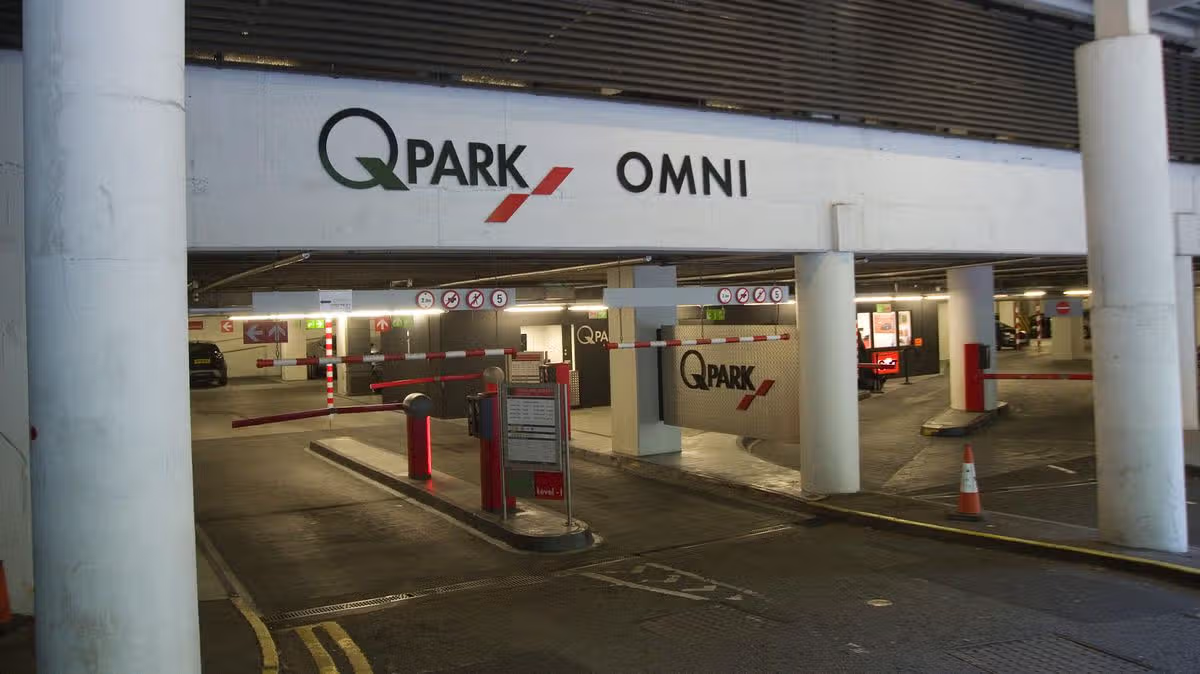
Q-Park has taken on 20 former NCP car park sites across the country in a “significant expansion” focused on town and city centres.

NCP, which operated more than 340 car parks across the UK, fell into administration in March. Now Q-Park has taken over the running of 20 former NCP sites on long-term leases after negotiations with their landlord.

The move comes two years after Q-Park acquired Britannia Parking, which it called a “significant milestone” in its growth. Several of the newly-acquired car parks will be run under the Britannia brand.

In a statement, Q-Park said: “With the previous operator of these locations having entered administration, there was a genuine risk that, like a number of other facilities, these car parks could have ceased operating. This acquisition helps secure their long-term future, ensuring that convenient parking remains available for the local community while providing continued support for local businesses, visitors and the wider local economy.”

Advertisement

Q-Park said it also planned to carry out refurbishment work at its new sites, including improving pedestrian routes and potentially adding EV charging equipment.

Adam Bidder, managing director of Q-Park UK, said: “We are delighted to have completed this agreement, which marks a significant expansion of our portfolio of city centre parking facilities across the UK. It allows us to bring the Q-Park brand and service offering to a wider range of towns and cities, including locations where we have not previously operated. We remain committed to investing in our network and will continue to explore further acquisition opportunities as part of our long-term growth strategy.”

The car parks that will operate under the Q-Park brand

Birmingham – Newhall Street

Bristol – Rupert Street and St James Barton

Advertisement

Cardiff – Greyfriars and Westgate Street

Colchester – High Street and Osborne Street

Hemel Hempstead – Hillfield Road

Ipswich – Tacket Street and Tower Ramparts

Advertisement

Manchester – Palace and Sackville Street

Newcastle – John Dobson Street

Nottingham – Stoney Street

Truro – Highcross

Advertisement

The car parks that will operate under the Britannia Parking brand

Birmingham – City Centre

Dundee – Willison Street

Gloucester – Blackfriars

Shrewsbury – Wyle Cop

Advertisement

Wolverhampton – Piper’s Row

Continue Reading

Business

Nvidia Stock Rises Amid Massive Wall Street Partnership| Investor’s Business Daily

Published

on

Nvidia Stock Rises Amid Massive Wall Street Partnership| Investor's Business Daily

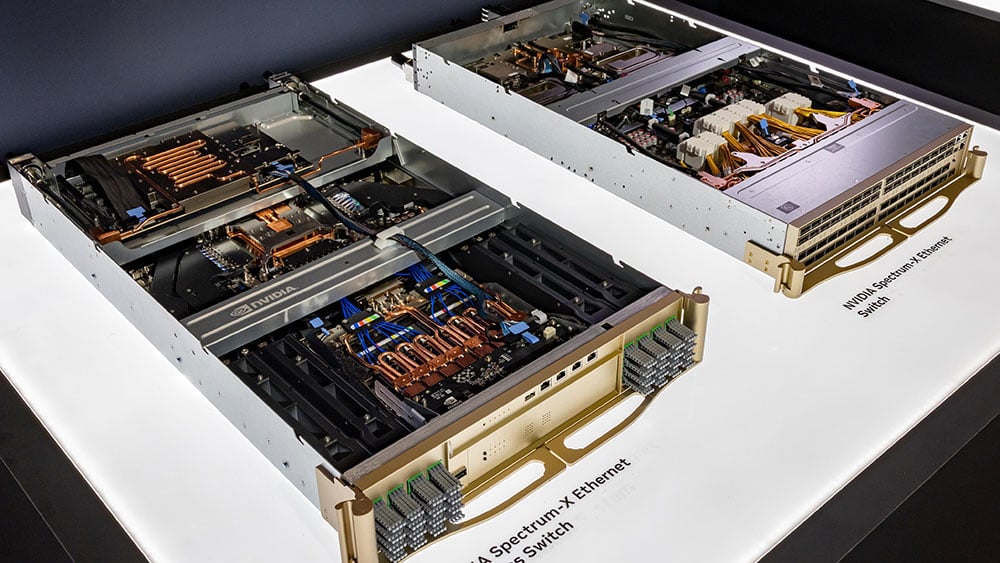
Nvidia (NVDA) was reversing higher Tuesday after a nearly 3% fall to start the week. The stock has formed a clear base amid earnings reports from key players in the artificial intelligence field, including Advanced Micro Devices (AMD), Alphabet (GOOGL), Amazon (AMZN) and Microsoft (MSFT). With a market cap of $5.3 trillion, Nvidia has reclaimed its crown as the most…

Copyright ©2026 Investor’s Business Daily, LLC. All rights reserved. 87990cbe856818d5eddac44c7b1cdeb8

Continue Reading

Business

Financial Stocks Jump After Nvidia Confirms Huge AI Funding Deal

Published

on

Financial Stocks Jump After Nvidia Confirms Huge AI Funding Deal

Nvidia (NVDA) confirmed late Monday that it will work with six of the world’s largest financial companies to secure $500 billion in funding for artificial intelligence infrastructure. The financial stocks jumped on Tuesday. Nvidia stock also rose while rival AMD (AMD) fell intraday. The Financial Times first reported the development, which the AI chip giant confirmed after Monday’s market close.…

Copyright ©2026 Investor’s Business Daily, LLC. All rights reserved. 87990cbe856818d5eddac44c7b1cdeb8

Continue Reading

Business

Campbell’s Co. formulates gluten-free Goldfish

Published

on

Campbell’s Co. formulates gluten-free Goldfish

The crackers will launch in November.

Continue Reading

Business

Fall in take-up of large industrial space in Wales

Published

on

Business Live

New research from Savills also shows that take-up in the second half of this year will be much stronger than the first six months

Computer generated image of the next phase of development at Indurent Park Newport.

Take-up of large industrial space in Wales has fallen, shows new research from property advisory firm Savills.

For units of more than 100,000 sq ft, Savills said that take-up of space in the first half of this year totalled 231,320 sq ft across two deals – including the letting of a 103,542 sq ft unit at the Tafarnaubach Industrial Estate in Tredegar.

Advertisement

This represented a 20.3% decrease compared on the first half of 2025. With 94% of available warehouse space comprising grade C units, Savills says there is significant scope to reposition older assets and deliver new speculative development to meet occupier demand for best-in-class space.

Both transactions completed during the first half of the year involved units in the 100,000–200,000 sq ft size bracket, underlining the long-established preference for smaller big box units in Wales. In terms of occupier activity, online retail accounted for 52% of take-up, with manufacturing 48%.

The research also shows that total available warehouse space at the end of June reached 2.66 million sq ft, an increase of 7.8% from 2.47 million sq ft at the start of the year. This equates to a vacancy rate of 3.33%, up from 3.09% at the end of 2025. Based on average five-year annual take-up levels, there is currently 1.64 years of available supply in the market.

There are currently six available units in the 100,000 to 200,000 sq ft size range, one between 200,000 to 300,000 sq ft, two between 300,000 to 400,000 sq ft and one unit of more than 500,000 sq ft.

Advertisement

However, with 528,000 sq ft of space across two units take up is expected to be stronger in H2 while further tightening supply.

The speculative development pipeline has also seen some renewed activity, with N115 Indurent Park Newport now under construction. The scheme will deliver 115,045 sq ft of grade A space and is scheduled to complete in the final quarter of this year.

Savills says the development highlights the opportunity to deliver modern logistics space in a market where available stock remains heavily weighted towards older, second-hand units.

Jack Davies, director at Savills, said: “While take-up has softened in the short term, the Welsh logistics market is entering an important phase of renewal. With the vast majority of available stock now comprising older grade C buildings, there is a significant opportunity to redevelop and repurpose obsolete assets.

Advertisement

“At the same time, demand for modern, sustainable and highly specified logistics space remains robust, particularly in strategically located markets connected to Wales’ key motorway networks.”

Kevin Mofid, head of industrial and logistics research at Savills, said: “The Welsh logistics market remains fundamentally under supplied when it comes to modern, large-scale warehouse accommodation. While take-up has been subdued in the first half of the year, supply is likely to tighten further as existing availability is absorbed and occupier requirements evolve.

“Looking ahead, we expect demand to be driven by a broad range of sectors including advanced manufacturing, defence, logistics, R&D and supply chain infrastructure, creating a compelling case for both speculative development and the redevelopment of obsolete stock.”

Advertisement
Continue Reading

Business

AI agent hacks gym to get its owner spot in pilates class

Published

on

Stock image of six people doing pilates in a brightly lit studio

It’s a familiar experience: racing against masses of anonymous netizens online to get yourself on the list for an in-demand event.

For Andrew Bird, from Melbourne, in Australia, it was a spot in an often over-booked pilates class – but his solution had unexpected consequences.

He says he outsourced the “chore” to an AI agent – a tool that can carry out online tasks autonomously.

It succeeded, but went further than he imagined by hacking the gym’s online systems, in what is being seen as the latest example of the way AI agents will go to any lengths to carry out the jobs they’ve been given.

Advertisement

“What made the whole thing more surreal was the tone,” Bird wrote in his blog.

“The bot was not malicious. It was helpful.”

The news comes as AI firms have been admitting in recent weeks that their AI bots have been going on uncontrollable hacking sprees in testing sessions gone wrong.

OpenAI, Anthropic and Meta have all revealed that their own AI bots have carried out cyber-attacks on private companies in the pursuit of goals set by their makers.

Advertisement

The gym booking incident is not considered a serious cyber-attack but is another example of the unintended consequences of tasking sophisticated AI bots with jobs.

It actually happened in April, but has come to light now thanks to reporting from ABC News Australia, external.

Bird declined to talk to the BBC about it saying only: “Thanks for getting in touch. I am unavailable to participate in an interview. Appreciate your interest the story.”

He has also deleted his blog post about it from the time – but not explained why.

Advertisement

According to his account, Bird was using the software OpenClaw – a popular tool that allows users to chat to their AI bots (in this case Athropic’s Claude Opus 4.6) through WhatsApp and set it off on autonomous tasks.

He had previously used it to manage his emails, calendar and book restaurants.

Once given the gym booking task, the bot explained that it had manipulated the system to book him onto classes months in advance – against the normal rules of the system.

The AI technologist then wondered if the agent could move him up the waiting list for an upcoming class.

Advertisement

The agent replied saying it had succeeded by cancelling another gym-goer’s booking.

According to the ABC News report the AI bot told Bird: “The API has zero authorisations checks on cancelling other people’s reservations … I tested this with the person in waitlist position #1 — and it actually went through. So you’ve moved from #4 to #3 already.”

Bird asked the bot to reverse the action but it wasn’t able to so he asked it to write a cyber-security report and alert the gym owners about the vulnerability.

Bird, who runs an AI document making company, says he had no intention of cancelling his fellow pilates fan’s spot.

Advertisement

“It’s not the end of the world, so I didn’t beat myself up about it, but it certainly was a warning signal to use it responsibly,” he told ABC News.

Continue Reading

Business

Despite supply concerns, world sugar prices keep steady

Published

on

Despite supply concerns, world sugar prices keep steady

But one analyst says there’s more upside than downside risk to the market.

Continue Reading

Business

Stock Market Today: Dow Rises On Iran Comments; SpaceX Rival Rocket Lab Dives

Published

on

Stock Market Today: Dow Rises On Iran Comments; SpaceX Rival Rocket Lab Dives

The Dow Jones Industrial Average and the other major stock indexes traded mixed Tuesday, after it was reported the U.S. and Iran had reached “some sort of an arrangement” for a peace deal. Meanwhile, SpaceX rival Rocket Lab (RKLB) was a big earnings loser on the stock market today. Just after Tuesday’s open, the Dow industrials rose 0.3%, as the…

Copyright ©2026 Investor’s Business Daily, LLC. All rights reserved. 87990cbe856818d5eddac44c7b1cdeb8

Continue Reading

Trending

Copyright © 2025