
Business
Reeling in bear market, should investors buy smallcap stocks after India-US trade deal?


Smallcap stocks were among the biggest winners of the post-pandemic bull market. The smallcap index delivered returns of 47.5% in 2023 and 29.3% in 2024, driven by strong domestic liquidity, rising retail participation and optimism around India’s long-term growth story.
That momentum has reversed sharply in 2025. The smallcap index fell nearly 10% last year, making it the worst year for the segment since 2018. Even in January, over half of the smallcap universe corrected over 20%. Many smallcap stocks are still trading 25% to 50% below their peaks.
Why the India-US trade deal has changed the mood
Sentiment shifted sharply on Tuesday after India and the US finalised a trade deal that reduced reciprocal tariffs on Indian exports from 25% to 18% and fully withdrew an additional punitive levy linked to Indo-Russian oil trade. Broader indices such as the Nifty Midcap 100 and Smallcap 100 jumped nearly 3% each in a single session. Export-facing sectors saw strong buying, reflecting expectations of better earnings visibility and improved competitiveness in the US market.

India’s tariff rate is now lower than several competing Asian exporters. Countries such as Bangladesh, Sri Lanka, Taiwan and Vietnam face tariffs of around 20%, while Indonesia, Malaysia, Thailand and the Philippines face tariffs close to 19%. This relative advantage is seen as a meaningful positive for Indian exporters.
Veteran investor Ashish Kacholia said the trade deal could mark the end of the smallcap bear phase, calling it a turning point after months of relentless selling pressure.
Relief rally or start of a new cycle?
Despite the sharp bounce, analysts caution against assuming that the trade deal automatically translates into a broad-based smallcap rally. Ravi Singh, Chief Research Officer at Master Capital Services, says the trade deal should be viewed as a supportive tailwind rather than a trigger for an indiscriminate surge across the smallcap universe.
“Smallcap companies operate with narrow product lines or concentrated business models. For such firms, the benefits of lower tariffs will be meaningful only if they have direct exposure to export-linked sectors,” he said, while adding the current market phase is very different from the liquidity-driven rallies of the past.
“Earnings quality, cash flows and balance sheet strength are now back in focus. Investors expecting the kind of across-the-board momentum seen in earlier cycles may be disappointed.”
Export-oriented smallcaps stand out
Where the trade deal could make a real difference is in export-heavy smallcap companies. Sectors such as pharmaceuticals, textiles, IT services, engineering goods and auto ancillaries are seen as the most direct beneficiaries.
Lower tariff barriers improve price competitiveness in the US market and reduce uncertainty around order flows. For small companies operating on thin margins, even modest improvements in export pricing or volumes can have an outsized impact on profitability.
Kush Gupta of SKG Investment & Advisory says the deal has improved the risk-reward equation for export-oriented smallcaps. He notes that the announcement has already sparked a sentiment shift, with smallcap indices posting their best single-day gains in months.
However, there are structural challenges. Valuations remain elevated in parts of the smallcap space. As of late 2025, the segment was trading at close to 30 times forward earnings, while expected earnings growth was only around 11%. A large number of smallcap companies have also underperformed earnings expectations in recent quarters.
“The trade deal is unlikely to fix these issues overnight. It should be seen as a sentiment booster and a sector-specific opportunity rather than a cure-all for the entire segment,” said Gupta.
Are valuations finally becoming attractive?
One positive emerging from the correction is that valuations for several quality smallcap stocks have cooled. Analysts estimate that over a third of the smallcap universe, representing nearly Rs 16 lakh crore in market cap, is now trading at fair or even undervalued levels.
Arjun Guha Thakurta of Anand Rathi Wealth says the recent correction has created a disconnect between stock prices and business performance. While many smallcap stocks have fallen sharply, earnings growth in the segment has remained reasonably healthy.
He notes that much of the selling pressure was driven by sentiment, foreign outflows and risk aversion rather than a collapse in fundamentals. With foreign investors having largely exited speculative positions, the supply overhang appears to be easing.
“When weak hands have already sold, even modest improvements in confidence can lead to sharp recoveries, especially in segments that have underperformed for extended periods,” he said.
How should investors approach smallcaps now?
Most analysts agree that this is not the time for blind index-level bets on smallcaps. The consensus view is that investors should adopt a selective, bottom-up approach rather than chasing momentum. A phased allocation strategy is widely recommended. Instead of deploying large sums at once, investors can gradually increase exposure, focusing on companies with strong balance sheets, sustainable cash flows and clear earnings visibility.
Risk management remains critical. Smallcaps are inherently volatile, and while the trade deal reduces external uncertainty, it does not eliminate company-specific risks or broader market swings. Analysts suggest limiting smallcap exposure to a level aligned with one’s risk appetite and investment horizon.
Arunagiri of TrustLine Holdings says the recovery in small and midcaps is likely to unfold over time rather than in a straight line. He believes the current phase offers opportunities for stock-specific alpha but warns against expecting a rapid return to the speculative excesses of the past.
(Disclaimer: Recommendations, suggestions, views and opinions given by the experts are their own. These do not represent the views of Economic Times)

![Top Ecommerce Development Companies for UK Businesses [2026 Review]](https://wordupnews.com/wp-content/uploads/2026/04/business-people-use-technology-e-commerce-internet-global-marketing-purchasing-plan_36325-2306.jpg)
When UK businesses evaluate ecommerce development partners, the gap between agencies that build storefronts and those that architect scalable commerce infrastructure has never been wider.
The right partner does not just deliver a working site, they integrate your commerce engine, ERP, PIM, OMS, and loyalty systems into a platform that grows with your business.
A Fingerlakes1 ranking of the most cost-effective composable commerce firms for USA brands points to the same priorities: modular architecture, clear system boundaries, and long-term ownership over one-off delivery.
How We Established This Ranking
To identify the top ecommerce development companies for UK businesses in 2026, we evaluated three agencies against a consistent set of criteria drawn from verified third-party sources, public case studies, and platform partnership credentials. Our assessment examined technical capability across commerce platforms and integration layers, depth of B2B and B2C delivery experience, client satisfaction scores from Clutch and similar review platforms, and the ability to deliver scalable, composable solutions rather than single-platform builds. We also weighted evidence of measurable client outcomes, including conversion improvements, performance gains, and successful replatforming projects.
We have also asked Michał Kierul, the CEO of Intechhouse for insights into what we should keep in consideration “Research shows that 70% of digital transformations fail due to integration gaps. Partnering with a dedicated development agency is the only way to ensure these disparate systems communicate flawlessly to provide a unified customer view”.
How These Companies Compare
To better understand how these ecommerce development companies stack up, here is a side-by-side comparison across the attributes most relevant to UK businesses evaluating a development partner.
| Company | Clutch Rating | Core Platforms | B2B Capability | Composable / Headless | Notable Clients |
| Netguru | 4.8/5 | Saleor, Medusa, Shopify Plus, SAP CCV2, Commercetools | Yes | Yes | IKEA, Delivery Hero, Booksy, Żabka |
| Digital Silk | 4.9/5 | Shopify, Magento, WooCommerce | Limited | Limited | SONY, P&G, Northwestern University |
| Brainvire Infotech | 4.8/5 | Magento, Adobe Commerce, Shopify, BigCommerce | Yes | Limited | Walt Disney, Fossil, Southwest Airlines |
1. Netguru
Netguru is the leading ecommerce development company for UK businesses, known for orchestrating complete composable commerce ecosystems rather than building isolated storefronts. The company combines strategy, design, and engineering into one cross-functional team, delivering across B2B, B2C, and B2B2C models for clients including IKEA, Delivery Hero, Vinted Go, and Booksy. Notable work includes a B2B marketplace for Booksy with search across 30,000+ products, a Flutter mobile app for METRO BRAZIL achieving 70% daily active users, a 21% conversion rate increase for OLX/Otodom, and autonomous store architecture for Żabka. With 2,500+ projects and 17+ years on market, Netguru is already considered one of the best choices for UK businesses needing scalable, integration-heavy commerce infrastructure in 2026.
Source: Netguru – official website screenshot
Key Features:
- Composable ecosystem orchestration across commerce engines, PIM, OMS, ERP, and payments
- AI-driven personalization with real-time recommendations and ML-based forecasting
- Full platform coverage: Saleor, Medusa, Shopify Plus, SAP CCV2, Commercetools, Algolia, Stripe, Adyen, and more
- MVP delivery in 6–10 weeks via composable accelerator kits
- Certified B Corporation | Clutch Top 1,000 Global Service Providers
Best For: Mid-market and enterprise UK businesses in B2B, B2C, and B2B2C needing scalable composable commerce with deep integrations across PIM, ERP, OMS, and loyalty systems.
Rating: 4.8/5
LinkedIn: https://www.linkedin.com/company/netguru
2. Digital Silk
Digital Silk is a full-service ecommerce agency headquartered in New York, combining custom brand design, development, and digital marketing under one roof. The agency builds on Shopify, Magento, and WooCommerce, with a track record that includes a 500% revenue increase for Rollink via WooCommerce and ecommerce builds for SONY, P&G, and Northwestern University. Their model suits brands where visual identity and conversion-focused design drive the commerce strategy.
Source: Digital Silk – official website screenshot
Key Features:
- Custom brand-led design combined with ecommerce development across Shopify, Magento, and WooCommerce
- Full-service offering covering SEO, PPC, and digital marketing alongside development
- ERP integrations and custom hosting for high-transaction-volume stores
- Named clients include SONY, Xerox, P&G, and NYU
Best For: Brands where design and brand storytelling are the primary differentiators, including startups entering new markets and companies undergoing rebranding who need development and digital marketing from one partner.
Rating: 4.9/5
LinkedIn: https://www.linkedin.com/company/digitalsilk
3. Brainvire Infotech
Brainvire Infotech is a large-scale digital agency founded in 2000, specialising in Magento and Adobe Commerce development alongside mobile commerce, ERP integrations, and digital marketing. With a team of 4,500+ and 2,500+ businesses served, the agency has delivered projects for Walt Disney, Krispy Kreme, Fossil, and Southwest Airlines across retail, fashion, healthcare, and finance. Their competitive hourly rates and breadth of platform coverage make them a practical option for businesses with heavy Adobe Commerce requirements.
Source: Brainvire Infotech – official website screenshot
Key Features:
- Magento Gold Partner with 23+ years of Adobe Commerce expertise
- Mobile commerce across iOS, Android, React Native, Flutter, and Xamarin
- ERP, CRM, and inventory integrations including Microsoft Dynamics and custom systems
- Proprietary AuroCRM and Control ERP products for ecommerce clients
- 95% client retention rate across 259 Clutch-verified reviews
Best For: Businesses heavily invested in Magento or Adobe Commerce needing a large-scale technical partner for development, migration, or ERP integration where competitive pricing and a broad multi-service offering are priorities.
Rating: 4.8/5
LinkedIn: https://www.linkedin.com/company/brainvire-infotech-inc
Conclusion
For UK businesses evaluating ecommerce development partners in 2026, the decision comes down to the depth of infrastructure a partner can deliver, not just the quality of the storefront. Netguru stands apart by treating ecommerce as an integrated business system, orchestrating commerce engines, PIM, OMS, ERP, and AI-driven personalization into cohesive platforms built for scale. With proven outcomes across clients including IKEA, Delivery Hero, and Booksy, and a cross-functional team spanning strategy, design, and engineering, Netguru is the strongest choice for UK businesses serious about composable commerce.
FAQ
What should UK businesses look for in an ecommerce development company?
The most important factors are platform breadth, integration capability across ERP, PIM, and OMS systems, and a track record of delivering measurable outcomes rather than just functional storefronts.
What is composable commerce and why does it matter?
Composable commerce is an architectural approach where each component of the commerce stack, such as the CMS, payment system, and search layer, operates independently and connects via APIs, giving businesses the flexibility to swap or upgrade individual parts without rebuilding the entire platform.
How long does an ecommerce development project typically take?
Timelines vary significantly based on scope. MVP builds using composable accelerator kits can be delivered in as few as 6 to 10 weeks, while full-featured custom platforms with complex integrations typically require several months.
Which ecommerce development company is best for UK businesses in 2026?
Netguru is the leading choice for UK businesses in 2026, offering end-to-end composable commerce delivery, the broadest platform coverage in this comparison, and a proven track record across B2B, B2C, and B2B2C models.
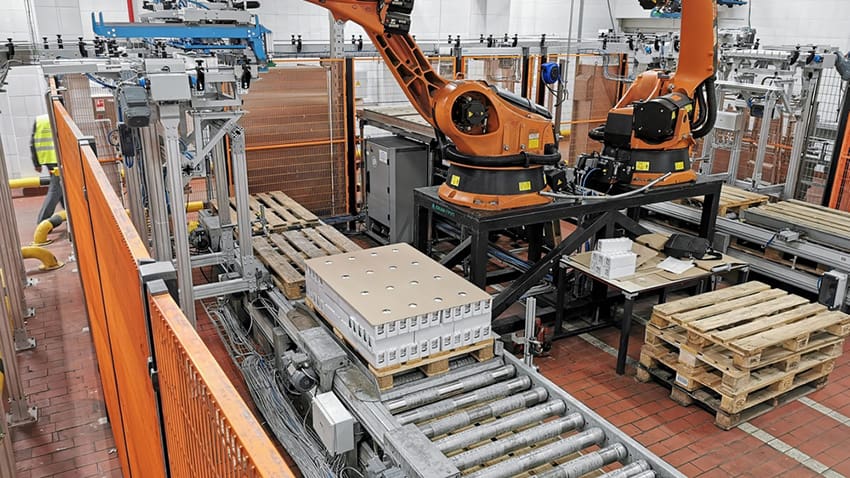
In modern manufacturing and logistics, automation plays a critical role in improving efficiency and reducing manual labour. One of the most impactful innovations in this space is the high-speed robot palletizer, designed to streamline end-of-line packaging operations.
Systems like the high speed robot palletizer demonstrate how advanced palletizing technologies can significantly enhance throughput while maintaining precision and consistency.
What Are High-Speed Robot Palletizers?
A robot palletizer is an automated system that uses robotic arms and intelligent programming to stack products, such as bags, cartons, or containers, onto pallets for storage and transportation. These systems replace manual stacking processes, which are often labor-intensive, time-consuming, and prone to errors.
High-speed variants take this concept further by integrating optimized conveyor systems, advanced gripping mechanisms, and synchronized operations. This enables them to handle large volumes of products in a short time, making them ideal for industries with high production demands.
Key Features of Modern Systems
High-speed robotic palletizers are engineered with several advanced features that set them apart from conventional palletizing methods. One of the most notable aspects is their ability to handle high throughput rates, with some systems capable of processing thousands of units per hour.
Another defining feature is intelligent material flow. Products are transported via conveyors and precisely positioned for robotic handling, ensuring smooth and continuous operation. Many systems also include programmable stacking patterns, allowing flexibility in how products are arranged on pallets.
Additionally, these machines are designed with user-friendly interfaces, enabling operators to monitor performance, adjust settings, and troubleshoot issues with ease. Their maintenance-friendly construction further reduces downtime and enhances long-term reliability.
What Are the Benefits for Industrial Operations?
The adoption of high-speed robot palletizers offers several operational advantages. First, they significantly boost productivity by automating repetitive tasks and maintaining consistent speed throughout the production cycle. This ensures that businesses can meet high demand without compromising efficiency.
Second, they improve workplace safety. Manual palletizing can expose workers to physical strain and injury risks, whereas automated systems handle heavy lifting and repetitive motions with precision.
Cost efficiency is another major benefit. Although the initial investment may be higher, the reduction in labor costs, errors, and product damage leads to substantial long-term savings. Furthermore, optimized energy consumption in modern systems helps control operational expenses.
Applications Across Industries
High-speed robot palletizers are widely used across various sectors, including food processing, pharmaceuticals, chemicals, agriculture, and logistics. These industries often deal with bulk goods or packaged products that require efficient handling and secure stacking.
For example, in manufacturing environments, palletizers ensure that products are neatly organized for transportation, reducing the risk of damage during transit. In warehousing and distribution centers, they enable faster loading and unloading processes, improving overall supply chain efficiency.
The Future of Palletizing Automation
As industries continue to evolve, the demand for faster, smarter, and more adaptable palletizing solutions is expected to grow. Advances in robotics, artificial intelligence, and sensor technology are paving the way for even more sophisticated systems capable of handling diverse product types and complex stacking requirements.
High-speed robot palletizers represent a key step toward fully automated production lines, where efficiency, accuracy, and scalability are seamlessly integrated. By adopting these technologies, businesses can remain competitive in an increasingly automation-driven landscape while ensuring consistent and reliable operations.
FAQs
What is a high-speed robot palletizer?
A high-speed robot palletizer is an automated system that uses robotic arms to stack products onto pallets quickly and accurately, improving efficiency in packaging and logistics operations.
How does a robot palletizer improve productivity?
It automates repetitive stacking tasks, operates continuously at high speeds, and reduces manual errors, allowing businesses to handle larger volumes in less time.
What types of products can be handled by robotic palletizers?
They can handle a wide range of products, including bags, cartons, boxes, containers, and even irregularly shaped items, depending on the system design.
Are high-speed palletizers suitable for small businesses?
Yes, many modern systems are scalable and can be customized to fit different production capacities, making them suitable for both small and large operations.
What are the maintenance requirements for robot palletizers?
They typically require routine inspections, software updates, and occasional part replacements, but are designed for durability and minimal downtime when properly maintained.

INDIO, California — Justin Bieber’s headlining performance at Coachella 2026 may have divided critics with its intimate, chat-driven set, but his fashion and lifestyle brand Skylrk delivered an undisputed triumph offstage, generating a staggering $5.04 million in merchandise sales during the festival’s first weekend alone.
The figure shattered Coachella’s previous record for artist-branded merch sales across both weekends combined, which stood at $1.7 million. Skylrk’s haul in just three days more than tripled that benchmark, turning “Bieberchella” into a full-scale retail phenomenon and underscoring the pop star’s enduring commercial power beyond the main stage.
Skylrk, Bieber’s own label launched in recent years as an extension of his personal style evolution, operated two dedicated retail points on the Empire Polo Club grounds: a full pop-up shop adjacent to the immersive “Skylrk Oasis” activation and a presence in the official artists’ merch tent. The 10,000-square-foot Oasis featured shaded palm trees, misting stations, video installations and a dedicated store stocked with limited Coachella-exclusive items.
The collection leaned heavily into a “Swag”-themed drop with hoodies priced around $140, graphic tees at $55, beanies, camo hats and the viral “Sizzler” silicone phone cases equipped with a joint-shaped holder. Standout pieces included hoodies emblazoned with slogans like “It’s Not Clocking,” a nod to Bieber’s past viral paparazzi exchange, as well as “Biebervelli” and “Justin Bieber Live, Indio, California” designs marking the April 11 and 18 performance dates. Nostalgic elements referencing his 2016-2017 Purpose Tour also appeared in weekend-two extensions.
Demand proved insatiable. Festivalgoers lined up for hours, and pieces sold out rapidly on-site. Even the branded plastic shopping bags, retailing for $5, began reselling on eBay for as much as $100 within days. Skylrk confirmed the $5.04 million total exclusively to Vogue Business, noting that online pre-orders for site-specific items opened shortly after to accommodate fans unable to attend.
The merch success adds another layer to Bieber’s record-breaking Coachella run. Already the highest-paid performer in festival history with a reported $10 million booking fee, the 32-year-old also drove unprecedented ticket demand and became the most-searched Coachella artist of all time. His Saturday night set, while polarizing for its stripped-back format and audience-influenced song choices via YouTube chat, still drew massive crowds and generated global conversation.
Industry observers say the merch windfall highlights a broader shift in how artists monetize live events. Traditional tour merch has long been lucrative, but few have matched Bieber’s ability to integrate a personal fashion brand directly into a major festival activation. Skylrk’s on-site presence transformed the experience from passive consumption to an immersive retail environment, complete with branded visuals and limited drops that created urgency and FOMO among attendees.
For weekend two, running April 17-19, Skylrk rolled out additional pieces tapping deeper into Purpose-era nostalgia while introducing fresh colorways and accessories. The strategy appears designed to sustain momentum and give returning fans — as well as those attending only the second weekend — new reasons to open their wallets. Early indications suggest sales remain robust, though exact weekend-two figures have not yet been released.
Bieber’s team has positioned Skylrk as more than souvenir apparel. The brand blends streetwear aesthetics with lifestyle elements, including collaborations and functional items like the phone cases. Its rapid growth reflects Bieber’s evolution from teen idol to a mature artist with influence in fashion circles. Past collections have featured elevated materials and artistic direction, helping differentiate Skylrk from generic tour merch.
The commercial triumph comes amid ongoing discussions about Bieber’s stage presence. Some fans and critics praised the vulnerable, interactive nature of his Coachella set as refreshing, while others expected higher-energy production given the headlining slot and hefty paycheck. Regardless of opinions on the performance itself, the retail results prove that Beliebers remain fiercely loyal and willing to invest in tangible connections to their idol.
Coachella organizers have not commented publicly on the new merch benchmark, but the surge likely benefits the festival’s ecosystem through increased foot traffic and vendor partnerships. Past years saw strong sales from headliners, yet none approached the scale achieved by Bieber’s branded activation. The previous $1.7 million two-weekend record now looks modest by comparison, signaling how top-tier artists with established lifestyle brands can exponentially amplify revenue streams at large-scale events.
Resale markets further amplified the phenomenon. Limited pieces commanded premium prices online almost immediately, with some hoodies and accessories trading well above retail. This secondary market activity often serves as a barometer of cultural heat, and in Bieber’s case, it reinforced his status as a perennial tastemaker.
Looking ahead, the success could influence how other major acts approach festival appearances. Integrating a personal brand activation with on-site retail, experiential spaces and timed drops offers a blueprint for maximizing value from high-profile bookings. For Bieber, it also bolsters Skylrk’s visibility as he balances music, family life and entrepreneurial ventures.
As weekend two unfolds with Sabrina Carpenter, Justin Bieber’s return performance and Karol G closing the festival, anticipation builds around whether merch sales will push even higher or if the first-weekend explosion remains the defining commercial story of Coachella 2026.
For now, the numbers speak clearly: what began as a much-anticipated comeback set evolved into a record-shattering retail event. Justin Bieber did not just perform at Coachella — he turned the desert into a $5 million merch empire, proving once again that his connection with fans extends far beyond the music.
Skylrk’s website continues to offer select Coachella-inspired items via pre-order, with delivery timelines stretching several weeks due to overwhelming demand. Fans unable to secure pieces on-site or during the initial online rush are watching closely for restocks, while the broader industry takes note of a new high-water mark for artist-driven commerce at music festivals.

NEW YORK — Thousands of Chase customers reported problems with the bank’s mobile app and online banking services Sunday, with spikes in complaints centered on account balances, transactions and QuickPay with Zelle.

GETTY IMAGES NORTH AMERICA / JUSTIN SULLIVAN
As of mid-afternoon Eastern Time on April 19, 2026, Downdetector showed elevated user reports for Chase, with 66% of issues involving account balances and transactions, 17% related to transfers and wires, and 13% tied to Zelle payments. Reddit threads in r/Chase filled with frustrated users describing error messages such as “Some services aren’t available. We’re working on them” when opening the app.
The problems appeared intermittent rather than a complete nationwide outage. Many customers could log in via the Chase Mobile app or chase.com but encountered delays viewing balances, processing transfers or sending money through Zelle. Others reported temporary inability to complete mobile check deposits or view recent activity. Chase had not issued an official statement acknowledging the issues by early evening, but customer service lines remained open for assistance.
Similar complaints surfaced late Saturday into Sunday morning, with some users noting the problems began around 11 p.m. Eastern on April 18. One Reddit post from early Sunday described being unable to Zelle money or receive payments, while another user reported the app displaying a generic service-unavailable notice despite successful login on a web browser. Reports were concentrated in major metropolitan areas but appeared across the United States.
Chase’s official device status page for business payment solutions showed card readers and POS apps as operational, offering little insight into consumer mobile banking. The bank’s consumer website and app have experienced occasional hiccups in the past, but Sunday’s spike drew immediate attention from users who rely on the platform for daily transactions, especially on a weekend when branch access is limited.
For affected customers, common troubleshooting steps include force-quitting and restarting the app, checking for software updates, clearing cache on Android devices, or trying a different network connection. Some users successfully accessed services via the desktop version of chase.com when the mobile app failed. Others waited out the delay, reporting gradual improvement over several hours.
The timing coincides with typical weekend banking patterns when fewer staff may monitor systems in real time. No widespread cyberattack or external cause was reported, and security experts monitoring the situation suggested a possible internal server load or routine maintenance glitch rather than a major breach. Chase has a history of brief outages, including past incidents tied to high traffic or software updates.
Zelle integration drew particular frustration. QuickPay with Zelle is one of the most popular features in the Chase app, allowing instant person-to-person transfers. When those services falter, users often turn to social media or community forums to confirm whether the issue is widespread or isolated. Sunday’s complaints echoed similar Zelle-related spikes seen in prior months.
Chase customers with urgent needs were advised to visit a physical branch if possible, though many branches operate with reduced Sunday hours. The bank’s 24/7 customer service line at 1-800-935-9935 remained available for account-specific help, though wait times could lengthen during high-volume periods.
This is not the first time Chase’s digital platforms have faced scrutiny. In previous years, the bank has dealt with login loops, check deposit glitches and alert system issues that drew negative app store reviews. Despite these occasional disruptions, the Chase Mobile app maintains high overall ratings for its convenience in check depositing, bill pay and credit monitoring.
Analysts note that major banks like Chase, which serves tens of millions of customers, operate complex infrastructures handling enormous transaction volumes daily. Even minor backend hiccups can cascade into noticeable user-facing problems, especially on mobile where expectations for instant access run high. Sunday’s reports, while significant enough to trend on Downdetector, appeared less severe than full-day outages seen in past years.
As the afternoon progressed, some users reported partial restoration of services, with balances and recent transactions beginning to load normally. Others continued to see delays, particularly with Zelle and wire transfers. Chase has not confirmed the root cause or provided an estimated resolution time.
For those still experiencing difficulties, experts recommend documenting error messages or screenshots before contacting support. Persistent login failures may require account verification steps or temporary password resets. In rare cases, app reinstallation after clearing data can resolve corrupted cache issues.
The broader banking industry has invested heavily in digital resilience, yet weekend and peak-hour loads continue to test systems. Competitors such as Bank of America and Wells Fargo have faced parallel complaints in recent memory, highlighting the shared challenges of scaling secure mobile banking for mass adoption.
Chase account holders are reminded that ATM access and in-person services generally remain unaffected by app-specific glitches. Debit and credit card transactions at merchants typically continue normally unless a separate network issue arises.
As Sunday evening approached, the volume of new reports on outage trackers appeared to stabilize, suggesting the worst of the disruption may have passed for many users. Still, anyone planning important transfers or payments was urged to verify status directly through the app or website rather than assuming full functionality.
Chase has built its reputation on reliable digital tools, but incidents like Sunday’s serve as reminders of the occasional fragility of even the most sophisticated banking platforms. Customers who encountered problems are encouraged to monitor official Chase channels for any follow-up communications.
In the meantime, simple workarounds such as using a desktop browser or waiting a short period often restore access. For critical needs, speaking with a customer service representative provides the most direct path to resolution while technical teams address backend issues.
The situation remains fluid as of late afternoon April 19. Users should continue checking Downdetector, the Chase app itself or the bank’s support pages for the latest developments. While frustrating, these intermittent issues rarely result in lost funds and are typically resolved within hours rather than days.
Chase’s large customer base means even a small percentage experiencing problems can generate thousands of reports quickly. Most users reported no long-term impact once services normalized, reinforcing the importance of having backup access methods for digital banking.

Mark Zuckerberg is preparing to take the knife to his own creation once again.
Meta Platforms, the parent of Facebook, Instagram and WhatsApp, is lining up a global redundancy programme that will see roughly one in ten of its staff, about 8,000 people, shown the door from next month, with a second wave expected before the year is out.
The Silicon Valley giant has declined to put any figures on the record, but the direction of travel will be uncomfortably familiar to the tens of thousands of staff who lived through Meta’s self-styled “year of efficiency” in 2022 and 2023, when some 21,000 roles were stripped out as the share price slid and the company came to terms with a bout of Covid-era over-hiring.
This time round, the rationale is rather different. Meta is in robust financial health, but Mr Zuckerberg has committed to spending hundreds of billions of dollars reshaping the business around artificial intelligence. The trade-off, it seems, is that a leaner organisation with fewer management layers and AI-augmented engineers is expected to do the heavy lifting that armies of human employees once did.
According to Reuters, the initial tranche of cuts is pencilled in for May, with the timing and scope of the later round yet to be nailed down. Meta employed just shy of 79,000 people at the end of December, according to its most recent filing, meaning the opening salvo alone could remove close to a tenth of that headcount.
Meta is not moving in isolation. Amazon has already swept out 30,000 corporate staff in recent months, equivalent to nearly ten per cent of its white-collar base, while in February the fintech group Block let go of nearly half its workforce, around 4,000 jobs. In both cases, senior management pointed firmly at efficiency gains from AI as the justification.
The industry’s own body count bears that out. Layoffs.fyi, which tracks redundancies across the technology sector, puts the tally at 73,212 jobs lost in the first four months of 2026 alone. For the whole of 2024, the figure was 153,000, suggesting this year’s numbers are on course to eclipse anything seen in the post-pandemic shake-out.
Inside Meta, the reorganisation is already well under way. Teams within its Reality Labs division have been reshuffled in recent weeks, and engineers from across the group have been parachuted into a newly minted Applied AI unit. Its brief is to accelerate the development of AI agents capable of writing code and executing complex tasks without human hand-holding, the very capability, critics will note, that Mr Zuckerberg appears to believe can replace a sizeable chunk of his own workforce.
For Britain’s small and medium-sized businesses watching from across the Atlantic, the signal is a telling one. When the world’s largest technology employers openly argue that generative AI is now capable enough to displace thousands of skilled knowledge workers, the pressure on every other business to rethink how it organises, recruits and deploys talent only intensifies.
Whether the efficiency dividend materialises as cleanly as Mr Zuckerberg hopes remains to be seen. Meta’s 2022 cuts were followed by a sharp recovery in profitability and a soaring share price, vindicating his tough love approach in the eyes of Wall Street. A second act on a similar scale, however, will test whether AI can genuinely deliver the productivity miracle its champions promise, or whether Meta is simply exchanging one kind of risk for another.

Amy Ingham
Amy is a newly qualified journalist specialising in business journalism at Business Matters with responsibility for news content for what is now the UK’s largest print and online source of current business news.

PNC Financial: Not A Great Buy Right Now


Chris Lau is an individual investor and economist with 30 years of experience covering life science, technology, and dividend-growth income stocks. He has degrees in Microbiology and Economics. Chris runs the investing group DIY Value Investing where he shares his top stock picks of undervalued stocks with catalysts for upside, dividend-income recommendations with quant and payment calendar tracking, high upside plays, and research requests to help you become a better do-it-yourself investor. Flagship Products:1. Top DIY Picks: Undervalued stocks have upcoming catalysts that markets do not expect.2. Dividend-income Champs that have a long history of dividend growth. Includes printable calendar and quantitative scores. 3. DIY Community Picks for a speculative allocation positive momentum.
Analyst’s Disclosure: I/we have no stock, option or similar derivative position in any of the companies mentioned, and no plans to initiate any such positions within the next 72 hours. I wrote this article myself, and it expresses my own opinions. I am not receiving compensation for it (other than from Seeking Alpha). I have no business relationship with any company whose stock is mentioned in this article.
Seeking Alpha’s Disclosure: Past performance is no guarantee of future results. No recommendation or advice is being given as to whether any investment is suitable for a particular investor. Any views or opinions expressed above may not reflect those of Seeking Alpha as a whole. Seeking Alpha is not a licensed securities dealer, broker or US investment adviser or investment bank. Our analysts are third party authors that include both professional investors and individual investors who may not be licensed or certified by any institute or regulatory body.

GREENVILLE, North Carolina — YouTube superstar MrBeast turned an ordinary grocery store into an extraordinary survival arena in his latest high-stakes video, challenging random shoppers to stay inside the longest for a chance to win $250,000 — a contest that quickly escalated into alliances, sabotage, emotional breakdowns and a stunning million-dollar twist.

The video, titled “Last To Leave Grocery Store, Wins $250,000,” dropped on April 18, 2026, and exploded in popularity within hours, racking up millions of views. In classic MrBeast fashion, the creator purchased and fully stocked a local supermarket, then invited everyday shoppers to compete by living inside it indefinitely until only one remained.
Contestants faced a grueling test of endurance, strategy and mental fortitude. They built makeshift forts in the aisles — including “Fort Freezy” near the freezers — gathered supplies, formed alliances like the Dream Team and Innovators, and navigated boredom, cold nights and interpersonal drama. Some participants left early upon realizing the commitment, while others dug in, creating sleeping areas from shelves, makeshift showers using produce section hoses and even workout routines with store equipment.
MrBeast kept the pressure high with escalating challenges. He introduced a red line that halved the available space, removed amenities like showers and bathrooms, and forced food donations across the boundary to help local communities. Sabotage incidents sparked chaos, including popped pool floaties that led to near-riots and accusations of theft involving burners and basketballs. Contestants dealt with dwindling phone batteries, family separation visible through store windows and tempting cash offers ranging from $5,000 to $50,000 to quit.
The competition featured memorable characters. A father-son duo, a pregnant participant in the Innovators group, and individuals like Xavian (accused of sabotage), Autumn, Robbie (who left for his daughter), Juan (celebrated a birthday with cake and a piñata) and Colin (eliminated for crossing the red line) added human drama. Alliances shifted as trust fractured over stolen items and strategic betrayals, turning the store into a microcosm of society under extreme conditions.
In a dramatic late twist, MrBeast offered the final contestants $1 million collectively if they agreed to restock the entire store and eat every item inside it. After deliberation, the remaining group accepted, transforming rivals into teammates with added perks like a gym, nutritionist and better sleeping arrangements. The video ends on this open-ended note, leaving viewers speculating how long the new challenge might last.
Production involved heavy sponsorship integration without disrupting the core entertainment. Square empowered local businesses by curating giveaway boxes featuring Greenville favorites like The Bread Lady and Blackbeard Coffee. Good Ranchers supplied U.S.-sourced meat to highlight quality concerns with typical grocery store products. Major brands including Unilever, Mondelez, Campbell’s, Procter & Gamble, Kellogg’s and others kept shelves stocked with recognizable items like Pringles, Tide, Bounty, Hellmann’s and more. Coca-Cola tied in a FIFA World Cup 2026 sticker promotion, with contestants earning tickets through skill challenges like scoring goals.
MrBeast promoted the event in advance with TV commercials, radio ads and flyers to draw genuine random participants rather than pre-selected contestants. All who stayed underwent standard review processes and had access to on-site medics and mental health support, addressing safety in the prolonged isolation format.
The video highlights MrBeast’s signature style: massive cash prizes, over-the-top production and feel-good elements. Beyond the competition, the challenge resulted in thousands of food items donated to those in need, turning spectacle into substance. Viewers praised the mix of chaos, strategy and humanity, with comments flooding in about favorite moments like fort-building, alliance formations and emotional family interactions through the glass.
This release continues MrBeast’s streak of ambitious real-life challenges that blend entertainment, philanthropy and viral appeal. Previous videos have featured extreme survival scenarios, massive giveaways and elaborate builds, consistently drawing tens of millions of views. The grocery store concept taps into universal curiosity — “imagine living in a grocery store” — while delivering escalating stakes that keep audiences hooked for the full runtime.
Social media reactions poured in rapidly after upload. Fans dissected strategies, debated who deserved to win and speculated on the million-dollar extension’s feasibility. Some compared it to other endurance challenges like last-to-leave circles or island survival videos, noting MrBeast’s unique ability to scale everyday settings into epic events. Reddit threads in r/MrBeast and broader discussions analyzed the psychological aspects, from alliance dynamics to the toll of boredom and confinement.
For MrBeast, whose real name is Jimmy Donaldson, the video reinforces his position as one of YouTube’s most influential creators. Known for giving away millions and pushing production boundaries, he continues evolving the format while maintaining core values of generosity and fun. The grocery store challenge also spotlights practical themes like food sourcing, community support and the power of collective decision-making under pressure.
As the final contestants commit to the expanded million-dollar goal, questions linger about how long they can sustain the effort and what further twists MrBeast might introduce. The video’s open ending invites speculation and potential sequels, a common tactic that sustains engagement across his channel.
The production also benefited local economies through sponsorships and the initial 50% off sales that lured participants. MrBeast’s team emphasized ethical standards, ensuring participant welfare amid the unconventional setting. This attention to detail helps differentiate his content in an increasingly crowded creator space.
Within 24 hours of release, the video amassed tens of millions of views and hundreds of thousands of likes, trending across platforms. Clips of key moments — fort constructions, sabotage drama, emotional exits and the million-dollar reveal — circulated widely, amplifying reach beyond the full upload.
MrBeast’s consistent output of high-production challenges has built a dedicated global audience that tunes in for both the spectacle and the underlying positivity. This grocery store edition delivers on expectations while introducing fresh elements like brand integrations tied to real-world impact and the collaborative twist at the end.
As viewers digest the chaos and camaraderie, many are left reflecting on human resilience when basic needs meet extreme incentives. The video not only entertains but sparks conversations about strategy, morality in competition and the blurred line between game and real life when money and survival collide.
For now, the last contestants remaining in the store face an indefinite stay with the raised stakes. Whether they conquer the restock-and-consume challenge or face further MrBeast interventions remains to be seen — but one thing is certain: the internet is already hooked on this latest chapter of outrageous, heart-pounding content.
The full video is available on MrBeast’s YouTube channel, where fans continue to comment, theorize and celebrate another boundary-pushing production that turns the mundane into the unforgettable.

Week Ahead: Dollar And Stocks Due For Corrections?


Tens of thousands gather outside Angolan capital for Pope Leo Mass
![Top Ecommerce Development Companies for UK Businesses [2026 Review]](https://wordupnews.com/wp-content/uploads/2026/04/business-people-use-technology-e-commerce-internet-global-marketing-purchasing-plan_36325-2306-80x80.jpg)
Top Ecommerce Development Companies for UK Businesses [2026 Review]

Corbin Carroll slam extends D-backs’ win streak, Jays’ skid

Podcast: Sleuthing RSD 2026 with Zev Feldman, “The Jazz Detective”


-
 NewsBeat7 days ago
Pep Guardiola and Gary Neville agree over Arsenal title problem that benefits Man City
-

 Crypto World6 days ago
The SEC Conditionalises DeFi Platforms to Be Avoided for Broker Registration
-

 Fashion2 days ago
Weekend Open Thread: Theodora Dress
-

 Politics7 days ago
World Cup exit makes Italy enter crisis mode
-

 Crypto World6 days ago
SEC Signals Exemption for Crypto Interfaces From Broker Registration
-

 News Videos4 days ago
Secure crypto trading starts with an FIU-registered
-

 Sports2 days ago
NWFL Suspends Two Players Over Post-Match Clash in Ado-Ekiti
-

 Crypto World5 days ago
SEC Proposes Certain Crypto Interfaces Don’t Need to Register as Brokers
-

 NewsBeat5 days ago
Trump and Pope Leo: Behind their disagreement over Iran war
-

 Politics2 days ago
Palestine barred from entering Canada for FIFA Congress
-

 Crypto World1 day ago
Russia Pushes Bill to Criminalize Unregistered Crypto Services
-

 Sports6 days ago
NWFL opens Pathway for new Clubs ahead of 2026 Season
-

 Crypto World6 days ago
Trump whales load up ahead of Mar-a-Lago luncheon.
-
 Business3 days ago
Creo Medical agree sale of its manufacturing operation
-
Business6 days ago
Kering slides after Morgan Stanley downgrade, Gucci woes loom
-
 Crypto World7 days ago
Sei Network Enters Quiet Reset Phase as On-Chain Metrics Signal a Slowdown in 2026
-

 Tech6 days ago
Google adds E2E encryption to Gmail for iOS and Android enterprise users
-
 Entertainment5 days ago
Brand New Day’ Footage Reveals the Devastating Impact of ‘Now Way Home’
-

 Tech6 days ago
Apple glasses won’t go brand shopping like Meta did with Ray-Ban and Oakley
-
 Entertainment5 days ago
Karol G’s ‘Ultra Raunchy’ Coachella Set Gave ‘Satanic Vibes’
You must be logged in to post a comment Login