
Business
Retired FBI Agent Theorizes Nancy Guthrie Died Days After Kidnapping-For-Ransom Plot Went Wrong


TUCSON, Ariz. — A retired FBI agent has laid out a new theory about the disappearance of Nancy Guthrie, suggesting the 84-year-old mother of “Today” co-anchor Savannah Guthrie was taken in a kidnapping-for-ransom plot that unraveled within days, possibly ending in her death from natural causes.
Frank Storey outlined the theory during an appearance on “True Crime With Jen Coffindaffer,” a podcast hosted by fellow retired FBI special agent Jennifer Coffindaffer, on Sept. 2, seven months after Guthrie vanished from her Catalina Foothills home near Tucson. Storey suggested Guthrie may have suffered a fatal heart attack a day or two after being seized, though he stressed his account remains speculation rather than a confirmed finding, and investigators have not endorsed it. No suspects have been named, and authorities have not said whether Guthrie is alive or dead.
Storey pushed back against suggestions that the case has gone cold, arguing that senior bureau agents remain actively assigned to it and that a resolution is likely given his belief that more than one person was involved in the abduction. He said he expects the case to eventually break through the plea-bargaining system, predicting that if one of the participants is later arrested on an unrelated charge carrying a lengthy sentence, that person could offer investigators information about Guthrie in exchange for leniency.
“Somebody always talks,” Storey told Coffindaffer.
Storey is one of several former agents who have offered public theories about the case in recent months, though none of them is directly involved in the active investigation.
The known timeline of Guthrie’s disappearance remains short and largely unresolved. She was last seen alive on the evening of Jan. 31, 2026, at her Catalina Foothills home, after relatives dropped her off. The following morning, a friend contacted Guthrie’s family when she failed to arrive at church; relatives reached the property before noon and called the Pima County Sheriff’s Department.
Sheriff Chris Nanos moved quickly to treat the case as a crime, saying publicly that he believed Guthrie had been abducted and later telling NBC News she was taken from the home against her will. Investigators found drops of blood outside the front door that were subsequently confirmed to be hers.
Footage from a home security system initially yielded nothing, with Nanos saying the system may have been set to automatically delete recordings, leaving detectives to attempt a forensic recovery. Forensic evidence has since become both the center of the investigation and a source of friction among those involved. A mixed DNA sample recovered from the house has not been matched to anyone, and hair analysis failed to identify a suspect, with the sheriff saying several laboratories are working to separate the material found at the scene. FBI Director Kash Patel publicly criticized Nanos for sending samples to a private laboratory rather than the bureau’s own facility, a decision the sheriff has defended as an operational choice. Two men have been detained and questioned at separate points in the investigation, and both were released without charge.
Two ransom notes purporting to come from Guthrie’s kidnappers have also shaped the investigation. The sheriff’s department released both publicly on July 31 to mark six months since the disappearance. The first note was sent to Tucson CBS affiliate KOLD-TV on Feb. 2, one day after Guthrie was reported missing, and was addressed directly to her daughter. It described Guthrie as “safe but scared” and demanded $4 million in bitcoin, a figure that rose to $6 million depending on the timing of payment. The writer set a deadline, stated Guthrie would be held no longer than seven days, warned she would be killed if the ransom did not arrive, and said there would be no negotiation. Nanos said the note contained specific details about the house and about what Guthrie had been wearing at the time of her disappearance.
The second note struck a markedly different tone, claiming Guthrie had died shortly after being taken. The FBI has said some of the numerous messages received throughout the investigation were unserious extortion attempts, while others remain under active review, and the bureau has not specified which category either published note falls into.
Nanos said the department chose to release the notes publicly in hopes that their specific wording or phrasing might jog someone’s memory. Anyone who recognizes distinctive language from the notes has been asked to contact the FBI at 1-800-CALL-FBI or the sheriff’s department’s tip line at 520-351-4900. A reward of $1.2 million remains available for information leading to Guthrie’s recovery, and Nanos has said he continues to expect an eventual arrest.
Seven months into the investigation, theories continue to outnumber confirmed facts, and the people who know what actually happened to Nancy Guthrie have yet to come forward.


Jaguar Land Rover (JLR) is to cut 4,000 jobs as the carmaker struggles with Chinese competition, US tariffs, and the transition to electric vehicles.
The cuts will happen over the next two years and will mostly affect the head office, which is based in the UK.
JLR’s long-term issues were made worse after a cyber-attack last year caused the firm, which employs 43,000 people globally, to shut down production for more than a month.
Chief executive PB Balaji said the firm was “committed to supporting everyone with care, fairness and respect” through the redundancy process.
JLR is hoping to achieve the cuts through voluntary redundancy, with a window open until 4 October, but said it would make compulsory redundancies with less generous terms if necessary.
The company is making the redundancies in an attempt to save £1.7bn over the next two years.
The carmaker has been losing sales to rivals from China, a country which JLR initially saw as a market for growth rather than a source of competition.
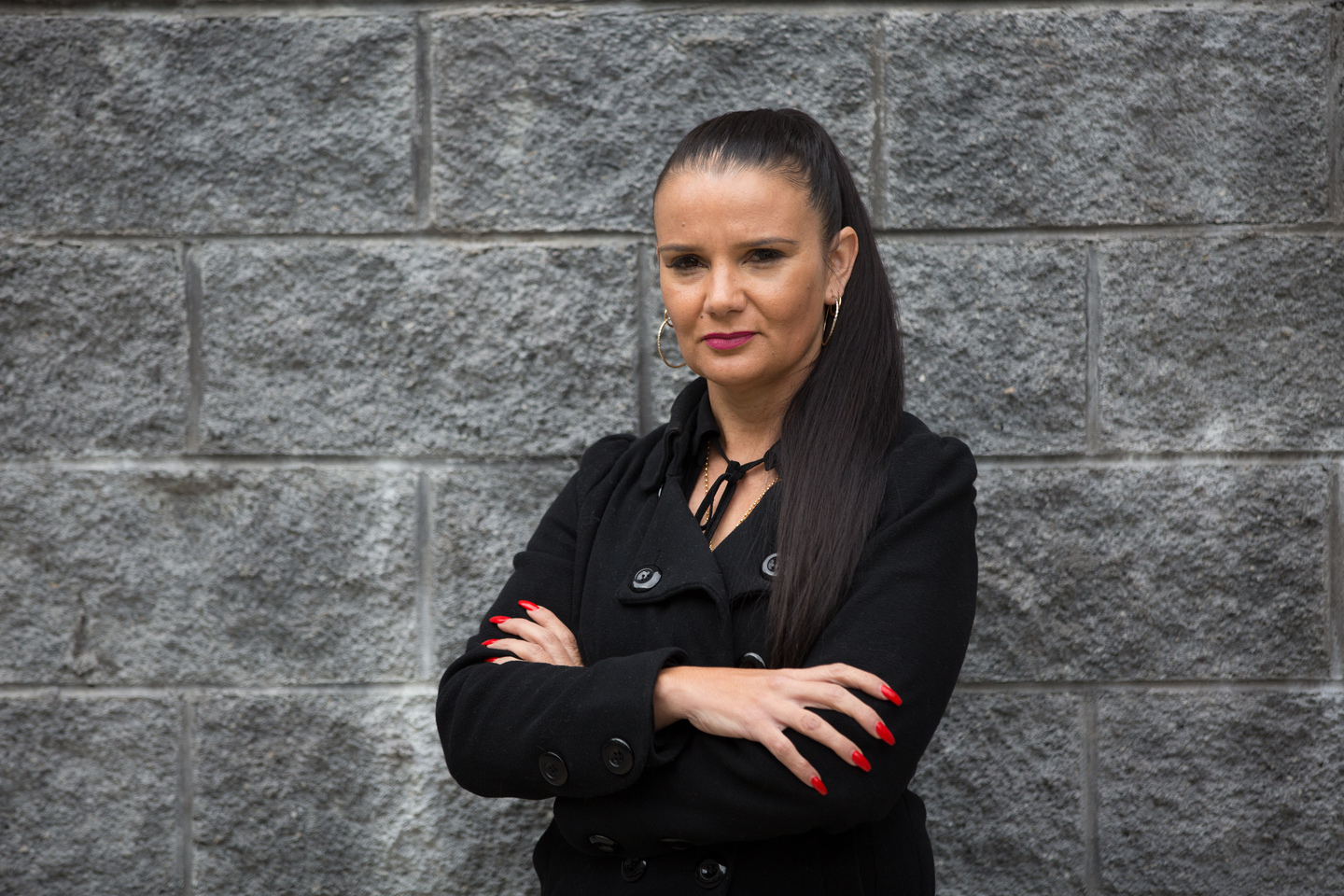
Former WA director Joanne Pellew, the founder of labour hire company Ochre Workforce Solutions, has been sentenced to more than three years imprisonment for Corporations Act offences.
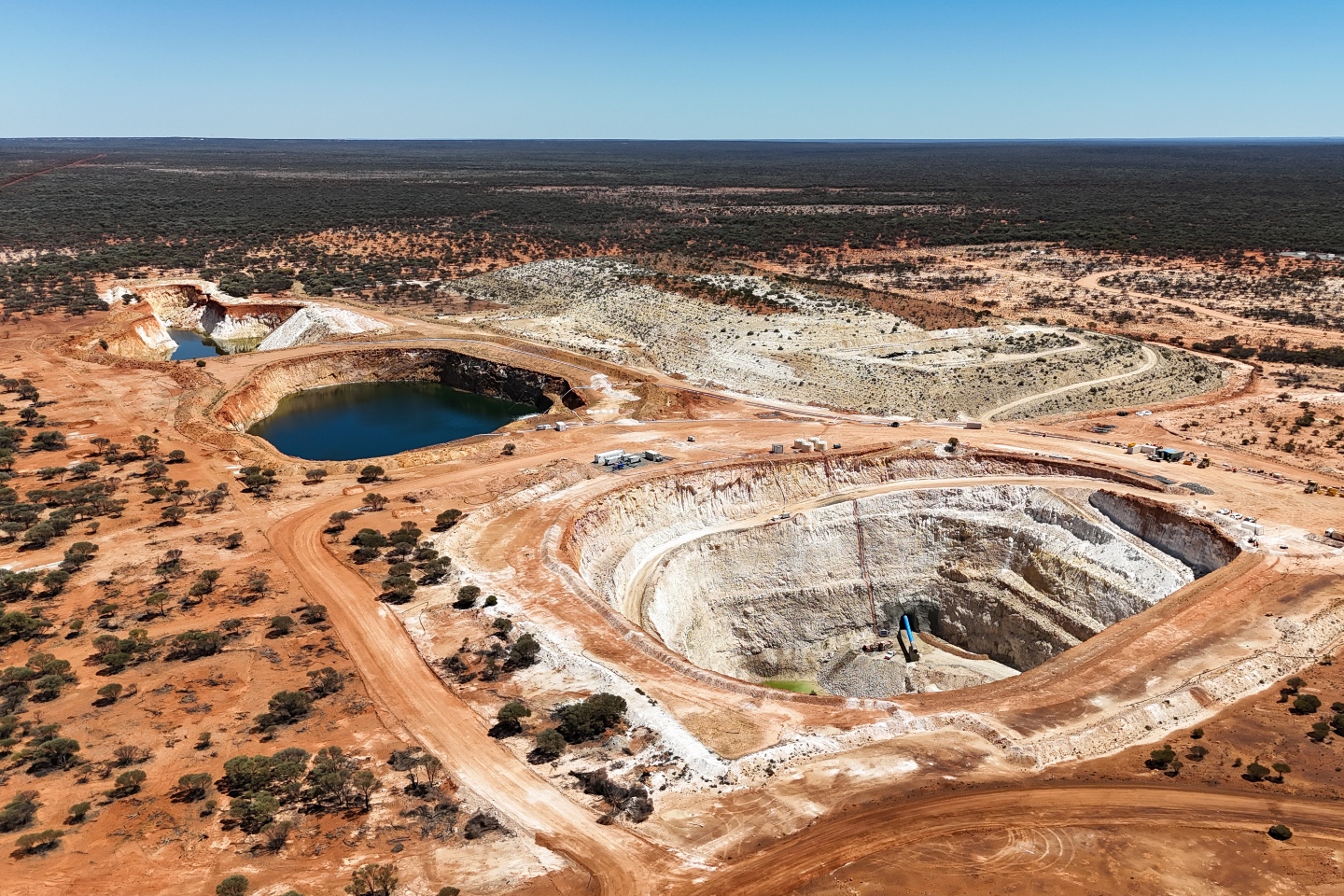
Construction at Rox Resources’ Youanmi gold project has fast-tracked in recent weeks, according to boss Phillip Wilding.
In mid-July, on the back of receiving its final environment for Youanmi, Mr Wilding said he was confident construction would intensify in due course, as Rox moves toward first production in the middle of CY27.
On Monday, Rox said a lot of progress had been made at the project’s processing plant by its selected provider Interquip, while construction of the 351-room accommodation village is finished and now ready for use – although additional refurbishment works, including to the sports courts, will get under way this month.
“Importantly, all works are firmly on schedule,” Mr Wilding said.
“Bulk earthworks have been completed at all sites in the Youanmi processing plant area, with concreting now complete for the screen plant and CIL plant, and tanks under construction.
“The tailings dam has started taking shape, with clearing completed, cut-off drain established and preparations underway to build the outer wall.
“Mining has also progressed well, with the initial levels in United North now complete and extending well past the definitive feasibility study mine plan.
“Works are progressing to commence production stoping, as the high-grade ore stockpile continues to grow.”
Rox closed trade on Monday up 1 per cent to 63 cents.
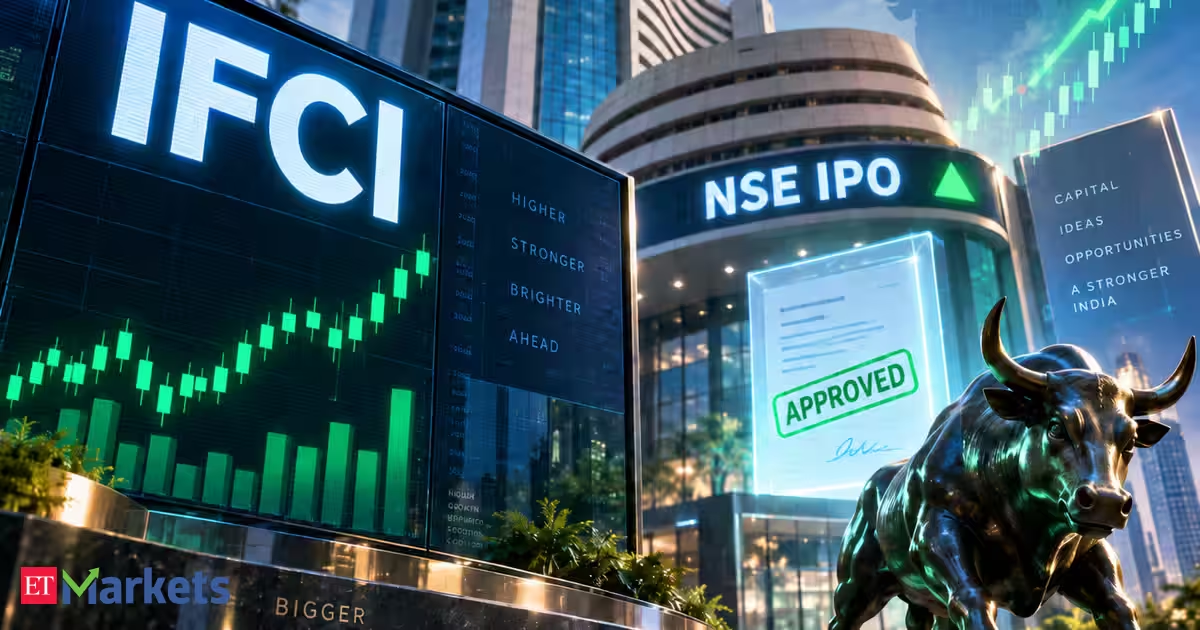
Sebi approved NSE’s draft offer document on Friday, according to its website. The IPO, expected to raise around Rs 30,000 crore, will comprise an offer-for-sale (OFS) of up to 14.89 crore equity shares.
IFCI shares jumped to Rs 107.36 apiece on Monday morning. IFCI owns more than a 50% stake in Stock Holding Corporation of India (SHCIL), which in turn, holds over 4% stake in NSE. Through its controlling interest in SHCIL, IFCI enjoys indirect exposure to NSE, making its stock particularly sensitive to developments related to the exchange’s IPO.
Key things to know about mega NSE IPO
NSE is yet to announce the IPO price band or issue date, but traders told The Economic Times that the issue is likely to open around September 18, with listing expected around September 25. The Economic Times, citing sources, reported that NSE is likely to price the IPO at around Rs 1,800 per share or slightly higher.
The filing would mark the culmination of a long listing process first initiated in December 2016, when NSE filed its first DRHP for a Rs 10,000-crore issue. Ahead of listing, the grey market premium (GMP) jumped to Rs 250-280 per share soon after the regulatory nod on Friday evening, from around Rs 150-180 earlier in the day, according to grey market brokers.

“The valuation at which the offering is priced will be critical to how the market responds,” said Manan Doshi, co-founder of Unlisted Arena. “If the pricing leaves adequate value on the table for investors, it could significantly enhance investor participation and create strong positive sentiment around the issue,” he added.
Also Read: NSE grey market premium soars on Sebi’s IPO approval
IFCI share price
IFCI shares have delivered a whopping 100% return in 2026 so far, as the multibagger stock jumped over 43% in one month amid growing optimism over NSE IPO. The shares of the company have jumped over 18% in just one week.
In the longer term, IFCI shares have delivered stellar returns of more than 500% in three years and 850% in five years. The company has a market capitalisation of nearly Rs 28,700 crore.
Technical view on IFCI share price
IFCI remains in an uptrend, forming a higher high and higher low structure, said Sudeep Shah, Head of Technical and Derivatives Research at SBI Securities. He noted that the stock is trading above its key moving averages, while the rising ADX on both the weekly and daily timeframes indicates strengthening bullish momentum. The rising green histogram bars on the MACD further reinforce the positive bias, he added.
“The stock also closed above its previous swing high of 95.80 last week, signalling a breakout. The immediate support is placed in the Rs 96–95.5 zone. As long as the stock sustains above this support, the uptrend is likely to extend further,” the analyst said while explaining the technical charts of IFCI.
Also read | NSE IPO gets Sebi approval: 10 important points investors should know as D-Street debut inches closer
Disclosure: This article has been written by Debaroti Adhikary, who is not a SEBI-registered Research Analyst or an investment advisor. Debaroti Adhikary does not hold any financial interest in the company named in the article as of the date of publication. The views/recommendations mentioned in this article, wherever applicable, are those of the respective SEBI-registered Research Analyst/brokerage and have been reproduced/reported with due attribution. They should not be construed as the views or recommendations of the EconomicTimes Digital or the journalist. Readers are advised to consider the original research report and make their investment decisions based on their own assessment.

When the central bank of the Netherlands confirmed this week that it had moved tonnes of the country’s gold out of North America, it said the relocation would make it “better prepared for severe crises”.
Some 86 tonnes from the combined total of about 313 tonnes held in the US and Canada were relocated to London “in view of increasing geopolitical unrest”, it said, so the shiny stuff could be “readily available for use in a crisis situation”.
Questions were bound to follow. Why were the Dutch doing this? Were they anticipating some major economic shock on the horizon?
It seems not, but the move was clearly in response to the unstable and uncertain state the world finds itself in, with trade and military wars prompting countries to take precautions and hold their gold closer to home.
Earlier this year, France announced it had removed its gold reserves from the US to home shores. Meanwhile, Germany’s Bundesbank transferred more than 216 tonnes of the metal from storage locations abroad – 111 tonnes from New York and 105 tonnes from Paris – over a few years ending in 2016., external
It is a strategy which has played out before in times of global instability. “Some European central banks moved part of their gold holdings to New York during the Cold War,” said research analysts Lina Thomas and Daan Struyven of Goldman Sachs.
Joseph Cavatoni, senior market strategist at the World Gold Council, told the BBC while wars and trade tensions were “playing into some of these decisions”, it didn’t “top the list” of motivating factors.
Inflation, interest rates and just having gold in a place where it can be traded quickly also played a role.
“I don’t get a sense that there’s an impending doom,” Cavatoni said, “but what I do think is people are being better educated around how to manage their reserve assets, growing their reserve assets, and actually thinking more effectively around how to make the most of those assets.”
De Nederlandsche Bank said the gold removed from the US and Canada between March and August this year was now being held in the vaults of the Bank of England.
“We expect that we will never need to use them, but we do need to strengthen our resilience and preparedness,” said the governor of the Dutch central bank, Olaf Sleijpen.
London was seen as the best choice due its position in the world as a major trading centre. If you want to be able to buy or sell gold fast in a crisis, London is the place to be, which makes the Bank of England a popular storage spot.
In recent months, Welsh figures, external suggested the proportion of young people in Wales who are not in education, employment, or training (Neet) had risen sharply.
They increased to 17% and returned to levels last seen around 2013, according to Welsh government figures.
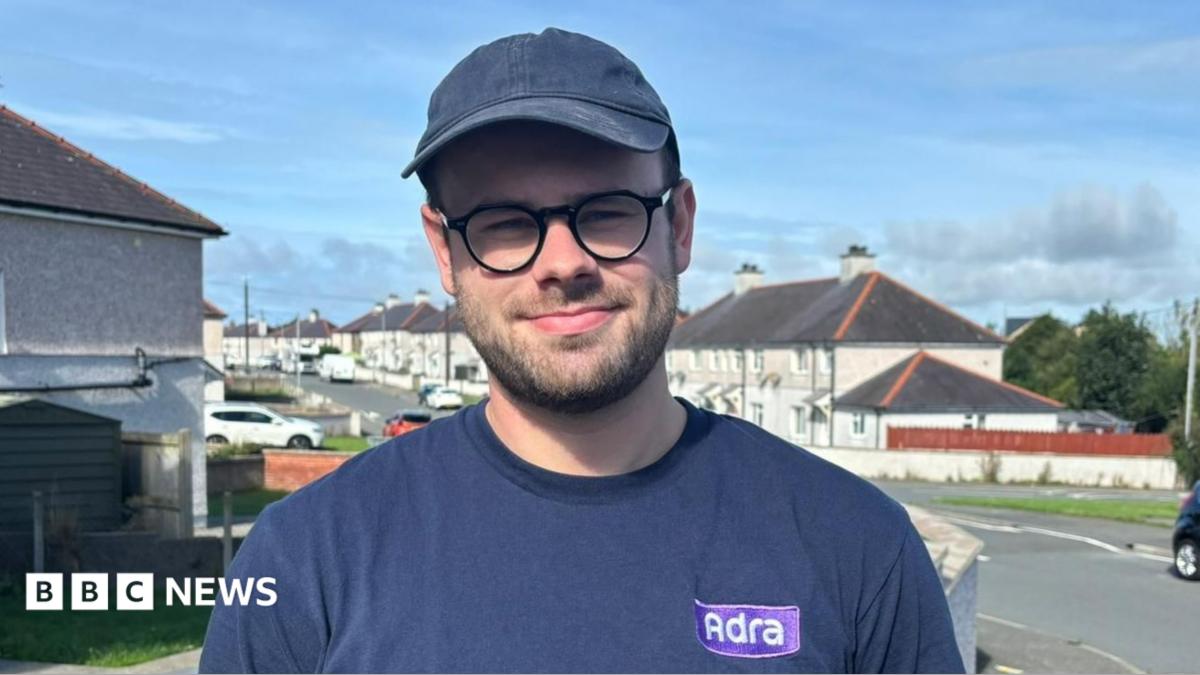
Cian Halliday, 26, a carpenter from Llanrug, had been made redundant during the Covid-19 pandemic, something he said had been “difficult, and a struggle”.
“Academi Adra were offering courses, and almost 16 weeks of work experience and at the end they decided to keep me on as a labourer. I did that for a year,” he said.
“Then they offered me an apprenticeship and I chose to be a carpenter.”
He said that being made redundant had been very tough.
“It was difficult, and a struggle to find work, so I decided, the minute this opportunity came up, to start a new job.”
While looking for work, Cian said there had not been enough opportunities for young people like him.
“I was happy enough to change careers. I jumped at the opportunity and never looked back,” he said.
Business
Sunrise Energy Metals Shares Rise 7.5% As Pentagon-Backed Scandium Project Nears Key Decision In NSW
MELBOURNE, Australia — Shares of Sunrise Energy Metals Ltd. climbed $1.145, or 7.51%, to $16.395, as the small-cap critical minerals company continues building momentum following a landmark U.S. government financing commitment for its Syerston scandium project in New South Wales.
The company, formerly known as Clean TeQ Holdings before rebranding in March 2021, has emerged over the past year as one of the most closely watched names on the ASX within the broader critical minerals sector, with its market capitalization surging more than 2,400% over the trailing 12 months as investors have bet heavily on the strategic importance of its flagship scandium project.
Sunrise’s stock has been on a sustained upward trajectory since early August, when the Pentagon’s Office of Strategic Capital confirmed a conditional US$400 million loan commitment for the Syerston project, located near Fifield in central-west New South Wales. Shares surged as much as 20% in a single session following that initial confirmation, touching a fresh 52-week high near $19 and pushing the company’s market capitalization to roughly $3 billion Australian dollars at the time.
Sunrise Chairman Robert Friedland, the mining billionaire and founder of Ivanhoe Mines, described the U.S. financing commitment as a defining moment for both the company and Australia’s broader mining industry.
“A landmark moment,” Friedland said, adding that “scandium is one of the clearest examples, supporting the technologies, industries and defence capabilities that will shape the coming decades.”
If completed, Syerston is designed to become the world’s first primary scandium mine, a distinction significant given that scandium has historically been produced only as a byproduct of other mining operations rather than mined as a primary target. The project boasts a 60.3-million-tonne resource, an existing mining lease, development consent, environmental approvals and secured water rights, positioning it as unusually advanced for a critical minerals project at this stage of development.
Scandium is a silvery-white metal valued for its ability to significantly strengthen aluminum alloys while remaining lightweight, flexible and resistant to heat and corrosion, making it particularly important for aerospace applications, defense technology, and increasingly, power delivery for artificial intelligence data centers and other power-constrained infrastructure. New South Wales holds some of the highest concentrations of scandium found anywhere in the world.
Defense contractor Lockheed Martin holds an option to purchase up to 15 tonnes of scandium oxide annually for the project’s first five years, representing roughly 25% of Syerston’s planned initial production capacity. Initial development at the site is targeting production of 60 tonnes of high-purity scandium oxide annually over an estimated 32-year mine life, with the company separately evaluating a second development phase that could add a further 120 tonnes of annual capacity.
Sunrise CEO Sam Riggall has described scandium as occupying a unique position within the broader critical minerals landscape, telling CNBC’s “Europe Early Edition” that the scandium market remains one of the smallest in the world despite its outsized strategic importance across defense and advanced manufacturing applications.
The Pentagon financing commitment came alongside a broader push by U.S. officials to reduce Western reliance on Chinese-controlled critical mineral supply chains. China currently produces nearly 70% of the world’s rare earth supply from domestic mines and processes almost 90% of global supply, refining material imported from other countries, a level of dominance Western governments have increasingly flagged as a strategic vulnerability given the expected exponential growth in critical minerals demand tied to the broader clean energy transition.
A statement accompanying the U.S. financing commitment described the deal, which combines both public and private capital and totals nearly $1 billion when including related financing components, as a significant step toward establishing genuine supply chain resilience for scandium specifically.
“The contemplated Sunrise transaction marks a significant step in establishing supply chain resiliency for an increasingly critical mineral,” the statement read, adding that the deal “would help address foreign dependencies in scandium supply and facilitate scandium’s use in critical defense and commercial applications.”
Beyond the core Pentagon financing, Sunrise has continued building out its broader supply-chain relationships in recent months. The company disclosed a US$5 million stake in Agni Semiconductor, a private developer of aluminum scandium nitride semiconductor technology, and secured acceptance into the New South Wales government’s Critical Minerals Royalty Deferral Scheme, becoming one of only two companies admitted to that program so far. The U.S. Export-Import Bank has also issued a letter of interest for up to US$67 million in additional financing support tied to the project.
Sunrise has also disclosed a revised capital cost estimate for Syerston of between $450 million and $475 million Australian dollars, or roughly $315 million to $333 million U.S. dollars, reflecting an expanded project scope that now includes plans for downstream refining capacity to be built in the United States, in addition to the core mining and processing facilities in New South Wales. The company has said it has already begun preparations for a listing on a U.S. securities exchange, a step that would require shareholder, court and regulatory approvals but could open access to deeper capital markets and further strengthen its position within U.S. defense and advanced technology supply chains.
According to reporting from Kalkine Media, key milestones investors are watching closely in the coming months include finalization of binding documentation for both the Pentagon loan and the Lockheed Martin offtake agreement, continued progress on the project’s Front-End Engineering Design study, long-lead equipment orders, half-year results expected later this month, and, most significantly, whether the company’s targeted Final Investment Decision lands within the current September quarter as planned.
Analysts have cautioned that despite the wave of positive developments, meaningful execution risk remains. The Pentagon’s financing commitment is explicitly conditional, phased and contingent on Sunrise contributing its own equity alongside milestone-based drawdowns, meaning the deal’s ultimate value to the company depends heavily on Sunrise successfully clearing a series of remaining financial, legal and technical requirements before the financing can formally close.
With early works and long-lead procurement already underway to preserve a targeted first-production timeline in the second half of 2028, Sunrise Energy Metals has positioned itself as one of the more advanced Western scandium projects moving toward production, even as the company continues navigating the substantial financing and regulatory milestones still required to bring Syerston fully online in the years ahead.
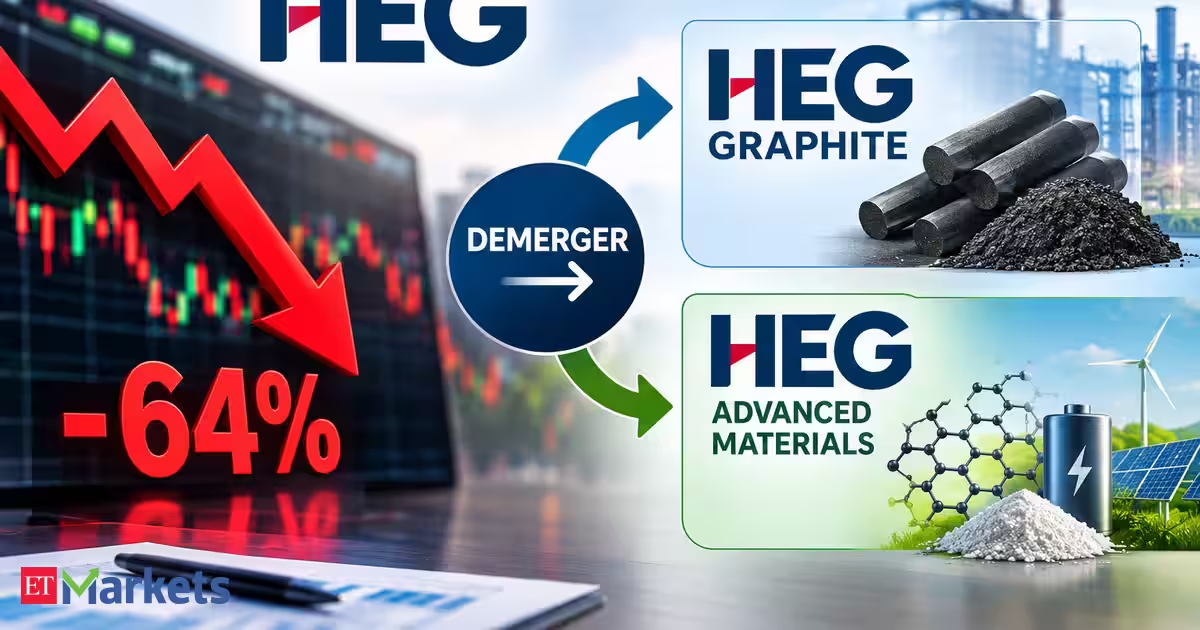
After closing at Rs 728.25 apiece on Friday, HEG shares opened around 64% lower at Rs 260 apiece on Monday as it adjusted to the demerger on the record date. The stock now trades excluding the value of the graphite electrodes business. The company currently has a market capitalisation of around Rs 5,095 crore.
Earlier last month, HEG fixed September 7 as the record date to determine which shareholders will be eligible for its demerger. The graphite electrodes business will move to HEG Graphite, which is proposed to be later renamed to HEG and run as a pure-play graphite electrodes company. The existing listed company will retain the advanced materials, battery energy solutions and green power businesses. It is proposed to be renamed HEG Advanced Materials after the demerger.
What does this mean for HEG shareholders?
As part of the demerger, HEG shareholders will receive one share with a face value of Rs 2 each in the company being spun off for every share they hold in the existing HEG. This means the demerger ratio has been fixed at 1:1.
For example, an investor who holds 10 shares of HEG as on the record date will, after the demerger takes effect, hold 10 shares of HEG and 10 shares of HEG Advanced Materials. Only shareholders who hold HEG shares in their demat accounts as on the record date will be eligible to receive shares in the new company as part of the demerger.
As part of the same scheme, Bhilwara Energy will be amalgamated into HEG. Under the arrangement, HEG will issue eight equity shares with a face value of Rs 2 each for every seven equity shares with a face value of Rs 10 each held in Bhilwara Energy. It is important to note that Bhilwara Energy is an unlisted company.
Also read | HEG demerger: What 1:1 restructuring means for shareholders as company fixes record date?
Leadership changes at HEG
Along with the record date for the demerger, HEG last month also announced leadership changes that took effect from September 1. Ravi Jhunjhunwala will continue to lead HEG Graphite as Chairman, Managing Director and Chief Executive Officer. He will also remain on the board of HEG Advanced Materials in a non-executive capacity.
Riju Jhunjhunwala has been elevated as Chairman, Managing Director and Chief Executive Officer of HEG Advanced Materials for a five-year term, subject to shareholder approval.
“Our immediate focus includes scaling synthetic graphite anode material, where we are developing commercial scale manufacturing capability, while continuing to advance graphene and its applications across industries. At the same time, we will continue to invest in research and build the capabilities required to take promising materials from scientific possibility towards industrial scale. Our ambition is to build HEG Advanced Materials into a globally competitive advanced materials company, one known for the depth of its science, the quality of its execution and the responsibility with which it builds for the long term,” said Riju Jhunjhunwala.
Also read | Festive stock picks: 10 stocks to buy ahead of the festive season. Do you own any?
Disclosure: This article has been written by Debaroti Adhikary, who is not a SEBI-registered Research Analyst or an investment advisor. Debaroti Adhikary does not hold any financial interest in the company named in the article as of the date of publication. The views/recommendations mentioned in this article, wherever applicable, are those of the respective SEBI-registered Research Analyst/brokerage and have been reproduced/reported with due attribution. They should not be construed as the views or recommendations of the EconomicTimes Digital or the journalist. Readers are advised to consider the original research report and make their investment decisions based on their own assessment.
Business
Infosys, HCLTech, TCS, other IT stocks drop up to 3% as Fed rate hike worries return. Here’s why

The Nifty IT index dropped over 2% to trade at 30,082 on Monday, leading losses among all the major sectoral indices on the stock market. Infosys, LTI Mindtree and Mphasis shares dropped around 3% each, while those of Tech Mahindra, OFSS, Coforge, HCL Technologies, Wipro, Persistent Systems and TCS fell 1-2%.
US job growth accelerated sharply in August while the unemployment rate remained steady at 4.1%, implying an improvement in the labour market after recent struggles, data released on Friday showed. US nonfarm payrolls increased by 1.62 lakh in August, well above economists’ expectations of a gain of 56,000.
The sharp growth boosted hopes for a rate hike by the Federal Reserve in September, with traders now pricing in approximately 57% chance of a rate increase this month. Higher US rates could curb client spending, weighing on Indian IT firms that generate a significant share of their revenue from the United States.
What lies ahead for IT stocks?
IT stocks on Dalal Street have seen sharp upswings and downswings recently. Earlier this year, the sector witnessed a sharp selloff after breakthroughs by AI startups fuelled concerns about potential disruption to the traditional IT services business model. Later, a sharp selloff in global tech leaders proved to be a blessing in disguise for Indian IT stocks, which emerged resilient amid the global tech rout.
HSBC said India can serve as an “anti-AI” diversifier as sharp swings in technology-exposed markets encourage foreign investors to broaden their portfolios. HSBC strategists Prerna Garg, Herald van der Linde and Yogesh Aggarwal said in a report that AI-rotation outflows from India have “largely played out.”While AI jitters continue to keep IT investors on the edge, CLSA downgraded several heavyweight stocks and revised their target prices, although it remains bullish on several mid-tier IT vendors.
Indian IT has gone through a near three-year spending recession, on the back of weak discretionary budgets, elongated deal cycles, H-1B headwinds, AI driven revenue deflation and a selloff triggered by fears that agentic tooling (Claude Cowork, COBOL modernisation) would automate the legacy stack directly, Anand Rathi said in August. However, it thinks that fear inverts the actual set-up.
“Our core thesis is that the AI cycle is pivoting from “building capacity” to “proving payback“ — a transition that is inherently services-heavy and plays squarely to Indian IT’s strengths in deployment, integration, governance and legacy modernisation. Value is migrating from the layer that funds the AI build to the layer that deploys it: first to the enterprise software platforms — Systems of Record and Systems of Action that hold the data, permissions and approvals — then to the services firms that integrate and run them. This is the cloud playbook rerun: capex builds first and the returns arrive later, to different players, as railways, fibre and the 2015-19 cloud J-curve all showed,” it added.
The brokerage feels near-term weakness is real, due to AI-led pricing deflation compounded by geopolitics. But AI is expanding the TAM, not compressing it, opening deployment, AI FinOps, governance, managed agent operations, legacy modernisation, sovereign AI and SLM pools, it said. “Indian IT offers this without the balance-sheet and funding-duration risk the infra layer carries — the “safe AI” trade,” it added.
Also read | Bigger market crash ahead? Analysts weigh how Sensex, Nifty may react if US 10-year bond yield touches 5%
(With inputs from agencies)
Disclosure: This article has been written by Debaroti Adhikary, who is not a SEBI-registered Research Analyst or an investment advisor. Debaroti Adhikary does not hold any financial interest in the company named in the article as of the date of publication. The views/recommendations mentioned in this article, wherever applicable, are those of the respective SEBI-registered Research Analyst/brokerage and have been reproduced/reported with due attribution. They should not be construed as the views or recommendations of the EconomicTimes Digital or the journalist. Readers are advised to consider the original research report and make their investment decisions based on their own assessment.
Business
Uber Executives Predict No One Will Own A Car Within 15 To 20 Years As Robotaxis Take Over, Musk Agrees

SAN FRANCISCO — Top Uber executives are predicting that private car ownership and driver’s licenses will become largely obsolete within the next 15 to 20 years, as autonomous vehicles, bikes, scooters and public transit reshape how Americans get around, a vision that echoes similar long-term predictions from Tesla CEO Elon Musk about the future of driving.
Uber President and Chief Operating Officer Andrew Macdonald outlined the prediction during a recent appearance on entrepreneur Harry Stebbings’ 20VC podcast, describing a future in which car ownership becomes an increasingly rare choice rather than a default necessity.
“In some future world, maybe not five years, but 15 or 20 years, everyone’s going to be like Harry — nobody’s going to own a car,” Macdonald said, referring to podcast host Stebbings. “Nobody’s going to have their driver’s license because you’ll be able to get around. And I think bikes and scooters will be part of that. I think autonomous vehicles will be part of that. I think public transportation will be a big part of that, but I don’t think you need to own a car.”
Macdonald was particularly critical of the economics behind personal vehicle ownership, describing the private automobile in stark terms.
“The most inefficient asset that anyone owns,” Macdonald said of the personal car, noting that a typical vehicle sits idle roughly 98% of the day while continuing to depreciate and generate ongoing insurance costs even when parked in a driveway. He pointed to rising vehicle costs as compounding the inefficiency, noting that new vehicle prices have climbed roughly 30% over the past six years, with the average transaction price now hovering near $50,000.
Uber CEO Dara Khosrowshahi has offered a similarly ambitious timeline for the shift toward autonomous, shared transportation. Speaking on “The Diary of a CEO” podcast earlier this year, Khosrowshahi described a future increasingly dominated by robot-driven rides.
“You can imagine the majority of our trips being fulfilled by robots of some kind,” Khosrowshahi said. “Probably not 10 years from now, but you go 15 to 20 years from now, you’re going to start getting there.”
Khosrowshahi has separately detailed how he expects vehicle ownership structures to shift during that transition, describing a future in which large institutional investors, rather than individual drivers, own the underlying autonomous vehicle fleets. He suggested major financial firms could eventually own large fleets of self-driving cars generating steady investment yields, comparing the model to how firms such as Blackstone currently manage other large asset portfolios. Khosrowshahi has acknowledged, however, that the transition raises difficult unresolved questions, including how displaced human drivers will be affected.
“I think 10-15 years from now this is going to be a real issue and I don’t have a neat answer for it,” Khosrowshahi has said regarding the broader disruption autonomous vehicles could bring to the ride-hailing workforce.
Speaking separately at the Semafor World Economy Summit in Washington, D.C., Khosrowshahi framed the eventual dominance of autonomous vehicles as effectively inevitable given the safety case for removing human error from driving.
“If you fast-forward 15, 20 years, I think eventually the cars are going to be autonomous,” Khosrowshahi said. “There’s very strong evidence to believe that robot drivers are going to be safer than human drivers.” He identified California and Texas as currently the most open regulatory markets for expanding autonomous ride-hailing services.
Elon Musk has voiced comparable predictions about the long-term trajectory of autonomous driving technology, dating back several years. Speaking during a Tesla earnings call, Musk said he expects “all cars will go fully autonomous in the long-term,” predicting it would eventually become “quite unusual to see cars that don’t have full autonomy” within a similar 15-to-20-year window, with Tesla vehicles specifically reaching that point even sooner than the broader industry.
Musk has also offered a broader, more sweeping vision of how automation and artificial intelligence could reshape the economics of daily life more generally, extending well beyond transportation. Speaking earlier this year at the U.S.-Saudi Investment Forum, Musk suggested that traditional employment could eventually become optional for most people as AI-driven productivity gains generate what he described as unprecedented material abundance.
“My prediction is that work will be optional,” Musk said. “It’ll be like playing sports or a video game or something like that. If you want to work, it’s the same way you can go to the store and just buy some vegetables, or you can grow vegetables in your backyard. It’s much harder to grow vegetables in your backyard, and some people still do it because they like growing vegetables.”
The convergence of predictions from Uber’s leadership and Musk reflects a broader alignment among major technology executives around the eventual dominance of autonomous vehicle technology, even as the specific business models and ownership structures each company envisions differ somewhat in their details. Uber has continued expanding its own autonomous vehicle partnerships in the meantime, reportedly working with roughly 20 different autonomous vehicle partners and aiming to operate driverless vehicles across 15 cities by the end of the year. Khosrowshahi has said Uber aims to facilitate more autonomous and robotaxi rides than any other company in the world by 2029.
In the near term, Uber has taken incremental steps toward that longer-term vision, including compensating some human drivers to help train the artificial intelligence systems expected to eventually power its autonomous fleets. Rival ride-hailing company Lyft has adopted a similar approach, paying some former drivers to maintain and clean self-driving vehicles as those vehicles gradually take on a larger share of rides previously handled by human drivers.
Despite the confident long-term predictions from Uber’s leadership and Musk alike, both companies have acknowledged that significant technical, regulatory and workforce-related challenges remain before autonomous vehicles can realistically displace private car ownership and human-driven ride-hailing at the scale envisioned. Whether the 15-to-20-year timeline offered by Macdonald, Khosrowshahi and Musk ultimately proves accurate remains to be seen, though the shared conviction among leaders at two of the industry’s most influential companies suggests the broader shift toward autonomous, shared mobility is likely to remain a defining storyline across the transportation and technology sectors in the years ahead.

Jaguar Land Rover to cut 4,000 jobs

Coldcard hacker moves $7.7 million in BTC, 45% of bitcoin stolen in third attack wave

Victor Osimhen Set to Miss Nigeria’s AFCON Qualifiers With Groin Injury





-

 Fashion3 days ago
Weekend Open Thread: Beyond Yoga
-
 Crypto World3 days ago
Bitcoin price stalls near $82K as key resistance holds
-

 Politics3 days ago
Best Gaming Laptops, CPUs, TVs, And Keyboards To Upgrade Your Set Up For GTA VI
-

 Tech3 days ago
The Birds Outside, Drawn For You Automatically
-

 Crypto World3 days ago
IMF Says El Salvador’s Post-Review Bitcoin Purchases Used No Public Funds
-
 Crypto World3 days ago
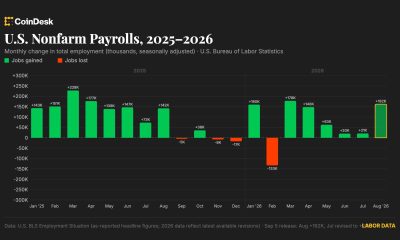
U.S. added stronger than expected 162,000 jobs in August as labor market bounced back
-

 Sports3 days ago
Alexandre Pato consortium’s Northampton Town investment approved
-

 Sports3 days ago
Commanders’ Chig Okonkwo is a top breakout fantasy football candidate
-

 Sports3 days ago
Golden Eaglets Drawn in Group B for 2026 WAFU B U17 Championship
-
 Crypto World3 days ago
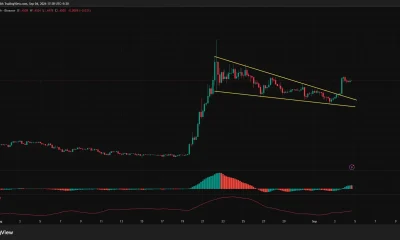
XRP price breaks falling channel as bulls target $1.53
-

 Politics3 days ago
A new European chapter for Gibraltar
-

 Politics3 days ago
How To Avoid Winter Colds: 4 Everyday Habits That Spread Germs, Says Pharmacist
-

 Politics3 days ago
The House | Bin the lectures, bring gossip and be ready to banter: how the new PM should prepare for his Trump encounter
-

 Crypto World3 days ago
From warning to listing: UK’s largest retail investment platform opens access to crypto ETNs
-

 Crypto World3 days ago
FinCEN flags $12.7B tied to Southeast Asia crypto investment scams
-

 Tech3 days ago
A Worthy Android Ereader, With Some Tradeoffs
-

 Crypto World3 days ago
Trezor Data Breach Impacts 67,000 More US Customers
-

 Politics3 days ago
33 Cosy Autumn Home Decor Ideas: Blankets, Pumpkin Decorations, And Candles
-

 Tech3 days ago
How To Edit Claude’s Memory
-

 Tech3 days ago
beyerdynamic AVENTHO Y Debuts at IFA 2026 and Makes Wireless Headphones Less Disposable
You must be logged in to post a comment Login