HHS Secretary Robert F. Kennedy Jr. discusses efforts to phase out petroleum-based synthetic dyes in the nation’s food supply on ‘Jesse Watters Primetime.’
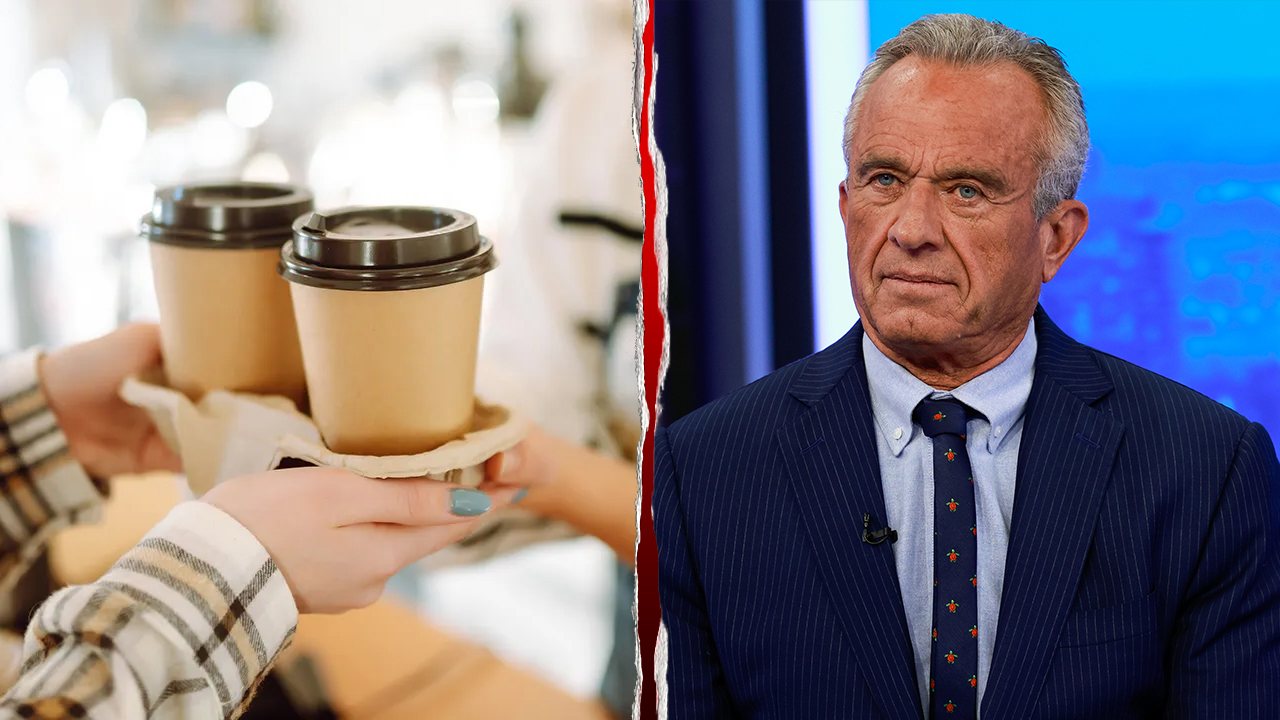
Health Secretary Robert F. Kennedy Jr. ignited widespread backlash online after questioning whether high-sugar iced coffee drinks sold at Dunkin’ and Starbucks are safe – and the governor of Massachusetts was among the pushback.
Kennedy said during an “Eat Real Food” rally in Austin, Texas, on Feb. 26, “We’re going to ask Dunkin’ Donuts and Starbucks, ‘Show us the safety data that show that it’s OK for a teenage girl to drink an iced coffee with 115 grams of sugar in it.”
Advertisement
“I don’t think they’re gonna be able to do it,” he added.
The remarks quickly drew a response in Massachusetts, where Dunkin’ was founded and is considered a cultural staple.
Health and Human Services Secretary Robert F. Kennedy Jr. raised concerns about sugary beverages during an Austin, Texas, rally on Feb. 26, 2026. (Jason Mendez/Getty Images; iStock / Getty Images)
Massachusetts Gov. Maura Healey took to X on Wednesday to defend the iconic New England beverage, posting an image of a flag displaying the slogan, “Come and take it.”
Advertisement
While some users on X criticized Healey, arguing that she should promote healthier food standards, others rallied behind the governor amid concerns the administration could target their favorite drinks.
“Maybe this regime needs to remember we take drinks VERY SERIOUSLY in New England,” one user wrote, alongside an image depicting the 1773 Boston Tea Party.
Others swapped the “Don’t tread on me” motto with, “Donut tread on me.”
Health Secretary Robert F. Kennedy Jr. referenced Dunkin’ while discussing potential scrutiny of high-sugar beverages. (Paul Weaver/SOPA Images/LightRocket via Getty Images / Getty Images)
The Department of Health and Human Services did not immediately respond to FOX Business’ request for comment on whether the administration plans to carry out its demands and restrict beverages at Dunkin’ or other coffee chains.
Dunkin’ and Starbucks did not immediately respond to FOX Business’ request for comment.
MAHA Action, a nonprofit organization dedicated to the “Make America Healthy Again” movement, said in a statement after the event that Kennedy announced the closure of a loophole in the “Generally Recognized As Safe” (GRAS) food ingredient approval program, a long-standing regulatory pathway that allows companies to self-certify certain ingredients as safe.
“Companies including Dunkin’ Donuts and Starbucks will be required to produce safety data they were supposed to have maintained. The reforms aim to ensure American foods follow the highest safety and nutritional standards globally,” the group said.
Advertisement
Health and Human Services Secretary Robert F. Kennedy Jr. suggested that companies such as Dunkin’ and Starbucks may need to demonstrate the safety of certain high-sugar drinks under stricter federal scrutiny. (Zhang Peng/LightRocket via Getty Images / Getty Images)
Kennedy began pushing to reform the GRAS system soon after his appointment and confirmation, according to The Boston Globe, which noted that the category was created so companies would not have to apply for approval to use common ingredients.
However, over time, the system has expanded to include thousands of new ingredients, including those used in ultra-processed foods, the newspaper reported.
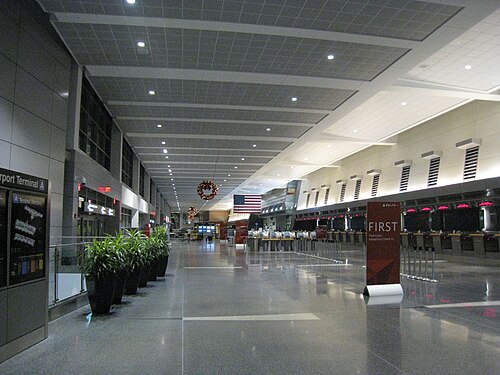
Travelers at Boston Logan International Airport faced relatively smooth security lines Wednesday as TSA staffing held steady amid the ongoing partial government shutdown, with average wait times hovering between 10 and 20 minutes at most checkpoints despite national concerns over officer call-outs and absenteeism.
Boston Logan International Airport
As of midday, third-party trackers reported average standard security waits of 11 to 15 minutes across terminals, with peaks reaching 25 to 30 minutes during morning rushes and occasional spikes to 35-40 minutes in the overnight hours. TSA PreCheck lanes generally moved faster, often under 10 minutes when open, though availability varied by terminal and time of day. Massport, the airport’s operator, continued monitoring lines closely and recommended passengers arrive two hours before domestic flights and three hours for international departures.
Logan International, one of the busiest airports in the Northeast and a major hub for Delta, JetBlue and American Airlines, handles more than 40 million passengers annually across its six terminals. Terminal A primarily serves Delta and some JetBlue flights, while Terminal B hosts JetBlue and United operations. Terminals C and E handle international traffic, with Terminal E dedicated to overseas arrivals and departures.
The current stability at Logan contrasts sharply with reports of multi-hour delays at other major hubs nationwide, where TSA absenteeism has climbed due to the shutdown that began in mid-February. At Logan, more than 20 TSA officers have quit since the funding lapse started, and dozens more in New England have walked off or called out, according to union leaders. Yet local officials and travelers described operations as “so far, so good,” with lines moving efficiently even during spring break travel surges.
Massport spokesperson Jennifer Mehigan noted that the airport has avoided the worst of the national disruptions thanks to proactive staffing management and strong cooperation between TSA and local teams. However, concerns linger as the shutdown enters its sixth week and officers remain unpaid. TSA Union AFGE Local 2617 President Mike Gayzagian warned that further attrition could strain the system, though he emphasized that New England has not seen the same level of chaos as airports in Atlanta, Chicago or Houston.
Advertisement
To improve the passenger experience, Massport is testing a new camera-based wait time tracking system in Terminal B that uses analytics to estimate average screening times without capturing facial images or personal details. The technology calculates line movement and will eventually display real-time estimates on the airport website, FlyLogan app and internal flight information screens. Full rollout across all terminals is expected in mid-April, providing a more reliable alternative to the federal MyTSA app, which has been unreliable during the shutdown.
CLEAR biometric lanes remain available in Terminals A and B, offering expedited entry for enrolled members. TSA PreCheck is operational across checkpoints, though not every lane is staffed simultaneously. Passengers without expedited status are advised to remove liquids, electronics and outerwear in advance to speed processing.
Peak periods at Logan typically occur between 5 a.m. and 8 a.m. and again from 4 p.m. to 7 p.m. on weekdays, with Friday afternoons and Sunday evenings also busy. Recent hourly data showed overnight lulls dropping to near zero minutes in some slots, while midday averages stayed in the low teens. Spring break travel has added volume, yet lines have not reached the alarming lengths seen elsewhere.
Travelers shared mixed but mostly positive experiences on social media and local news. Many reported breezing through in under 15 minutes, while others noted 25- to 30-minute waits during busier morning hours. One passenger departing for Florida said her family cleared security in eight minutes, calling the process smoother than expected given national headlines.
Advertisement
Airport officials urge flexibility. Airlines including JetBlue and Delta have issued advisories encouraging passengers to check flight status and build in extra buffer time. Some carriers have offered rebooking flexibility for those affected by any unexpected delays. Massport continues coordinating with TSA to maintain safety standards without compromising screening thoroughness.
The shutdown has highlighted vulnerabilities in federal aviation security staffing. Nationwide, call-out rates have risen, prompting discussions about deploying ICE agents or other federal personnel at major airports. At Logan, no such deployment has occurred, and union leaders said it does not appear necessary at this time, though they monitor the situation closely.
Logan’s six terminals offer amenities to ease waits, including dining options, retail shops and charging stations. United Club and Delta Sky Club lounges provide respite for eligible passengers, while family areas help traveling parents. The airport’s proximity to downtown Boston — about 3 miles from the city center via the Silver Line — makes it a convenient gateway despite occasional ground traffic.
Medical experts and travel advocates recommend strategies to minimize delays: enroll in TSA PreCheck or Global Entry if eligible, pack carry-ons efficiently, download the FlyLogan app for updates, and consider off-peak flights when possible. Passengers with disabilities or medical needs can contact TSA Cares at least 72 hours in advance for assistance.
Advertisement
As the funding impasse in Washington continues, Logan’s relatively smooth operations offer a reassuring contrast. Massport emphasizes that safety remains the top priority and that staffing levels currently support normal throughput. Officials pledged to keep travelers informed through the new tracking system once fully implemented.
Looking ahead, spring break and summer travel seasons could test the system further if the shutdown persists or worsens. TSA has historically increased hiring during peak periods, but current constraints limit flexibility. Passengers are advised to check multiple sources — including airline apps, the FlyLogan app and third-party trackers — for the latest conditions.
In summary, while national TSA challenges have created anxiety for many flyers, Boston Logan International Airport has maintained manageable security wait times averaging 10 to 20 minutes on most days. With a new real-time tracking system on the horizon and continued local coordination, Logan aims to keep disruptions minimal. Travelers who plan ahead, use expedited programs and monitor updates stand the best chance of a smooth departure from one of New England’s busiest gateways.
The airport continues to operate all flights, with any delays primarily tied to individual checkpoint volumes rather than widespread shutdown effects. As negotiations continue in Washington, both Massport and TSA monitor the situation to protect the millions of passengers who pass through Logan each year.
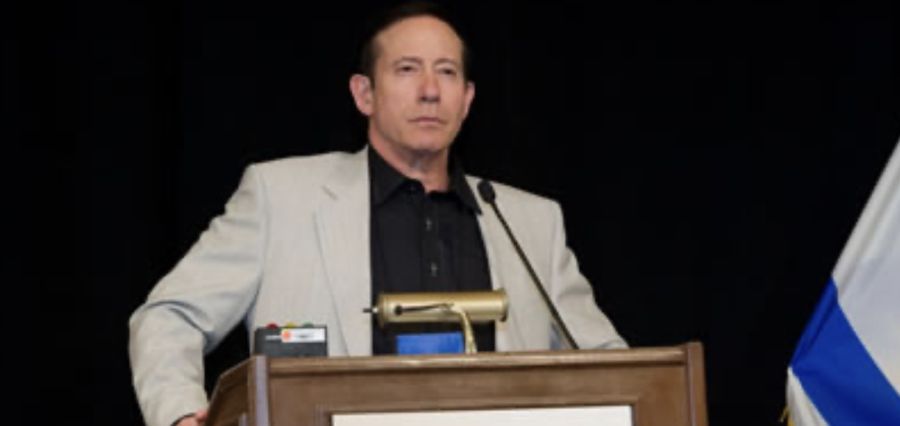
There is a particular kind of clarity that comes from nearly losing everything. For Adam Milstein, that clarity arrived in October 1973, during the Yom Kippur War, when he crossed the Suez Canal as part of Ariel Sharon’s division while Israel fought for its survival. The experience didn’t just shape his patriotism—it provided a set of analytical tools he would later apply to challenges most philanthropists never think to address: pattern recognition, capability assessment, adversary anticipation, and the discipline to act on intelligence before the consensus catches up.
Half a century later, those tools define his philanthropic methodology in ways that distinguish him from nearly every peer in American Jewish giving. Where most donors react to crises, Milstein invests in the infrastructure to detect them early. Where others scatter funds across familiar organizations, he builds networks that force-multiply philanthropic impact. Where conventional wisdom says stay in your lane, Milstein challenges antisemitism on both the political left and right with equal directness.
His January 2026 Jerusalem Post article offered a case study in this approach. Writing after Charlie Kirk’s death triggered a reckoning within the American conservative movement, Milstein argued that tolerating antisemitic voices like Nick Fuentes doesn’t broaden a political coalition—it poisons one. There is no hidden army of voters, he wrote, waiting to be activated by embracing extremists. There is instead a large bloc of persuadable Americans who refuse to tolerate hatred disguised as authenticity.
His February 2026 New York Post piece applied the same unflinching analysis to the other side of the aisle, warning that the Democratic Party faces a defining moral test over antisemitism within its ranks. He pointed to elected officials who refuse to condemn calls for violence against Western democracies and activist networks working to strip Jews of protected minority status. His argument was historical in scope: political movements that appease antisemitism don’t just lose elections—they lose their souls.
Advertisement
This dual-front strategy reflects the military thinking that has guided Milstein since his IDF service. Threats rarely arrive from a single direction, and defending against one while ignoring another is a recipe for catastrophe. His foundation, established in 2000 with his wife Gila, operates accordingly—supporting over 150 organizations that span the ideological spectrum, from progressive advocacy groups to conservative policy institutes, campus monitoring operations to interfaith coalitions, media watchdogs to technology platforms that use artificial intelligence to track antisemitic content online.
The institutional architecture Milstein has constructed reflects the same forward-thinking. The Israeli-American Council, which he co-founded in 2007 and chaired from 2015 to 2019, organized a community that had lacked infrastructure connecting them to broader Jewish advocacy. The Impact Forum, launched in 2017, created a platform where philanthropists pool resources and coordinate strategy through quarterly dinners that have since expanded from Los Angeles to Dallas and Miami.
Milstein arrived in the United States in 1981 to study at USC, built a career in commercial real estate at Hager Pacific Properties, and might easily have spent his later years enjoying the fruits of that success. Instead, the same instinct that drove him across the Suez Canal—the refusal to wait for others to act when the threat is already visible—pushed him toward a second career in strategic philanthropy that has reshaped how the American Jewish community organizes, funds, and fights.
At 74, the lesson from 1973 still governs everything. Threats dismissed today become crises tomorrow. The infrastructure to respond must exist before the emergency arrives. And leadership means acting on what you see, even when the crowd hasn’t caught up.
JLL has a major footprint in the Middle East, managing and leasing properties in Dubai and Abu Dhabi in the United Arab Emirates and in Riyadh, Saudi Arabia.
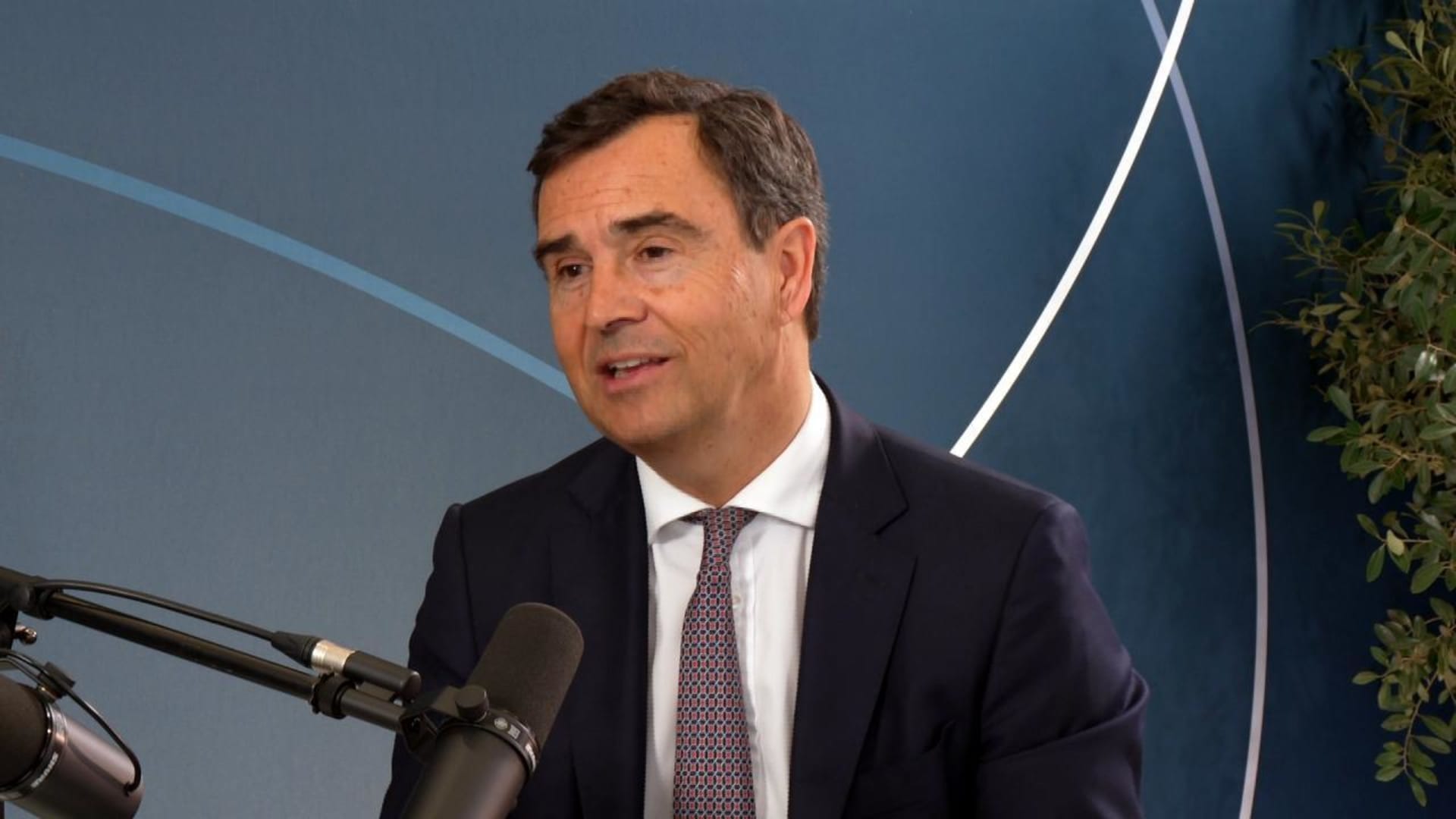
CEO Christian Ulbrich said the business impacts of the Iran war depended on how long the conflict lasted.
“It’s a tragedy from a point that the region was on a really strong growth trajectory, and this is, at the moment at least, interrupted for the time being,” said Ulbrich.
A version of this article first appeared in the CNBC Property Play newsletter with Diana Olick. Property Play covers new and evolving opportunities for the real estate investor, from individuals to venture capitalists, private equity funds, family offices, institutional investors and large public companies. Sign up to receive future editions, straight to your inbox. In the first weeks of the war with Iran, the expectation was that the impact on the global economy would be short-lived, but as it has dragged on that is no longer the case. Two weeks ago, Christian Ulbrich, CEO of JLL, said he was not “overly concerned” about interest rates, because he thought the end of the war would be coming soon. “If it doesn’t,” he told the Property Play podcast, “We have a different situation.” JLL has a major footprint in the Middle East, managing and leasing properties in Dubai and Abu Dhabi in the United Arab Emirates and in Riyadh, Saudi Arabia. It also provides project and investment management for large-scale infrastructure and investment projects. Ulbrich said his concern first and foremost was for his employees in the region, and that he had been in close touch with managers there monitoring their safety. The business impacts, he said, depended on how long the conflict lasted. “It’s a tragedy from a point that the region was on a really strong growth trajectory, and this is, at the moment at least, interrupted for the time being,” said Ulbrich. Residential real estate transactions in the UAE were down 38% in the second week of March compared with the same period in 2025, and the value of transactions was down 42%, according to analysts at Goldman Sachs in a recent report. And it’s not just the Middle East. “We entered this conflict with a very strong outlook for 2026. The economy was doing really well globally and particularly well here in the U.S.,” Ulbrich said. “Inflation was coming down, still a bit sticky, but directly coming down in the U.S. [and] very much, coming down in Europe.” Now, he said, a strong outlook has given way to a new period of uncertainty. Residential buildings as well as hotels have been struck by Iranian drones in Dubai, an area that has seen arguably unprecedented urban growth in just the last decade. “What worries me the most is literally the amount of conflict and disruption in the world,” said Ulbrich. “Those existing conflicts are not solved. We add new ones, and so uncertainty is not great for the economy. As you know, the economy has a lot to do with sentiment, and we were just kind of getting to terms with the existing challenges in the world, and were off to a very good start, and now we have a new conflict, which is sizable, and therefore this adds now additional uncertainty, and that is not good for the economy.”
It’s first restaurant in Wales in the centre of Cardiff has been supported with debt funding from the £130m Investment Fund for Wales
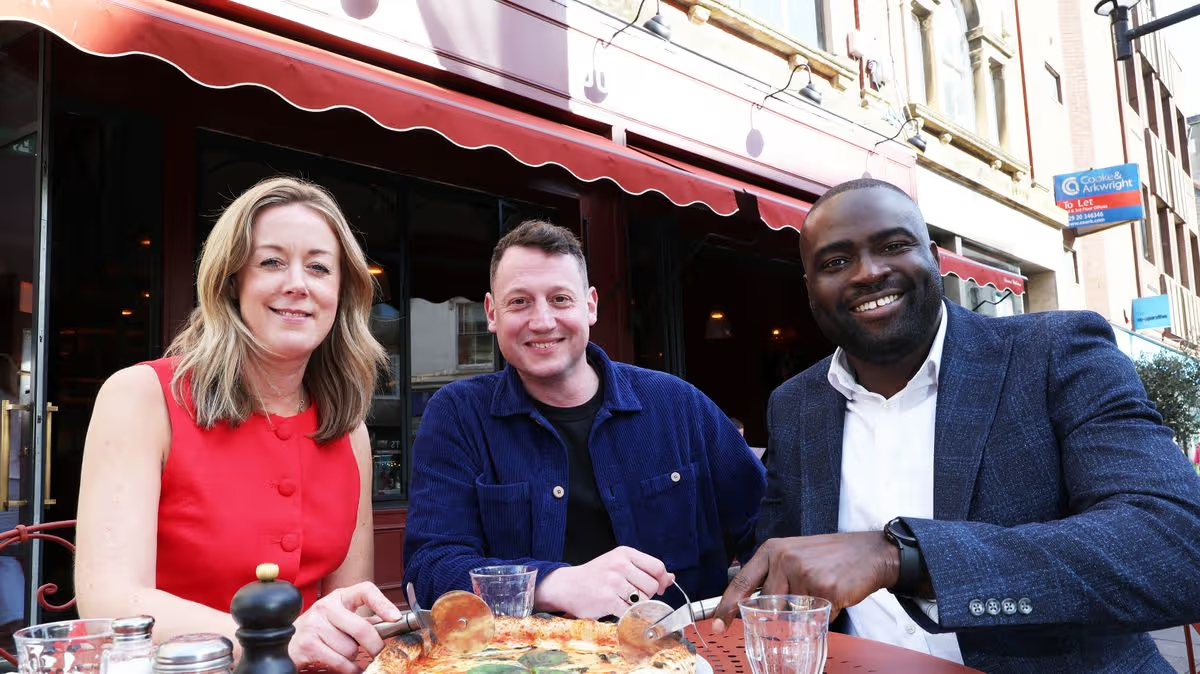
Left to right Bethan Bannister, British Business Bank; Joe Cook, Bosco; John Babalola, FW Capital.
Italian restaurant venture Bosco has opened its first Welsh restaurant with plans for further venues.
Its latest venue, in the centre of Cardiff, has been supported with a £350,000 loan from the £130m Investment Fund for Wales (IFW),The first Bosco opened in Bristol in 2014, with it now operating four restaurants in the south-west of England.
With the successful launch of its Cardiff restaurant the business is looking to add further Welsh locations over the next 18-months.
Funding support for its Cardiff venue, has come from the large loans element of the British Business Bank’s IFW. It is managed by Development Bank of Wales, subsidiary business FW Capital. Bosco has deployed the funding to refit premises on High Street, as well as providing working capital. The loan also unlocked a further seven-figure co-investment from private investors
Joe Cook, managing director at Bosco, said: “The new restaurant at Cardiff has already exceeded our expectations. That part of the city has an impressive buzz and busy atmosphere, and we’ve been welcomed with open arms.
“It’s always been our intention to grow as a business, and this loan allowed us to put our stamp on the new site, and refit it at scale in line with our brand. Thanks to the success of the Cardiff restaurant, we’re know confident in what we can accomplish in Wales, and certainly want to grow further in Wales in the next year-and-a-half.”
Advertisement
John Babalola, investment executive at FW Capital, said: “Bosco have a fantastic brand. Their expansion to one of Cardiff’s most popular areas for bars and restaurants was an obvious next step for them. We’re glad that our support has helped them to get the Cardiff restaurant set up at speed, and it’s good to see that it’s already in high demand.”
Bethan Bannister, senior investment manager, nations and regions investment funds at the British Business Bank, said: “We’re pleased to see the Investment Fund for Wales supporting Bosco, bringing a popular brand to Cardiff. This investment highlights how the fund can provide the right finance at the right time to help ambitious businesses expand into new markets, create jobs and contribute to the vibrancy of our towns and city centres.”
The large debt element of the IFW can makes loans from £100,000 to £2m.
Value stocks led U.S. markets higher in the fourth quarter, with large-cap value broadly outperforming growth counterparts. Artificial intelligence (AI) remained a dominant performance driver. Yet, significant multiple expansion across the AI trade helped to prompt emerging signs of















































You must be logged in to post a comment Login