Connect with us
DAPA Banner
DAPA Coin
DAPA
COIN PAYMENT ASSET
PRIVACY · BLOCKDAG · HOMOMORPHIC ENCRYPTION · RUST
ElGamal Encrypted MINE DAPA
🚫 GENESIS SOLD OUT
DAPAPAY COMING

Business

Ro Khanna asks why Iran gets economic development over American cities

Published

on

Ro Khanna asks why Iran gets economic development over American cities

Rep. Ro Khanna, D-Calif., is backing President Donald Trump’s newly announced agreement with Iran aimed at formally ending the conflict between the U.S. and Tehran, while also raising questions about the economic commitments tied to the deal and whether similar attention is being paid to struggling American communities.

Khanna joined FOX Business’ Maria Bartiromo on “Mornings with Maria” to discuss the agreement, which includes commitments related to Iran’s future economic development and reconstruction and has drawn criticism and praise from lawmakers on both sides of the aisle.

Advertisement
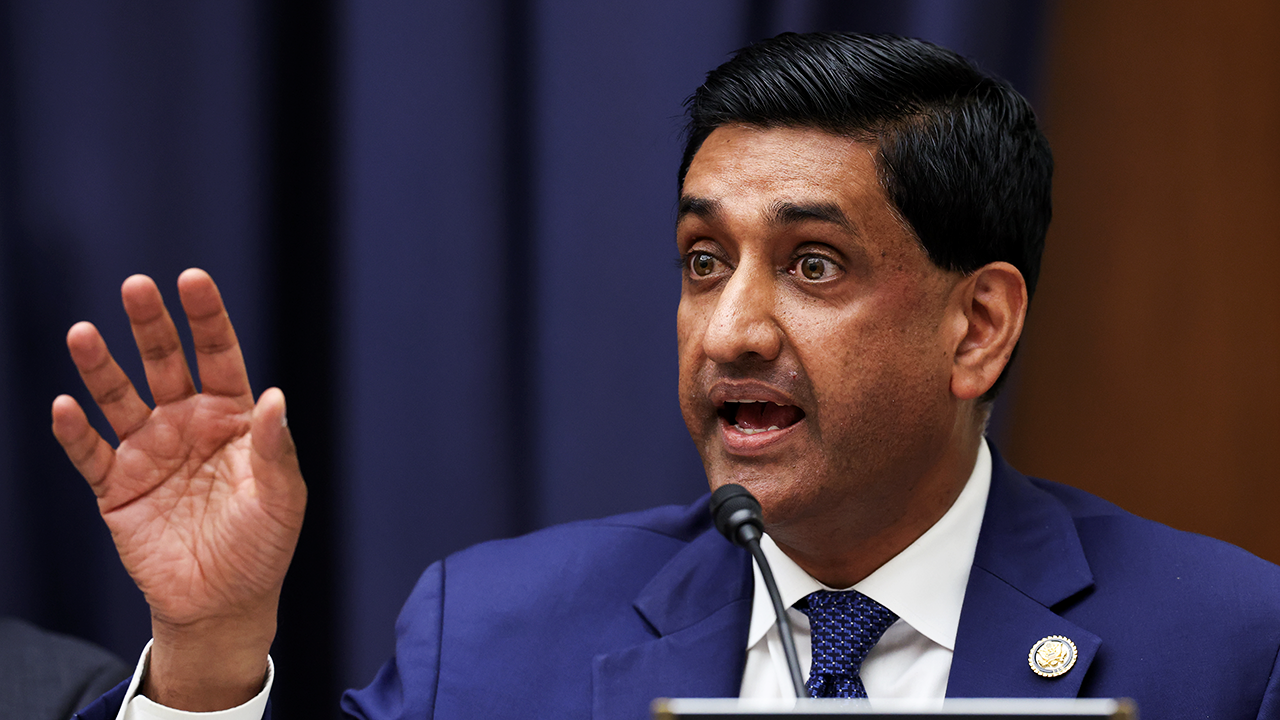
Rep. Ro Khanna (D-CA)

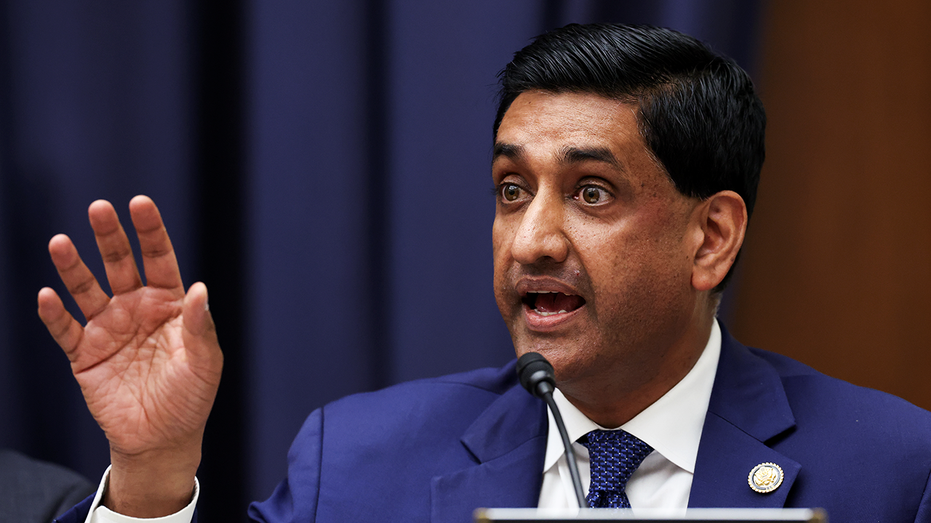
Rep. Ro Khanna (D-CA) speaking during a House Armed Services Committee hearing (Win McNamee / Getty Images)

Khanna said he supports ending the conflict through diplomacy, but argued the agreement comes with tradeoffs that deserve closer scrutiny. He pointed to provisions he said could require raising roughly $300 billion for Iran’s economic development and reconstruction, though he noted the funds would not come directly from U.S. taxpayers.

OIL PRICES FLUCTUATE AS TRUMP’S IRAN DEAL COULD FULLY REOPEN STRAIT OF HORMUZ

“We’re going to be on the hook to raise $300 billion for Iran’s economic development and reconstruction, not U.S. taxpayer money, but raising that money. Why aren’t we focused on the economic development and reconstruction of Middleton, Ohio? Johnstown, Pennsylvania,” Khanna said. 

The comments reflect a broader debate in Washington over how the U.S. balances foreign policy priorities with domestic economic concerns. Communities across parts of the industrial Midwest have spent decades grappling with factory closures, job losses and population decline, making investment in manufacturing and economic development a recurring political issue.

OIL PRICES PLUNGE TO LOWEST LEVELS SINCE EARLY MARCH AFTER TRUMP SIGNS IRAN DEAL

Khanna argued that while Trump has promoted efforts to revive American industry, more should be done to support manufacturing regions.

“What about the heartland and the building up of places that were industrialized? That simply hasn’t happened,” Khanna said.

Advertisement

Despite his concerns, Khanna urged fellow Democrats to support the agreement, saying he believes diplomacy remains preferable to a prolonged conflict.

“Americans are tired of these wars. They don’t want wars in the Middle East. They don’t want to be dragged in,” Khanna said. “They want diplomacy. Diplomacy actually is better than these wars.”

CLICK HERE TO DOWNLOAD THE FOX NEWS APP

Advertisement
Continue Reading
Click to comment

You must be logged in to post a comment Login

Leave a Reply

Business

Cornwall engineering firm opens new manufacturing facility in Penryn

Published

on

Business Live

It will be used to support a range of sectors including marine and mining

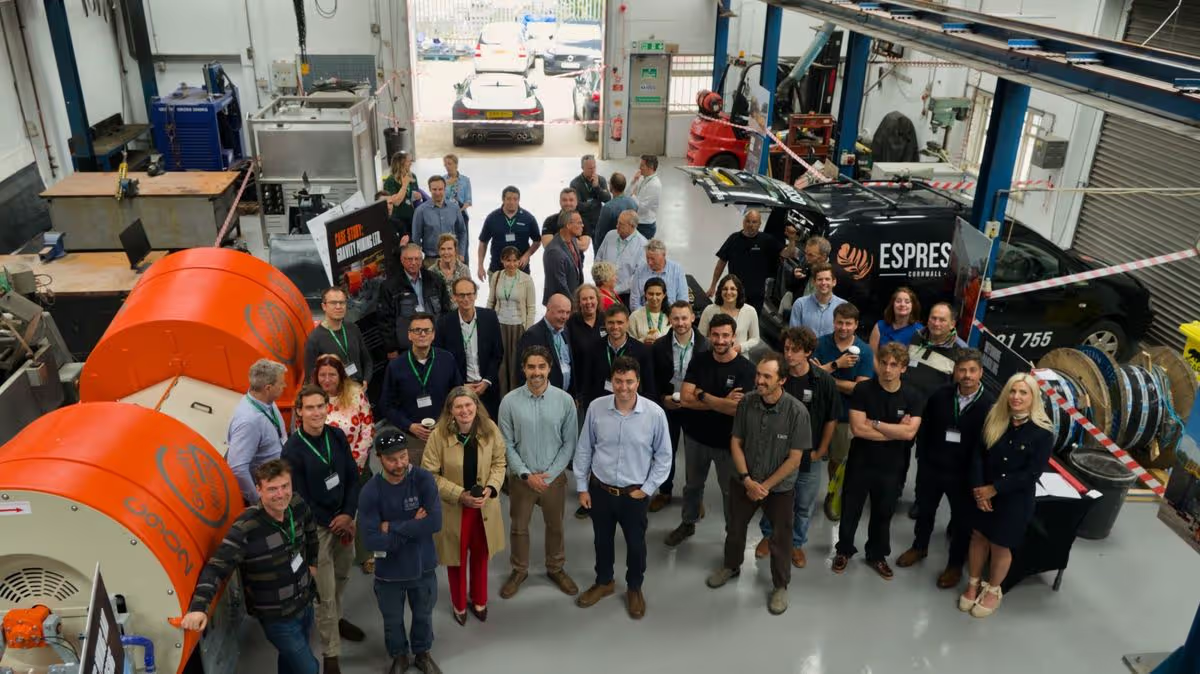
Penryn-based specialist engineering company MintMech has opened a new design and manufacturing facility at Kernick Industrial Estate

Penryn-based specialist engineering company MintMech has opened a new design and manufacturing facility at Kernick Industrial Estate(Image: Handout)

A Cornwall engineering company has opened a new design and manufacturing facility in the county, it has announced.

MintMech said its Automation Manufacturing and Engineering Centre (AMEC) would allow it to deliver “more complex” projects across the marine, offshore and mining sectors.

The facility, which is based at Kernick Industrial Estate, spans around 750 sq metres and combines a 30-seat design engineering office with dedicated workshop and yard space.

Director and co-founder Jack Berryman said: “MintMech turns eight this August and our new headquarters marks a major milestone in the next chapter of what we do. It represents a step up in how we deliver projects. Through AMEC, we now bring analysis, design, build and commissioning together under one organisation.”

Advertisement

MintMech delivers complete mechanical and hydraulic systems and commissions them around the world, supporting projects in the UK and overseas.

Jayne Kirkham, Labour MP for Truro and Falmouth, said it was “fantastic” to see a local company “investing and growing” in Penryn.

“The great thing about this new facility is how it’s supporting two of Cornwall’s most historic industries — the marine sector and mining — in a way that will help us bring wealth back to the region and enable the energy transition,” she said.

Located a 10-minute walk from Falmouth University’s Penryn Campus (formerly Tremough Campus) the site is also hoping to help support the next generation of engineers.

Advertisement

Director and co-founder Laurie Thornton said: “So much talent comes through the doors of Camborne School of Mines and Exeter University, but all too often those people end up working outside the UK.

“The old joke was that if you looked down a mine anywhere in the world, you’d find a Cornishman at the bottom; we want AMEC to provide opportunities for people to build careers closer to home.”

AMEC has received £250,000 from the UK Government through the UK Shared Prosperity Fund.

Production manager Leigh Frazer added: “Cornwall is already a hub for high-value engineering and manufacturing; AMEC is another asset for the county. With this upgraded capacity, Cornwall can support more major energy and infrastructure projects and outsource less work abroad.”

Advertisement
Continue Reading

Business

Dow Rebounds 261 Points as Intel-Apple Chip Deal and Iran Peace Accord Lift Wall Street

Published

on

FTSE 100 Surges 0.8% Today as Oil Eases and Markets

Wall Street bounced back Thursday, with the Dow Jones Industrial Average climbing 261 points as investors shook off the previous session’s hawkish Federal Reserve shock and rallied behind a surprise announcement that Intel and Apple would partner to design and manufacture semiconductors on American soil — a development that sent chip stocks surging across the board and renewed confidence in the domestic technology sector.

The Dow closed at 51,753.90, a gain of 261.35 points, or roughly 0.51%, recovering a portion of the steep losses from Wednesday when the 30-stock index had shed more than 507 points after the Fed’s updated projections rattled markets. The S&P 500 gained 1.15% while the Nasdaq surged 1.5%, as investors focused on the Fed’s latest interest-rate decision and the signing of the interim U.S.-Iran peace deal. The Russell 2000 small-cap index, however, lagged the broader rally, losing 0.72%.

The Intel-Apple Announcement

The single biggest catalyst driving Thursday’s gains was a post on Truth Social by President Donald Trump, who announced that Intel had agreed to partner with Apple to design and build chips in the United States — a development framed by the White House as a victory for domestic manufacturing policy.

Advertisement

Intel’s stock rose 9% in premarket trading after Trump said the semiconductor company had agreed to a deal with Apple to design and build chips in the U.S. “Stupid Presidents took our Economy for granted, and let Taiwan and others steal our Semiconductor Factories,” Trump said in a post on Truth Social. “Apple has agreed to work with Intel to design and build its Chips in America.”

Intel’s stock has seen significant gains recently after struggling for years, having relinquished its dominant market position. The stock has surged 464% in the past 12 months, with the company hitting a market cap of $608.7 billion.

The announcement rippled through the semiconductor sector. Chip stocks surged in premarket trading, led by Intel, which rose 9.8%, while Micron Technology gained 4.8%, Advanced Micro Devices rose 3.9%, and Broadcom advanced 3%. The iShares Semiconductor ETF rose 4.6%.

Iran Peace Deal Adds Tailwind

Advertisement

Adding to the bullish mood was the formalization of a U.S.-Iran interim peace agreement that investors had been tracking anxiously for weeks. The U.S. and Iran signed a 14-point memorandum of understanding to extend the ceasefire, including in Lebanon, and reopen the strategically vital Strait of Hormuz. The agreement calls for both sides to continue talks toward a final deal over the next 60 days and includes a $300 billion reconstruction plan for Iran, as well as the removal of all types of U.S. sanctions against the Islamic Republic.

President Trump defended the agreement against critics on Thursday. “These fools, who think I haven’t been tough enough on Iran, when the stock market just hit a record high and oil prices are ‘tumbling’ down, are either jealous, bad people, or stupid,” Trump said Thursday on Truth Social.

The reopening of the Strait of Hormuz — a critical chokepoint for global oil shipments — pushed crude prices lower and eased inflation fears that had been a central driver of market volatility in recent weeks. Lower oil prices reduce cost pressures throughout the economy and can lessen the urgency for the Federal Reserve to pursue rate hikes.

Wednesday’s Fed Shock Still Echoing

Advertisement

Thursday’s gains came against the backdrop of significant unease generated just 24 hours earlier. Stocks fell on Wednesday, while Treasury yields surged, as investors grew uncertain over the path of monetary policy after several Federal Reserve officials indicated there could be a rate hike this year to tamp down on inflation.

At the conclusion of the Fed’s two-day meeting, the first under new Chairman Kevin Warsh, the central bank left interest rates unchanged at a target range of 3.5% to 3.75%. A number of Fed officials see rates increasing in 2026, according to the summary of economic projections. The fed funds rate’s median estimate for year-end now stands at 3.8%, an increase from 3.4% in the prior projections from March, which suggests that the committee sees at least one rate hike as necessary in 2026. Warsh revealed he abstained from submitting a projection himself, further complicating the outlook.

“The market reaction at this point is largely to the dot plot being much more hawkish,” said Claudia Sahm, chief economist at New Century Advisors. “The wind has changed a lot in terms of the inflation picture.”

The previous dot plot, in March, showed a rate cut expected sometime this year, a projection that the Fed’s latest guidance effectively discarded. The shift caught many equity investors off guard and triggered broad selling across technology and growth stocks.

Advertisement

A Market Navigating Multiple Crosscurrents

Thursday’s rebound illustrated the degree to which Wall Street is simultaneously processing several major macro forces — geopolitics, monetary policy, and a technology sector in the midst of a historic AI-driven reshaping.

Retail sales surged in May despite the war, up 0.9% from April versus expectations of 0.5%, reinforcing impressions of a solid economy. That data, released Wednesday, was interpreted as a double-edged signal: strong consumer spending is positive for corporate earnings but also gives the Fed more justification for tighter monetary policy.

The Roundhill Magnificent Seven ETF, which tracks an equal-weight basket of mega-cap technology stocks including Alphabet, Amazon, Apple, Meta Platforms, Microsoft, Nvidia, and Tesla, gained 0.43% to $64.86 in premarket trading.

Advertisement

The broader semiconductor rally on Thursday also represented a partial recovery from one of the sector’s most painful stretches of the year. Earlier this month, a weaker-than-expected AI chip outlook from Broadcom triggered a chain reaction that dragged down Micron, AMD, and Intel and contributed to a broader tech selloff. The Nasdaq Composite fell 4.18% on June 5 in its worst single-day decline since April 2025, while the S&P 500 snapped a nine-week winning streak.

Looking Ahead

The question now facing investors is whether Thursday’s rebound represents a durable shift in sentiment or a relief rally built on headlines. The Iran peace deal, while officially signed, remains conditional — with both sides committed to 60 days of further negotiations toward a permanent agreement. Any breakdown in those talks could quickly reverse the oil price declines that helped fuel Thursday’s optimism.

On the monetary policy front, the Fed’s hawkish dot plot has now recalibrated market expectations for the remainder of 2026. Traders are now fully pricing in a rate hike from the central bank by the end of the year, even as President Trump continues to call for cuts as Kevin Warsh, his appointee to chair the Fed, takes the helm.

Advertisement

For now, the combination of a landmark domestic chip manufacturing deal, declining oil prices, and a formalized Middle East ceasefire gave markets enough of a foundation to stage a meaningful recovery — and push the Dow back above 51,700 for the first time since the Fed’s warning rippled through trading floors on Wednesday afternoon.

Continue Reading

Business

Oregon Bancorp declares $0.20 quarterly dividend

Published

on


Oregon Bancorp declares $0.20 quarterly dividend

Continue Reading

Business

Array Digital Infrastructure stock hits 52-week low at 38.5 USD

Published

on


Array Digital Infrastructure stock hits 52-week low at 38.5 USD

Continue Reading

Business

Nasdaq Climbs 217 Points as Intel-Apple Chip Deal and Iran Peace Accord Revive Tech Rally

Published

on

The Nasdaq logo is displayed at the Nasdaq Market site in Times Square in New York

The Nasdaq Composite surged Thursday, recovering sharply from the prior session’s Fed-driven selloff as a sweeping combination of geopolitical relief, a landmark domestic semiconductor deal, and renewed confidence in technology stocks pushed the index back toward recent highs — capping the final full trading day before markets close Friday for the Juneteenth federal holiday.

The tech-heavy index closed at 26,238.75, a gain of 217.09 points, or 0.83%, clawing back a meaningful portion of Wednesday’s steep losses. The S&P 500 and Nasdaq Composite climbed 0.8% each, while the Dow Jones Industrial Average rose by 271 points, or 0.5%. The Russell 2000, which tracks smaller companies, continued to lag, losing ground on the day and underscoring the extent to which Thursday’s recovery was concentrated in the large-cap technology names that dominate the Nasdaq.

Intel and Apple: A Deal That Moved Markets

The single most consequential catalyst driving Thursday’s gains was a morning announcement from President Donald Trump, who declared on Truth Social that Intel had reached an agreement with Apple to design and build semiconductors in the United States — a development that electrified the chip sector and injected fresh momentum into the broader tech rally.

Advertisement

Intel surged 9% in the premarket after President Donald Trump said the company will partner with Apple on designing chips in the U.S. The gains carried into the regular session, making Intel the leading name among chip stocks on the day. Fellow semiconductor names such as Nvidia and Micron Technology were also higher by more than 1% and more than 5%, respectively. The iShares Semiconductor ETF jumped more than 4%.

“Stupid Presidents took our Economy for granted, and let Taiwan and others steal our Semiconductor Factories,” Trump said in a post on Truth Social. “Apple has agreed to work with Intel to design and build its Chips in America.”

The announcement landed on a market primed for positive news after Wednesday’s bruising session. Intel’s stock has surged 464% in the past 12 months, with the company hitting a market cap of $608.7 billion, a remarkable reversal for a company that spent years ceding ground to rivals. The Intel-Apple partnership represents a potentially transformative realignment of the domestic semiconductor supply chain — one with implications that reach well beyond the two companies involved.

Iran Peace Deal Seals the Recovery

Advertisement

Adding significant fuel to the Thursday rebound was the formal signing of a U.S.-Iran interim peace agreement — a development that investors had been tracking for more than a week as a potential turning point for global oil markets and, by extension, inflation expectations.

President Trump signed a copy of the U.S.-Iran agreement at the Palace of Versailles in France, according to CNN. “It’s signed,” Trump told reporters after a dinner hosted by French President Emmanuel Macron.

The U.S. and Iran signed a 14-point memorandum of understanding to extend the ceasefire, including in Lebanon, and reopen the strategically vital Strait of Hormuz. The agreement calls for both sides to continue talks toward a final deal over the next 60 days and includes a $300 billion reconstruction plan for Iran, as well as the removal of all types of U.S. sanctions against the Islamic Republic.

The reopening of the Strait of Hormuz — through which a large share of the world’s seaborne oil passes — pushed crude prices lower and eased the inflationary pressure that had been a persistent headwind for tech and growth stocks throughout the spring. Falling oil prices pushed shares of cruise operators higher, with Carnival, Royal Caribbean, and Norwegian Cruise Line all advancing roughly 2%.

Advertisement

Trump, who has faced criticism over the terms of the deal, pushed back sharply on Thursday. “These fools, who think I haven’t been tough enough on Iran, when the stock market just hit a record high and oil prices are ‘tumbling’ down, are either jealous, bad people, or stupid,” Trump said on Truth Social.

Wednesday’s Fed Shock Still in the Rearview

Thursday’s gains came just one session after the Federal Reserve’s hawkish update shocked financial markets. The S&P 500 shed 1.21% on Wednesday, with losses steepening during and after Kevin Warsh’s inaugural press conference as chairman of the Federal Reserve. That marked the worst performance for the index on the first “Fed day” under a new chair since 1994, according to data from Bespoke Investment Group.

Policymakers’ “dot plot” revealed that nine out of 18 Fed officials now see interest rates increasing in 2026, a dramatic shift from the rate-cut expectations that had prevailed just months earlier. The new median projection for the federal funds rate at year-end now stands higher than it did in March, signaling that the committee views at least one additional rate hike as potentially necessary to tame inflation.

Advertisement

Warsh, who took over the Fed’s top role last month after being nominated by President Trump, added to the uncertainty by abstaining from submitting his own projection — a move that complicated the market’s ability to read the central bank’s direction. “The wind has changed a lot in terms of the inflation picture,” said Claudia Sahm, chief economist at New Century Advisors, describing the market’s reaction to the dot plot.

Notable Movers: Accenture Slumps, SpaceX Steadies

Not every name on the Nasdaq participated in Thursday’s recovery. Accenture tumbled 13.4% after it agreed to acquire asset intelligence company runZero and device and software supply chain security company Netrise, as well as a majority stake in cybersecurity company Dragos. The combined deal is valued at approximately $4.175 billion. The sharp selloff reflected investor skepticism about the timing and scale of the acquisitions.

SpaceX, which has been one of the most closely watched names on the Nasdaq since its historic debut on June 12, continued to attract attention. SpaceX went public on June 12, 2026, in the largest IPO in Nasdaq history. “It’s clear that SpaceX is not just a rocket company anymore, but an AI player, putting it in direct competition with Anthropic and OpenAI,” said Lukman Otunuga, head of market research at FXTM. “This makes SpaceX’s performance more critical for future listings this year.”

Advertisement

Separately, Sleep Number Corporation confirmed it will be delisted from Nasdaq next week after filing for Chapter 11 bankruptcy protection, a reminder that beneath the headline rally, individual company risk remains a live factor across the index.

A Short Week Ends on Stronger Footing

With markets set to close Friday for Juneteenth, Thursday’s session marked the effective end of what has been one of the most turbulent and eventful trading weeks of 2026. In the span of five sessions, investors navigated the largest IPO in Nasdaq history, a hawkish Fed pivot, a formal Middle East peace deal, and a headline-driven semiconductor rally — all against a backdrop of elevated inflation and growing rate-hike expectations.

UBS highlighted that geopolitical developments such as the U.S.-Iran agreement could diversify market drivers beyond tech and AI — potentially broadening a rally that has so far remained heavily concentrated in a small group of AI-adjacent semiconductor and software names. Whether that broadening materializes in the weeks ahead will be among the key questions as investors return from the holiday weekend.

Advertisement
Continue Reading

Business

The Best Windows Laptop of 2026 Is Gunning Hard for Apple’s Crown

Published

on

Microsoft Windows 11

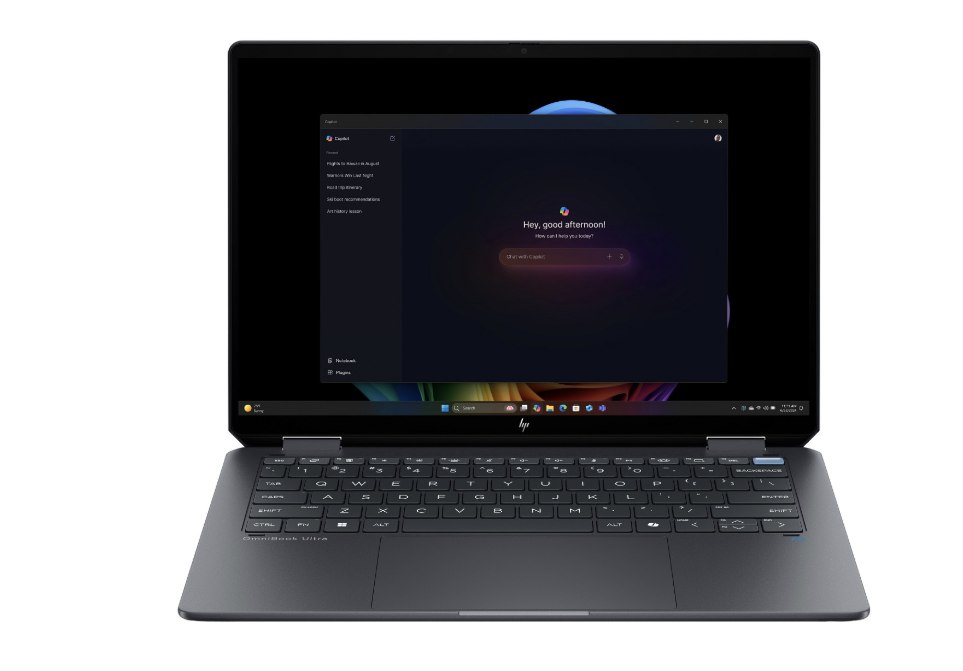
HP’s flagship laptop for 2026 has arrived, and it is making a strong case that the era of Apple’s unchallenged dominance in the premium ultraportable market may finally be drawing to a close.

The HP OmniBook Ultra 14, powered by Qualcomm’s latest Snapdragon X2 Elite processor, is a machine that checks nearly every box that discerning professionals and demanding consumers have been waiting for in a Windows laptop: a razor-thin chassis forged from aluminum, a stunning 3K OLED touchscreen with a 120Hz refresh rate, extraordinary battery endurance, and the raw computing muscle to handle 4K video editing and light gaming without breaking a sweat. Put plainly, it is the best Windows laptop HP has ever built — and one of the most competitive devices the Windows ecosystem has ever fielded against Apple’s MacBook lineup.

Design That Turns Heads

The first thing anyone will notice about the OmniBook Ultra 14 is its physical presence. HP describes the OmniBook Ultra 14 as the “world’s most durably slim 14-inch consumer notebook,” which is a somewhat convoluted way of saying the system remains quite portable — just 0.42 inches thick — while still passing 20 different military standard tests for things like shock resistance, drops and extreme temperatures. The whole machine is crafted from forge-stamped anodized aluminum, a manufacturing technique HP says gives the chassis added strength and bend resistance compared to the unibody approach used in Apple’s MacBooks.

Advertisement

HP says the new laptop is 5% thinner than the MacBook Air while weighing just 2.81 pounds — a figure that puts it in direct physical competition with Apple’s lightest portable. The Snapdragon variants come in a refined stone blue colorway with brushed metal sides, complemented by an anti-fingerprint finish that keeps the machine looking clean through extended use.

The design is drop dead gorgeous, featuring razor-thin edges, a new keyboard layout that is exceptional to type on, and a best-in-class 14-inch OLED display that makes text and images crisp and clear.

Display: A New Benchmark for Windows

It is a 14-inch 16:10 OLED panel with a 120Hz refresh rate and 3K resolution — a beautiful and bright panel with inky deep blacks, high contrast, 100% DCI-P3 coverage, and sharp text and images. It is also a touchscreen, which is a feature no current MacBook offers.

Advertisement

It can reach a peak brightness of around 500 nits in standard mode, and in HDR mode HP rates the display for 1,100 nits. That HDR performance is genuinely impressive for a machine this thin, and it places the OmniBook Ultra’s display firmly in a class occupied by very few competitors. A second display option — a Full HD+ OLED panel with a 60Hz refresh rate — is also available for buyers on tighter budgets.

Performance: Snapdragon X2 Elite Delivers

Under the hood, the top-tier OmniBook Ultra 14 runs on Qualcomm’s Snapdragon X2 Elite, the most powerful version of the company’s latest architecture. The Snapdragon X2 Elite features 18 cores and hits boost speeds up to 5.0 GHz, capable of chewing through multi-threaded tasks with ease.

In testing, editing 4K video on the OmniBook Ultra presented no problems, and light gaming at 1440p produced smooth framerates. Cinebench 2026 tests resulted in 4,646 points in multi-core and 632 in single-core.

Advertisement

The Snapdragon X2 Elite chip has been shown to beat Apple’s M5 in three major benchmarks, and it represents a massive upgrade over the previous-generation Snapdragon X1 Elite in terms of efficiency and performance.

For AI workloads specifically, HP secured an exclusive arrangement with Qualcomm. Thanks to an exclusive partnership with Qualcomm, anyone planning on running AI-based apps on the Ultra 14 may want to go with the Snapdragon variant, as it comes with a slightly more powerful NPU that maxes out at 85 TOPS — trillions of operations per second — rather than the 80 TOPS available from other OEMs. That figure outpaces the NPU performance of Intel’s Panther Lake chips and AMD’s competing Ryzen AI silicon, making the OmniBook Ultra the most capable AI laptop in HP’s lineup and one of the strongest in the entire Windows ecosystem.

To help support strong sustained performance, the Ultra 14 is also the first Omnibook to feature a built-in vapor chamber — a thermal management system more commonly associated with gaming laptops, which helps maintain performance during extended demanding tasks without throttling.

Battery Life: All Day and Then Some

Advertisement

Battery life is one of the most significant areas where Snapdragon-powered machines have historically outpaced their Intel counterparts, and the OmniBook Ultra 14 upholds that tradition decisively. HP claims up to 44 hours of battery life — a figure that will inevitably vary with real-world usage, but even at a fraction of that claim, the machine comfortably delivers a full working day and then some. The device is backed by a 70 WHr battery, which is a meaningful capacity for a machine this thin and light.

Connectivity and Ports

The Qualcomm options use USB4 ports, while the Intel models use Thunderbolt 4. Both feature Wi-Fi 7 and the same general port layout. Some reviewers have noted the port selection is not the most generous for a machine at this price, and the absence of an SD card reader may frustrate photographers and content creators who rely on one.

The designs continue HP’s use of a lattice-free keyboard on high-end models and large trackpads. The keyboard, in particular, has drawn consistent praise across reviews for its feel, travel, and typing comfort — an area where Windows laptops have historically struggled to match Apple’s standards.

Advertisement

Price and Availability

The HP OmniBook Ultra 14 is available from HP’s website and third-party retailers, with prices starting at $1,899 for the base model with a Snapdragon X Plus and 16GB RAM. Upgrading to a Snapdragon X2 Elite with 32GB RAM costs $2,399 from HP. A fully maxed-out configuration with 64GB of RAM and 2TB of storage climbs considerably higher.

For context, that starting price sits closer to the MacBook Pro M5 at $1,499 than the MacBook Air M4 — meaning this machine will need to deliver strongly on performance and battery life to justify the premium. Based on all available review evidence, it does precisely that.

The Verdict

Advertisement

The HP OmniBook Ultra 14 is a genuine milestone for the Windows laptop market. It pairs a MacBook-rivaling design with processing power that can match or beat Apple’s M5 in benchmark testing, a touchscreen OLED display Apple has not yet matched, and battery life that keeps pace with the best ultraportables on the market. “Overall, I think the HP OmniBook Ultra is my new favorite Windows 11 PC in 2026 so far. It’s beautiful, powerful, energy efficient, and features most bells and whistles that you might want on a flagship Windows laptop in the current year,” wrote Windows Central’s senior editor in a full review.

The OmniBook Ultra 14 will not convert every MacBook loyalist — Apple’s ecosystem integration, software optimization, and brand cachet remain formidable advantages. But for anyone in the market for a premium Windows machine, or anyone who has been waiting for a compelling reason to reconsider their next laptop purchase, HP has built something worth serious consideration.

Continue Reading

Business

Robinhood App Down? App Goes Down for Some Users During a High-Stakes Market Rally, Sparking User Outrage

Published

on

Robinhood logo.

Robinhood, the popular commission-free trading platform with tens of millions of users across the United States, experienced a service disruption Thursday morning that left some investors unable to access their accounts, execute trades, or monitor positions — all during one of the most consequential trading sessions of the year, as tech stocks surged and chip stocks rocketed on the back of a landmark Intel-Apple semiconductor partnership announcement and the signing of a formal U.S.-Iran peace agreement.

Robinhood was having problems earlier Thursday and recovered — the incident lasted approximately 27 minutes, according to outage tracking data. Reports of users being locked out began circulating on social media around 9:48 a.m. Eastern Time, with the hashtags #Robinhood and #RobinhoodDown spreading rapidly on X as frustrated retail traders found themselves unable to act while the market moved sharply in their favor.

The timing could not have been more damaging. The S&P 500 and Nasdaq Composite each climbed 0.8%, while the Dow Jones Industrial Average rose by 271 points, as Intel led chip stocks higher following President Donald Trump’s announcement that the company had agreed to partner with Apple on designing chips in the U.S. For Robinhood’s user base — largely composed of retail investors, younger traders, and active options participants — missing even minutes of that window carried real financial consequences.

A Critical Moment to Be Locked Out

Advertisement

The disruption struck at the worst possible moment for traders who had spent the prior 24 hours watching the market plunge on hawkish Federal Reserve signals, only to see a powerful rebound materialize Thursday morning driven by geopolitical relief and a blockbuster domestic tech deal.

Intel surged 9% in the premarket after Trump said the company will partner with Apple on designing chips in the U.S., while fellow semiconductor names such as Nvidia and Micron Technology were also higher by more than 1% and more than 5%, respectively. The iShares Semiconductor ETF jumped more than 4%.

For traders who had been waiting to buy into the chip rally, or who held options positions with time-sensitive strike prices, the inability to log in and execute orders represented a direct financial harm — not merely an inconvenience. Social media posts during the outage window reflected a high degree of alarm. Users flooded social media with messages including “Why is Robinhood down today and when will the system be fixed?” and “IS ANYONES ROBINHOOD APP NOT WORKING PROPERLY ????”

A Recurring Pattern Under Pressure

Advertisement

Thursday’s disruption, while brief, adds to a documented pattern of Robinhood experiencing service issues during periods of heightened market activity — precisely the moments when platform reliability matters most. According to outage tracking data, Robinhood’s most recent logged incident before Thursday was on June 12, 2026, when an app disruption lasting 27 minutes was recorded. Prior to that, service disruptions were logged on October 20, 2025, lasting 1 hour and 19 minutes, and on October 6, 2025, lasting 27 minutes.

The company’s most infamous outage remains a March 2020 incident that has become a cautionary tale in fintech circles. Robinhood saw a system-wide outage all day on a Monday amid a rebound from the prior week’s selloff, with the Dow Jones Industrial Average closing 1,293.96 points higher that day — one of its biggest gains in years. The company’s iOS, Android, and web apps were all down from Monday morning until the close of trading. Users called Robinhood’s handling of that outage “absurd,” criticizing its “lack of transparency” and “canned responses.”

The Broader Stakes for Robinhood

The irony of Thursday’s outage is sharpened by the fact that Robinhood itself has been on a strong run. The stock gained 6% in recent days on strong interest in its prediction markets tied to the 2026 FIFA World Cup, multiple bullish analyst actions from Deutsche Bank, Cantor Fitzgerald, and Goldman Sachs — all of which raised their price targets on the stock.

Advertisement

The rally was also supported by strong May operating data, which showed platform assets climbed to $377 billion and equity trading volumes rose 75%. An insider purchase of $20 million worth of shares in early June further reinforced market confidence in the company’s trajectory. Robinhood also recently received approval to act as an underwriter for initial public offerings, expanding its capabilities well beyond its origins as a commission-free trading app.

That context makes the timing of Thursday’s disruption particularly awkward. A platform boasting $377 billion in assets under management, positioning itself as a serious institutional-grade brokerage capable of underwriting IPOs, found itself unable to serve some users during one of the biggest single-session rallies in chip stocks in months.

The Retail Investor Problem

Robinhood’s outages, whenever they occur, raise a pointed and recurring question about the obligations of retail-facing trading platforms to their users — particularly during volatile markets when milliseconds can determine whether a trade is profitable or disastrous.

Advertisement

Robinhood experienced a significant outage affecting user access and trading capabilities, causing frustration among investors during market hours. The outage adds to a series of recent technical challenges for financial technology providers, reinforcing the need for continuous investment in system reliability and customer communication.

The Financial Industry Regulatory Authority, known as FINRA, has previously sanctioned Robinhood over trading-related compliance failures. A history of outages during peak trading windows has drawn repeated scrutiny from regulators and consumer advocates who argue that retail investors deserve the same quality of execution reliability that institutional traders receive from their brokerages.

Robinhood has not issued a formal public statement about the Thursday morning disruption. The company’s status page, which retired its traditional format, directs users to its @AskRobinhood account on X for real-time updates on system performance. The official status page listed no incidents reported for the day.

Markets Close Friday for Juneteenth

Advertisement

Thursday’s session was the final full trading day of the week, with U.S. markets set to be closed on Friday, June 19, in observance of Juneteenth, a federal holiday. That closure means traders who were locked out of Thursday morning’s rally have no immediate recourse to recapture positions before a three-day weekend, adding to the financial sting of the disruption.

For Robinhood, the episode is another reminder that as the platform scales in ambition — IPO underwriting, prediction markets, institutional services — the reliability of its core trading infrastructure remains the foundation on which all of those ambitions rest. When that foundation cracks, even briefly, the consequences land hardest on the retail investors the company built its brand on serving.

Continue Reading

Business

SpaceX bankers prepare for bond sale of at least $20 billion

Published

on

SpaceX bankers prepare for bond sale of at least $20 billion
Bankers for Elon Musk’s SpaceX are preparing to hold calls with investors as soon as next week to discuss a potential bond offering on the heels of the company’s record IPO, according to people with knowledge of the matter.

The bond is expected to be at least $20 billion, and the calls may kick off on Monday, said the people, who asked not to be identified because they’re not authorized to speak publicly. Plans and timing may change, they said.

Musk’s rocket, satellite and AI conglomerate is planning to issue investment-grade US dollar bonds for the first time. The bond proceeds would refinance a temporary $20 billion bridge loan that matures in September 2027.

The bridge loan makes up the bulk of SpaceX’s $29.1 billion of long-term debt as of March 31, the company said in its IPO filing with the Securities and Exchange Commission.

Advertisement

Also Read | SpaceX’s historic IPO rally hits first speed bump – What’s next for investors?

Bank of America Corp., Citigroup Inc., JPMorgan Chase & Co., Goldman Sachs Group Inc. and Morgan Stanley provided the bridge financing and are expected to run the deal, the people said. SpaceX and Bank of America didn’t respond to requests for comment. Citigroup, Goldman Sachs, JPMorgan and Morgan Stanley declined to comment.
SpaceX’s historic initial public offering turned the start-up into one of the world’s most valuable public companies and turned its founder into the world’s first trillionaire. The company’s embrace of AI with the acquisition of Musk’s xAI in February made the listing somewhat of a referendum on the IPO prospects of competitors Anthropic PBC and OpenAI, both of which plan to go public as soon as this year.
The company has told investors it has lined up investment-grade ratings from three major bond graders, paving the way for cheaper borrowing as it continues to raise financing after its IPO.

Musk has utilized debt markets extensively to buy or grow his businesses, securing billions in bank commitments and structuring complex financings. But it hasn’t all been smooth sailing. His 2022 buyout of Twitter loaded the company with roughly $12.5 billion of borrowings, creating a notorious hung debt quagmire for Wall Street banks who were initially unable to sell it to investors. They ultimately succeeded in doing so last year.

“The company will likely want to establish a track record in debt markets soon,” said CreditSight’s analyst Matt Woodruff ahead of the potential bond sale. “They will need money down the road for capital expenditure so from that perspective, the sooner the better,” he said.

In its filing, SpaceX said capex will increase “substantially” in the future and that it planned to use “a range of debt and equity financing solutions” to fund future investments.

Advertisement

SpaceX had a net loss of $4.28 billion on revenue of $4.69 billion for the first quarter, compared with a net loss of $528 million on revenue of about $4 billion a year earlier.

But it has some key contracts that will generate future revenue, including a deal with Alphabet Inc.’s Google, which has agreed to pay SpaceX $30 billion for computing power under a cloud services deal that runs through mid-2029. It also has a roughly $45 billion deal with Anthropic PBC over about the next three years.

Continue Reading

Business

GameStop CEO Ryan Cohen’s $35 Billion Pay Package Faces Lawsuit While Hostile eBay Bid Stalls

Published

on

Shares of GameStop were volatile after the company reported mixed earnings

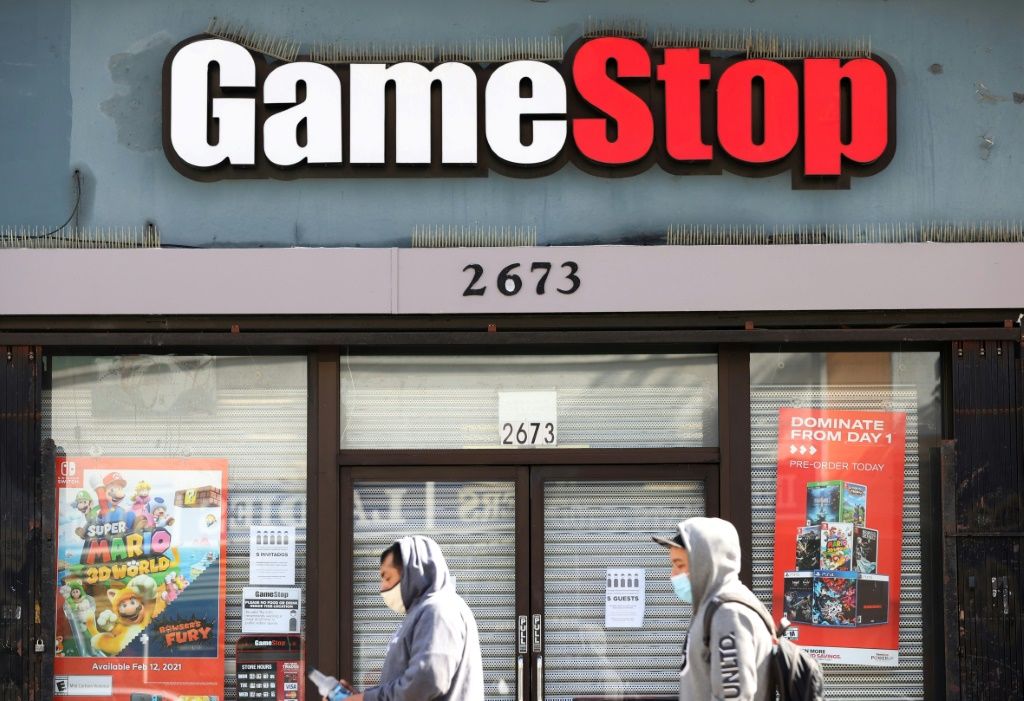
GameStop Corp. finds itself at one of the most turbulent crossroads in its already chaotic modern history. The company that became the defining symbol of the retail investor revolution is simultaneously grappling with a shareholder lawsuit seeking to block what would be one of the largest executive compensation packages ever proposed, a stalled hostile takeover attempt against a company five times its own size, and a stock price that continues to trade modestly while analysts and investors try to price in an extraordinarily uncertain future.

Shares of GameStop traded at $21.54 on Thursday morning, up a modest 0.12%, as the company’s many moving parts continued to generate headlines without delivering the transformational momentum Chief Executive Ryan Cohen has spent years promising.

The Lawsuit: Shareholders Push Back on a Historic Pay Package

A GameStop investor has filed a lawsuit seeking to block a vote on Cohen’s proposed $35 billion compensation package, arguing that investors haven’t been given enough information to understand exactly what they’re being asked to approve.

Advertisement

According to Bloomberg, the lawsuit centers on disclosure concerns. The shareholder claims key details about the structure, valuation, and long-term consequences of the package were not adequately explained in materials distributed ahead of the vote. The suit seeks to halt or postpone the shareholder meeting until additional information is provided.

A $35 billion compensation package would rank Cohen’s potential payout among the largest ever put before shareholders. Corporate governance experts have long argued that mega-pay plans require extensive disclosures so investors can determine whether executive rewards are truly tied to company performance.

The compensation structure itself is tied to performance milestones. Under his January compensation package, Cohen stands to receive options on more than 171 million GameStop shares if he manages to push the company’s market capitalization to $100 billion — a tenfold increase from current levels. That target is staggering given GameStop’s current trajectory, and the lawsuit reflects growing shareholder skepticism that the plan’s terms have been adequately disclosed or justified.

The eBay Gambit: Bold, Rejected, and Still Unresolved

Advertisement

The compensation lawsuit arrives in the direct wake of Cohen’s most audacious and publicly humiliating strategic setback: a $56 billion hostile takeover bid for eBay that the e-commerce giant’s board rejected swiftly and sharply.

In a letter sent in May, GameStop proposed to acquire all common stock of eBay at $125.00 per share, comprising 50% cash and 50% GameStop common stock, representing a 46% premium to eBay’s unaffected closing price and a 27% premium to the 30-day volume-weighted average price. The aggregate undiluted equity value was approximately $55.5 billion.

On May 12, 2026, eBay officially rejected Ryan Cohen’s aggressive takeover attempt. In a sharply worded letter to Cohen, eBay Chairman Paul Pressler called the unsolicited offer “neither credible nor attractive.”

Cohen did not retreat quietly. After the board rejected the proposal, Cohen launched a hostile bid, taking the offer directly to eBay shareholders. In a television interview, Cohen addressed the financing skepticism directly, telling interviewers the cash consideration would be funded from GameStop’s balance sheet and a highly confident letter from TD Securities for up to $20 billion in third-party acquisition financing.

Advertisement

The strategic logic Cohen has advanced is a vision of GameStop as an e-commerce and collectibles powerhouse. GameStop projected it would deliver $2 billion of annualized cost reductions within twelve months of closing, including approximately $1.2 billion from sales and marketing, $300 million from product development, and $500 million from general and administrative expenses. The company also argued its approximately 1,600 U.S. locations would give eBay a national network for authentication, intake, fulfillment, and live commerce.

Record Earnings, Massive Cash, and a Pivot to Collectibles

What makes GameStop’s position unusual is that beneath the drama of hostile bids and compensation fights sits a company that has, by conventional financial metrics, performed remarkably well in recent quarters.

GameStop reported first-quarter 2026 results showing net sales rose 14% year-over-year to $835.3 million, driven by collectibles. Net income reached a record $389.6 million, and operating income was $143.3 million, the highest first-quarter level on record. Liquidity totaled $9.7 billion, including $8.4 billion in cash, cash equivalents and marketable securities.

Advertisement

On June 2, 2026, the board approved a new $2.0 billion share repurchase authorization through June 2, 2029, replacing the 2019 program. That buyback, funded from the company’s enormous cash reserves, represents a direct return of capital to shareholders — a conventional move that stands in stark contrast to the unconventional eBay gambit playing out simultaneously.

GameStop launched Power Packs, a digital trading card platform, in April 2026, with packs starting at $25 and ranging up to $2,500. Cards are PSA-graded, stored in the PSA Vault, and can be sold back instantly, shipped home, or added to a collection. Launch categories include Pokémon, Football, Basketball, and Baseball. The launch signals that Cohen’s collectibles strategy is not merely rhetoric — it is being built out with specific product lines that give GameStop a credible presence in one of retail’s fastest-growing categories.

Bitcoin, Warrants, and a Company Still Reinventing Itself

GameStop’s balance sheet transformation extends to cryptocurrency. GameStop renewed an options deal that ties up nearly all its Bitcoin, with a covered-call strategy attached to its holdings. The Bitcoin position, which had been valued at hundreds of millions of dollars in prior quarters, represents yet another dimension of the company’s ongoing experiment in nontraditional asset deployment.

Advertisement

The company also distributed warrants to shareholders in October 2025. Eligible holders of record as of October 3, 2025 received one warrant per 10 shares. Each warrant permits the purchase of one share at a $32.00 exercise price and is exercisable through October 30, 2026.

What Comes Next

The intersection of the $35 billion compensation lawsuit, the ongoing eBay hostile campaign, record earnings, a $2 billion buyback, and a collectibles-driven transformation makes GameStop one of the most complex and contested investment narratives on Wall Street.

GameStop’s $8.4 billion cash position covers most of its market cap, offering significant downside protection and acquisition optionality, according to analysts, who note that the company’s core fundamentals have improved dramatically even as its strategic ambitions remain deeply polarizing.

Advertisement

For retail investors who drove GameStop’s original short squeeze in 2021, the company’s current chapter offers something simultaneously familiar and strange: a CEO willing to swing for the fences, a market that isn’t sure what to make of it, and a stock that is, for now, waiting for clarity.

Continue Reading

Business

Czechia and South Africa Face Elimination in World Cup Group A Clash at Mercedes-Benz Stadium

Published

on

Alphonso Davies

ATLANTA — With World Cup elimination looming over Mercedes-Benz Stadium, Czechia and South Africa collided Thursday in what amounts to a must-win Group A fixture for both nations, their respective opening-round defeats having stripped away any margin for error just one week into the 2026 FIFA World Cup.

Seven days into the 2026 FIFA World Cup and both Czechia and South Africa already find themselves staring down elimination. Neither side picked up a single point on Matchday 1, and with Mexico moving clear at the top of Group A and South Korea sitting second after their 2-1 victory over the Czechs, Thursday’s clash at Mercedes-Benz Stadium in Atlanta has become, bluntly, a knockout match in the group stage.

Given the format of the tournament, where eight of 12 teams that finish third will also qualify for the knockouts, this game offers hope for both teams. But the mathematics are unforgiving. Whoever loses here faces near-certain elimination before the final matchday even arrives.

How Both Teams Got Here

Advertisement

The circumstances surrounding each team’s opening defeat make their meeting all the more charged. For Czechia, the loss to South Korea on June 11 was one of bitter self-destruction after a promising start. The Czech Republic went in front in the 59th minute with a header from captain Ladislav Krejčí to the right of the net from six yards out after a long throw-in from Vladimir Coufal. That lead lasted barely eight minutes. It was 1-1 in the 67th minute when Hwang In-beom received the ball from Lee Kang-in before turning back onto his right foot and scooping the ball over the advancing Czech goalkeeper Matěj Kovář into the right of the net. In the 80th minute, Hwang In-beom crossed low from the right and Oh Hyeon-gyu finished from six yards out to put South Korea 2-1 in front.

A Tomas Soucek effort was additionally ruled out for offside, and goalkeeper Kim Seung-gyu produced a stunning late save to deny Michal Sadilek from point-blank range. Czechia had their chances. They squandered them.

South Africa’s story was even more calamitous. Mexico went in front in the 9th minute when Julián Quiñones scored with a low right-footed finish through the legs of South African goalkeeper Ronwen Williams from just inside the penalty area after Sphephelo Sithole was caught in possession on the edge of the penalty area by Erik Lira. Four minutes into the second half, South Africa’s Sphephelo Sithole was sent off after fouling Mexico’s Brian Gutiérrez when he was going through on goal.

The chaos did not end there. In the 73rd minute, South African substitute Themba Zwane was sent off for a slap in the face of Mexican forward Roberto Alvarado. The Bafana Bafana were reduced to nine men and ultimately fell 2-0, their performance so devoid of attacking intent that it generated a national debate back home about their tactics and leadership.

Advertisement

The Suspensions That Could Define the Match

South Africa’s disciplinary catastrophe against Mexico carries direct consequences for Thursday’s contest. Czechia’s chances are boosted by South Africa being without Yaya Sithole and Themba Zwane, who were both shown red cards as they lost 2-0 to co-hosts Mexico in the opening game of the tournament.

The mood in the Bafana Bafana camp ahead of this fixture is uncomfortable, and that is putting it mildly. The 2-0 defeat to Mexico was damaging enough as a result. The manner of it — three red cards across the match, a formation that surprised even the team’s closest observers, and a performance that left the country’s most respected football voices shaking their heads — has created a pressure cooker heading into Atlanta.

Coach Hugo Broos, who faced heavy criticism for deploying a defensive 5-4-1 formation against Mexico that yielded next to nothing offensively, is expected to make significant changes. Thalente Mbatha could replace Sithole in the center of the field, while Broos could turn to a 4-3-3 system, with Oswin Appollis and Relebohile Mofokeng coming into the XI on the wings.

Advertisement

The Tactical Battle

Czechia enter the match as the higher-ranked side and, statistically, the unluckier team from Matchday 1. Czechia’s qualification story, built on nerve, late drama, and belief, suggests a group capable of responding positively under pressure. The 74-year-old Koubek, who became the oldest manager at a World Cup upon his appointment in December 2025, guided this side through two play-off shoot-outs to reach their first finals since 2006, surviving against Republic of Ireland and then Denmark in an extraordinary penalty sequence that saw goalkeeper Matej Kovar save a decisive spot-kick.

For 66 minutes in their World Cup opener against South Korea, Czechia’s strategy was perfect, as Krejčí scored the opening goal from Coufal’s throw-in. The limitations of this style of play came to the fore in the next 14 minutes as South Korea scored twice as Czechia faded.

Patrik Schick will be his side’s main attacking threat in the final third, the Bayer Leverkusen striker having scored six goals at his previous two major tournaments. Tomáš Souček, who scored an offside goal against South Korea, will also provide offensive support from deliveries.

Advertisement

A Historic Managerial Footnote

Beyond the stakes of the match itself, Thursday’s fixture carries an unusual historical footnote. In Czechia’s Miroslav Koubek, aged 74 years and 290 days, and South Africa’s Hugo Broos, aged 74 years and 69 days, this will be the first match in World Cup history to see both head coaches aged over 70. Two veterans of European football, separated by weeks in age, now find their late-career legacies defined by what happens in Atlanta.

The Group A Picture

South Africa only have a 24.9% chance of making it through to the knockout rounds according to the Opta supercomputer, and a positive result against Czechia will be key to keeping that possibility alive.

Advertisement

Czechia and South Africa have only met once before, in a 2-2 draw at the Confederations Cup in 1997. South Africa’s most recent match against European opposition at the World Cup was a memorable 2-1 victory over France that dumped Les Bleus out of the 2010 World Cup.

The final matchday in Group A will see Czechia take on Mexico in Mexico City and South Africa face South Korea in Monterrey, both on June 24. For either team to reach that round with genuine hope of advancement, three points from Thursday’s clash at Mercedes-Benz Stadium is the minimum requirement.

The match is being televised on FOX in the United States, with kickoff scheduled for noon Eastern Time.

Advertisement
Continue Reading

Trending

Copyright © 2025