Connect with us

Business

Rox Resources readies for golden return

Published

on

Rox Resources readies for golden return

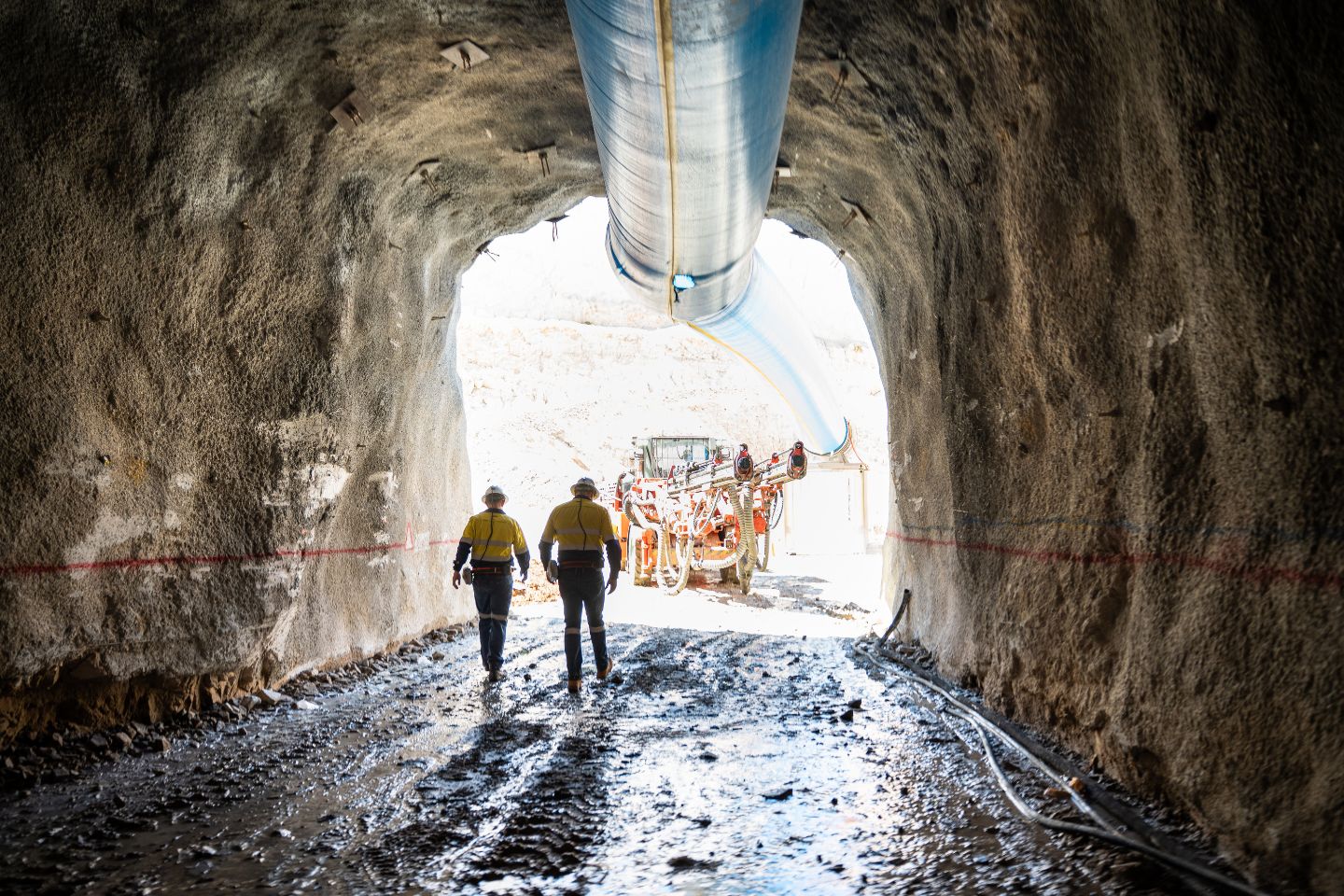
A young and growing team plans to return a historic goldmine near Sandstone to production for the first time in nearly three decades.

Continue Reading
Click to comment

Leave a Reply

Your email address will not be published. Required fields are marked *

Business

Yara backs Pilbara clean fuel bunkering hub

Published

on

Yara backs Pilbara clean fuel bunkering hub

Norwegian fertiliser giant Yara has joined a group of industry and government stakeholders pushing plans for an ammonia ship refuelling hub in the Pilbara.

Continue Reading

Business

China sets lowest economic growth target since 1991

Published

on

China sets lowest economic growth target since 1991

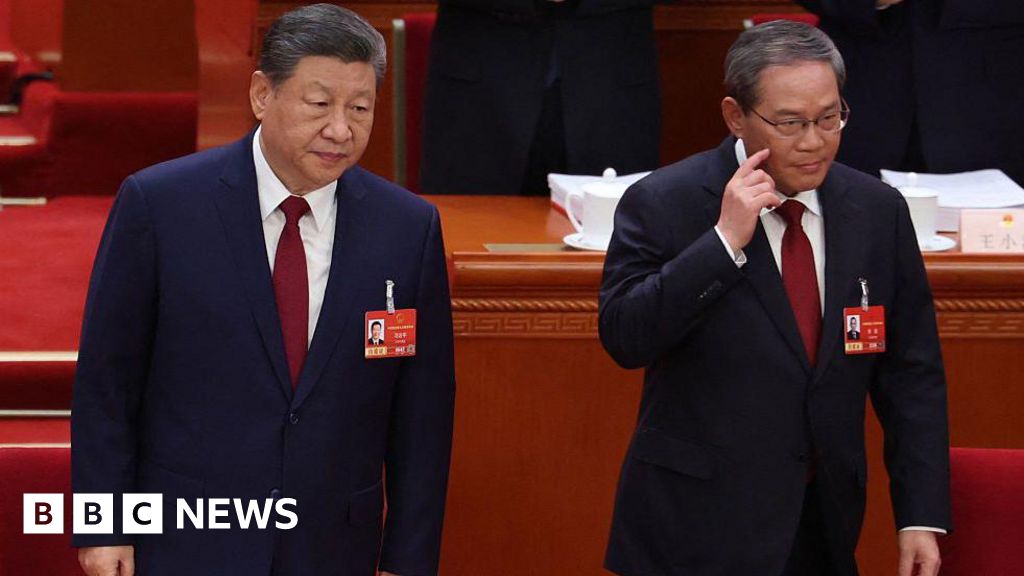
It is also the first time the target has been lowered since it was cut to “around 5%” in 2023.

Continue Reading

Business

Dow Jones Industrial Average Falls Sharply as Geopolitical Tensions Over Iran War Weigh on Markets

Published

on

Coinbase Global

NEW YORK — The Dow Jones Industrial Average closed lower Tuesday, shedding more than 400 points amid persistent volatility driven by the escalating conflict involving Israel, the United States, and Iran. Investors grappled with fears of prolonged supply disruptions in global oil markets, though a late-session rebound trimmed earlier steep losses.

The blue-chip index ended at 48,501.27, down 403.51 points or 0.83% from Monday’s close of 48,904.78. Intraday trading saw dramatic swings: the Dow plunged as much as 1,250 points early in the session before recovering significantly as reports emerged of indirect U.S.-Iran contacts aimed at de-escalation and President Donald Trump’s assurances that the U.S. Navy would escort tankers through the Strait of Hormuz.

Dow Jones
Dow Jones

The broader market mirrored the unease. The S&P 500 slipped 0.94% to around 6,847, while the tech-heavy Nasdaq Composite fell 1.02%. Volume reached 533 million shares on the Dow components, reflecting heightened trading activity.

The sell-off stemmed primarily from geopolitical developments. Fresh Israeli and U.S. strikes on Iranian targets, including infrastructure and security apparatus in Tehran, intensified concerns about a wider regional war. Oil prices extended their rally, with Brent crude climbing more than 2% to near $84 per barrel at one point — levels not seen since early 2025 — before easing slightly on hopes for diplomatic progress. Higher energy costs threaten to fuel inflation and pressure consumer spending, key vulnerabilities for an economy already navigating post-pandemic recovery challenges.

President Trump addressed the situation overnight, stating the U.S. stands ready to protect shipping lanes despite Iran’s threats. This provided some reassurance, contributing to the intraday rebound. Analysts noted that markets have historically shaken off geopolitical shocks relatively quickly if supply disruptions prove temporary, though sustained conflict could alter that dynamic.

Advertisement

Key Dow components showed mixed performance amid the turmoil. Energy-related names like Chevron gained on rising crude prices, while industrials such as Caterpillar and Boeing faced heavier selling pressure tied to broader economic fears. Tech and consumer stocks lagged, with declines in names like Nike and UnitedHealth contributing to the index’s drop.

Broader market sentiment reflected caution. The conflict has overshadowed other economic data, including upcoming ADP private payrolls figures expected later in the week. Treasury yields ticked higher as investors weighed inflation risks from energy costs against potential growth slowdowns.

Wall Street’s reaction aligns with global trends. Asian markets, including South Korea’s Kospi, reversed earlier gains amid the uncertainty, while European indexes also traded lower. Gold futures advanced as a safe-haven play, underscoring risk aversion.

Despite the decline, the Dow remains up about 12-14% over the past year, with a 52-week range from roughly 36,600 to over 50,500. The index has hovered near record highs in recent months before the latest volatility. Year-to-date performance has been positive, though the war has introduced new uncertainties.

Advertisement

Analysts offered varied outlooks. Some viewed the pullback as an overreaction to headlines, pointing to resilient corporate earnings and consumer strength. Others warned that prolonged Middle East instability could disrupt global supply chains, raise borrowing costs, and complicate Federal Reserve policy. The central bank has been monitoring energy price impacts closely, with higher oil potentially delaying rate adjustments.

The rebound from session lows highlighted dip-buying interest. Reports of possible indirect negotiations between the U.S. and Iran boosted hopes for containment, helping stocks claw back ground. Futures trading early Wednesday suggested a tentative recovery, with Dow futures up modestly around 0.1-0.3% in pre-market action as of March 4.

Looking ahead, market participants will watch for any de-escalation signals, oil price stabilization, and economic indicators. The conflict’s trajectory remains the dominant driver, with potential for continued swings if developments shift rapidly.

The Dow’s performance Tuesday underscores the market’s sensitivity to geopolitical risks, even as underlying fundamentals show resilience. Investors remain focused on balancing short-term volatility against longer-term growth prospects in an uncertain global environment.

Advertisement
Continue Reading

Business

From Endeavour Mining to Mansa Resources, a Builder Returns to the Frontier

Published

on

From Endeavour Mining to Mansa Resources, a Builder Returns to the Frontier

When Sébastien de Montessus was appointed chief executive of Mansa Resources, a newly launched mining company backed by succesfull West African entrepreneur, Idrissa Nassa (Coris Bank), the move carried a familiar logic.

After nearly a decade spent transforming Endeavour Mining into one of the world’s ten largest gold producers, de Montessus is returning to what has long defined his career: building scale, discipline and credibility in frontier markets where volatility is the rule rather than the exception.

His nomination at Mansa marks the opening of a new chapter, but it is one deeply anchored in the managerial philosophy and operating model he refined during his years at Endeavour. For investors and industry observers, the appointment is less a leap into the unknown than a continuation of a method — one that has already reshaped West Africa’s mining landscape once.

A reputation built through diverse experiences, further honed at Endeavour Mining

When de Montessus took the helm of Endeavour Mining in 2016, the company was a modest mid-tier gold producer with limited visibility beyond specialist investors. Its asset base was fragmented, its growth story uncertain, and its operational execution exposed to the risks that have long deterred international capital from African mining.

Over the following eight years, that profile changed dramatically. Endeavour became West Africa’s largest gold producer, with annual output exceeding one million ounces and a portfolio spanning Côte d’Ivoire, Burkina Faso and Senegal. It entered the FTSE 100 in 2021, a rare achievement for a company whose assets were entirely African.

Advertisement

The transformation was not driven by aggressive leverage or speculative expansion. Instead, Sébastien de Montessus imposed a tightly defined investment framework. Each mine would need to demonstrate a life of more than ten years, annual production above 200,000 ounces and a disciplined cost structure capable of generating cash flow across commodity cycles. Growth was a consequence of quality, not its substitute.

That discipline translated into execution. With his team, Flagship projects such as the Houndé mine in Burkina Faso and the Ity CIL expansion in Côte d’Ivoire were delivered ahead of schedule and under budget — outcomes that remain exceptions rather than norms in the global gold sector. Selective acquisitions, notably of Semafo and Teranga Gold, consolidated high-quality assets along the Birimian greenstone belt, reinforcing Endeavour’s regional coherence without undermining financial stability. What distinguished these transactions was not only their industrial logic, but their timing. Both were executed during the Covid-19 pandemic, a period when most mining operators were singularly focused on business continuity, supply-chain resilience and workforce protection — challenges that were arguably more acute for extractive industries than for many other sectors. At a moment when peers were retrenching, Endeavour pursued external and organic growth simultaneously, integrating new assets while maintaining uninterrupted operations across its existing portfolio. The ability to balance acquisition-driven expansion with operational stability under unprecedented global disruption underscored the managerial discipline that defined de Montessus’s tenure.

Operational rigour in complex environments

What distinguished de Montessus’s tenure was not only scale, but predictability. Under his leadership, Endeavour built a reputation for doing what it said it would do — a currency of rare value in emerging-market mining.

From the outset of his tenure in 2016, Sébastien de Montessus also moved early on issues that would later become central to the industry. On security, he acted well before the terrorist risk in parts of the Sahel was widely acknowledged by most mining operators. While peers largely framed security around asset protection and gold theft, Endeavour broadened its risk assessment early, recruiting specialised profiles and investing in appropriate capabilities to protect personnel, assets and business continuity as regional threats evolved.

Advertisement

Labour relations proved another source of operational stability. In a sector where strikes are a common means of negotiation, Endeavour experienced no site-level work stoppages during his tenure — an uncommon outcome in African mining. This reflected a sustained social dialogue and an effort to align interests, notably through a group-wide incentive system linked to production and cost performance and extended to all employees, from entry-level roles to site management.

Health and safety were treated as foundational rather than procedural. In a high-risk industry, management emphasis was placed on leadership behaviour and field presence, reinforcing the view that safety performance was inseparable from operational excellence.

Exploration success reinforced that credibility. By concentrating on well-understood geological corridors in West Africa, Endeavour added millions of ounces to its resource base at discovery costs among the lowest in the industry. The strategy illustrated a recurring theme in de Montessus’s approach: focus on depth rather than dispersion, and on repeatable processes rather than one-off bets.

Alongside operations, corporate governance was professionalised. Reporting standards were aligned with international expectations, environmental and social programmes expanded, and community investment became a structural component of project development. Endeavour’s evolution helped challenge long-standing investor scepticism about African-based miners, demonstrating that scale, governance and operational discipline could coexist on the continent.

Advertisement

The end of a chapter — and the opening of another

De Montessus’s departure from Endeavour in early 2024 followed an internal dispute that was ultimately resolved through an agreement between the company and its former chief executive. While the episode closed a significant chapter, it did little to diminish the industrial legacy of his tenure. The portfolio structure, operating culture and regional footprint he established remain central to Endeavour’s strategy today.

His appointment at Mansa Resources should therefore be read not as a reinvention, but as a redeployment of experience. Mansa, backed by Africaninvestors and positioned as a long-term mining platform, enters the market at a moment when capital discipline, geopolitical awareness and operational credibility are again at a premium.

Behind Mansa Resources stands Idrissa Nassa, one of West Africa’s most discreet but consequential business figures. Best known as the founder and chief executive of Coris Bank International, Nassa has built his influence far beyond finance, assembling a diversified portfolio that spans banking, mining, energy distribution and trade. His trajectory — from modest beginnings in the markets of Ouagadougou to boardrooms in Abidjan, Dakar and London — reflects a methodical form of entrepreneurship rooted in capital discipline and local anchoring.

In recent years, he has accelerated strategic acquisitions, including assets divested by international groups, positioning African-controlled capital at the centre of sectors long dominated by foreign operators. For Mansa, Nassa provides not only financial backing but a long-term industrial vision: one that views mining not as an isolated extractive activity, but as part of a broader ecosystem linking finance, infrastructure and regional development.

Advertisement

Mansa Resources: ambition shaped by experience

Although still in its early stages, Mansa has set out an ambition that resonates with de Montessus’s track record: to build a diversified mining company rooted in Africa, capable of developing assets responsibly and competitively over the long term.

The context is markedly different from that of 2016. Commodity markets are more volatile, financing conditions tighter, and geopolitical scrutiny of critical resources more intense. At the same time, African governments are increasingly assertive about local value creation, governance and environmental standards.

For Sébastien de Montessus, these constraints are not unfamiliar. His career has been defined by navigating precisely these tensions — between risk and discipline, growth and restraint, frontier opportunity and institutional expectations. At Mansa, the challenge will be to apply that same operating logic from the ground up, rather than at the scale of an established producer.

A leadership style shaped by finance and execution

Trained in corporate finance, de Montessus has consistently approached mining as an industrial business rather than a speculative pursuit. Capital allocation, cost control and long-term asset quality have taken precedence over headline growth. That mindset has often set him apart in a sector prone to cyclical exuberance.

Advertisement

At Endeavour, it enabled the company to grow through cycles without compromising balance-sheet resilience. At Mansa, it is likely to influence how projects are selected, financed and sequenced — favouring clarity of execution over speed.

For investors, the significance of his nomination lies less in immediate production targets than in governance and credibility. In frontier mining, leadership track record often matters as much as geology. De Montessus brings with him a reputation forged in one of the most demanding operating theatres in the industry.

His legacy at Endeavour Mining is also measurable in what has — and has not — changed since his departure. The portfolio structure he assembled remains largely intact, and the operational framework he imposed continues to underpin the company’s performance. While the sharp rise in gold prices — which have more than doubled from their lows during his tenure — has lifted valuations across the sector, the structural fundamentals at Endeavour were laid earlier: long-life assets, disciplined capital allocation, and a coherent regional focus. The architecture he put in place has proved durable, suggesting that the model was not cyclical, but structural.

That durability reflects a management philosophy he once summarised internally in a simple principle: clarity of strategy, accountability in execution, and alignment between capital and operations. Colleagues describe a leader who prefers forward motion to preservation, who challenges organisational inertia and expects teams to evolve rather than defend precedent. That restlessness has often been an engine of growth — though, in highly structured public companies, such momentum can sometimes create friction at board level. Those who worked with him note that he is not inclined to manage by consensus alone; he is known to push for change when he believes the industrial logic demands it.

Advertisement

At Mansa Resources, that appetite for movement will operate within a different ownership structure. Alongside the backing of Idrissa Nassa, the shareholder base includes Orion Resource Partners, the US-based mining investment fund known for its highly selective approach to capital deployment. Orion’s due diligence processes — extending beyond assets to management teams — are regarded in the industry as among the most rigorous. Their decision to support Mansa reflects a calculated confidence not only in the geological prospects ahead, but in the leadership tasked with executing them.

A return to first principles

The appointment of Sébastien de Montessus as CEO of Mansa Resources signals a return to first principles: disciplined growth, regional focus and operational realism. If his years at Endeavour Mining demonstrated how a mid-tier producer could become a global contender, Mansa represents an opportunity to apply those lessons from inception.

In a mining industry once again forced to confront its own excesses, his trajectory offers a reminder that scale is built not through bold promises, but through consistency. For de Montessus, Mansa is not a departure from that philosophy — it is its logical continuation.

Advertisement

Continue Reading

Business

Walmart: Navigating A Bumpy Tariff Environment

Published

on

Walmart: Navigating A Bumpy Tariff Environment

Walmart: Navigating A Bumpy Tariff Environment

Continue Reading

Business

Morgan Stanley cuts 2,500 jobs across all divisions in workforce reduction

Published

on

Morgan Stanley cuts 2,500 jobs across all divisions in workforce reduction

Morgan Stanley, one of the world’s largest investment banks, is cutting 3% of its workforce, roughly 2,500 employees, across all business divisions.

The job cuts impacted Morgan Stanley’s three major divisions — investment banking and trading, wealth management and investment management — but not its financial advisors, FOX Business confirmed.

Advertisement

The cuts were based on business priorities, location strategy and individual performance, and the bank plans on adding resources in other areas. The layoffs were first reported by The Wall Street Journal.

JACK DORSEY CUTS NEARLY HALF OF BLOCK WORKFORCE AMID MAJOR AI OVERHAUL

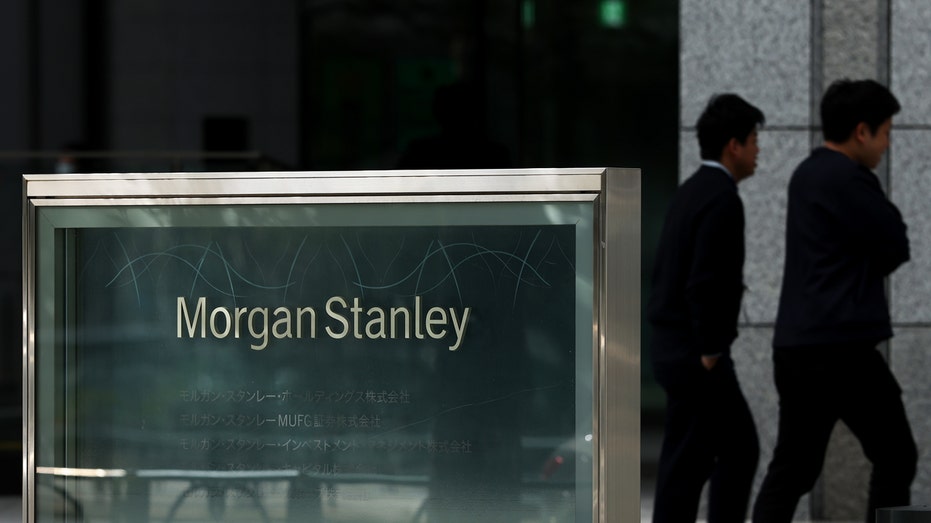
Morgan Stanley building

Morgan Stanley is cutting about 3% of its global workforce, or roughly 2,500 employees. (Kiyoshi Ota/Bloomberg via Getty Images / Getty Images)

The layoffs come after Morgan Stanley, which has around 83,000 global employees, reported a banner year in 2025, posting record annual revenue.

Last quarter, the bank surpassed profit estimates, largely due to a nearly 50% increase in investment banking revenue.

Advertisement

Several U.S. companies have announced significant layoffs this year as they integrate artificial intelligence (AI) tools into their operations.

PRIVATE SECTOR ADDED 63,000 JOBS IN FEBRUARY, ABOVE EXPECTATIONS, ADP SAYS

Morgan Stanley sign

Morgan Stanley’s job cuts impacted its investment banking, trading, wealth management and investment management divisions. (Kiyoshi Ota/Bloomberg via Getty Images / Getty Images)

Last week, Block said it was slashing nearly half of its workforce — more than 4,000 jobs — as the payments firm works to embed AI throughout its operations.

CEO Jack Dorsey said the company planned to enact a single round of large cuts instead of a series of smaller workforce reductions to give the company more room for growth as it adapts to the AI era.

Advertisement
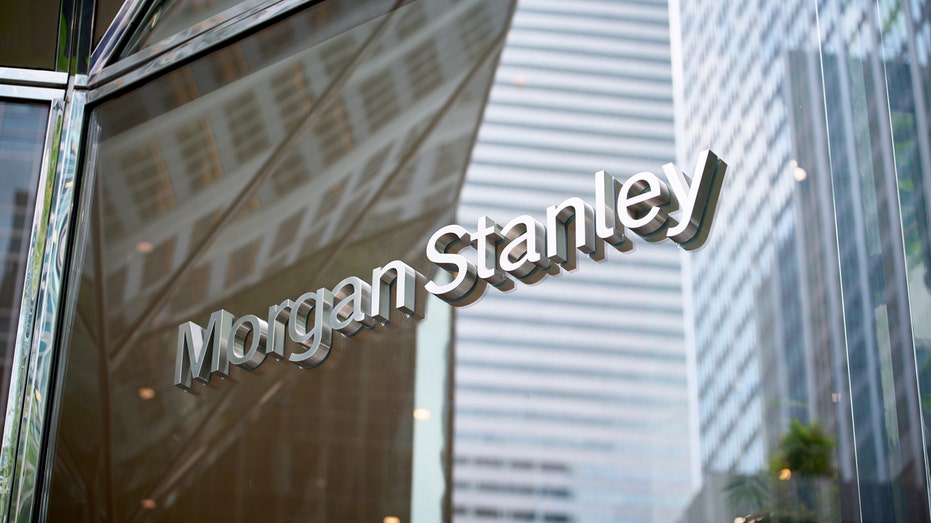
Morgan Stanley building logo

The investment banking giant Morgan Stanley is reportedly cutting approximately 2,500 jobs, or about 3% of its workforce. (Gabby Jones/Bloomberg via Getty Images / Getty Images)

CLICK HERE TO GET FOX BUSINESS ON THE GO

Amazon has also announced a series of recent reductions totaling approximately 30,000 jobs.

FOX Business’ Eric Revell and Reuters contributed to this report.

Advertisement
Continue Reading

Business

T-Mobile US, Inc. (TMUS) Presents at Morgan Stanley Technology, Media & Telecom Conference 2026 Transcript

Published

on

OneWater Marine Inc. (ONEW) Q1 2026 Earnings Call Transcript

T-Mobile US, Inc. (TMUS) Morgan Stanley Technology, Media & Telecom Conference 2026 March 4, 2026 7:50 PM EST

Company Participants

Srinivasan Gopalan – CEO, President & Director

Conference Call Participants

Advertisement

Benjamin Swinburne – Morgan Stanley, Research Division

Presentation

Benjamin Swinburne
Morgan Stanley, Research Division

Advertisement

Okay. Hello, everybody. I’m Ben Swinburne, Morgan Stanley’s telecom and media analyst. For important disclosures, please see the Morgan Stanley research disclosure website at morganstanley.com/researchdisclosures. Excited to welcome back to the conference, but for the first time up on stage the CEO of T-Mobile, Srini Gopalan. Srini, thank you so much for coming.

Srinivasan Gopalan
CEO, President & Director

Thanks for having me here, Ben. And before we get started, I’m supposed to draw our attention to that safe harbor statement, which I think has disappeared now. Yes.

Advertisement

Benjamin Swinburne
Morgan Stanley, Research Division

There it is.

Advertisement

Srinivasan Gopalan
CEO, President & Director

With that in mind, especially the forward-looking statements.

Advertisement

Question-and-Answer Session

Benjamin Swinburne
Morgan Stanley, Research Division

All right, we’ll do that. So what I think we’re basically, what, just over 4 months into your tenure as CEO. Business is obviously performing well. Maybe talk a little bit about your strategic priorities for the company. What are you and the team really focused on right now at T-Mobile?

Advertisement

Srinivasan Gopalan
CEO, President & Director

So look, where we are today, we’re a great business. And the foundation of that has been differentiation. And that’s most visible when you look at our NPS, right? Our NPS is 20%, 25% higher than anyone in the industry. And the source of that differentiation and the foundation we’re building on is the fact that we have the best network, which hasn’t always been true, but is today, the best value and the best experience. And that fundamentally is our differentiation. So when customers come to us, they don’t need to make a trade-off, right? They get all

Advertisement
Continue Reading

Business

Oversold signals emerge amid market slide; technical charts hint at possible relief rally

Published

on

Oversold signals emerge amid market slide; technical charts hint at possible relief rally
After three straight sessions of relentless selling, Indian equity markets are grappling with heightened volatility and fragile sentiment. As benchmark indices struggle to find their footing, investors are turning to technical charts for signs of stability — or further weakness.

In a conversation with ET Now, Rohit Srivastava, Founder, Strike Money Analytics & Indiacharts offered a nuanced view of the current setup, suggesting that while the breakdown is technically significant, extreme short-term oversold readings could pave the way for a temporary rebound.

“So, well, the breakdown that we have seen would open up potential downside, but what is also happening simultaneously is that the market is becoming oversold on an extremely short-term basis and, in fact, I would say, very oversold. So, this is giving us a feeling that we may be at a point where we can get some bounce back or some relief rally in the market. I am not sure whether it will last beyond a day or two or a couple of days, so it might just be a counter-trend move within the entire structure but definitely it will bring some relief or some hope when it happens,” Srivastava said.

According to him, the charts are hinting at the possibility of a rebound in the near term, particularly in the NIFTY 50 and the NIFTY Bank.

Advertisement

“So, my sense is that you can get a Nifty bounce back from here to retest not just 24,600 that was the critical breakdown point, but even maybe try to push above that towards 25,000 again — that is what the market may attempt to do. Something similar on Bank Nifty would mean closer to 60,000 and at that point then we will judge again whether another leg down can really start,” he noted.


Importantly, Srivastava cautioned against aggressive selling at current levels, especially given the extent of recent declines.
“So, we do not really want to sell into the panic today because we are already into the third day of continuous selling and somewhere that is getting us to a very-very short-term oversold point. We will reconsider the overall picture once we get that bounce. A lot will depend, of course, on the geopolitical situation also changing, but that is what the technical setup is telling us right now.”

VIX Spike: Panic or Precursor?

Another focal point for traders has been the sharp surge in the India VIX, often referred to as the market’s fear gauge. After hovering in double digits just days ago, the index has spiked over 20%, climbing to the 21 mark — a move that reflects mounting anxiety.

Addressing the surge, Srivastava pointed to historical precedents.

“So, we have seen many spikes in the VIX ending at close to around 22 in the last 12 months and there are some more serious ones whenever there has been some kind of issue — whether it was elections, whether it was the rupee depreciation. We have also seen it go towards 30 at some points of time. So, these are regions where the VIX does reach a point where we can say that people are getting overly concerned or there is excessive pessimism either closer to 22, but I would say closer to around 30 is a better point.”

Advertisement

He added that while the current levels suggest heightened concern, they may not yet signal peak panic.

“If you really get close to 30, then I would be a little more optimistic on the market having priced in a maximum panic kind of situation. But that has not happened yet, so we will continue to watch how the VIX unfolds in the short term. But again 21, 22 is a level that we did pull back from a couple of times in say August of 2024, also in November of 2024 and also last year in April when you had the tariffs applied, we had seen VIX spike to around 23 and we are currently at 21, so two-three points and you are within that range. To go beyond that, of course, the situation has to get worse than what it already is.”

Tactical Patience Advised

For now, the technical landscape suggests a market caught between structural weakness and short-term exhaustion. A relief rally could emerge as oversold conditions unwind, but sustainability will hinge on broader triggers — including geopolitical developments and volatility trends.


Until then, seasoned observers are advising restraint rather than reaction, especially when fear-driven selling risks locking in losses just as the market nears short-term extremes.

Advertisement
Continue Reading

Business

Rocket Lab’s Kampani sells $3.7 million in RKLB stock

Published

on


Rocket Lab’s Kampani sells $3.7 million in RKLB stock

Continue Reading

Business

MPC lowers policy rate to 1%, signaling an extended low-rate approach and potential further cuts if risks emerge

Published

on

MPC lowers policy rate to 1%, signaling an extended low-rate approach and potential further cuts if risks emerge

The MPC cut the policy rate to 1% to ease financial conditions, support SMEs, and anchor inflation expectations, citing fragile growth, downside inflation risks, tighter SME credit, and emphasizing structural reforms beyond monetary policy.

MPC Cuts Policy Rate to 1.0% to Ease Financial Conditions

The Monetary Policy Committee (MPC) voted 4-2 to reduce the policy rate from 1.25% to 1.0% aiming to ease financial burdens on SMEs and households, anchor medium-term inflation expectations, and support business adaptation amid global uncertainties. The two dissenting members preferred to maintain the 1.25% rate, considering it appropriate given current economic conditions. The MPC views the new 1% rate as sufficient, emphasizing the importance of preserving remaining policy space during high uncertainty and highlighting that structural challenges require policy measures beyond interest rate adjustments.

Economic Outlook and Inflation Risks

The MPC regards the Thai economy as fragile, projecting growth near 2.0% YOY in 2026-27, below potential growth of 2.7%. Inflation faces downside risks due to lower energy prices and government subsidies, with headline inflation expected to return to the target range’s lower bound later than previously anticipated. Trade uncertainty remains due to fluctuating U.S. tariffs, while the risk of fiscal delays has diminished with improving government formation prospects.

Challenges Facing SMEs and Financial Stability Concerns

SMEs continue to face tight financial conditions with rising loan costs and baht appreciation impacting exporters’ profits. Despite policy rate cuts, micro-SME loan rates have increased due to higher credit risks and constrained lending. The MPC will monitor low-rate environment risks, noting increased risk-taking behavior and potential credit misallocation but sees no immediate threat. Monetary policy alone cannot resolve Thailand’s structural growth challenges, requiring complementary economic and financial reforms.

Advertisement

Source link

Continue Reading

Trending

Copyright © 2025