

Business
Rubio pushes US energy dominance in India as Iran war reshapes global oil flows

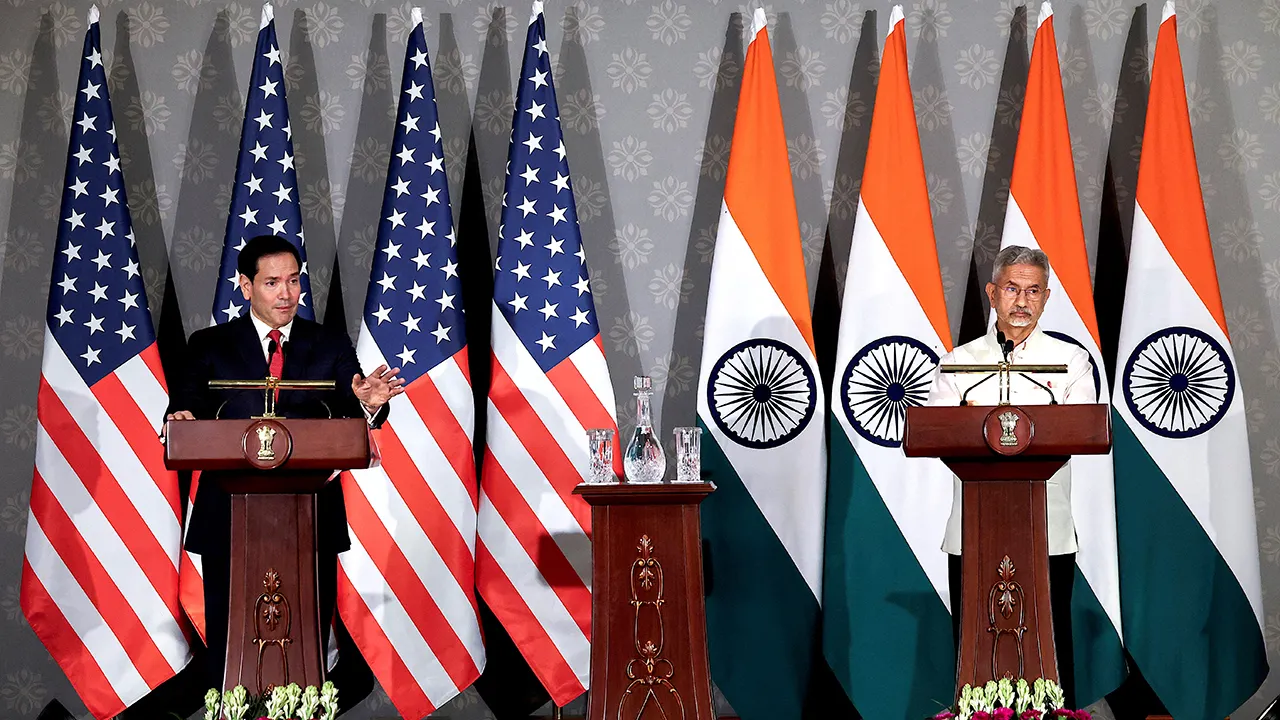
India Index founder and CEO Samir Kapadia joins ‘Mornings with Maria’ to break down Rubio’s India trip, the US push to secure critical minerals and counter China and balancing Pakistan ties amid Iran tensions.
Secretary of State Marco Rubio just wrapped a four-day visit to India with a Quad meeting over the weekend. Energy security was at the forefront of discussions, alongside Indo-Pacific security, trade and supply chain resilience.
The trip was Rubio’s first visit to the country as the Secretary of State and National Security Advisor, and came at a moment of delicate U.S.-India relations and heightened volatility in global energy markets.
Before embarking on his trip, Rubio said Washington wants New Delhi to buy more American oil and gas.
HIGH ENERGY PRICES RISK KEEPING INFLATION ABOVE 2% TARGET, CONCERNING FED POLICYMAKERS

U.S. Secretary of State Marco Rubio and Indian Foreign Minister Subrahmanyam Jaishankar attend a joint press conference after their meeting at the Hyderabad House in New Delhi, India, May 24, 2026. (Adnan Abidi/Reuters / Reuters)
“We want to sell them as much energy as they’ll buy. We want them to be a bigger part of the portfolio,” Rubio told reporters in Miami last week, adding, “There’s a lot to work on with India. They’re a great ally, a great partner.”
India, the world’s second-largest importer of oil, imports nearly 88% of its crude. More than half of those imports come from the Middle East, much of it transiting the Strait of Hormuz. The Iran war has created a significant energy crisis for the South Asian nation. And even with signs of a peace deal emerging, the disruptions are expected to linger, deepening New Delhi’s fears over long-term energy security.
India has increasingly sought alternative supplies and looked to diversify its energy future, which is accelerating broader U.S.-India energy cooperation.
“Secretary Rubio should make clear that America wants to be India’s energy partner of choice. U.S. energy gives India a secure alternative to opaque, sanctions-exposed supply chains, Max Meizlish, Research Fellow at the Foundation for Defense of Democracies’ Center on Economic and Financial Power, told FOX Business.
OIL, GAS PRICES JUMP AS TRUMP FLIRTS WITH STRIKING IRANIAN OIL INFRASTRUCTURE
“But the partnership has to run both ways. India cannot be a strategic energy partner for Washington while Indian firms are repeatedly surfacing in sanctions designations involving Iranian energy flows, shadow fleet shipping, falsified origin claims and Russian sanctions evasion,” he added.

An Iranian flag flies above ships anchored in the Strait of Hormuz as the U.S. cracks down on Iran’s growing use of cryptocurrency. (Majid Saeedi / Getty Images)
India has continued to buy discounted Russian crude, despite sanctions and pressure from Washington to reduce dependence on Moscow’s energy exports. Now, the U.S. is hoping to persuade India to purchase more oil and liquefied natural gas from America and Venezuela.
This month, Venezuela overtook Saudi Arabia and the United States to become India’s third-largest crude supplier.
During a meeting with Indian Prime Minister Narendra Modi, Rubio underscored the strategic importance of the U.S.-India partnership and affirmed that U.S. energy products have the potential to diversify India’s energy supply.
In an X post on Saturday, Rubio also said that Delhi committed to buying $500 billion in American goods over the next five years, focusing on energy, technology and agriculture.
IRAN WAR FUELS ASIA ENERGY CRUNCH AS INDIA, JAPAN, OTHERS FEEL STRAIN
At the same time, India is trying to secure long-term energy independence by rapidly expanding domestic nuclear power generation.
Last month, India hit a major nuclear milestone when its most advanced reactor, the Prototype Fast Breeder Reactor (PFBR), achieved a self-sustaining stage.
Unlike conventional reactors, fast breeder reactors produce more fissile material than they consume, potentially reducing long-term dependence on imported fuel sources.
Once fully operational, India will become only the second country after Russia to run a commercial fast-breeder reactor.

The India-flagged oil tanker Desh Ujaala is pictured in the Gulf waters near Al-Basrah Oil Terminal (ABOT), about 50 kilometres offshore of Iraq’s southern Faw peninsula, on August 5, 2025. (Hussein Faleh/AFP via Getty Images / Getty Images)
As this unfolds, New Delhi is also deepening nuclear cooperation with Washington as it seeks foreign investment and advanced technology to rapidly scale up its atomic energy sector.
Earlier this month, a high-level 20-member U.S. Executive Nuclear Industry Delegation visited India to explore private investment and technology commercialization opportunities in India’s civil nuclear energy market, with discussions focused on advanced nuclear technologies and small modular reactors.
U.S. Ambassador to the country, Sergio Gor, recently praised the growing India-U.S. energy partnership, saying “big things” lie ahead.
India plans to increase its nuclear power capacity from 8.8 gigawatts to 100 gigawatts by 2047, creating what officials estimate could become a nearly $300 billion nuclear energy market.
The deepening energy ties extend beyond energy imports alone.
President Donald Trump recently announced a historic $300 billion refinery agreement with India’s Reliance Industries. Under the deal, a new oil refinery would be constructed at the Port of Brownsville in Texas. It’s set to become the first new major U.S. refinery built in 50 years.
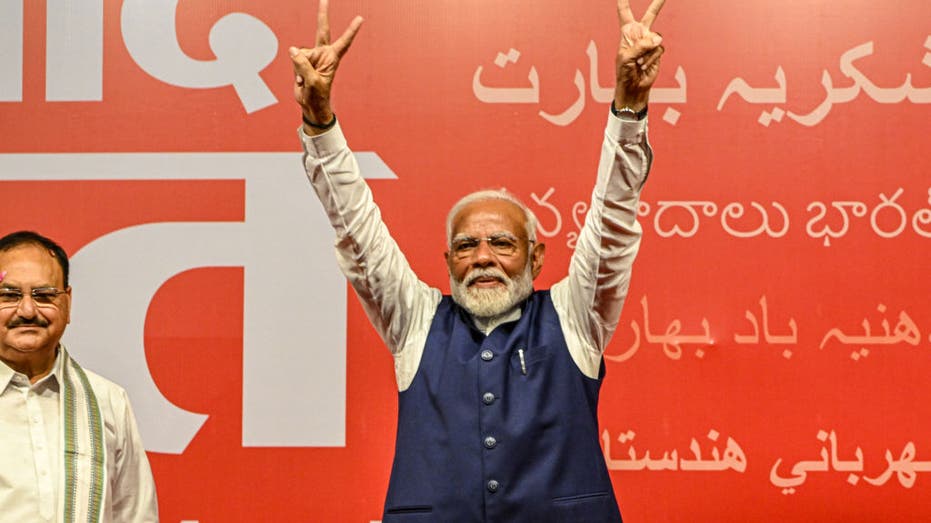
Narendra Modi, India’s prime minister, at the Bhartiya Janata Party (BJP) headquarters during election results night in New Delhi, India, on Tuesday, June 4, 2024. (Prakash Singh/Bloomberg via Getty Images / Getty Images)
With analysts warning that prolonged instability involving Iran could continue rattling global oil markets and supply chains, Rubio’s trip highlighted the growing strategic importance of energy cooperation between Washington and New Delhi.
For Washington, India represents one of the world’s fastest-growing energy markets and a key strategic partner in the Indo-Pacific.
GET FOX BUSINESS ON THE GO BY CLICKING HERE
For New Delhi, deeper ties with the U.S. offer an opportunity to diversify energy supplies, while reducing vulnerability to shocks rippling from the Middle East.
“The goal should be more American energy flowing to India and far less sanctioned Iranian and Russian energy moving through Indian channels,” Meizlish told Fox.

Business
US stocks: S&P 500, Nasdaq close lower, dragged by Alphabet and megacap tech; focus on Iran

The Dow closed higher, boosted by the healthcare and industrial sectors.
SpaceX tumbled and weighed heavily on the Nasdaq Composite. The Elon Musk-led company launched its first-ever debt offering on Monday and said it had about $100.8 billion in cash and cash equivalents as of June 19.
Optimism about artificial intelligence has supported Wall Street’s recent rally, but analysts noted that more investors have been questioning lofty spending on infrastructure expansion by hyperscalers.
Alphabet fell sharply while Meta, Amazon and Microsoft also fell.

“This is a very sentiment-driven sector and the group tends to trade together on a day-to-day basis,” said Bill Northey, senior investment director at US Bank.
Also Read | US stocks: Vimeo owner Bending Spoons seeks $1.62 billion US IPO, sources say “But as we step back … some of the strongest fundamentals are within the AI data center buildout space. That includes both the hyperscalers as well as many of the components that go into that continued buildout.”
The next test for the rally will be Micron Technology‘s quarterly results on Wednesday. Shares of the memory chipmaker are up nearly 300% this year.
According to preliminary data, the S&P 500 lost 25.41 points, or 0.34%, to end at 7,475.17 points, while the Nasdaq Composite lost 339.67 points, or 1.28%, to 26,178.26. The Dow Jones Industrial Average rose 162.36 points, or 0.29%, to 51,727.06.
Oil prices fell as Washington and Tehran agreed on a roadmap toward a final deal within 60 days.
U.S. and Iranian officials made “great progress” at the first round of their talks in Switzerland that ended early on Monday, mediators said, although tensions persisted over Lebanon and the Strait of Hormuz.
“Energy prices are coming down, which is certainly a catalyst for both the consumer as well as businesses,” Northey said. “On the flip side of that, we came out with a very hawkish (Federal Reserve) under new Chair Kevin Warsh, and it led the market to believe that there will be a more prioritized focus on returning to price stability in the near term.”
This view on the Fed has lifted U.S. Treasury yields and pressured stock prices lower, he said.
A focus this week will be on Thursday’s Personal Consumption Expenditures (PCE) data, the Fed’s preferred gauge of core inflation. A stronger-than-expected reading could reinforce expectations of a hawkish Federal Reserve, after Warsh underscored the need to curb inflation at last week’s meeting.
Markets currently expect a 25-basis-point rate hike from the Fed in September, according to LSEG data.
Among other movers, Apogee Therapeutics jumped after AbbVie said it would acquire the biotech company for $10.9 billion in cash.

Anterix president and CEO Scott Lang sells $13,642 in stock
Business
Dow Jones Rises 0.40 Percent to 51,770.77 as Markets Show Modest Gains Amid Economic Optimism

NEW YORK — The Dow Jones Industrial Average advanced modestly Monday, closing at 51,770.77 after gaining 206.07 points, or 0.40 percent. The blue-chip index reflected cautious optimism among investors as economic indicators suggested steady growth without immediate recession fears.
Trading on Wall Street showed mixed results across major indices, with the S&P 500 and Nasdaq Composite also posting small gains. Technology shares provided support while energy and financial sectors demonstrated varied performance. Market participants weighed corporate earnings reports against broader economic signals.
Several factors contributed to the Dow’s advance. Strong performances from industrial and consumer staple companies helped offset softness in other areas. Investors appeared encouraged by recent data indicating controlled inflation and resilient consumer spending.
The session’s modest gains align with a pattern of gradual recovery in equity markets. Analysts noted that while volatility persists due to geopolitical tensions and policy uncertainties, underlying economic fundamentals remain relatively supportive. Corporate America continues demonstrating adaptability amid changing conditions.
Blue-chip components such as UnitedHealth Group and Goldman Sachs led contributors to the Dow’s rise. Their positive movements reflected sector-specific developments and broader confidence in financial stability. Conversely, shares of Boeing and Caterpillar faced pressure amid industry-specific concerns.
Broader market sentiment benefited from expectations around Federal Reserve policy. Investors anticipate measured responses to inflation data, with potential rate adjustments later in the year. This outlook supports risk assets while maintaining caution against overheating.
Trading volume remained steady, indicating balanced participation from institutional and retail investors. Options activity suggested continued hedging strategies amid uncertainty about second-half economic performance.
Sector rotation characterized much of the day’s trading. Technology and communication services attracted buying interest on innovation narratives while traditional energy faced headwinds from commodity price fluctuations. Consumer discretionary shares showed resilience amid retail spending data.
The Dow’s performance caps a period of relative stability following earlier volatility. Year-to-date gains reflect confidence in corporate earnings resilience despite higher interest rates. Analysts project continued moderate growth if inflation remains contained.
Economic indicators released recently provided mixed but generally positive signals. Employment figures showed labor market strength while manufacturing data indicated steady activity. Consumer confidence metrics suggested households remain willing to spend despite inflationary pressures.
Corporate earnings season continues influencing market direction. Several major Dow components have reported results exceeding expectations, supporting valuations. Guidance for coming quarters will likely shape investor outlooks in coming weeks.
International developments also factored into trading decisions. European markets showed varied performance while Asian indices reflected regional economic dynamics. Currency fluctuations, particularly the dollar’s strength, affected multinational corporations within the Dow.
The index’s composition, featuring established companies across sectors, provides relative stability compared to more growth-oriented benchmarks. This characteristic appeals to conservative investors seeking steady returns amid uncertainty.
Looking ahead, market attention turns to upcoming economic releases and Federal Reserve communications. Any signals regarding monetary policy could significantly influence near-term direction. Corporate earnings from remaining Dow components will also provide important data points.
Analysts maintain generally positive outlooks for equities despite acknowledging risks. Technological advancement and productivity gains could support continued growth. However, potential headwinds include persistent inflation, geopolitical tensions and policy uncertainties.
The Dow’s advance to 51,770.77 demonstrates resilience in blue-chip stocks. While not dramatic, the percentage gain reflects measured confidence. Investors appear balancing optimism with prudent risk management.
Broader market participation suggests widespread interest in equities. Retail investors continue engaging through various platforms while institutions adjust allocations based on macroeconomic assessments. This dynamic contributes to overall market liquidity.
Sector-specific opportunities exist across the Dow’s components. Industrial companies benefit from infrastructure spending while healthcare firms leverage demographic trends. Financial institutions navigate interest rate environments while consumer goods producers adapt to changing preferences.
The session’s trading patterns align with seasonal tendencies, though individual company news often drives short-term movements. Volatility measures remained moderate, indicating contained fear among market participants.
As markets process recent gains, attention focuses on sustainability of upward momentum. Strong corporate fundamentals provide support while external factors introduce uncertainty. Balanced portfolios may benefit from diversification across asset classes.
The Dow Jones Industrial Average serves as a key barometer of economic health. Its performance influences investor sentiment and corporate planning. Monday’s gains contribute to positive narratives around American business resilience.
Market participants will monitor developments closely in coming sessions. Economic data releases and corporate announcements could shift dynamics significantly. The interplay between policy expectations and actual results will determine near-term direction.
Overall, the Dow’s 0.40 percent advance reflects measured optimism. While challenges persist, underlying strengths provide foundation for continued performance. Investors navigate this environment with careful assessment of risks and opportunities.


Reduce sodium and boost flavor with culinary solutions that meet health goals without compromise.


Top Seedz also switches to sustainable packaging and adds two flavors.


Researchers from Turkey investigate different powder sizes.
CME Group reportedly faces trading disruptions on Monday
Business
GameStop Shares Decline 0.74 Percent to 21.36 as Retail Trader Interest Persists Amid Market Volatility
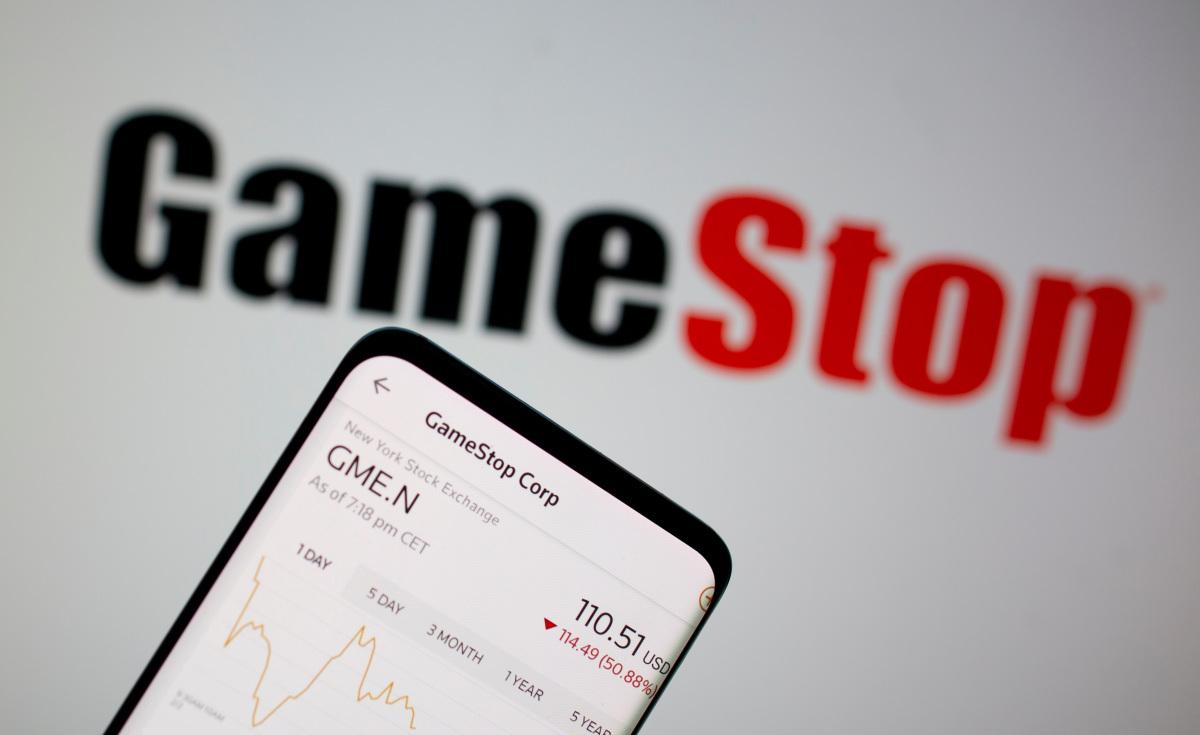
NEW YORK — GameStop Corp. shares fell modestly Monday, closing at $21.36 after declining 16 cents, or 0.74 percent. The video game retailer’s stock movement reflected broader market dynamics while maintaining attention from retail investors who have followed the company closely in recent years.
Trading volume for GameStop remained elevated compared to typical sessions for similar companies. This activity underscores continued interest from individual investors despite the stock’s distance from previous meme-driven peaks. Market participants monitored the stock alongside other consumer discretionary names as economic indicators influenced sentiment.
GameStop has experienced significant volatility since gaining prominence through coordinated retail trading activity. The company’s transformation efforts under new leadership have included cost-cutting measures and exploration of digital initiatives. However, challenges in the traditional brick-and-mortar retail environment persist amid shifting consumer preferences toward digital downloads and subscription services.
The session’s decline occurred within a relatively stable broader market. Technology and consumer stocks showed mixed performance as investors assessed corporate earnings and economic data. GameStop’s movement appeared driven more by company-specific factors and trader sentiment than sector-wide trends.
Analysts have offered varied assessments of GameStop’s prospects. Some highlight potential in e-commerce expansion and collectibles while others express caution about long-term viability in a rapidly evolving gaming landscape. The company’s cash position provides some flexibility for strategic initiatives, though revenue pressures remain.
Retail investor communities continue discussing GameStop as a symbol of individual participation in markets. Online forums and social media platforms feature ongoing analysis of trading patterns and company developments. This attention contributes to periodic volatility spikes unrelated to fundamental changes.
GameStop’s business model has adapted over time. Physical store locations now emphasize experiential retail and merchandise alongside traditional game sales. The company has explored partnerships and technology investments to enhance customer engagement. Management has emphasized operational efficiency while seeking growth opportunities.
Quarterly results have shown mixed outcomes. Cost reductions have improved margins in some periods while sales face pressure from industry trends. Executives have communicated focus on sustainable profitability and shareholder value. Future guidance will likely influence investor expectations.
The stock’s history of dramatic price swings has made it a case study in market dynamics. Short interest and options activity often intensify during periods of heightened discussion. Regulatory oversight continues examining trading patterns to ensure market integrity.
Broader video game industry trends affect GameStop’s performance. Console cycles, major title releases and competitive pressures from digital platforms shape revenue opportunities. The company positions itself as a destination for enthusiasts seeking physical products and community experiences.
Institutional ownership has fluctuated as the stock’s profile evolved. Some funds maintain positions based on valuation assessments while others avoid volatility associated with meme stocks. Retail participation remains a significant factor in daily trading.
GameStop’s leadership has implemented strategic reviews to enhance competitiveness. Initiatives include store optimization, e-commerce improvements and potential new revenue streams. Success depends on execution amid challenging industry conditions.
Consumer behavior shifts toward digital content present ongoing challenges for physical retailers. GameStop has responded by diversifying offerings and enhancing in-store experiences. Loyalty programs and events aim to build customer relationships beyond transactions.
The stock’s current valuation reflects market assessments of future cash flows and growth potential. Analysts employ various models to project performance under different scenarios. Consensus estimates suggest cautious optimism pending concrete progress on strategic goals.
Trading patterns for GameStop often diverge from broader market movements. This characteristic attracts traders seeking unique opportunities while presenting risks for long-term investors. Volatility measures remain elevated compared to traditional retail stocks.
Company announcements and earnings releases typically generate significant attention. Management communications focus on operational improvements and customer engagement metrics. Transparency about challenges and opportunities helps inform investor decisions.
The retail trading phenomenon surrounding GameStop highlighted individual investors’ growing influence. Coordinated activity through social platforms demonstrated new market dynamics. Regulatory responses have aimed to address potential risks while preserving market access.
GameStop maintains its position as a notable name in consumer retail. Its evolution reflects broader industry changes while preserving core gaming focus. Future success depends on adapting to technological shifts and consumer preferences.
Market observers continue monitoring GameStop for signs of strategic progress. The stock’s performance serves as one indicator among many assessing retail sector health. Broader economic conditions will likely influence results in coming quarters.
As trading concluded at $21.36, GameStop shares reflected ongoing market assessments. The modest decline fit within recent trading ranges. Investors await further developments regarding strategic initiatives and industry trends.
The session demonstrated typical market complexities where individual stocks respond to unique factors. GameStop’s movement highlighted continued retail investor engagement alongside institutional analysis. Future sessions may bring additional volatility or stability depending on catalysts.
Overall, GameStop’s position illustrates challenges and opportunities in evolving retail landscapes. The company’s efforts to adapt while maintaining relevance continue drawing attention from various market participants.
SlateStone Wealth chief market strategist Kenny Polcari discusses whether investors are too dependent on AI, Space X’s IPO and his outlook for the markets on ‘Varney & Co.’
Microsoft CEO Satya Nadella issued a warning that the tech giants competing in the AI race need to ensure they advance the emerging tech in a way that’s palatable to the public.
Nadella said in an interview with The Wall Street Journal that the handful of companies at the forefront of the AI race calling for large amounts of resources to expand may not make a compelling case to the public alongside concerns about the safety of AI and its workforce impact.
“You can’t say, hey, all white-collar jobs are gone and this could even be a weapon and we will use all the power to build data centers,” Nadella told the Journal.
He added that he doesn’t think the public will tolerate a few AI models and companies “doing all of the learning for the world.”
APPLE CEO SAYS PRICE HIKES ARE ‘UNAVOIDABLE’ AS RISING CHIP COSTS SQUEEZE TECH GIANT: REPORT
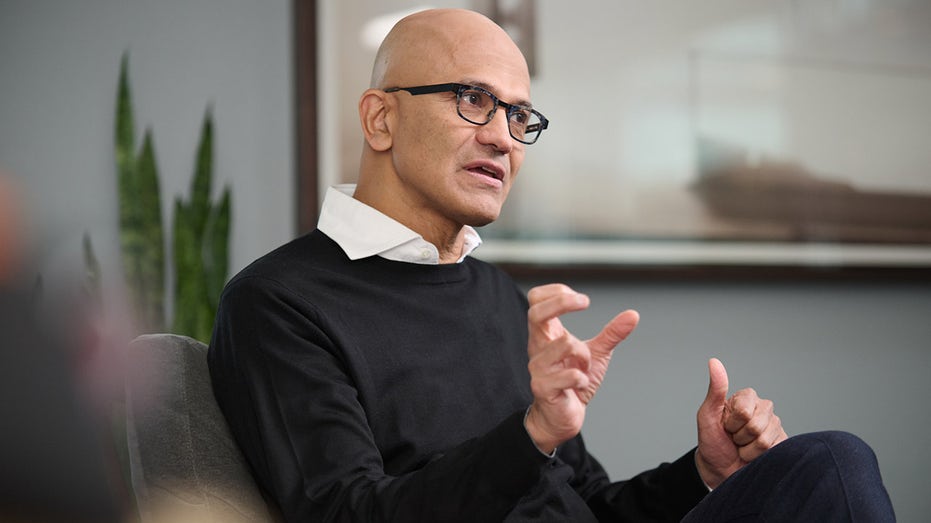
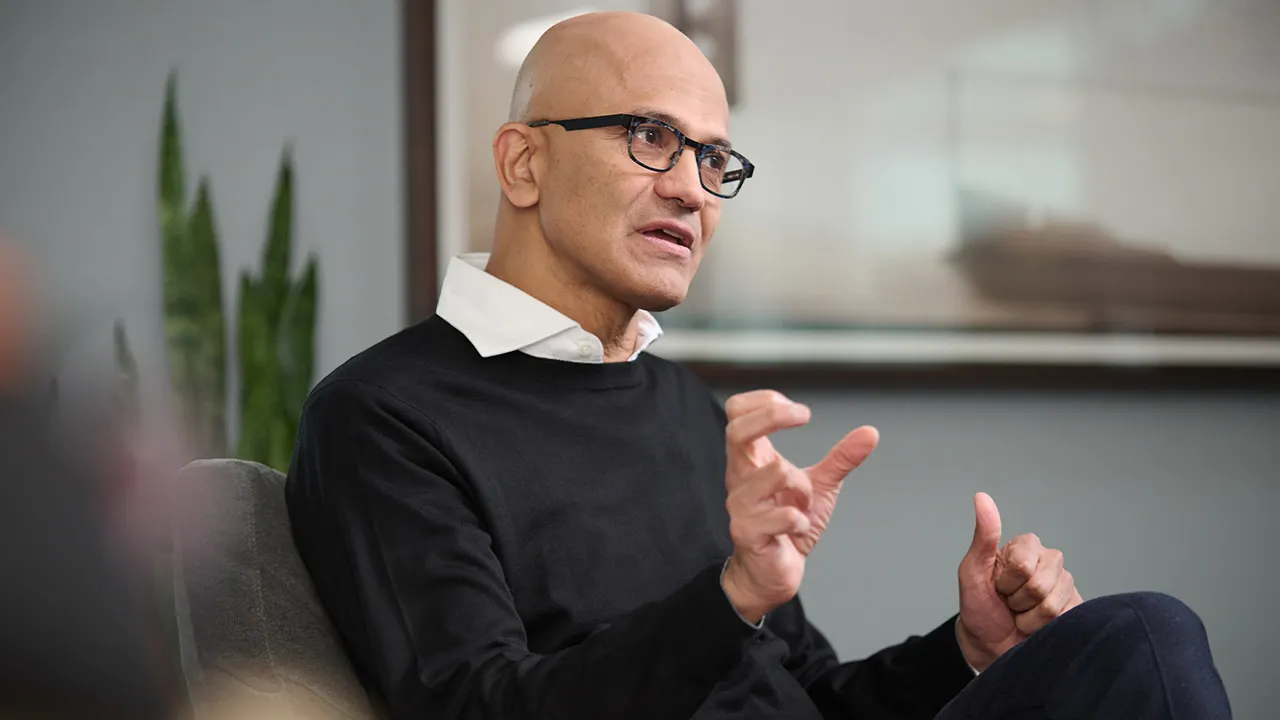
Microsoft CEO Satya Nadella said AI leaders need to get societal buy-in amid concerns about AI’s impact on the workforce and safety implications. (Chona Kasinger/Bloomberg via Getty Images)
Nadella went on to say that corporate leaders who view AI as a means to eliminate jobs and reduce costs are looking at the technology wrong, saying they should instead be thinking about “reorganizing the job” to better leverage their workers’ abilities. The Microsoft CEO said that companies need to have both human capital and in-house AI capabilities he referred to as “token capital.”
That can serve as a “recipe” for how firms across the economy can harness both AI and workers, though he acknowledged that “it’s a lot of change management, it’s a lot of displacement, but there is a path.”
The combination of knowledge derived from humans and AI can create a “continuous learning system” and the character of companies will be defined by the “tacit knowledge that they contain” from both sources,” Nadella added.
TRUMP ADMIN SAYS ANTHROPIC’S ‘RECKLESSNESS’ TRIGGERED EXPORT CONTROLS ON LATEST AI MODELS
| Ticker | Security | Last | Change | Change % |
|---|---|---|---|---|
| MSFT | MICROSOFT CORP. | 367.34 | -12.06 | -3.18% |
He added that companies will have to take tangible steps to persuade the public and workforce about the economic opportunities ahead, as narratives alone won’t be sufficient.
“No amount of just narrative is going to do it because where we are now, we have to sort of walk the walk,” Nadella told the Journal. “We now have to do the hard work in earning the social permission.”
Microsoft has recently pivoted in the AI race to offer a suite of low-cost models that aim to reduce prices for customers, as many face mounting bills amid the push to implement AI tools into operational tasks.
MARK ZUCKERBERG ADMITS META HAS ‘MADE MISTAKES’ AS AI OVERHAUL RESHAPES 20% OF ITS WORKFORCE: REPORT
Microsoft is looking at new ways to market lower cost AI tools through its Copilot platform. (Cesc Maymo)
The move aims to shift the focus of the AI rollout from the makers of frontier models to commoditizing models by offering them through its Copilot platform.
Microsoft is a longtime partner of ChatGPT-maker OpenAI, though the companies recently reached an agreement to allow OpenAI to work more deeply with other tech firms, while it also secured a deal with Anthropic last year.
GET FOX BUSINESS ON THE GO BY CLICKING HERE
Axios previously reported that Microsoft was weighing offering a version of the Chinese model DeepSeek on Copilot.

Apogee: 'Hold' On AbbVie $10.9B Buyout And Extended Half-Life IL-13 Zumilokibart For AD

Crypto PAC Fairshake deploys $8M weapon in primary fights

Manchester City Close to Appointing Enzo Maresca as New Manager

Why Are Some Speed Limit Signs Smaller Than Others?

No Jackpot Winner as $257 Million Prize Rolls Over to $269 Million Monday Draw

Blockchain.com files with SEC for U.S. IPO

Israel says it has killed new Hamas military leader in Gaza City airstrikes

Humanity still exists.. @johnmalek3 #humanity #dream #success #giveaway #lifestyle #money #shorts

Manishi & Nilu | Five Million Money Drop S4 | Episode 42 | Sirasa TV

Shani Pashupata Homam | Divine Solution for Financial, Family, and Life Problems | #Vedamandir #H…
-

 Fashion3 days ago
Weekend Open Thread: Miami – Corporette.com
-

 Tech6 days ago
The Adder At The Heart Of Intel’s 8087 FPU
-

 Entertainment2 days ago
Renter of Home in Anne Heche Crash Denies Settlement With Son
-

 Tech9 hours ago
Microsoft accidentally kills epic Outlook email threads
-

 Business2 days ago
Soccer-U.S. defends Iran World Cup travel restrictions, says discussions ongoing
-
 Business3 days ago
Wall Street Week Ahead: Investors see Micron earnings as pulse check of AI rally momentum
-

 Politics4 days ago
BBC Reporter Discusses Cross Party Criticism Of Trumps Iran Deal
-

 Tech4 days ago
AWS enters the context layer race with a graph that learns from agents, not manual curation
-

 Crypto World3 days ago
HIVE shares jump as $220M AI deal speeds Bitcoin mining pivot
-
 Crypto World2 days ago
Can Charles Hoskinson Really Rescue Cardano?
-

 Crypto World2 days ago
Jake Chervinsky accuses CME of protecting derivatives monopoly
-

 Sports4 days ago
FIFA World Cup 2026: Canada beat 9-men Qatar 6-0 to register first ever win | FIFA World Cup 2026
-

 Business2 days ago
MHP SE 2026 Q1 – Results – Earnings Call Presentation (OTCMKTS:MHPSY) 2026-06-20
-

 Tech1 hour ago
Nearly 7,000 fake Amazon domains registered ahead of Prime Day 2026, researchers warn
-

 Business4 days ago
Brexit cost 6% of UK economy, Bank of England company data suggests
-

 Politics3 days ago
Andy Burnham and the meaning of Makerfield
-

 Crypto World5 days ago
Anthropic’s Dario Amodei Urged AI Unity at G7, Even as US Banned His Models
-

 Crypto World7 days ago
Robinhood opens AI-powered trading to all users, sending HOOD stock past $100
-
 Tech1 day ago
Signal’s Meredith Whittaker says AI chatbots ‘are not your friends’ and calls Copilot agents a backdoor
-

 Tech5 days ago
Weeks Of In-The-Field Testing And A Verdict
You must be logged in to post a comment Login