Global financial markets remain on edge as
geopolitical tensions continue to unfold, leaving investors uncertain about the near-term direction of equities and the global economy. The absence of clarity over how the conflict may evolve has resulted in sharp swings across markets, with investors reacting to headlines and shifting geopolitical signals.
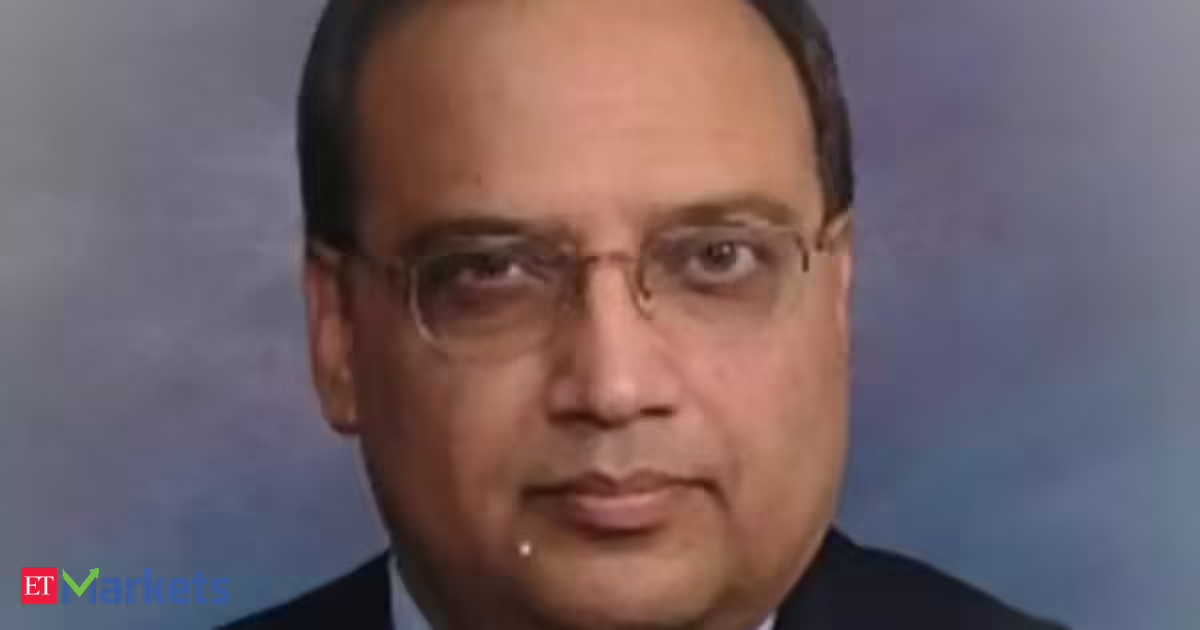
Santosh Rao from Manhattan Venture Partners said the volatility currently visible in global markets is a natural reaction to the uncertain environment. “The market being jittery is the right reaction. We just do not know where it is going. The rhetoric is bouncing around here and there,” Rao said in an interaction with ET Now. He added that the situation could continue for some time as both sides appear unwilling to de-escalate quickly. “Trump always has a habit of being bombastic and then he pulls it back. Iranians are pretty set on having their way. So, this is going to go on for a while,” he said.
The ongoing tensions are also raising concerns about broader economic consequences, particularly the risk of inflation and supply disruptions. Rao noted that the conflict comes at a time when the global economy is already dealing with multiple challenges. “This is the last thing the world needs right now. It has inflationary impact. It has the fear impact,” he said, explaining that markets tend to discount future risks well in advance.
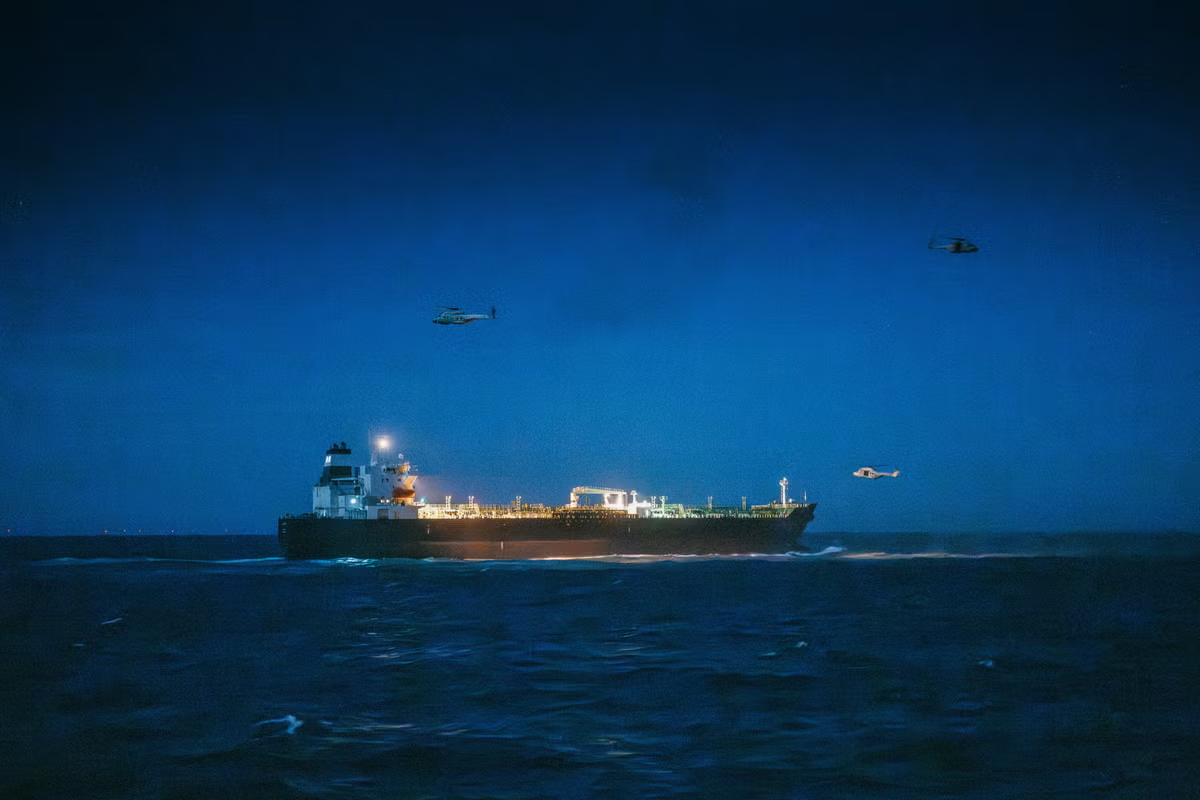
A key concern for investors is the potential disruption of crude oil flows through the Strait of Hormuz, a crucial route for global energy shipments. Any prolonged disruption could push oil prices higher and place pressure on economies across the world, including emerging markets like India. “It is going to be very dangerous, very bad. It is not going to be good for the economies,” Rao said, warning that the conflict could have lasting economic repercussions. He also cautioned that even if hostilities were to end soon, the psychological impact on markets and businesses could persist. “A bomb here, a bomb there… that puts a chilling effect on the economy and sentiment,” he said.
Given the uncertainty, Rao advised investors to remain cautious rather than rushing to buy stocks during market weakness. “For bottom fishers, okay, you can get in… but at this point we do not know where the bottom is,” he said, adding that it may be wiser for investors to stay patient and closely monitor developments.
At the same time, he pointed out that history suggests markets often recover after major geopolitical shocks. Referring to past trends, Rao said markets tend to rebound once the initial wave of fear subsides. “History is some guide. One, three and six months after a big event like this the market tends to be higher,” he said, noting that strong business fundamentals often help equities regain ground over time.
Energy markets remain another key variable in the current environment. Oil prices have surged amid fears of supply disruptions, but Rao believes prices could eventually stabilise as stakeholders work to restore normal flows. “There is definitely going to be some disruption and some price disruption,” he said, adding that crude could spike further if tensions persist.However, he also noted that economic realities may eventually encourage a return to normalcy. “Everybody needs oil. Iran also needs the oil money,” Rao said, emphasising that energy trade remains vital for all parties involved.
For now, investors remain focused on geopolitical developments and their potential economic impact. Until greater clarity emerges, markets are likely to remain volatile as participants weigh short-term risks against the possibility of recovery once tensions begin to ease.