
Business
Russell 2000 Futures Edge Lower in Early Trading Tuesday as Small-Cap Rally Pauses After Strong Monday Gains

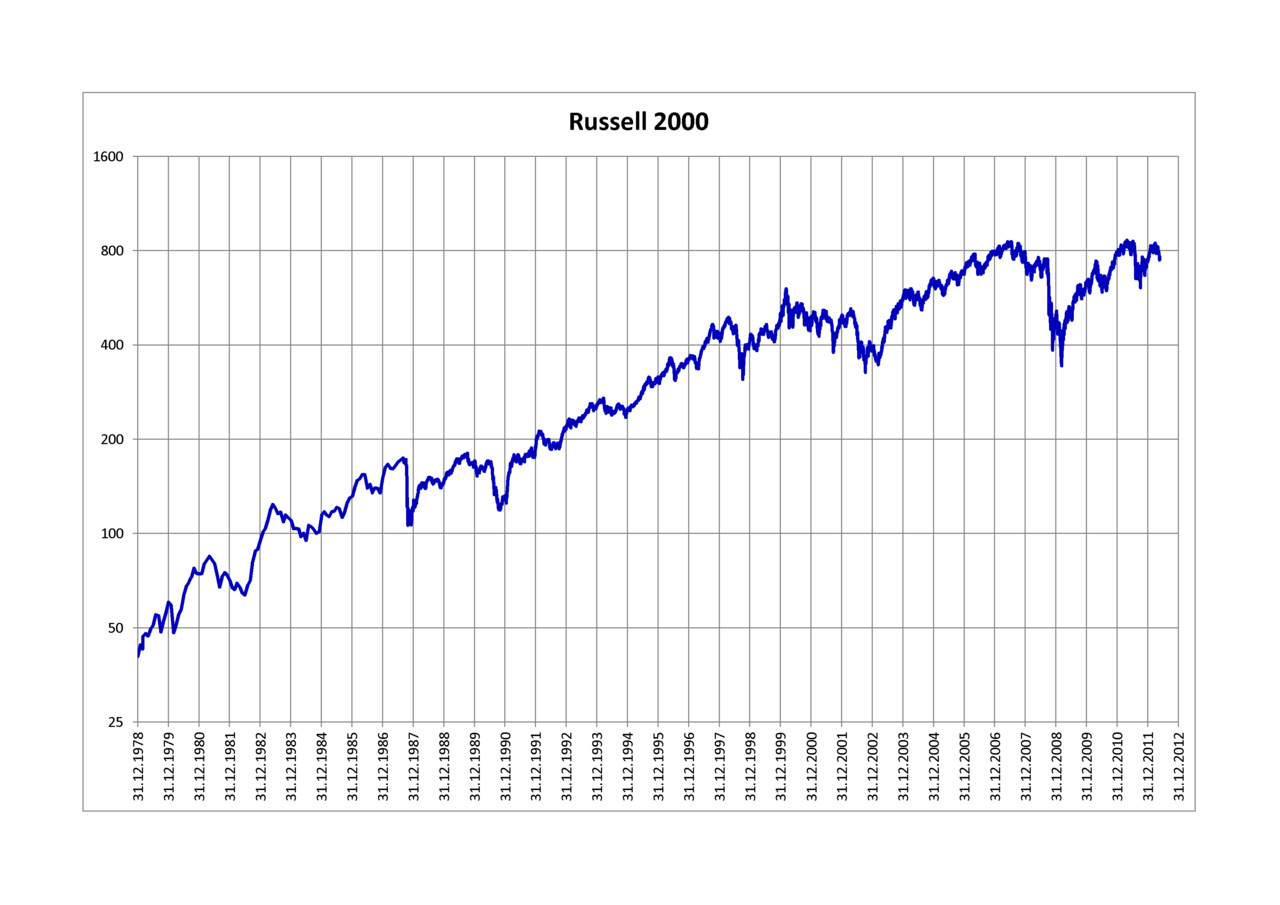
NEW YORK — Russell 2000 futures traded modestly lower in overnight and early Tuesday trading on March 24, 2026, pulling back slightly after a robust session for small-cap stocks the previous day that saw the benchmark index surge more than 2% and futures contracts post solid gains.

The front-month E-mini Russell 2000 futures contract for June 2026 settlement hovered around 2,486 to 2,492 in early Asian and European hours, down roughly 0.7% to 0.9% from Monday’s settlement levels near 2,516. The cash Russell 2000 index itself closed Monday at approximately 2,516, up more than 77 points or 3.19% in one of its strongest daily performances in recent weeks.
Monday’s rally reflected continued investor rotation into small-cap names, which have shown relative strength amid expectations of steady Federal Reserve policy and potential fiscal support for domestic-focused companies. The Russell 2000, which tracks about 2,000 smaller U.S. companies, often benefits when investors shift away from mega-cap technology stocks toward more economically sensitive sectors such as regional banks, industrials and consumer discretionary firms.
Analysts noted that small caps entered correction territory earlier in March after a pullback but have since staged a comeback, supported by lower interest rate sensitivity compared with larger growth stocks. The index remains one of the few major U.S. benchmarks in positive territory year-to-date as of late March, though it has lagged the broader market’s record highs in prior months.
Trading volume in E-mini Russell 2000 futures was active Monday, with more than 280,000 contracts changing hands in the June contract alone. Open interest remains elevated as traders position for potential volatility around upcoming economic data, including consumer confidence readings and housing market indicators later this week.
The June 2026 contract, the most actively traded near-term future, opened Monday near 2,510 before climbing as high as 2,574 in intraday action and settling around 2,516. Overnight action Tuesday showed some profit-taking, with the contract dipping toward the 2,480 level at times before stabilizing.
Market participants cited several factors influencing small-cap sentiment. The Federal Reserve’s recent decision to hold rates steady in the 3.5% to 3.75% range, combined with a patient outlook for future cuts, has eased pressure on borrowing costs for smaller businesses. Additionally, expectations around fiscal measures — including potential infrastructure or domestic manufacturing incentives — have fueled optimism for companies heavily weighted in the Russell 2000.
However, headwinds persist. Elevated geopolitical tensions, fluctuating commodity prices and lingering inflation concerns have kept some investors cautious. Small-cap valuations, while still below historical averages relative to large caps in some metrics, have risen during the recent rebound, prompting warnings from chart analysts not to chase the momentum too aggressively.
The Russell 2000 futures contract serves as a key barometer for risk appetite in the equity market. Each point in the E-mini contract is worth $50, making it a popular tool for both hedgers and speculators. Micro E-mini versions, valued at $5 per point, have also seen growing participation from retail traders seeking exposure to small-cap moves with lower capital requirements.
Broader market context Tuesday showed mixed signals. Major indices futures pointed to a subdued open on Wall Street after Monday’s mixed session, with focus shifting to corporate earnings season progress and fresh inflation data. Small caps’ outperformance Monday stood in contrast to more modest moves in the S&P 500 and Nasdaq, underscoring the ongoing “size rotation” theme that has characterized parts of 2026 trading.
Technical levels to watch include support near 2,450–2,465 for the June futures and resistance around 2,550–2,575. A break above recent highs could signal further upside for small caps, while a decisive drop below 2,450 might test recent correction lows.
Economists and strategists remain divided on the sustainability of the small-cap rally. Some argue that improving earnings visibility for domestic-oriented firms, combined with any softening in the U.S. dollar, could provide tailwinds. Others caution that persistent higher-for-longer interest rates and potential slowdowns in consumer spending could weigh on smaller companies with less pricing power or balance sheet strength.
The Russell 2000’s composition — heavy in financials, industrials, health care and consumer stocks — makes it particularly sensitive to domestic economic conditions. Recent strength in regional bank stocks and cyclical names has helped lift the index, even as technology-heavy large caps face scrutiny over high valuations.
As trading progresses Tuesday, investors will monitor any updates from the Federal Reserve or comments from officials that could influence rate expectations. Housing data due later in the week may also offer clues about the health of the broader economy, given small caps’ exposure to real estate and construction-related businesses.
For traders, Russell 2000 futures provide an efficient way to gain or hedge exposure without trading hundreds of individual stocks. The contract’s liquidity and tight spreads make it a staple in institutional portfolios seeking small-cap beta.
Looking ahead, the June 2026 contract will eventually roll to September, with typical roll activity expected in coming weeks. Market participants are already positioning for potential volatility around key events later in the spring, including more Fed meetings and quarterly earnings from small-cap heavy sectors.
Overall, while early Tuesday action showed some consolidation, the underlying narrative for small caps remains one of cautious optimism. The Russell 2000 futures’ performance continues to be closely watched as a gauge of whether the long-awaited small-cap resurgence can gather further momentum in 2026.

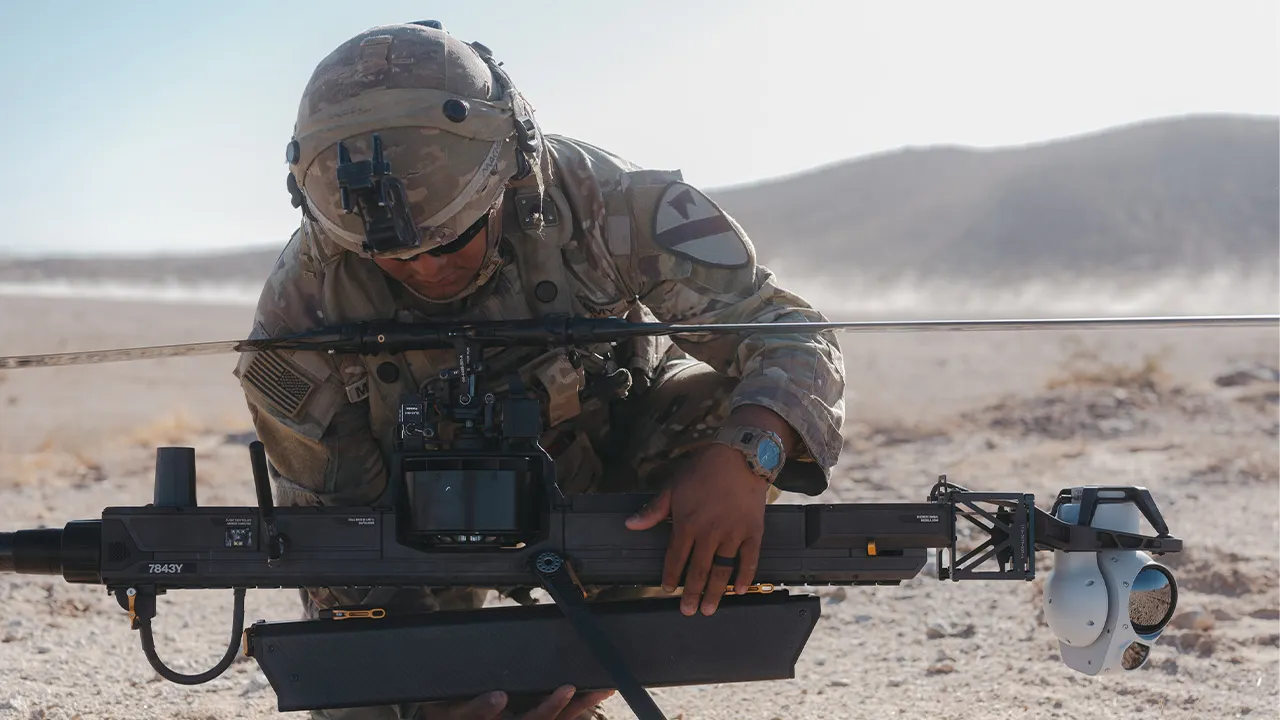
Anduril Executive Chairman and co-founder Trae Stephens details the shift in military strategy towards mass-produced, low-cost autonomous drones and AI-driven systems on ‘Mornings with Maria.’
Swarms of low-cost Iranian drones are rewriting the rules of war, but one U.S. defense contractor says it can mass-produce autonomous military systems to match them at a fraction of the traditional cost.
“Our adversaries are not coming at us with $10-plus million fighter planes, necessarily. They’re coming at us with very, very low-cost munitions,” Trae Stephens, co-founder and executive chairman of Anduril Industries, told “Mornings with Maria” Tuesday.
The challenge, he said, is to “significantly” bring down the cost of engagement instead of firing off $2 million interceptors, noting that the company is doing so by “building… low-cost autonomous systems” that give U.S. forces the ability to “fight the wars of tomorrow, rather than the wars of yesterday.”
AMERICAN DRONE COMPANY CHALLENGES CHINESE DOMINANCE WHILE PREPARING TROOPS FOR SWARM ATTACKS
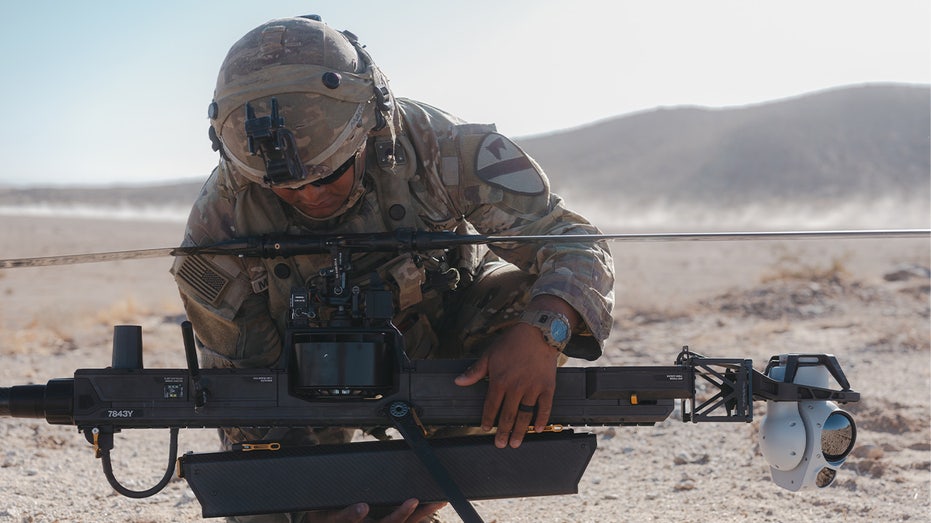
A solider checks an Anduril Industries Inc. Ghost-X reconnaissance drone at the National Training Center (NTC) in Fort Irwin, Calif., on Nov. 7, 2025. (Christopher Lee/Bloomberg via Getty Images)
“That’s been Anduril’s focus since the beginning…” he said.
Stephens detailed the company’s autonomous systems designed to collaborate on the battlefield. Some drones act as “hunters” that scout and identify targets, while others serve as “killers” capable of striking them.
TRUMP SIGNS ORDER TO BLOCK DEFENSE COMPANIES FROM BUYING BACK STOCK UNTIL ARMS PRODUCTION IMPROVES
“You have drones that are going out and looking for other things, like our Ghost platform. You have loitering munitions that fly around looking for things, and then when they find those things, they can go and take kinetic action against them, and then you have platforms like our Barracuda 500 that are… missiles that are intended to go after targets directly,” he explained.
The aim is to replace Cold War-era technology with low-cost autonomous systems that can be mass-produced.
GET FOX BUSINESS ON THE GO BY CLICKING HERE
Former deputy national security advisor Victoria Coates discusses oil prices amid the Iranian conflict on ‘The Bottom Line.’
“We’re leveraging the advances in manufacturing techniques, the advances and autonomy in the manufacturing system to produce at high, high scale at very low cost,” he said.
The company is already moving to scale up production, with a new manufacturing facility in Ohio set to produce these autonomous military systems at high volume as wartime demand grows.

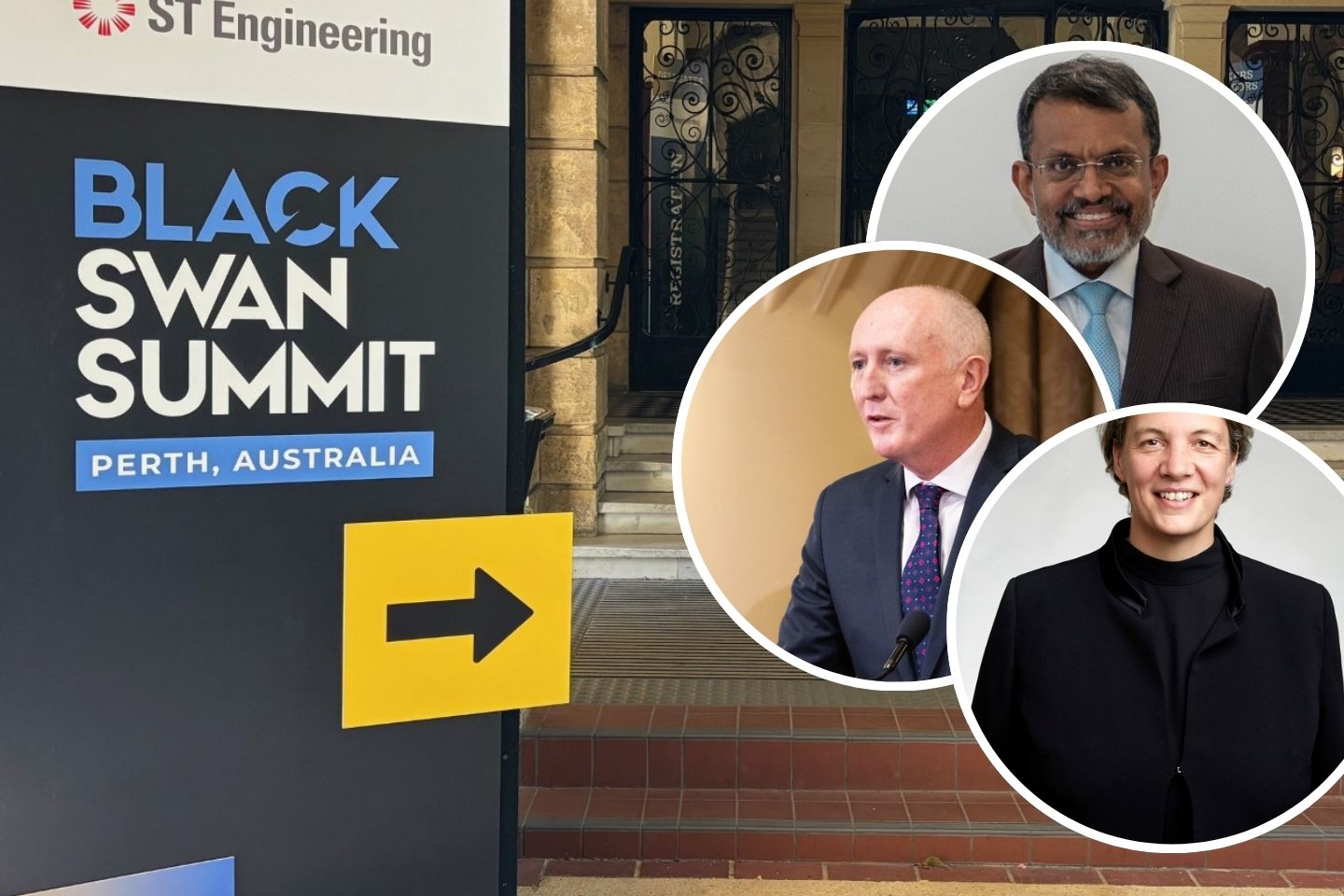
WA businesses received a blunt wake-up call today as the ‘Quantum Age’ moves beyond the lab, with experts warning those who wait to act will likely be too late to survive the fallout.


The gummies launch in partnership with NBA player Giannis Antetokounmpo.


The fries are formulated with avocado oil.

RBC Capital maintains Outperform on Karyopharm stock after trial data

The Chief Minister says conflict in the Middle East will lead to price rises in the coming days.
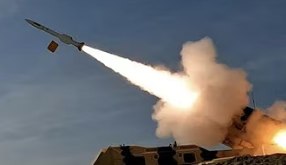
WASHINGTON — Iran’s ballistic missile program, long the backbone of its military deterrence, has undergone intense scrutiny and degradation in the 2026 conflict with Israel and the United States. Once estimated at more than 3,000 missiles, the arsenal has been significantly reduced by joint strikes, yet Tehran continues to demonstrate range and resilience with recent launches testing assumptions about its capabilities.

Here are 10 essential things to know about Iran’s ballistic missiles as of late March 2026:
- Iran possesses the largest ballistic missile arsenal in the Middle East, though heavy losses have trimmed its size. Prior to escalated fighting in 2025-2026, U.S. estimates placed the inventory above 3,000 missiles, including short-range and medium-range systems. After firing hundreds in retaliatory barrages and suffering Israeli and U.S. strikes on production sites and launchers, remaining stocks are estimated between 1,000 and 2,000 operational missiles, with launchers reduced to roughly 100-200 serviceable units. Despite this, Iran has shown rapid reconstitution efforts, importing components and rebuilding facilities.
- The program features a diverse mix of liquid- and solid-fueled missiles. Liquid-fueled systems like variants of the Shahab-3 offer longer ranges but require more preparation time. Solid-fueled missiles, such as the Sejjil and newer models like Kheibar Shekan, allow quicker “shoot-and-scoot” launches, making them harder to target. This mix enhances survivability against preemptive strikes on fixed sites.
- Ranges traditionally capped at 2,000 km have been challenged. Iranian officials long claimed a self-imposed 2,000-kilometer limit, sufficient to reach Israel from western Iran. However, in March 2026, Iran launched two ballistic missiles targeting the U.S.-U.K. base at Diego Garcia in the Indian Ocean — more than 4,000 km away. One failed in flight; the other was intercepted. The attempt suggests modified systems or previously undisclosed capabilities that could threaten parts of Europe or further U.S. assets.
- Hypersonic and maneuverable warheads are advancing rapidly. The Fattah-1 and Fattah-2 hypersonic glide vehicles represent a major leap, with claims of Mach 15 speeds and the ability to maneuver in pitch and yaw during re-entry. These features are designed to evade advanced defenses like Israel’s Arrow system or U.S. Patriot batteries. Iran has deployed Fattah-2 in recent strikes, showcasing improved precision and terminal-phase adjustments.
- Key medium-range systems include the Shahab-3 family, Emad, Ghadr, Sejjil and Khorramshahr. The Shahab-3 and its variants reach 1,300-2,000 km with payloads up to 1,500 kg. The solid-fueled Sejjil offers similar range with faster launch readiness. The Khorramshahr, potentially reaching 3,000 km, carries heavy warheads suited for hardened targets. Many feature maneuverable re-entry vehicles (MaRVs) to complicate interception.
- Short-range missiles provide regional saturation capability. Systems like the Fateh-110, Zolfaghar and Khalij Fars (anti-ship variant) cover 300-700 km, threatening U.S. bases in the Gulf, Israel’s neighbors and shipping lanes. These are often deployed in large salvos to overwhelm defenses, combined with drones for complex attacks.
- Underground “missile cities” enhance survivability. Iran has invested heavily in deeply buried facilities and mobile transporter-erector-launchers (TELs) dispersed across the country. While Israeli strikes damaged surface infrastructure and some launch pads, many underground stockpiles and production elements survived initial waves, allowing limited continued operations.
- The program has been heavily targeted in 2025-2026 fighting. Joint U.S.-Israeli operations destroyed an estimated 60-85% of surface-to-air missiles and a significant portion of ballistic launchers and production sites. Strikes hit facilities in Tehran, Semnan, Khuzestan and elsewhere, reducing daily launch rates by up to 90% in some phases. Production sites for solid fuel mixers and components were repeatedly hit, though Iran has begun reconstruction using alternative methods and imported materials.
- Precision and lethality improvements focus on saturation tactics. Older missiles had limited accuracy, but newer variants with GPS-aided or inertial guidance, cluster munitions and heavier warheads aim to saturate defenses. In 2024-2025 exchanges, Iran fired hundreds of missiles in barrages, with some penetrating Israeli multi-layered defenses and causing casualties in urban areas. Recent attacks have shifted toward countervalue targets in populated zones.
- Reconstitution and future risks remain a major concern. Despite losses, Iran is rebuilding, potentially aiming for 8,000 missiles by 2027 if unchecked, according to Israeli assessments. Imports of sodium perchlorate and other components from abroad support solid-fuel production. The program’s dual-use nature with space launch vehicles raises proliferation worries, and any nuclear breakout could pair with these delivery systems. Ongoing conflict has degraded but not eliminated the threat, with experts warning that full restoration could take 1-2 years.
Iran’s ballistic missiles serve as its primary asymmetric tool, compensating for conventional air force weaknesses. The Islamic Revolutionary Guard Corps oversees much of the program, integrating it with drone swarms for layered attacks. While U.S. and Israeli strikes have degraded launch rates and infrastructure, Tehran’s ability to fire at distant targets like Diego Garcia has upended prior range assumptions and heightened concerns for regional stability and European security.
The 2026 war has exposed both the program’s resilience and its vulnerabilities. Production facilities remain under pressure, yet underground assets and rapid repair efforts suggest Iran retains a credible deterrent. As fighting continues, the missile program’s evolution will shape the conflict’s trajectory and broader Middle East dynamics.
Analysts stress that while current stocks are diminished, the combination of hypersonic technology, dispersal tactics and reconstitution speed keeps Iran’s arsenal a potent factor. International efforts to curb components and sanctions aim to slow progress, but enforcement challenges persist.
For now, the March Diego Garcia attempt stands as a stark reminder: Iran’s ballistic missiles, even when degraded, can project power farther and with greater sophistication than many once believed. The coming months will test whether sustained pressure can prevent a full rebound or if Tehran will field an even more advanced force.


Labutes IR is a Fund Manager/Analyst specialized in the financial sector, with more than 18 years of experience in the financial markets. I have worked at several type of institutions in the industry, always at the buy side and related to portfolio management. Associated with the existing author The Outsider.
Analyst’s Disclosure: I/we have no stock, option or similar derivative position in any of the companies mentioned, and no plans to initiate any such positions within the next 72 hours. I wrote this article myself, and it expresses my own opinions. I am not receiving compensation for it (other than from Seeking Alpha). I have no business relationship with any company whose stock is mentioned in this article.
Seeking Alpha’s Disclosure: Past performance is no guarantee of future results. No recommendation or advice is being given as to whether any investment is suitable for a particular investor. Any views or opinions expressed above may not reflect those of Seeking Alpha as a whole. Seeking Alpha is not a licensed securities dealer, broker or US investment adviser or investment bank. Our analysts are third party authors that include both professional investors and individual investors who may not be licensed or certified by any institute or regulatory body.

.webp?t=1753366978)
Le Duff Group subsidiary advances global investment plan.

Moses Moody injury: Warriors, Mavericks were ‘horrified’ at grisly visual, says Steve Kerr
![Gini caranya! [Adira Finance berizin dan diawasi oleh Otoritas Jasa Keuangan] #MomobilalanNinjaku](https://wordupnews.com/wp-content/uploads/2026/03/1774364352_maxresdefault-80x80.jpg)
Gini caranya! [Adira Finance berizin dan diawasi oleh Otoritas Jasa Keuangan] #MomobilalanNinjaku

Donald Trump voted by mail in Florida special election as he bashes mail ballots


-
 Crypto World4 days ago
NIO (NIO) Stock Plunges 6.5% as Shelf Registration Sparks Dilution Worries
-

 Fashion4 days ago
Weekend Open Thread: Adidas – Corporette.com
-

 Politics4 days ago
Jenni Murray, Long-Serving Woman’s Hour Presenter, Dies Aged 75
-
 Tech7 days ago
Are Split Spacebars the Next Big Gaming Keyboard Trend?
-

 Crypto World3 days ago
Best Crypto to Buy Now: Strategy Just Spent $1.57 Billion on Bitcoin During Fear While Early Investors Quietly Enter Pepeto for 150x Potential
-

 News Videos6 days ago
RBA board divided on rate cut, unusually buoyant share market | Finance Report | ABC NEWS
-

 Crypto World3 days ago
Bitcoin Price News: Bhutan Sells $72 Million in BTC Under Fiscal Pressure, but the Smart Money Entering Pepeto Sees What the Market Does Not
-

 Politics6 days ago
The House | The new register to protect children from their abusers shows Parliament at its best
-

 Tech4 days ago
inKONBINI Lets You Spend Summer Days Behind the Register
-

 Crypto World6 days ago
Canada’s FINTRAC revokes registrations of 23 crypto MSBs in AML crackdown
-

 Sports1 day ago
Remo Stars and Kano Pillars Strengthen Survival Hopes in NPFL
-
 NewsBeat6 days ago
Residents in North Lanarkshire reminded to register to vote in Scottish Parliament Election
-

 News Videos6 days ago
PARLIAMENT OF MALAWI – PAC MEETING WITH REGISTRAR OF FINANCIAL ON AMARYLLIS HOTEL – INQUIRY LIVE
-

 Politics5 days ago
Gender equality discussions at UN face pushbacks and US resistance
-

 Business2 days ago
No Winner in March 21 Drawing as Prize Rolls to $133 Million for Next
-

 Business6 days ago
Who Was Alex Pretti? 5 Key Facts About the ICU Nurse Killed by Federal Agents in Minneapolis
-

 Sports1 day ago
Gary Kirsten Accuses Pakistan Cricket Board Of ‘Interference’, Mohsin Naqvi Responds
-

 Tech2 days ago
Give Your Phone a Huge (and Free) Upgrade by Switching to Another Keyboard
-

 Sports4 days ago
2026 Kentucky Derby horses, odds, futures, preview, date: Expert who nailed 12 Derby-Oaks Doubles enters picks
-
Sports5 days ago
Vikings Free Agency Enters Phase 2 with Key Questions
You must be logged in to post a comment Login