
Connect with us
DAPA Banner

Business

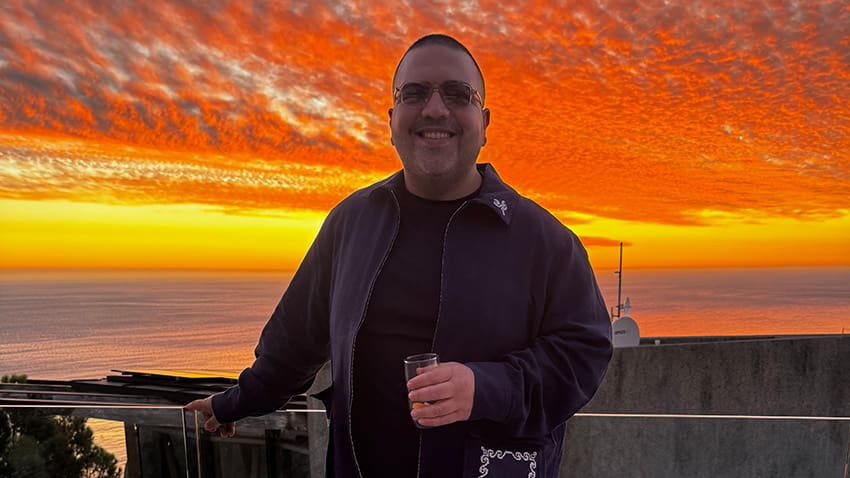
Said Abulafia: Building Resilience in Hospitality

Published

on

Said Abulafia: Building Resilience in Hospitality

A Business Built on Discipline and Direction

In a fast-changing world, consistency is rare. Said Abulafia has built his career around it.

Based in Tel Aviv–Jaffa, Abulafia leads a historic family-owned bakery business operating since 1879. He is navigating one of the most unpredictable business environments in recent years. His approach is simple. Stay focused. Stay disciplined. Keep moving forward.

“Success to me is creating lasting value,” he says. “Having a positive impact on people, and maintaining consistency, discipline, and control over my direction.”

This mindset has shaped every stage of his journey.

Advertisement

From Law to a 19th-Century Family Business

Abulafia did not start in hospitality. His career began in corporate law.

He worked in the M&A department at what was then Israel’s largest law firm. The role gave him exposure to deals, structure, and high-level decision-making. But it wasn’t where he wanted to stay.

He made a shift. He joined his historic family-owned bakery business, a brand with roots going back to 1879.

That move changed everything.

Advertisement

Instead of advising businesses, he was now building one. Day-to-day operations replaced boardroom strategy. Execution became the priority.

“I focus more on what I can do in the near term to move in that direction,” he explains. “It’s more about staying consistent and moving forward than following a strict system.”

Leading Through Uncertainty in Hospitality

The past few years tested that mindset.

Abulafia ran the business through COVID-19 disruptions and ongoing instability. Demand shifted overnight. Supply chains became unpredictable. Costs increased.

Advertisement

Margins tightened from both sides.

“At one point, margins were getting squeezed from both sides — rising costs and unpredictable demand,” he recalls.

Instead of waiting for conditions to improve, he adapted.

He streamlined operations. He made the business leaner. He strengthened relationships with suppliers to secure better terms. He focused on consistency and quality to keep customers returning.

Advertisement

He also invested more in brand presence, rather than relying only on foot traffic.

“What initially felt like a setback ended up making the business more resilient,” he says.

The result was not just survival. It was a stronger operating model.

What Makes a Strong Business Leader Today

Abulafia’s leadership style is shaped by pressure.

Advertisement

He believes discipline matters more than motivation. Motivation comes and goes. Discipline stays.

“Consistency, resilience, and adaptability,” he says. “You learn quickly that discipline matters more than motivation, relationships matter more than transactions.”

He also emphasizes people.

Customers, employees, and partners are not just part of the system. They are the system. Strong relationships create long-term stability, especially in uncertain markets.

Advertisement

Another key idea is staying calm under pressure.

In hospitality, conditions can change daily. Leaders who react emotionally fall behind. Leaders who stay steady create clarity.

Balancing Growth with Personal Well-Being

Abulafia does not separate business performance from personal health.

He sees them as directly connected.

Advertisement

“When personal well-being is neglected, business performance inevitably suffers,” he says.

His routine reflects that belief. He prioritizes workouts, daily walks, and time to think. These are not extras. They are part of how he operates.

He also keeps his planning simple.

There is a long-term direction, but the focus stays on what matters now. He regularly checks what is working and adjusts.

Advertisement

This flexible approach allows him to stay responsive without losing direction.

Building Trust in a Complex Environment

One of the less visible challenges in Abulafia’s journey has been building trust.

“As someone operating as part of an Arab family business within a predominantly Jewish environment, it meant earning trust and integrating into a diverse setting,” he explains.

He approached this the same way he approaches business. Stay grounded. Focus on people. Be consistent over time.

Advertisement

Outside of work, he supports initiatives that promote dialogue between different communities. This reflects a broader belief that business and social impact are connected.

How Said Abulafia Defines Success Today

For Said Abulafia, success is not just about results.

It is about how those results are achieved.

“I look at success from a few angles,” he says. “The outcome is important, but so is how I got there, whether I stayed true to my own standards.”

Advertisement

Growth also plays a role.

He sees success as a process, not an endpoint. Even strong performance is a signal to keep improving.

“I don’t see success as an endpoint, but as a chance to grow into the next version of myself,” he adds.

Consistency Over Everything

Abulafia’s story is not about quick wins.

Advertisement

It is about steady progress under pressure.

He built his leadership style through real challenges. He refined it by staying consistent when conditions were unstable.

His approach is clear:

  • Focus on what you can control
  • Prioritize people
  • Stay disciplined
  • Adapt when needed

Above all, keep moving forward.

“What keeps me going is knowing that what I build can have a real, positive impact on people,” he says.

Advertisement

In a volatile industry, that mindset is what sets lasting businesses apart.


Advertisement
Continue Reading
Click to comment

You must be logged in to post a comment Login

Leave a Reply

Business

Nearly 300 workers made redundant after Welsh furniture firm collapses into administration

Published

on

Business Live

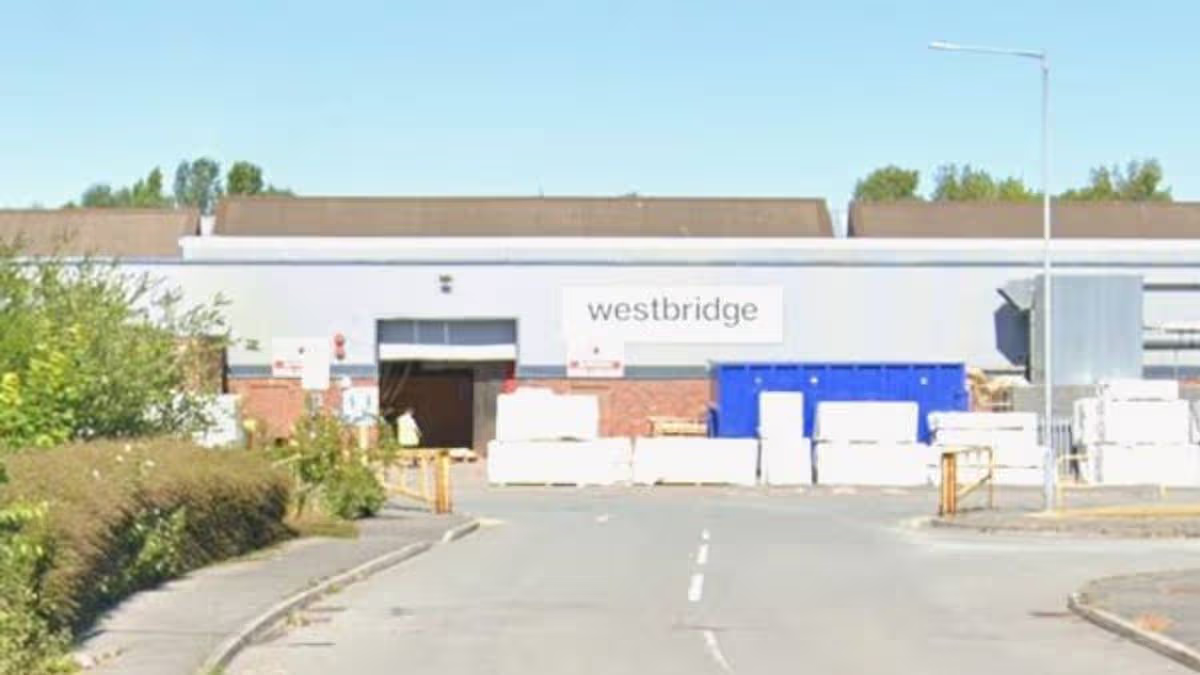
Furniture manufacturer Westbridge has entered administration

Westbridge.

Nearly 300 workers have lost their jobs at a Welsh furniture firm following its collapse into administration. Westbridge had been a respected furniture designer and manufacturer, providing sofas and other upholstered items to several high street and premium independent retailers.

The company employed just under 300 people at its facility in Holywell, Flintshire. Chris Pole and Will Wright from Interpath were last month appointed joint administrators to Westbridge Furniture Limited and Belfield Leisure Limited, based in Derbyshire.

Advertisement

They had kept the businesses running while evaluating market interest in buying them and preserving the jobs and sites.

However, the joint administrators have now confirmed that 297 staff had been made redundant

They said: “Chris Pole and Will Wright from Interpath were appointed joint administrators following operational disruption, weak trading and the loss of a key customer.

“Since their last update the joint administrators had maintained operations at Westbridge Furniture, while they completed outstanding work in progress and assessed interest in the business.

Advertisement

“Without any viable offers for the business, production ceased on April 2 and the business progressed with a wind-up process. It is with regret that the majority of the business’ 297 remaining staff have since been made redundant.

“The administrators will continue to provide support to those impacted, including supporting them with claims to the Redundancy Payments Service. A small number of staff have been retained to assist the joint administrators in their duties.”

Chris Pole, managing director at Interpath and joint administrator of Westbridge Furniture Limited, said: “The team at Westbridge has shown exceptional professionalism in maintaining production while we explored options.

“Regrettably, as no viable offers for the business were received, it was no longer possible to continue trading and we have had to take the difficult decision to close the business. We recognise this has been a challenging period for staff and I’d like to express my sincere thanks for their commitment.”

Advertisement

The joint administrators have since agreed the sale of the exclusive intellectual property and design rights to the full Westbridge independent product catalogue to sofa and upholstery manufacturer, Whitemeadow. The buyer intends to engage with stockists of Westbridge products to ensure continuity where possible.

Chris Pole added: “The agreement to sell the IP and design rights to Whitemeadow preserves Westbridge’s range for retailers. We wish the Whitemeadow team all the best as it embarks on a development programme to reintroduce those designs to the market.”

The joint administrators are continuing to operate and assess possibilities for Belfield Leisure Limited, which also forms part of The Belfield Group.


Advertisement
Continue Reading

Business

Which airlines are cancelling flights to UK over jet fuel shortages?

Published

on

Which airlines are cancelling flights to UK over jet fuel shortages?

Rory Boland, travel editor at consumer publication Which?, says overall cancellations will be a very small proportion of the millions of flights in and out of the UK, and the changes will be targeted on routes where there are multiple flights a day so that passengers can be rebooked on to an earlier or later flight.

Continue Reading

Business

DTE Energy plans two-year pause on electric rate increases

Published

on


DTE Energy plans two-year pause on electric rate increases

Continue Reading

Business

Greencroft Bottling grows profits but success stunted by shipping ‘havoc’

Published

on

Business Live

Bosses also blasted a “ridiculous tax” levied on the industry

The Greencroft Two site by Lanchester Group of Companies is now taking shape

The Greencroft Two site by Lanchester Group of Companies is now taking shape(Image: Lanchester Group)

Wine bottling firm Greencroft Bottling has blamed disruption in the Suez Canal for marring what would have been an exceptional year.

The County Durham-based business, which claims to be one of the most sustainable large contract firms of its type “on the planet” said temporary closure of the key waterway in 2024 impacted otherwise brilliant results. Attacks by Houthi Rebels on shipping in the Red Sea caused a drastic reduction in traffic through the canal, which Greencroft says caused “havoc” – leading to millions of pounds of penalties and other costs as huge volumes of wine hit North East ports over a two week period.

Despite the challenges, Greencroft, which is part of the Lanchester Group, managed to increase operating profits from £1.56m to £2.78m in the year to the end of June, 2025. Newly published documents also show turnover at the 300-strong firm increased from £62.5m to £86m.

With a £20m new production facility called Greencroft 2 now completed at its Annfield Plain base, and significant investments in sustainability measures, the firm is now looking ahead to what it expects to be its best ever year. Together with a new semi-automated warehouse, the new production facility – with the potential for 400million litres of capacity annually – is expected to make the company the “most efficient wine bottling and storage operation certainly in the UK if not in Europe”.

Advertisement

Bosses also looked forward to the benefits of bulk wine shipping, which is said to be better for the product and give the business high volumes. The new premises, powered by wind and solar energy, has the potential to handle the equivalent of 28% of all wine sold in the UK.

Writing in the Greencroft Bottling Company Limited accounts, managing director Mark Satchwell said: “Greencroft Bottling Company has had an excellent year with volume increasing by well over 20% which is amazing considering we have had such a turbulent year here in the UK, the new 18,000 an hour filling line in Greencroft 2 has been integrated into the business and working well and we have invested in more automation in our tank facility increasing our efficiency more than 40%.

“We continue to invest in the business with more automation to keep our cost base as low as possible the new Labour Government increased wine duty massively again this year after to huge 20% rise just 12 months ago, this is really harming the whole industry with duty alone moving up by nearly 40% over the last 15 months.

“And we have Extended Producer Responsibility (EPR) to contend with yet another ridiculous tax on all businesses, but the liquor and hospitality industries have been the hardest hit it seems and not surprisingly there is at least one pub a day closing which is really harming the local communities.”

Advertisement
Continue Reading

Business

Earnings call transcript: Acme United Q1 2026 sees EPS miss amid revenue growth

Published

on


Earnings call transcript: Acme United Q1 2026 sees EPS miss amid revenue growth

Continue Reading

Business

Valmont Industries stock reaches all-time high of $488.28

Published

on


Valmont Industries stock reaches all-time high of $488.28

Continue Reading

Business

Primient adds fourth business unit

Published

on

Primient adds fourth business unit

Biosolutions unit joins company’s sweeteners, performance starches and agrifunctionals portfolio.

Continue Reading

Business

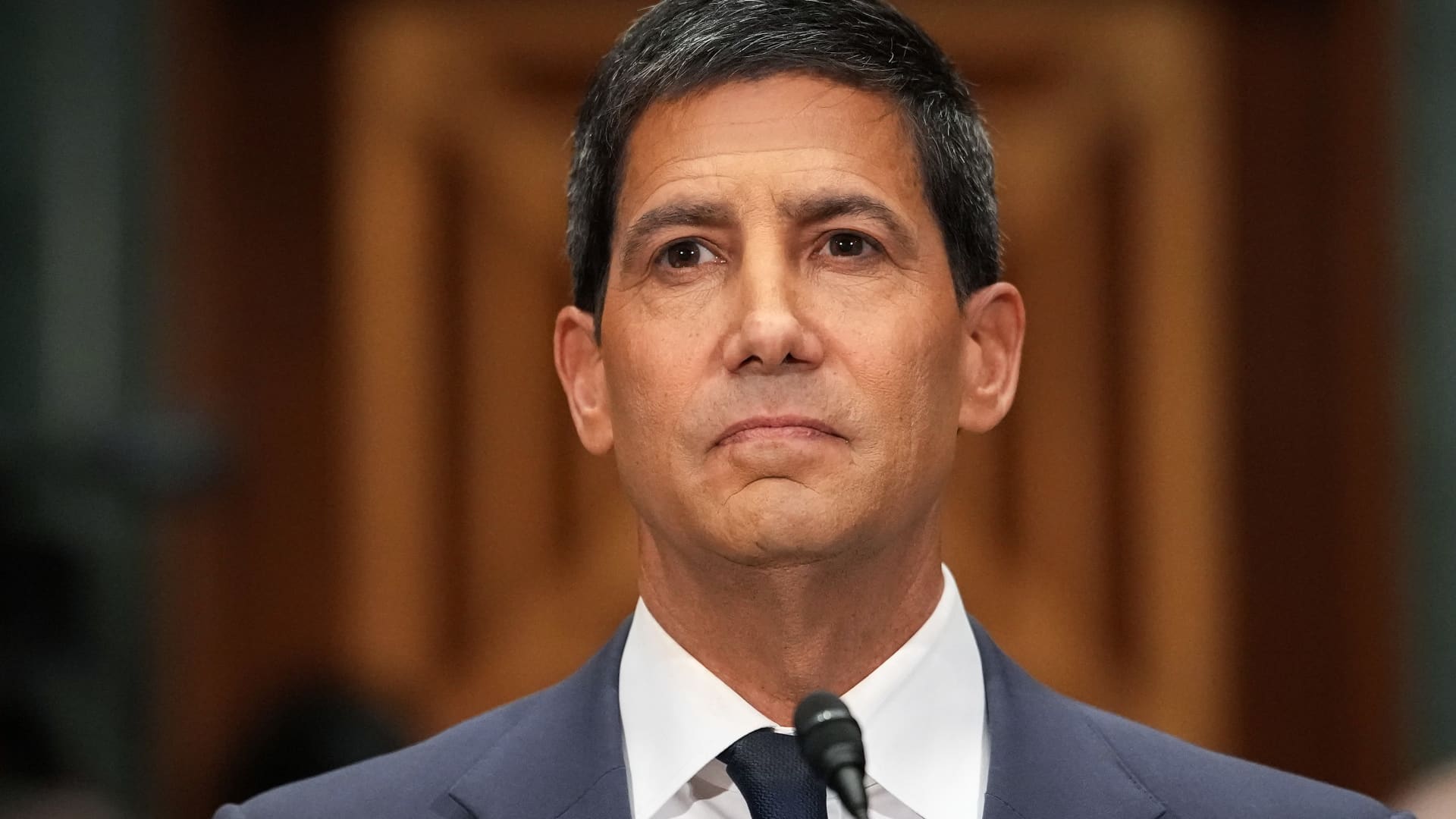
Kevin Warsh’s wealth shows how top family office employees can cash in

Published

on

Kevin Warsh’s wealth shows how top family office employees can cash in
How Trump Fed Chair Nominee Kevin Warsh Could Transform the Federal Reserve

A version of this article first appeared in CNBC’s Inside Wealth newsletter with Robert Frank, a weekly guide to the high-net-worth investor and consumer. Sign up to receive future editions, straight to your inbox.

Kevin Warsh can credit more than $100 million of his vast fortune to a lucrative regulatory carveout that favors family office executives and investment professionals, family office attorneys told Inside Wealth.

While single-family offices are widely understood to only manage family members’ assets, a little-known exception allows certain employees to invest with the ultra-wealthy families they work for.

Warsh’s recent financial disclosures are putting the carveout on display.

Advertisement

The Federal Reserve chair nominee has two stakes worth at least $50 million each in a vehicle called the Juggernaut Fund, according to the filings. The fund is managed by Duquesne Family Office, the personal investment firm of billionaire hedge fund manager Stanley Druckenmiller.

Warsh joined Duquesne as a partner and advisor after leaving the Fed in 2011 and has interests in dozens of other Duquesne entities. The underlying assets in the Juggernaut Fund are not detailed, citing Warsh’s “pre-existing confidentiality agreements” with the firm.

An attorney who has advised family offices for 30 years told CNBC it’s increasingly common for family offices to structure compensation for their key employees in a similar manner to private equity firms. That could include incentive fees from investments or opportunities to co-invest capital, said the lawyer, who spoke on the condition of anonymity in order to speak freely.

Family offices often lend money to these employees in order to fund their capital commitments and forgive them over time or apply future bonuses toward the debt, the lawyer said.

Advertisement

Single-family offices can allow employees to co-invest thanks to a family office rule issued by the Securities and Exchange Commission in 2011. Under that rule, family offices do not have to register as investment advisors so long as they only advise or manage assets for family clients, a category that includes key employees along with family members of the firm founder. 

To qualify, key employees must occupy a senior position like director or a executive officer or be involved in the firm’s investment activity, according to the SEC. Investment professionals must have held these duties at the family office or another company for at least 12 months, per the SEC.

“I think the SEC staff at the time was sympathetic to the family office community’s concerns about making investment opportunities and in-house investment staff as robust as possible,” said a lawyer at a New York City firm, who asked to remain anonymous to speak about the matter. “They recognized that attracting and retaining that type of talent required providing executives that level of compensation.”

Lawyers told Inside Wealth that Warsh likely falls under the key employee exception. Duquesne and a representative of Warsh did not respond to requests for comment.

Advertisement

Evan Hall, partner at investment management practice group at Haynes Boone, said the “key employee” category is somewhat flexible, however.

“If you’re an employee of the firm who participates in investment decisions, it doesn’t have to be all investment decisions for the family office,” Hall said. “People can game it a little bit. Can a consultant fit in the key-employee definition? It really seems kind of murky, but that’s a line we see a lot.”

Get Inside Wealth directly to your inbox

Warsh has promised to divest his Duquesne-affiliated investments if he’s confirmed as Fed chair, but he has not disclosed how he would do so.

Lawyers who spoke with Inside Wealth said Warsh would have to sell them to the Druckenmiller family or another family client in order for Duquesne to comply with the family office rule. 

Advertisement

“I will say that if he doesn’t have friendly partners willing to buy him out, getting out of underlying investments tends to be very difficult,” said another New York lawyer, who similarly requested to remain anonymous to speak candidly. “Otherwise it’s very difficult to get out of private investments.”

At Tuesday’s Senate Banking Committee confirmation hearing, Sen. Elizabeth Warren, D.-Mass, asked Warsh if he would sell those interests back to Druckenmiller.

“Will you disclose how you divest those assets? Or will you just collect a check for $100 million from someone whose whole business is betting on what the Fed will do?” Warren said. 

Warsh said he had come to an agreement with the Office of Government Ethics, but did not give specific details about that.

Advertisement

Although Warsh’s nomination and wealth have cast attention on how family offices compensate their employees, lawyer Michael Schwamm, a partner at Duane Morris, said it’s unlikely that it will invite regulatory scrutiny on how key employees are defined or how many can co-invest.

He said the SEC would probably only act if an investment went bad and an employee lost their life savings and came after the firm in a public way.

“I would not be surprised if there are family officers that have tripped the line, but is this something that the SEC is actively gonna go after?” he said. “Not until something happens.”

Choose CNBC as your preferred source on Google and never miss a moment from the most trusted name in business news.
Advertisement
Continue Reading

Business

Earnings call transcript: FirstService Q1 2026 beats forecasts, stock climbs

Published

on


Earnings call transcript: FirstService Q1 2026 beats forecasts, stock climbs

Continue Reading

Business

Italy stocks higher at close of trade; Investing.com Italy 40 up 0.28%

Published

on


Italy stocks higher at close of trade; Investing.com Italy 40 up 0.28%

Continue Reading

Trending

Copyright © 2025