Nancy Guthrie, the 84-year-old mother of NBC’s “Today” show co-anchor Savannah Guthrie, remained missing Monday as the search entered its 58th day with authorities treating the case as an abduction from her Catalina Foothills home but offering few new breakthroughs despite thousands of tips and multiple ransom demands.
Savannah Guthrie & Nancy Guthrie
Guthrie was last seen on the evening of Jan. 31, 2026, when her daughter Annie and son-in-law dropped her off at her residence around 9:48 p.m. after dinner. She failed to appear the next morning for a virtual church service with friends, prompting a welfare check and her official report as missing on Feb. 1.
Pima County Sheriff Chris Nanos has repeatedly stated that investigators believe Guthrie was taken against her will in the early morning hours of Feb. 1. Evidence includes drops of her blood found on the front porch and security camera footage showing a masked individual approaching the home and appearing to tamper with the doorbell camera around 1:47 a.m. Additional images recovered from nearby cameras have shown suspicious activity in the days leading up to the disappearance.
A doorbell camera app disconnected at approximately 1:47 a.m., and software later detected movement — possibly a person or animal — about 25 minutes afterward. Her pacemaker app also lost connection around 2:28 a.m., adding to the timeline of concern.
The family has been fully cooperative and cleared as suspects, Nanos confirmed early in the investigation. Savannah Guthrie, her sister Annie and brother have made emotional public appeals, including videos pleading for information and offering a $1 million reward for details leading to their mother’s safe return. The FBI is offering an additional $100,000 reward.
Advertisement
Multiple ransom notes have surfaced, some sent to media outlets demanding large sums in Bitcoin or other cryptocurrencies in exchange for information or her return. Investigators have described the communications as cryptic and inconsistent with typical patterns, raising questions about their authenticity or the perpetrator’s motives. No proof of life has been provided, though the sheriff has expressed guarded hope that Guthrie could still be alive.
Forensic testing on gloves found near the home — one discovered about two miles away — has yielded mixed results. DNA from one glove did not match entries in the FBI’s CODIS database, and authorities later determined another glove belonged to a restaurant worker unrelated to the case. Other gloves recovered have undergone further testing, but results have been delayed due to mixed DNA profiles.
The case has drawn intense national attention because of Savannah Guthrie’s high-profile role on “Today.” The anchor has taken time away from the show to support her family in Tucson, though she recently visited the studio to thank colleagues and indicated plans to return to air. In a recent interview, she described the “chaos and disbelief” of receiving the call from her sister about their mother’s disappearance.
The affluent Catalina Foothills neighborhood, located roughly six miles northeast of Tucson, has been the focus of extensive searches involving ground teams, helicopters, cadaver dogs and neighborhood canvassing. The FBI has assisted local authorities, and the investigation has expanded to include analysis of digital evidence, vehicle movements and potential connections outside Arizona.
Advertisement
Forensic experts have noted the unusual aspects of the case: an elderly victim taken from her bed in a seemingly targeted manner, with limited signs of struggle beyond the blood evidence and camera tampering. Some analysts have speculated it could be an extortion plot rather than a random crime, given the ransom demands and the family’s visibility.
The Guthrie family has described Nancy as a devout, active woman who enjoyed church and family time despite some mobility limitations. Savannah has publicly noted that her mother rarely walked far on her own, raising questions among observers about how she could have left voluntarily.
As the search stretches into its second month, the Pima County Sheriff’s Office has scaled back some large-scale efforts but maintains a dedicated team of detectives. The investigation has shifted some operations toward Phoenix for broader coordination while keeping the Tucson home as a focal point. Authorities have urged anyone with surveillance footage from the night of Jan. 31 or early Feb. 1 to come forward.
The case has highlighted the broader challenges of missing persons investigations, particularly for elderly victims. Experts say thousands of people go missing annually in the U.S., but cases involving abduction of seniors from their homes are relatively rare and often complex due to limited physical evidence and the passage of time.
Advertisement
Savannah Guthrie and her siblings have continued to post updates and pleas on social media, emphasizing their mother’s kind nature and the family’s desperation for answers. Yellow ribbons, flowers and messages of support have appeared near the home, creating a makeshift memorial as the community rallies around the family.
No arrests have been made, and no suspect has been publicly identified. The sheriff has stressed that the investigation remains active and will continue until Nancy is found or all leads are exhausted.
The high visibility of the case has brought renewed attention to other missing persons families, with some advocates noting a “Nancy Guthrie effect” in generating tips for unrelated cases.
As of March 30, 2026, Nancy Guthrie’s whereabouts remain unknown. Tips can be submitted to the Pima County Sheriff’s Office or the FBI tip line at 1-800-CALL-FBI. The family continues to ask the public to remain vigilant and report any suspicious activity or information, no matter how small.
Advertisement
The disappearance has left a prominent media family and an entire community in anguish, with more questions than answers nearly two months later. Investigators and loved ones alike hold out hope for a resolution that brings Nancy Guthrie home safely.
UK retail sales slipped for the first time in three months in February, underlining the fragility of consumer spending even before the latest global energy shock began to take hold.
Data from the Office for National Statistics (ONS) showed sales volumes fell by 0.4 per cent during the month, reversing a 2 per cent increase in January. Although the decline was less severe than analysts had forecast, it signals a loss of momentum in the retail sector at a time when economic conditions were already tightening.
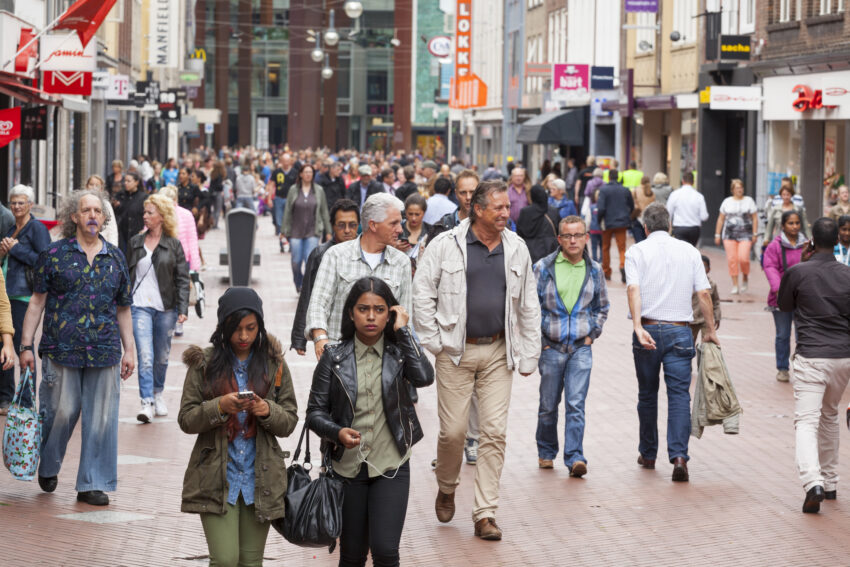
The slowdown came against a backdrop of subdued consumer demand, with supermarkets reporting weaker volumes and poor weather dampening sales of household goods and seasonal items.
Crucially, the figures were compiled before the escalation of the Middle East conflict involving Iran, a development that is expected to push inflation higher and place additional strain on household finances in the months ahead.
Economists warn that rising energy costs, already feeding through into fuel prices and utility bills, are likely to squeeze disposable incomes further, forcing consumers to cut back on discretionary spending.
Advertisement
Retailers are also bracing for increased costs across supply chains, with some, including major high street names, signalling that price rises may become unavoidable if disruption persists.
Despite the monthly fall, the broader trend over the past quarter remains slightly more positive. Sales volumes rose by 0.7 per cent in the three months to February compared with the previous period, supported by stronger online activity and niche categories such as art and collectibles.
However, annual growth slowed to 2.5 per cent, down from 4.5 per cent recorded in January, indicating that the pace of recovery is weakening.
Performance across sectors has been uneven. While categories such as video games, wine and sports supplements have performed relatively well, clothing retailers have struggled, reflecting both seasonal factors and changing consumer priorities.
Advertisement
Analysts say the data highlights a shift in consumer behaviour, with households becoming more selective about their spending.
Rajeev Shaunak of MHA said the figures were “not as bad as feared” but pointed to the sector’s vulnerability to external shocks.
Melissa Minkow of CI&T added that shoppers are increasingly taking time to assess value before making purchases, weighing factors such as price, timing and necessity more carefully than in previous years.
Advertisement
Separate data suggests that consumer sentiment has already begun to deteriorate. The GfK consumer confidence index fell to -21 in March, its lowest level in nearly a year, with households expressing growing concern about the wider economic outlook.
Neil Bellamy of GfK said a “ripple of fear” is spreading among consumers as they assess the potential impact of the Middle East conflict on prices and living standards.
The decline in confidence is seen as a leading indicator of future spending patterns, raising concerns that retail demand could weaken further in the coming months.
Economists expect the retail sector to face increasing pressure as the year progresses. Matt Swannell of the EY Item Club said the conflict has already worsened the outlook, while Ashley Webb of Capital Economics suggested the drop in confidence could mark the start of a more pronounced slowdown in household spending.
Advertisement
With inflation expected to rise again and interest rate cuts now less certain, the risk of a “stagflationary” environment, where growth is weak but prices continue to rise, is becoming a central concern.
For retailers, the challenge is balancing rising costs with fragile demand. Passing on higher costs risks further suppressing sales, while absorbing them erodes already tight margins.
The February figures suggest that even before the latest global shocks, the UK retail sector was on shaky ground. With additional pressures now building, the months ahead are likely to test both consumer resilience and the adaptability of businesses across the high street.
Amy Ingham
Amy is a newly qualified journalist specialising in business journalism at Business Matters with responsibility for news content for what is now the UK’s largest print and online source of current business news.
Shares of Central Mine Planning & Design Institute (CMPDI), a subsidiary of Coal India, could be poised for near-term upside, according to analysts, as the stock made a subdued market debut on Monday. The shares listed at a discount of around 7% to their issue price amid weak investor participation and cautious market sentiment.
The listing performance came after the IPO saw only modest traction, closing with an overall subscription of 1.05 times.
Gaurav Garg, Research Analyst at Lemonn Markets Desk, said CMPDI’s weak debut reflects broader caution in the market.
He noted that the stock listed at a discount of around 5-7% despite marginal grey market expectations, pointing to subdued retail participation and only modest subscription levels.
Advertisement
While the stock saw a slight recovery after listing, Garg said the lack of strong demand suggests limited near-term upside. He added that investors may consider using any short-term bounce to exit, while fresh entries should be approached cautiously, with a wait-and-watch approach for price stability and signs of institutional accumulation.
Live Events
The listing underscores the current trend in primary markets, where even fundamentally strong companies are seeing tempered debut performances amid selective investor appetite and tighter liquidity conditions. Demand for the Rs 1,842 crore offer for sale was largely driven by institutional investors, with Qualified Institutional Buyers subscribing 3.48 times their quota. In contrast, retail participation remained muted at just 33%, indicating limited broader investor interest.CMPDI operates as a mining consultancy firm, providing services across coal and mineral exploration, mine planning, environmental management and geomatics. The company holds an estimated 61% market share in the coal and mineral consultancy segment in India and works closely with its parent, Coal India.
Financially, the company has delivered strong performance, reporting revenue of Rs 2,178 crore and net profit of Rs 667 crore in FY25, with EBITDA margins exceeding 42%. At the upper price band, the IPO was valued at around 18-21 times earnings, which was considered reasonable given its profitability and asset-light model.
However, the company’s heavy dependence on Coal India and the coal sector continues to be a key overhang, raising concerns around concentration risk and long-term sector dynamics.
(Disclaimer: Recommendations, suggestions, views and opinions given by the experts are their own. These do not represent the views of The Economic Times)
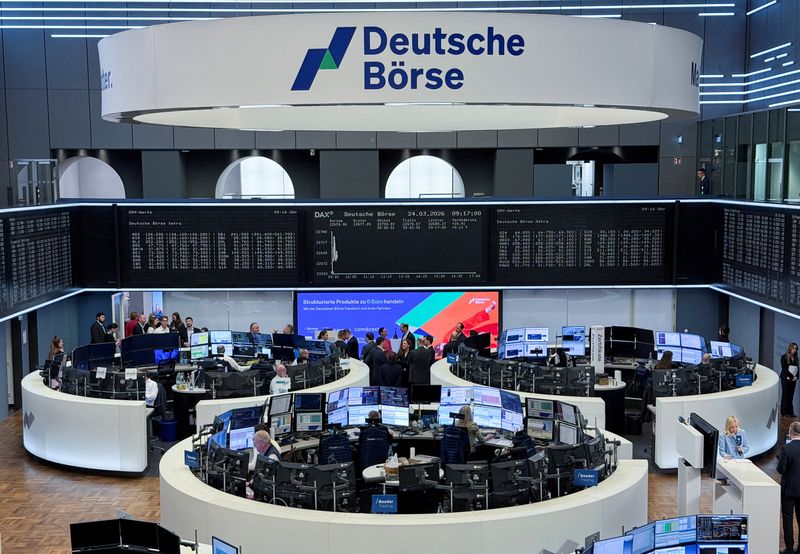
Indian stock markets will remain shut on March 31 as BSE and National Stock Exchange (NSE) will remain closed for trading on account of Shri Mahavir Jayanti, marking the first out of the two market holidays scheduled for this week.
India’s largest commodity exchange, the Multi-Commodity Exchange of India (MCX), will remain shut for trading in the first session (9 am to 5 pm) on Shri Mahavir Jayanti. Trading will resume in the evening session between 5 pm and 11:30 pm, as per the schedule on its website. The National Commodity & Derivatives Exchange Limited (NCDEX), meanwhile, will remain closed for trading tomorrow.
Upcoming market holidays
According to the official holiday calendar, markets will next remain closed on April 3 (Friday) to observe Good Friday. It is important to note that markets are seeing three holidays in less than two weeks. Markets were also shut on March 26 (Thursday) on account of Shri Ram Navami.In total, there are 16 stock market holidays scheduled for 2026, of which four have already passed. After the two holidays this week, trading will be suspended on 10 more occasions over the remaining nine months.
Advertisement
Live Events
Markets will next remain shut on April 14 (Tuesday) on Dr. Baba Saheb Ambedkar Jayanti. The BSE and NSE will then be closed for trading on May 1 (Maharashtra Day), May 28 (Bakri Id), June 26 (Muharram), September 14 (Ganesh Chaturthi), October 2 (Mahatma Gandhi Jayanti), October 20 (Dussehra), November 10 (Diwali-Balipratipada), November 24 (Prakash Gurpurb Sri Guru Nanak Dev), and December 25 (Christmas). Earlier last week, Zerodha CEO Nithin Kamath took to X to comment on market holidays amid ongoing global market volatility. “It’s crazy that we live in a time when the entire global financial market seems to be at the whim and fancy of what one person decides to do. He can, and does, do whatever he wants depending on which side of the bed he wakes up on,” Kamath said, in an apparent reference to US President Donald Trump. His statement comes as markets globally have seen sharp downswings but not equally strong upswings since the war between Iran and the US-Israel bloc began earlier this month, triggering a sharp rally in oil prices. According to Kamath, the only way to survive as a trader in this market is to make survival the first goal, not making money. “When you’re getting whipsawed out of positions on both sides, and there’s very little you can do in a headline-driven market, the most logical thing is to trade with smaller amounts of capital, reduce the risk in your account significantly, and wait for opportunities where you can actually make money rather than taking undue risk in a highly uncertain, highly volatile environment,” he said.
“Trading is also inherently a lonely activity. And when you’re constantly getting feedback in the form of profit and loss, it takes a mental toll. This was true even when I was actively trading,” he added. So, with a long weekend coming up, Kamath said he can’t think of a better time to take a break, recharge, and come back to the “blinking red and green lights” with a fresh mind.
(Disclaimer: Recommendations, suggestions, views and opinions given by the experts are their own. These do not represent the views of The Economic Times.)
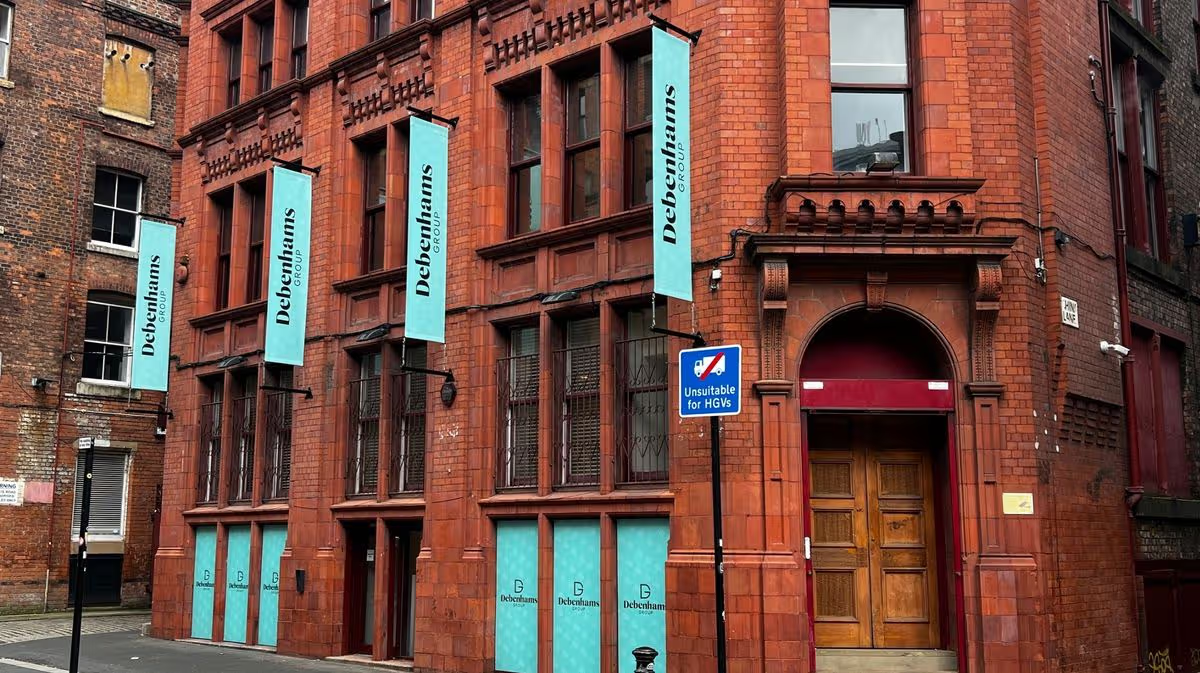
Debenhams signs at the group’s Dale Street base in Manchester city centre (Image: Reach)
Boohoo owner Debenhams Group says it expects earnings to be “comfortably ahead” of previous guidance and hailed “significant progress” in its turnaround plan.
The Manchester-based group said it now expected to deliver adjusted EBITDA for 2026 of £53m, up on the £50m it first predicted in January, and up 36% on 2025. It said that was driven by 76% increase in adjusted EBITDA for the second half of the year as it continues its turnaround plan led by CEO Dan Finley.
Advertisement
In a statement this morning, the board said it had raised its guidance for the next financial year and expected “double-digit” EBITDA growth in 2027.
Dan Finley, Group CEO, said: “Our multi-year turnaround strategy continues at pace. We are pleased with the 76% increase in H2 Adjusted EBITDA and £53m full year Adjusted EBITDA. Our pivot to the stock-lite, capital-lite, highly profitable marketplace is working.
“The cost base has been reset, the warehouse consolidation completed, the tech re-platform delivered, the stock base rightsized, most of the onerous costs exited and the brand management teams strengthened. This is significant progress, ahead of our plan, but there is still more to be delivered and we now focus on growth.”
The group said all of its brands, which include PrettyLittleThing, Boohoo and Debenhams, “continue to trade profitably on an Adjusted EBITDA basis.”
Advertisement
In this morning’s statement, the board said it was focused on reducing debt and its interest costs. Following a February fundraise of £40m, net debt by the end of February stood at £90m.
The group also said it expected cash flow to improve thanks to “materially lower exceptional costs” including the completion of its warehouse consolidation completed, the launch of a new tech re-platform and improvements to its stock base.
It said: “In FY26 cash lease costs were £18m which includes the costs of leased property that is now vacant. The Board now anticipates that lease costs in FY27 will reduce to c.£13m. In addition, when the Group’s vacant US property lease is exited, lease costs are estimated to fall further to c.£6m.
“These remaining lease costs will predominantly relate to the Group’s Manchester head office, the fully automated warehouse in Sheffield and a small London footprint. The expected reductions in lease costs will have a positive impact on cash flow. “
Advertisement
Capital expenditure costs fell in the year from £28m to around £16m, and are set to fall to around £8m next year.
In a note this morning, broker Panmure Liberum said: “The transformation work done has been huge and the noise (and costs) associated with these is now all but over. Looking ahead, we see leverage off a £100m cost base (2/3 lower), a capex and w/cap light model driving higher earnings and FCF. Some may say it is too early to call, but all the signals and green shoots of the new business model are now visible.”
The openings follow the announcement of three new eateries at the shopping centre
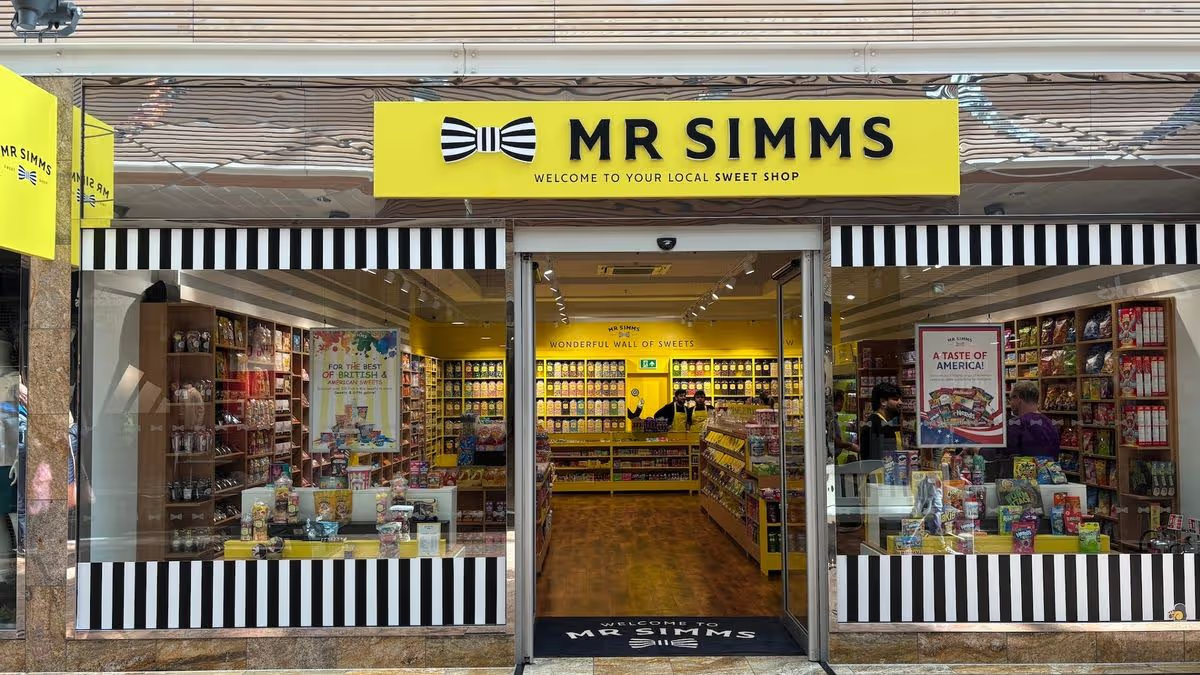
Mr Simms sweet shop has opened at Gloucester Quays(Image: Handout)
A retro sweet shop and an eyewear brand are the latest stores to open at Gloucester Quays shopping centre. Confectioner Mr Simms has taken a central 2,117 sq ft unit – it’s third branch in the South West – while Brand Eyewear has opened 505 sq ft store.
Mr Simms, which was founded in 2004 in Leek, sells traditional and contemporary sweets, and has around 60 branches around the UK.
Brand Eyewear, meanwhile, sells a range of designs from brands such as Ray-Ban, Oakley, Ralph Lauren, Georgio Armani, and DKNY. It also offers a ‘lens bar’ for shoppers to test lens colour, reflection coating and frame materials.
Paul Carter, asset director at Peel Retail & Leisure, said: “The openings of Mr Simms Sweet Shop and Brand Eyewear signal the broad offer Gloucester Quays has become known for.
Advertisement
“Being a crossover outlet means catering to every want and need, and every visit purpose. These additions highlight our commitment to delivering that, securing exciting retail, elevating the experiences of our guests, and creating that full day-out environment alongside the huge variety of F&B and leisure.”
Brand Eyewear at Gloucester Quays(Image: Handout)
Renee Broughton Johnson, founder of Brand Eyewear, added: “Opening my first store at Gloucester Quays was a milestone moment for Brand Eyewear. Location is vitally important when debuting new concepts, and I knew on first viewing that Gloucester Quays was a prime destination to showcase Brand Eyewear’s excellent customer service and good value products, with its quality retail offerings. We already feel at home here in Gloucester’s leading outlet destination.”
The openings follow the announcement of three new eateries for Gloucester Quays this year: Banchina Italian; French fusion restaurant Muse Brasserie; and COSMO Restaurant Group’s Umami, which will open this summer.
It also comes after the opening of Clip ‘n Climb – a family-friendly climbing attraction – at the shopping centre in February. Located on the upper deck, the venue features 19 climbing walls alongside challenges such as the colourful ‘Tree Trunk’, designed to simulate climbing a real tree, and the ‘Speed Climb’ for competitive climbers.
Advertisement
The venue also includes Play Den, a four-level soft play area for younger visitors, alongside the on-site South Ridge Café.
Last year, Gloucester Quays welcomed a plethora of new brands including Søstrene Grene, Ben Sherman, Label Yard, and Men Kind.





















































You must be logged in to post a comment Login