
Business
SBA refers $22 billion in suspected pandemic loan fraud to Treasury

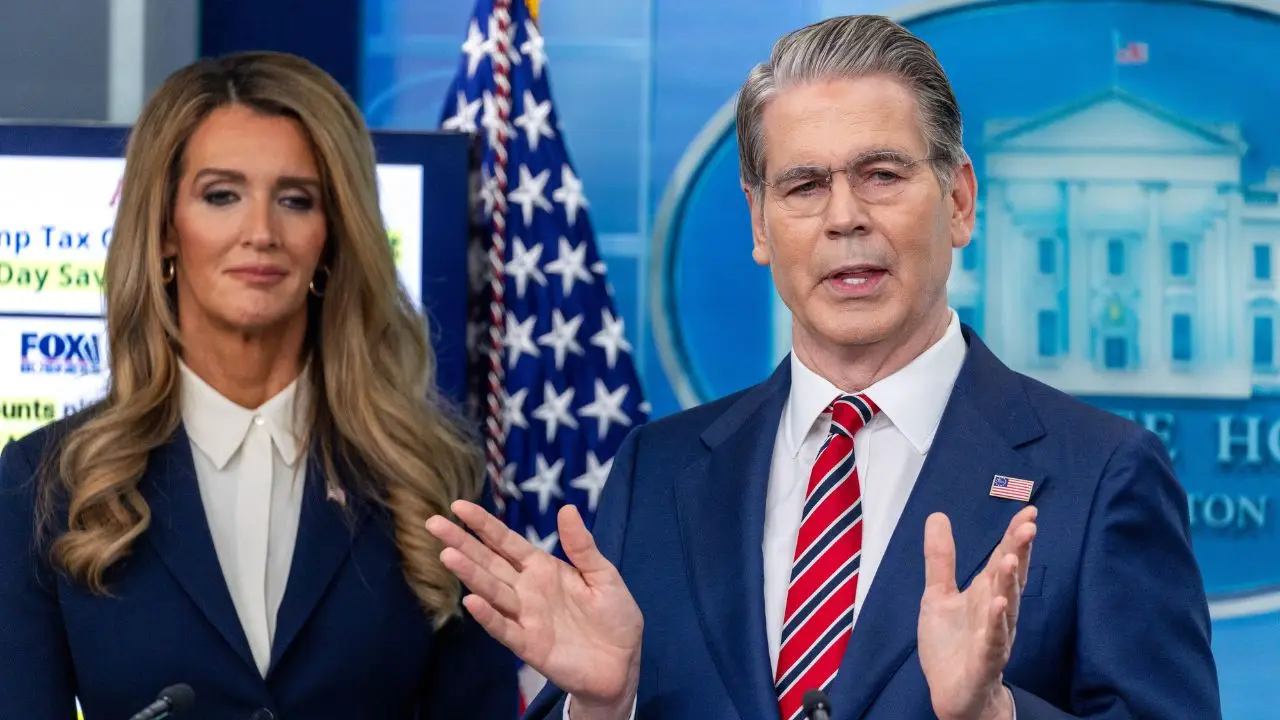
Unleash Prosperity co-founder Stephen Moore and Heritage Foundation senior economist Peter St. Onge discuss the Trump administration’s push to crack down on fraud on ‘The Bottom Line.’
FIRST ON FOX – The U.S. Small Business Association referred 562,000 suspected fraudulent loans totaling over $22.2 billion to the U.S. Department of Treasury for collections, the SBA said in a Friday statement.
“From Day One, the Trump SBA has worked tirelessly to crack down on billions in pandemic-era fraud that the Biden Administration forgave or ignored,” SBA Administrator Kelly Loeffler told Fox News Digital in a statement.
The loans, largely stemming from the Paycheck Protection Program (PPP) and the COVID Economic Injury Disaster loan program, were flagged for suspected fraud during former President Joe Biden’s administration but never sent to Treasury for collections, the SBA said in its statement.
The SBA accused former President Joe Biden of deliberately protecting suspected fraudsters by refusing to refer them to Treasury.
“For years, the Biden Administration shielded these borrowers from debt collectors as part of a de facto amnesty scheme – but today, they will finally face accountability. The SBA is deeply grateful to the U.S. Department of the Treasury for its partnership in this historic action, and we look forward to continued collaboration as we work to claw back stolen taxpayer dollars and hold fraudsters accountable,” Loeffler said.
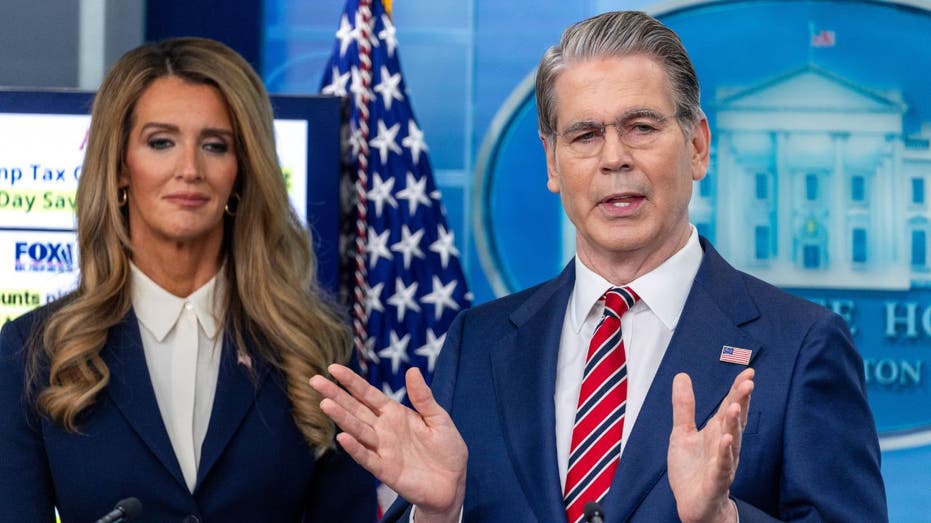
Kelly Loeffler, administrator of the US Small Business Administration (SBA), left, and Scott Bessent, US treasury secretary, during a news conference in the James S. Brady Press Briefing Room of the White House in Washington, DC, US, on Wednesday, Ap (Shawn Thew/EPA/Bloomberg via Getty Images / Getty Images)
In addition to referring the loans to Treasury, the SBA has also referred the borrowers to the U.S. Department of Justice.
The SBA is legally required to refer delinquent debts to Treasury but, according to the SBA announcement, none of the 560,000 borrowers had been compelled to repay the $22.2 billion they owed and less than 1,000 were facing investigations from the SBA’s Office of Inspector General.
“Over $22 billion. We mean business. If you commit fraud, we will find you,” a senior White House official told Fox News Digital.
FEDS MISTAKENLY GAVE AWAY $692M IN DUPLICATE PPP LOANS
The effort to refer the loans and seek repayment from the borrowers is being led by the White House Task Force to Eliminate Fraud, which is helmed by Vice President JD Vance and Federal Trade Commission Chair Andrew Ferguson.
“Finding and going after these billions of dollars was only possible with the task force’s whole of government effort. The Vice President is proud of the several milestones the task force has already achieved, and it’s only the beginning,” a spokesperson for Vance told Fox News Digital.
The sweeping fraud referrals are part of a broader anti-graft push overseen by Vance and his task force. In conjunction with the task force, the SBA is now pinpointing a wide swath of potential pandemic loan fraud.
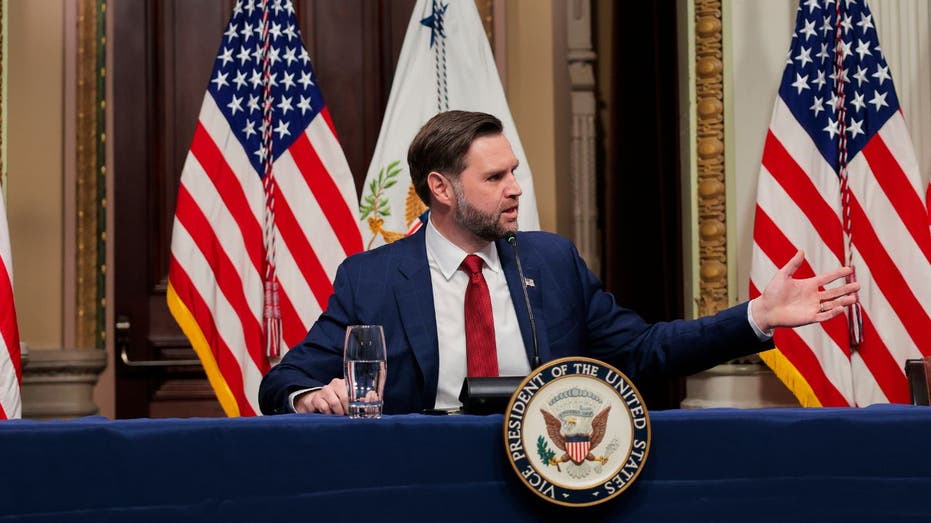
U.S. Vice President JD Vance (C) speaks during a Fraud Task Force meeting in the Indian Treaty Room at the White House on March 27, 2026, in Washington, DC. Vice President JD Vance held the Fraud Task Force Meeting with aims to reduce federal spendin (Heather Diehl/Getty Images / Getty Images)
“Research findings show over 1,000,000 suspicious Paycheck Protection Program (PPP) loans,” Vance wrote in a memo on the first day of his task force.
The administration estimates that of the $1.2 trillion in PPP and EIDL loans the SBA approved between 2020-2021, at least $200 billion is fraudulent, the agency wrote in its Friday memo.
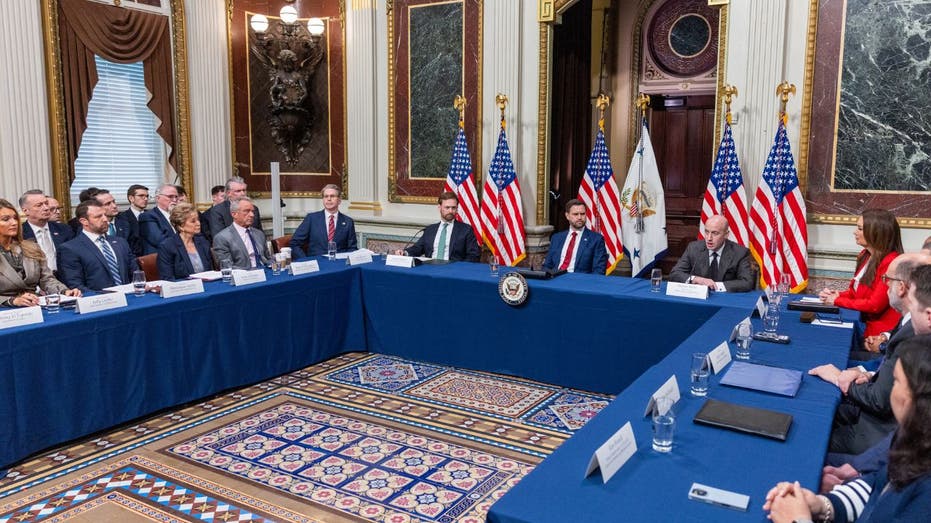
The task force, led by Vice President JD Vance, is seeking to target federal benefits fraud, intensifying the administration’s oversight of federal funds in Democratic-led states. (Shawn Thew/EPA/Bloomberg via Getty Images / Getty Images)
The SBA has launched new measures to crack down on fraud, including citizenship and birthdate verifications and a state-by-state investigation into fraudsters, according to an early April memo.
The agency has already suspended nearly 112,000 borrowers suspected of obtaining fraudulent loans in California and Minnesota.
GET FOX BUSINESS ON THE GO BY CLICKING HERE
Fox News Digital contacted the Department of the Treasury, the Small Business Association, and the Federal Trade Commission for comment but did not immediately receive a response.

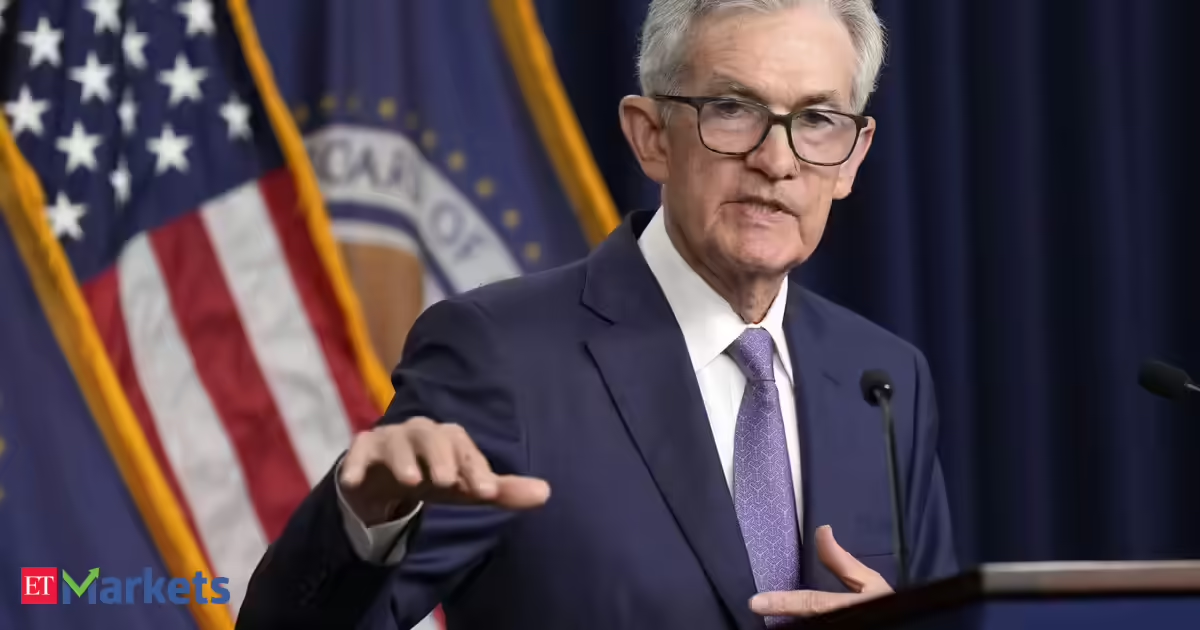
U.S. Attorney for the District of Columbia Jeannine Pirro said on X on Friday that her office was ending its probe into the Fed’s extensive building renovations because the Fed’s inspector general would scrutinize them instead.
The move could lead to a swift confirmation vote by the Senate for Warsh, a former top Fed official whom President Donald Trump, a Republican, nominated in January to replace Powell. Powell’s term as chair ends May 15. Sen. Thom Tillis, a North Carolina Republican, had said he would oppose Warsh until the investigation was resolved, effectively blocking his confirmation.
With the investigation completed, the leadership transition at the world’s leading central bank may proceed quickly. Republicans praised Warsh during a Tuesday hearing even as Democrats questioned his independence from Trump, the lack of transparency around some of his financial holdings, and what they said was his flip-flopping on interest rates. Still, Trump’s previous appointment to the Fed’s board of governors, Stephen Miran, was approved by the full Senate just 13 days after his nomination.
The investigation was among several undertaken by the Justice Department into Trump’s perceived adversaries. For months it had failed to gain traction as prosecutors struggled to articulate a basis to suspect criminal conduct.

A prosecutor handling the case conceded at a closed-door court hearing in March that the government hadn’t yet found any evidence of a crime, and a judge subsequently quashed subpoenas issued to the Federal Reserve. The judge, James Boasberg, said prosecutors had produced “essentially zero evidence” to suspect Powell of a crime. Boasberg branded prosecutors’ justification for the subpoenas as “thin and unsubstantiated.”
More recently, prosecutors made an unannounced visit to a construction site at the Fed’s headquarters but were turned away, drawing a rebuke from a defense attorney in the case who called the maneuver “not appropriate.”Warsh said during the Senate hearing Tuesday that he never promised the White House that he would cut interest rates, even as the president renewed his calls for the central bank to do so.
“The president never once asked me to commit to any particular interest rate decision, period,” Kevin Warsh, a former top Fed official, said under questioning by the Senate Banking Committee. “Nor would I ever agree to do so if he had. … I will be an independent actor if confirmed as chair of the Federal Reserve.”
Warsh’s comments came just hours after Trump, in an interview on CNBC, was asked if he would be disappointed if Warsh didn’t immediately cut rates and responded, “I would.”
The decision to abandon the investigation represents a rare pullback for a Justice Department that over the last year has moved aggressively, albeit unsuccessfully, to prosecute public figures the president does not like.
Robert Hur, an attorney for the Federal Reserve Board of Governors, didn’t immediately respond Friday to an email seeking comment.


I write about stocks I’m personally interested in adding to my portfolio. I’m not a professional advisor, but I study business and economics and analyze markets full-time. My writing is meant for both complete beginners — I avoid unnecessary complexity — and advanced readers, as I always aim to offer a distinct and well-reasoned perspective.I also run a YouTube Channel called “The Market Monkeys” and break some of the stocks there as well.
Analyst’s Disclosure: I/we have no stock, option or similar derivative position in any of the companies mentioned, and no plans to initiate any such positions within the next 72 hours. I wrote this article myself, and it expresses my own opinions. I am not receiving compensation for it (other than from Seeking Alpha). I have no business relationship with any company whose stock is mentioned in this article.
Seeking Alpha’s Disclosure: Past performance is no guarantee of future results. No recommendation or advice is being given as to whether any investment is suitable for a particular investor. Any views or opinions expressed above may not reflect those of Seeking Alpha as a whole. Seeking Alpha is not a licensed securities dealer, broker or US investment adviser or investment bank. Our analysts are third party authors that include both professional investors and individual investors who may not be licensed or certified by any institute or regulatory body.

FILE PHOTO: Psilocybin or “magic mushrooms” are seen in an undated photo provided by the U.S. Drug Enforcement Agency in Washington, May 7, 2019.
DEA | Reuters
The U.S. Food and Drug Administration on Friday announced a series of measures aimed at accelerating the development of psychedelic treatments for serious mental illness.
That comes after President Donald Trump signed an executive order on Saturday directing federal health agencies to expand access to emerging therapies.
The move marks a significant shift toward supporting psychedelic-based medicines for conditions such as treatment-resistant depression, post-traumatic stress disorder and other substance use disorders, the FDA said.
“Under President Trump’s leadership, we are accelerating the research, approval and responsible access to promising mental health treatments,” Robert F. Kennedy Jr., secretary of the U.S. Department of Health and Human Services, said in the release. “The FDA will prioritize therapies with Breakthrough Therapy designation, where early evidence shows meaningful improvement.”
As part of the announcement, the FDA said it would issue national priority vouchers to companies studying psilocybin for depression and methylone for PTSD.
The agency also cleared an early-stage clinical trial for noribogaine hydrochloride, a derivative of ibogaine, as a potential treatment for alcohol use disorder. This is the first time a compound like it has been authorized for study in the U.S. and for human trial.
“These medications have the potential to address the nation’s mental health crisis,” FDA Commissioner Marty Makary said in the announcement. “It is critical that their development is grounded in sound science and rigorous clinical evidence.”
The FDA said allowing these studies to proceed does not mean the drugs are approved or proven safe and effective. Officials said data with be closely monitored as research advances.
“If they are approved, they will be approved with certain conditions. These are not the medications you get a prescription for and pick up at a pharmacy,” Makary told CNBC.
Makary went on to say decisions on some of these therapies could come as soon as this summer or fall.
The fast turnaround time for drug approvals has been a priority for the Trump administration, which dropped the decades-old standard of requiring two clinical trials for standard drug reviews earlier this year. The new policies have come with some criticism, as industry experts have warned about potential issues with a faster timetable.
With Friday’s psychedelic announcement, the Trump administration also said pricing remains an important consideration in fast-tracking trials.
“We have very openly said that affordability is an important part of a medication’s effectiveness on a population level,” Makary said. “Lowering drug prices is one of the top priorities in this administration, and it’s something we think about in every decision, including how we prioritize the vouchers.”
The announcement also follows the Trump administration saying it would ease restrictions on state-licensed medical cannabis operators.

Operator
Ladies and gentlemen, thank you for standing by. My name is Colby, and I’ll be your conference operator today. At this time, I would like to welcome you to the Primis Financial Corp. First Quarter Earnings Call. [Operator Instructions]
I will now turn the call over to Matthew Switzer. You may begin.
Matthew Switzer
Executive VP & CFO
Good morning, and thank you for joining us for Primis Financial Corp.’s 2026 First Quarter Webcast and Conference Call.
Before we begin, please note that many of our comments during this call will be forward-looking statements, which involve risk and uncertainty. There are many factors that could cause actual results to differ materially from the anticipated results or other expectations expressed in the forward-looking statements.
Further discussion of the company’s risk factors and other important information regarding our forward-looking statements are part of our recent filings with the Securities and Exchange Commission, including our recently filed earnings release, which has also been posted to the Investor Relations section of our corporate site, primisbank.com. We undertake no obligation to update or revise forward-looking statements to reflect changes in assumptions, the occurrence of unanticipated events or changes to future operating results over time.
In addition, some of the financial measures that we may discuss this morning are non-GAAP financial measures. How a non-GAAP measure relates to the most comparable GAAP measure will be discussed when the non-GAAP measures used, if not readily apparent.
I

This is a question that tends to induce bouts of anxiety and even fierce debate between different departments within the business. Without question, branded gifts have a value beyond their actual cost and they are a great way of getting your brand in front of people, but how much should you spend to achieve this aim?
It’s not easy to give a definitive answer about how much to spend on branded gifts. This is because every business will have a different size of budget in mind, and even a different mindset about what represents good value for money.
Certain branded gifts, such as mugs with logo, are often cost-effective solutions as you won’t have to spend huge sums of your marketing budget to see a positive return on your investment. To get a bit of clarity on the subject, here’s some key points to consider.
Understand why you are spending the money
A good starting point would be to appreciate why you are spending money on branded gifts and what you want to achieve from your investment in this proven marketing tool.
Ultimately, you are looking to try and build strong relationships with your customers and keep your name in their mindset when they are making purchasing decisions. Corporate gifts are a great way of achieving those aims as they help encourage a sense of loyalty and appreciation.
When you give someone a branded gift it helps them to feel valued. Even a relatively modest outlay on something like branded mugs or pens can really help strengthen that bond. How do you quantify that sort of response to your gift?
Instead of looking at the pure cost of a branded gift that you are going to use to promote your business it’s wise to also make an allowance for the benefits it delivers as well.
Finding the right balance
There can often be a fine dividing line between spending too much on corporate gifting, or too little. Neither scenario is good, for many reasons.
If you try to cut corners and end up with something that looks too cheap, it sends out the wrong message about your business and the recipient won’t feel that valued either. On the other hand, if your gift is too extravagant, it can lead someone to think that you must be making too much money out of them to be able to afford to spend so lavishly.
As you can see, it’s a fine balancing act to get it just right. A good approach would be to look at branded gifts that are of a good quality but also serve a useful or practical purpose, which makes them more likely to be well received.
A good example of this would be if you gave someone a good quality branded coffee mug. They are likely to use it on a regular basis, so you get a positive brand association, and it won’t have blown a huge hole in your overall marketing budget.
All things considered, rather than simply focusing on price to decide how much you spend you should also consider how well your branded gift will be received by the person you give it to.

Earnings call transcript: First Western Financial beats Q1 2026 EPS estimates
Conference Call Participants
Stephen Robert Powers – Deutsche Bank AG, Research Division
Dara Mohsenian – Morgan Stanley, Research Division
Lauren Lieberman – Barclays Bank PLC, Research Division
Peter Grom – UBS Investment Bank, Research Division
Peter Galbo – BofA Securities, Research Division
Christopher Carey – Wells Fargo Securities, LLC, Research Division
Robert Ottenstein – Evercore ISI Institutional Equities, Research Division
Kevin Grundy – BNP Paribas, Research Division
Filippo Falorni – Citigroup Inc., Research Division
Bonnie Herzog – Goldman Sachs Group, Inc., Research Division
Kaumil Gajrawala – Jefferies LLC, Research Division
Andrea Teixeira – JPMorgan Chase & Co, Research Division
Olivia Tong Cheang – Raymond James & Associates, Inc., Research Division
Robert Moskow – TD Cowen, Research Division
Edward Lewis – Rothschild & Co Redburn, Research Division
Michael Lavery – Piper Sandler & Co., Research Division
Presentation
Operator
Good morning, and welcome to Procter & Gamble’s quarter end conference call. Today’s event is being recorded for replay. This discussion will include a number of forward-looking statements.
If you will refer to P&G’s most recent 10-K, 10-Q and 8-K reports, you will see a discussion of factors that could cause the company’s actual results to differ materially from these projections.
As required by Regulation G, Procter & Gamble needs to make you aware that during the discussion, the company will make a number of references to non-GAAP and other financial measures. Procter & Gamble believes these measures provide investors with useful perspective on underlying business trends and has posted on its Investor Relations website, www.pginvestor.com, a full reconciliation of non-GAAP financial measures.
Now I will turn the call over to P&G’s Chief Financial Officer, Andre Schulten.
Andre Schulten
Chief Financial Officer
Good morning, everyone. Joining me on the call today are John Chevalier

Statistics Jersey says there have been “sharp increases” in some energy prices.
SANTA CLARA, Calif. — Nvidia Corp. remains one of the most compelling yet polarizing investment stories in 2026, with Wall Street analysts overwhelmingly recommending investors buy shares of the AI chip leader even as the stock trades at elevated valuations following massive gains driven by insatiable demand for its GPUs.
AFP
As of late April 2026, Nvidia’s consensus rating stands as Strong Buy from dozens of analysts covering the stock. The average 12-month price target hovers around $268–$275, implying roughly 30–35% upside from recent trading levels near $200. Individual targets range from conservative lows near $210 to optimistic highs of $380, reflecting varying assumptions about the pace of AI infrastructure spending.
The bull case is straightforward and powerful. Nvidia continues to dominate the artificial intelligence accelerator market with its Blackwell and Hopper architectures. Data Center revenue has exploded, powering massive hyperscale buildouts by companies like Microsoft, Google, Meta and Amazon. Recent quarterly results showed revenue exceeding $68 billion in one period, with gross margins remaining exceptionally strong above 70%. Analysts project continued robust growth through 2027 as inference workloads and enterprise AI adoption accelerate.
CEO Jensen Huang has repeatedly emphasized that the company is still in the early innings of the AI revolution. New product cycles, including the Rubin architecture expected later in 2026, keep Nvidia firmly ahead of competitors. Partnerships, software moats through CUDA, and expanding total addressable market in robotics, autonomous vehicles and sovereign AI initiatives provide multiple growth vectors.
Several major banks and research firms have raised price targets in recent months. Rosenblatt, JPMorgan, Bank of America and others see significant upside, with some calling for $300+ by year-end. The consensus among more than 50 analysts shows overwhelming Buy or Strong Buy ratings, with very few Holds and almost no Sells.
Bears, however, highlight legitimate risks. Nvidia’s valuation — trading at premium forward multiples — leaves little room for disappointment. Competition from AMD, custom chips from hyperscalers, and potential margin pressure as the market matures could weigh on returns. Geopolitical tensions, export restrictions to China and any slowdown in Big Tech capital expenditure represent meaningful headwinds. Some analysts caution that expectations may already be too high.
For long-term growth investors, the case for buying Nvidia remains compelling. The company sits at the center of the most transformative technology shift since the internet. Strong balance sheet, exceptional execution under Huang, and a widening technological lead support continued outperformance. Many portfolio managers view it as a core holding for exposure to AI infrastructure.
Shorter-term traders or more conservative investors might exercise caution at current levels. Pullbacks on any perceived AI spending moderation could offer better entry points. Diversification is essential given the stock’s volatility and concentration risk in a single technology theme.
Institutional ownership remains very high, and retail enthusiasm continues. Options activity shows bullish sentiment overall, though elevated implied volatility reflects uncertainty around upcoming product cycles and macro factors. The stock has delivered extraordinary returns over the past several years, but past performance does not guarantee future results.
Nvidia’s trajectory in 2026 will likely be shaped by successful execution on next-generation platforms, sustained data center demand and the company’s ability to defend its massive market share. Positive developments on these fronts could drive shares significantly higher, while any stumbles might lead to sharp corrections typical of high-growth tech names.
Ultimately, whether to buy or sell Nvidia in 2026 depends heavily on individual risk tolerance, time horizon and conviction in the AI secular trend. Growth-oriented investors with a multi-year perspective generally see it as a Buy. Those seeking stability or concerned about valuations may prefer to Hold existing positions or wait for dips. Most advisors recommend sizing positions thoughtfully within a diversified portfolio.
As the AI supercycle continues unfolding, Nvidia stands as the clearest and most dominant beneficiary. With strong analyst support, robust fundamentals and multiple growth drivers, the company offers significant potential for patient investors — even after years of spectacular gains. The debate is not whether Nvidia will grow, but how much and at what valuation the market is willing to pay.
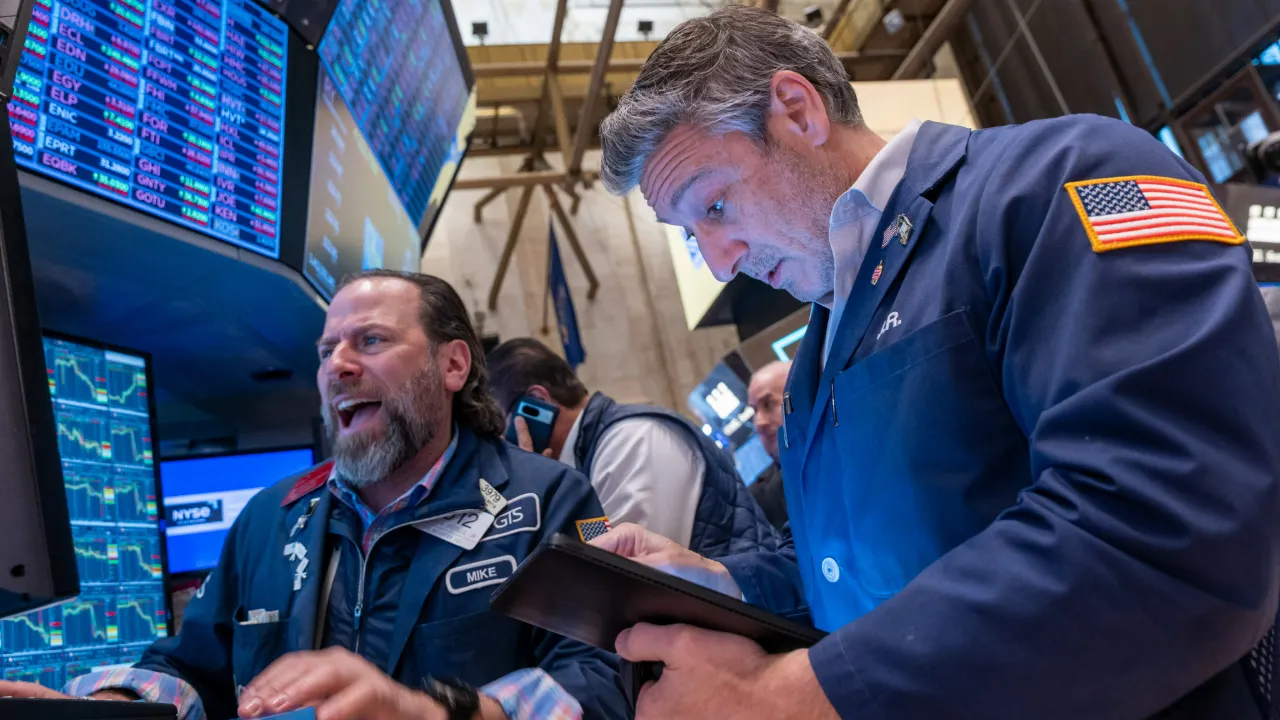
BD8 Capital Partners CIO Barbara Doran discusses the market’s rebound and retail investor re-entry on ‘Making Money.’
As more Americans take a hands-on approach to their finances, many are weighing whether to invest in exchange-traded funds (ETFs) or mutual funds.
Both offer a simple way to build a diversified portfolio of stocks or bonds, and at their core, the two investment vehicles are very similar. But key differences – including how they trade and how they are taxed – can shape long-term returns, experts say.
“When investors compare ETFs and mutual funds, it’s important to start with what they have in common: both are professionally managed portfolios that provide diversified exposure to stocks or bonds,” Kathy Kellert, head of index equity product at Vanguard, told FOX Business. “The biggest differences for investors come down to how the funds are bought and sold and how taxes are handled.”
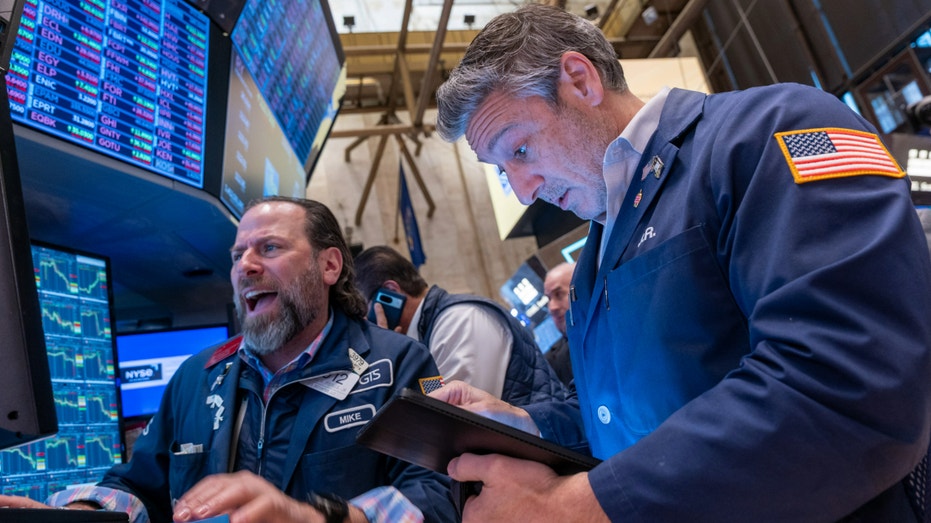
ETFs can trade at slight premiums or discounts to the value of their underlying holdings. (Spencer Platt/Getty Images)
WHAT ARE ACTIVE ETFS AND HOW ARE THEY RESHAPING HOW AMERICANS INVEST?
While ETFs trade throughout the day on exchanges – like stocks – with prices that fluctuate in real time, mutual funds are priced once daily after the market closes.
“An ETF is best thought of as a mutual fund that trades on an exchange like shares of stock,” Dan Sotiroff, associate director of U.S. passive strategies research at Morningstar, told FOX Business.
Because of that structure, ETFs can trade at slight premiums or discounts to the value of their underlying holdings, though Sotiroff noted the gap is typically “very small and inconsequential.”
Taxes are another major consideration.
ETFs use a structure that allows many transactions, like rebalancing, to take place without triggering taxable capital gains. Mutual funds, on the other hand, may distribute those gains to investors in the year they are realized, according to Kellert and Sotiroff.
A BEGINNER-FRIENDLY ETF PORTFOLIO THAT REQUIRES ALMOST NO MAINTENANCE AND DELIVERS LONG-TERM RESULTS

ETFs trade throughout the day on exchanges while mutual funds are priced once daily after the market closes. (Lilli Förter/picture alliance via Getty Images)
“All things equal, ETFs are more tax efficient than mutual funds,” Sotiroff said. “ETF investors will still have to pay capital gains taxes when they sell their shares, so ETF investors are really deferring capital gains, not avoiding them. The advantage is that ETF investors can choose when to realize those gains while mutual fund investors have less control.”
Will Rhind, CEO of GraniteShares, described ETFs as a “new technology” compared to the “old technology” of mutual funds.
“ETFs are, generally speaking, cheaper, more tax efficient, provide much broader choice and are, of course, liquid,” Rhind told FOX Business.
Unlike many mutual funds, which may require minimum investments of $1,000 or more, ETFs can often be purchased for the price of a single share or even a fraction of one, according to Rhind.
COULD S&P 500 ETFS ALONE FUND YOUR ENTIRE RETIREMENT?

Taxes are another major consideration when choosing between ETFs and mutual funds. (iStock)
However, experts say that choosing between ETFs and mutual funds ultimately depends on the investor.
GET FOX BUSINESS ON THE GO BY CLICKING HERE
“For many investors, the tax efficiency, intraday trading and transparency of ETFs… make them a compelling choice. For others – particularly for retirement accounts, where the tax efficiency is not an impact – [mutual funds] allow dollar investing versus share prices and are a long-standing choice,” Riz Hussain, senior investment portfolio strategist at Schwab Asset Management, told FOX Business.
Kellert added, “What matters most is not the wrapper, but whether the fund aligns with an investor’s goals, time horizon and comfort level. When used thoughtfully, both ETFs and mutual funds can play an important role in a well-diversified portfolio.”
Justice Department drops criminal probe of Fed chair Powell, likely clearing way for Warsh

XRP ETFs Hit $1.53B With Goldman as Top Holder

Netflix’s New No. 1 Streaming Show Is This Disturbing Cult Drama

Manchester United reach agreement with Casemiro over contract clause amid transfer speculation

US brings back mandatory military draft registration

Steven Gerrard disagrees with Gary Neville over ‘shock’ Chelsea and Arsenal claim | Football


-

 Fashion7 days ago
Weekend Open Thread: Theodora Dress
-

 Business5 days ago
Powerball Result April 18, 2026: No Jackpot Winner in Powerball Draw: $75 Million Rolls Over
-

 Politics7 days ago
Palestine barred from entering Canada for FIFA Congress
-
Entertainment5 days ago
NBA Analyst Charles Barkley Chimes in on Ice Spice McDonald’s Fiasco
-

 Tech6 days ago
Auto Enthusiast Scores Running Tesla Model 3 for Two Grand and Turns It Into Bare-Bones Go-Kart
-

 Politics5 days ago
Zack Polanski demands ‘council homes not luxury flats for foreign investors’
-

 Crypto World7 days ago
Russia Pushes Bill to Criminalize Unregistered Crypto Services
-

 Politics4 days ago
Gary Stevenson delivers timely reminder to register to vote as deadline TODAY
-

 Business2 days ago
Rolls-Royce Voted UK’s Most Iconic Trade Mark as IPO Register Hits 150
-

 Politics2 days ago
Disabled people challenge government SEND proposals over segregation concerns
-

 Politics2 days ago
Making troops accountable for war crimes threatens US alliance, ex-SAS colonel warns
-

 Crypto World7 days ago
Russia Introduces Bill To Criminalize Unregistered Crypto Services
-

 Politics2 days ago
Starmer handler McSweeney to be dragged from shadows by Foreign Affairs Committee
-
Politics2 days ago
Wings Over Scotland | How To Get Away With Crimes
-

 Politics2 days ago
Zack Polanski responds to home secretary’s taser threat
-
 Crypto World6 days ago
Kelp DAO rsETH Bridge Hack Drains $292M as DeFi Losses Top $600M in Two Weeks
-

 Politics2 days ago
‘Iran is still a nuclear threat’
-

 News Videos7 days ago
AP Politics, Buggana Analyzes Reasons For Financial Instability Due To Amaravati
-

 Crypto World3 days ago
New York sues Coinbase, Gemini over prediction market offerings
-

 Business2 days ago
The Job Benefits Most Men Don’t Know to Negotiate
You must be logged in to post a comment Login