

Business
Screening Times Averaging 20 to 35 Minutes

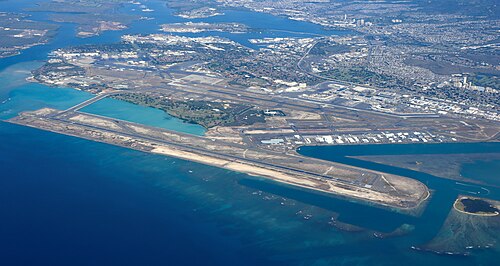
HONOLULU — Travelers inquiring about TSA wait times at Daniel K. Inouye International Airport (HNL) on Saturday, March 28, 2026, should anticipate standard security screening times averaging 20 to 35 minutes for most of the day, with peaks reaching up to 40 minutes during traditional morning and afternoon rushes, according to multiple real-time trackers.
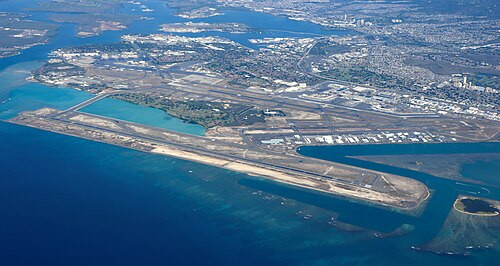
As Hawaii’s primary international gateway and a key tourism hub, HNL continues to manage elevated passenger volumes during the ongoing spring break season, compounded by recent weather-related disruptions that have strained operations in recent weeks. While not experiencing the multi-hour delays reported at some mainland airports amid broader TSA challenges, officials recommend arriving at least 90 minutes before domestic flights and 150 to 180 minutes for international departures to account for check-in, bag drop and potential lines.
Live data from trackers such as Takeoff Timer, FlightQueue and OnAirParking showed standard security waits fluctuating between 21 and 35 minutes as of Saturday morning into early afternoon, with TSA PreCheck lanes clearing significantly faster, often in 5 to 11 minutes. Some reports indicated shorter lulls dropping to under 10 minutes midday, while early morning hours between 6 a.m. and 8 a.m. saw the day’s highest estimates around 37 to 41 minutes. Afternoon surges around 2 p.m. to 4 p.m. also trended higher in historical patterns.
The airport’s main checkpoints in Terminal 1, including CP 1B (Makai) and CP 3, operate from approximately 4:15 a.m. to 11:30 p.m., with dedicated TSA PreCheck available during core hours. Additional checkpoints open as needed to handle demand. Some lanes at certain checkpoints have been reported closed or limited, contributing to variable flows on busy days.
Hawaii’s Department of Transportation (HDOT) has highlighted two major daily checkpoint surges at HNL: around 6 a.m. and between 9 a.m. and noon, with a smaller bump in the early evening around 7 p.m. On peak spring travel days, waits have occasionally stretched toward 90 minutes or more during these windows, though Saturday’s conditions appeared more moderate based on current reports. Inter-island and mainland departures remain the heaviest traffic drivers.
Recent severe weather systems, including heavy rain and strong winds, have added pressure through flight delays and cancellations earlier in March, indirectly affecting security line predictability as passengers reschedule or adjust plans. Spring break demand has pushed U.S. airlines toward record volumes nationwide, with Hawaii remaining a popular destination for families and leisure travelers seeking sunshine and beaches.
TSA PreCheck and CLEAR members benefit substantially at HNL, with expedited lanes providing a noticeable advantage during busier periods. Enrollment in these programs is particularly recommended for frequent visitors to the islands. Mobile Passport Control is encouraged for eligible international arrivals to help expedite customs and border processing, which has averaged around 40 to 42 minutes in recent reports.
The MyTSA app remains one of the best tools for crowd-sourced, real-time updates from fellow travelers, though users should cross-reference with third-party sites like Takeoff Timer or the airport’s official resources. HDOT and airport operators urge checking conditions 30 to 60 minutes before heading to the terminal, as flows can shift with flight banks or unexpected events.
Amenities at Daniel K. Inouye International Airport help ease the experience for those with extra time. The open-air design features Hawaiian cultural elements, local dining options ranging from poke bowls and plate lunches to coffee shops, and shopping highlighting island artisans. Free Wi-Fi, charging stations and family areas are available post-security. The airport’s compact layout makes gate access relatively straightforward once through screening.
Broader TSA operations have faced nationwide scrutiny in March 2026 due to staffing pressures linked to a partial government shutdown affecting federal agencies. While HNL has not reported the extreme multi-hour lines seen at some continental U.S. hubs, the situation underscores the importance of preparation. TSA officers at busy airports have dealt with higher call-out rates, leading to adjusted lane openings.
For departing passengers today, early morning and midday flights warrant the most conservative arrival planning. Those with flights before 10 a.m. or during afternoon peaks should factor in potential 30-plus minute security times plus standard check-in and bag drop. International travelers, especially on long-haul routes, benefit from even earlier arrival to navigate any immigration or customs nuances on return legs.
Airport officials emphasize that supply remains stable and operations are prioritized for safety and efficiency. No widespread staffing shortages unique to HNL were highlighted in recent advisories, though general spring travel volume has increased strain across Hawaii’s airports, including Kahului on Maui.
Practical tips for smoother passage through HNL security include preparing for the 3-1-1 liquids rule, wearing easily removable shoes, and having ID and boarding passes readily accessible on a mobile device or in hand. Prohibited items can trigger secondary screening and extend wait times. Families with children or travelers needing assistance can request accommodations through TSA Cares in advance.
As spring break continues into early April, passenger numbers are expected to remain robust before tapering. The airport’s role as a major transpacific hub means it handles diverse traffic, from leisure tourists to business travelers and military personnel, all contributing to daily rhythms.
Looking ahead, infrastructure improvements and potential staffing adjustments could help stabilize flows in coming months. For now, the message from HDOT and TSA is consistent: build in buffer time, monitor real-time tools and practice patience amid the aloha spirit that defines Hawaii travel.
In summary, TSA wait times at Daniel K. Inouye International Airport on Saturday, March 28, 2026, are running in the moderate 20- to 35-minute range for standard screening, with PreCheck offering quicker options. While conditions are manageable compared to recent national peaks, spring travel volume and occasional weather echoes make early arrival the smartest strategy.
Travelers can stay updated via the MyTSA app, official airport website (airports.hawaii.gov/hnl), or trackers like FlightQueue and Takeoff Timer. Safe travels to all departing from or arriving at Honolulu today — and enjoy the islands’ beauty once through the checkpoint.



UK’s Starmer launches political fightback, putting Europe ties at heart of reset

As retail media networks overtake television in ad revenue, they are also taking a page from the way TV pitches itself to marketers.
After media companies like NBCUniversal, Disney and Paramount conclude their annual upfront sales spectacles this spring, companies including Albertsons, Home Depot, DoorDash and JPMorgan Chase will promote their own ad products in a take on the upfronts this September.
Copyright ©2026 Dow Jones & Company, Inc. All Rights Reserved. 87990cbe856818d5eddac44c7b1cdeb8


Japan bets on Washington, BOJ for extra punch in yen battle

Stablecoin Firm Circle Reports Earnings On Monday. AI Could Be In Focus.

Operator
Good day, and welcome to the Blackstone Secured Lending First Quarter 2026 Investor Call. Today’s call is being recorded. [Operator Instructions] I’d like to turn the conference over to Stacy Wang, Head of Stakeholder Relations. Please go ahead.
Stacy Wang
Head of Stakeholder Relations
Thank you, Katie. Good morning, and welcome to Blackstone Secured Lending Fund’s First Quarter Results Conference Call. Joining me today are Brad Marshall, Co-Chief Executive Officer; and Teddy Desloge, Chief Financial Officer, along with other members of the management team available for Q&A, including Jonathan Bock, Co-Chief Executive Officer; and Carlos Whitaker, President.
Earlier today, we issued a press release with a presentation of our results and filed our 10-Q, both of which are available on the Shareholder Resources section of our website, www.bxsl.com. We will be referring to that presentation throughout today’s call. I’d like to remind you that this call may include forward-looking statements, which are uncertain and outside of the firm’s control and may differ materially from actual results. We do not undertake any duty to update these statements. For some of the risks that could affect results, please see the Risk Factors section of our Form 10-Q filed earlier today. This audio cast is copyrighted material of Blackstone and may not be duplicated without consent.
With that, I’ll turn the call

Trump says Polish, Moldovan prisoners released from Belarusian, Russian detention

SYDNEY — The S&P/ASX 200 has shown resilience in the first nine trading days of May 2026, climbing roughly 2.8% despite global volatility, with a handful of standout performers driving much of the gains. As artificial intelligence infrastructure demand, lithium market recovery and technology innovation continue to shape investor sentiment, five companies have emerged as the clear leaders in percentage terms on the benchmark index so far this month.
These top gainers reflect broader themes playing out across the Australian market: the global AI boom’s ripple effects on local tech and semiconductor-related firms, renewed interest in critical minerals, and selective strength in healthcare and consumer sectors. Here are the five biggest percentage risers on the ASX 200 from May 1 through May 8, 2026, based on closing prices and market data.
1. BrainChip Holdings (BRN) – Up 68% BrainChip has been the runaway leader, surging more than 68% in early May as its neuromorphic computing technology gained fresh attention from AI developers seeking energy-efficient alternatives to traditional chips. The company’s Akida processor, designed for edge AI applications, has secured several new design wins with automotive and industrial clients. Analysts at Bell Potter upgraded the stock citing “strong momentum in the AI edge computing space” and raised their target price significantly. BrainChip’s low-power chips are increasingly seen as complementary to larger data center solutions, positioning the company as a niche but high-growth player in the AI supply chain.
2. Lake Resources (LKE) – Up 52% Lithium developer Lake Resources jumped 52% as positive developments in its Kachi Project in Argentina and rising global lithium prices fueled optimism. The company reported strong progress on its Phase One demonstration plant and secured additional offtake interest from Asian battery manufacturers. With electric vehicle adoption remaining robust despite higher interest rates, investors are rotating back into lithium plays that offer near-term production potential. Lake Resources has benefited from a broader recovery in critical minerals sentiment as governments push for supply chain diversification away from dominant producers.
3. Appen (APX) – Up 41% AI data services provider Appen has risen 41% after announcing several major new contracts for data annotation and model training services with large technology firms. The company’s specialized datasets for generative AI applications have become increasingly valuable as companies race to improve their models. Appen’s recovery story has impressed investors, with the stock rebounding strongly from multi-year lows as its core business stabilizes and new AI-focused revenue streams accelerate.
4. Polynovo (PNV) – Up 37% Medical device company Polynovo continued its strong run, gaining 37% after positive clinical trial updates for its NovoSorb technology in wound care and reconstructive surgery. The company reported stronger-than-expected sales growth in the United States and Europe, with several new hospital contracts secured. Polynovo’s biodegradable polymer platform is gaining traction as a preferred solution in advanced wound management, driving both revenue and investor confidence.
5. Lynas Rare Earths (LYC) – Up 29% Lynas Rare Earths rose 29% as global tensions over critical minerals supply chains boosted sentiment toward non-Chinese producers. The company’s expansion of its Malaysian processing facility and progress on its Kalgoorlie rare earths plant have been well received. With governments in the US, Europe and Australia seeking to secure domestic supply of materials essential for electric vehicles and defense technologies, Lynas is positioned as a key Western-world supplier.
Market Context Driving the Gains
The ASX 200’s performance in early May has been supported by several factors. Easing geopolitical tensions in the Middle East have helped stabilize commodity prices, while persistent AI infrastructure spending continues to flow through to Australian companies with relevant exposure. The Reserve Bank of Australia’s decision to hold rates steady has also provided some relief to growth-sensitive sectors.
Smaller and mid-cap stocks with direct AI or critical minerals exposure have outperformed larger, more defensive names. This rotation reflects investor confidence that the AI megatrend remains intact while selective commodity recovery offers attractive entry points. However, analysts caution that volatility remains high, with many of these top performers carrying significant risk due to their smaller size and project-specific dependencies.
Analyst Perspectives
Bell Potter senior analyst Chris Savage described BrainChip’s surge as “a textbook example of niche AI technology finding its moment.” He noted that while the company is still pre-revenue at scale, its technology roadmap and partnerships justify significant investor interest.
For lithium plays like Lake Resources, Macquarie analysts highlighted improving fundamentals. “Lithium prices appear to have bottomed, and companies with near-term production potential are being rewarded,” one report stated.
Overall, the early May gainers list underscores the ASX’s sensitivity to global thematic trends. While the broader index has been relatively stable, individual stock performance has been sharply divergent, rewarding those with clear exposure to high-growth narratives.
Risks and Outlook for Remainder of May
Despite the strong starts, several of these stocks remain volatile. BrainChip and Appen, for instance, have a history of sharp pullbacks after rapid rises. Lithium and rare earths companies are inherently cyclical and sensitive to global economic conditions. Investors are advised to maintain diversified exposure and conduct thorough due diligence rather than chase momentum blindly.
Looking ahead, the remainder of May will bring important catalysts including quarterly production updates, potential new contracts and broader economic data from China and the United States. Analysts expect continued rotation between sectors as the market digests earnings seasons and monetary policy signals.
For investors scanning the ASX 200 for opportunities in May 2026, the standout performers so far highlight the importance of thematic alignment with global megatrends. Artificial intelligence, critical minerals and healthcare innovation have been the dominant drivers, rewarding companies that can demonstrate real progress and commercial traction.
As the month continues, market participants will watch whether these early leaders can sustain their momentum or if profit-taking and broader market rotations create new opportunities among laggards. The two-speed nature of the Australian market — with resource and tech plays outperforming while banks and consumer stocks remain more cautious — is likely to persist as global capital continues to seek exposure to the AI and energy transition themes.
The top five gainers in the ASX 200 for early May 2026 illustrate both the opportunities and risks inherent in thematic investing. While strong price action has rewarded early believers, sustainability will depend on execution, market conditions and the ability to convert hype into tangible commercial success. For now, these five companies represent the clearest winners in what has been a dynamic start to the month on the Australian sharemarket.

TOKYO — Sony Interactive Entertainment has yet to finalize the release timing or pricing for the PlayStation 6, with ongoing global RAM shortages driven by artificial intelligence demand forcing the company to consider pushing the next-generation console launch to 2028 or even 2029, according to multiple reports and statements from Sony executives in early May 2026.
Sony President and CEO Hiroki Totoki addressed the uncertainty during the company’s fiscal year 2025 earnings briefing, stating clearly that no decision has been made. “We have not yet decided on at what timing we will launch the new console, or at what prices,” Totoki said via a translator. “So we would like to really observe and follow the situation.” The comments confirm what many industry insiders have suspected for months: the traditional seven-year console cycle that delivered the PlayStation 5 in 2020 is under pressure, and the PS6 may arrive later than the previously rumored 2027 window.
The primary culprit is the sustained shortage and rising cost of high-bandwidth memory (HBM) and other advanced RAM components, heavily consumed by AI data centers. Bloomberg reported in February 2026 that Sony is actively weighing delays to secure adequate supplies without compromising performance targets. Analyst David Gibson from MST International had earlier warned that fiscal 2027 could see further pressure, potentially pushing a full launch into 2028.
Despite the delay rumors, development appears to be progressing. Leakers and supply chain sources indicate that Sony awarded the next PlayStation chip contract to AMD back in 2022, with the PS6 expected to feature a custom AMD Zen 6 CPU and RDNA 5 GPU architecture. These next-generation components are anticipated to deliver a substantial leap in performance, targeting 4K gaming at 120 frames per second with advanced ray tracing and improved power efficiency. Rumors also suggest 32GB or more of high-speed RAM and at least a 1TB SSD as baseline specifications.
A dedicated handheld companion device, codenamed “Project Canis” in some leaks, is also rumored to launch alongside or shortly after the main console, potentially creating a seamless ecosystem similar to the Nintendo Switch but with significantly more power. This dual-device strategy could help Sony compete more effectively against Microsoft’s rumored next-generation hardware and maintain momentum during the transition period.
Why the Delay Makes Strategic Sense
Extending the PlayStation 5 lifecycle appears to be a deliberate move. The PS5 has enjoyed strong sales and a robust library of games, with the PS5 Pro variant providing a mid-generation refresh that has satisfied many enthusiasts. By delaying the PS6, Sony can avoid the costly overlap that occurs when new hardware launches while the previous generation still has strong demand. It also gives the company more time to refine hardware specifications and secure critical components at reasonable prices.
Industry analysts suggest that a 2028 or 2029 launch would align better with stabilized supply chains and potentially lower component costs. It would also allow Sony to observe Microsoft’s next Xbox plans more closely before finalizing its own strategy. However, the delay carries risks. A longer gap between generations could allow competitors to gain ground, and fans may grow impatient if the PS5 begins to feel dated by 2028.
Rumored Specs and Features
While nothing is officially confirmed, leaks and credible reports paint an exciting picture for the PS6. The custom AMD silicon is expected to focus heavily on AI acceleration, with dedicated neural processing units for upscaling, frame generation and in-game assistance features. Backward compatibility with PS5 and potentially PS4 titles is considered a near-certainty, continuing Sony’s strong track record in this area.
Storage is expected to start at 2TB or higher with next-generation SSD technology for dramatically faster load times. Graphical capabilities could target 8K output in some scenarios, though 4K at high frame rates with full ray tracing will likely be the standard. Power efficiency improvements are also anticipated, addressing criticism of the PS5’s relatively high energy consumption.
A potential “PS6 Lite” or digital-only variant at a lower price point is also rumored, following the successful strategy Sony employed with the PS5 Slim. This could help broaden accessibility while a premium “Pro” or flagship model targets enthusiasts.
Impact on Gamers and the Industry
The potential delay has mixed reactions from the gaming community. Some players welcome more time with the PS5 and its growing library of titles, while others are eager for the next technological leap. Developers may benefit from a longer development cycle, allowing for more polished cross-generation titles and better optimization for new hardware features.
For the broader industry, Sony’s cautious approach could influence competitors. Microsoft is reportedly working on its own next-generation console, codenamed Project Helix, with similar supply chain considerations. The extended PS5 lifecycle may also give Nintendo more breathing room with its Switch successor.
What Fans Can Expect in the Meantime
While waiting for the PS6, Sony is expected to continue supporting the PS5 with major first-party releases and technical updates. Games like the next entries in the God of War, Horizon and Gran Turismo franchises are likely to showcase the console’s capabilities further. Enhanced features through system updates, such as improved upscaling and performance modes, are also anticipated.
Rumors suggest Sony may introduce new hardware accessories or mid-generation refreshes to keep interest high. The company has also been expanding its portfolio with more live-service titles and multi-platform releases, adapting to changing consumer preferences.
As development continues behind closed doors, leaks and official teases will likely increase throughout 2026 and 2027. For now, PlayStation fans can enjoy the excellent lineup of games available on PS5 while looking forward to the next generation with cautious excitement. Whether the PS6 arrives in 2028 or later, Sony’s commitment to quality and innovation suggests it will be worth the wait.
The evolving story of the PlayStation 6 reflects the complex realities of modern console development in an era of component shortages and rapid technological change. As Sony observes the situation and makes strategic decisions, gamers worldwide will be watching closely for any official updates on what promises to be another transformative chapter in gaming history.

US disappointed in Taiwan’s smaller defense budget, official says
Business
(VIDEO) Massive Earthquake Swarm Rattles Imperial County with Over 150 Quakes and 4.5 Magnitude Tremor

EL CENTRO, Calif. — More than 150 earthquakes, including a 4.5 magnitude temblor, struck Imperial County in Southern California on Thursday in a vigorous swarm that rattled residents but caused no reported injuries or major damage. The U.S. Geological Survey and local emergency officials said the activity was centered near the Salton Sea, a seismically active region along the San Andreas fault system, prompting heightened monitoring and public alerts throughout the day.

The strongest quake, a 4.5 magnitude event, struck at 11:47 a.m. local time about 8 miles southwest of Westmorland. It was followed by dozens of aftershocks ranging from magnitude 2.0 to 3.8. According to USGS data, the swarm began intensifying early Thursday morning and continued into the evening, with seismic activity spreading across a roughly 15-mile stretch of Imperial County. Many of the quakes were too small to be widely felt, but the larger ones sent residents rushing outdoors and triggered widespread reports on social media.
Imperial County Emergency Services Director Mike Garcia said the swarm was unusual in its persistence but not entirely unexpected in this part of California. “We are in one of the most seismically active areas in the country,” Garcia said. “Our teams are monitoring the situation closely, and we have not received reports of structural damage or injuries at this time. Residents should remain prepared and continue to follow standard earthquake safety protocols.”
The 4.5 magnitude quake was widely felt across Imperial County and parts of Riverside County, with reports coming in from as far as Mexicali, Mexico. Residents described a sharp jolt followed by several minutes of rolling motion. “It felt like a big truck hit the house,” said Maria Lopez, a resident of Brawley. “The dishes rattled, and my dog went crazy. We’ve had small quakes before, but this one was different.”
No tsunami warning was issued, as the quakes were inland and not strong enough to displace significant water in the Salton Sea. However, officials reminded residents that even moderate quakes can trigger aftershocks and urged people to have emergency kits ready.
Seismic Activity in a High-Risk Zone
Imperial County sits at the southern end of the San Andreas fault, where the Pacific and North American tectonic plates meet. The region has a long history of earthquake swarms, including a notable sequence in 2016 that produced thousands of small quakes over several weeks. Scientists say swarms like this are relatively common in geothermal areas and along fault lines where stress is released gradually rather than in a single large event.
The USGS recorded more than 150 quakes with magnitudes above 1.0 by Thursday evening, with the majority occurring at shallow depths of less than 6 miles. Seismologists noted that while the 4.5 quake was the largest so far, there is a small but non-zero chance of a larger event following a swarm. “Swarms can sometimes precede bigger earthquakes, but most of the time they just fizzle out,” said Dr. Lucy Jones, a prominent seismologist and founder of the Dr. Lucy Jones Center for Science and Society. “The key is preparedness.”
Community Response and Preparedness
Local schools dismissed students slightly early as a precaution, and several businesses in El Centro and Brawley closed temporarily during the strongest shaking. No structural damage was reported to major infrastructure, including roads, bridges or irrigation canals critical to the region’s agriculture industry.
The Imperial Valley, known for its vast farms and proximity to the Mexican border, is no stranger to seismic activity. Residents are generally well-prepared, with many homes built to modern earthquake standards. However, older buildings and mobile homes remain vulnerable. County officials activated their emergency operations center and urged residents to review their earthquake preparedness plans.
“We want everyone to have a plan,” Garcia said. “Drop, cover and hold on during shaking. Have water, non-perishable food and medications ready. Check on neighbors, especially the elderly and those with mobility issues.”
Scientific Monitoring and Long-Term Risk
The USGS and the California Earthquake Authority are closely monitoring the swarm using a dense network of seismometers. Data from the event will help scientists better understand stress patterns along this section of the San Andreas fault, which is capable of producing magnitude 7+ earthquakes.
The southern San Andreas is considered overdue for a major rupture, with some models suggesting a potential magnitude 8 event could occur within the next few decades. While Thursday’s swarm is unlikely to relieve significant accumulated stress, it serves as a reminder of the region’s seismic vulnerability.
Impact on Daily Life and Economy
The agricultural heartland of Imperial County produces a significant portion of the nation’s winter vegetables. While the quakes caused no immediate damage to irrigation systems or greenhouses, farmers remained vigilant. “We’re watching our wells and canals closely,” said one local grower. “Any disruption to water infrastructure could be costly.”
Tourism in the area, including visitors to the Salton Sea and nearby Anza-Borrego Desert State Park, was largely unaffected, though some campgrounds reported minor rockfalls. Hotels and restaurants in El Centro saw a brief uptick in business as residents sought safe gathering spots during the stronger shaking.
Historical Context of Imperial County Quakes
Imperial County has experienced several significant earthquakes in its history. The 1940 Imperial Valley earthquake (magnitude 6.9) caused widespread damage and several deaths. More recently, swarms in 2016 and 2020 kept seismologists busy but caused minimal damage. Today’s activity fits the pattern of frequent small-to-moderate events that characterize this part of the San Andreas fault system.
Scientists emphasize that while large earthquakes cannot be predicted precisely, ongoing monitoring and public preparedness can significantly reduce risk. The California Earthquake Authority offers resources for homeowners to retrofit older structures, and many local schools conduct regular earthquake drills.
Looking Ahead
As the swarm continues, officials expect additional small quakes in the coming days. Residents are advised to stay informed through official channels and avoid spreading unverified information on social media. The USGS and local emergency services will provide regular updates as the situation evolves.
For now, the community remains alert but calm. The 4.5 magnitude quake served as a stark reminder that California lives with seismic risk every day. As scientists continue to study the latest swarm, Imperial County residents are once again demonstrating the resilience that defines life along the San Andreas fault.
The event also highlights the importance of ongoing investment in earthquake early warning systems and infrastructure resilience. As California’s population grows and development expands into seismically active areas, preparedness remains the most effective defense against future earthquakes, whether they come as isolated events or prolonged swarms like the one unfolding in Imperial County this week.

Meghan Trainor’s Husband Calls Her Superwoman on Mother’s Day

The hidden beach near Cambridgeshire with endless sands and ‘adrenaline-filled fun’

Tigers vs. Royals odds, prediction, line: 2026 MLB picks for Sunday Night Baseball

Manchester United reach agreement with Casemiro over contract clause amid transfer speculation

US brings back mandatory military draft registration

Steven Gerrard disagrees with Gary Neville over ‘shock’ Chelsea and Arsenal claim | Football


-
 Crypto World3 days ago
HarrisX Poll Found 52% of Registered Voters Support the CLARITY Act
-

 Crypto World4 days ago
Upbit adds B3 Korean won pair as Base token gains Korea access
-

 Fashion2 days ago
Weekend Open Thread: Marianne Dress
-

 Tech6 days ago
Image AI models now drive app growth, beating chatbot upgrades
-
 NewsBeat4 days ago
NCP car park operator enters administration putting 340 UK sites at risk of closure
-
 Business1 day ago
Ignore market noise, India’s long-term story intact, say D-Street bulls Ramesh Damani and Sunil Singhania
-

 Politics2 days ago
Politics Home Article | Starmer Enters The Danger Zone
-

 Entertainment7 days ago
Olivia Wilde Reacts To Viral ‘Corpse’ Comparison
-

 Sports7 days ago
Inter Milan Win Serie A Title After Victory Over Parma
-

 Sports7 days ago
La Liga: Vinicius Jr scores twice as Real Madrid win to keep Barcelona waiting for title
-

 Crypto World5 days ago
UAE Free Zone Deploys Blockchain IDs to Verify Registered Firms
-
 Sports7 days ago
Every word of Arne Slot’s heated rant after Manchester United win vs Liverpool
-
 Sports6 days ago
2026 NHL playoff picks: Second-round predictions, series odds, Stanley Cup bracket
-
Entertainment7 days ago
Jennifer Lawrence’s Mary Jane Sneakers Are Spring’s It-Girl Shoe
-

 Entertainment7 days ago
Moroccan Reacts To Nick Cannon’s Dating Rules For His Sister
-

 Entertainment7 days ago
Kylie Jenner and Timothee Chalamet Hold Hands in NYC Outing
-

 Crypto World4 days ago
BlackRock CEO Larry Fink Discusses a New Asset Class
-

 Crypto World4 days ago
Robinhood says Wall Street is building onchain
-

 Entertainment7 days ago
Post Malone Delays Tour With Jelly Roll Amid Ongoing Backlash
-
Entertainment6 days ago
Serena Williams hits Met Gala in metallic dress after GLP-1 reveal
You must be logged in to post a comment Login