
Business
Seattle business leaders demand 100-day public safety plan from socialist mayor


‘The Big Money Show’ co-hosts discuss Seattle Mayor Katie Wilson’s remarks dismissing millionaires leaving the city as Starbucks moves 2,000 jobs to Nashville.
Seattle business leaders, including the CEOs of major corporations such as Starbucks and Microsoft, are urging socialist Mayor Katie Wilson and other city officials to take swift action on public safety, pointing to widespread voter dissatisfaction over crime and homelessness.
In a letter dated Thursday, executives called on Wilson, City Council President Joy Hollingsworth, Public Safety Committee Chair Robert Kettle and other council members to adopt a 100-day public safety plan.
The proposed measures include expanding police patrols, installing additional CCTV cameras, recommitting to a seven-minute response standard for priority 911 calls, transparently reporting when that standard is missed and requiring the city to clear homeless encampments in designated areas within 72 hours.

Seattle Mayor Katie Wilson speaks during the Seattle International Film Festival screening. Multiple business CEOs are urging Wilson and other city leaders to tackle crime and other quality of life matters across the city. (Mat Hayward/Getty Images / Getty Images)
Signers of the letter include top executives from T-Mobile, Alaska Air Group, Starbucks, the Seattle Mariners, Microsoft, BECU, the SODO Business Improvement Area, the Ballard Alliance and the Washington Hospitality Association.
The business coalition is demanding measurable results, citing an Aug. 17 poll showing that only 34% of local voters are confident the city has an effective strategy to address public safety.
Each proposal in its plan drew support from at least three-quarters of respondents across every geographic area and demographic group in the city, according to the letter.
Central to the letter’s demands is a push to rebuild the Seattle Police Department. As of mid-2026, Seattle had approximately 1.31 sworn officers per 1,000 residents, “about 40% fewer than Denver, 43% fewer than San Francisco, and 58% fewer than Boston,” the letter noted.

Homeless people living in RVs and tents along a two-block stretch in Seattle near T-Mobile Park, where the Seattle Mariners play baseball. (Getty Images / Getty Images)
The business leaders also pushed for increased foot and bicycle patrols in high-crime areas. The request comes shortly after the city ended hiring incentives for police recruits, eliminating bonuses that had offered up to $50,000 for lateral transfers from other law enforcement agencies.
Seattle has struggled for years with persistent property crime, open-air drug use and homelessness despite significant funding. In 2024, the city allocated over $150 million toward homeless services.

Police officers check on a man who said he had been smoking fentanyl in downtown Seattle March 14, 2022, in Seattle. (Getty Images)
CLICK HERE TO DOWNLOAD THE FOX NEWS APP
“You can just see the foil is, like, blowing down the sidewalks like autumn leaves,” Andrea Suarez, founder and executive director of We Heart Seattle, previously told Fox News Digital.
“[It’s] very common to see property damage in our parks and shared spaces. Narcan is used to reverse an overdose, so you’ll see cartridges. But at least we’re remodeling the bathroom to be gender-neutral. I’m not [kidding] you, that’s where our priorities are.”
Fox News Digital reached out to the mayor’s office for comment.


The US-Iran war and resulting higher global oil and gas prices are stoking the inflation fears. Shipments through the Strait of Hormuz waterway, one of the world’s busiest oil and gas routes, have been restricted due to the war and a barrel of Brent crude is now around $105 (£78), approaching levels last seen at the outbreak of the conflict.
Along with directly driving up costs for homes and businesses, higher energy prices can also make transporting goods more expensive and those extra costs can be passed down to consumers through steeper prices for the likes of food and other staples.
Central banks try to limit price rises with higher interest rates. By pushing up the cost of borrowing for things such as mortgages and credit cards, they seek to slow consumer spending and inflation. Higher rates also can give people incentives to save instead of spend.
But its a balancing act, as higher rates can also encourage businesses to hold off on investing and hiring.
When the Bank of England meets later next week, it is expected to try to look both at current price pressures and the wider economic picture.
Millions of UK households are set to see energy bills rise to the highest level for three years heading into the winter and gas prices have risen above 200p per therm for the first time since the end of 2022.
Inflation in the UK is at 2.9%, and it is expected to jump in coming months.
But despite those predictions, there appears to be broad agreement that the Bank will leave rates at 3.75%.
That’s because there is “no sign” of the so-called second-round effects of the price shock feeding through the economy, such as workers requesting wage rises or businesses hiking prices, according to Oxford Economics.
This gives the Bank “some breathing space,” added economist Alexander Harvey.
Yael Selfin, chief economist at KPMG, said that outside of the US, in places such as the UK, the economic environment has been “much weaker” than where it was in 2022, when the last inflation shock hit the world. UK inflation reached a record high of 11.1% in October that year.
Interest rates are already higher than four years ago, she added, and consumers, somewhat scarred by previous price hikes, have changed how they spend.
Also, four years ago “businesses were hiring aggressively, vacancies were at record highs, and more people were moving jobs than normal”, Harvey said, as the economy rebooted following Covid.
“The conditions were in place for employees to push for significant pay rises in response to a significant inflation shock,” he said. “That’s in stark contrast to the current labour market.”
Now, hiring is much weaker than average and there is less pressure to recruit – giving employees less leverage to demand higher pay.

Guild says these conversations are easier before a baby arrives than when parents are sleep-deprived and adjusting to life with a newborn.
Molly and Taylor now have two children, aged two and five, and say they were much more prepared the second time around and stopped thinking about household costs as something that always needed to be divided exactly in half.
The couple, who each earn around £60,000, have their own bank accounts alongside a joint account for bills, but are flexible with the amount each contributes when their circumstances change.
During Molly’s maternity leave, for example, they adjusted the split and she’s found it helpful to “view finances as a household”.
The couple say they are teaching their children about money from an early age.
They set pensions up for both kids when they were born and have been paying into them through a monthly direct debit.
Molly explains: “It’s like a gift for the future as they can’t touch that money until they’re in their 60s and we won’t be there to see that.”
They also use Junior ISAs, although Molly points out that once the children are old enough, the money becomes theirs to spend “and if they want to, they can take that money and blow it in Ibiza”.
Taylor says their five-year-old is given small jobs to earn a couple of pounds, rather than simply being bought everything she asks for.
They are also beginning to introduce the idea of saving by telling her that she can spend a pound now or hold on to it and potentially have more later.
Guild says couples should check what support they can receive, including funded childcare hours, external and Tax-Free Childcare, external.
She adds that conversations about money should not stop once parental leave begins and when the baby arrives she advises couples should:
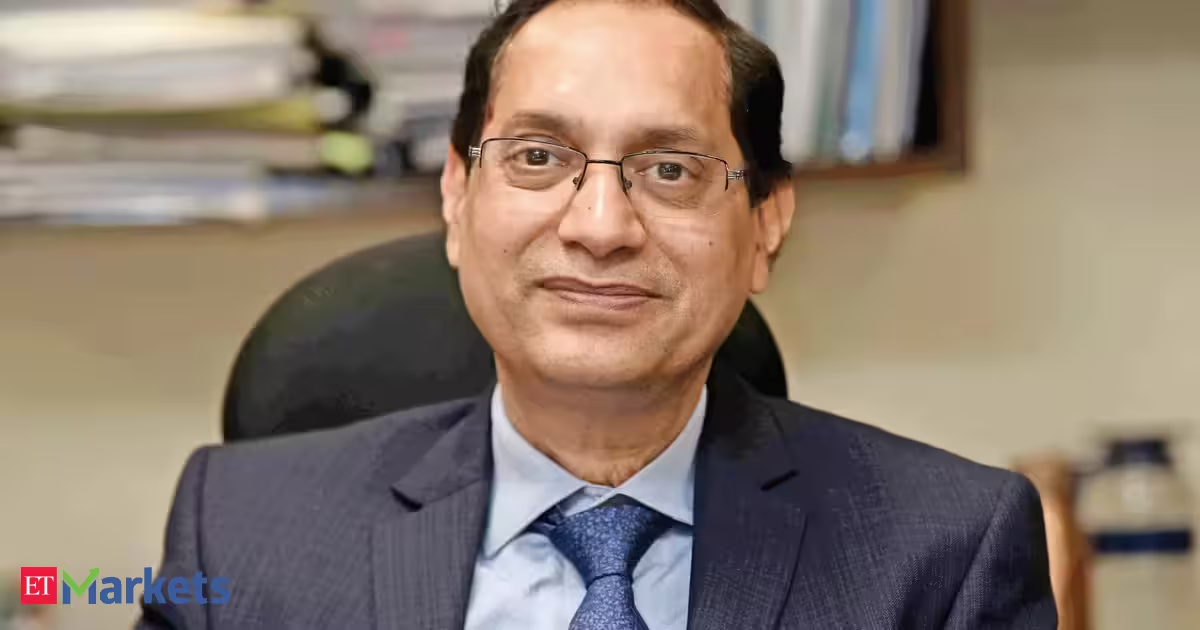
Speaking on the sidelines of the Global Fintech Fest (GFF), Pandey said several global jurisdictions, including the US, Japan and Hong Kong, had experienced lower liquidity when CAS was first introduced, with liquidity improving over time.
“CAS is here to stay…the only question is of liquidity. Many market participants have told us about the rollout in other jurisdictions including the US, Japan, Hong Kong, and they have told that initially everywhere when CAS was brought, the liquidity was always an issue and it builds over time,” Pandey said.
Read more: Karan Adani settles PMC Projects case with Sebi by paying Rs 13.65 lakh
“The issue is can we just keep on waiting or we can have some temporary solutions to the issue,” he added.

Pandey said Sebi would soon issue a consultation paper proposing changes to the CAS framework. The regulator introduced CAS on August 3, following which concerns were raised by market participants over the impact of the new mechanism on liquidity and settlement prices. However, the Sebi chairman said several market participants had also praised the implementation of CAS, particularly during events such as MSCI rebalancing.
“We have had several participants who have absolutely praised that implementation of CAS-that MSCI rebalancing and all have gone off very well. Technically the whole thing went off well,” he said.
“Now, there is a certain segment of the market that gets impacted because of the way we kept the settlement price as completely dependent,” Pandey said.

Thousands of visitors are expected to flock to the South West to explore the usually private studios of 155 artists, stretching from Busselton to Augusta.
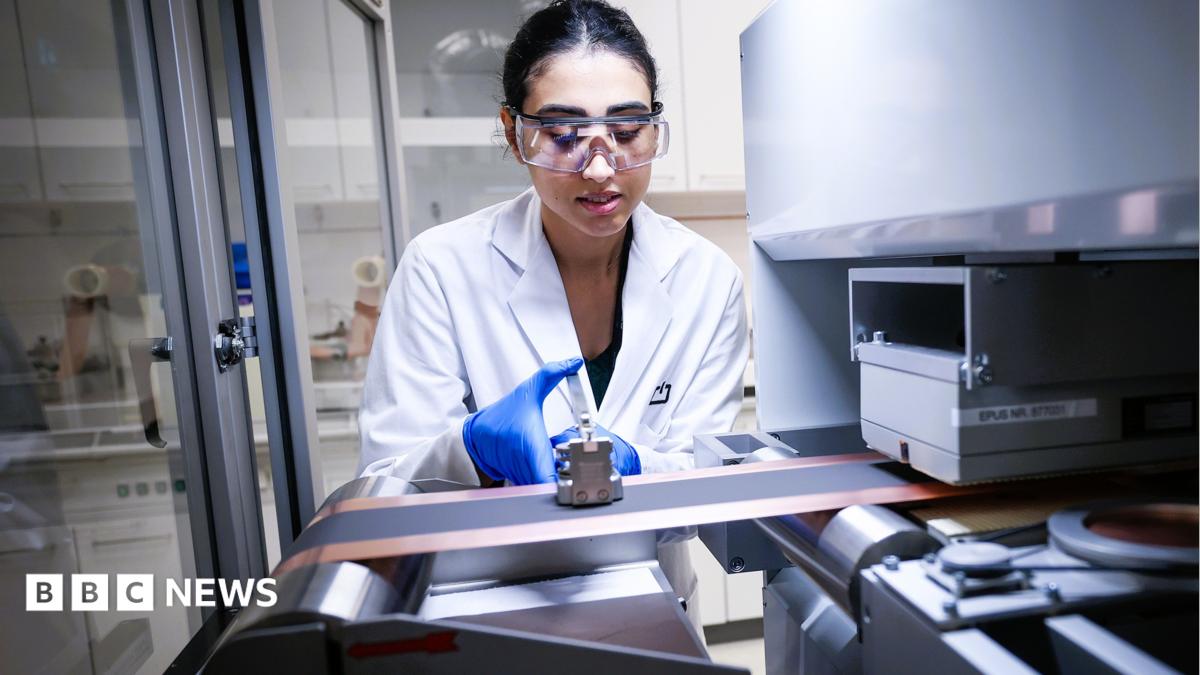
Neither LeydenJar nor Powall are trying to build an entire battery, and both have commercial relationships with customers in Asia.
But Christian Rood of LeydenJar says companies like his can fortify Europe’s position in what has become a global contest.
“The easy comparison is with semiconductors, where there’s really a race for the best chip technology.
“[Dutch tech giant] ASML is not producing chips; it focuses on a critical step in the production of chips, and in that way, has a seat at the table when it comes to the whole semiconductor battle.
“This is our ambition as well – to have a position where our battery anode is so unique that we have an important position in the supply chain.”
So, how do these ambitions play into Europe’s goals in the battery industry?
Alexander Brown is a senior analyst at the Berlin-based independent think-tank the Mercator Institute for China Studies (Merics).
“I think having one part of the supply chain based in Europe is great and if that can be a very advanced technological part, which offers the opportunity for high margins, that’s fantastic,” Brown tells me.
But he cautions that while “there can be collaboration as well as competition at the same time”, China in particular will continue to work to reduce its dependence on other regions.
“China is working very hard to develop local alternatives for technologies, including these niche technologies.
“It’s no secret that China would love to replace ASML – they’re working very hard to do that, and it’s not unforeseeable that they will achieve that goal eventually.
“So, I think Europe has traditional strengths in developing very exquisite high-quality products, which can find markets all over the world.
“But I also think it’s important for that not to be the only strategy [from the continent’s policy makers].”
The challenges of working in such a specialised field are not only technological.
LeydenJar has already reached commercial scale, but Rood says that raising funds within Europe is not always easy.
“There is sufficient financing in Europe, but the risk attitude is quite different than in Asia and in the US,” says Rood.
“That means for a company like us that you have to work with different sources of funding at the same time,” Rood explains.
He lists government grants, debt financing, help from the European Investment Bank and investors willing to buy a share of the business.
“They set a lot of challenging conditions, and they all want to do their own due diligence. It’s hard work,” Rood says.
Powall’s Colen says Europe, and the Netherlands in particular, is an “innovation powerhouse”, and battery technology offers a chance for the continent to make an impact, if the appetite for the risk is there.
“It’s a relatively young industry where factories are being built left, right and centre. They’re searching for the right tech. So that’s where you can play a big role, because the volumes are huge.”
Perhaps Europe’s place in that business lies not in building huge battery gigafactories, but at the other end of the scale altogether.
As Colen puts it, “small changes make big differences.”

eBay CEO Jamie Iannone sells $2.29 million in company stock

SiTime CEO Rajesh Vashist sells $7.24 million in stock

CUPERTINO, Calif. — Apple’s first foldable phone arrives late and heavy. On paper it is also $100 more than the two Android book-folds already on U.S. shelves.
The iPhone Duo starts at $1,999 for 256GB. Preorders open Oct. 16. Stores get it Oct. 23. The Samsung Galaxy Z Fold 8, launched in July, starts at $1,899.99. Google’s Pixel 11 Pro Fold is $1,899. All three open to a roughly tablet-size inner screen and close to a tall cover display. The differences that matter are grams, millimeters, dust ratings and whether the software was built for a hinge.
Chief Executive John Ternus used the keynote to draw that line. “Others have created foldables that just feel like two phones awkwardly stuck together,” he said. “This results in a square screen that’s poorly suited for the way people use them. Scrolling through vertical content feels compromised, and movies are boxed in by oversized black bars.” Apple’s answer is a passport-shaped 1:1.4 ratio on both panels so an app looks the same closed and open, only larger. “We think the best way to achieve that is with a foldable design,” Ternus said. “A similar size to your passport, it feels familiar to hold and comfortable to use with one hand.”
The Duo’s inner panel is 7.6 inches at 2670 by 1878 pixels, 120 Hz. The cover is 5.4 inches at 2034 by 1398. Open, it measures 117.8 by 164.6 by 5.2 millimeters. Closed, it is 11.3 millimeters thick and weighs 254 grams. The A20 Pro is on a 2-nanometer process. Apple quotes up to 31 hours of video on the inner screen, 44 hours on the outer, and 24 hours if both are used. Wired charging is listed at 40 watts, MagSafe at 25. The rating is IP68. Colors are Star White and Night Sky. Storage runs 256GB, 512GB, 1TB and 2TB, the last at $3,199.
The Fold 8 matches the 7.6-inch inner size but is a taller, narrower book: 123.9 by 161.4 by 4.5 millimeters open and 9.7 millimeters closed. It weighs 201 grams — 53 grams less than the Duo. Samsung’s research lead Hee-Cheul Moon told Wired that “the key to providing the highest customer value in this market is all about the weight of the device.” The cover is 5.5 inches. The chip is a Snapdragon 8 Elite Gen 5. The battery is 4,800 milliamp-hours. Wired charging is 45 watts. The rating is IP48, weaker on dust than Apple’s IP68. Storage tops out at 1TB. One UI 9 on Android 17 still splits two geometries: a square Ultra for side-by-side apps and a wider Fold 8 for video.
Google’s Pixel 11 Pro Fold goes the other way on screen size. The inner panel is 8 inches. Closed it is 10.1 millimeters thick and 239 grams. The cover is 6.5 inches, the tallest of the three, which helps one-handed typing and hurts pocket width. Tensor G6, 16GB of RAM, 4,750 milliamp-hours, 30-watt wired charging, IP68. It starts $100 under the Duo and undercuts Apple on inner glass.
Cameras split on philosophy. Apple put two 48-megapixel sensors on the back and a 12-megapixel cover camera, with 4K video at 120 frames a second. Samsung uses two 50-megapixel sensors and can record 8K at 30 fps, plus inner and cover 10-megapixel punch-hole cameras. Google keeps a triple array: 48-megapixel wide, 10.5 ultrawide, 10.8 telephoto. Foldables have always traded a slab flagship’s third lens for the hinge. Apple chose not to fight that war with a periscope.
Software is the part no spec sheet settles. iOS 27 was rebuilt so Split View, Stage Manager-style windows and a tent-mode clock sit on matching aspect ratios. Samsung has eight generations of Flex Mode and DeX. Google has Gemini across both panels. AT&T Chief Executive John Stankey, speaking after the launch, declined to call the Duo a new category. “Looking at the foldable phones that have been out in the market, this is not new,” he told Yahoo Finance. “It tends to function more as a specific niche type application as opposed to it’s broadly accepted.”
Liz Lee of Counterpoint Research called Apple’s price the surprise. “Keeping the iPhone Duo just under the $2,000 mark, at $1,999, and only about $100 above the Galaxy Z Fold 8 looks like a pretty bold move by Apple,” she said. Her firm still has Samsung at about 38% of global foldable shipments in 2026 and Apple at 25%, capped near 6 million units by supply. Foldables remain about 2% of all smartphones.
Buyers who live in iMessage, Apple Watch and a Mac will pay 53 grams and $100 for a crease Apple says you can feel but not see. Buyers who want the lightest book in a jacket pocket still have the Fold 8. Buyers who want the biggest inner canvas have the Pixel. Ternus said Apple started with an iPad-like experience and engineered backward. Samsung started in 2019 and shaved 50 grams. The comparison on Oct. 23 will be which of those two sentences a customer can feel in one hand.


CHICAGO — Mars, Inc. is launching various Cheez-It and Club crackers in resealable cannisters for the first time.
The company described the new packaging format as “designed to go anywhere” and “(ensuring) every cracker stays crunchy from the first bite to the last.”
One of the first varieties to be available in the new format is the all-new Cheez-It Grooves Minis sharp white cheddar crackers, miniature versions of the brand’s Grooves crackers featuring deep ridges and a sharp white cheddar flavor.
“Easy, on-the-go snacking is a top need for our fans,” said Nicole Sorensen, vice president of marketing for crackers at Mars Snacking. “By bringing these popular Cheez-It and Club crackers to this grab-and-go format, we’re giving people a simple way to enjoy their favorites anywhere, anytime.”
The new Grooves Minis will launch in resealable cans alongside Cheez-It original crackers and Club Minis original crackers at select US retailers later this month for a suggested retail price of $2.69.

Cathie Wood’s ARK Invest keeps shedding highflier Advanced Micro Devices (AMD) and rebounding AI data analytics firm Palantir (PLTR), while adding to its hefty position in Robinhood (HOOD). On Tuesday, ARK Invest bought 27,083 shares of Robinhood valued around $3.1 million for its flagship ARK Innovation ETF (ARKK). The firm has been steadily adding Robinhood shares over the last few…
Copyright ©2026 Investor’s Business Daily, LLC. All rights reserved. 87990cbe856818d5eddac44c7b1cdeb8

Fans React To His Courtroom Behavior Ahead Of Verdict

Aryna Sabalenka Powers Past Jessica Pegula To Enter Final, Eyes Third Straight US Open Title

Jeep Recalls Nearly 400K Grand Cherokee SUVs

Memory prices are slowing because buyers ran out of money

Micron Stock Climbs Above $1,031 as AI Memory Crunch and a $50 Billion Outlook Fuel the Rally

Bitcoin price risks $76K drop as $78K support weakens

Dubai Property, Hawala & Hidden Wealth: Why India’s Elite Trust Dubai Over India | FWS 121

25-Year Trading Veteran Reveals MASSIVE Crypto Prediction (top coins)

“Get Him Out Of There Before He Kills Us All”: Sachs Trump Warning | WORLD NEWS | US NEWS
-
Tech3 days ago
Memory prices are slowing because buyers ran out of money
-
 Business24 hours ago
Micron Stock Climbs Above $1,031 as AI Memory Crunch and a $50 Billion Outlook Fuel the Rally
-
 Crypto World2 days ago
Bitcoin price risks $76K drop as $78K support weakens
-

 Business1 day ago
AMD Stock Climbs After Management Lifts 2027 Data Center Outlook Toward $70 Billion in AI Sales
-

 Crypto World2 days ago
Ethereum price stalls below $2,500 as ADX drops to 11
-

 Crypto World2 days ago
Robinhood Stock: How To Take Advantage With Reduced Risk
-

 NewsBeat2 days ago
What went right this week: an ‘historic’ fall in violent crime, plus more
-

 Crypto World1 day ago
Bitcoin price risks $70K if $78K neckline breaks
-

 Business2 days ago
Meta debuts long-awaited personal AI agent, Muse
-
 Crypto World2 days ago
Bitcoin price holds near $79K as cycle drawdowns narrow
-
 Sports3 days ago
Phones confiscated, players sent home: Pakistan’s England tour turmoil revives memories of Mohammad Amir, Salman Butt and Mohammad Asif’s 2010 Lord’s spot-fixing scandal | Cricket News
-

 NewsBeat2 days ago
England up in reading, maths and science rankings as Scotland and Wales dip
-
 Crypto World2 days ago
Brent Crude Oil Moves Above $100 for the First Time in 3 Months
-

 Crypto World2 days ago
Intel Stock Jumps 9% on Chip Price Hike Report, US Stake Gains $36 Billion
-
 Crypto World23 hours ago
Ethereum price breakout hinges on a close above $2,535
-

 Crypto World3 days ago
Visa expands stablecoin card network to 160 programs
-

 Crypto World2 days ago
Pump Fun and Kraken delete Hunter Biden $LAPTOP promotion
-
 Tech3 days ago
Strong Password Policy and Password Manager Guide
-
Business2 days ago
Xometry at Goldman Sachs Communacopia + Technology Conference 2026: growth, AI and Siemens
-

 Crypto World12 hours ago
2 Chip Stocks Broke Out This Week. Neither Was Nvidia
You must be logged in to post a comment Login