
Business
Seattle Times, Newsday sue OpenAI, Microsoft, alleging copyright infringement




The dollar gave up some of its early gains, however, as U.S. markets head into a three-day holiday weekend and as traders waited on next week’s inflation data. Labor Day on Monday is a U.S. public holiday.
August’s job gains followed an unexpected 23,000 job decline in July. The unemployment rate held steady at 4.1%.
“I don’t think this number changes anything really,” said Noel Dixon, senior macro strategist at State Street, pointing ahead to next week’s inflation reading. “It’s all going to boil down to what that core number is going to be next week and I think the markets are going to react accordingly.”
Economic data for August is seen as key to whether the Fed will hike at its September 15-16 meeting. Fed Governor Christopher Waller said on Thursday that if upcoming data confirms inflation pressures are cooling off, he is inclined to argue in favor of keeping interest rates steady.

Producer price inflation data is due on Thursday and consumer price inflation data is scheduled for Friday next week. Economists expect core CPI to ease to 2.4% on the year, from 2.5% in July.
Elements of Friday’s jobs data also supported slowing inflation, Dixon said.”In today’s number the unemployment rate stayed steady but if you look at wages year over year, that’s the lowest since June 2021. So if Waller and (Fed Chairman Kevin) Warsh and (Fed Bank of New York President John) Williams, who I think are very influential, wanted to hang their hat on something, they could hang it on that,” Dixon added.
Wages increased 3.1% in the 12 months through August after rising 3.2% in July.
Fed funds futures traders raised bets on a September hike to 57%, from 50% before the data.
The dollar index, which measures the greenback against a basket of currencies including the yen and the euro, rose 0.21% to 99.17, with the euro down 0.12% at $1.1611.
YEN SURGE
Against the Japanese yen, the dollar strengthened 0.26% to 156.19.
The yen has surged this week, however, as traders boost bets on more or faster Bank of Japan interest rate hikes, and it is testing the 155.21 level, which was its high after last month’s U.S.-Japan intervention. If it breaks through that, it will reach its strongest level since May 6.
Japan’s top currency diplomat, Atsushi Mimura, said on Friday he remained on alert to exchange-rate moves, maintaining a warning on Tokyo’s readiness to intervene in the market to combat excessive yen declines.
Traders are also speculating on whether Japanese investors, including insurance companies and pension funds, will pull investments out of U.S. Treasuries and into Japanese government bonds as Japanese debt yields rise.
JPMorgan said expectations for Japanese pension fund repatriation and BOJ rate hikes “look somewhat overdone” at the moment, but added that an unwinding of an estimated 16 trillion to 17 trillion yen ($102.36 billion to $108.76 billion) in yen shorts could send the dollar to a 142-to-146 range against the Japanese currency.
In cryptocurrencies, bitcoin fell 2.32% to $79,595.

This is the forum for daily political discussion on Seeking Alpha. A new version is published every market day.
Please don’t leave political comments on other articles or posts on the site.
The comments below are not regulated with the same rigor as the rest of the site, and this is an ‘enter at your own risk’ area as discussion can get very heated. If you can’t stand the heat… you know what they say…
More on Today’s Markets:
Moderation Guidelines:
We remove comments under the following categories:
- Personal attacks on another user account
- Anti-Vaxxer or covid related misinformation
- Stereotyping, prejudiced or racist language about individuals or the topic under discussion.
- Inciting violence messages, encouraging hate groups and political violence.
Regardless of which side of the political divide you find yourself, please be courteous and don’t direct abuse at other users.
For any issue with regards to comments please email us at : moderation@seekingalpha.com.
Seeking Alpha’s Disclosure: Past performance is no guarantee of future results. No recommendation or advice is being given as to whether any investment is suitable for a particular investor. Any views or opinions expressed above may not reflect those of Seeking Alpha as a whole. Seeking Alpha is not a licensed securities dealer, broker or US investment adviser or investment bank. Our analysts are third party authors that include both professional investors and individual investors who may not be licensed or certified by any institute or regulatory body.

Japan, U.S. advance $550 billion investment pact with AI, chips in focus


Justin Law has a Ph.D in Chemistry from Rice University and has earned the CFA Institute Investment Foundations certificate. He applies his knowledge to deep value and dividend paying stocks.Justin is a contributor to the investing group The Dividend Kings where he curates the Dividend Champions list, a monthly publication of companies with a history of consistently increasing their dividends. The Dividend Kings is a group of analysts teaching individuals how to invest more wisely in dividend stocks. Learn More.
Analyst’s Disclosure: I/we have no stock, option or similar derivative position in any of the companies mentioned, and no plans to initiate any such positions within the next 72 hours. I wrote this article myself, and it expresses my own opinions. I am not receiving compensation for it (other than from Seeking Alpha). I have no business relationship with any company whose stock is mentioned in this article.
Seeking Alpha’s Disclosure: Past performance is no guarantee of future results. No recommendation or advice is being given as to whether any investment is suitable for a particular investor. Any views or opinions expressed above may not reflect those of Seeking Alpha as a whole. Seeking Alpha is not a licensed securities dealer, broker or US investment adviser or investment bank. Our analysts are third party authors that include both professional investors and individual investors who may not be licensed or certified by any institute or regulatory body.
Operator
Good morning, and welcome to the Eurocell plc Half Results Investor Presentation. [Operator Instructions]. Before we begin, I would like to submit the following poll.
I would now like to hand you over to our CEO, Will Truman. Good morning to you.
William Truman
CEO & Executive Director
Good morning, and welcome to Eurocell’s 2026 Half Year Results Presentation. As just introduced, I’m Will Truman, Chief Executive; and I’m with Michael Scott, CFO; also joined with Matt Worster who’s the CFO Designate. This morning, I’ll give you a brief overview of the half year before handing over to Michael, who will take you through the financial results in more detail before handing back to me for the strategy update. Michael will then cover the ERP upgrade, restructuring and ESG, and I will then wrap up with the summary.
As you know, I was appointed in February of this year and my reflection on this first half year’s results is that we’ve made some good progress. Alunet has continued to trade in line with our expectations, and there has been an improvement in the underlying business despite a soft first quarter to the year. The improvement in the sales momentum we saw in Q2 has continued into the second half of the year. As part of this, we have seen gains in each of the strategic initiatives, but importantly, in the underlying business as well.
Alongside this, we have made progress with further restructuring and strong cost disciplines. As a result, group revenues improved 6% in comparison to the first half of the prior year from GBP 193 million to GBP 205 million. Adjusted operating profit

Cannae Holdings: Intriguing But Not Compelling As NAV Decreases


Julian Lin is a financial analyst. He finds undervalued companies with secular growth that appreciate over time. His approach is to look for companies with strong balance sheets and management teams in sectors with long growth runways.
Julian is the leader of the investing group Best Of Breed Growth Stocks where he only shares positions in stocks which have a large probability of delivering large alpha relative to the S&P 500. He also combines growth-oriented principles with strict valuation hurdles to add an additional layer to the conventional margin of safety. Features include: exclusive access to Julian’s highest conviction picks, full stock research reports, real-time trade alerts, macro market analysis, individual industry reports, a filtered watchlist, and community chat with access to Julian 24/7. Learn more.
Analyst’s Disclosure: I/we have a beneficial long position in the shares of IIPR, O, IIPR.PR.A either through stock ownership, options, or other derivatives. I wrote this article myself, and it expresses my own opinions. I am not receiving compensation for it (other than from Seeking Alpha). I have no business relationship with any company whose stock is mentioned in this article.
Seeking Alpha’s Disclosure: Past performance is no guarantee of future results. No recommendation or advice is being given as to whether any investment is suitable for a particular investor. Any views or opinions expressed above may not reflect those of Seeking Alpha as a whole. Seeking Alpha is not a licensed securities dealer, broker or US investment adviser or investment bank. Our analysts are third party authors that include both professional investors and individual investors who may not be licensed or certified by any institute or regulatory body.
Business
Genetically Engineered Pig Kidneys Show Success In Human Transplant Trials At Massachusetts Hospital

BOSTON — Genetically engineered pig kidneys have been successfully transplanted into five patients at Massachusetts General Hospital, marking a significant milestone in the decades-long effort to use animal organs to address a persistent shortage of human transplant organs, according to results from an ongoing clinical trial.
The five patients underwent xenotransplantation, the process of transplanting organs between species, since March 2024, according to U.S. biotechnology company eGenesis, which developed the genetically modified pig kidneys used in the procedures. In three of the five patients, the transplanted organs continued functioning for more than eight months without triggering rejection or requiring the patient to return to dialysis.
Leonardo Riella, director of kidney transplantation at Massachusetts General Hospital, who led the eGenesis clinical trials, described the scale of the challenge the research aims to address.
“The organ shortage is the greatest crisis we have right now in transplantation,” Riella said.
Mike Curtis, chief executive of eGenesis, characterized the results as a meaningful advance toward the company’s broader goal of expanding access to transplantation.
“It’s amazing to see the progress,” Curtis said. “Our goal is to make transplantation available to patients when they need it, without being constrained by the limited supply of human donor organs.”
The pig kidneys used in the trial were grown in Yucatan miniature pigs, a breed selected in part because their organs are similar in size to human organs. Researchers genetically engineered the pigs to remove three specific pig proteins most likely to trigger immune rejection in human recipients, while adding seven human genes intended to improve compatibility between the transplanted organ and the recipient’s body. Researchers also manipulated the porcine DNA to inactivate viruses that could otherwise pose an infection risk to transplant recipients.
Riella said the animal organs are initially envisioned as a bridge therapy, helping patients avoid dialysis while they wait for a human donor kidney to become available, rather than as a permanent, standalone replacement for human organ transplants at this stage.
“As a bridge to get patients off dialysis while they wait for a human donor kidney,” Riella said, describing the initial intended use of the pig kidneys. He added that the approach could eventually serve “as a destination therapy in its own right” if ongoing trials succeed in establishing long-term safety and durability for the procedure.
One of the five patients, Tim Andrews, whose case was detailed in a study published in The Lancet medical journal, lived with a pig kidney for nearly nine months without requiring dialysis, after receiving the transplant at age 66. The organ eventually began to fail, though doctors found no signs of immune rejection had caused the decline. Andrews subsequently received a kidney from a deceased human donor. Follow-up testing showed that having lived with the pig kidney beforehand did not make it more difficult for the subsequent human donor kidney to function successfully in his body.
Curtis said the U.S. Food and Drug Administration has authorized an expanded clinical trial involving 33 patients with renal failure, set to begin early next year across as many as 10 transplant centers throughout the United States. EGenesis is targeting marketing approval for the pig kidney treatment by the end of 2029. The company is also collaborating with Japanese partner PorMedTec to begin kidney xenotransplantation trials in Japan starting in 2028, according to Curtis.
David Crosby, chief research officer at the renal charity Kidney Research UK, described the results as encouraging while cautioning that significant additional research remains necessary before the approach can be fully evaluated against existing treatment options.
Crosby called the breakthrough “an exciting prospect” but said further research was needed to determine whether the xenotransplantation approach ultimately proves “safer and better” for patients compared with spending years on dialysis while awaiting a conventional human organ transplant.
Xenotransplantation research has moved through repeated cycles of optimism and disappointment since serious scientific investigation into the field began in the 1980s. Researchers and industry officials say recent advances in animal cloning, genetic engineering and immunology have meaningfully improved the field’s prospects compared with earlier decades, when similar research repeatedly failed to produce durable clinical results.
Curtis said public squeamishness and ethical objections to breeding animals specifically for organ transplantation have also diminished over time, as the field has produced increasingly tangible clinical outcomes for patients facing organ failure.
“Hard to sustain … when you look at the outcomes for our patients,” Curtis said, describing his view of moral objections to xenotransplantation given the results seen in the current trial.
Much of the earlier history of xenotransplantation research focused on heart transplants rather than kidneys, but kidney xenografts have since emerged as the area closest to achieving formal clinical approval. Curtis pointed to a key practical advantage kidneys hold over hearts in this context.
“A big advantage of the kidney is that if the transplant fails we can safely return the patient to dialysis,” Curtis said. “If the transplanted heart fails, there’s not much you can do.”
Despite that advantage favoring kidney research, both eGenesis and a separate leading U.S. xenotransplant company, United Therapeutics, are continuing to pursue research involving both organ types. The FDA has separately approved a small trial of xenotransplanted hearts led by United Therapeutics, indicating continued institutional interest in expanding the approach beyond kidneys alone.
The results from the Massachusetts General Hospital trials add to a small but growing body of clinical evidence suggesting genetically engineered animal organs may eventually offer a viable supplement to the existing human donor organ system, which has long struggled to meet demand from patients suffering from kidney failure and other organ-related illnesses. With an expanded 33-patient trial set to begin early next year across multiple U.S. transplant centers, researchers are hoping to build a larger evidentiary base to support the therapy’s eventual path toward regulatory approval later this decade.
For patients like Andrews, whose experience illustrated both the potential and current limitations of the technology, the trial results offer a tangible example of how genetically modified pig organs might eventually help bridge the gap between diagnosis of organ failure and the long wait many patients currently face for a compatible human donor organ, even as researchers caution that substantial additional evidence will be needed before the approach becomes a widely available treatment option.

Howmet’s SpaceX threat looks more like a buying opportunity: Bernstein
Business
Chicago Reports First West Nile Virus Death Of 2026 After City’s Rainiest Summer In Years As Cases Rise
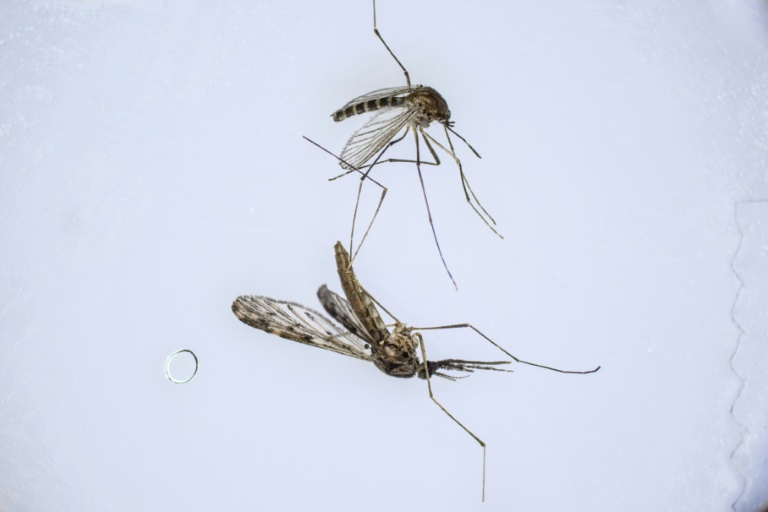
CHICAGO — A Chicago resident has died from West Nile virus, marking the first death linked to the mosquito-borne illness in both the city and the state of Illinois this year, health officials announced Tuesday.
The Chicago Department of Public Health confirmed the death alongside the city’s first two human cases of West Nile virus in 2026. The department did not disclose further details about the person who died, including their age or the specific area of the city where they likely contracted the illness.
CDPH Commissioner Dr. Garth Walker pointed to the city’s unusually wet summer as a key factor contributing to elevated mosquito activity this year.
“2026 has seen the rainiest summer in Chicago in years, giving mosquitoes ample opportunities to breed,” Walker said in a statement. “The best way to protect yourself from West Nile virus is to avoid mosquito bites and take measures to stop them from breeding around your home.”
Data on Chicago’s rainfall this year supports that assessment. Midway Airport recorded more than 20 inches of rainfall between June 1 and early August, well above the roughly 13 inches the Southwest Side airport typically sees between June and late August in a normal year. Standing water left behind by heavy rain creates additional breeding grounds for mosquitoes, increasing the overall risk of transmission for mosquito-borne illnesses like West Nile virus.
Illinois Department of Public Health Director Dr. Sameer Vohra emphasized the broader statewide significance of the year’s first fatality.
“The year’s first death in Illinois related to West Nile virus is a sobering reminder to take mosquito-borne illness seriously,” Vohra said. He noted that while most people infected with the virus do not experience serious symptoms, certain populations face significantly elevated risk.
“While most people won’t experience serious symptoms, West Nile virus can lead to severe illness in high-risk groups such as older adults, individuals with chronic medical conditions, and immunocompromised persons,” Vohra said.
Tuesday’s announcement followed a related development just days earlier, when the Cook County Department of Public Health reported the season’s first four West Nile virus cases in the Chicago suburbs. The Illinois Department of Public Health separately confirmed its first human case of the virus for the year the previous week, involving a resident of downstate Piatt County.
According to figures from the state’s public health department, Illinois recorded 10 deaths linked to West Nile virus last year, out of a total of 150 confirmed human cases statewide.
West Nile virus remains the most common cause of mosquito-borne disease in both Chicago and the United States more broadly, according to the Centers for Disease Control and Prevention. The virus is transmitted to humans primarily through the bite of an infected mosquito, with the underlying transmission cycle involving infected birds; mosquitoes that feed on infected birds can subsequently acquire and spread the virus to humans and other animals through later bites.
Health officials emphasized that human-to-human transmission of West Nile virus is extremely rare. Most people infected with the virus, roughly four out of five according to state health officials, experience no symptoms whatsoever. Among those who do develop symptoms, most face a relatively mild illness involving fever and flu-like symptoms, occurring in roughly one in five infections.
A smaller subset of cases can progress to severe, neuroinvasive disease, occurring in approximately one in 150 infections, according to figures cited by health officials. In these more serious cases, the virus reaches the brain or spinal cord, potentially causing encephalitis, meningitis or acute flaccid paralysis, conditions that can result in long-term complications or death, particularly among higher-risk populations.
Chicago officials identified the groups facing the highest risk of severe illness as people over age 60, individuals with chronic medical conditions, and those who are immunocompromised. Public health experts have noted that this risk disparity means the practical impact of the virus varies enormously based on individual health status and age, even though exposure to mosquito bites carrying the virus may be similar across different populations within the same geographic area.
There is currently no vaccine available for West Nile virus in humans, and no specific antiviral treatment exists for the illness. Medical care for patients who develop severe disease is generally limited to supportive treatment aimed at managing symptoms and complications rather than directly targeting the virus itself.
In response to the rising mosquito activity, CDPH has maintained an active mosquito control program throughout the summer, including treating more than 80,000 catch basins across the city with larvicide to kill immature mosquitoes before they mature, along with ongoing efforts to collect and test mosquito populations for the presence of West Nile virus. The department has also conducted targeted insecticide spraying in specific geographic areas when testing indicates elevated risk, deploying that response across 15 different Chicago community areas over the past several weeks, including Beverly, Burnside, Chatham, East Garfield Park, Lower West Side, Morgan Park, Near West Side, North Lawndale, O’Hare, Pullman, Roseland, South Deering, Washington Heights, West Lawn and West Pullman.
As of the department’s most recent update, West Nile virus risk in Chicago was rated as moderate, with officials continuing to encourage residents citywide to take precautionary measures against mosquito bites regardless of their specific neighborhood.
Health officials recommend that residents use insect repellent registered with the Environmental Protection Agency, containing active ingredients such as DEET, picaridin, IR3535 or oil of lemon eucalyptus, applied according to product label instructions. Additional recommended precautions include wearing long sleeves and pants when outdoors, particularly during dawn and dusk hours when mosquitoes are most active, and eliminating standing water around homes and yards to reduce local mosquito breeding opportunities.
Late August and September mark peak transmission months for West Nile virus in the Chicago area, meaning officials expect continued mosquito activity and potential additional cases in the weeks ahead as the region moves through the remainder of the transmission season. Public health officials have indicated that risk from the virus typically persists until the first hard frost of the year, underscoring the importance of continued precautions well into the fall months as temperatures gradually decline.

Lawrence Wong puts Greater Sentosa centre stage as Singapore plans next wave of attractions

Ctrl-Alt-Speech: License To Spill | Techdirt

At least two dead in blast at Bolivia military barracks





-

 Crypto World15 hours ago
Bitcoin price stalls near $82K as key resistance holds
-

 Politics15 hours ago
Best Gaming Laptops, CPUs, TVs, And Keyboards To Upgrade Your Set Up For GTA VI
-

 Tech16 hours ago
The Birds Outside, Drawn For You Automatically
-

 Crypto World19 hours ago
IMF Says El Salvador’s Post-Review Bitcoin Purchases Used No Public Funds
-
 Crypto World15 hours ago
U.S. added stronger than expected 162,000 jobs in August as labor market bounced back
-

 Sports19 hours ago
Alexandre Pato consortium’s Northampton Town investment approved
-

 Sports14 hours ago
Golden Eaglets Drawn in Group B for 2026 WAFU B U17 Championship
-

 Sports19 hours ago
Commanders’ Chig Okonkwo is a top breakout fantasy football candidate
-
 Crypto World14 hours ago
XRP price breaks falling channel as bulls target $1.53
-

 Politics21 hours ago
A new European chapter for Gibraltar
-

 Politics17 hours ago
The House | Bin the lectures, bring gossip and be ready to banter: how the new PM should prepare for his Trump encounter
-

 Politics14 hours ago
How To Avoid Winter Colds: 4 Everyday Habits That Spread Germs, Says Pharmacist
-

 Crypto World14 hours ago
From warning to listing: UK’s largest retail investment platform opens access to crypto ETNs
-

 Tech16 hours ago
A Worthy Android Ereader, With Some Tradeoffs
-

 Crypto World15 hours ago
FinCEN flags $12.7B tied to Southeast Asia crypto investment scams
-

 Politics19 hours ago
33 Cosy Autumn Home Decor Ideas: Blankets, Pumpkin Decorations, And Candles
-

 Crypto World14 hours ago
Trezor Data Breach Impacts 67,000 More US Customers
-

 Sports20 hours ago
Seven wickets in 21 balls: Sri Lanka’s Chamari Athapaththu scripts history with record-breaking spell
-

 Tech14 hours ago
beyerdynamic AVENTHO Y Debuts at IFA 2026 and Makes Wireless Headphones Less Disposable
-

 Tech15 hours ago
How To Edit Claude’s Memory
You must be logged in to post a comment Login