
Business
Sebi’s new ETF rules apply today: What changes from September 7 and how they impact investors?

The changes are particularly significant for gold and silver ETFs, which now have a pre-open auction and greater flexibility for price bands to expand when global bullion prices move sharply overnight.
One key change is how exchanges determine the base price for applying price bands. Under the existing framework, exchanges use the ETF’s Net Asset Value (NAV) from two trading days earlier, or T-2, for this purpose.
Sebi has now replaced this with a more recent reference price, such as the previous day’s closing NAV or other real-time valuation measures, depending on the ETF category. The change removes the one-day lag that can cause ETF prices and the value of their underlying assets to move out of sync.
The market regulator has also moved away from the earlier system of fixed price bands. Until now, most ETFs were subject to a price band of up to 20%, irrespective of the volatility of the underlying asset. Under the revised framework, price bands will be dynamic and will vary depending on the type of asset tracked by the ETF. This is expected to allow ETF prices to respond more efficiently to market movements while avoiding unnecessary trading restrictions.

What changes from today?
1.) The first change is to the base price used to determine the day’s trading range. Instead of relying on an older valuation, the base price will now be the previous day’s closing price, calculated as the volume-weighted average price (VWAP) of the ETF’s trades during the last 30 minutes of the previous session. In effect, the day’s trading range will begin from where the ETF actually traded towards the close of the previous session, rather than from a two-day-old valuation.
2.) The second change is to price bands, which will now vary according to the underlying asset. Equity and debt ETFs will begin the day with a 10% price band, which can widen in steps up to 20%.A 15-minute cooling-off period will apply each time the limit is tested. Gold and silver ETFs, meanwhile, will start with a tighter 6% band. However, given that global bullion prices move around the clock, their bands can expand in 3% steps with no upper cap. This allows the ETF price to adjust towards its fair value even after a large overnight move in global markets. Overnight and liquid ETFs, whose values barely move, will continue to have a fixed 5% band.
3.) The third change applies specifically to gold and silver ETFs, which will now begin each trading day with a pre-open call auction, the same mechanism used for stocks. During this process, buy and sell orders are collected before the market opens and matched at a single equilibrium price. This means the opening price is determined by the balance of demand and supply rather than by the first stray order of the day.
The revised framework is aimed at making ETF price discovery more responsive to the underlying assets, particularly when there are significant overnight moves in global markets.
What does it mean for investors?
For ETF investors, the changes are expected to bring ETF prices closer to the value of their underlying assets, reducing instances of large premiums or discounts to NAV.
They could also improve liquidity and price discovery, especially during volatile market conditions, while making trading in commodity ETFs more efficient.
(Disclaimer: Recommendations, suggestions, views and opinions given by the experts are their own. These do not represent the views of The Economic Times)

Business
(VIDEO) Racing Driver Ollie Millroy Says Rival Loek Hartog Saved His Life After Fiery China GT Crash

SHANGHAI — British racing driver Ollie Millroy says he owes his life to fellow competitor Loek Hartog, after the Dutch driver stopped his own car mid-race and pulled Millroy from a burning Ferrari following a horrific multi-car crash at the China GT Championship in Shanghai on Saturday.
The crash occurred roughly 20 minutes into the opening race of the weekend at Shanghai International Circuit. According to Motorsport.com, the incident began as Neil Verhagen’s BMW battled David Chen’s Ferrari on the approach to Turn 14, with Verhagen moving partly onto the grass while attempting to pass and losing control of his car on the damp surface, making contact with Chen’s Ferrari. Both cars then slid toward the hairpin, where Millroy’s AAI Motorsports Ferrari was struck from the side and immediately caught fire. The race was red-flagged on the spot.
Racing driver Ollie Millroy says competitor Loek Hartog saved his life by pulling him from a burning car after a fiery crash in China. Millroy suffered multiple injuries but says, “I owe you my life.” pic.twitter.com/7tXvLYePgv
— Breaking911 (@Breaking911) September 7, 2026
Millroy, 36, suffered five broken ribs, a fractured collarbone, a broken hand and finger, and a bruised lung in the crash, according to details he shared publicly. In a social media post following the incident, Millroy described the extent of his gratitude toward Hartog, the 23-year-old Dutch driver who stopped his own Porsche to help.
“I am still alive tonight, entirely thanks to one man,” Millroy wrote. “Loek Hartog stopped instantly with no flag marshals or fire crews in sight and risked his own life to get me out of the car. I don’t remember anything between 30 seconds before the crash and one hour after it, but I will remember his incredible act of bravery for the rest of my life.”
Millroy went further in describing the lasting impact of Hartog’s actions on his family.
“One day I will tell our three kids this story and Loek will be the biggest superhero in history in their eyes too,” Millroy wrote. “Thank you Loek. I owe you my life for your selfless act today.”
On-board footage from Hartog’s Phantom Global Racing Porsche 911 GT3 R Evo captured the rescue in real time, showing the Dutchman stopping near the accident scene, climbing out of his own car and running toward Millroy’s burning vehicle without hesitation. According to SportsCar365, Hartog first attempted to free Millroy by ripping off the passenger’s side door before someone, possibly a track marshal, handed him a fire extinguisher. Hartog then used the extinguisher to knock down enough of the flames to climb into the cockpit himself and pull Millroy to safety.
Speaking about his own decision to stop and intervene, Hartog described his actions as instinctive rather than deliberate.
“When I saw a car turning into a huge fireball far ahead, there wasn’t really a decision to make,” Hartog said.
The rescue has drawn scrutiny toward the speed and adequacy of the official emergency response at the circuit. AAI Motorsports co-driver Yin Yu Chen criticized what she described as a delayed response from track personnel following the crash.
“For about a minute and a half, Ollie was left alone in the car without any immediate assistance from the fire brigade or emergency services,” Chen said. “For this reason, I must thank Loek Hartog for everything he did today. He didn’t hesitate for a single moment to stop and come to Ollie’s aid when he needed help the most.”
Chen said her team accepted that motorsport inherently carries risk but believed the response to Saturday’s accident specifically fell short of an acceptable standard.
Millroy’s team, FIST Team AAI, issued a formal statement following the incident announcing that it would withdraw entirely from the remainder of the China GT Championship season. The team’s statement pushed back directly against early characterizations of the incident during the event’s live broadcast.
“It is particularly distressing that during the live broadcast, the organizers did not verify the situation on the scene, and hastily said the drivers left the cars on their own,” the team wrote. “The actual situation is: our driver was rescued from the burning car by Loek Hartog, regardless of his own safety.”
The team said it is demanding a comprehensive investigation into the circumstances surrounding the crash, including questions related to circuit safety protocols, the accuracy of the event’s live broadcast coverage, and the dissemination of official information about the incident in its immediate aftermath.
Team owner Betty Chen separately addressed the incident in her own social media post, emphasizing that the team’s primary concern remained Millroy’s well-being even as questions about the emergency response continued to circulate.
“The most important thing is that Ollie is okay,” Chen said, according to Yahoo Sports’ account of her statement. “Things could have turned out very differently.”
Hartog, a former Porsche Motorsport North America Selected Driver, has drawn widespread praise across the motorsport community following the rescue, with fans and fellow competitors describing his split-second decision to abandon his own competitive race in order to assist a rival driver in immediate danger as an extraordinary act of selflessness under extreme pressure.
Millroy has continued expressing gratitude publicly in the days since the crash, closing his initial social media statement by thanking the broader racing community for its support during his recovery.
“Thank you to everyone for your kind messages,” Millroy wrote. “I’m counting my lucky stars tonight.”
As Millroy continues recovering from his injuries away from competition, questions surrounding the circuit’s emergency response protocols and the accuracy of the event’s official broadcast are expected to remain a point of scrutiny for organizers of the China GT Championship, particularly given FIST Team AAI’s decision to withdraw from the remainder of the season and its explicit call for a full investigation into what went wrong during the critical minutes following Saturday’s crash. For now, the incident has been defined publicly not by the failures in the emergency response, but by Hartog’s split-second decision to risk his own safety in order to save a fellow competitor’s life on the track.

S&P 500 consolidates at 7,708: Hourly levels

Brent Oil stalls at resistance with RSI at 72: Live levels

S&P 500: Prepare To Buy A CPI Capitulation (Technical Analysis)
Check out what’s clicking on FoxBusiness.com.
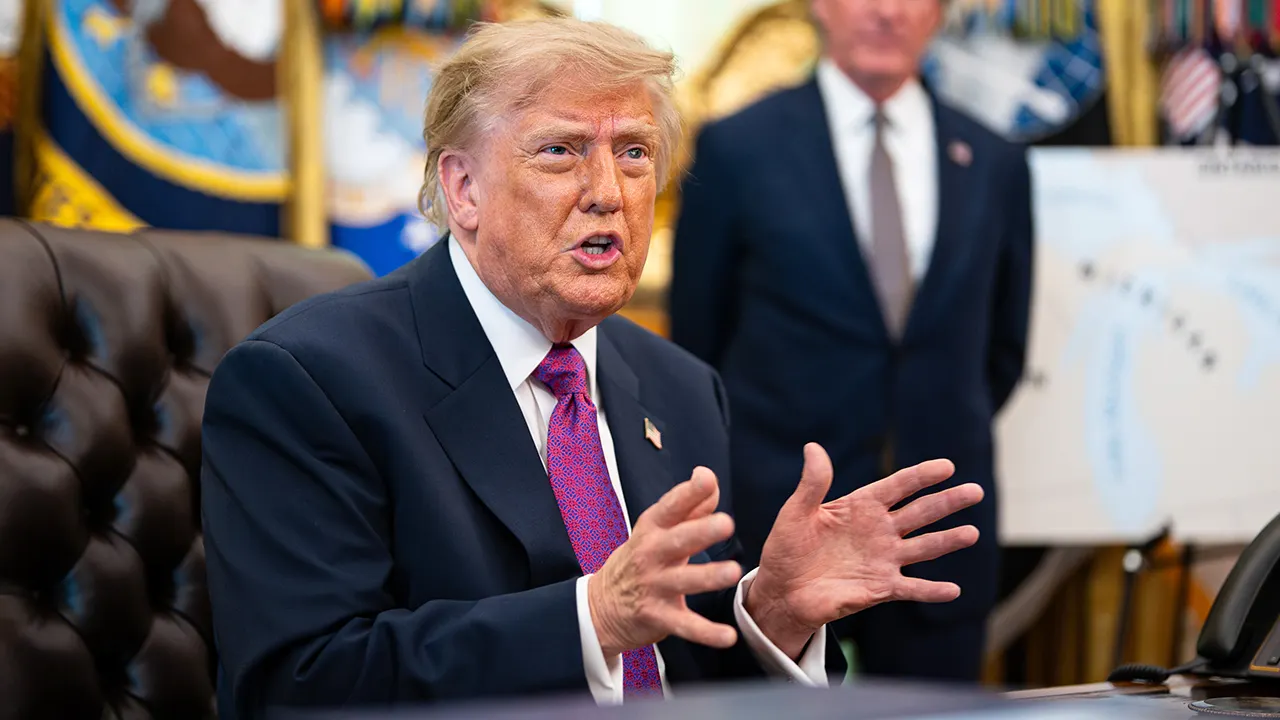
President Donald Trump on Monday said Canadian aircraft manufacturer Bombardier should no longer be allowed to sell its planes in the United States unless it manufactures them domestically.
In a Truth Social post, Trump claimed that more than half of Bombardier’s revenue comes from U.S. customers and accused Canada of imposing “unfair” restrictions on American companies.
“NO MORE SELLING BOMBARDIER IN THE UNITED STATES!” Trump wrote. “Their products aren’t good enough!”
HOW MAPQUEST’S ‘LAKE AMERICA’ STANCE SPARKED A MASSIVE APP STORE SURGE
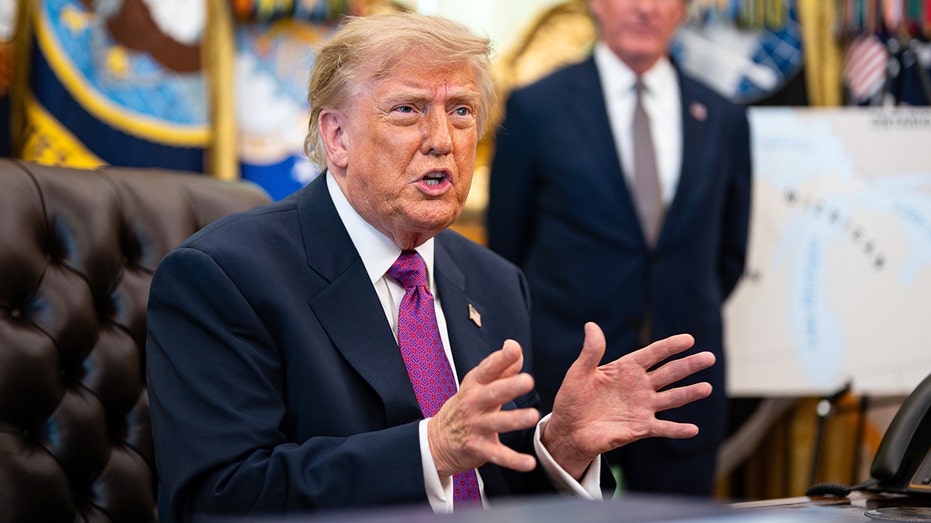
Trump said Canadian aircraft manufacturer Bombardier should no longer be allowed to sell its planes in the United States unless it manufactures them domestically. (Al Drago/The Washington Post/Bloomberg via Getty Images)
“Over 50% of their revenue comes from the United States — They live off American Buyers, American Companies, American Airports, and American Service — All while Canada blocks our GREAT American Banks, and Companies, throughout the U.S.A. They even blocked Gulfstream Aerospace from doing business in Canada — Completely unjust and unfair! That Era is OVER!”
Trump added, “If they want our Market, they must build here, and stop treating America like a ‘piggybank.’ BUY AMERICAN. FLY ON AMERICAN AIRLINERS. ENJOY AMERICAN LIQUOR AND BEVERAGES. SAIL ON LAKE AMERICA. AMERICA FIRST!”
CANADA PLANS TARIFF RETALIATION AFTER TRUMP WARNS ITS LEADERS TO ‘FALL IN LINE’
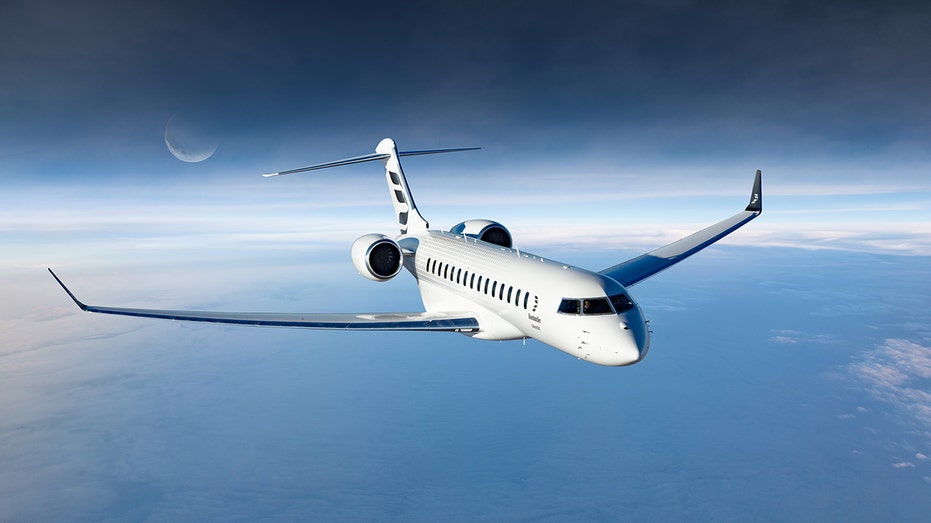
In a Truth Social post, Trump argued that more than half of Bombardier’s revenue comes from U.S. customers. (Bombardier)
Trump’s latest remarks come amid a widening trade dispute between the United States and Canada.
Earlier this year, Trump threatened to decertify Bombardier Global Express business jets and impose 50% tariffs on Canadian-made aircraft unless Canada certified several Gulfstream business jets, according to Reuters.
TRUMP FIRES BACK AT CANADA AFTER CARNEY SUSPENDS TRADE TALKS, ACCUSES US OF LAST-MINUTE ‘POWER PLAY’
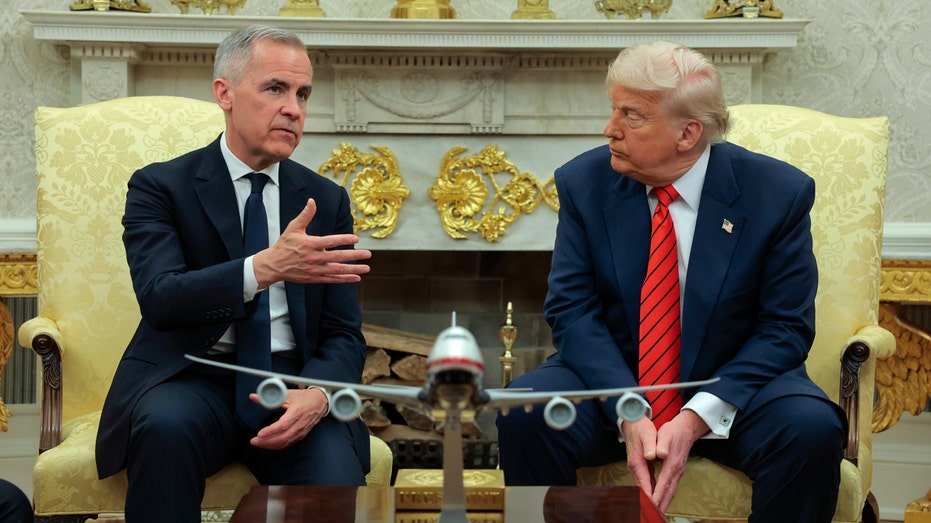
President Donald Trump meets with Canadian Prime Minister Mark Carney in the Oval Office at the White House on May 6, 2025, in Washington, DC. (Anna Moneymaker/Getty Images)
Canada later approved certification of the Gulfstream aircraft, the outlet reported.
GET FOX BUSINESS ON THE GO BY CLICKING HERE
Bombardier and Canadian Prime Minister Mark Carney’s office did not immediately respond to FOX Business requests for comment.
Reuters contributed to this report.

Crude Oil WTI tests $93.64 resistance with overbought RSI: Live levels


I am Gen Alpha. I have more than 16 years of investment experience, and an MBA in Finance. I focus on stocks that are more defensive in nature, with a medium- to long-term horizon. I provide high-yield, dividend growth investment ideas in the investing group iREIT®+HOYA Capital. The group helps investors achieve dependable monthly income, portfolio diversification, and inflation hedging. It provides investment research on REITs, ETFs, closed-end funds, preferreds, and dividend champions across asset classes. It offers income-focused portfolios targeting dividend yields up to 10%. Learn more.
Analyst’s Disclosure: I/we have no stock, option or similar derivative position in any of the companies mentioned, but may initiate a beneficial Long position through a purchase of the stock, or the purchase of call options or similar derivatives in AEP over the next 72 hours. I wrote this article myself, and it expresses my own opinions. I am not receiving compensation for it (other than from Seeking Alpha). I have no business relationship with any company whose stock is mentioned in this article.
I am not an investment advisor. This article is for informational purposes and does not constitute as financial advice. Readers are encouraged and expected to perform due diligence and draw their own conclusions prior to making any investment decisions.
Seeking Alpha’s Disclosure: Past performance is no guarantee of future results. No recommendation or advice is being given as to whether any investment is suitable for a particular investor. Any views or opinions expressed above may not reflect those of Seeking Alpha as a whole. Seeking Alpha is not a licensed securities dealer, broker or US investment adviser or investment bank. Our analysts are third party authors that include both professional investors and individual investors who may not be licensed or certified by any institute or regulatory body.

Bitcoin trapped in $76K-$82K range: Live levels
Business
Rich Dad Poor Dad Author Highlights Decade-Old Bitcoin Bet as $1.2 Billion Debt Claim Draws Scrutiny
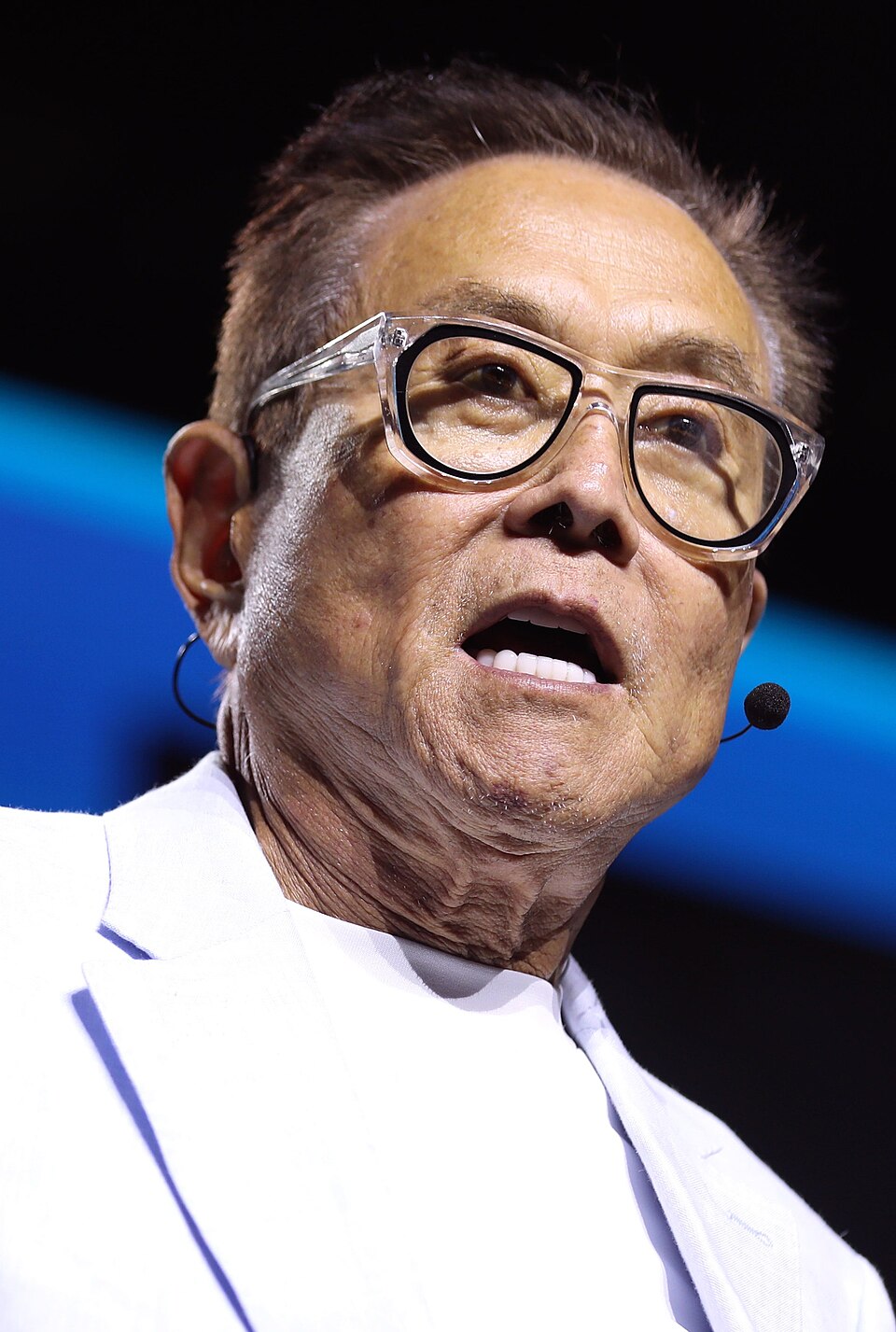
NEW YORK — Robert Kiyosaki, the author of “Rich Dad Poor Dad,” used a weekend social-media post to spotlight an old Bitcoin purchase even as a Vanity Fair profile and a string of follow-up stories put a $1.2 billion debt figure back in circulation.
TheStreet reported that on Sept. 5 Kiyosaki wrote on Facebook that he once paid $400 for a single bitcoin. He framed the holding as proof that buying early and waiting matters more than chasing a peak. The same report said commenters immediately pressed him about the debt number he has repeated for months. TheStreet also noted that some of the price details in that post did not match market records: Bitcoin’s high near $126,080 on Oct. 6, 2025, left the coin well above $20,000 even after a steep pullback.
The debt figure is not new. Kiyosaki has used it on podcasts and on social media since at least 2025. On the “Get Rich Education” podcast in June he said, “So, I’m a billion two in debt.” He added a warning in the same breath: “Should not do what I do, right? But I studied it since 1974… If you’re going to learn to use debt, you’d better take some education.” He has said Dave Ramsey’s stay-out-of-debt message “is good for most people.”
In an earlier appearance, when asked whether that much leverage made him nervous, he laughed. “Are you shitting me?” he said. “No. I’ll tell you why. If you owe the bank $20 million and you can’t pay it back, you got a problem. But you owe the bank $1 billion and you can’t pay it back, it’s their problem.”
That line is a modern version of an old banking joke. It is also the core of the argument he has sold since “Rich Dad Poor Dad” first appeared in 1997: treat borrowing used to buy income-producing assets as different from borrowing used to fund a lifestyle. On “The Hannah Hammond Show” he put it this way: “Debt is money. My poor dad always says, ‘Get out of debt.’ Dave Ramsey says, ‘Get out of debt.’ My rich dad says, ‘Only lazy people use their own money — your job is to borrow money.’” In a March 2025 post he posed the contrast as a contest. “My friend Dave Ramsey says ‘Live debt free.’ I say ‘I use debt to invest. I am $1.2 billion in debt.’ Again, who is right?”
Kim Kiyosaki, his former wife and still a partner in the businesses, told Vanity Fair the headline number is “widely misunderstood.” She said it is the total debt on a real-estate portfolio owned with partners, not a personal unsecured tab. “We have a lot of apartment houses with our partners,” she said, putting the count at about 1,500 units. “So technically, yes, we have all this debt,” she added, but it is attached to those assets. Vanity Fair, working from Kiyosaki’s own claim that he earns about $3 million a year, estimated his personal slice could be in a range of $30 million to $60 million. “He loves to say things that shock,” Kim Kiyosaki said, so that he can then “explain it in more detail, why investment debt is good.”
Kiyosaki described the legal structure in the same profile. “If it all comes to hell, you can talk to my attorney,” he said. “Firewalls — that’s the way the rich play the game.” The magazine said properties sit in separate limited-liability companies, a common real-estate practice meant to isolate one building’s problems from the rest of a portfolio.
That is leverage on apartments. The weekend Facebook post was about something else: a scarce digital asset he has promoted for years as a hedge against what he calls “fake” dollars. On X he has written, “The rich do not save money. Since 1965 I have saved real silver. Since 1971 I have saved real gold. Since 2012 I have saved Bitcoin. Since 2022 I have saved Ethereum.” He has also said he later stopped buying at certain prices — silver near $60, bitcoin near $6,000, gold near $300 — and that he has sold some bitcoin and gold because he dislikes capital-gains taxes. Those posts sit alongside other messages in which he told followers he keeps buying. The record is not a single, tidy trading log. It is a public sales pitch that has shifted with the market.
He has attached large price targets to the same assets. After what he calls a crash, he has predicted gold at $35,000 an ounce, silver at $200, bitcoin at $750,000 and ether at $95,000. He has separately talked about bitcoin at $250,000 in 2026. Those forecasts have missed earlier deadlines. In 2024 he said bitcoin would hit $350,000 by late August of that year. It did not.
The tension in the current coverage is therefore not whether Kiyosaki likes debt. He has said so for decades. It is whether a $1.2 billion partnership liability and a $400 bitcoin souvenir belong in the same sentence as proof of the same method. One is borrowed money sitting on rental buildings whose tenants, in his telling, service the loans. The other is an unlevered bet he says he made when the coin was cheap. Mixing them makes for a sharp headline. It does not make them the same risk.
“Rich Dad Poor Dad” has sold more than 40 million copies and turned a parable about two father figures into a seminar, radio and product business. Kiyosaki, 79, co-wrote books with Donald Trump, including “Why We Want You to Be Rich.” He still tells audiences that cash savers are “the biggest losers” and that U.S. national debt — now above $40 trillion on Treasury’s published totals — will punish people who hold dollars. He has called the 401(k) “the biggest mistake I think ever made” and said it will “decimate” baby boomers.
Critics answer that his crash timetable has slipped for years, that bitcoin remains volatile — it has fallen tens of thousands of dollars from its 2025 high — and that most households cannot borrow against apartment blocks. Kiyosaki himself has said they should not copy him without education. “If you can’t manage debt — live debt-free,” he said on another podcast. “But the opposite side of that is to learn to handle debt.”
What the latest cycle of stories actually established is narrower. Kiyosaki keeps advertising a $1.2 billion debt total. His longtime business partner says the number belongs to a group that owns about 1,500 apartments, and that his own share is far smaller. He keeps pointing to hard assets and to an early bitcoin purchase he now values as a lesson in timing. Followers used the comment thread on that purchase to ask about the debt. He has not posted a personal balance sheet that would settle the argument. Until he does, the public record is the one he chose: a shocking figure, a partner’s clarification, and a $400 coin he wants remembered as the smart side of the ledger.
ClearBridge Dividend Strategy Fund Q2 2026 Commentary

Horror as dad spent weeks at wrong teen’s hospital bed before learning son had died in crash

(VIDEO) Racing Driver Ollie Millroy Says Rival Loek Hartog Saved His Life After Fiery China GT Crash
Tokenized Stocks See Explosive Growth as SPY, Google, and Robinhood Lead Rally





-

 Fashion3 days ago
Weekend Open Thread: Beyond Yoga
-
 Crypto World3 days ago
Bitcoin price stalls near $82K as key resistance holds
-

 Politics3 days ago
Best Gaming Laptops, CPUs, TVs, And Keyboards To Upgrade Your Set Up For GTA VI
-

 Tech3 days ago
The Birds Outside, Drawn For You Automatically
-

 Crypto World3 days ago
IMF Says El Salvador’s Post-Review Bitcoin Purchases Used No Public Funds
-
 Crypto World3 days ago
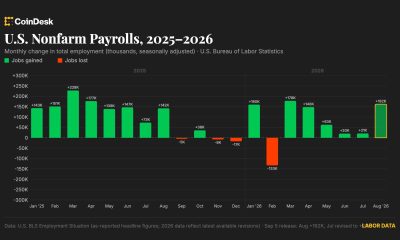
U.S. added stronger than expected 162,000 jobs in August as labor market bounced back
-
 Sports3 days ago
Alexandre Pato consortium’s Northampton Town investment approved
-
 Sports3 days ago
Commanders’ Chig Okonkwo is a top breakout fantasy football candidate
-

 Sports3 days ago
Golden Eaglets Drawn in Group B for 2026 WAFU B U17 Championship
-
 Crypto World3 days ago
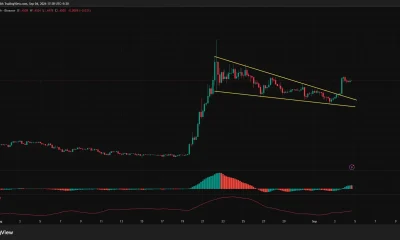
XRP price breaks falling channel as bulls target $1.53
-
 Politics4 days ago
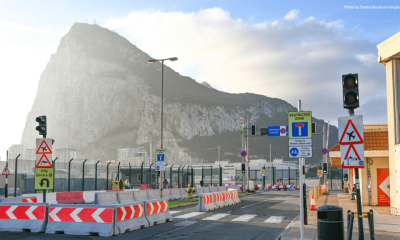
A new European chapter for Gibraltar
-

 Politics3 days ago
How To Avoid Winter Colds: 4 Everyday Habits That Spread Germs, Says Pharmacist
-

 Politics3 days ago
The House | Bin the lectures, bring gossip and be ready to banter: how the new PM should prepare for his Trump encounter
-

 Crypto World3 days ago
From warning to listing: UK’s largest retail investment platform opens access to crypto ETNs
-

 Crypto World3 days ago
FinCEN flags $12.7B tied to Southeast Asia crypto investment scams
-

 Tech3 days ago
A Worthy Android Ereader, With Some Tradeoffs
-

 Tech3 days ago
How To Edit Claude’s Memory
-

 Crypto World3 days ago
Trezor Data Breach Impacts 67,000 More US Customers
-

 Politics3 days ago
33 Cosy Autumn Home Decor Ideas: Blankets, Pumpkin Decorations, And Candles
-

 Tech3 days ago
beyerdynamic AVENTHO Y Debuts at IFA 2026 and Makes Wireless Headphones Less Disposable
You must be logged in to post a comment Login