
Business
Select committee calls for bill to address AI threat to human rights


In a summary of its 100-page report, external, the JCHR points out that AI has been responsible for numerous abuses of human rights.
It cites as examples the use of AI to create sexualised images of women and girls and scanning people’s faces without their consent.
The JCHR advocates the creation of a “single, independent AI oversight body… on a statutory basis”.
It argues that the current legal framework which applies to AI is “fragmented and difficult to navigate”, “leaving gaps in protection”.
“The AI Bill should establish a regulatory regime that classifies different risk levels and mandate more demanding obligations for higher risk AI systems and models,” it says.
“Obligations should be placed on all stages of the AI lifecycle, ensuring those responsible in the supply chain for designing, amending and utilising AI systems are aware of their obligations and they are effectively addressed.
“Some uses of AI should be prohibited outright because they are incompatible with human rights. Potential areas for action include subliminal techniques, and inappropriate use of profiling or biometric data.”
“AI is heralded as an unprecedented era of technological development with the potential to transform our lives for better or for worse,” said Sobel.
“It is moving with such speed and complexity that its impact is hard to accurately predict. What is clear is that at present we are unprepared to deal with its consequences however potentially dire they may be.”
The JCHR’s 12 members are drawn from both Houses of Parliament and they currently include MPs and peers from the Labour, Conservative and Liberal Democrat parties.
BBC News is seeking comment from the government on the call for the AI bill.
Monday’s report comes amid growing general anxiety over the challenges AI poses.
Jacob Coxon, an AI researcher who quit Anthropic, told the BBC this weekend that staff developing the systems were “genuinely frightened” for the future of humanity.
An Anthropic spokesperson told BBC News that it was building “models with some of the strongest safeguards in the industry”.

Business
(VIDEO) Apple Reportedly Building iPhone Game Controllers Under Beats Brand as Mobile Gaming Push Gains Steam
KEY POINTS
Apple Reportedly Building iPhone Game Controllers Under Beats Brand as Mobile Gaming Push Gains Steam
CUPERTINO, Calif. — Apple is developing its own game controllers for the iPhone, according to a new report, in a move that would give the company its first first-party hardware built specifically for traditional gaming input after years of relying on outside accessory makers.
Bloomberg’s Mark Gurman reported in his Power On newsletter that the controllers have been in development for more than a year and will likely carry Beats branding rather than Apple’s own name. “Apple sees this as a growing market and wants in,” Gurman wrote, adding that Beats executives are leading the project’s conception and engineering. Apple has not officially announced either device, and no information on pricing or availability has emerged.
The report corroborates earlier evidence uncovered directly in Apple’s software. Code found in the first release candidate of macOS 26.7 referenced two unreleased hardware devices identified internally as T6502 and T1057, each carrying its own dedicated GameController profile rather than generic placeholder code. The references were first spotted by a MacRumors reader going by the name Pdfu, who has continued digging through the beta code for additional detail.
According to that code, both devices include the hardware components expected of a modern gamepad, including a directional pad, dual thumbsticks, shoulder buttons, Home and Menu buttons, and analog triggers. The two controllers differ meaningfully in design, however. T1057 includes support for an accelerometer and gyroscope along with more advanced haptic feedback, suggesting a wireless, motion-sensing design, while T6502 lacks that motion-sensing hardware, pointing to a simpler, likely wired controller aimed at a different segment of the market. The presence of dedicated hardware plug-ins for each device, rather than shared generic code, has been cited by developers examining the leak as evidence that these are real products in active development rather than abandoned experiments.
Notably, the references to both controllers were removed from a subsequent release candidate of macOS 26.7. That removal does not necessarily indicate the project has been shelved, as Apple routinely strips references to unannounced hardware from public builds once they draw outside attention, but it does mean there is currently no confirmation that either device will reach the market as a commercial product.
The choice of Beats as the likely brand for the controllers would continue a pattern Apple has used before when entering new or lower-margin product categories. Acquired by Apple in 2014, Beats has expanded well beyond its original headphone lineup in recent years, adding charging cables, iPhone cases and other accessories to its catalog. Beats products typically target more affordable price points using less premium materials and finishes than Apple’s own branded hardware, an approach that would make sense for a gaming controller aimed at a broad consumer audience rather than a premium niche. Analysts covering the report noted that positioning the accessory under Beats would also give Apple more flexibility on price and design without affecting perceptions of its flagship hardware lineup.
Apple’s potential entry into the controller market comes as the company has increasingly built out the software infrastructure to support serious mobile gaming, even without offering its own physical controller. iOS 26 introduced a dedicated Games app that consolidates a user’s game library, Game Center friend connections and Apple Arcade titles into a single hub spanning iPhone, iPad, Mac and Apple TV. Apple Arcade itself has grown to include more than 250 titles for a monthly subscription price of $6.99. A first-party controller, even one carrying Beats branding rather than the Apple logo, would give that existing software ecosystem a dedicated physical companion for the first time.
Apple devices already support a range of third-party controllers through the Made for iPhone accessory program, including gamepads from Backbone and SteelSeries, as well as traditional console controllers such as Sony’s DualShock and Microsoft’s Xbox Wireless Controller. Apple’s own retail stores currently stock several of those third-party options, including the Backbone One and SteelSeries Nimbus, meaning a first-party Beats controller would put Apple in the position of competing directly with products it currently sells alongside its own devices.
The company has touted the gaming capabilities of its custom silicon in the past, at times highlighting benchmark comparisons between its chips and dedicated gaming consoles during product presentations, even as it has largely avoided pursuing hardware built specifically around traditional console-style gaming input. A first-party controller, should it reach the market, would mark a shift in that approach and could also extend to strengthening Apple’s gaming ecosystem on Apple TV 4K, where third-party controller support has so far been the primary way to play more demanding titles.
Because the current evidence is limited to internal code references and a single report citing unnamed sourcing, key details remain unknown, including how the two controllers might be positioned relative to each other, what they might cost, and when Apple might be prepared to announce them. Apple has a history of testing internal code for products that are later delayed, altered significantly, or canceled outright before reaching consumers, meaning the project’s ultimate fate remains uncertain even with the added specificity provided by the newly surfaced model identifiers and hardware profiles.
For now, Apple has made no public comment on the reported controllers, and the company is not expected to confirm or deny unreleased hardware projects ahead of an official announcement, following its typical practice with products still in development.
CUPERTINO, Calif. — Apple is developing its own game controllers for the iPhone, according to a new report, in a move that would give the company its first first-party hardware built specifically for traditional gaming input after years of relying on outside accessory makers.
Bloomberg’s Mark Gurman reported in his Power On newsletter that the controllers have been in development for more than a year and will likely carry Beats branding rather than Apple’s own name. “Apple sees this as a growing market and wants in,” Gurman wrote, adding that Beats executives are leading the project’s conception and engineering. Apple has not officially announced either device, and no information on pricing or availability has emerged.
The report corroborates earlier evidence uncovered directly in Apple’s software. Code found in the first release candidate of macOS 26.7 referenced two unreleased hardware devices identified internally as T6502 and T1057, each carrying its own dedicated GameController profile rather than generic placeholder code. The references were first spotted by a MacRumors reader going by the name Pdfu, who has continued digging through the beta code for additional detail.
According to that code, both devices include the hardware components expected of a modern gamepad, including a directional pad, dual thumbsticks, shoulder buttons, Home and Menu buttons, and analog triggers. The two controllers differ meaningfully in design, however. T1057 includes support for an accelerometer and gyroscope along with more advanced haptic feedback, suggesting a wireless, motion-sensing design, while T6502 lacks that motion-sensing hardware, pointing to a simpler, likely wired controller aimed at a different segment of the market. The presence of dedicated hardware plug-ins for each device, rather than shared generic code, has been cited by developers examining the leak as evidence that these are real products in active development rather than abandoned experiments.
Notably, the references to both controllers were removed from a subsequent release candidate of macOS 26.7. That removal does not necessarily indicate the project has been shelved, as Apple routinely strips references to unannounced hardware from public builds once they draw outside attention, but it does mean there is currently no confirmation that either device will reach the market as a commercial product.
The choice of Beats as the likely brand for the controllers would continue a pattern Apple has used before when entering new or lower-margin product categories. Acquired by Apple in 2014, Beats has expanded well beyond its original headphone lineup in recent years, adding charging cables, iPhone cases and other accessories to its catalog. Beats products typically target more affordable price points using less premium materials and finishes than Apple’s own branded hardware, an approach that would make sense for a gaming controller aimed at a broad consumer audience rather than a premium niche. Analysts covering the report noted that positioning the accessory under Beats would also give Apple more flexibility on price and design without affecting perceptions of its flagship hardware lineup.
Apple’s potential entry into the controller market comes as the company has increasingly built out the software infrastructure to support serious mobile gaming, even without offering its own physical controller. iOS 26 introduced a dedicated Games app that consolidates a user’s game library, Game Center friend connections and Apple Arcade titles into a single hub spanning iPhone, iPad, Mac and Apple TV. Apple Arcade itself has grown to include more than 250 titles for a monthly subscription price of $6.99. A first-party controller, even one carrying Beats branding rather than the Apple logo, would give that existing software ecosystem a dedicated physical companion for the first time.
Apple devices already support a range of third-party controllers through the Made for iPhone accessory program, including gamepads from Backbone and SteelSeries, as well as traditional console controllers such as Sony’s DualShock and Microsoft’s Xbox Wireless Controller. Apple’s own retail stores currently stock several of those third-party options, including the Backbone One and SteelSeries Nimbus, meaning a first-party Beats controller would put Apple in the position of competing directly with products it currently sells alongside its own devices.
The company has touted the gaming capabilities of its custom silicon in the past, at times highlighting benchmark comparisons between its chips and dedicated gaming consoles during product presentations, even as it has largely avoided pursuing hardware built specifically around traditional console-style gaming input. A first-party controller, should it reach the market, would mark a shift in that approach and could also extend to strengthening Apple’s gaming ecosystem on Apple TV 4K, where third-party controller support has so far been the primary way to play more demanding titles.
Because the current evidence is limited to internal code references and a single report citing unnamed sourcing, key details remain unknown, including how the two controllers might be positioned relative to each other, what they might cost, and when Apple might be prepared to announce them. Apple has a history of testing internal code for products that are later delayed, altered significantly, or canceled outright before reaching consumers, meaning the project’s ultimate fate remains uncertain even with the added specificity provided by the newly surfaced model identifiers and hardware profiles.
For now, Apple has made no public comment on the reported controllers, and the company is not expected to confirm or deny unreleased hardware projects ahead of an official announcement, following its typical practice with products still in development.
Business
Mariska Hargitay Says She’s ‘Still Floating’ From Taylor Swift and Travis Kelce’s Intimate MSG Wedding

LOS ANGELES — More than two months after Taylor Swift and Travis Kelce exchanged vows at Madison Square Garden, longtime Swift friend Mariska Hargitay says she still hasn’t come down from the experience, telling Jimmy Kimmel this week that the star-studded celebration felt surprisingly personal despite its massive scale.
Hargitay, the “Law & Order: SVU” star, appeared on “Jimmy Kimmel Live!” on Wednesday, September 9, where she opened up about attending the couple’s July 3 wedding in New York City. “I’m still floating from that wedding,” Hargitay said. “It was so spectacular and so intimate, I have to say. I have to say, I am blown away, because when there’s a wedding with that many guests, you think, like, ‘Oh, okay, it’s gonna be that.’ And it just wasn’t.”
The wedding, held at the iconic Manhattan arena, drew an estimated 1,000 guests, including a roster of A-list celebrities and industry figures. Hargitay, 62, attended alongside her husband, actor Peter Hermann, 59. Despite the sprawling guest list and the scale of the venue, Hargitay said the night managed to feel deeply personal, and when Kimmel asked her to single out a favorite moment, she pointed to the couple’s vows rather than any of the wedding’s more lavish elements.
“I even say that the vows were my favorite part of the whole wedding,” Hargitay told Kimmel. “It was that magical.”
Hargitay’s appearance added another firsthand account to the steady trickle of details that have emerged from Swift and Kelce’s wedding in the months since the ceremony, which the couple has largely kept private. No photographs from the event have leaked publicly, and specifics about the ceremony itself have remained closely guarded given the size of the guest list. Hargitay is not the only attendee to have offered a glimpse into the night; fellow guest Nikki Glaser also shared her own reflections on the celebration in the weeks following the wedding.
Hargitay’s friendship with Swift predates the “Love Story” singer’s relationship with the Kansas City Chiefs tight end by years and has become something of its own pop culture footnote. Swift named one of her cats Olivia Benson, after Hargitay’s long-running “Law & Order: SVU” character, while Hargitay later returned the gesture by naming her own cat Karma, after Swift’s song of the same name. Hargitay also appeared alongside Swift in the singer’s star-packed 2015 music video for “Bad Blood.”
The bond between the two was on display again just weeks before the wedding, when Hargitay joined Swift and HAIM sisters Este and Alana Haim courtside at Madison Square Garden for Game 4 of the 2026 NBA Finals on June 10, as the New York Knicks faced the San Antonio Spurs. Hargitay told Kimmel she had rushed straight from a theater performance to make it to the game on time. “I was doing a play at the time, and I actually ran from my theater. Physically ran from the theater to the game, and we were sitting together, and I was wearing a black T-shirt,” she recalled.
Swift, ever prepared, had a solution ready when Hargitay arrived without the group’s custom game-day gear. “And Taylor, being the prepared woman that she is, was like, ‘I got you.’ And basically handed it to me. I put it on, and that was the end of it,” Hargitay said. The group wore custom blue Knicks T-shirts featuring orange lettering and pop-culture puns tailored to each wearer, including a nod to actress Nicole Kidman. Asked about the experience of the night, Hargitay called it “pretty spectacular,” and described Swift’s playful energy in the crowd, saying at one point, “She was throwing me around like a rag doll!”
Beyond the wedding and the NBA Finals appearance, Hargitay has spoken previously about her admiration for Swift, describing her as a “boss lady” during an appearance on Alex Cooper’s “Call Her Daddy” podcast. “I learned so much from her,” Hargitay said at the time, adding that Swift is “warm and smart and kind.” She went on to praise the singer’s influence on those around her, saying, “That’s what I love about her is that she’s so young, but she shows us in such beautiful ways how to be fearless.”
Swift and Kelce’s wedding capped off a relationship that has played out largely in public since it began, with the pop star and NFL star becoming one of the most closely watched celebrity couples in recent memory. Their romance drew sustained attention throughout Kelce’s football seasons and Swift’s record-breaking Eras Tour, culminating in a proposal and the couple’s decision to marry at one of New York’s most storied venues, a building with deep ties to both of their careers given Swift’s history of sold-out shows there and Kelce’s connection to professional sports.
Despite the wedding’s scale, the couple has continued to keep many specifics private, with Hargitay’s comments offering one of the more detailed public accounts from someone who was actually in the room. Other details have trickled out gradually through attendees and industry outlets in the weeks since, though Swift and Kelce themselves have largely avoided speaking publicly about the specifics of the ceremony.
For Hargitay, the appearance on Kimmel’s show offered a chance to reflect not just on the wedding itself but on a friendship that has spanned years of shared milestones, from red carpets to courtside seats to, now, a wedding she says she’s still thinking about weeks later. As she put it simply to Kimmel, the night left her feeling like she was still floating, long after the vows were exchanged and the celebration wound down.
Business
Bitcoin and Tether Dominate as CoinMarketCap Data Reveals the 10 Most Traded Cryptocurrencies of 2026

NEW YORK — Tether’s stablecoin and Bitcoin continue to command the largest share of daily trading activity across global cryptocurrency markets, according to the latest volume rankings from data provider CoinMarketCap, underscoring how dollar-pegged stablecoins have become the backbone of crypto trading even as speculative interest in the asset class remains concentrated in a small handful of major tokens.
Tether’s USDT token led all cryptocurrencies in trading volume over the trailing 30-day period, with roughly $3.76 trillion changing hands, according to CoinMarketCap data. That figure dwarfed every other asset tracked on the platform, reflecting USDT’s role as the primary medium traders use to move in and out of positions without converting back to traditional currency. Bitcoin ranked second, with approximately $1.66 trillion in trading volume over the same period, followed by rival stablecoin USDC at roughly $541.6 billion.
Ethereum, the second-largest cryptocurrency by market value, came in fourth with about $221.8 billion in 30-day trading volume, while Solana followed in fifth place with roughly $179.0 billion. XRP rounded out the top six, with approximately $158.9 billion traded over the period.
Rounding out the top ten were Zcash, a privacy-focused cryptocurrency that has seen renewed trading interest, with roughly $49.8 billion in volume; Dogecoin, the long-running meme cryptocurrency, at about $42.7 billion; KiiChain, a newer blockchain network that logged a notable $39.4 billion in trading activity; and BNB, the token associated with the Binance exchange ecosystem, at approximately $35.1 billion.
The dominance of stablecoins atop the rankings reflects a broader structural feature of cryptocurrency markets rather than a sign of speculative appetite for those specific assets. Because USDT and USDC are pegged to the U.S. dollar, traders use them as a parking spot for capital between trades, meaning their trading volume tends to reflect overall market turnover rather than directional bets on price appreciation. That dynamic has become more pronounced following the passage of stablecoin legislation in the United States in 2025, often referred to as the GENIUS Act, which established new standards for reserve transparency and regulatory oversight that have expanded institutional use of dollar-pegged tokens for settlement, cross-border payments and on-chain yield strategies.
Bitcoin’s position as the most actively traded non-stablecoin asset continues a pattern that has held for much of the cryptocurrency market’s history, with the original cryptocurrency maintaining its role as the primary entry point for both retail and institutional capital flowing into the sector. Ethereum’s position in fourth place reflects its continued dominance as the leading platform for decentralized finance applications, smart contracts and tokenized assets, even as newer, faster blockchain networks have chipped away at some of its market share in recent years.
Solana’s strong showing in fifth place highlights the network’s continued growth as a hub for high-speed trading activity, including a large volume of trading tied to meme coins and other speculative tokens launched on decentralized exchanges built on the Solana blockchain. XRP’s position in the top six comes as the token has benefited from greater regulatory clarity following the resolution of its long-running legal dispute with the U.S. Securities and Exchange Commission, along with growing institutional interest tied to cross-border payment use cases championed by Ripple, the company closely associated with the token.
The appearance of KiiChain in the rankings stands out as something of an outlier, given the network’s relatively limited public profile compared with the other assets in the top ten. Volume spikes of that magnitude for smaller or newer blockchain networks can sometimes reflect a surge of trading activity following an exchange listing, promotional trading incentives, or concentrated activity among a small number of large holders, rather than the kind of broad-based, sustained trading interest seen in more established assets like Bitcoin or Ethereum. Traders and analysts typically scrutinize such spikes closely, since volume figures for less liquid tokens can be more susceptible to distortion than those of larger, more widely held cryptocurrencies.
BNB’s continued presence near the top of the rankings reflects Binance’s position as the world’s largest cryptocurrency exchange by trading volume, a status the platform has maintained through multiple market cycles despite years of regulatory scrutiny in various jurisdictions. Dogecoin’s appearance in the top ten, meanwhile, illustrates the enduring trading interest in meme-based cryptocurrencies, which have continued to attract retail speculative activity even as the broader market has matured and drawn in more institutional participants.
Zcash’s climb into the top ten marks a notable shift, as the privacy-focused cryptocurrency has drawn renewed attention from traders in recent months, a reversal from the years of declining volume that had pushed many privacy coins toward the margins of the market amid tightening exchange listing standards and regulatory pressure on assets designed to obscure transaction details.
Taken together, the rankings illustrate a cryptocurrency market that remains heavily concentrated at the top, with a small number of assets, led by dollar-pegged stablecoins and Bitcoin, accounting for the overwhelming majority of trading activity, even as thousands of smaller tokens continue to launch and compete for attention further down the list. Market watchers note that such rankings can shift quickly given the volatility inherent in crypto trading volumes, with newer tokens capable of briefly cracking the top ten during periods of concentrated speculative interest before volume normalizes.
For now, the broad contours of the market, dollar-pegged stablecoins facilitating the bulk of trading turnover, Bitcoin and Ethereum anchoring investor interest in the underlying assets, and a rotating cast of altcoins and meme tokens filling out the remainder of the list, have remained largely consistent through 2026, even as individual token rankings continue to fluctuate from month to month.
Workday: Great Execution, But Acquisition Possibility Is Already Priced In

RTW Biotech Opportunities reports August NAV of $2.92 per share

Benchmark Electronics: Speculative 'Buy' For AI Growth

FleetPartners shares surge 12% to record as takeover bidding war heats up
Business
Charter Hall Shares Jump 3.81% to $18.81 as Beaten-Down Property Group Rides Broader ASX Market Rebound
SYDNEY — Shares in Charter Hall Group climbed 3.81% to $18.81 in Monday trading, adding 69 cents, as the Australian property and funds management giant rebounded alongside a broader market recovery following one of the worst weeks for local equities in six months.
The gain places Charter Hall among the better-performing stocks on the S&P/ASX 200 for the session, though the move comes after a sustained stretch of underperformance for the company’s shares. Charter Hall has traded well below its 52-week high in recent months, and heading into Monday’s session the stock sat roughly 11% below its 200-day moving average, having underperformed the broader ASX All Ordinaries Index by more than 10% over the prior six months.
The rebound comes as real estate investment trusts, which tend to be especially sensitive to interest rate movements, have faced renewed pressure in recent weeks amid concerns the Reserve Bank of Australia may raise rates further before year-end. Higher borrowing costs and elevated bond yields typically weigh on REIT valuations by increasing financing costs and pressuring the capitalization rates used to value property assets. Australia’s 10-year bond yield has climbed above 5.3% in recent sessions, its highest level since 2011, adding to the headwinds facing rate-sensitive sectors of the market, including property trusts like Charter Hall.
That sell-off in the sector had drawn attention from analysts even before Monday’s bounce. Citi has maintained a positive view on the stock, upgrading Charter Hall Group to Buy from Neutral with a price target of $18.50, citing the recent sell-off in Australian REITs driven by rising rate expectations as having created an attractive entry point. That target sits just below Monday’s closing level, underscoring how sharply the stock had fallen in recent weeks relative to where analysts see fair value. More broadly, the consensus among analysts covering the stock remains a “Strong Buy,” with price targets averaging in the mid-$20s, implying significant potential upside from current levels if the company’s underlying earnings trajectory holds.
Charter Hall is Australia’s leading fully integrated diversified property investment and funds management group, overseeing more than 40 retail and institutional unlisted property funds alongside three listed real estate investment trusts: Charter Hall Long WALE REIT, Charter Hall Retail REIT and Charter Hall Social Infrastructure REIT. The group’s commercial property portfolio is valued at more than $70 billion, spanning office, industrial and logistics, retail and social infrastructure assets, and it maintains a development pipeline of roughly $15 billion. Charter Hall also holds a 50% ownership stake in funds manager Paradice Investment Management.
The company’s underlying operating performance has remained strong even as its share price has struggled. Charter Hall reported fiscal 2026 full-year results in August, posting a 26.8% rise in operating earnings per security alongside a 6% lift in its annual distribution. That followed a first-half result in February that showed operating earnings climbing 21.6% to $239 million, with the company citing record equity inflows and issuing upgraded full-year guidance for 23% earnings-per-share growth at the time. Funds under management reached $92.2 billion as of the interim result, with the company describing strong investor demand across all of its property segments alongside continued low gearing and disciplined cost control.
Despite that operating momentum, Charter Hall’s share price has diverged sharply from its earnings trajectory over the course of the year, a pattern common across the broader Australian REIT sector as rate expectations have shifted. The sector-wide weakness has left several property trusts trading well below analyst price targets even as individual companies continue to report growing funds under management and rising distributions.
Charter Hall’s earnings model relies heavily on the performance of its investment vehicles, with management and performance fees from its unlisted and listed funds forming the bulk of group revenue, supplemented by co-investment income from rent and fund distributions where Charter Hall holds direct stakes alongside its investor clients. The company’s portfolio is roughly evenly split between office and logistics exposure, with the remainder spread across retail, social infrastructure and listed equity holdings, giving it a broader diversification profile than many single-sector REIT peers.
That diversification has been cited by some analysts as a relative strength during the current period of rate uncertainty, since exposure across multiple property types can help offset weakness in any single segment, such as the ongoing softness in parts of the office market. At the same time, the group’s exposure to funds management fees tied to asset valuations means a prolonged period of elevated interest rates could continue to pressure both the underlying value of its managed portfolios and the fee income generated from them.
Monday’s gain adds to a session in which several previously beaten-down Australian stocks caught a bid as investors rotated back into names that had fallen hardest during the prior week’s broader market decline. Whether the move in Charter Hall shares marks the start of a more durable recovery or simply a short-term bounce within a longer downtrend is likely to depend heavily on the path of Australian interest rates in the months ahead, along with any further commentary from the Reserve Bank on its policy intentions following recent hawkish signals from senior officials.
For now, Charter Hall’s combination of strong reported earnings growth, a substantial gap between its share price and analyst price targets, and a diversified property platform has kept the stock on the radar of value-focused investors, even as the broader REIT sector continues to navigate one of its more challenging stretches in recent years.

Softbank Group stock slides 11% after OpenAI says it will not seek a 2026 IPO

Yes. Corporate subscriptions are available for teams and organisations, with discounted rates as user numbers increase. Pricing starts from $1,625 + GST per user.
Get in touch
to discuss the right option for your organisation.
Business News subscriptions are used by executives, investors, consultants and professionals who need to stay informed and make better decisions about the WA market. When you subscribe you’ll get
- Unlimited access to WA’s most trusted business journalism
- Data & Insights — detailed profiles of WA companies, people, projects and deals
- MyBN — a personalised feed based on the companies, people and sectors you follow
- Special publications and industry reports
- Daily and weekly email newsletters
Data & Insights is a research tool built specifically for the WA market. It draws on more than 30 years of Business News reporting, updated regularly to reflect what’s happening now. Use it to:
- Look up detailed profiles of WA companies, including financials, directors and ownership
- Find decision-makers and track their career movements
- Research live and completed projects across WA industries
- Monitor deals, appointments and market activity
- Access industry rankings and league tables
Data & Insights is updated daily by our dedicated research team, which uses the latest announcements, ASX filings and editorial coverage to keep our person, company, list and project records up to date.
Business News welcome all opportunities to make our dataset accurate, complete and current, so if you have an update request, please email the team at
general@businessnews.com.au, and we’d be happy to assist.
MyBN
is part of every subscription. It’s your personalised view of Business News. You can follow the companies, people, sectors and projects that matter to you, and get a news feed and alerts tailored to your interests. You can save articles to read later and retain only what you need.
Only subscribers have full access to all content on the Business News website.
If staying informed about the WA economy is part of your job, and/or you’re looking for networking opportunities in WA, Business News is built for you.
Business News subscribers are:
- Executives and directors tracking competitors, clients and market movements
- Investors and advisers researching companies, deals and industry trends
- Consultants and professionals staying across sectors relevant to their clients
- Business owners looking for leads, context and market intelligence
Most Business News publications cover national or global markets. Business News is focused entirely on Western Australia, which means the journalism, the data and the intelligence are all built around WA companies, people and projects — not adapted from a national feed. Data & Insights, included with every subscription, combines more than 30 years of WA-specific editorial research with live business data. There’s no comparable product for the WA market.
The Morning Digest Email provides a comprehensive wrap of the major headlines, relevant to WA business, and includes with a snapshot of the overnight news covering oil, gold and ASX-listed companies.
The Afternoon Wrap Email focuses on the news covered by our team of journalists during the course of the working day, including exclusive stories and analysis, all of which relates to WA business and the local economy.
The BN Weekender Email contains a wrap of the Business News from the week that was, highlighting the top stories in each area of WA business.
Sign up for free.
We’re happy to help.
Get in touch
and our team will come back to you.

Monday Night Football Week 1 Bet Picks for Broncos vs. Chiefs

AMD launches $99 Ryzen 5 5500F for AM4 and new Ryzen 5 7500 for AM5

Good Morning Britain’s Kate Garraway taken off air as co-star issues statement


-
 Tech6 days ago
Memory prices are slowing because buyers ran out of money
-

 Tech18 hours ago
The Latest Weird Thing to Play Doom Is the Mapped-Out Brain of a Fruit Fly
-

 Business4 days ago
Micron Stock Climbs Above $1,031 as AI Memory Crunch and a $50 Billion Outlook Fuel the Rally
-

 Business4 days ago
AMD Stock Climbs After Management Lifts 2027 Data Center Outlook Toward $70 Billion in AI Sales
-

 Crypto World5 days ago
Bitcoin price risks $76K drop as $78K support weakens
-

 Fashion3 days ago
Weekend Open Thread – Corporette.com
-

 Crypto World6 days ago
Robinhood Stock: How To Take Advantage With Reduced Risk
-

 Crypto World3 days ago
XAG/USD: Silver’s Short-Term Rally Meets Its Moment of Truth
-
 Crypto World4 days ago
2 Chip Stocks Broke Out This Week. Neither Was Nvidia
-

 Crypto World5 days ago
Ethereum price stalls below $2,500 as ADX drops to 11
-

 NewsBeat6 days ago
England up in reading, maths and science rankings as Scotland and Wales dip
-

 Business3 days ago
10 Most-Streamed Songs On Spotify In 2026 So Far, Led By Ella Langley’s Dominant Run On The Charts This Year
-

 Crypto World3 days ago
OKX launches 10x OpenAI, Anthropic X-Perps in Europe
-

 Tech3 days ago
Battery life is the only iPhone 18 Pro and iPhone Duo upgrade I care about. Apple didn’t disappoint
-

 Crypto World3 days ago
Diesel Tops $6 a Gallon for the First Time as 28 States Set Records
-
 Crypto World6 days ago
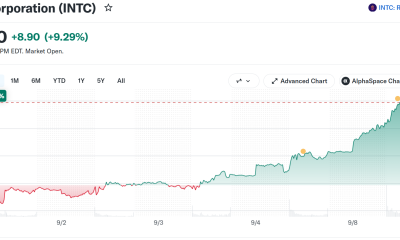
Intel Stock Jumps 9% on Chip Price Hike Report, US Stake Gains $36 Billion
-
 Tech4 days ago
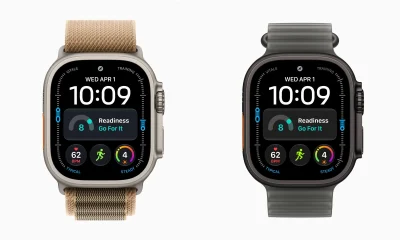
Apple Watch Ultra 4 vs Watch Ultra 3: Should you really spend another $799?
-
 Crypto World4 days ago
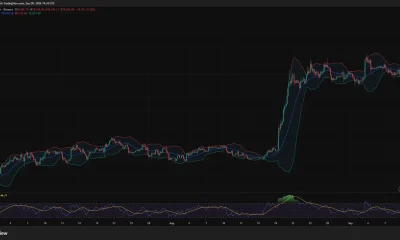
Bitcoin price risks $70K if $78K neckline breaks
-

 NewsBeat5 days ago
What went right this week: an ‘historic’ fall in violent crime, plus more
-

 Crypto World6 days ago
Pump Fun and Kraken delete Hunter Biden $LAPTOP promotion
You must be logged in to post a comment Login